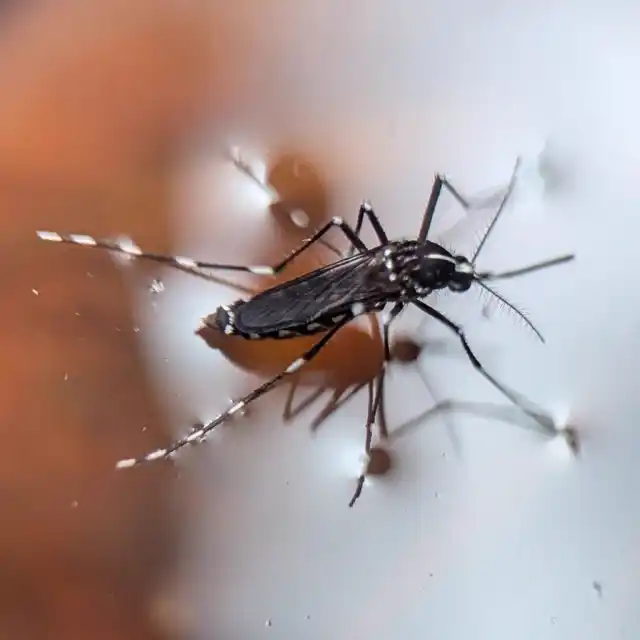

Virginia has 58 known mosquito species. You only ever meet a handful of them. Around a home here, the biting is done by six:
- Asian tiger mosquito: black with white stripes, bites all day, breeds in containers
- Northern house mosquito: plain brown, bites dusk to dawn, breeds in storm drains
- Eastern treehole mosquito: a daytime biter in wooded yards, breeds in tree holes
- Asian bush mosquito: a container and rock pool specialist, common along the Potomac
- Inland floodwater mosquito: arrives in waves after heavy rain, and travels miles
- Salt marsh mosquitoes: coastal Virginia only, where there is tidal marsh
Each one breeds somewhere different and bites at a different time of day, so each calls for a different fix. I’m a third-generation licensed technician at Better Termite & Pest Control. I’ve spent years walking Northern Virginia yards looking for where these things come from. Below is when they show up, which diseases actually matter here, and what genuinely brings the population down.
Common Mosquitoes in Virginia at a Glance
Here’s the short version before we go species by species. Use it to narrow down what’s biting you based on when you get bitten and where you were standing.
| Species | Looks Like | Bites | Breeds In | Where in Virginia |
|---|---|---|---|---|
| Asian tiger mosquito | Black with bright white stripes | Daytime, aggressive | Containers, corrugated drain pipe | Statewide, worst in suburbs |
| Northern house mosquito | Small, plain brown | Dusk to dawn, shy | Storm drains, stagnant organic water | Statewide, urban and suburban |
| Eastern treehole mosquito | Dark with silvery side scales | Daytime, in woods | Tree holes, old tires | Wooded properties |
| Asian bush mosquito | Dark with gold thorax stripes | Daytime | Rock pools, clean containers | Common along the Potomac |
| Inland floodwater mosquito | Brown with narrow pale leg bands | Dusk, in waves after rain | Flooded fields, tire ruts, ditches | Statewide after heavy rain |
| Salt marsh mosquitoes | Dark with white leg and proboscis bands | Twilight, relentless | Tidal salt marsh pools | Hampton Roads, Eastern Shore |
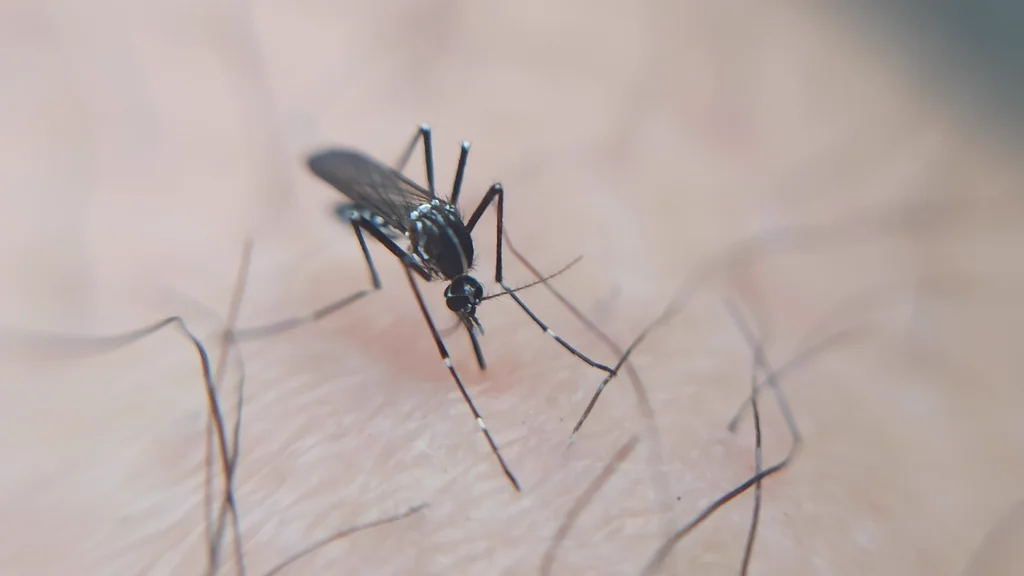


How Many Mosquito Species Are There in Virginia?
Virginia Cooperative Extension entomologists at Virginia Tech count 58 known species of mosquitoes in the Commonwealth, spread across nine genera. That number climbed recently because two species, Culex coronator and Culex nigripalpus, were added to the state list after the last regional survey.
Fifty-eight sounds overwhelming. In practice, it isn’t. Most of those species feed on birds, frogs, or other insects. Many live in habitats you’ll never visit. Others exist in such small numbers that you’d need a light trap to find one. Basically, six species do nearly all the biting around Virginia homes.
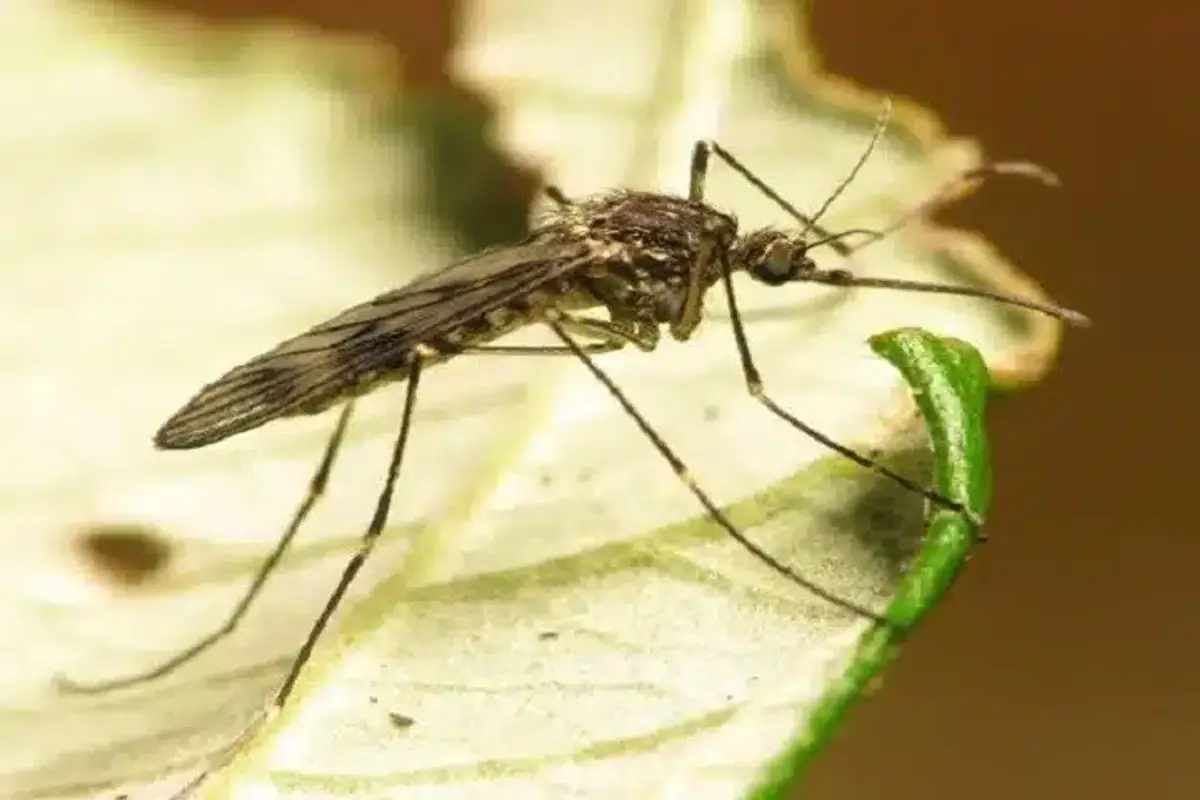
Asian Tiger Mosquito: Virginia’s Number One Biter
If you’re getting eaten alive in your own yard in the middle of the afternoon, this is almost certainly why. Fairfax County’s health department calls the Asian tiger mosquito the county’s number one nuisance mosquito. It is active during the day, not at dusk.
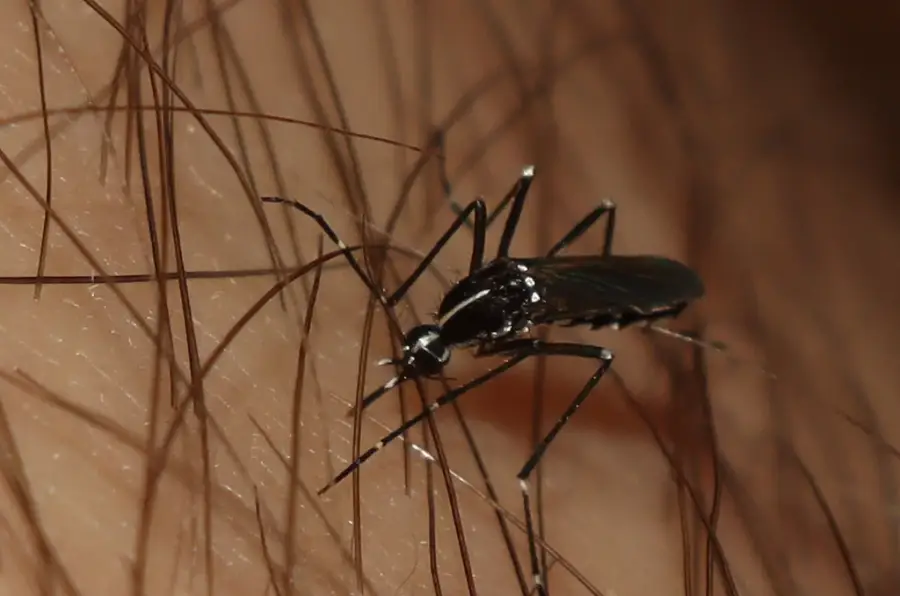
It’s easy to identify. Asian tiger mosquitoes are jet black with striking white markings on the body and legs, plus a single silvery-white stripe running down the middle of the thorax. That center stripe is the giveaway.
What makes this species so hard to shake is where it breeds. It’s a container specialist. It lays eggs in anything artificial that holds water for a week or more: tires, buckets, flowerpot saucers, kids’ toys, tarps, and clogged gutters. Fairfax County’s guide singles out black corrugated drain pipe, above or below ground, as the most important breeding site of all. Those pipes hold a little water at every low spot, and nobody ever looks inside them.
A container-mosquito study in Fairfax County found that Aedes albopictus was the most abundant species in artificial containers, while Aedes japonicus dominated natural rock pools along the Potomac. Separate research in southwestern Virginia found that Ae. albopictus preferentially laid eggs in the yard surrounding a home rather than in the adjacent forest, with numbers peaking in late August. In other words, this mosquito is a suburb specialist, and the yard itself is the nursery.
They also rest where you’d least expect. Fairfax notes that ivy, azaleas, and similar shrubs are among their favorite daytime resting spots. That is exactly why treating dense foliage works better than fogging an open lawn.
Northern House Mosquito: The Dusk-to-Dawn Storm Drain Breeder
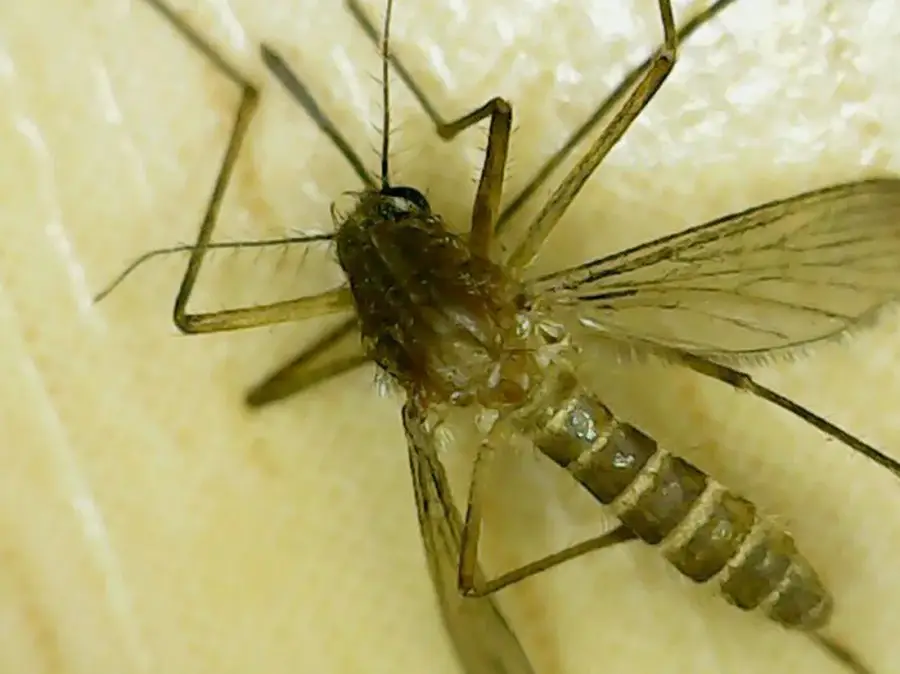
This is the mosquito behind the classic “they come out at sunset” experience. Fairfax County’s guide describes Culex pipiens and its close relative Culex restuans as small, brown, and shy, feeding from dusk until dawn. It also calls them the most important mosquitoes in the West Nile virus transmission cycle.
The northern house mosquito breeds in stagnant, organic, nutrient-rich water. Think catch basins and storm drains, clogged rain gutters, neglected birdbaths, and anywhere water sits and goes green for a few weeks. Northern Virginia counties treat storm drains directly for this reason, running larvicide programs in county-maintained stormwater ponds from April through October.
You’re less likely to notice this one biting, because it’s not aggressive and it prefers birds. That bird preference is exactly what makes it a disease vector: it picks the virus up from birds, then occasionally feeds on a person.
Eastern Treehole Mosquito: The Woodland Day Biter
If your property backs to woods and you get bitten walking the tree line, meet Aedes triseriatus. The Virginia Department of Health describes treehole mosquitoes as aggressive daytime biters, especially in wooded areas.
The eastern treehole mosquito is dark, with silvery scales along the sides of the thorax. It lays eggs in water collected in tree holes and, increasingly, in discarded tires sitting in shade. Its flight range is short. Often it travels only a few hundred yards from the tree hole or tire pile it emerged from.
This species matters more than its numbers suggest, because it’s the primary vector of La Crosse encephalitis. VDH notes that infected females pass the virus to their eggs, and the virus survives the winter inside those dormant eggs, hatching into already-infected mosquitoes come spring.
Asian Bush Mosquito: The Rock Pool Specialist
Aedes japonicus, sometimes called the Asian rock pool mosquito, arrived in the United States in 1998 and spread fast. The Asian bush mosquito is dark with distinctive golden stripes on the thorax, It breeds in small volumes of relatively clean, clear water: rock pools, tree holes, and containers.
In the Fairfax County container study mentioned above, it was the most abundant species collected from rock pools along the Potomac. If you live along the river or have a rocky creek on the property, it’s part of your mix. It also shares containers with the Asian tiger mosquito, so the same weekly dumping routine handles both.
Inland Floodwater Mosquito: The One That Travels
Most mosquitoes in Virginia stay close to home. Aedes vexans doesn’t. The inland floodwater mosquito has been recorded dispersing five, ten, even fifteen miles from where it emerged.
It breeds in sheet water: flooded fields, tire ruts, drainage ditches, stormwater facilities, and creek banks that jumped their edges. It’s brown, with narrow white bands at the base of each leg segment rather than the bold rings you see on a tiger mosquito. It bites hardest around dusk, peaking roughly half an hour after sunset.
This is the species behind the “where did they all suddenly come from?” week after a heavy summer storm. It arrives in a wave, and because it flies so far, the source may not be anywhere near your property.
Salt Marsh Mosquitoes: A Coastal Virginia Problem
Two salt marsh species are on Virginia’s official list: Aedes sollicitans and Aedes taeniorhynchus. Both are brutal where they occur. The eastern saltmarsh mosquito is dark, with a band of white scales ringing the center of its proboscis. It is an important vector of Eastern equine encephalitis and of dog heartworm.
Here’s the part that matters for placing them. Both species need tidal salt marsh to lay eggs, in pools left behind by exceptional high tides. They are also strong fliers, which is why a coastal brood can make an entire county miserable at once. But no salt marsh means no brood. So these are a Virginia Beach, Hampton Roads, and Eastern Shore story, not an Alexandria or Fairfax one. If someone tells you salt marsh mosquitoes are the problem in your Arlington backyard, they are describing the wrong insect.
When Is Mosquito Season in Virginia?
The Virginia Department of Health puts mosquito season at early May through early November. That’s the outer envelope. Inside it, the year has a rhythm.
County larvicide programs start treating stormwater ponds and catch basins. Overwintering Aedes eggs are sitting dry in containers, waiting for water. Virginia Tech’s extension guidance notes that heavy spring rain means plenty of breeding sites later. So this is the month to dump containers and drill drainage holes, before anything hatches.
Biting starts for real. Culex restuans egg rafts appear early, and the first Asian tiger mosquito generations come off containers. Bites are still scattered; most homeowners don’t call yet.
The worst stretch. Warm nights shorten development time, so each container turns over faster. Asian tiger numbers build toward a late-August peak, and West Nile virus activity in Culex populations climbs through summer into fall. This is when the phone rings most.
Still bad, and often surprising to people who assume Labor Day ends it. Late-season Culex activity is when human West Nile cases typically surface. Treatments are still worth running.
Virginia Tech notes that most mosquitoes need warm weather to complete their life cycle and aren’t found during extended cold. Aedes eggs simply wait. The CDC notes they can survive drying out for up to eight months. That is why last year’s containers become next year’s problem.
Mosquitoes are personal for me. My own family’s backyard had a serious problem, mostly because of heavy vegetation and moisture back there. We ended up developing our whole mosquito program by experimenting on our own yard, trying one thing after another to see what actually moved the needle. What finally worked was a combination of In2Care traps and a topical treatment to the vegetation, which cut the breeding happening on the property itself.
Daren, one of our registered technicians, has a story that says even more about where these things come from. He had a mosquito account he simply could not get under control. It turned out the property had NDS drainage wells, the catch basins that pull water away from the house, so overgrown he couldn’t see them. He only found one because he stepped over it and felt it underfoot, then pulled the grass back. The PVC lines were clogged solid with grass and roots and were breeding mosquitoes continuously. The homeowner actually had a map of them. Once they were cleared and repaired, the problem went away.
He’ll also tell you Mount Vernon and Fort Hunt are the hardest areas we work for mosquitoes. It comes down to how dense the vegetation is, and not just at the customer’s house. The neighbors’ yards count too. Mosquitoes aren’t strong fliers, but there’s nothing stopping them from drifting over the property line.
Mosquito-Borne Diseases in Virginia: The Honest Numbers
The Virginia Department of Health lists five mosquito-borne illnesses as locally transmitted in Virginia: West Nile virus, La Crosse encephalitis, Eastern equine encephalitis, St. Louis encephalitis, and Jamestown Canyon virus.
All five are rare. In the CDC’s national arboviral surveillance report covering 2024, Virginia recorded 5 neuroinvasive West Nile cases and no reported La Crosse virus cases, in a state of roughly 8.8 million people. Nationally that same year, St. Louis encephalitis produced just 2 cases and Eastern equine encephalitis 19.
West Nile is the one worth understanding, because it’s the most common and the most misunderstood. According to the CDC, about 80% of infected people develop no symptoms at all. Roughly 20% get flu-like illness. Fewer than 1% develop severe disease affecting the central nervous system.
La Crosse deserves a mention for families with kids. VDH notes that children under 16 are more likely than adults to develop serious neurological illness from it. And the vector, the eastern treehole mosquito, bites in daylight in wooded yards.
Dogs are a separate consideration. The American Heartworm Society notes that heartworm disease depends on mosquitoes to complete its life cycle and has been diagnosed in all 50 states. Year-round preventive from your veterinarian is the standard answer there.
What Actually Works Against Mosquitoes in Virginia
Here’s the single most useful fact in this entire article: the mosquito biting you probably grew up within a few hundred feet of where you’re standing. The American Mosquito Control Association puts the flight range of container breeders like the Asian tiger mosquito at about 300 feet. The CDC says these mosquitoes will only fly a few blocks in their lifetime, and Virginia Tech notes that most adults remain close to the site where they developed.
That changes the whole strategy. You are not fighting “the mosquitoes of Virginia.” You are fighting the ones your own yard and your neighbor’s yard are producing.
Walk the property slowly and look low. Corrugated drain pipe, flowerpot saucers, tarps, kids’ toys, wheelbarrows, tire swings, clogged gutters, birdbaths, boat covers, and drainage catch basins. Fairfax County points out that a container as small as a bottle cap is enough water to produce mosquitoes.
Weekly is the magic interval, because the CDC puts egg-to-adult development at 7 to 10 days. Virginia Tech’s guidance is direct. Empty water-filled containers near the house each week. Flush and refill birdbaths weekly. Check roofs for standing water, and drain low-lying areas that hold it.
Some water can’t be dumped: rain barrels, water gardens, a catch basin. Virginia Tech recommends goldfish in water gardens to eat the larvae, and products that release Bacillus thuringiensis israelensis in standing water. Worth knowing: mosquitoes rarely breed in streams, rivers, or healthy ponds, because the fish and aquatic insects eat the larvae.
Adults rest in cool, humid, shaded vegetation during the day: ivy, azaleas, dense shrub beds, low tree limbs. Keeping vegetation thinned and the grass cut removes the daytime harbor. This is the part homeowners underrate most.
The EPA maintains a list of registered repellent ingredients for skin application, including DEET, picaridin, IR3535, oil of lemon eucalyptus, and para-menthane-diol. Virginia Tech’s narrower homeowner recommendation is DEET, picaridin, or oil of lemon eucalyptus on exposed skin. Long, loose, light-colored clothing helps, and intact window and door screens keep them out of the house.
That routine handles most yards. When it doesn’t, the water is usually somewhere you can’t get to.
Backyard Gadgets That Don’t Work
I’d rather tell you what to skip than watch you spend money twice.
Bug zappers. The American Mosquito Control Association cites a study finding that female mosquitoes made up just 0.13% of the insects killed by these devices. Virginia Tech’s extension guidance agrees: bug zappers kill very few mosquitoes, and plenty of insects that were never the problem.
Ultrasonic repellers. Virginia Tech puts it plainly. Ultrasonic devices marketed to repel mosquitoes have not worked as claimed in scientific trials. The AMCA has reviewed at least ten studies over fifteen years and found no repellency value whatsoever.
Citronella candles. Mild effect at best. The AMCA’s position is that they don’t offer significantly more protection than any other candle producing smoke. Note the distinction: oil of citronella is an EPA-registered skin-applied ingredient, which is a different product from a patio candle.
When to Call a Professional
Honest answer: if you’ve dumped every container for three weeks straight and you’re still getting bitten, the source is probably something you can’t reach. Think a neighbor’s yard, a clogged drainage system, a creek buffer, or a wooded lot line.
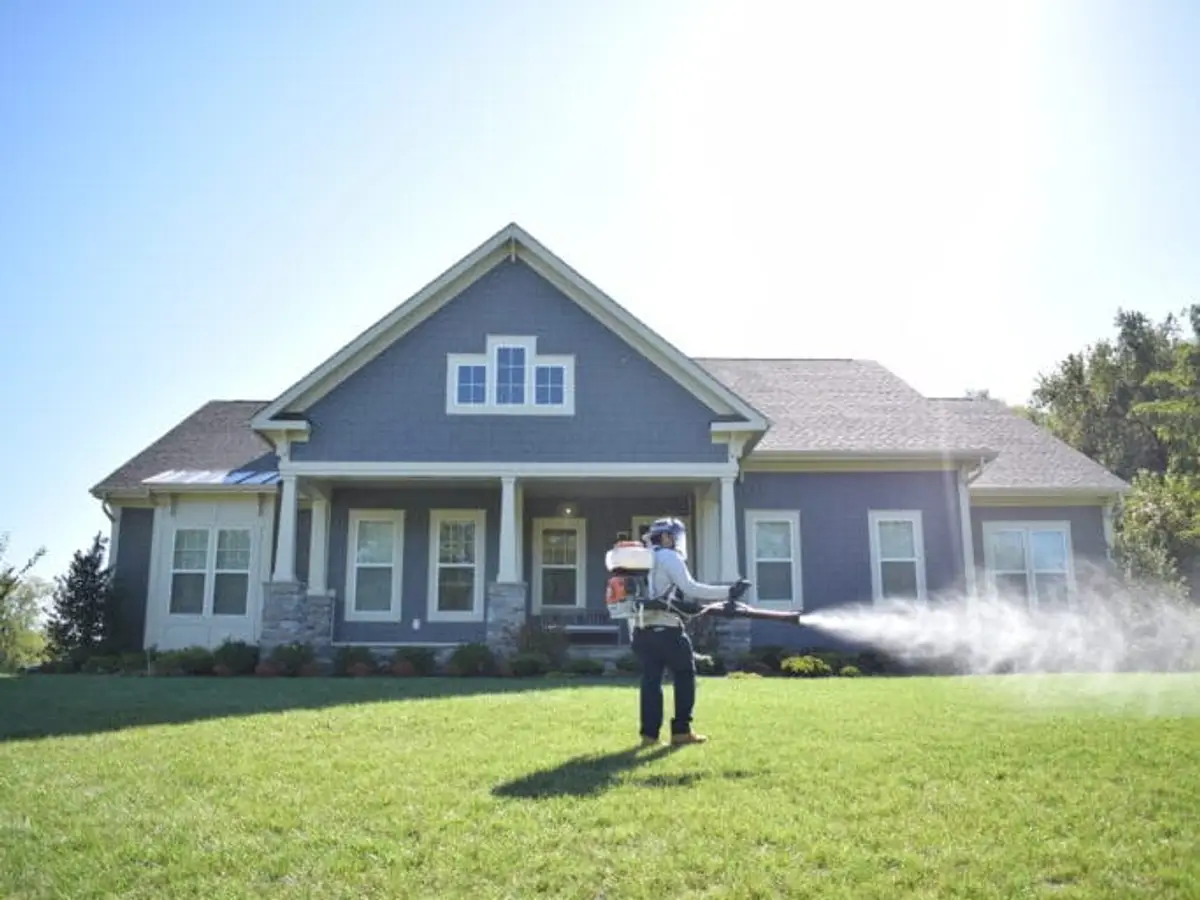
Our mosquito control approach is layered, because a single spray isn’t enough. A licensed technician walks the yard looking for breeding sources first. Then he treats the dense shrubbery and foliage where adults rest, plus the low-lying areas where water collects. We pair that with In2Care traps, which spread larvicide to breeding spots we can’t physically reach. All the products we use are EPA registered and have been through our internal research team. Each one is something we’d be comfortable using in our own yards. We dropped nine harsher chemicals from our lineup over the years because homeowners asked for a better approach.
I’ll also set expectations the way our technicians do in person: we are not going to remove every mosquito from your property. Nobody can. What a good program does is knock the population down to where you can actually use your deck again, and keep it there through the season.
Pricing starts at $75 per service, and rises with yard size and application time. We don’t do single-visit mosquito work, because one application in August accomplishes very little. Seasonal plans work better and bring the per-visit cost down. Mosquito and tick service pairs naturally, since the same shaded, overgrown edges produce both.
We’re a family business, now 58 years into serving the DMV, with more than 1,800 reviews and about 300 years of combined field experience across the team. We’re members of the Virginia Pest Management Association and the National Pest Management Association. If you’re local, we cover mosquito work across Northern Virginia, including Arlington, Alexandria, Fairfax, Chantilly, and Bealeton.
Fifty-eight species sounds like a lot, but the practical picture in Virginia is simple. A day-biting striped mosquito breeding in your containers, a quieter brown one breeding in storm drains, a woodland biter from tree holes, and a flood-driven wave after big storms. Learn which one is biting you and when, dump standing water every week, and the problem gets much smaller. These insects are almost always homegrown.
If you’d like a second set of eyes on your yard, or you just want to know what’s biting you, give us a call at 703-683-2000 or email info@bettertermite.com. Estimates are free, and we’re happy to tell you if the fix is something you can handle yourself.