
The best time to spray a wasp nest is after dark, or in the cool hour just before sunrise. At that point nearly the whole colony is home, the wasps are slow, and they can’t see you well. The best time of year is late spring or early summer, while the nest is still small.
I treat a lot of wasp nests around Northern Virginia, and timing is the single biggest thing homeowners get wrong. They spray at 2 in the afternoon, when the most foragers are flying, and they hit maybe half the colony. Then the other half comes home angry. Wait until dark and the same can of spray does far more, with far less risk to you.
Best Time of Day: After Dark
Wasps are daytime fliers. Workers spend warm, sunny hours collecting food and nest material. As the light fades and the air cools, they fly home and settle on the comb. That’s your window.
University of Minnesota Extension says to treat yellow jacket and paper wasp nests in the late evening or early morning, when the wasps are less active. Virginia Tech’s yellow jacket guide puts it even more plainly: come back late at night, after the workers have returned to the nest.
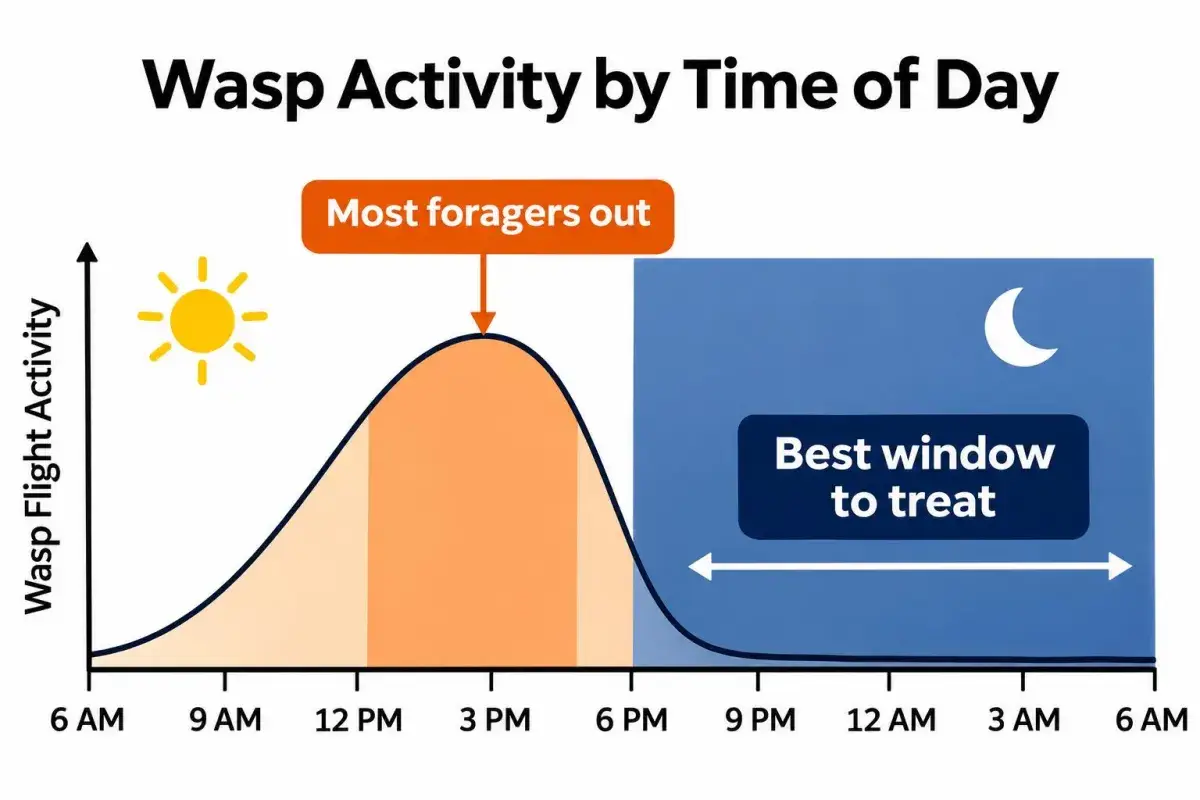
Basically, there are three reasons night works better:
- More of the colony is home. Spray during the day and the foragers who were out come back to a treated nest. Some survive and may rebuild nearby.
- The wasps are slow. Cool air slows them down, so fewer of them fly out at you.
- They can’t see well. Penn State Extension notes that at night, wasps are less likely to fly and have trouble seeing. It also suggests a red light or red filter to keep them in the dark.
So which is better, dusk or dawn? Both work. Personally I lean toward an hour or two after full dark. Right at sunset you still get stragglers flying home. The hour before sunrise is also good, because it’s usually the coldest part of the night. However, it’s easy to run out of time before the sun warms the nest up.
Best Time of Year: Early, While the Nest Is Small
Time of day matters most for the spray itself. Time of year decides how big a job you’re facing. Every yellow jacket, hornet, and paper wasp nest in our area starts from scratch each spring with a single queen. It grows all summer and dies in the winter.
Best time to treat. Queens come out of winter hiding and start new nests. A spring nest might be the size of a golf ball with one queen and a handful of workers. One quick spray at dusk usually ends it.
Still a good time. Nests grow fast as new workers hatch. Paper wasp nests under eaves and railings are easy to spot now. Treat at night and you’ll usually be done in one or two tries.
Hardest time. This is when colonies are at their biggest and most defensive. Yellow jacket nests in the ground or in walls can hold thousands of wasps. Night treatment matters most now.
Often no need to treat. Hard freezes kill the workers. Only new queens survive, and they leave to spend the winter somewhere else. The old nest is not reused.
Purdue Extension notes that small, early-season colonies are easily controlled. In my experience, nests show up most in spring and again at the end of summer. August is when wasps are most aggressive. If you spot a nest going up in May, deal with it then. Don’t wait to see what happens.
Sometimes, yes. University of Minnesota Extension says you can leave a nest alone until temperatures drop into the mid to upper 20s °F, which kills the workers and the queen. Penn State adds that nests found in the fall will die soon anyway, so treatment may not be needed.
In Northern Virginia and the Maryland suburbs, that means late fall or early winter. Therefore, a bald-faced hornet nest high in a tree in October is often best left alone. A yellow jacket nest by your kids’ swing set is a different story.
In short, the earlier you catch a nest, the easier it is. A late-summer nest is a bigger job at any hour.
Best Weather to Spray
The right evening also needs the right weather. Look for:
- Dry conditions. Rain can wash spray off an open paper nest before it soaks in. It also makes a ladder slick in the dark.
- Calm air. Wind blows the spray stream off target and can blow it back at you.
- A cool night. The cooler it is, the slower the wasps move. A cool evening in May or September is ideal.
Avoid the hottest summer nights, too. On a hot, muggy evening, wasps can stay active longer after sunset. On those nights, waiting until later in the night or until just before dawn makes sense.
How to Spray a Wasp Nest at Night
Once the timing is right, the method is simple. Use a spray labeled for wasps and hornets, and read the whole label before you start. These sprays shoot a stream, so you can stand back from the nest.
Wear long sleeves, long pants, gloves, and something over your face and neck. Tuck your pants into your socks. For a big hornet or yellow jacket nest, a bee veil is worth the money.
Use a red light, or tape red cellophane over a flashlight. Set it on the ground off to the side. University of Kentucky entomologists warn not to shine a beam straight into the nest entrance, because it can startle the wasps.
Stand back as far as the label allows. For a yellow jacket or hornet nest, aim right into the entrance hole. For an open paper wasp nest, coat all of the comb. Don’t stand directly under the nest.
Spray, then walk away right away. Don’t stand there and watch. Keep kids and pets inside until morning.
Watch the nest from a distance the next afternoon. If wasps are still going in and out, treat again that night. Large nests often need more than one round.
One more point before you head out with a can of spray. Some people shouldn’t be doing this at all.
Timing by Nest Type
Night is the best time for nearly every nest, but each type has its own wrinkle.
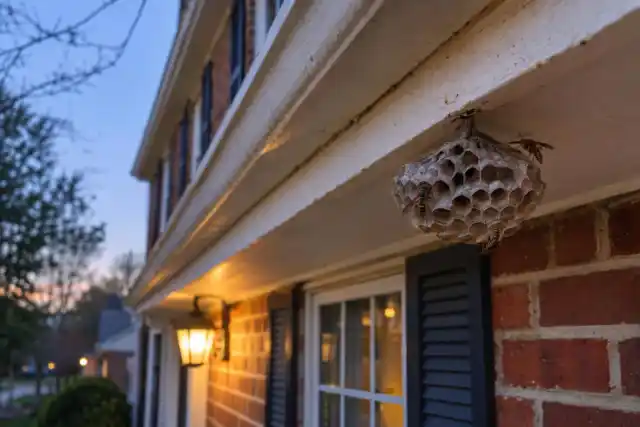
Paper wasps build open, umbrella-shaped combs under eaves, railings, and grill lids. These are the most forgiving nests. A small one can be treated in daylight as long as you don’t stand under it. Still, dusk is better for larger nests. Paper wasps are also less aggressive than yellow jackets, so a nest away from doors can often be left alone.
Ground nests are the most common stinging problem we see in lawns and mulch beds. All you usually see is a hole with steady traffic. Treat after dark, aiming right into the hole. Dust often works better than spray for underground nests because it reaches deeper. Never pour gasoline into a ground nest. Our post on yellow jacket nests and gasoline explains why.
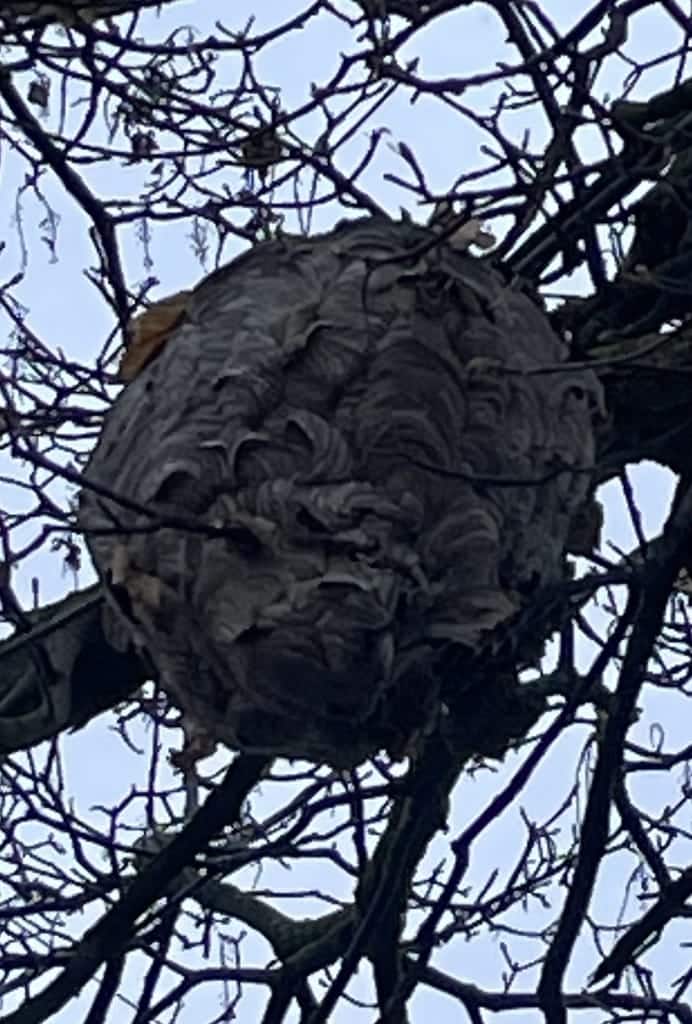
Bald-faced hornets hang large, grey, football-shaped nests in trees and shrubs. These are among the most defensive wasps in our area. Treat only at night, aim for the single entrance hole near the bottom, and wear real protective gear. If the nest is high in a tree and away from people, it’s often fine to leave it until frost.
A nest inside a wall void is the one case where no time of day makes aerosol spray the right choice. The spray can’t reach the nest, and it can push the wasps deeper into your home. Don’t seal the hole either. Our guide to a wasp nest in the wall covers what works instead.
Each nest type looks different, so it helps to know which one you have before you pick a night to treat it.

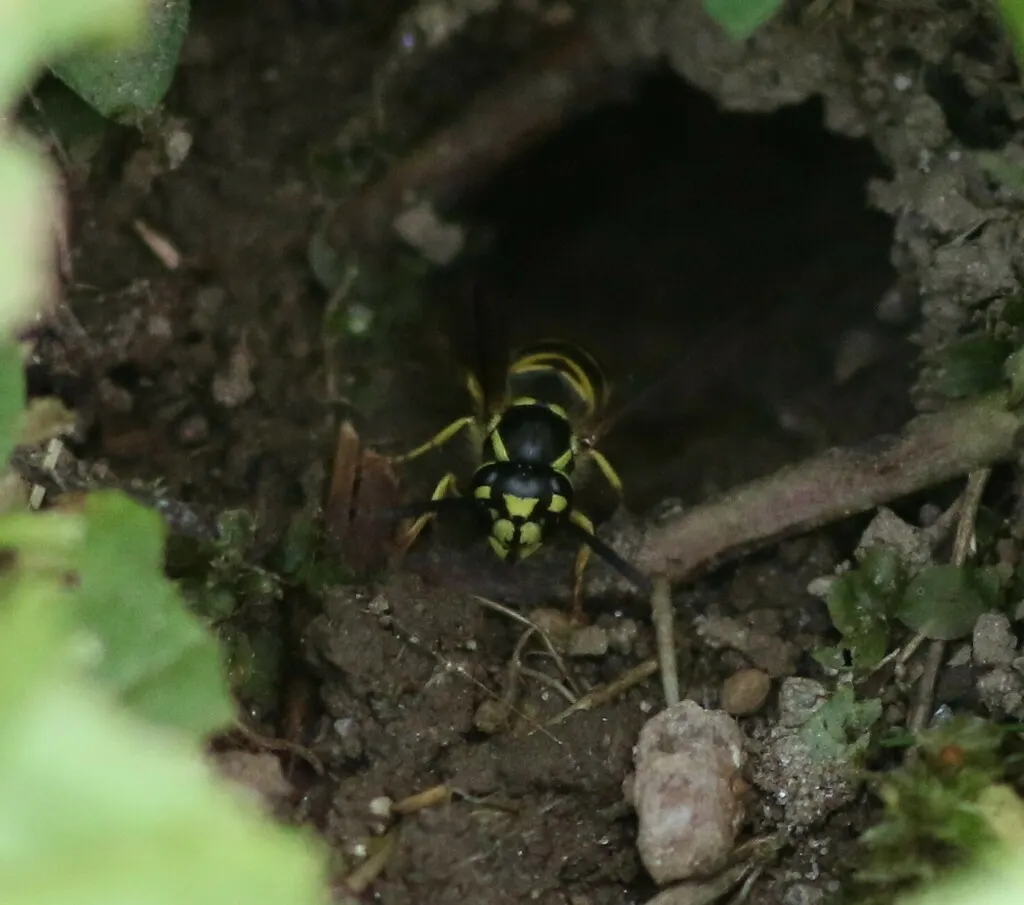

Ground nests are the ones where night timing pays off most. In daylight, you can’t get close without stepping into the flight path.
Here’s how that plays out on a real job.
One fall I helped on a job at an HOA where residents had a yellow jacket nest in the ground right next to a walking path. People were worried about getting stung. We treated the nest in rounds, putting product into the underground nest at intervals. Then we came back a few days later and dug up the nest to make sure it was dead and nothing had moved back in.
The big lesson from jobs like that: the timing and the follow-up check matter as much as the product. One spray at the wrong time of day rarely finishes a late-season ground nest.
When Not to Spray a Wasp Nest at All
Sometimes the best time to spray is never. Leave the nest alone, or call a pro, when:
- The nest is inside a wall, attic, or soffit. Spray can drive the wasps indoors.
- It’s late fall and the nest is out of the way. Frost will do the work for you.
- The bugs are actually bees. Honey bees and bumble bees call for a different approach than wasp spray. A local beekeeper can often collect a honey bee swarm.
- The nest is high up. Climbing a ladder in the dark while wasps pour out is how people get hurt.
- Someone is allergic to stings.
If you aren’t sure what you’re looking at, our guide to types of wasp nests can help you identify it first.
When to Call a Professional
A small paper wasp nest under a deck rail is a reasonable DIY job at dusk. A late-summer yellow jacket nest in a wall or a bald-faced hornet nest over your front walk usually isn’t.
Our licensed technicians handle these as part of our wasp control service. For ground and wall colonies, we also offer yellow jacket nest removal, and our hornet nest removal service covers the big grey nests in trees and eaves. All the products we use are EPA approved and have passed through our internal research team. Each one is something we’d feel comfortable using in our own homes.
Conclusion
The best time to spray a wasp nest is after dark or right before dawn, on a dry, calm evening, as early in the season as you can catch it. That timing gets most of the colony at home, slow, and unable to see you. Late in the fall, you can often skip spraying entirely and let the cold finish the job. Nests in walls, high nests, and anything near a person with a sting allergy are better left to a pro.
If you have questions or would like an estimate, call us at 703-683-2000 or email info@bettertermite.com. With 1800+ reviews across our locations, we’ve helped plenty of Northern Virginia and Maryland homeowners take back their porches and yards.