
If you’re allergic, one yellow jacket sting can be dangerous. If you’re not allergic, the danger comes from volume. Medical guidance says more than 50 stings in an adult, or more than 1 sting per kilogram of body weight in a child, calls for lab work and follow-up, even if the person feels fine.
So the honest answer depends on who got stung and how many times. Most healthy adults handle one or two stings with pain and swelling. However, anyone with allergy signs needs 911, and anyone with several stings should get checked. I work in pest control, not medicine. So every number below comes from allergy and medical sources, and it’s here to help you decide what to do next.
How Many Yellow Jacket Stings Are Dangerous? The Short Answer
There isn’t one magic number. Instead, there are two different kinds of danger. One is an allergic reaction, where a single sting is enough. The other is a toxic reaction, where the sheer amount of venom from many stings starts damaging the body.
Here’s how the numbers break down by situation:
| Situation | Number of stings | What to do |
|---|---|---|
| Person with a sting allergy | 1 | Use epinephrine if prescribed and call 911 at the first allergy sign |
| Healthy adult, no allergy | 1 to a few | Usually painful but not dangerous; watch for allergy signs |
| Several stings, no allergy | More than a couple | See a healthcare provider promptly |
| Adult, no allergy | More than 50 | Needs medical evaluation and lab work, with a recheck at 24 hours |
| Child, no allergy | More than 1 per kg of body weight (about 18 for a 40-lb child) | Needs medical evaluation and lab work, with a recheck at 24 hours |
| Anyone | Hundreds | Go to the ER right away, even without symptoms |
The 50-sting and 1-per-kg thresholds come from a 2021 pediatric review in Frontiers in Medicine. The “several stings” row follows Cleveland Clinic’s advice, covered below.
For perspective, deaths are rare but real. The CDC counted an average of 72 deaths per year from hornet, wasp, and bee stings in the U.S. between 2011 and 2021. That count lumps all stinging insects together, so it doesn’t tell you how many came from yellow jackets alone.
One Sting Is Dangerous If You’re Allergic
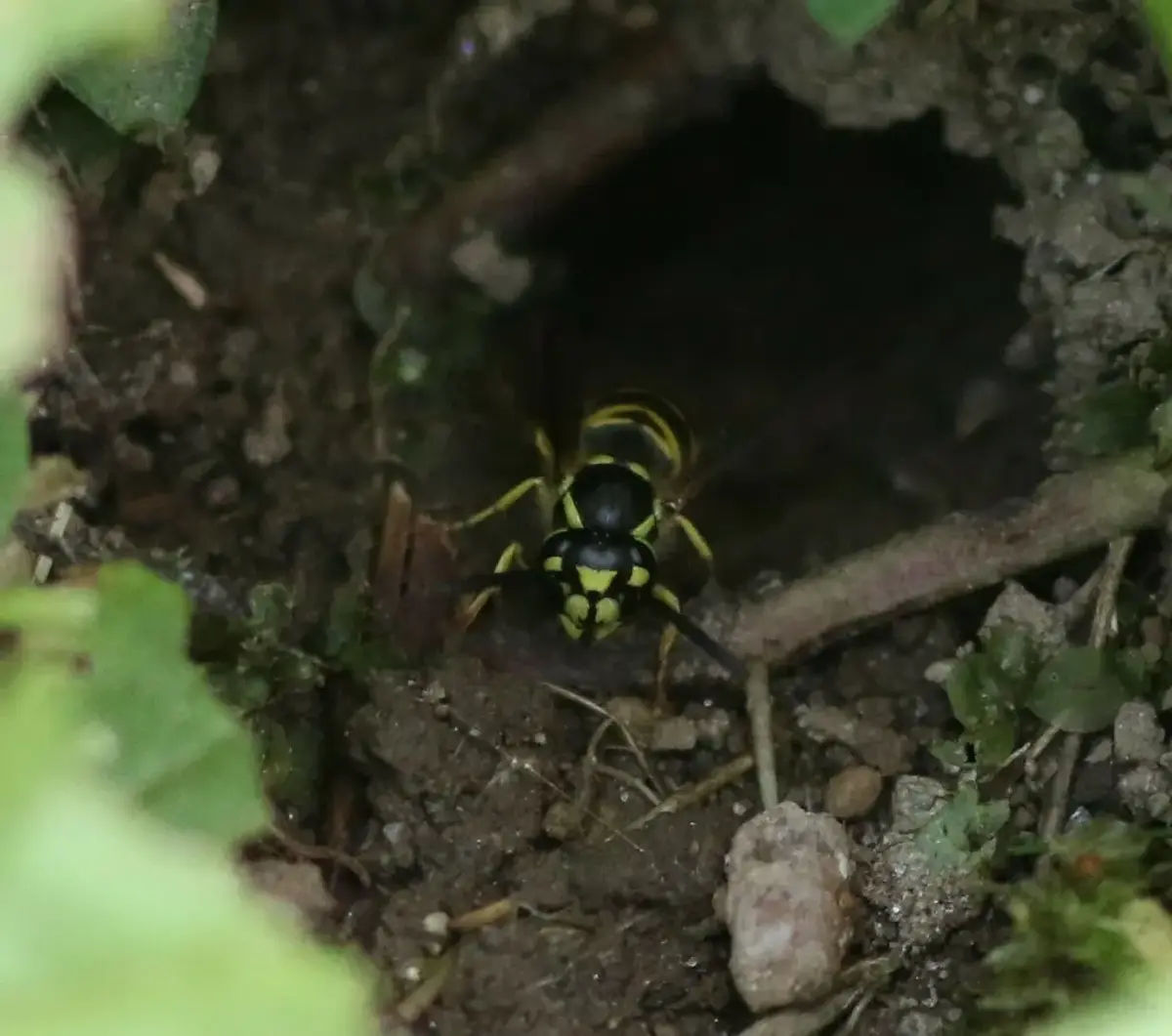
For most people, a yellow jacket sting means a sharp pain, a red welt, and some swelling. However, for people with a venom allergy, one sting can set off anaphylaxis. That’s a body-wide reaction that can drop blood pressure and close the airway.
According to Cleveland Clinic, even one yellow jacket sting can be fatal for someone allergic to the venom. They also note that yellow jacket stings are the most common insect sting in the U.S.
How common is the allergy? The American College of Allergy, Asthma and Immunology estimates that life-threatening sting allergy affects about 0.4% to 0.8% of children and about 3% of adults. ACAAI also notes that anaphylaxis can start within minutes of a sting. So the clock matters.
Signs of an Allergic Reaction
The American Academy of Allergy, Asthma & Immunology lists these as signs of a severe allergic reaction to a sting:
- Hives or itching in areas away from the sting
- Swelling of the throat or tongue
- Trouble breathing or wheezing
- Dizziness or a drop in blood pressure
- Stomach cramps, nausea, or diarrhea
AAAAI also advises that people with a known severe sting allergy carry two epinephrine auto-injectors, because a second dose is sometimes needed.
Many Stings Are Dangerous Even Without an Allergy
Now for the second kind of danger. A handful of stings won’t overwhelm a healthy adult. However, dozens or hundreds of stings carry enough venom to cause a toxic reaction. That can happen even in someone with no allergy at all.
The Frontiers in Medicine review mentioned above puts it plainly: more than 50 stings in an adult, or more than one sting per kilogram in a child, calls for lab work and a recheck 24 hours later. Basically, that’s the point where doctors want to look at the kidneys, muscles, and blood, even if the person seems okay.
Smaller numbers can still matter. A 2022 Cureus report on mass wasp stings reviewed earlier research on 1,091 sting cases. Patients with 10 or more stings died in the hospital about five times as often as patients with fewer than 10. That data mostly involved Asian hornets, not our yellow jackets. Still, it shows why “a few” and “a lot” are very different situations.
There’s no precise lethal number for yellow jackets. The commonly cited estimate is about 20 stings per kilogram of body weight, and the Frontiers review repeats it. That figure comes mostly from honeybee data, so treat it as a rough guide.
For a 150-pound adult (about 68 kg), 20 stings per kg works out to roughly 1,360 stings. That lines up with Cleveland Clinic’s estimate of around 1,500 yellow jacket stings for a non-allergic person.
However, those are numbers for death, not for harm. Kidney injury, muscle breakdown, and other complications can happen at far lower counts. That’s why medical guidance sets the “get labs” line at 50 stings for adults, not 1,000.
Kids, Older Adults, and People With Health Conditions
Body size changes the math. The child threshold is based on weight, so a small child reaches the danger zone much sooner. For example, a 40-pound child weighs about 18 kg. By the one-per-kg guideline, more than about 18 stings already calls for lab work.
Other factors raise the risk of a severe reaction, too. A 2017 review in Allergologie Select lists older age, heart disease, and certain conditions and medications (including ACE inhibitors) as risk factors. The same review notes that wasp stings tend to cause more severe reactions than honeybee stings. If you or a family member falls into one of these groups, it’s worth asking your doctor about a plan before the next yellow jacket season.
The Delayed Danger After Multiple Stings
This is the part most people don’t know. An allergic reaction usually shows up fast. A toxic reaction can show up late.
After a mass sting, venom can break down muscle tissue. That’s called rhabdomyolysis. The broken-down muscle proteins can then injure the kidneys. The Cureus report notes that while anaphylaxis appears quickly, rhabdomyolysis “may be insidious in onset.” In other words, it can creep up.
The Frontiers review goes further. It says there can be a symptom-free stretch of several days before kidney failure shows up. For that reason, it recommends a second round of kidney labs 4 to 9 days after the stings.
So someone who takes 60 stings, feels sore but okay, and skips the doctor could be missing the real problem. If you or your child took a large number of stings, get checked even if you feel fine. Also, mention the number of stings to the doctor so they know what to look for.
How Many Times Can a Yellow Jacket Sting?
As many times as it wants. Unlike honeybees, yellow jackets don’t lose their stinger. Clemson Cooperative Extension describes it as a smooth stinger that can be used to sting multiple times.
That changes how dangerous a single encounter can be. A honeybee usually stings once and dies. A yellow jacket can stay on you and keep stinging. Additionally, if it’s trapped in clothing, it can sting again and again before you get it off.
Then there’s the colony. University of Maryland entomologist Michael Raupp explains that attacking eastern yellowjackets release an alarm pheromone. That chemical signal calls more workers out to defend the nest. He also notes that colonies may contain thousands of workers by late summer and fall. So one sting near a nest can quickly turn into twenty.
Why Mass Stings Happen in Virginia and Maryland
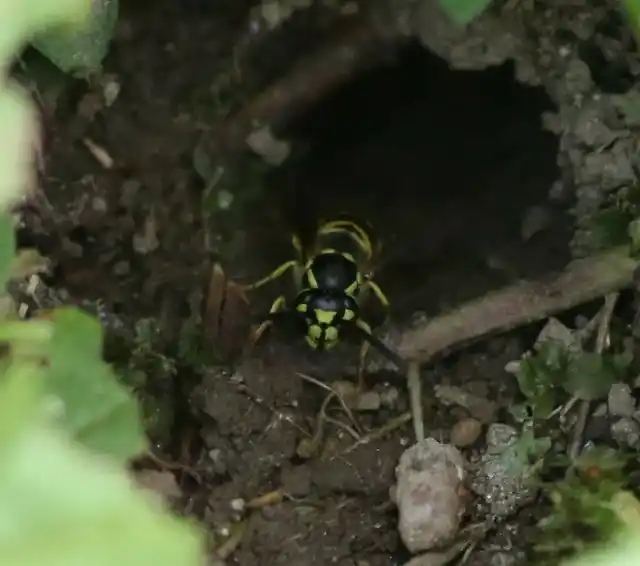
In the DMV, one of the most common yellow jackets around homes is the eastern yellowjacket. It usually nests underground, in old rodent burrows or holes under shrubs and landscape timbers. You often can’t see the nest until you’re right on top of it.
That’s the setup for most multiple-sting incidents I hear about:
- Mowing or string trimming over a ground nest entrance
- Kids playing in a yard and stepping into a hole
- Pulling weeds or moving mulch near a hidden entrance
- Cleaning out a shed or crawl space where a nest sits in a void
Timing matters, too. Colonies grow all summer, and they peak in late summer and early fall. That’s when they’re biggest and most defensive. Our guide on when yellow jackets come out walks through the full season.
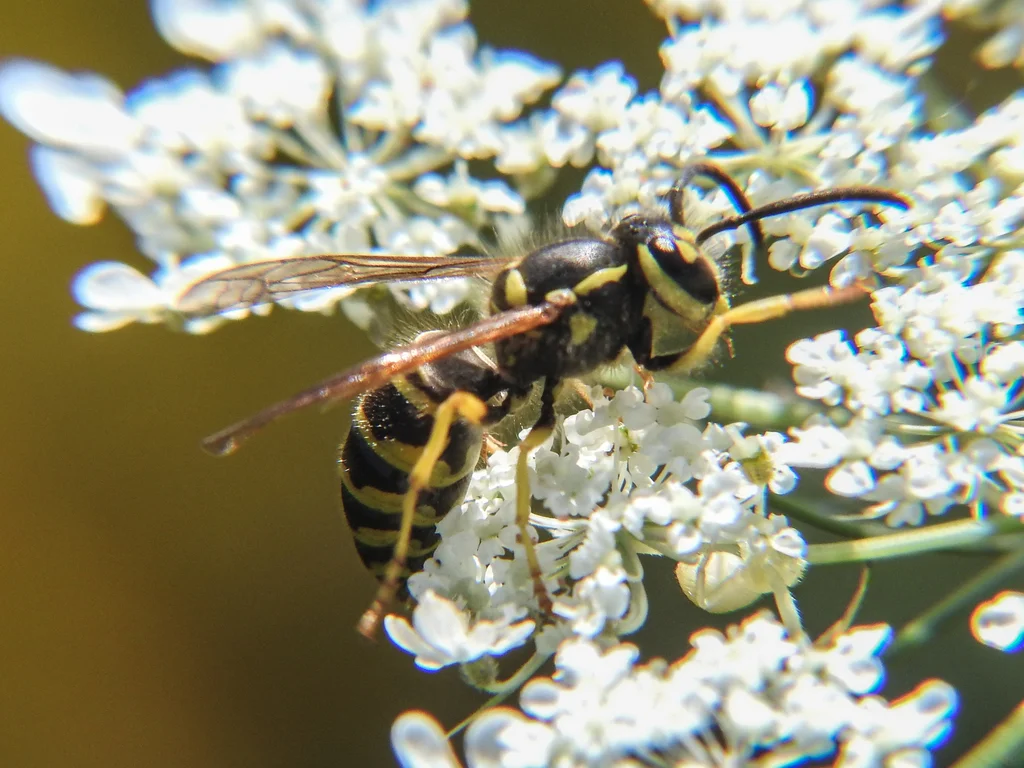
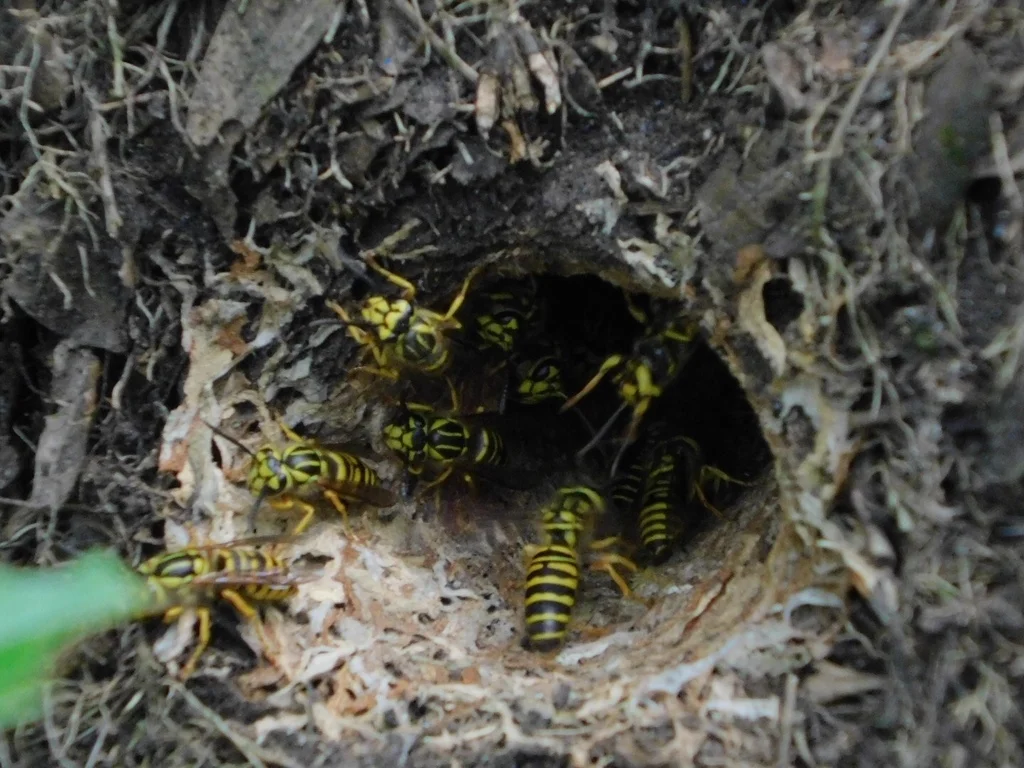
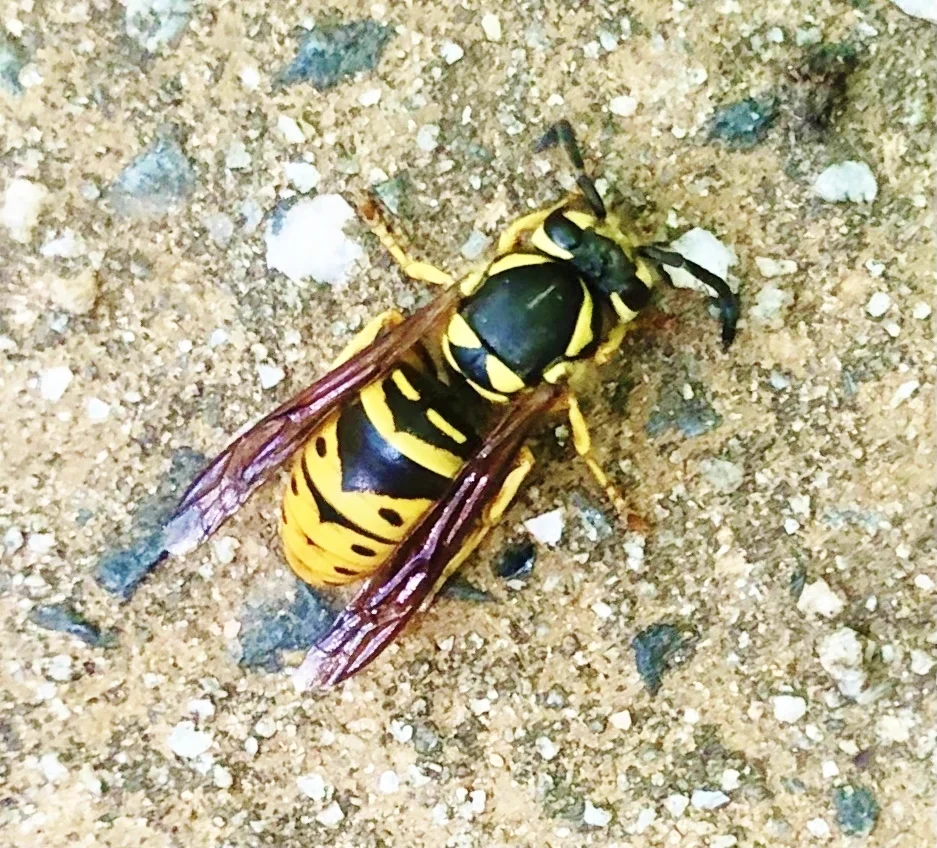

The good news is that a ground nest is easy to deal with once you know it’s there. Here’s what that looks like on a real job.
One yellow jacket job I helped on was at an HOA. The nest was at ground level, right where residents walked, and people were worried about getting stung. Nobody had been hit yet, and that’s the best time to deal with it.
We treated the underground nest at intervals instead of all at once. A few days later, we came back and dug up the dead nest to make sure nothing had moved back in. That kind of follow-up is the difference between “it seems quiet” and knowing the colony is gone. It also beats the alternative, which is someone running a mower over that hole in September.
If you’ve spotted yellow jackets going in and out of a hole in your yard, don’t wait for someone to step on it.
What to Do After Multiple Yellow Jacket Stings
If someone takes several stings, here’s a simple order of operations. This isn’t medical treatment advice. It’s about getting the right help fast, based on the sources above.
Move away from the area quickly. Yellow jackets defend the nest, and the alarm pheromone keeps drawing more workers. Get indoors or well away before you do anything else. Brush off any yellow jackets still on clothing, since they can keep stinging.
Look for any body-wide signs: hives away from the stings, swelling of the lips, tongue, or throat, trouble breathing, wheezing, dizziness, or vomiting. If any of these show up, call 911. If the person has a prescribed epinephrine auto-injector, use it as directed.
Get a rough count of the stings. Doctors use the number to decide what to test. A child’s weight matters too, since the guideline is one sting per kilogram.
For one or two stings with no allergy signs, watch closely and follow your doctor’s usual advice for sting pain and swelling. For several stings, Cleveland Clinic advises seeing a healthcare provider right away, even without an allergy. For dozens of stings, or more than 1 per kg in a child, go to the ER for lab work, even if the person feels okay.
One more thing helps a lot at the doctor’s office.
If the swelling from a sting keeps growing over the next couple of days, our guide on wasp sting swelling after 48 hours explains which patterns are typical and which need a doctor.
How to Lower the Odds of a Mass Sting
The best way to avoid a dangerous number of stings is to deal with the nest before someone finds it the hard way. Here’s what helps:
- Walk the yard in July and August. Watch for a steady stream of yellow jackets flying in and out of one spot in the ground, a wall gap, or a shrub.
- Flag the hole. Mark it so nobody mows, trims, or plays near it.
- Don’t plug the entrance or pour things into it. Blocking a ground nest can send yellow jackets out another exit, or into a house if the nest is in a wall void.
- Keep food and trash covered at cookouts in late summer, when yellow jackets switch to scavenging.
- Get the nest treated. Our yellow jacket nest removal service handles ground nests, wall voids, and nests in shrubs. Our licensed technicians wear protective gear and use EPA-registered products.
If you’re not sure whether you’re looking at yellow jackets or another wasp, our yellow jacket vs. paper wasp guide helps you tell them apart. Paper wasps are far less likely to swarm you. For other species, our broader stinging insect control covers hornets, paper wasps, and more.
The Bottom Line on Dangerous Yellow Jacket Stings
For someone with a venom allergy, one yellow jacket sting can be dangerous. For everyone else, the risk climbs with the count. Several stings mean a call to your doctor. More than 50 stings in an adult, or more than 1 per kg in a child, means lab work even if you feel fine. And because muscle and kidney damage can show up days later, “I feel okay” isn’t the all-clear after a mass sting.
The real fix is upstream: find and remove the nest before anyone mows over it. Our family has been doing pest control in Northern Virginia and Maryland for 58 years, and yellow jackets are one of the stinging insects we deal with most. If you’ve spotted one, call us at 703-683-2000 or email info@bettertermite.com for an estimate.