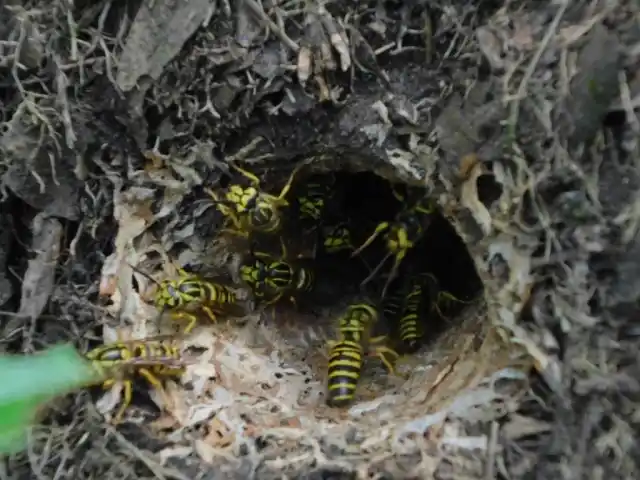

No, don’t pour gasoline into a yellow jacket nest in the ground. It’s an old backyard “trick.” University extension experts warn against it every year. Gasoline vapor can catch fire. The fuel soaks into your soil and maybe your groundwater. It isn’t a legal pesticide. And it often doesn’t even kill the whole colony. Instead, you end up with a contaminated patch of lawn and a nest full of angry survivors.
There are better options. You can mark the nest and have it treated at night with a product that’s actually labeled for wasps. Or, if it’s late fall and the nest is out of the way, you can wait for cold weather to finish it off. I’m a licensed technician at Better Termite, and I’ve seen plenty of ground nests around Northern Virginia and Maryland. Below, I’ll walk through why gasoline backfires and what works instead.
Why People Pour Gasoline on Yellow Jacket Nests
I get why people try it. A yellow jacket nest in the ground is scary. It’s usually right where you mow, garden, or let the kids play. Basically, someone’s grandfather did it, it seemed to work, and the tip got passed down. Today it also shows up in online forums and short videos.
The problem is that “it seemed to work” leaves out a lot. It leaves out the fire risk, the fuel left in the soil, and the colonies that survived. Extension services in Virginia, North Carolina, Kentucky, and the Pacific Northwest all give the same answer. Don’t do it.
4 Reasons Not to Use Gasoline on a Ground Nest
1. Fire and Explosion Risk
Gasoline is a motor fuel, not a bug killer. The Maryland Department of the Environment puts it simply: use gasoline as a motor fuel only. It also warns that gasoline vapors are heavier than air and can travel along the ground to an ignition source.
That matters in a yard. A ground nest is often near a deck, a grill, a lawn mower, a shed, or an air conditioner. Additionally, the CPSC, the federal agency that tracks consumer product injuries, lists “exterminating insects” among the common misuses of gasoline. It also says fires and explosions are the chief hazards of using it the wrong way.
Lighting the nest on fire is even worse. Virginia Cooperative Extension says not to try to smoke or burn yellow jackets out. Burning fuel can spread through dry grass and leaves. It can flash back at you or reach your house. And the yellow jackets that fly out will go after whoever is closest.
2. Soil and Groundwater Contamination
Whatever you pour into the hole doesn’t stay in the hole. Gasoline soaks into the soil, kills the grass and roots around it, and can keep moving down. According to the CDC’s ATSDR, gasoline contains more than 150 chemicals, including benzene.
It doesn’t take much to cause a problem. The Alabama Department of Environmental Management estimates that one gallon of gasoline can contaminate about 750,000 gallons of water. That agency also notes that many people use gasoline to kill weeds and fire ant beds, which is exactly the kind of use it’s warning against. This is especially worth thinking about if your home gets its water from a private well.
3. It’s Not a Legal Pesticide
Anything you use to kill a pest counts as a pesticide in the eyes of the law. The EPA defines a pesticide as any substance intended to prevent, destroy, repel, or reduce a pest. Gasoline isn’t registered for any pest use. The Pacific Northwest Insect Management Handbook is written by university experts in Oregon, Washington, and Idaho. It says pouring gasoline, diesel, or paint thinner into nests is dangerous, harmful to the environment, and illegal.
Locally, there’s a second issue. Virginia law prohibits discharging oil onto land in the Commonwealth, and the state code defines oil to include petroleum products. In Maryland, the same MDE fact sheet says never to dispose of gasoline by pouring it onto the ground, and notes that improper disposal can carry fines.
4. It Often Doesn’t Kill the Colony
This is the part the old-timers leave out. University of Kentucky entomologists write that “folk” remedies like dousing nests with gasoline are seldom successful and can result in multiple stings.
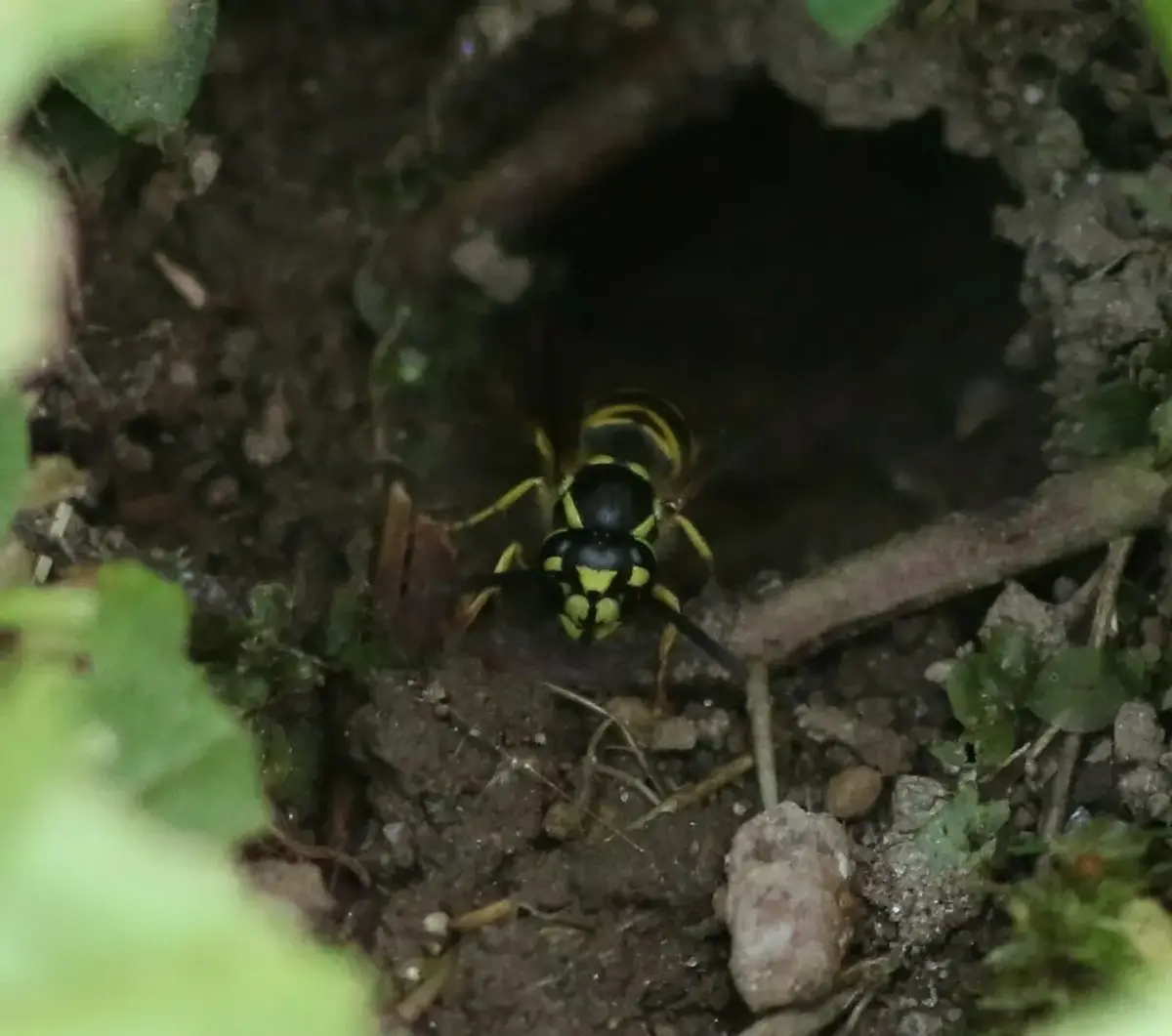
There are a few reasons for that. First, an underground nest isn’t just a hole. It’s a cavity holding a papery nest with several layers of comb. Second, the Virginia Cooperative Extension notes that yellow jacket ground nests often have more than one entrance. Pour into one hole, and workers can come and go through another. Finally, the yellow jackets that are out foraging when you pour come home to find you standing there.
Bigger than most people picture. The University of Florida IFAS describes eastern yellowjacket nests ranging from under 4 inches to about a foot across. The largest one in that study had eight levels of comb and more than 2,800 wasps.
Virginia Cooperative Extension adds a few more details. Yellow jackets can fly about a mile from the colony to forage. Colonies are at their biggest in late summer and early fall. Then the workers die off with cold weather. New queens leave to spend the winter somewhere sheltered, like under loose bark, and start brand-new nests in the spring. The old nest is not reused.
So a late-season nest might have thousands of workers spread through a cavity you can’t see. That’s why a splash of anything into the entrance rarely reaches all of them.
Basically, what you see from the lawn is only a small part of the nest.
What to Do Instead of Using Gasoline
Here’s the honest version of how to deal with a yellow jacket nest in the ground. Which option fits depends on where the nest is, the time of year, and who lives in the house.
Best for: nests near doors, paths, play areas, or anywhere you mow. Also the right call if anyone in the home is allergic.
Extension experts recommend treating yellow jacket nests at night, when the workers are inside and calmer, using a product that’s actually labeled for wasps. Large nests can take more than one treatment. This is the work our yellow jacket nest removal service handles, and we wear protective gear while we do it.
Best for: late-fall nests in an out-of-the-way corner of the yard.
Yellow jacket colonies don’t survive the winter here. According to Virginia Cooperative Extension, the remaining workers die off with cold weather and abandoned nests are not reused the next year. If it’s late October or November and nobody needs to walk past the nest, waiting can be a reasonable choice. Check when yellow jackets come out to see how the season plays out.
Best for: buying time while you decide.
Flag the area, keep kids and pets away, and don’t mow or use a string trimmer near it. Running a mower over a ground nest is one of the most common ways people get stung. Traps can catch some foragers, but extension experts say they won’t eliminate a nest.
How to Handle a Ground Nest Until It’s Treated
If you’ve found a nest and you’re waiting on help, these steps keep you out of trouble.
Watch from several feet away during the day to see where the yellow jackets are flying in and out. Then mark the spot with a flag or stake. Don’t stand in their flight path. Also look for a second entrance nearby.
Tell everyone in the house where the nest is. Hold off on mowing, edging, and yard work in that area. Keep dogs from digging at it.
No gasoline, diesel, bleach, boiling water, fire, or burying. Virginia Cooperative Extension warns against all of them. Basically, anything that disturbs the nest without killing the whole colony just makes the survivors more defensive.
For a nest near your home, or if anyone is allergic, call a professional. We’ll confirm it’s really yellow jackets, treat it, and follow up.
Once the nest is gone, the problem usually goes with it. Yellow jackets start new nests in new spots each spring, so the same hole won’t fill back up next year.
If it is yellow jackets and the nest is close to your house, it’s time to bring in help.
How We Treat Yellow Jacket Nests in the Ground
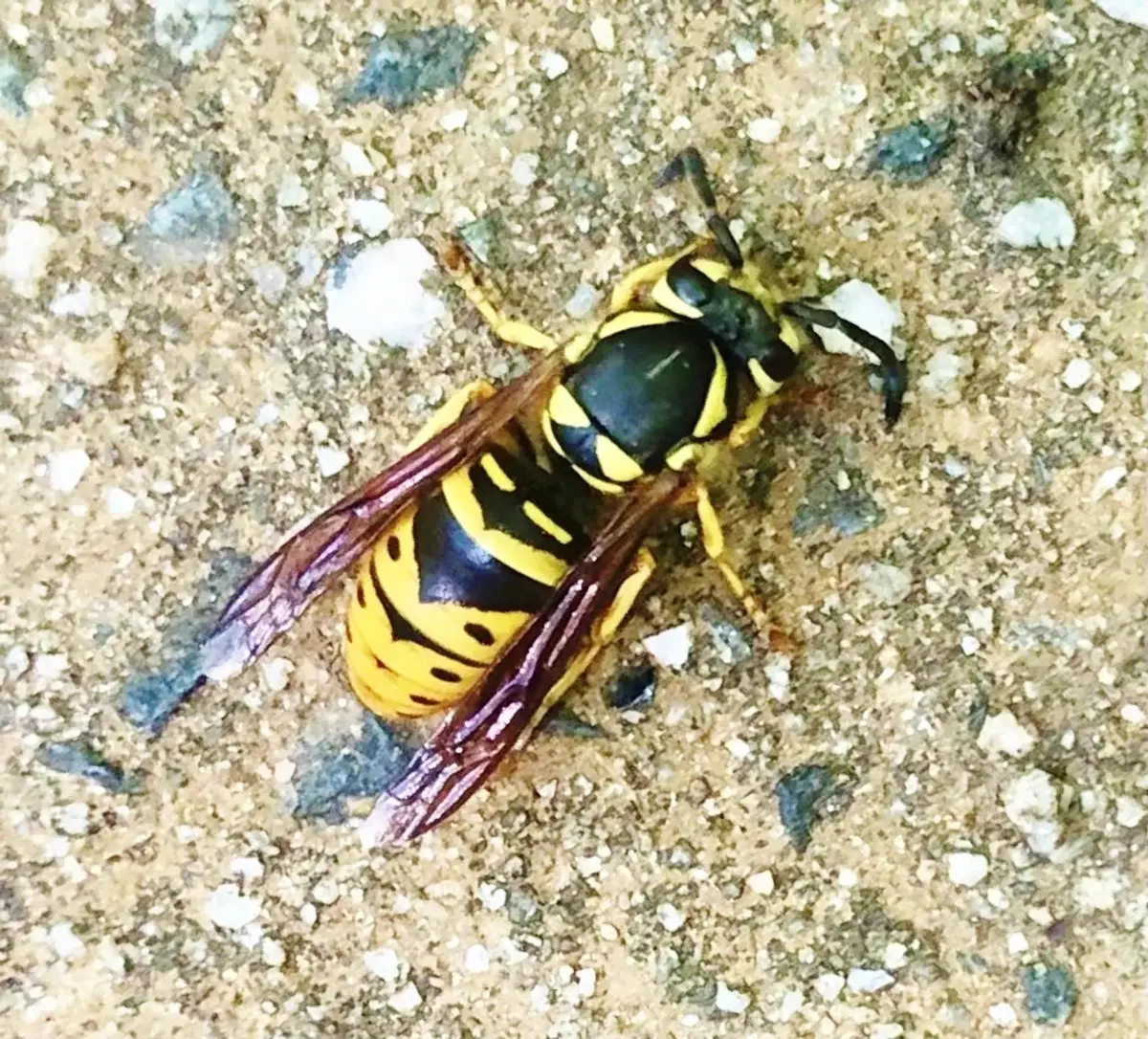
Around the DMV, most ground nests belong to the eastern yellowjacket. The German yellowjacket tends to nest in wall voids and other hidden spaces, which is a different problem. Either way, we start by confirming what we’re dealing with and finding every entrance.
Then we treat the nest with EPA-approved products that have passed through our internal research team. Each one is something we’d feel comfortable using around our own homes. On jobs like the one below, we come back to make sure the nest is done, rather than assuming it is.
One yellow jacket job I helped out on last fall was a ground-level nest in an HOA. The residents were worried about getting stung every time they walked by. Our approach was to treat into the underground nest at intervals. Then we came back a few days later and dug up the now-dead nest to make sure it hadn’t been re-settled.
That follow-up is the part most DIY attempts skip. With a ground nest, you want to know it’s finished, not just quieter for a day.
The key difference is the product. We use treatments that are labeled for wasps and applied by trained hands.
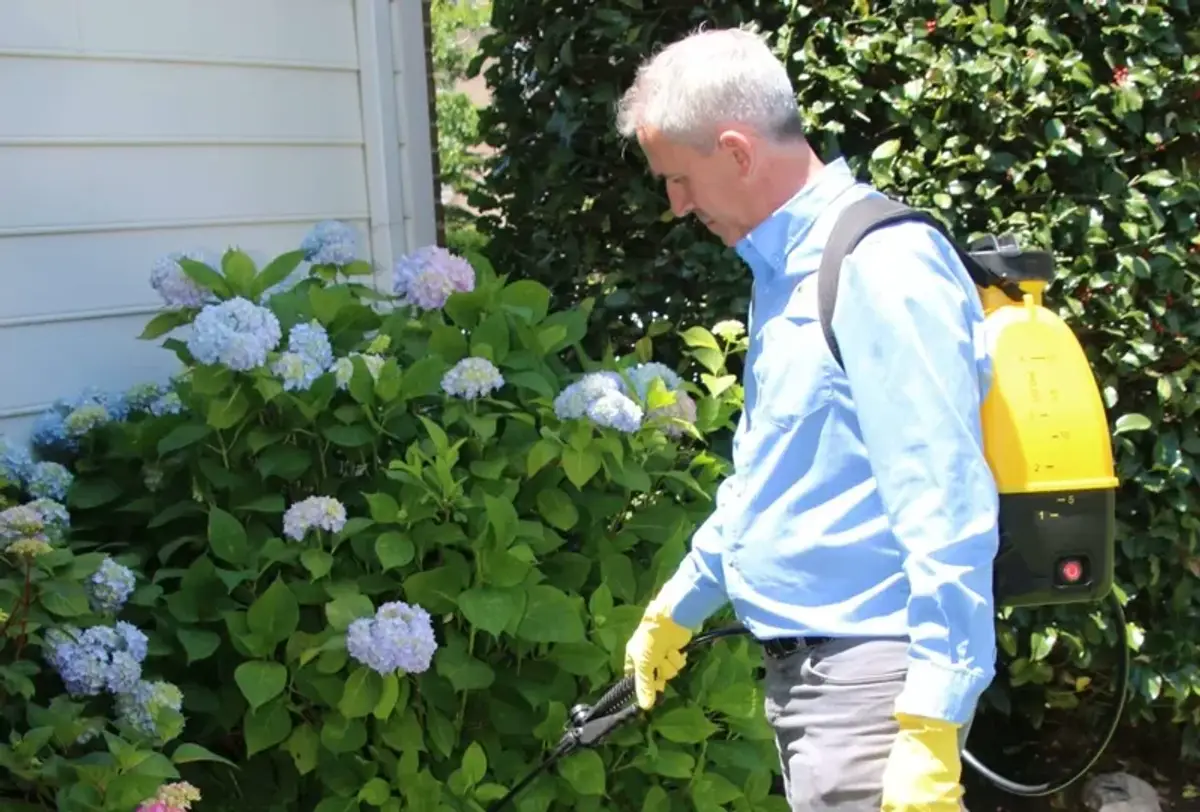
We handle more than ground nests, too. Our wasp control covers paper wasps around eaves and porches, and our stinging insect control covers the full range of what you might find in a Northern Virginia or Maryland yard.
If You Get Stung
Disturbing a ground nest, with gasoline or a lawn mower, is one of the most common ways people end up with multiple stings. Yellow jackets can sting more than once, and they defend the nest as a group.
For more on sting risk, read how many yellow jacket stings are dangerous. And if a sting is still bothering you days later, see why a yellow jacket sting won’t stop hurting.
The Bottom Line
Pouring gasoline into a yellow jacket nest in the ground is a gamble with bad odds. The vapors can catch fire. The fuel gets into your soil and maybe your water. It isn’t a legal pesticide. And it often leaves part of the colony alive. Extension experts from Virginia to the Pacific Northwest all say the same thing: don’t do it.
Instead, mark the nest, keep people away, and have it treated with a product made for the job. Or, if it’s late fall and the nest is tucked out of the way, let the cold weather finish it. With 58 years in the business and 1,800+ reviews across our locations, we’ve handled a lot of ground nests. Call us at 703-683-2000 or email info@bettertermite.com with questions or for an estimate.