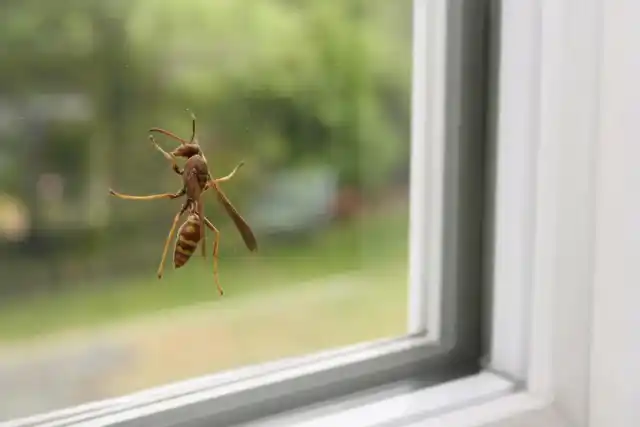

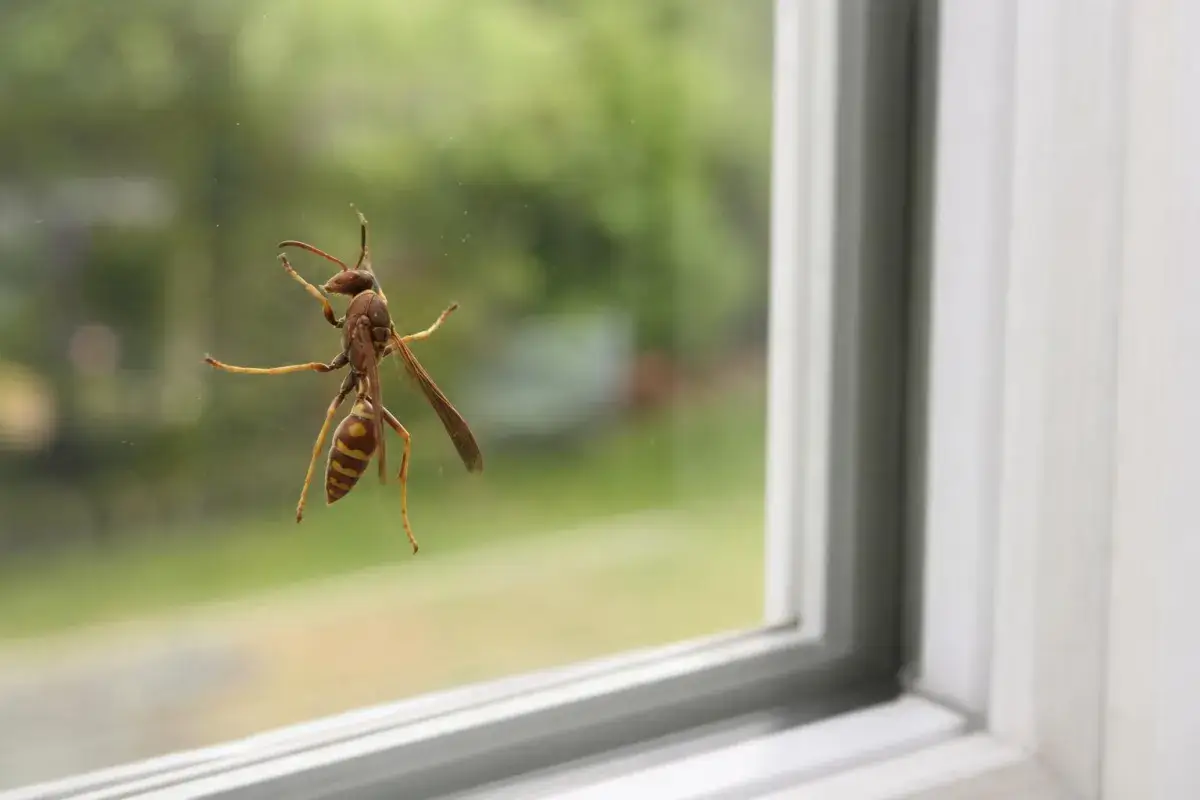
If you kill a wasp in your house, usually nothing happens. The wasp dies, and that’s the end of it. Killing a wasp does not send out a call that pulls more wasps in from outside. That only happens when the nest is close by, because the alarm scent a crushed wasp gives off works over a short distance.
The better question is why the wasp was inside at all. One wasp by an open door is a stray. However, wasps that keep turning up in the same room often mean a nest in the wall or attic. In my experience, nests are most common here in spring and again at the end of summer, and that’s when these calls come in.
Does Killing a Wasp Attract More?
Not inside your house, in almost every case. The idea comes from something real, though, so it’s worth explaining.
Social wasps like yellow jackets defend their nest as a group. They use a scent, called an alarm pheromone, to call for backup. Washington State University, quoting a USDA research entomologist, explains that when a yellow jacket is smashed, its venom sac releases that alarm chemical. Stinging releases it too. The same article is clear about the catch: a swat can bring out a wasp’s co-workers “if a nest is nearby.”
That last part is what matters in your kitchen. The scent has to reach other wasps from the same colony. A wasp that wandered in through a door is alone. No nestmates are in the room, so no one answers.
Researchers have tested this directly. In a study published in Florida Entomologist, eastern yellow jacket workers showed alarm responses to a target treated with an extract of the wasp’s sting apparatus. The eastern yellow jacket is one of the most common species in Virginia and Maryland.
Virginia Tech’s entomology lab puts it in plain terms: yellowjackets release an alarm pheromone when attacking, which excites other nestmates to attack intruders as a group.
Notice what both describe. The response comes from workers at or near the nest. Nothing in the research suggests wasps track the scent across a yard and into a closed house.
When Killing a Wasp Does Bring More
There are two situations where swatting really can make things worse:
- You’re next to the nest. That includes a nest you can’t see. If wasps are coming out of a wall, a light fixture, or an attic hatch, the colony is a few feet away. Crushing wasps there can stir up the rest.
- You’re outside near a ground or eave nest. Swatting at a yellow jacket by its nest entrance is how people end up with a lot of stings at once. Our guide on how many yellow jacket stings are dangerous covers what to do if that happens.
So the rule is simple. One wasp in a room, far from any nest, is fine to kill. A stream of wasps coming from one spot is a nest problem, and swatting won’t solve it.
What One Wasp in the House Usually Means
What a wasp indoors means depends a lot on the time of year. Basically, summer wasps are workers and cold-weather wasps are queens.
Most likely: a queen waking up. Queens that spent the winter tucked into your attic, wall, or window frame get active on the first warm days. Some head toward the light inside instead of outside. The University of Minnesota Extension notes that wasps you see indoors at this time are not coming from an active nest. They’re coming from a shelter.
Killing a queen in spring means one less nest started on your house this year.
Most likely: a stray worker, or a nest close by. One wasp that came in through a door or a torn screen is just lost. It will usually go straight to a window.
Repeat wasps are different. Colonies are at their biggest from late summer into early fall. If you’re finding wasps in the same room every day or two, something is leading them inside. That is usually a gap from a wall void, attic, or soffit nest.
Most likely: a queen looking for shelter. Once it turns cold, the workers die off. Only new queens survive, and they look for protected places to wait out winter. Attics and wall voids are common picks. When the heat kicks on, a few may wander into the living space. They tend to be slow and sluggish.
These queens aren’t guarding a nest, so they rarely sting unless you press on one.
How to Tell a Stray From a Nest
Here’s what I’d look for before deciding it’s nothing:
- How many, and how often. One wasp once is a stray. Three or four in the same room in a week is a pattern.
- Where they show up. Wasps near a recessed light, a ceiling fan, a bathroom vent, or a window frame often came through that opening.
- What you hear. A low hum or a crackling sound in a wall or ceiling on a warm afternoon points to a colony.
- What’s happening outside. Stand back and watch that side of the house for ten minutes. A steady line of wasps using one gap means a nest inside.
If those signs line up, read our guide to a wasp nest in the wall before you do anything else.
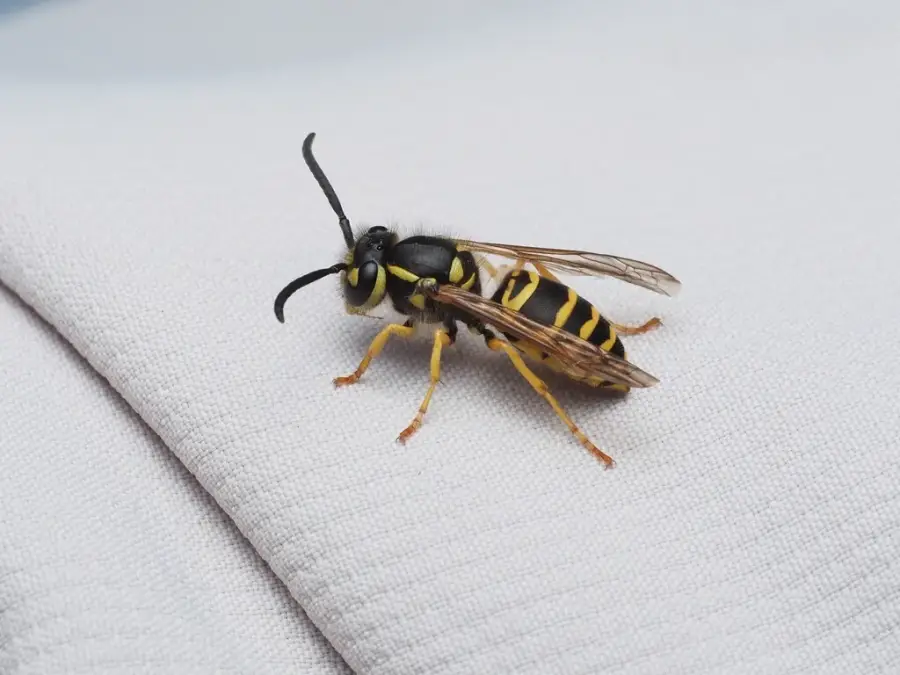
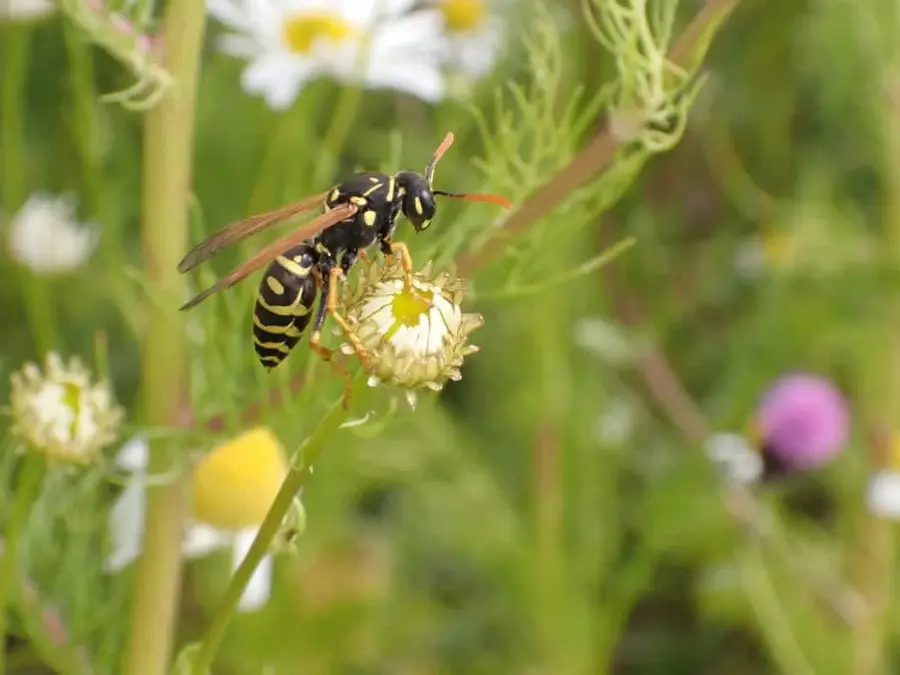
It also helps to know which wasp you have. According to the University of Maryland Extension, a paper wasp nest holds around 20 to 75 members at its peak, while large yellow jacket nests may contain thousands of workers. A few paper wasps slipping in from a nest by the window is a small problem. Yellow jackets coming out of the drywall is not. If you can’t tell them apart, our yellow jacket vs paper wasp comparison shows the difference.
How to Deal With a Wasp Indoors
You have two good options, and neither one involves spray. I’d skip the aerosol can for a single wasp, because you end up with insecticide in the air and on surfaces for no real gain.
Wasps fly toward light. Close the doors to the room, turn off the lights, and open one window with the screen out. Most of the time the wasp finds its own way out within a few minutes.
If it’s sitting on a window, put a glass over it, slide a piece of stiff paper underneath, and carry it outside. If you’d rather kill it, use a fly swatter and make the first hit count. A vacuum hose also works well, especially for slow wasps in winter.
Pick up the dead wasp with a paper towel or vacuum it. Don’t use bare fingers. Then throw it out. There’s no scent trail you need to wash away.
Make a note of the room and the date. If more wasps turn up in the same spot over the next week, check outside for a gap they’re using, and look at light fixtures and vents inside.
One caution on the cleanup step, because it catches people off guard.
What Not to Do If Wasps Keep Coming In
When several wasps show up indoors, most people do the two things that make it worse.
Don’t plug the hole. It feels like the obvious fix, but it backfires. Penn State Extension says German yellowjacket nests are usually in attics, wall voids, and other open parts of a building, and by fall they usually hold 1,000 to 3,000 workers. If those workers can’t get out the usual way, they may chew through the inside wall and come out in your living space.
Don’t spray into the gap from inside. A can of wasp spray won’t reach a nest that sits a foot or more back in the wall. It mostly drives the wasps toward the room you’re standing in.
Daren, one of our technicians, puts it this way: yellow jackets in a wall void are a big deal, because if you treat it wrong you can push them into the house.
One yellow jacket job I helped on involved a ground nest in an HOA common area. The residents were worried about getting stung just walking by. We treated the underground nest at intervals rather than all at once. Then we came back a few days later and dug up the dead nest to make sure nothing had settled back in.
That job comes to mind when someone tells me they’ve been swatting wasps in the same room for two weeks. Killing the ones you can see doesn’t touch the colony. The nest is the problem, and it has to be treated at the source.
Cold-weather wasps are a different case. There’s no live colony to treat, so the fix is keeping next year’s queens out.
When to Call a Professional
One wasp doesn’t need a pest control company. I’d call when:
- You’ve had several wasps in the same room within a week or so.
- You can hear buzzing or crackling in a wall or ceiling.
- Wasps are coming out of a light fixture, vent, or gap in the drywall.
- Someone in the home is allergic to stings.
- The nest is high up, inside a wall, or you can’t find it at all.
Wasp nests can be tricky to treat without getting stung, and our licensed technicians often wear protective equipment when they get close to one. For a hidden nest, we find the entrance the wasps are using, treat the nest through it, and leave that opening alone until the activity stops. All the products we use are EPA approved and have passed through our internal research team. You can see how the service works on our wasp control page, or read about wasp nest removal if you already know where the nest is.
The Bottom Line
If you kill a wasp in your house, you’ve killed one wasp. No others are coming because of it. What you should pay attention to is whether it happens again. One is a stray. A pattern is a nest, or in the cold months, queens that moved in for the winter.
Better Termite & Pest Control has worked on stinging insect problems around Alexandria and the rest of Northern Virginia for 58+ years. If wasps keep showing up inside and you’d like a second set of eyes, call us at 703-683-2000 or email info@bettertermite.com.