
If your yellow jacket sting won’t stop hurting, the most likely reason is a large local reaction. That’s swelling that keeps building for a day or two after the sting, and the swelling is what keeps the spot sore. The sharp pain itself usually fades within a couple of hours. Less often, a sting that hurts more after a few days has become infected, and that needs a doctor.
Call 911 right away for trouble breathing, swelling of the face, lips, or throat, hives spreading across the body, dizziness, or fainting. Those are signs of a body-wide allergic reaction, and they can’t wait. I’m a licensed technician at Better Termite, not a doctor. We deal with yellow jacket nests every late summer and fall, and people ask us about their stings all the time. So this guide pulls straight from medical and allergy sources to help you figure out what’s going on and who to call.
Why a Yellow Jacket Sting Won’t Stop Hurting
Most yellow jacket stings follow the same path. There’s a burning jab, a red welt, and then the pain fades. Cleveland Clinic notes that the pain can last around one to two hours. It also says yellow jacket stings are the most common insect sting in the United States.
So when the pain is still there hours or days later, something besides the venom’s first hit is usually driving it. In practice, there are four common reasons.
1. A Large Local Reaction
This is the big one. A large local reaction is an allergic swelling that spreads outward from the sting. The AAAAI and ACAAI practice parameter lays out the pattern. The swelling usually starts growing 6 to 12 hours after the sting. It keeps growing for 24 to 48 hours. Then it goes down over 3 to 10 days. It’s often larger than 10 cm (about 4 inches) and can cover a whole arm or leg.
That swelling is why a sting can hurt more the next morning than it did the night before. The skin gets tight, warm, and tender. However, the same allergy experts say these reactions are generally not dangerous, and they are not the same thing as an infection.
2. Scratching and Irritation
Yellow jacket stings itch as they heal. Scratching keeps the spot raw, and it also opens the door to germs. Basically, the more you scratch, the longer it stays sore.
3. A Secondary Infection
Infection after a sting is uncommon, but it does happen. A Children’s Wisconsin clinical guideline notes that yellow jacket stings are more likely to get infected than other stings. It adds that most infections come from scratching. The key clue is timing. Infection is a concern when redness, swelling, and pain get dramatically worse three to five days after the sting, right when a normal reaction should be fading.
4. More Than One Sting
Unlike honey bees, yellow jackets don’t lose their stinger. The Virginia Cooperative Extension points out that each female yellow jacket can give multiple painful stings. They also release an alarm scent when they attack, which pulls in more of the colony. So if you stepped on a ground nest, you may have more stings than you realize, and each one adds to the soreness.
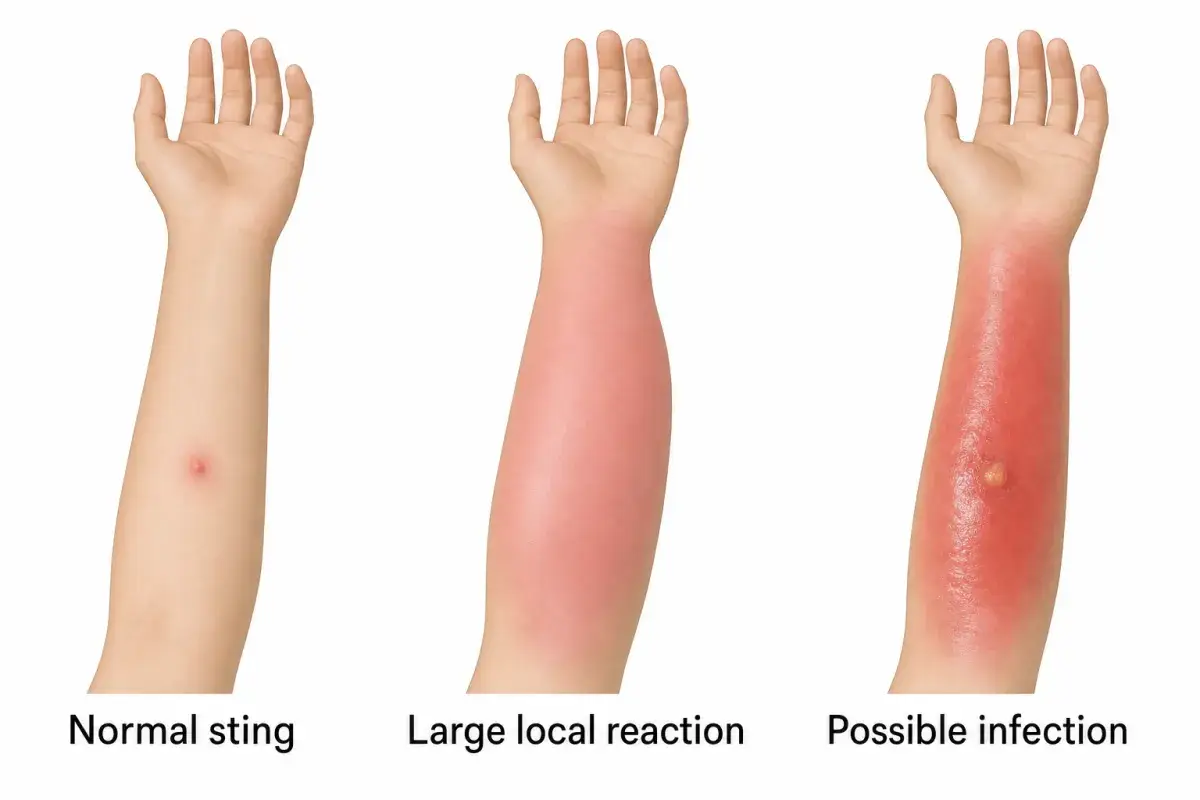
The tricky part is that a large local reaction and an infection can look alike at first. Both can be red, warm, and sore. Timing is usually the best clue, which is why the timeline below matters.
Wasp venom is a mix of chemicals built to cause pain. A 2022 review in Biomolecules describes a kinin-like peptide in wasp venom as a pain-inducing molecule. The venom also contains mastoparans, which trigger cells in the skin to release histamine. Histamine is a big part of the itching and swelling that follows. It also has an enzyme called hyaluronidase. That enzyme breaks down hyaluronic acid, a substance that helps hold skin tissue together.
In other words, the first sharp pain comes from the venom itself. The longer-lasting soreness mostly comes from your body’s reaction to it.
Yellow Jacket Sting Pain: A Typical Timeline
Everyone heals a little differently. Still, here’s roughly what medical sources describe for a sting that’s healing normally, and the point where it’s time to call a doctor.
A sharp, burning pain and a red welt at the sting. This is also when a body-wide allergic reaction would usually start. Trouble breathing, throat swelling, or spreading hives means call 911.
The sharp pain fades for most people. A sore, itchy bump stays behind.
If you get a large local reaction, the swelling builds in this window. The area may ache, feel tight, and feel warm. This is the most common reason a yellow jacket sting won’t stop hurting.
Swelling and tenderness slowly go down. Itching often outlasts the pain.
If the sting is getting worse now instead of better, with more redness, more pain, pus, or a fever, see a doctor. That pattern can point to infection.
What Helps a Yellow Jacket Sting Stop Hurting
The standard home care is simple. According to MedlinePlus, from the U.S. National Library of Medicine, you should:
- Wash the sting with soap and water. This helps lower the chance of infection.
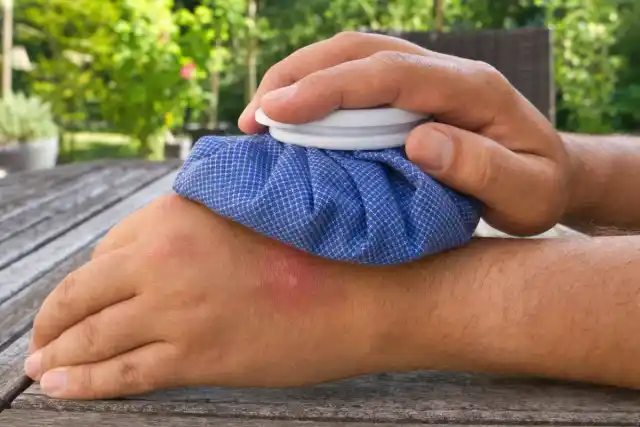
- Use ice wrapped in a washcloth for 10 minutes on, then 10 minutes off.
- Take an antihistamine or use an anti-itch cream to calm the itch and swelling.
- Watch the area over the next several days for signs of infection.
The American Academy of Dermatology adds that over-the-counter pain relievers like acetaminophen or ibuprofen can help with the pain. If the sting is on an arm or leg, keeping it raised can also help the swelling. Check with a pharmacist or your doctor about which medicines and doses are right for you, especially for kids or anyone on other medications.
When a Yellow Jacket Sting That Won’t Stop Hurting Needs a Doctor
Lingering soreness by itself is usually not an emergency. However, some signs mean you should stop waiting it out. The guidance below comes from the medical sources cited in this article. It’s not a diagnosis, so when in doubt, call your doctor.
See a Doctor Soon If:
- The pain, redness, or swelling gets dramatically worse three to five days after the sting
- You see pus or fluid draining, or red streaks spreading
- You have a fever or chills
- The pain is stronger than the itch and isn’t easing with home care after a day or two
- You were stung many times. Cleveland Clinic advises seeing a provider right away after multiple yellow jacket stings, even without an allergy
- The sting is in the mouth or throat
- The swelling was very large or unusually painful. The American College of Allergy, Asthma and Immunology says an unusually painful or very large local reaction may need medical attention
It’s also worth knowing that big swelling isn’t automatically an infection. The allergy practice parameter cited above notes that antibiotics usually aren’t needed unless there’s clear evidence of infection, like fever, chills, or sweats. That’s a call for your doctor to make, not something to guess at.
Severe reactions are rare, but they’re real. The CDC reports an average of 72 deaths per year from hornet, wasp, and bee stings in the U.S. from 2011 to 2021. If you’ve had a big reaction before, ask your doctor whether you should see an allergist. For more on that risk, read our guide on how many yellow jacket stings are dangerous.
Why Yellow Jacket Stings Spike in Late Summer and Fall
If you got stung in September or October, you’re not alone. In Virginia, yellow jackets are a nuisance from late summer until early autumn, because that’s when colonies are at their largest. More workers means more stings. They also get more defensive around the nest and more interested in sweet drinks, trash cans, and cookout food.
Around the DMV, the stings usually come from the eastern yellowjacket, which nests in the ground, and the German yellowjacket, which often nests in wall voids and crawl spaces. Not sure what stung you? Our yellow jacket vs. wasp guide shows how to tell them apart from paper wasps, and our yellow jacket vs. hornet guide covers the bigger look-alikes. You can also check when yellow jackets come out to see how the season builds.
One yellow jacket job I helped out on last fall was a ground-level nest in an HOA common area. The residents were worried about getting stung every time they walked past. Our approach was to treat into the underground nest at intervals. Then we came back a few days later to dig up the dead nest and make sure it hadn’t been re-settled.
That’s the piece most people miss after a sting. The sting heals, but the nest is still there. And with yellow jackets, a nest you step on once is one you’ll likely step on again.
Stop the Next Sting: Deal With the Nest
If you were stung in your own yard, there’s probably a nest close by. Yellow jackets often nest in the ground, under decks, in shrubs, or inside walls. Spraying a store-bought can into a ground hole or a wall gap often sends angry workers out at you, or pushes them deeper into the house.
That’s where our yellow jacket nest removal service comes in. Our licensed technicians find the nest, treat it with EPA-approved products that have passed through our internal research team, and follow up to make sure it’s gone. We also handle wasp control for paper wasps and hornet nest removal for the bigger aerial nests. If you’re not sure what you’re dealing with, our stinging insect control covers it all.
The Bottom Line
A yellow jacket sting that won’t stop hurting is usually a large local reaction, not an emergency. The sharp pain fades in a couple of hours, while the swelling and soreness can take several days to settle. Cold packs, washing the spot, and over-the-counter relief are the standard home care. However, a sting that gets much worse three to five days later, drains pus, or comes with a fever needs a doctor. And any trouble breathing, throat swelling, or spreading hives means call 911 right away.
Once you’re feeling better, deal with the nest so it doesn’t happen again. With 58 years in the business and 1,800+ reviews across our locations, we’ve handled a lot of yellow jacket nests around Northern Virginia, DC, and Maryland. Call us at 703-683-2000 or email info@bettertermite.com with questions or for an estimate.