
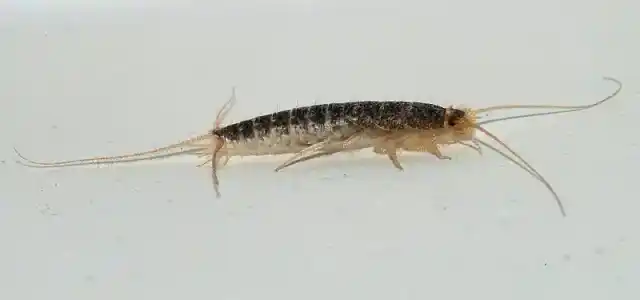

Silverfish are caused by damp air and something starchy to eat. Most species need humidity above 75%, so they settle in bathrooms, basements, laundry rooms, and crawl spaces, then feed on paper, glue, and fabric. They come from outdoors or ride in on boxes and books. Seeing them doesn’t mean your house is dirty. It means some part of it is too wet.
I’ve been doing pest control in Northern Virginia, DC, and Maryland since 2015, and silverfish calls almost always trace back to one damp room. Silverfish don’t bite or sting, but they chew up books and wallpaper and multiply when the conditions are right. Here’s what causes them, where they come from, and what actually makes them go away.
What Causes Silverfish? The Six Usual Suspects
These are the causes I see most, roughly in the order they matter:
- High humidity. Silverfish need humid air to survive and breed. A room that sits above 75% humidity, like a bathroom without a working fan, is the top cause.
- Leaks and standing moisture. A dripping trap under the sink, a sweating cold-water pipe, or basement seepage gives them a steady water source.
- Paper and starch to eat. Book bindings, wallpaper paste, cardboard, stored papers, and cotton or linen fabric are all food.
- Clutter and cardboard storage. Stacks of boxes give them dark, undisturbed hiding places right next to their food.
- Stuff brought in from storage. Boxes, used books, and papers from a damp basement, garage, or storage unit can carry silverfish and eggs straight into dry rooms.
- Outdoor habitat against the house. Thick mulch, leaf litter, and woodpiles near the foundation keep a population close to the cracks and gaps they use to get in.
If you fix only one of these, fix the humidity. The rest of this guide goes through each cause in more detail.
Where Do Silverfish Come From?
Silverfish come from outside first. Virginia Cooperative Extension notes that outdoors they live under rocks and bark and in leaf litter, and they move indoors looking for better conditions. University of Maryland Extension says the same thing: most silverfish are found outdoors, and they become pests once they get in.
They get inside two main ways:
- They crawl in. Silverfish squeeze through small cracks around pipes, foundation walls, and window and door frames. Common entry points include laundry rooms, crawl spaces, and areas where plumbing enters the house.
- They ride in. They hitch rides on books, cardboard boxes, and fabric items from damp storage. University of California Agriculture and Natural Resources adds that large numbers can invade new homes from surrounding wild areas and can come in on lumber and wallboard.
Once inside, they set up near moisture and food sources before spreading. For more, see our guide on silverfish in bathrooms.
Why Am I Suddenly Seeing Silverfish?
Most people who search this have had silverfish for a while. Something changed that pushed them into view. The usual triggers:
- A humid stretch. DMV summers are sticky, and an unconditioned basement can climb well past 75% humidity in July and August, and silverfish get bolder and easier to spot.
- A new leak. A slow drip behind the toilet or under the vanity can bring them out in a room where you never saw one before.
- Boxes came out of storage. Moving, holiday decorations, or a box of old books from Grandma’s basement are a classic start.
- Something got disturbed. Renovation, a basement clean-out, or pulling up old carpet exposes hiding spots, and the silverfish scatter into living space.
- You’re up at night. They’re nocturnal. If you’ve started getting up for a late glass of water, you’ll see the ones that were always there.
If you keep finding them in the same room week after week, that room has a moisture problem worth finding.
What Causes Silverfish in Bathrooms
High humidity is the main thing that draws silverfish to your bathroom. They need moisture to live and do best in 75 to 95% humidity. Your bathroom stays humid from showers, baths, and poor airflow.
Leaky pipes create the damp spots silverfish love most. Even small drips from faucets give them the steady moisture they need. Condensation on pipes adds to the problem.
Poor ventilation makes it worse. Without good airflow, moisture gets trapped. If you don’t run an exhaust fan or dehumidifier, you’re making your bathroom a welcoming spot for silverfish.
What Causes Silverfish Throughout Your Home
Beyond the bathroom, several things can trigger a silverfish problem. Cluttered storage areas filled with cardboard give them both shelter and food. Our family business has served the DMV for 58+ years, and we see silverfish issues most often in homes with packed storage and high humidity.
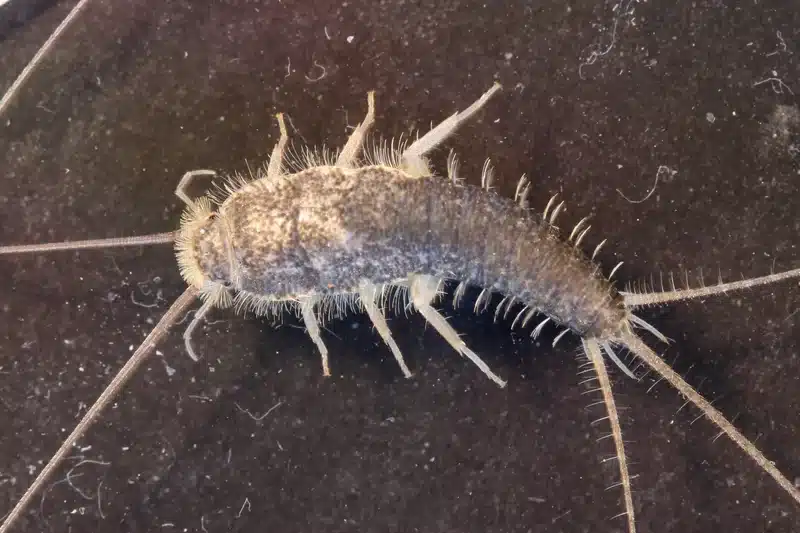
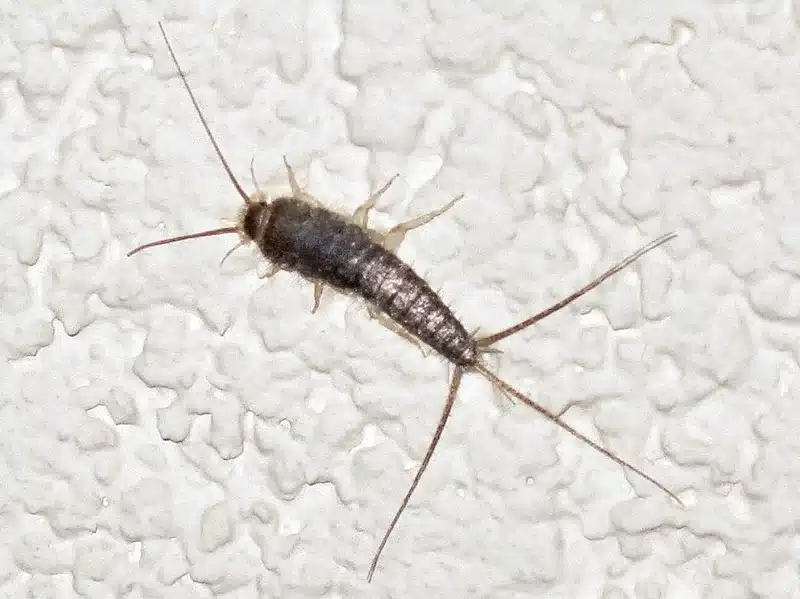

These insects go after starchy food throughout your home. They eat wallpaper paste, book glue, fabric sizing, and even dead insects. They’re especially drawn to natural fibers like cotton, linen, and silk.
The humid climate in Virginia, Maryland, and DC gives them good conditions for much of the year. Basement seepage, crawl space moisture, and poor ventilation all add to the problem. Older rowhouses and homes with stone or block foundations tend to have damp basements, which suits silverfish well.
Silverfish Humidity and Temperature: The Numbers That Matter
Humidity decides whether a room can hold a silverfish population at all. That’s why it’s the most useful thing to control.
According to University of California Agriculture and Natural Resources, silverfish do best between 71 and 90 degrees F, and at the higher end of that range the relative humidity must be above 75%. Development speed depends on the conditions: silverfish can mature in as little as 60 days in warm rooms, but it can take up to 500 days when it’s below 50 degrees F.
University of Maryland Extension notes that silverfish prefer damp, cool places such as basements, laundry rooms, and under sinks. In the DC area, summer mornings often run above 75% humidity, so untreated basements and crawl spaces here sit right in the range silverfish need.
People often tell us their house isn’t damp. Daren, one of our registered technicians, runs into this all the time with moisture pests. He has customers set up a hygrometer, a small gauge that reads humidity, and plenty of times a customer who swears the house is dry gets a reading of 72%. You want to be around 45 to 50%. His advice for most moisture pests is a dehumidifier before any chemical, because fixing the condition goes further than a spray.
Temperature is a smaller lever, but it matters for individual items. Freezing can clear silverfish from books, documents, and stored fabrics without chemicals; see the FAQ below for the time and temperature. Firebrats break the “cool and damp” rule. They like hot spots near furnaces and water heaters, so a dehumidifier alone won’t move them.
Practical target: keep a digital hygrometer in the basement and any problem room, and hold relative humidity near 45 to 50% year-round.
Does Having Silverfish Mean Your House Is Dirty?
No. Silverfish show up in spotless homes all the time. They point to moisture and stored paper, not to crumbs or poor cleaning. A tidy house with a damp basement full of cardboard boxes is a better silverfish home than a messy one with dry air. Decluttering helps, but only because it takes away hiding spots and food like old newspapers and boxes.
How to Identify Silverfish
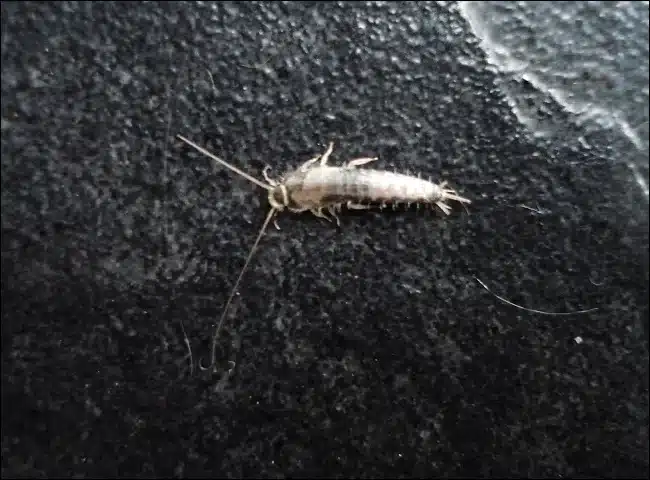
Silverfish have fish-like bodies covered in silvery scales. They’re about 1/2 to 1 inch long with two long antennae and three tail-like parts. They wiggle when they move, which is how they got their name.
They’re most active at night. You’ll usually spot them when you flip on a light and they dart away. They squeeze into tight cracks and crevices during the day.
In our region, the most common types include the common silverfish and four-lined silverfish. The larger, duller gray silverfish also turns up in homes. Firebrats are related but prefer warmer spots near water heaters and furnaces. Young silverfish look like small, pale adults; our guide to silverfish larvae shows what they look like. Earwigs sometimes get mistaken for them, and our earwig vs silverfish comparison covers the differences.
Signs of Silverfish
The most obvious sign is seeing them run across bathroom floors or getting stuck in sinks and tubs. You’ll see them most often at night when they’re active.
Watch for:
- Irregular holes and surface scratches on books and papers
- Yellow stains and small notches in wallpaper
- Pepper-like droppings on shelves and in storage areas
- Shed scales and yellowish skin fragments in hidden spots
Our technicians often find these clues during inspections of homes with tiny brown bugs in bathroom complaints.
What Silverfish Eat
Their diet explains why they show up in certain rooms. Silverfish feed on starch, cellulose, and certain proteins. They eat wallpaper paste, book glue, fabric sizing, and the starch in clothing.
They also eat dead insects, paper, cardboard, and some synthetic fabrics. Starving them out isn’t realistic: Virginia Cooperative Extension says they can live almost a year without food if they have water. That’s another reason moisture control beats cleaning alone. Our silverfish diet guide lists everything they’ll eat.
How to Prevent Silverfish
Moisture control is your best weapon. Use a dehumidifier to keep humidity near 45 to 50%, especially in basements and bathrooms. Of everything on this list, it does the most.
Store books, papers, and seasonal clothes in sealed plastic bins instead of cardboard boxes. This cuts off food sources and protects your things.
Seal cracks around baseboards, install door sweeps, and fix leaky pipes. Outside, pull mulch and leaf litter back a few inches from the foundation. Daren’s short list for keeping most pests out is the same: pull the mulch away from the house, keep the yard maintained, and run a dehumidifier in any basement or damp area.
DIY Control Methods
Traps and Monitoring
Place sticky traps along baseboards and in damp areas. These catch individual insects and help you track the problem. Focus on bathrooms, basements, and other humid spots.
Vacuum regularly in cracks, behind appliances, and along baseboards. This removes eggs, shed scales, and food debris.
Lower Humidity
Run exhaust fans during and after showers. Improve attic ventilation. In our humid DMV climate, whole-house dehumidification makes a real difference.
Dust Treatments
Apply food-grade diatomaceous earth in cracks where silverfish travel. This natural powder damages their outer shell, causing them to dry out. Reapply after cleaning or moisture events since it stops working when wet.
Professional Treatment
When DIY isn’t enough, especially with widespread infestations, professional help is the next step. Our team offers pest control in La Plata and throughout the DC metro area.
When to Call a Pro
Call when you find silverfish in multiple rooms or notice real damage to books, fabrics, or wallpaper. Established populations usually need a professional silverfish treatment that reaches the wall voids and cracks where the rest of the population is sitting. Silverfish are covered under our recurring pest plans, which start around $49 a month plus a $200 setup fee on the first visit.
What We Do
Our technicians use targeted gel baits along with residual treatments in wall voids and crack-and-crevice areas, using products like silica gel dust. Where the bait goes matters. A lab study on long-tailed silverfish found that spreading indoxacarb gel bait along all the edges of an area killed about four times as many as clustering it in the middle. Leaving bait in place longer and removing competing food also helped.
All products are EPA-approved and vetted by our research team.
Keeping Silverfish Away Long-Term
Regular checks of problem areas and steady humidity control prevent silverfish from coming back. Replace cardboard storage with plastic bins. Keep storage areas organized for good airflow.
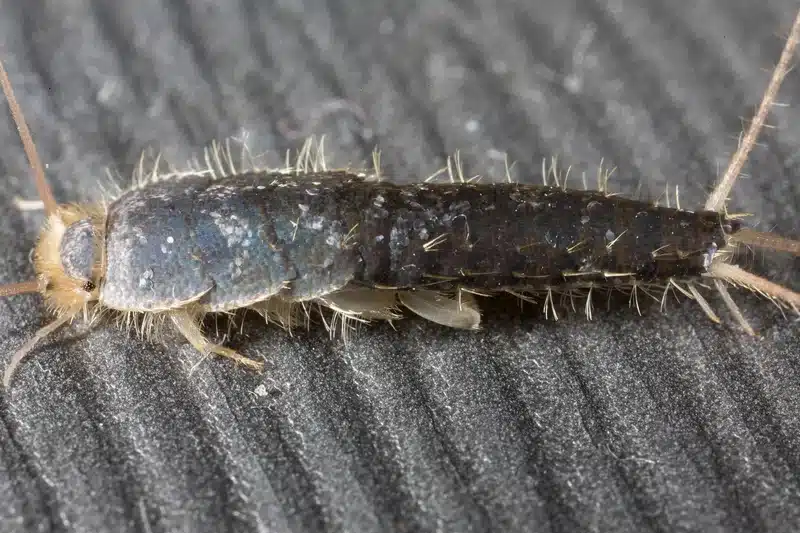
Like other moisture-loving pests such as millipedes and centipedes, silverfish come back whenever the damp does. Get the humidity down first, then deal with the ones already inside.
If silverfish won’t go away, call us at 703-683-2000 or email info@bettertermite.com for expert help tailored to your home.