
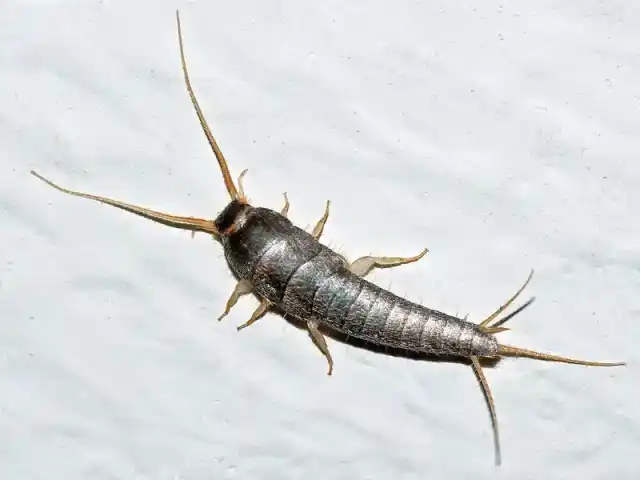

If you’ve spotted tiny white specks darting across your basement floor or bathroom baseboards, you might be looking at silverfish larvae. These cream-colored insects are often the first sign of a growing pest problem.
In my four years as a registered technician, I’ve seen how catching these pests early makes all the difference. Our family business has served homes across Virginia, Maryland, and DC for over 50 years. Finding and treating silverfish larvae early prevents a minor issue from becoming a major infestation.
What Are Silverfish Larvae?
Silverfish larvae are the young nymph stages of silverfish. These wingless insects belong to the order Zygentoma. The most common species is the silverfish (Lepisma saccharinum), but you may also see gray silverfish, four-lined silverfish, or firebrats.
Silverfish don’t go through a cocoon stage like many insects. Instead, the young look like tiny versions of adults from the start. They go through many molts, getting bigger each time.
What makes them tough to deal with: adults can live 6 to 8 years and keep molting their entire lives. The full cycle from egg to adult takes 3 months to 3 years, depending on conditions.
How to Identify Silverfish Larvae
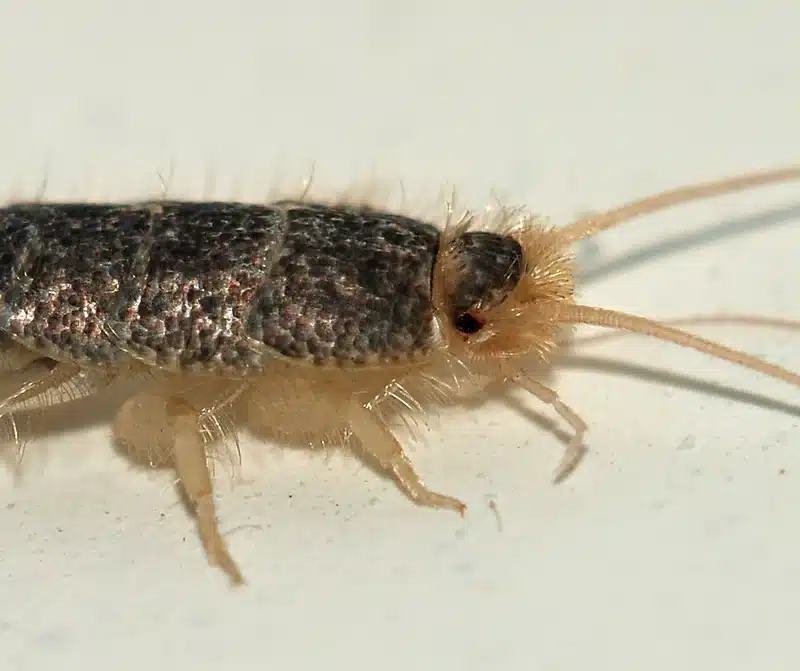
First-stage larvae are pale cream-white and see-through, only 2 to 3 mm long. They lack the silver scales that give adults their name. They have large heads and short antennae for their size.
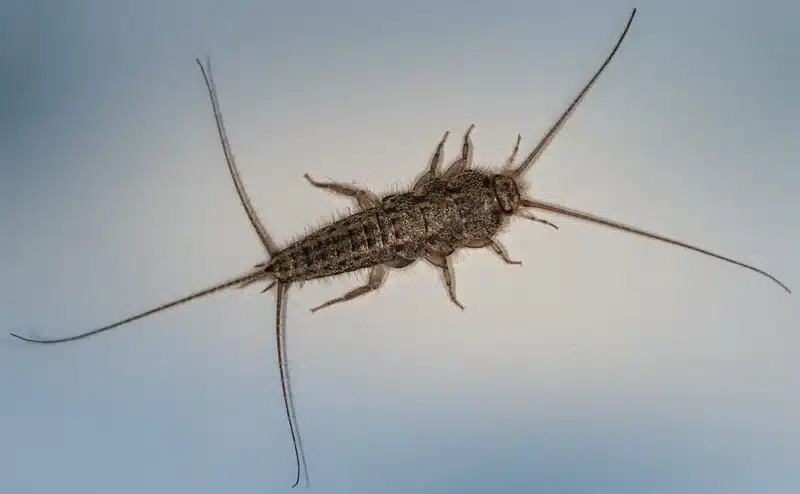
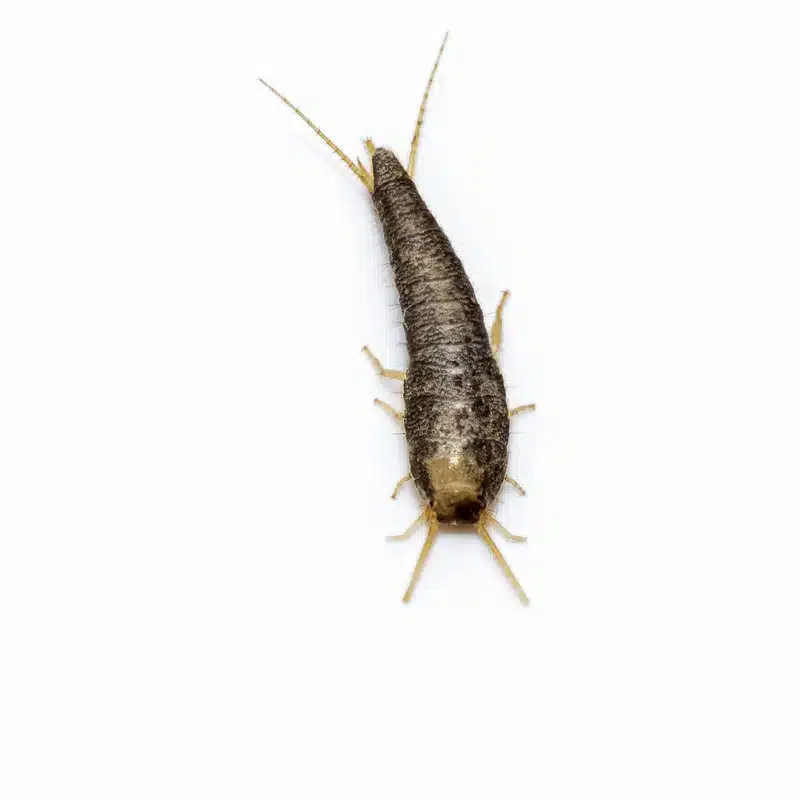

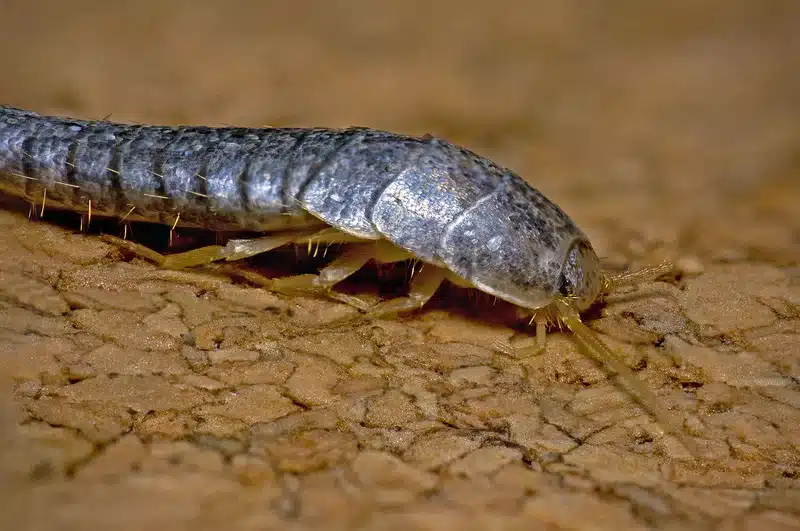
As larvae grow, their bodies get longer and darker. The silver scales don’t show up until around the fourth molt. Early detection means looking for these scale-less, cream-colored nymphs.
Many homeowners mistake young silverfish for tiny brown bugs in bathrooms or think they’re just moving dust. Their quick, darting movement is the giveaway.
Their three tail-like parts (two side pieces and one center piece) are much shorter than on adults. This is another clue when trying to ID young vs mature silverfish.
Where They Live
Silverfish larvae need humidity between 75% and 95%. They hide in cracks, under cardboard, behind baseboards, and in other tight, damp spots.
According to the University of Florida, common silverfish prefer 72 to 81°F. Gray silverfish can handle cooler temps (46 to 77°F). Firebrats need it above 90°F.
In the DMV, basement humidity often tops 70% in summer. This is perfect for silverfish. Even in winter, they find damp pockets behind walls near plumbing.
They eat the same things as adults: starches in paper, book bindings, and wallpaper paste. They also eat protein from pet food and fabric fibers like rayon and linen.
Signs of an Infestation
Detecting silverfish early means knowing what clues to look for beyond the insects themselves. They’re small and see-through, so you might miss them if you’re not looking closely.
Watch for:
- Dark pepper-like droppings on shelves and in storage areas
- Yellowish shed skins where larvae have molted
- Etching marks on paper and book bindings
- Small holes in fabric
This mix of dark droppings and pale shed skins often shows up before you spot the actual bugs. The Virginia Cooperative Extension notes that damage often appears before homeowners know they have a problem.
How to Monitor
Sticky traps are the best tool. Place them along baseboards, under sinks, inside bookcases, and anywhere you suspect activity. Check weekly. If you’re catching more than 5 per week, it’s time to act.
Nighttime checks work well since silverfish are most active in the dark. Use a flashlight behind stored items, especially around damp cardboard.
Egg clusters look like tiny crumbs tucked into cracks. Females lay 2 to 50 eggs at a time, often between cardboard and damp floors.
Why Early Action Matters
Catching silverfish early makes control much simpler. While they breed slowly, adults live up to 8 years. That means ongoing problems if left alone.
Young larvae are especially vulnerable to changes in their environment. Research shows that keeping humidity below 55% for 2 to 4 weeks kills early-stage larvae through drying out.
I’ve seen this play out in basement jobs. When we catch it in the first year, we can often clear the problem without heavy treatments. Once scaled adults spread through the house, it gets much harder and more costly.
Control Without Chemicals
Cut Humidity
The most effective long-term fix. Run dehumidifiers in basements and crawl spaces. Aim for below 50% humidity.
Fix plumbing leaks, roof drips, and condensation right away. Insulate cold water pipes to stop drips, especially in damp basements.
Change the Habitat
Get cardboard boxes, papers, and fabric storage off the floor and away from walls. This removes food sources and egg-laying spots.
Seal gaps around baseboards, pipes, and window frames with caulk. This blocks hiding and breeding spots.
Physical Removal
Vacuum around cracks, shelves, and behind baseboards to remove eggs and young larvae before they grow protective scales.
For infested books, photo boxes, or textiles, freeze at 0°F for 72 hours. Museums use this method for pest control in collections.
Dust Treatments
Apply food-grade diatomaceous earth or silica gel lightly into wall voids and under cabinets. The University of Maryland Extension recommends these because they work well on freshly molted nymphs with soft outer shells.
Chemical Options
When non-chemical methods aren’t enough, targeted treatments can help. Focus on crack-and-crevice applications using products with bifenthrin, deltamethrin, or cyfluthrin.
Dust formulations work well in wall voids where larvae grow. Boric acid dusts are especially effective when applied in thin layers to areas insects will contact.
For heavy infestations in attics or basements, orthoboric acid baits with 5% or less active ingredient can cut numbers. Always follow label directions and combine with moisture control.
All products we use are EPA-approved and vetted by our research team.
A Full Control Approach
Good silverfish control takes a system, not just one method. Start with inspection and monitoring using sticky traps and nighttime checks.
Next, fix moisture sources and lower humidity throughout your home. Clean up by decluttering and vacuuming eggs and nymphs from hiding spots.
Apply dust treatments or freeze infested items as needed. If traps still catch more than 5 per week after 4 weeks, add targeted chemical treatments.
Keep monitoring for a full 12 months. Silverfish growth can take up to 3 years, so patience matters. Sticking with the plan through multiple seasons is how you get lasting results.
Telling Silverfish from Other Pests
Silverfish larvae get confused with other small household bugs. Unlike centipedes or millipedes, they have only 6 legs.
Firebrats (Thermobia domestica) are close relatives but need much higher temps, usually above 90°F. You’ll find these near furnaces and water heaters, not in cool basements.
The carrot-shaped body and three tails set silverfish apart from earwigs (which have pincers) and springtails (which are much smaller). Knowing what draws different pests helps with prevention. Silverfish go after starchy materials and can feed on many household items.
Professional Help
When silverfish stick around despite your efforts, professional treatment gives you the tools and know-how for full removal. Our technicians can access wall voids and other areas that are hard to treat on your own.
Professional pest control also provides ongoing monitoring and follow-up. Silverfish can live for years, so clearing an established population often takes work over multiple seasons.
For homes in Northern Virginia, Alexandria, Bethesda, and Reston, we’ve built methods that fit our climate and housing types.
If you’re seeing silverfish in your home, early action matters. Call us at 703-683-2000 or email info@bettertermite.com for expert help.