
I’ve been in pest control since 2015 and have helped well over 100 homeowners with termite problems, and Sentricon is the thing people ask me about most. Below are the questions I hear on the phone and at the door, answered the way I’d answer them in your yard.
What Is the Sentricon System?
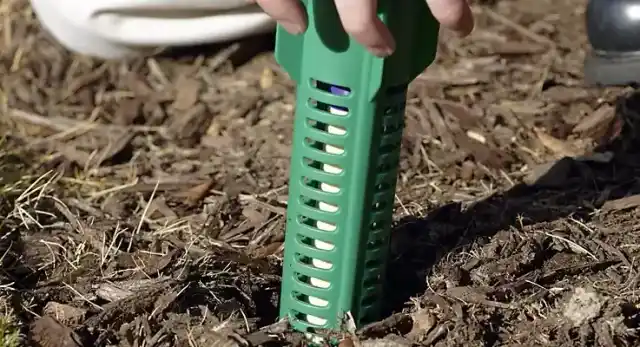
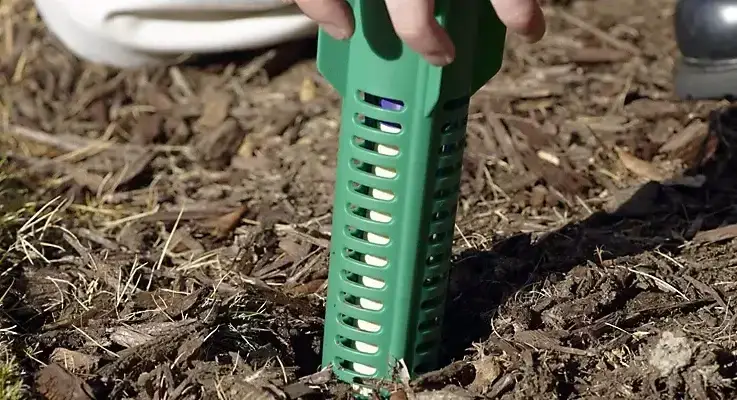
Sentricon is a termite colony elimination system. Small bait stations go into the soil around your house. When subterranean termites find a station, they eat the bait inside and carry it back to the colony. The goal is to kill the whole colony, not just the termites near your foundation.
It has been around longer than most people think. Dow AgroSciences launched it in 1995, and the brand now belongs to Corteva. In 2000 the EPA gave Dow a Presidential Green Chemistry Challenge Award for Sentricon because it puts bait only where termites are feeding, instead of treating large amounts of soil. The EPA also registered it as a reduced-risk pesticide. If you’re looking for the manufacturer’s own site, it’s sentricon.com.
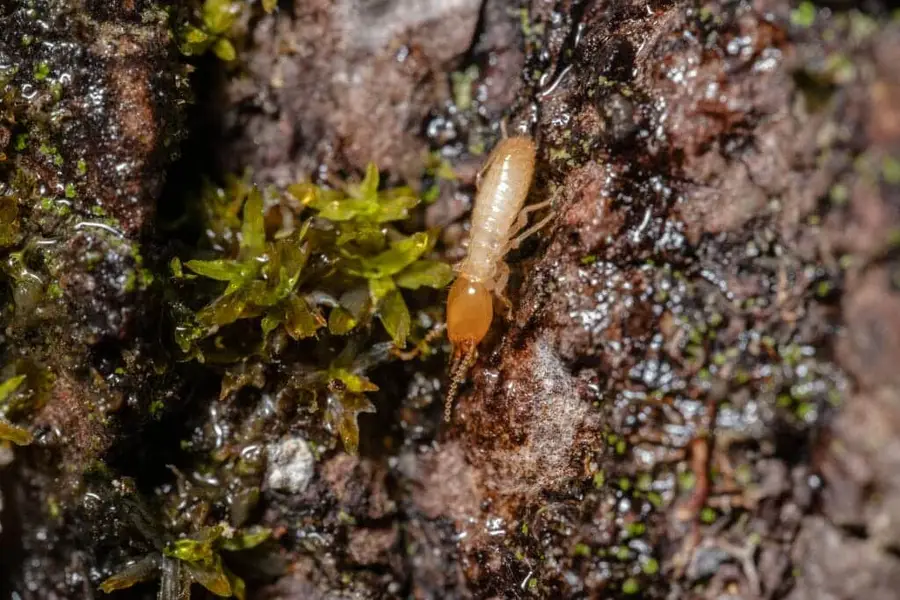
In our area the termite you’re dealing with is almost always the eastern subterranean termite. It lives in the soil and tunnels out to find wood, which is exactly the habit Sentricon is built around.
How Does Sentricon Work?
Here is what happens, step by step:
- Stations go in the ground. A technician places stations in the soil around the house, roughly every 10 feet. No drilling through the slab and no trenching. At an average Alexandria home, installation takes about two hours.
- Foraging workers find a station. Worker termites spend their lives tunneling through soil looking for wood. Sooner or later, one tunnels into a station.
- They eat the bait. Each station holds Recruit HD, a wood-fiber bait made with noviflumuron. Workers treat it like food.
- They share it. Termites pass food mouth to mouth. Workers feed the soldiers, the young termites, and the queen, so the bait spreads through the colony.
- Termites can’t molt. Noviflumuron is an insect growth regulator. It blocks the process termites use to shed their outer shell and grow. When a termite tries to molt, it dies. Over weeks, the colony shrinks and collapses.
- The stations stay. After the colony is gone, the stations stay in the ground as monitors. If a new colony moves in, it runs into a station first.
This bait has been tested on real colonies in the field, not just in lab dishes.
In a study published in the Journal of Economic Entomology (Eger et al., 2012), researchers baited 122 subterranean termite colonies across the U.S. with a 0.5% noviflumuron cellulose bait, the same active ingredient used in Sentricon today. Every colony was eliminated in less than a year. 63% were gone in the first three months, and the average time to elimination was 96 days (median 74 days), even though the researchers only checked the bait every three months.
Does Sentricon Attract Termites to Your House?
No. This is one of the most common worries I hear, and the answer is a clear no. The stations don’t give off a scent or a lure. NC State Extension puts it plainly: termites find bait stations the same way they find any other underground food, like old roots or buried wood. The termites that hit your stations were already foraging near your house. Sentricon just gets to them first.
How Long Does Sentricon Take to Kill Termites?
About three months on average. Most homeowners see clear results in the first three months, and full colony elimination before six. That lines up with the study above, where the average was 96 days.
Two things can stretch that out:
- Discovery time. Nobody can predict how fast termites will find a station. Some colonies hit one in weeks. Others take months.
- Season. Termites slow down in cold or dry soil. In Northern Virginia and Maryland, activity drops over the winter. If you install in the fall, don’t be surprised to see termite swarmers the next spring. That colony was already there, and the bait needs warm-weather feeding to finish the job.
For a longer look at how bait timelines compare with liquid treatments, see how long termite treatment lasts.
Does Sentricon Actually Work?
Yes, when it’s used for the right job. In my experience with 100+ termite customers, installing Sentricon before there’s a problem is usually cheaper and less stressful than treating an infestation later. It has a very high success rate as a preventive system.
It is not the answer for every house, though. When there’s a severe infestation already inside the structure, we’ve found that sometimes the termites never find the stations. They have plenty of food in the house and no reason to go looking. In those cases we do a targeted liquid treatment with a product like Premise or Termidor, and often keep Sentricon in place for the long term.
Most complaints about Sentricon I’ve heard trace back to one of these:
- Expecting instant results. Bait is slow on purpose. If termites died right away, they couldn’t carry the bait home. Weeks of feeding are the point.
- Missed monitoring. NC State Extension calls proper monitoring and maintenance “the key to a successful termite baiting program.” A station nobody checks does nothing.
- Using it alone on an active, heavy infestation. That’s the case above where a liquid treatment belongs in the plan.
How Often Are Sentricon Stations Checked?
On our plans, a licensed termite technician checks the stations once a year. The visit takes 30 to 60 minutes. The tech opens each station, looks for termite activity, replaces bait as needed, and writes up a service report. If we find activity, or there’s a reason to watch more closely, we can come out more often at no extra cost while you’re on the plan.
Between visits you don’t need to do anything. Just don’t dig up or move a station, and let us know if you’re planning work like a new patio or addition that would disturb the soil around the house.
Who Installs Sentricon? Finding a Sentricon Specialist
Only trained, authorized companies can sell and service Sentricon. The manufacturer calls these companies Certified Sentricon Specialists, and the system is registered for professional use only. You can’t buy it at a store and put it in yourself.
We install and service Sentricon across Northern Virginia and suburban Maryland, from Alexandria and Arlington out to Reston and up to Bethesda, Rockville, and Silver Spring. Farther east, homes along the Patuxent get the same stations and yearly checks through our Laurel, MD termite control service. You can see how our service works on our Sentricon termite baiting page.
Can Sentricon Be Used Inside the House?
Yes. The main system goes in the soil outside, but when termites are actively feeding inside, above-ground stations (Recruit AG) can be mounted right where the mud tubes or damage are. That gives the termites bait at the spot where they’re already eating, which can speed things up. The in-ground stations still handle the long-term protection.
Does Sentricon Work on Drywood Termites?
No. Sentricon is built for subterranean termites, which live in the soil and tunnel out to feed. Drywood termites live entirely inside the wood they eat and never forage through soil, so they would never find an in-ground station. Drywood termites are mostly a problem in the far South and West, not in our area. If you’re not sure which you have, see subterranean vs. drywood termites.
Sentricon vs. Liquid Termite Treatment
Both have a place, and we install both.
| Sentricon | Liquid treatment | |
|---|---|---|
| How it works | Bait carried back to kill the colony | Treated soil zone termites can’t cross |
| Installation | Stations in the soil, no drilling | Trenching, and often drilling slabs or stoops |
| Speed | Weeks to months | Fast knockdown |
| Best for | Prevention and early activity | Heavy or active infestations inside |
| Ongoing | Stations stay as monitors, checked yearly | Annual inspection under a warranty |
For many homes, Sentricon alone is the right call. For a house with termites already in the walls, it’s often liquid plus Sentricon. Our termite control page walks through all of our options.
How Much Does Sentricon Cost in Northern Virginia and Maryland?
Sentricon protection with us is starting around $35/month for an average DMV home, plus $200 setup fee on the first visit. Homes with an active infestation, or ones that need a liquid treatment added, cost more. We can usually quote your home over the phone in a few minutes. For a broader look at what termite work costs, see how much it costs to get rid of termites.
Can I Garden Around Sentricon Stations? Are They OK Around Kids and Pets?
You can plant, mulch, and garden around the stations. They sit flush with the soil and most people forget they’re there. The only rule is not to dig them up or move them.
The bait is sealed inside the station under a locking cap. Nothing is sprayed across your yard or beds. That’s a big part of why many parents and pet owners pick Sentricon over a liquid treatment.

What to Do Next
If you already see mud tubes, swarmers, or damage, start with an inspection so you know whether you need bait alone or bait plus a liquid treatment. We do termite inspections in Virginia and in Maryland. If you don’t have termites and want protection before you do, Sentricon is the option I’d look at first.
Call us at 703-683-2000 or email info@bettertermite.com to ask about Sentricon for your home.