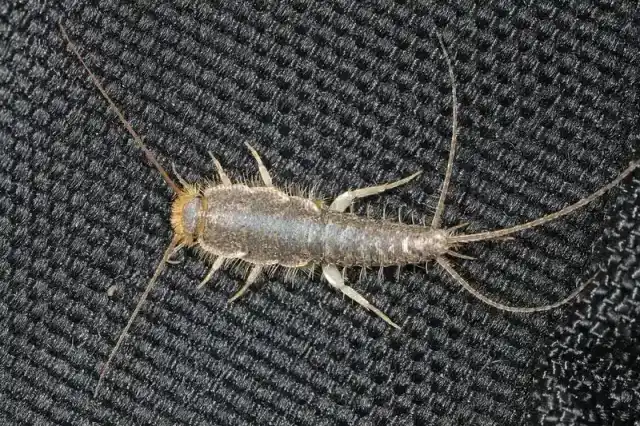

Silverfish holes in clothes are ragged, irregular holes and thin, scraped-looking patches on cotton, linen, rayon or starched fabric, often with yellowish stains nearby. Silverfish are after the starch, sizing and stains, not the fiber itself. So if the holes are in wool, cashmere, silk, fur or felt, silverfish probably didn’t do it. Clothes moths or carpet beetles are far more likely.
That’s the first thing I check when someone shows me a damaged shirt or sweater. What is the fabric, and what’s left behind near the holes? Silk webbing means moths. Bristly brown shed skins mean carpet beetles. No webbing and no skins, just scraped cotton with yellow marks, points to silverfish. Carpet beetles are one of the pests I find most often in homes around the DMV, so they get blamed on silverfish all the time.
Silverfish vs. Clothes Moth vs. Carpet Beetle Damage
Here’s the quick comparison. Start with the fabric column, because it rules out the most suspects fastest.
| Clue | Silverfish | Clothes moths | Carpet beetles |
|---|---|---|---|
| Fabric | Cotton, linen, rayon | Wool, silk, fur | Wool, silk, fur, leather |
| Holes | Ragged, scattered, thin patches | Holes under collars, cuffs | One large damaged area |
| Left behind | Yellow stains, scales | Webbing or tiny cases | Bristly shed skins |
| Where | Damp basements, laundry rooms | Dark closets, attics | Closets, carpet edges |
| Bug seen | Silvery, 1/2 inch, fast | Small tan moth | Tiny round spotted beetle |
One rule does most of the sorting. Clothes moth and carpet beetle larvae eat animal fibers. According to the University of Kentucky, neither one can digest cotton, linen, rayon or synthetic fibers. Those fabrics only get hit when they’re heavily soiled with food stains or body oils. Silverfish are the opposite. They go for plant-based, starchy materials and usually skip clean wool.
What Silverfish Holes in Clothes Look Like
Silverfish don’t chew neat, round holes. They scrape. They graze the surface layers of starch and sizing off the fabric, a little at a time.
Researchers at the Connecticut Agricultural Experiment Station describe this as a characteristic “thinning” of the item. Heavily damaged fabric ends up as thin as tissue, with ragged-edged holes. Additionally, the University of California notes that feeding usually starts in one area and spreads as unconnected, irregularly shaped holes.
So what should you look for? Here are the signs that point to silverfish:
- Ragged, uneven hole edges. Not clean, round holes.
- Thin or see-through patches around the holes, where the surface has been scraped.
- Yellowish stains. The University of Maryland Extension lists yellowish stains on linens, along with droppings, scales and irregular feeding marks.
- Plant-based fabric. Linen is their favorite. Cotton, rayon and some silks come next.
- Starched or stained items. Starched dress shirts, table linens and old stained clothes in storage are the usual targets.
- Damp storage. Damage clusters in basement closets, laundry rooms and bins near bathrooms.
So why does fabric type matter so much? It comes down to what each pest can digest.
Silverfish feed mostly on starch, cellulose and the coatings on paper and cloth, like sizing, glue and some dyes. University of Missouri Extension notes they may damage silk and some synthetic fabrics, but they usually avoid woolens.
Clothes moth and carpet beetle larvae are different. They can digest keratin, the protein in wool, fur, feathers and silk. That’s why a wool coat in a dry attic can get chewed up while a cotton shirt next to it is fine. It’s also why a damp basement full of starched linens gets silverfish damage and no moths at all.
Clothes Moth Damage: Webbing and Cases
Clothes moths are the classic sweater-eaters. The adult moths don’t feed at all. The damage comes from the larvae, which are small, creamy white caterpillars that hide in the fabric.
There are two common species, and each leaves a different calling card:
- Webbing clothes moths spin silken feeding tunnels and mats across the fabric.
- Casemaking clothes moths carry a small, tube-shaped silk case covered in fibers from whatever they’re eating.
A UC clothes moth guide says the cases are about 3/8 inch long. It also notes that damage tends to hide beneath collars and cuffs, and that fabrics with food, sweat or urine stains get hit harder.
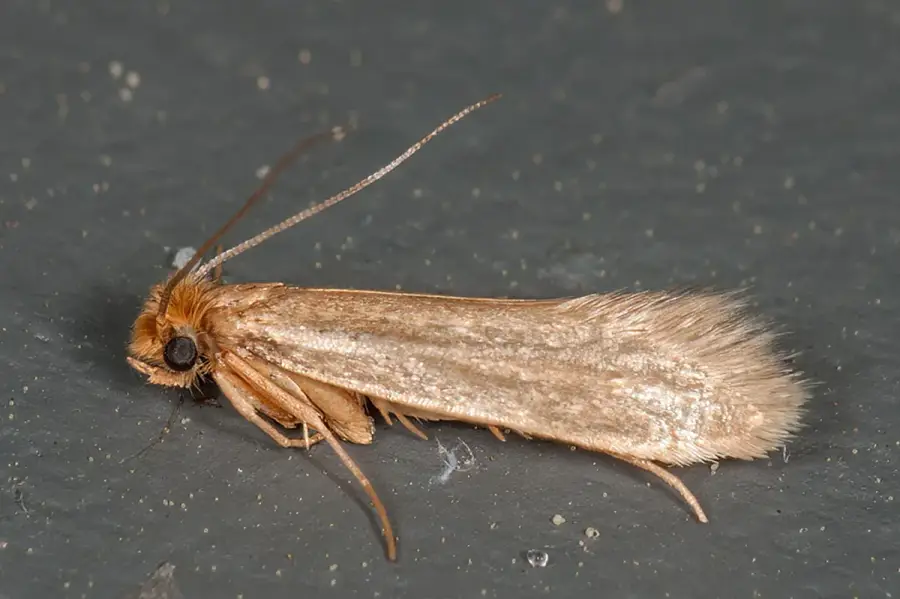
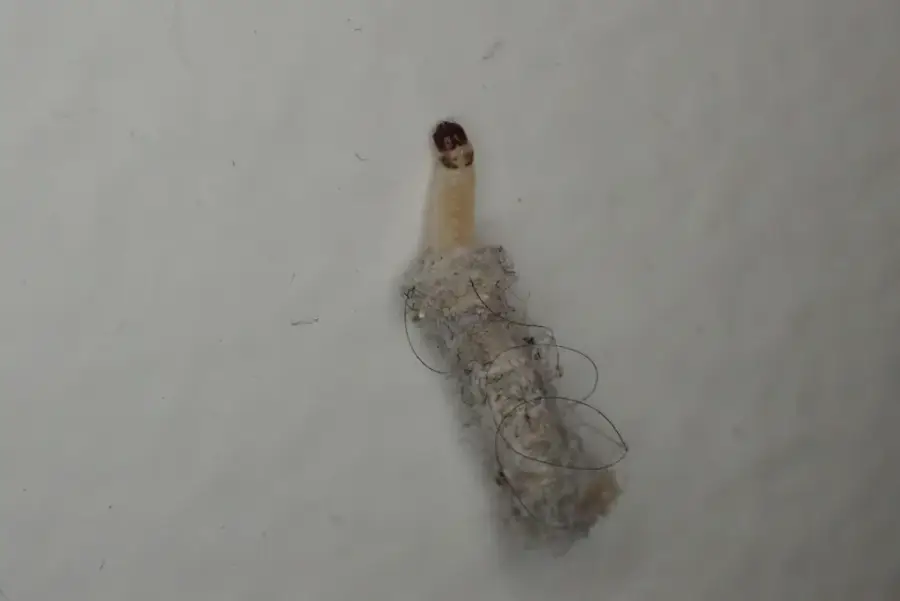
If you see webbing, little cases or tan moths fluttering out of a dark closet, you can stop blaming silverfish. For a deeper dive on the moths you might be seeing, read our guide to pantry moths vs. clothes moths.
Carpet Beetle Damage: Shed Skins, No Webbing
Carpet beetles are the other big fabric pest, and in my experience they’re the one people miss most. The adults are tiny, round and spotted. They often come in on flowers and sit on windowsills. The larvae do the damage.
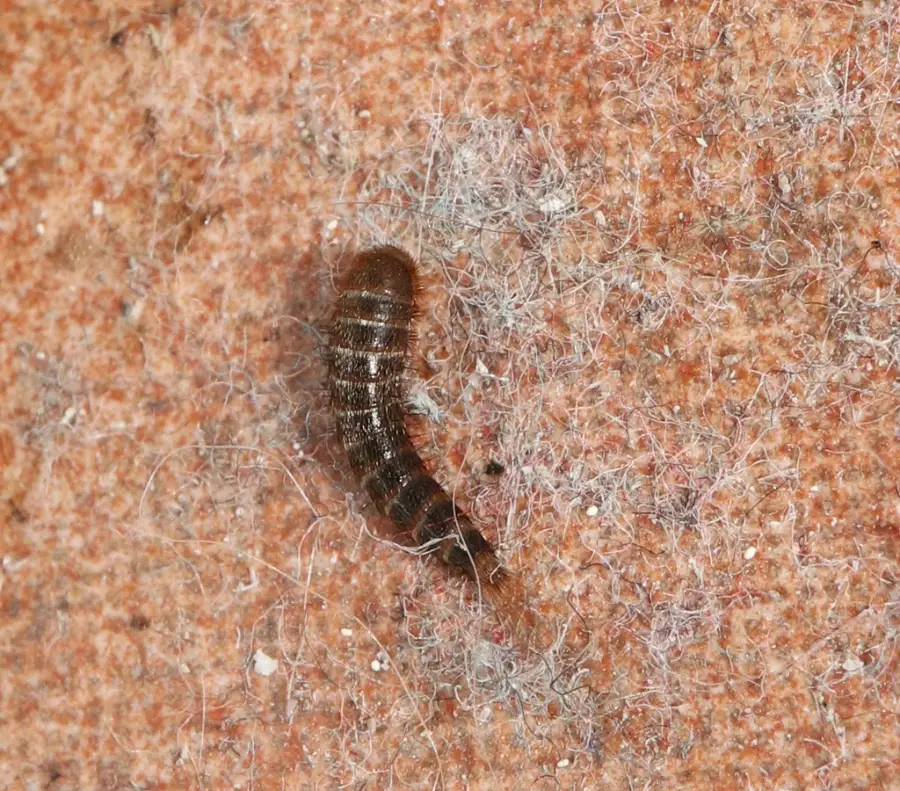
A UC carpet beetle guide points out three tells. Carpet beetles tend to damage a large area on one part of a garment. They leave brown, bristly shed skins behind. And they don’t make webs like clothes moths do.
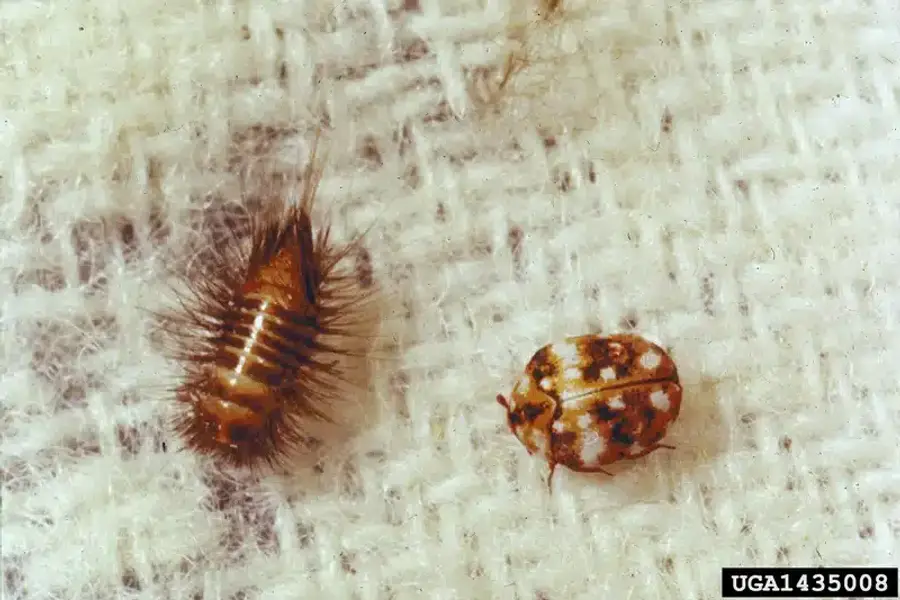
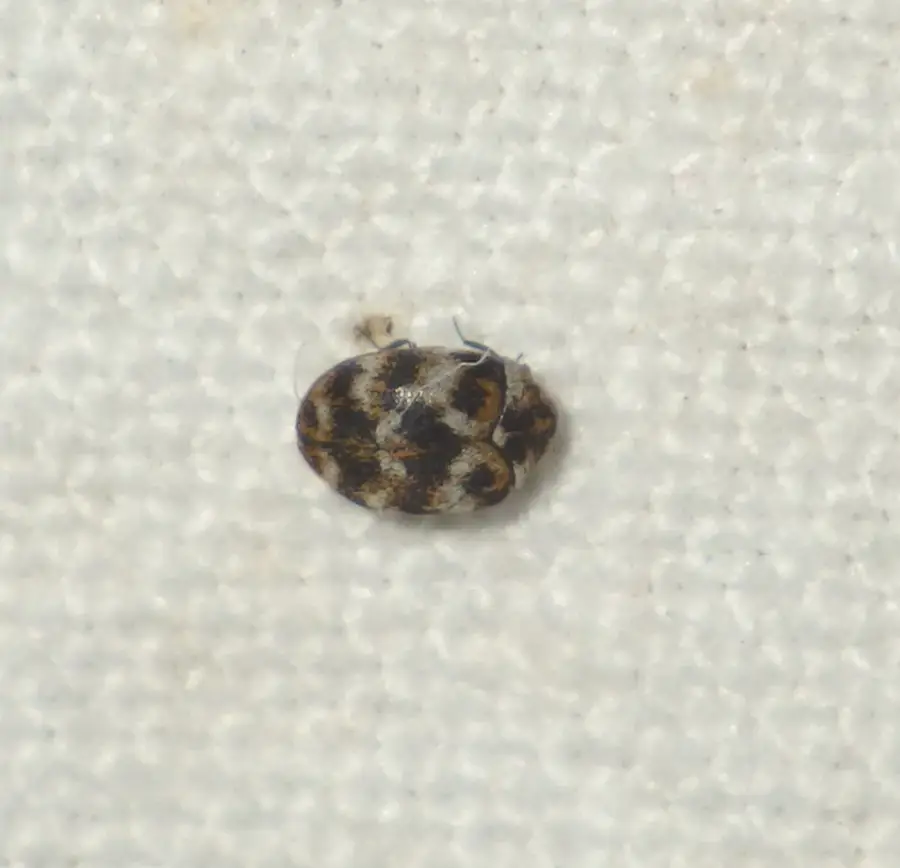
Around here, Virginia Tech lists the varied, black, common and furniture carpet beetles as the most important species. It also notes that shed skins are often mistaken for live larvae. If you find those skins in a drawer or along a baseboard, check the wool and silk items nearby. Our pages on the varied carpet beetle and carpet beetle larvae have more photos. You can also read the signs of carpet beetles to look for.
Not a Bug at All? Friction Holes
Sometimes there is no pest. A common example is a row of tiny holes along the belly of a T-shirt, right at the waistline. That’s usually friction. Belt buckles, jeans buttons, zippers and kitchen counters rub the same spot every day, and thinner modern knits wear through.
Here’s a quick way to tell. Friction holes line up in the same spot on several shirts. They don’t come with droppings, webbing, shed skins or stains. Insect holes are scattered and usually come with at least one of those signs.
How to Confirm It’s Silverfish
If the fabric and the signs still point to silverfish, a couple of quick checks will confirm it.
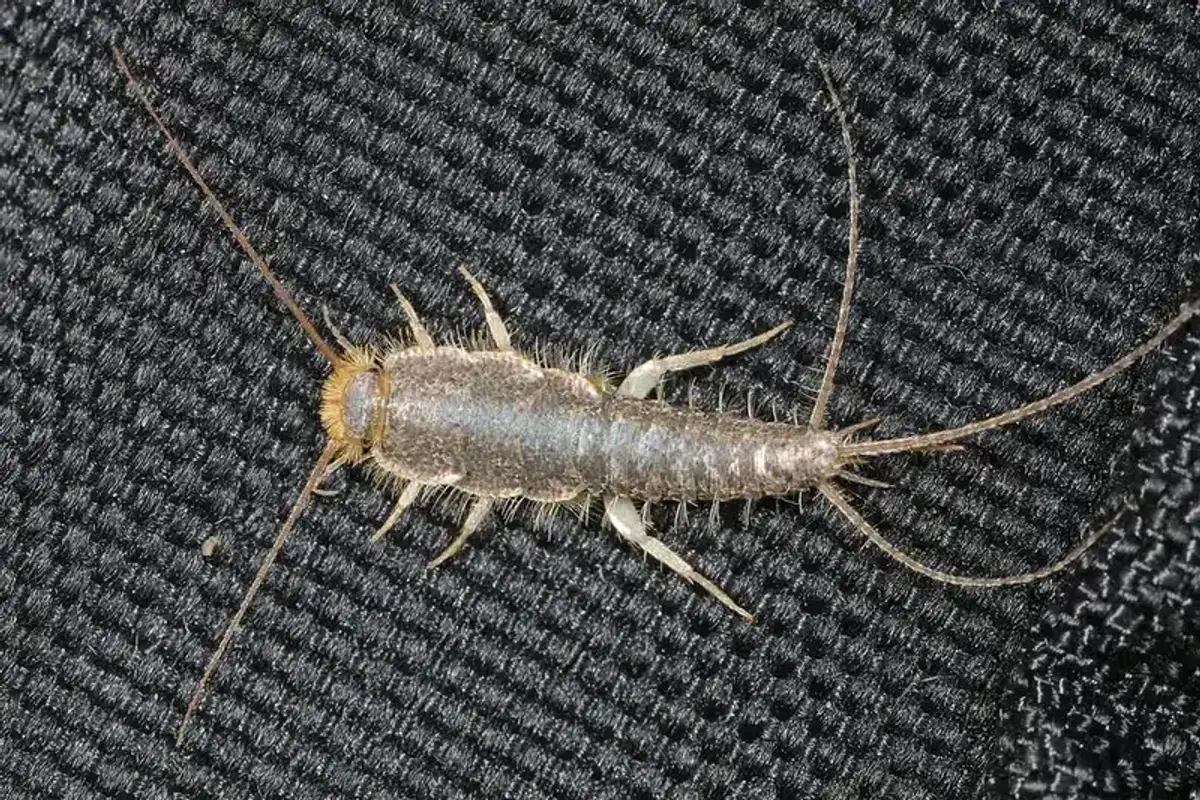
Silverfish come out at night. Walk into the closet, basement or laundry room after dark with a flashlight. Look for silvery, carrot-shaped insects about 1/2 inch long that dart away fast. See our main silverfish page for photos.
Check shelves, folded linens and the bottoms of storage bins. Tiny dark droppings and shiny shed scales point to silverfish. Silk webbing or tube-shaped cases mean moths instead.
Place a few sticky traps along closet walls and near storage bins for a week. You’ll catch whatever is moving around, which takes the guesswork out of it.
Put a cheap hygrometer in the space. Silverfish need damp air to thrive. If the reading stays high, you’ve found the reason they’re there.
If your trap catches a bug, compare it to these two. They’re the ones people mix up most.
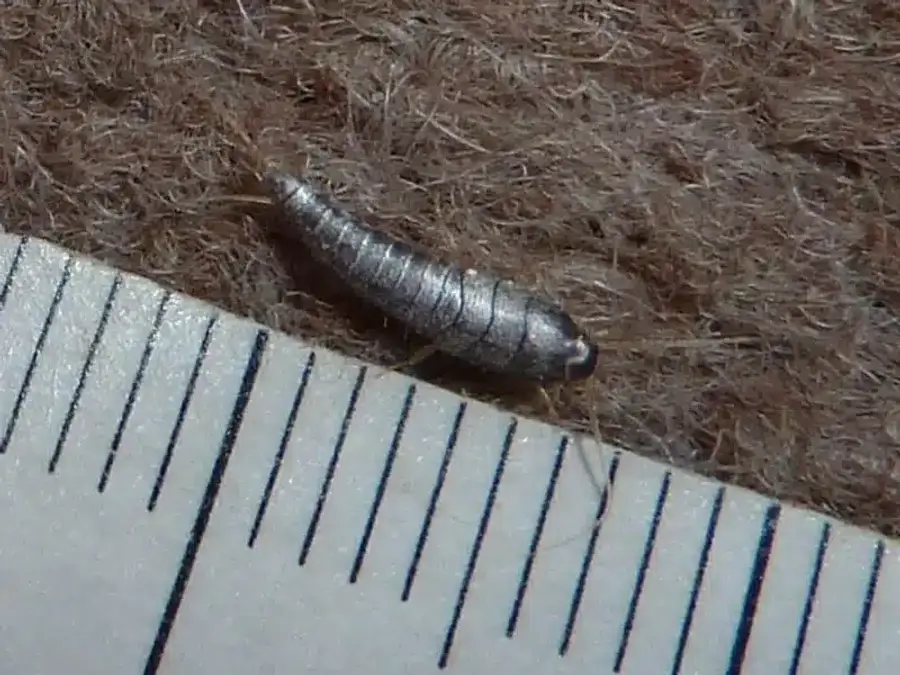
Also, know your silverfish. The gray silverfish can live in drier spots than the common kind. Firebrats like hot areas near furnaces and water heaters. A dehumidifier alone won’t move firebrats.
A lot of my job is sorting out mix-ups. Customers call about one bug and it turns out to be another. Paper wasps get called yellow jackets. Outdoor roaches get called German roaches. Fabric damage works the same way.
Carpet beetles are one of the pests I find most often inside homes. They’re small, they hide in closets and under furniture, and most people never see them. So when someone finds holes in a wool coat and has seen a silverfish in the bathroom, they connect the two. Usually the real culprit is a beetle larva they’ve never noticed. That’s why I always start with the fabric and what’s left near the holes, not the bug someone happened to see.
How to Stop Silverfish From Damaging Clothes
Silverfish need damp air and something starchy to eat. Take away either one and the damage slows down. Here’s what works.
Moisture is the biggest lever. Run a dehumidifier in basements, laundry rooms and closed storage areas. Fix leaks under sinks and around tubs. Keep stored clothing out of crawl spaces and off damp concrete floors. Our post on what causes silverfish explains why humidity matters so much.
Wash or dry clean clothing before you store it, because stains and body oils draw both silverfish and fabric pests. Skip starch on items going into long-term storage. Then pack linens and seasonal clothes in sealed plastic bins instead of cardboard boxes. Cardboard is food and shelter for silverfish. See what attracts silverfish for the full list.
Freezing kills insects in clothing without chemicals. The Canadian Conservation Institute recommends -20°C (about -4°F) for one week. Seal the item in a plastic bag first. Then let it warm up for about a day before you open the bag so moisture doesn’t condense on the fabric. This works for moths and carpet beetles too.
A lot of people reach for mothballs or cedar first. Here’s why I’d hold off.
If silverfish keep showing up after you dry things out, the moisture source may be hidden in a wall, crawl space or bathroom. Our silverfish control guide covers treatment options. Carpet beetles call for a different plan, which we cover on our carpet beetle control page.
When to Call a Professional
Call for help when the damage keeps spreading after you clean and dry things out. Also call when you can’t tell which pest you’re dealing with, or when expensive wool, silk or heirloom items are at risk. A wrong guess costs time and clothing, because silverfish, moths and carpet beetles each need a different approach.
Our family has served the DMV for 58 years, and we’ve treated over 100,000 homes, with 1,800+ reviews. Our licensed technicians start with an inspection to find what’s actually feeding on your clothes and where it’s living. All the products we use are EPA approved and have been reviewed by our internal research team. Each one is something we’d feel comfortable using in our own homes.
The Bottom Line on Silverfish Holes in Clothes
Silverfish can put holes in clothes, but their damage has a look. It’s ragged, thin and scraped, on cotton, linen or rayon, often near yellow stains. Holes in wool or silk point to clothes moths or carpet beetles instead. And a neat row of holes at a shirt’s waistline is usually just wear. Sort it by fabric first, then look for webbing, cases or shed skins. Then fix the moisture and storage problems that let the pest settle in.
Have questions, or want us to take a look? Call us at 703-683-2000 or email info@bettertermite.com for an estimate.