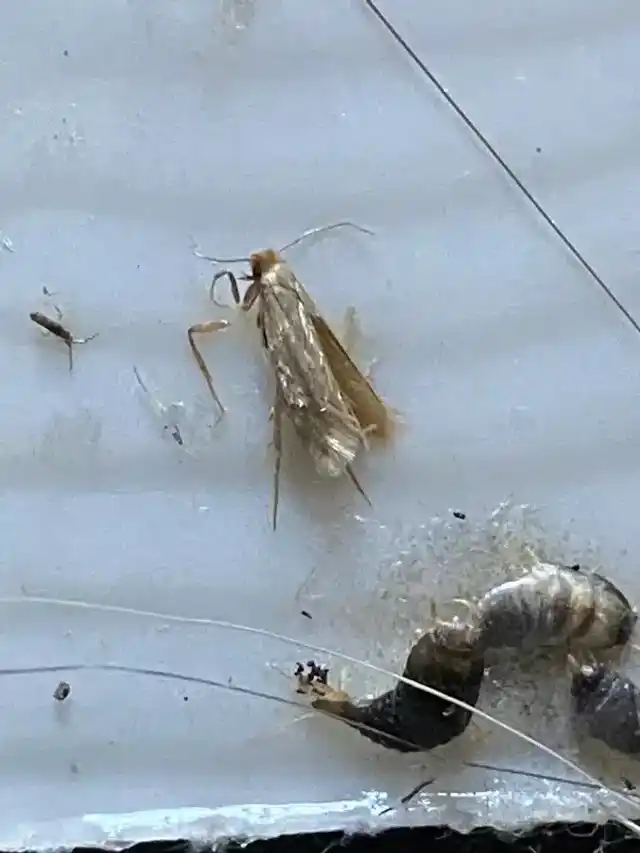

Small moths in the house are almost always one of two things. Clothes moths are plain gold, hide in dark closets and eat wool. Pantry moths have two-tone wings, fly to lights and live in your flour, cereal or bird seed. They are not the same insect, and they don’t share a food source, a trap or a treatment.
I’m a licensed technician and have worked in pest control since 2015, in a family business that has served the DMV for 58+ years. The most common mistake I see with moths is treating the wrong one. Here’s how to tell them apart at a glance.
| Clothes Moths | Pantry Moths | |
|---|---|---|
| Body length | About 1/4 inch | About 1/3 to 2/5 inch |
| Wing color | Plain golden-buff, no pattern | Pale gray near the body, coppery red-brown on the outer two-thirds |
| Light | Not attracted, stays in the dark | Flies toward lights |
| Where you see them | Closets, rugs, under furniture | Kitchen, pantry, near pet food and bird seed |
| Larvae eat | Wool, silk, fur, feathers | Grains, flour, nuts, dried fruit, pet food |
| Damage | Small holes, silk mats on fabric | Webbing and clumps in food |
| Trap | Clothes moth pheromone trap | Pantry (Indian meal) moth trap |
Clothes Moth vs Pantry Moth Pictures: What to Look For
Look at the wings first. Size helps less than people think, because the two overlap more than most guides admit.
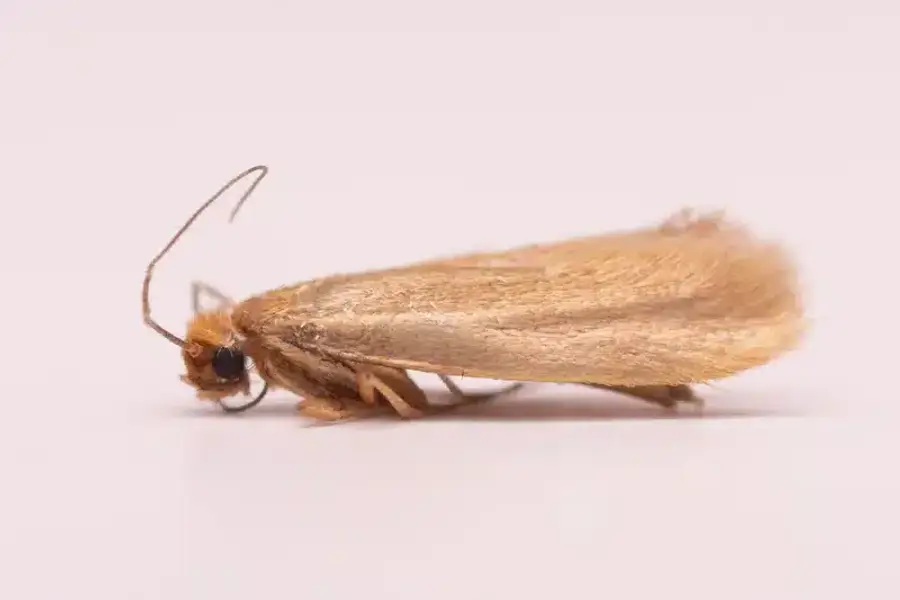
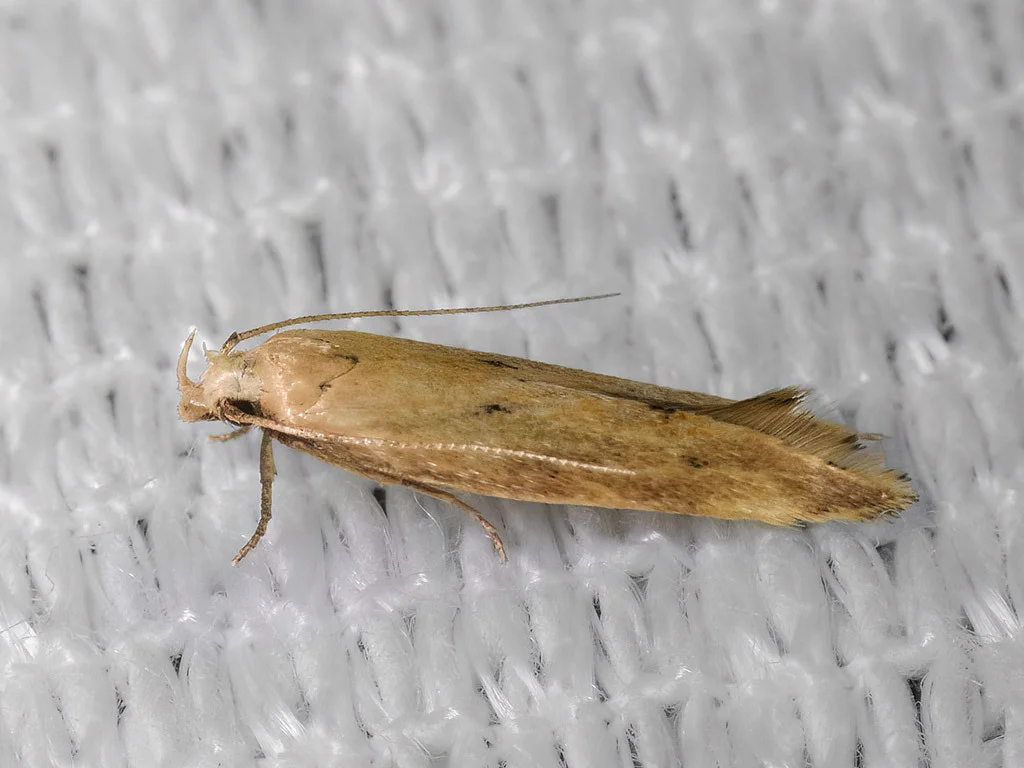
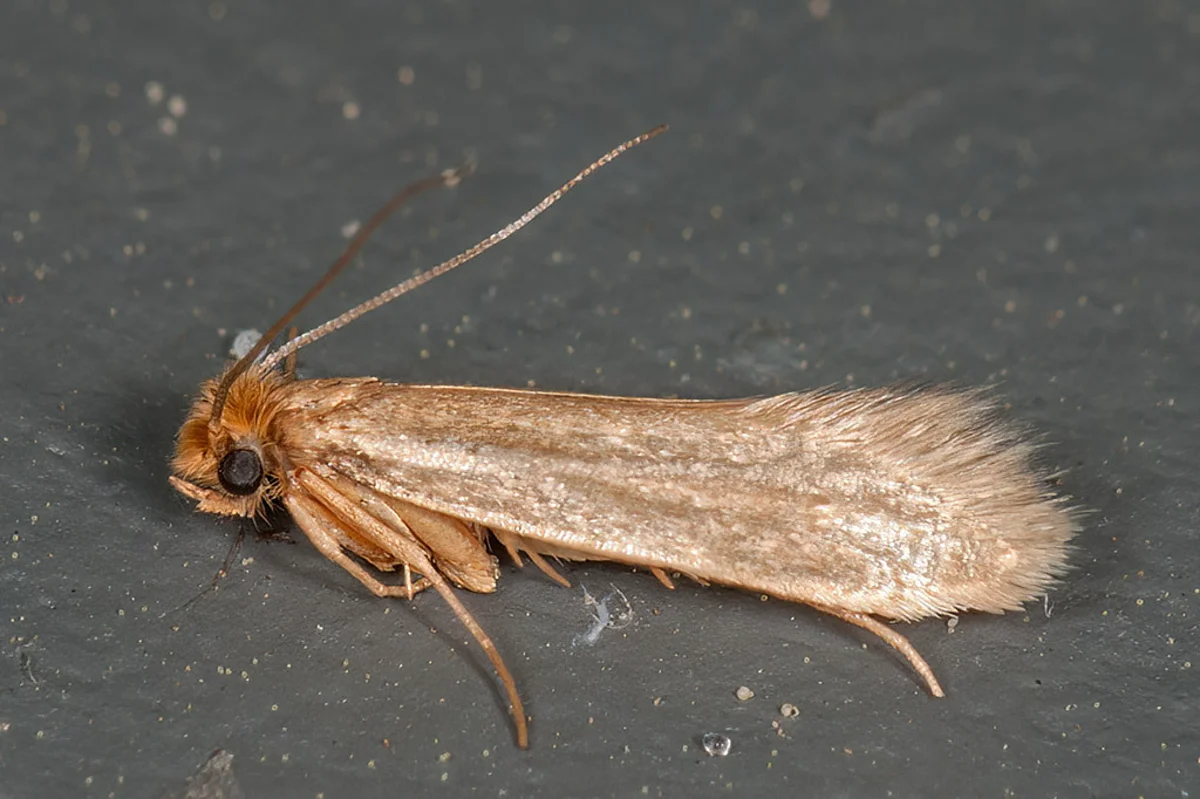
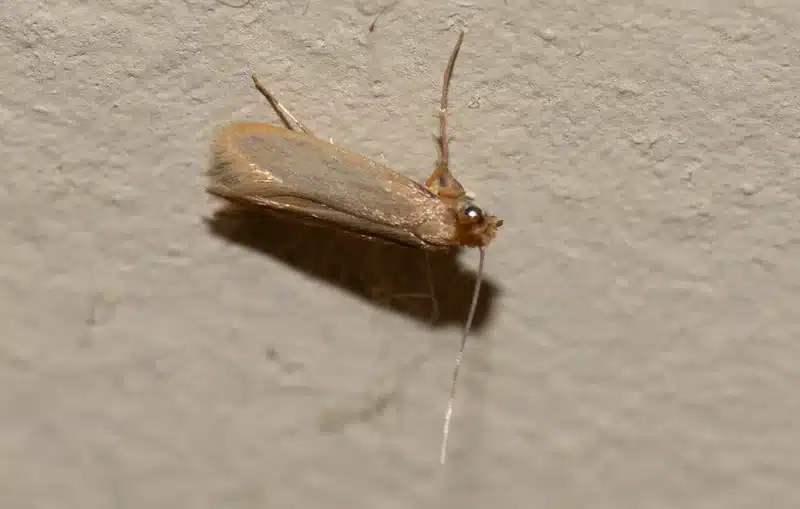
Clothes moths are about 1/4 inch long at rest with a wingspan of about 1/2 inch, according to UC IPM. The common webbing clothes moth is one even golden-buff color with a tuft of reddish-gold hair on its head. Its narrow wings have a fringe of hairs on the edges.
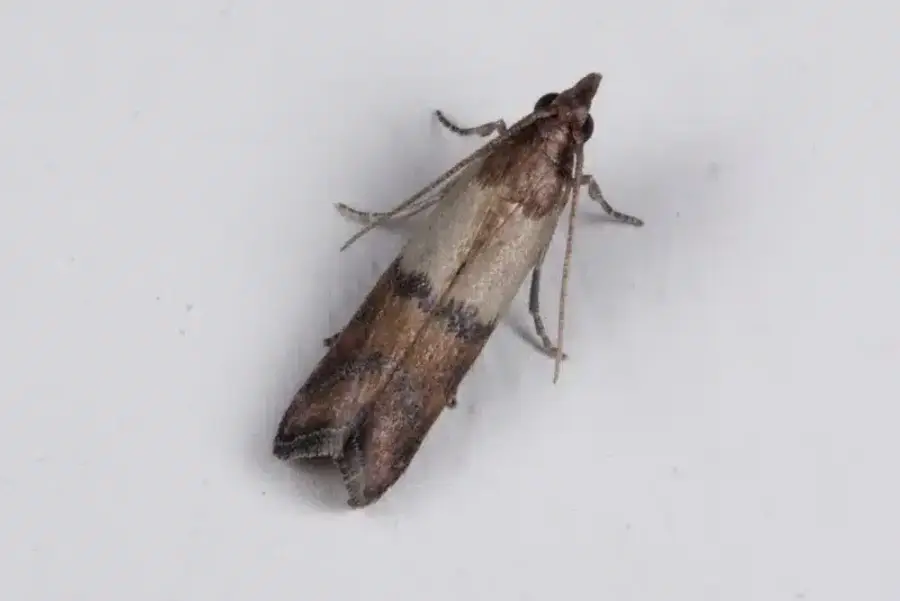
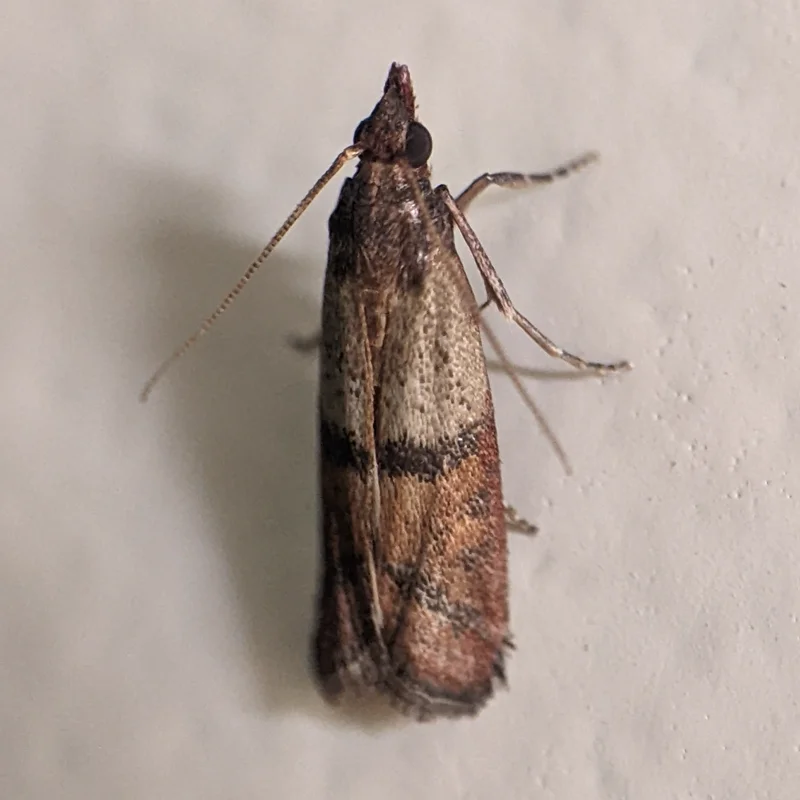
Pantry moths are a little bigger, about 1/3 to 2/5 inch long with a wingspan near 5/8 inch. The Indian meal moth, the one most homes have, has forewings that are pale gray or tan near the body and coppery red-brown on the outer two-thirds. When it rests with its wings folded, it looks like it has a light band across its back. Nothing on a clothes moth looks like that.
Are Pantry Moths Attracted to Light?
Yes. The University of Minnesota Extension notes that adult Indian meal moths are attracted to lights and may show up in rooms where there is no infestation at all. That is why people find them on a bedroom ceiling and assume they have clothes moths. Clothes moths are weak fliers that are not drawn to lights. You’ll usually find them close to the infested item, in a dark part of the closet. If a moth is circling a lamp at night, it is almost certainly not a clothes moth.
Types of Pantry Moths (and the Two Clothes Moths)
“Pantry moth” is a group name, not one species. NC State Extension lists five moths that infest stored food. All of them fly to lights, and none of them eat fabric.
- Indian meal moth (Plodia interpunctella). Two-tone wings, gray-tan and copper. NC State calls it probably the most common stored food pest in homes. Daren, one of our registered technicians, sees the same thing in the field: Indian meal moths are the pantry pest he deals with most, ahead of carpet beetles, sawtoothed grain beetles and weevils.
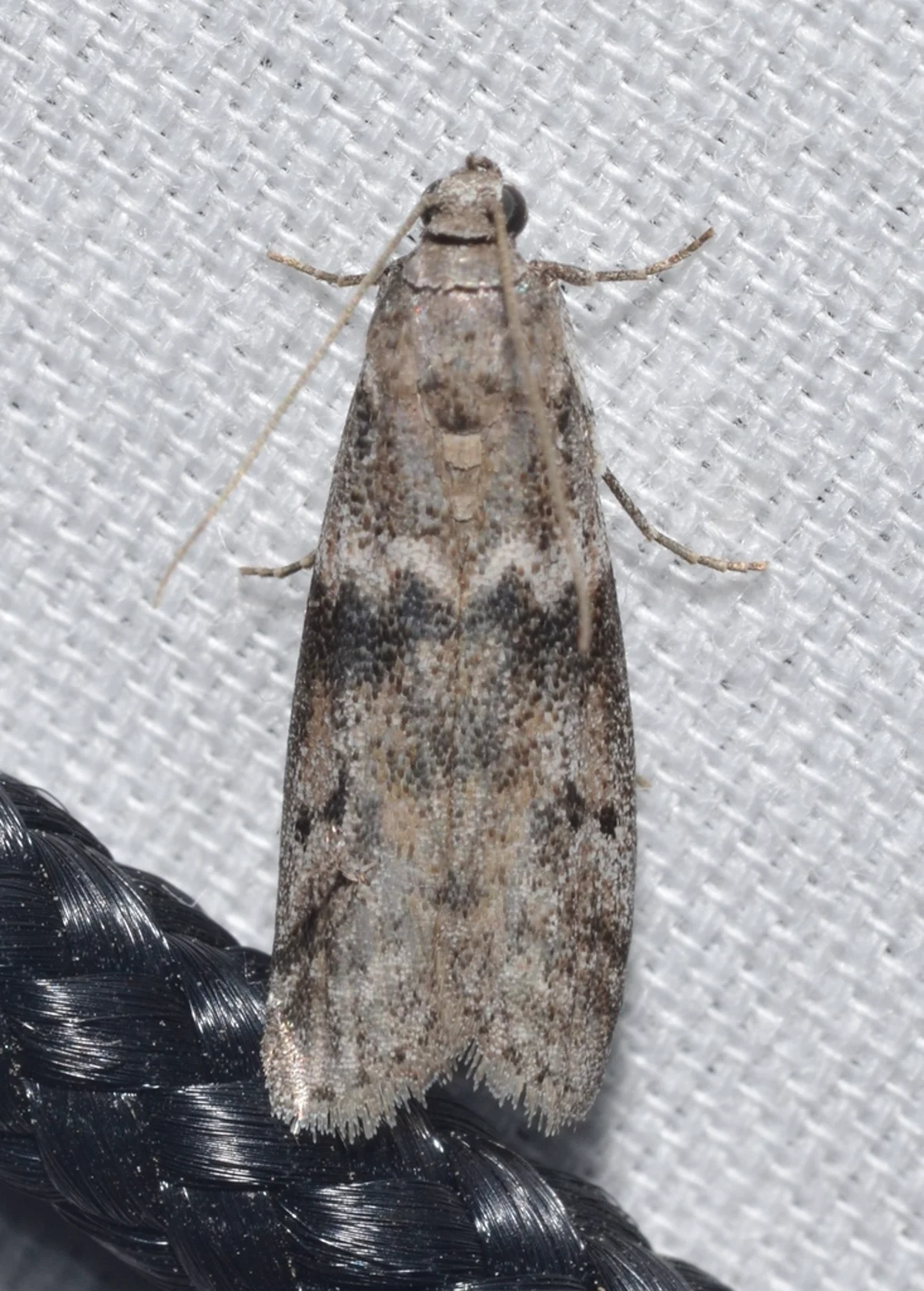
- Mediterranean flour moth (Ephestia kuehniella). Pale gray with two dark zigzag lines across each forewing. It rests with its head raised and its back end sloping down. Mostly found in flour, bran and cereal.
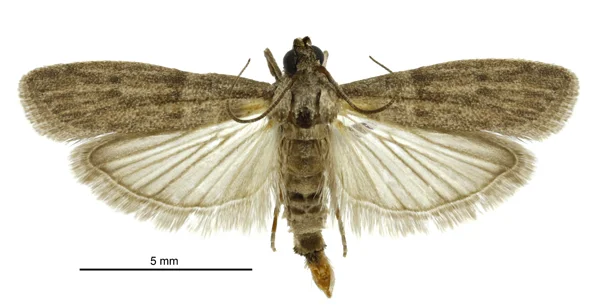
- Almond moth (Cadra cautella). Up to 1/2 inch, gray-brown with faint bands. Likes nuts, dried fruit, candy and cereal.
- Angoumois grain moth (Sitotroga cerealella). About 1/3 inch, plain buff to yellow-brown with fringed wing edges. Its larvae feed inside whole kernels, so you see it in whole corn, oats, rice and bird seed. Because it is plain and tan, it is easy to mistake for a clothes moth. The difference is where it came from: a grain moth comes out of food.
- Meal moth (Pyralis farinalis). Up to 1/2 inch, with a pale middle band framed by reddish-brown. NC State notes it needs a different pheromone trap than the Indian meal moth.
Two related species, the tobacco moth and the rice moth, also turn up in stored foods.
Clothes moths come in two common types. The webbing clothes moth is plain gold and spins silk mats on fabric. The casemaking clothes moth is more brownish with faint dark spots, and its larva drags a silk case around. UC IPM says the webbing clothes moth is the more common and more damaging of the two.

Larvae: The Damage-Causing Stage
Both clothes moth larvae and pantry moth larvae look like small caterpillars, but knowing the differences helps with proper ID.
Clothes Moth Larvae
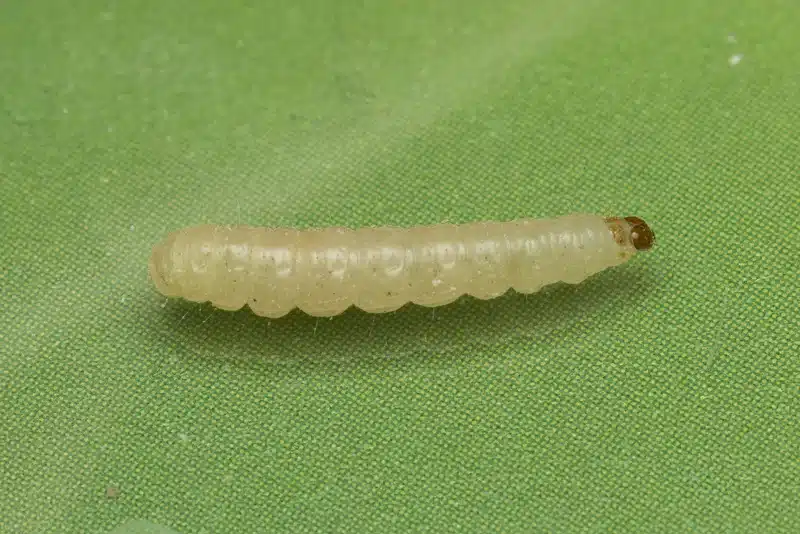
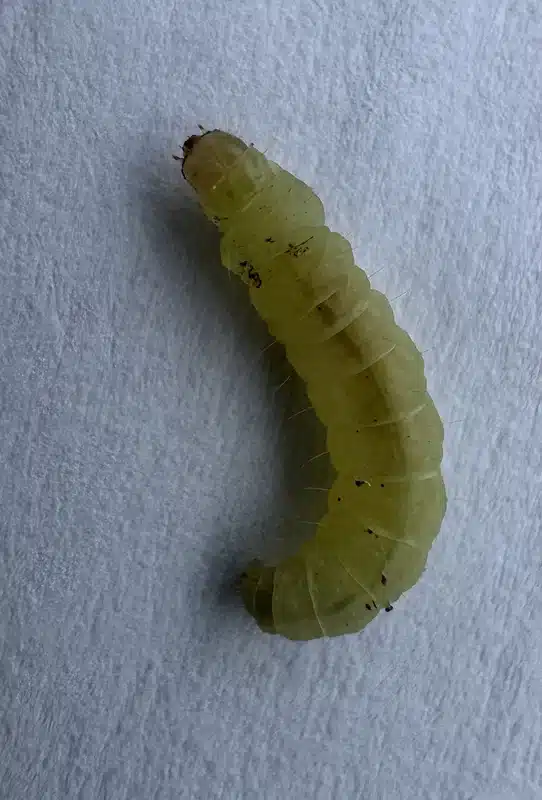
Clothes moth larvae are ivory-colored with brown heads, reaching about 12mm when fully grown. They create silken mats and tunnels as they feed. Casemaking moth larvae drag around protective silken cases.
You’ll find these larvae on or near natural fiber fabrics like wool, silk, and cashmere. They leave behind pin-sized holes and silky surface mats on the fabrics they feed on.
Pantry Moth Larvae
Pantry moth larvae are cream to pinkish with brown heads and grow to similar sizes. If you find a larva in your food products, it’s almost certainly a pantry moth issue.
These larvae leave clumps of silk throughout contaminated food and often crawl up walls when ready to pupate. You’ll spot them inside food packages and sometimes wandering across kitchen ceilings.
The larva stage is when most damage happens, no matter the moth type. Larvae feed nonstop and grow fast under good conditions. That makes early detection key for stopping major damage to either fabrics or food supplies.
What Each Moth Type Eats
What Clothes Moths Eat
Clothes moths eat only natural animal fibers because their larvae digest keratin protein. This means they target wool, cashmere, silk, fur, feathers, leather, and hair. Clothes moths feed more on soiled fabrics that have perspiration, food stains, or body oils, which give extra nutrients.
What Pantry Moths Eat
Pantry moths eat a wide range of dried plant products. Their larvae are generalists that thrive on cereals, flour, rice, nuts, chocolate, dried fruit, spices, bird seed, and pet food. Any grain-based or dried organic matter in your pantry can become a food source. The tobacco moth is another pantry species with a broad diet that includes cocoa, spices, and even dried tobacco products.
This is why you can find pantry moths in the kitchen but never clothes moths. A clothes moth larva can’t live on flour, and a pantry moth larva can’t digest wool.
Where Each Moth Type Lives
Clothes moths thrive in dark, undisturbed, humid areas. You’ll find them in closets, cedar chests, and around upholstered furniture. They avoid light and prefer quiet spaces where they can lay eggs on natural fabric. For more info, read our guide on pantry moths vs clothes moths.
Pantry moths set up in kitchens, pantries, cabinets, bulk food storage bins, and garage spaces where bird seed is stored. These areas stay above 50 degrees F year-round, allowing multiple generations to develop.
In our DMV service area, both moth types can stay active through winter in heated homes. Pantry moth numbers often spike after bulk food purchases or when homeowners stock up on bird seed during fall months.
Moth Life Cycle: How Fast They Multiply
- Clothes Moths: 4-6 months egg to egg, usually 2 generations per year
- Pantry Moths: about 6 weeks egg to adult, 4-6 generations per year
- Temperature Impact: Both species slow below 50 degrees F, but heated homes allow year-round activity
- Detection Window: Pantry moths show up faster because kitchens are high-traffic areas
Clothes moths are slow. UC IPM puts their development at four to six months from egg to egg, with usually two generations a year. Damage builds quietly in a wool rug or a stored coat for months before anyone sees a hole.
Pantry moths are fast. Virginia Cooperative Extension says the Indian meal moth goes from egg to adult in about six weeks, with four to six generations a year. One female can lay 40 to 350 eggs on or near food. That is why one forgotten bag of bird seed can turn into moths in every cabinet by the end of the summer.
Clothes moth females tend to run along fabric rather than fly, so they lay eggs right where the larvae will eat. Pantry moth females fly from package to package, which spreads an infestation across the kitchen.
According to UC Statewide IPM, you can kill clothes moths in an item by bagging it and freezing it below 18 degrees F for several days, or by heating it above 120 degrees F for at least 30 minutes. For pantry foods, Virginia Cooperative Extension says heating to 120 degrees F for one hour kills Indian meal moth larvae. UC IPM does not recommend insecticides for pantry moths at all. Cleanup, sealed containers and traps do the work.
Signs of Infestation: What to Look For
Spotting early signs of moths prevents minor problems from becoming major ones.
Clothes Moth Signs
- Pin-sized holes in natural fiber clothing, especially in hidden areas like under collars or inside folds
- Silky surface mats on fabrics
- Detached fur hairs from garments
- Small cocoons in closet corners
- Ivory-colored larvae on or near fabrics
Pantry Moth Signs
- Fine silk webbing inside food packages
- Clumped products that should flow freely (like flour or cereal)
- Shed larval skins in contaminated items
- Moths flying around kitchen lights at night
- Larvae crawling on walls and ceilings near the kitchen
Both infestations often go unnoticed at first because adult moths are small and larvae grow in hidden spots. However, pantry pests usually show up faster because moths flying around food prep areas are harder to miss than clothes moths hiding in dark closets.
Prevention and Treatment
Preventing Clothes Moths
- Clean all natural fiber items before long-term storage (clothes moths prefer soiled fabrics)
- Store clean items in sealed garment bags or airtight containers
- Vacuum closets regularly to remove hair and fabric fibers
- Fresh eastern red cedar panels can deter clothes moths in tightly enclosed spaces, but cedar loses strength within about two years
- Inspect vintage or secondhand clothing and furniture before bringing them home
Preventing Pantry Moths
- Transfer all new dry goods to glass, metal, or plastic containers with tight-fitting lids right after purchase
- Thin cardboard boxes and zip-lock bags won’t keep adult pantry moths out
- Clean pantry shelves regularly to remove crumbs and residue
- Even small spills of flour or pet food can support a full life cycle
- Check bulk food purchases and bird seed for signs of infestation before storing
Treatment Approaches
For clothes moths: Bag affected items and freeze them below 18 degrees F for several days, or heat them above 120 degrees F for at least 30 minutes. Laundering or dry cleaning also works for washable items. Use species-specific pheromone traps to monitor male moth activity.
For pantry moths: Do a complete food audit. Remove and bag all suspect items, then vacuum the shelf corners and clean them with soap and water. Our guide on how to get rid of pantry moths walks through each step, and pantry moth egg pictures shows what to look for in the packages. Use pantry moth pheromone traps to track and reduce male moth populations over 4-6 weeks.
Important: Pheromone traps only catch males. You still need to address eggs and larvae through cleaning and proper storage.
Why Proper ID Matters
The usual mistake goes like this. Someone sees a moth in the bedroom, buys clothes moth traps, and catches nothing for a month. Meanwhile the real source, an open bag of dog food in the laundry room, keeps making Indian meal moths. A pantry moth lure in a closet fails the same way in reverse, because each lure only pulls in males of its own species.
The treatments don’t cross over either. Freezing a sweater does nothing for pantry moth pupae tucked into a shelf crack, and throwing out food does nothing for larvae in a wool rug. If you aren’t sure which moth you have, check where the larvae are before you buy anything. Food means pantry moth. Fabric means clothes moth.
When to Call a Professional
Most pantry moth problems can be solved at home once the infested food is found and thrown out. Call a pro when moths keep coming back after a full cleanout, when you can’t find the source, or when clothes moths are in rugs, upholstered furniture or other things you can’t put in a freezer.
A technician will confirm which moth you have, look for the hidden food source (pet food, bird seed, a spill behind the stove), and set the right traps so you can tell whether the numbers are dropping.
Regional Tips for DMV Area Homes
Our summers in Northern Virginia, DC and Maryland are hot and humid, and both moths develop faster in warm weather. Inside a heated home they keep breeding through the winter, so a moth in January doesn’t mean it came in from outside.
Older homes in DC and Old Town Alexandria often have wool Oriental rugs, upholstered antiques and closets that stay closed for months. That is the setup clothes moths like best. Check under heavy furniture, where rugs stay dark and don’t get vacuumed.
Bird seed and dry pet food bought in bulk are common pantry moth sources. Store them in sealed bins, not in the bag they came in, especially if you keep them in a garage or mudroom.
I recommend checking closets before you pack away winter clothes, and checking the pantry before you stock up.
Get Help with Moths
If you’re still not sure which moth you have, send us a photo or have a technician take a look. Call us at 703-683-2000 for expert identification and treatment, or email us at info@bettertermite.com to schedule your inspection today.