Wharf Borers Identification Guide
Nacerdes melanura
Wharf borers are slender orange-tan beetles. Their larvae tunnel through wet, rotting wood in docks, pilings, and damp framing. Adults come out in large numbers each summer and gather at lights and windows.
Taxonomy
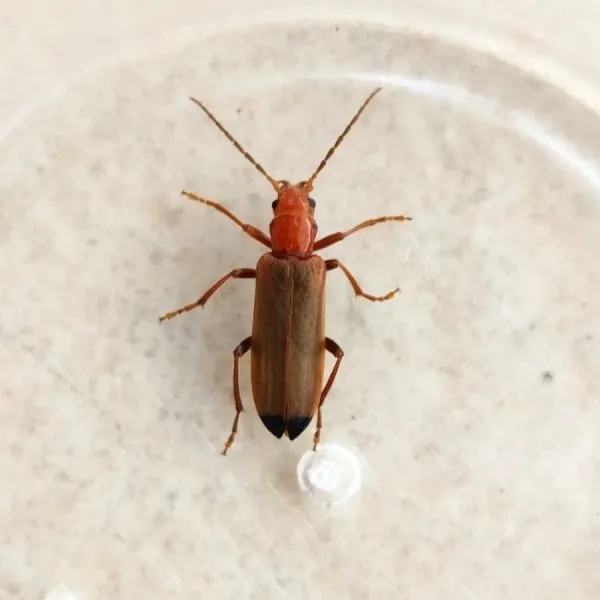
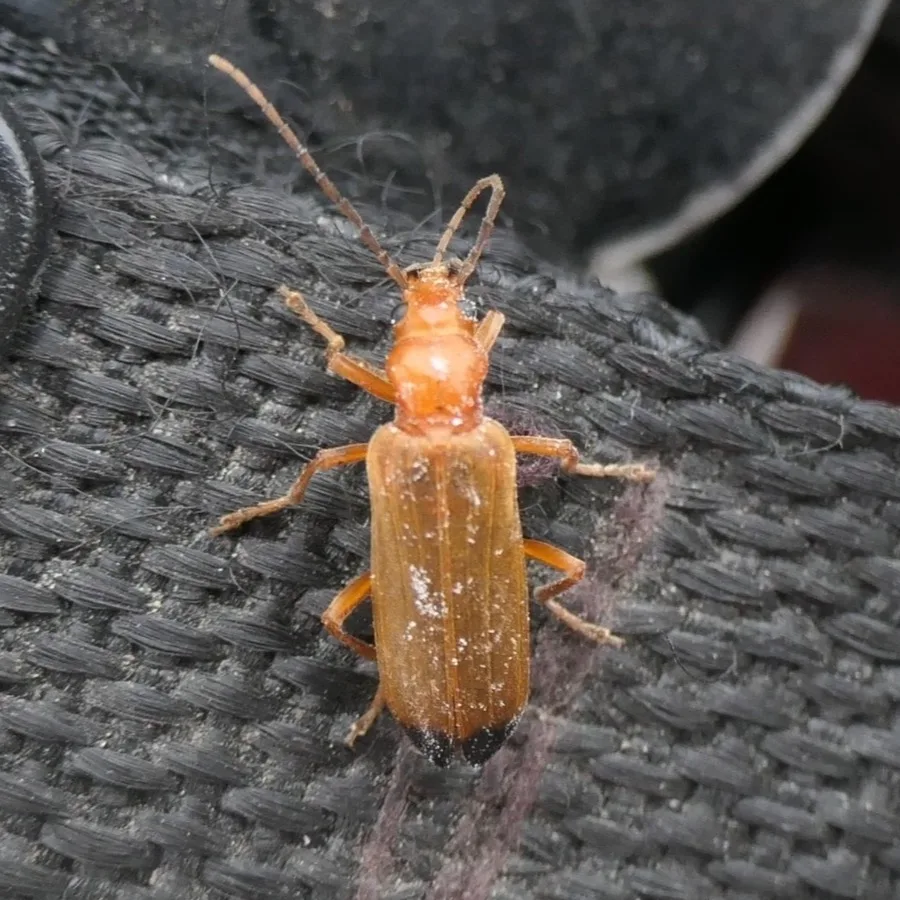
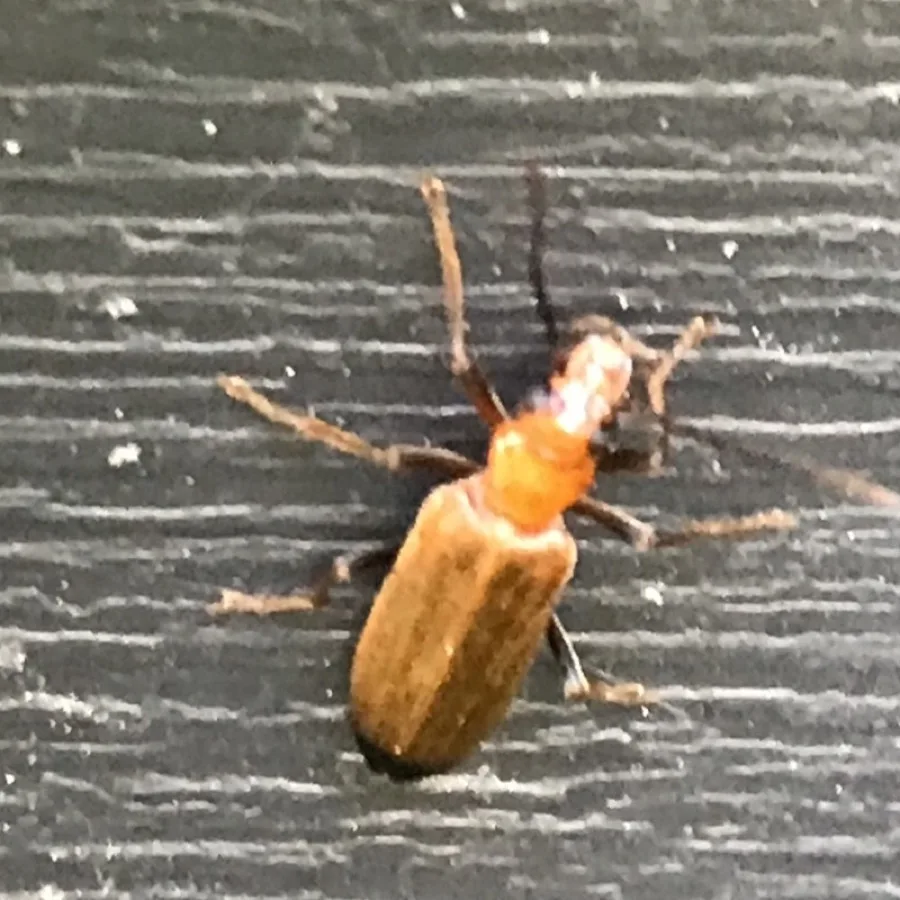
Wharf Borers Coloration
Common color patterns to help identify wharf borers
Wharf Borers
Seasonal Activity
When wharf borers are most active throughout the year

Where Wharf Borers Are Found
Hover over states to see their names. Green regions indicate where wharf borers have been reported.
Wharf Borer Identification Guide
The wharf borer (Nacerdes melanura) is a slim, soft-bodied beetle. Its young grow in wood that stays wet enough to rot. The beetle got its name from dock and wharf pilings. It shows up anywhere water sits against wood: boardwalks, bulkheads, buried lumber, sill plates under a slow leak, and beams in a wet crawlspace. The beetle is not native to North America. It came from Europe on ships. Today it lives along both coasts, around the Great Lakes, and at scattered inland sites.
Physical Characteristics
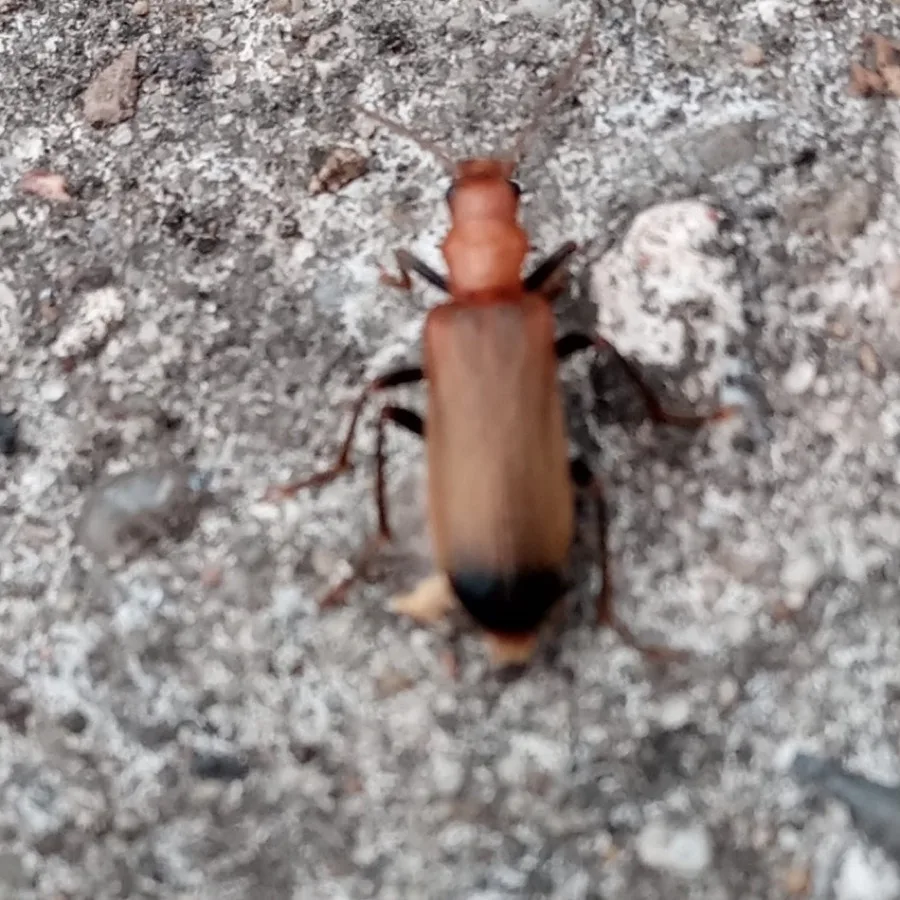
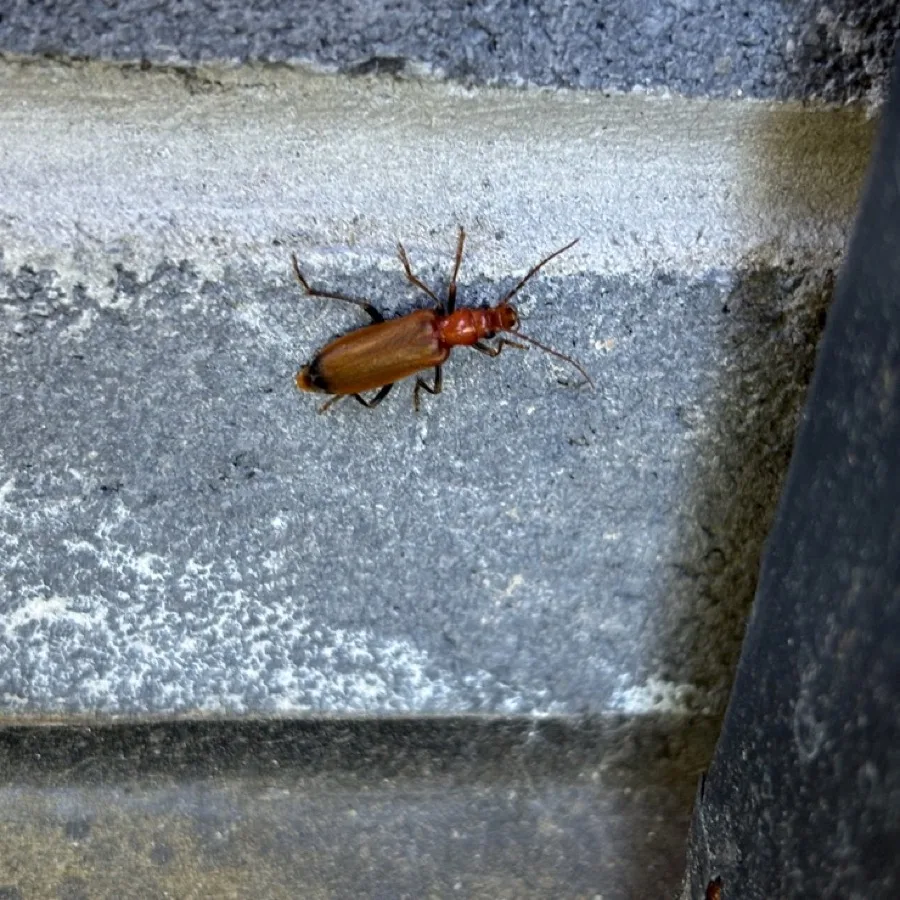
Adults are 8 to 14mm long. That is about a third to a half inch. The body is narrow. The wing covers feel soft, not hard like a ground beetle.
Key features of adults:
- Yellow-orange to orange-brown body with a slight fuzzy sheen
- Black or very dark brown tips at the rear of the wing covers, which is the single best field mark
- Three faint raised lines running lengthwise on each wing cover
- Antennae about half the body length
- Dark legs and dark markings on the underside
The larvae do the tunneling. They are cream colored, long, and narrow. Each one has a small brown head and three pairs of short legs behind it. Grown larvae can reach close to an inch. They also have small fleshy bumps on top of the third and fourth belly segments. You usually only see them when a rotted board is pried open.
Common Species
The wharf borer belongs to the false blister beetle family, Oedemeridae. About 100 species live in North America. Most adults feed on pollen, and their young grow in rotting wood.
- Nacerdes melanura: the wharf borer. It is the only member of its family that often becomes a household nuisance.
- Oxacis and Oxycopis species: narrow, pale beetles that gather at lights near the coast. They do not have dark wing-cover tips.
- Asclera ruficollis: the red-necked false blister beetle. It has a red thorax and black wing covers and appears on spring flowers.
Wharf Borer Behavior and Biology
Habitat
Wharf borer larvae need wood that is wet and already softened by decay fungi. Sound, dry lumber will not support them. Neither will treated wood in good shape. Common breeding sites include:
- Dock pilings, bulkheads, and boardwalk planks near the waterline
- Buried scrap lumber, old form boards, and stumps left in backfill
- Wooden retaining walls and landscape timbers in contact with soil
- Sill plates, joists, and subfloor soaked by a plumbing leak or a failed gutter
- Crawlspace framing where standing water and poor ventilation keep moisture high
The wood has to be soaked before the beetles can use it. So a wharf borer problem inside a building is really a moisture problem with beetles attached to it.
Diet
The larvae eat the softened, fungus-worked wood. They carve ragged tunnels as they go. Adults do not feed on wood at all. They visit flowers for pollen and nectar during their short lives. At night they are strongly drawn to lights.
Life Cycle
Females lay eggs in cracks, splits, and old tunnels in damp wood. Eggs hatch in one to three weeks. Larvae then feed inside the timber for about a year in warm, wet conditions. Where summers are short, they take longer. A grown larva pupates in a chamber near the surface. The adult then chews out through a rounded exit hole.
Adults live only one to two weeks. Growth is tied to moisture and warmth, so a whole brood in one timber can mature at once. That is why homeowners often see dozens or hundreds of beetles at the same time in May, June, or July.
Why You See Them Indoors
Adults come out of a buried timber, a wet crawlspace beam, or a dock nearby. Then they fly toward the nearest light. They pile up on basement windows, sliding doors, and porch fixtures. Seeing them inside does not mean your framing is being eaten. It means soaked wood is close by. That wood may sit under the slab, behind a wall, or outside the foundation.
Treatment Methods for Wharf Borers
Wharf borers are a wood-and-water issue, not a spray issue. Better Termite & Pest Control does not treat for wharf borers. The steps below are what work against beetles that breed in rotting wood. If an inspection turns up wood-destroying insects that do attack dry framing, our termite control service covers the subterranean termites behind most of that damage in the Mid-Atlantic.
- Find the wet wood. Trace the beetles back to their source. Check crawlspaces, the base of exterior walls, plumbing and water heaters, under decks, and any wood that touches soil. Poking a suspect timber with a screwdriver finds soft, spongy spots fast.
- Fix the moisture first. Repair leaks, extend downspouts, and regrade soil that sends water at the foundation. Add crawlspace airflow or a vapor barrier. Once the wood dries out, decay fungi stop growing. Larvae inside die out, and new eggs will not survive.
- Remove and replace rotted material. Cut out decayed joists, sill sections, and landscape timbers. Dig out buried scrap lumber and form boards. Replace them with pressure-treated or naturally durable wood. For docks and retaining walls, non-wood materials last longer and keep the problem from coming back.
- Reduce the nuisance while you work. Seal gaps around basement windows, doors, and utility lines. Add or repair screens. Switch outdoor fixtures to warm-toned or yellow bulbs and move them away from doors so fewer adults gather there. Sweep or vacuum any beetles that get inside instead of crushing them.
- Know the limits of chemicals. Surface insecticides cannot soak through waterlogged timber to reach larvae. Treating a dock or piling also raises real environmental and permit concerns. Repair and replacement are the lasting answer.
Species Commonly Confused With Wharf Borers
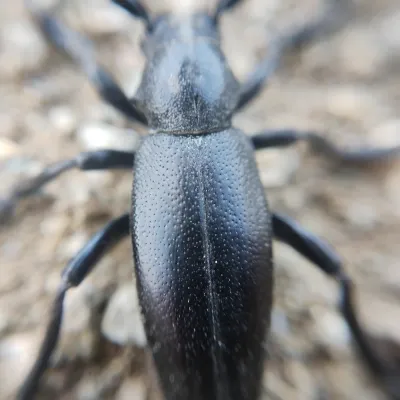
- Old house borers: much larger and grayish black. They are a real threat to dry softwood framing. Wharf borers are smaller and orange with dark wing-cover tips.
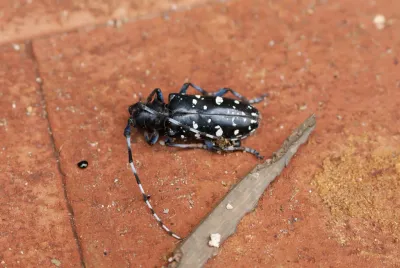
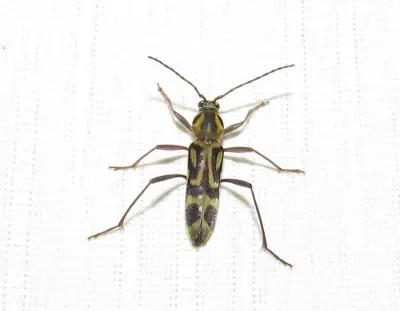
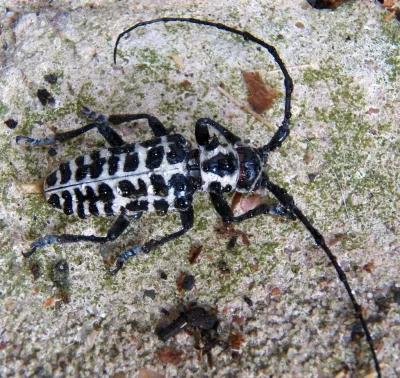
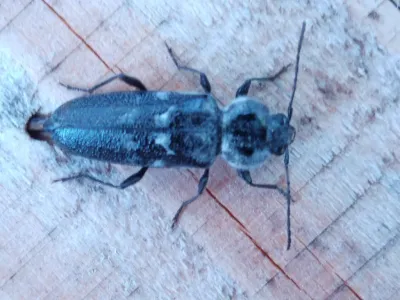
- Longhorn beetles: antennae as long as the body or longer, with harder wing covers. Wharf borer antennae reach only about halfway.
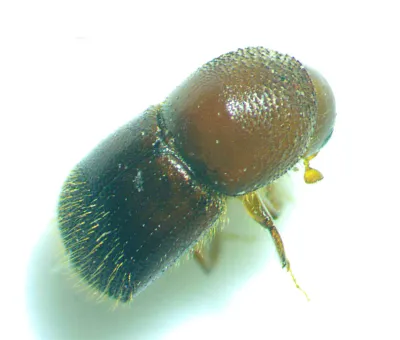
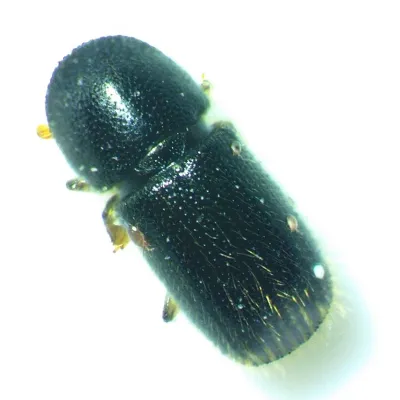
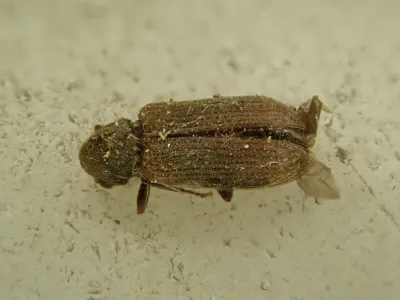
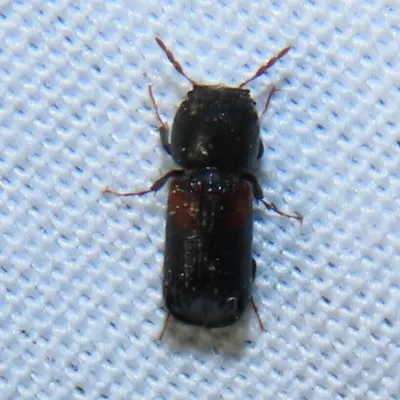
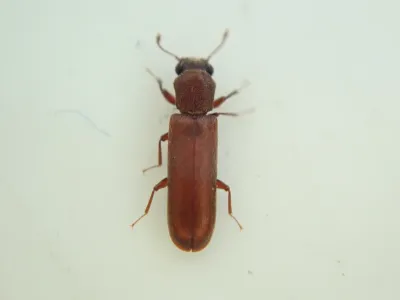
- False powderpost beetles and powderpost beetles: small, dark, tube-shaped beetles. They leave fine flour-like dust in dry hardwood. Wharf borers leave coarse, damp tunnels and no powder.
- Blister beetles: soft-bodied with a similar outline. You find them on garden plants, not damp wood, and they lack the dark wing-cover tips.
- Soldier beetles: orange and soft-winged like wharf borers, but broader. They feed on late-summer flowers and have no raised lines on the wing covers.
References
- Wharf Borer (Nacerdes melanura), Penn State Extension
- False Blister Beetles (Oedemeridae), University of Florida IFAS Entomology
- Wood-Destroying Insects, University of Kentucky Entomology
- Wood Handbook: Wood Decay and Moisture, USDA Forest Products Laboratory
- Overview of Wood Preservative Chemicals, EPA
Other Wood Boring Beetles
Explore other species in the wood boring beetles family
Commonly Confused With
Wharf Borers are often mistaken for these similar pests
Where Wharf Borers Are Found
Hover over states to see their names. Green regions indicate where wharf borers have been reported.
Common Questions about Wharf Borers
What is a wharf borer?
+
The wharf borer is a slender orange-tan beetle in the false blister beetle family. Its larvae feed only in wood that stays wet and has begun to rot. That includes dock pilings, boardwalk planks, buried timbers, and framing under a slow leak. Adults come out in late spring and summer. They often show up indoors near windows and lights.
Do wharf borers damage houses?
+
Wharf borers only tunnel in wood that is already soaked or rotting. They do not attack dry, sound lumber. When they turn up inside a home, they are a sign of a moisture problem. The water damage and wood rot are usually a bigger issue than the tunneling itself.
Do wharf borers bite people?
+
Wharf borers do not bite or sting, and they do not spread disease. Some relatives in the Oedemeridae family can release a blistering compound called cantharidin when crushed against skin. For that reason, sweep or vacuum these beetles up instead of squashing them by hand.
Why are wharf borers suddenly in my basement?
+
Large numbers of adults usually mean wet, rotting wood nearby. Common sources are a leaking pipe or water heater, a wet crawlspace, buried construction lumber, an old wooden retaining wall, or a dock close to the house. Adults follow light, so they collect at basement windows and doors.
What do wharf borer larvae look like?
+
The larvae are cream colored, long, and slender. Each has a small brown head and three pairs of short legs near the front. Grown larvae can reach about an inch. They live inside soft, spongy wood, so you usually see them only when a rotted timber breaks open.
How do I get rid of wharf borers?
+
Find and dry out the wet wood. Fix the leak or drainage problem. Remove and replace rotted timbers. Pull buried scrap lumber out of crawlspaces and backfill. Once the wood dries, the larvae cannot grow. Surface insecticides do not reach larvae deep inside soaked wood.
When are wharf borers active?
+
Adults are most common from May through August across most of North America, with scattered activity in April and September. Larvae feed inside wood year round and can take a year or more to mature in cool conditions.
What is the difference between a wharf borer and an old house borer?
+
Old house borers are larger and grayish black. They attack dry softwood framing, which makes them a structural threat. Wharf borers are smaller and orange-tan with dark wing-cover tips. They grow only in wet, rotting wood. Finding one points to a water problem rather than a lumber problem.

With five years of hands-on experience in the pest control industry, George Schulz is a registered technician with the Virginia Pest Management Association and a proud third-generation professional in a family business that's been protecting homes for over 58 years. He manages and trains a team of service pros while also leading internal research efforts—recently spearheading a deep-dive review of thousands of documents on pest control materials to hand-pick the most kid and pet friendly, most effective solutions tailored specifically for homes in the DC metro area.
Local Wharf Borers Help
Dealing with wharf borers at home? Our licensed technicians provide pest control across Northern Virginia and Maryland.
