Steel-Blue Cricket Hunters Identification Guide
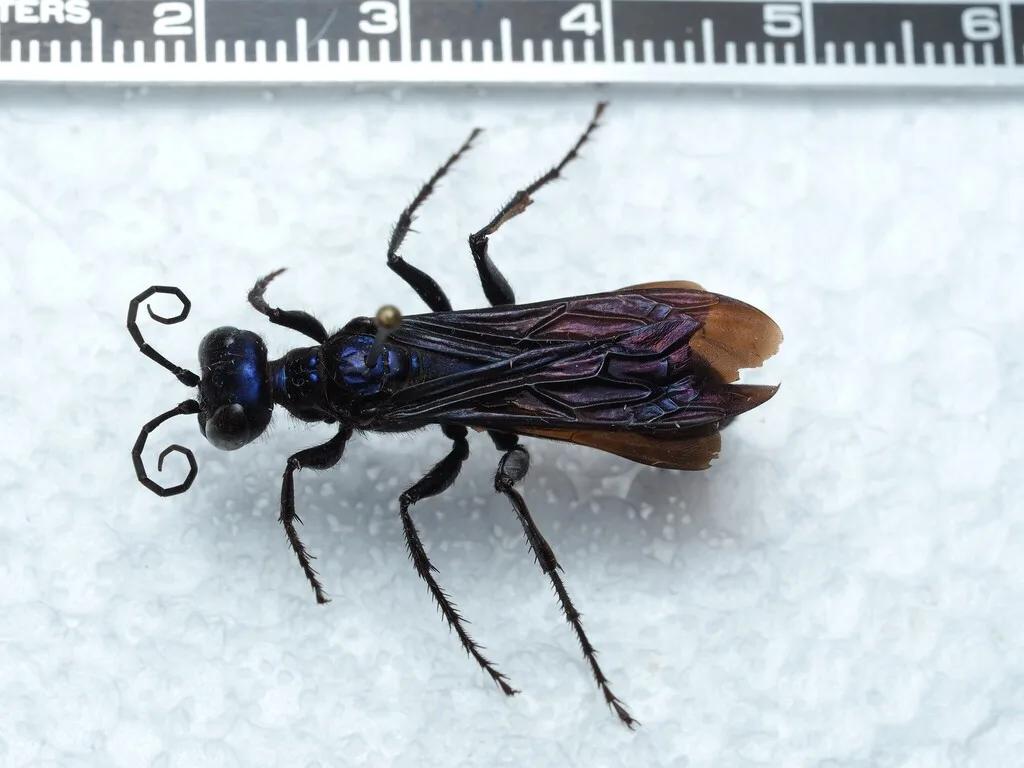
Chlorion aerarium
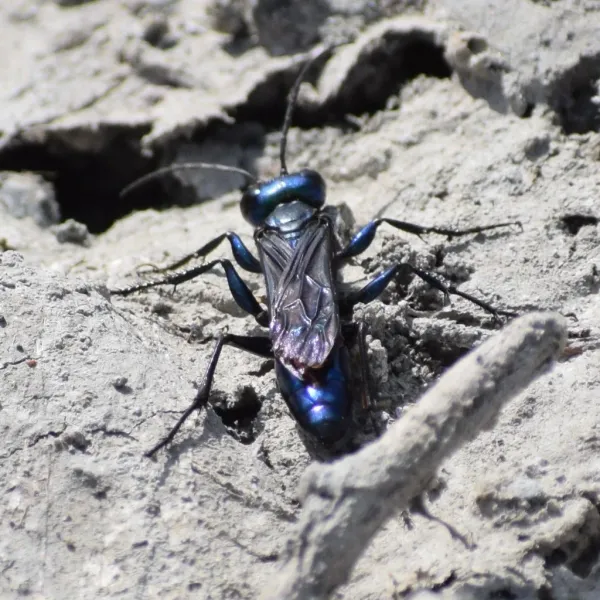
The steel-blue cricket hunter is a large, shiny blue solitary wasp that digs ground burrows and stocks them with paralyzed field crickets. It is not aggressive and rarely stings people.
Taxonomy
Steel-Blue Cricket Hunters Coloration
Common color patterns to help identify steel-blue cricket hunters
Steel-Blue Cricket Hunters
Seasonal Activity
When steel-blue cricket hunters are most active throughout the year

Where Steel-Blue Cricket Hunters Are Found
Hover over states to see their names. Green regions indicate where steel-blue cricket hunters have been reported.
Steel-Blue Cricket Hunter Identification Guide
Physical Characteristics
The steel-blue cricket hunter is a large thread-waisted wasp. Adults are about 3/4 inch to just over 1 inch long. The size and bright color make people stop and stare.
Key features include:
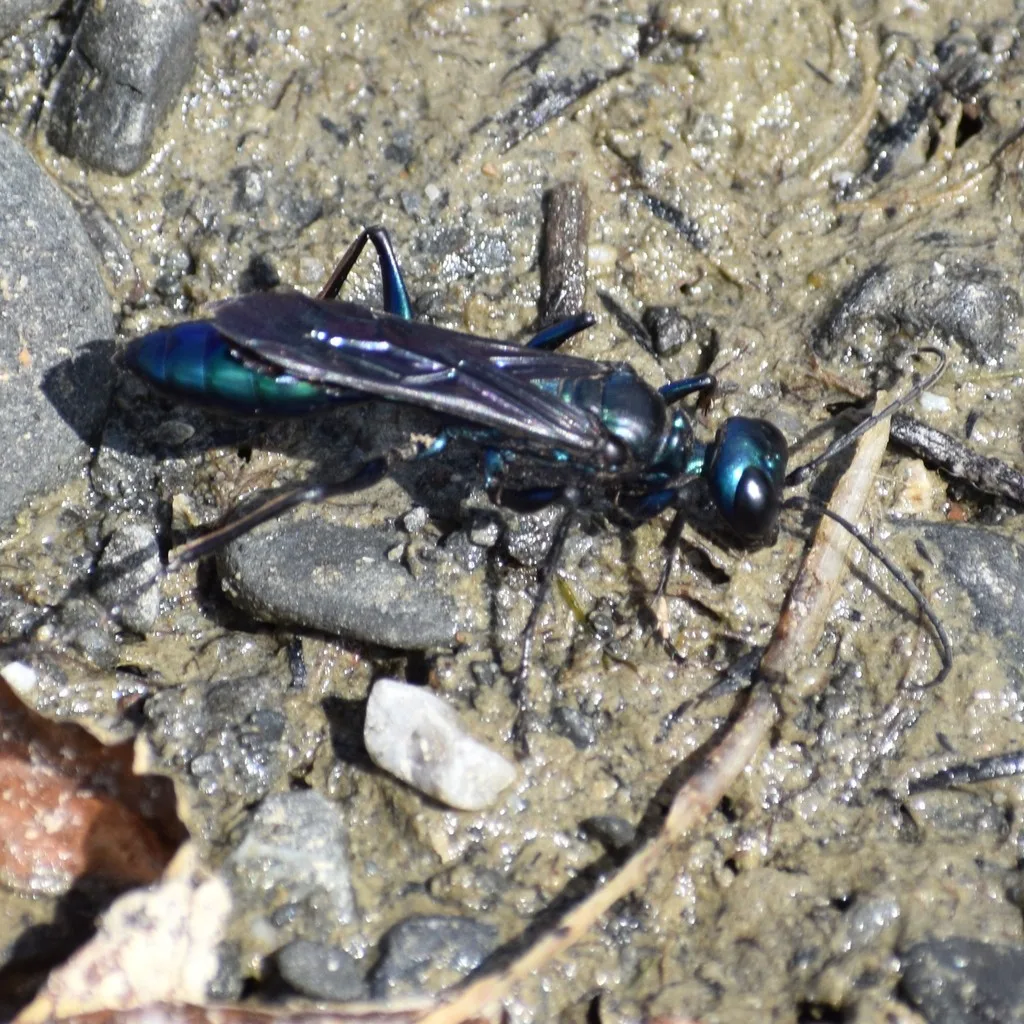
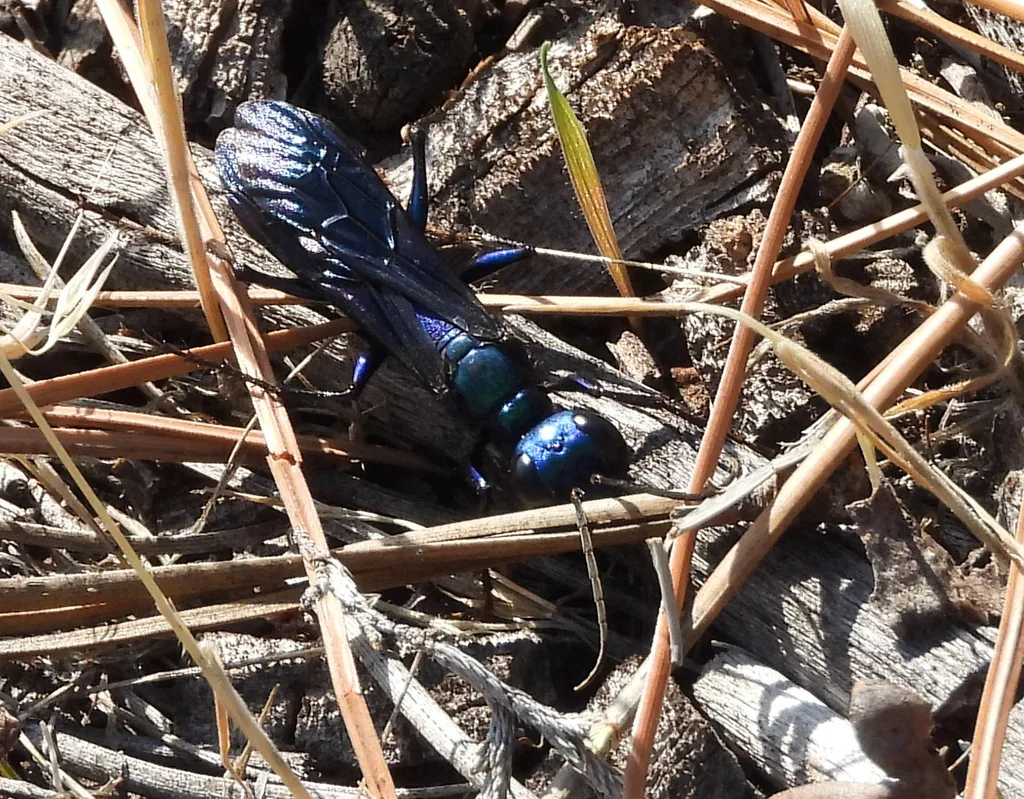
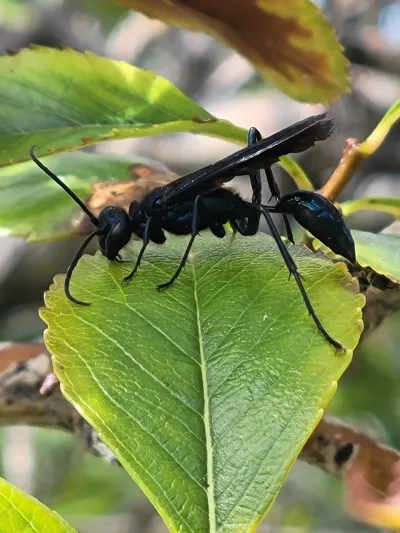
- Color: The whole body is metallic steel blue. In bright sun it can flash blue-green or violet. The legs and antennae are black.
- Wings: Smoky dark brown, often with a faint purple or amber tint toward the tips.
- Shape: A narrow waist joins the thorax to a shiny, rounded abdomen. The legs are long and spiny.
- Behavior you can see: It runs over the ground in quick bursts, flicking its wings and tapping its antennae as it hunts.
How to Tell It Apart From Look-Alikes
Several blue or black wasps share the same yards in summer:
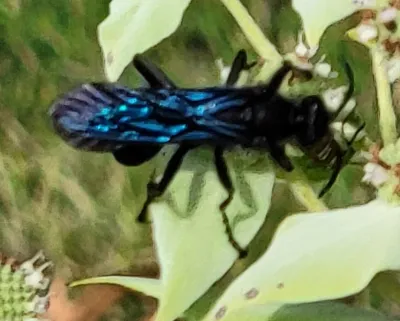
- Blue mud daubers (Chalybion californicum) have a very similar color. They are usually smaller and have a longer, thinner waist. They hunt spiders, not crickets, and are most often seen near mud nests on porches, sheds, and attics.
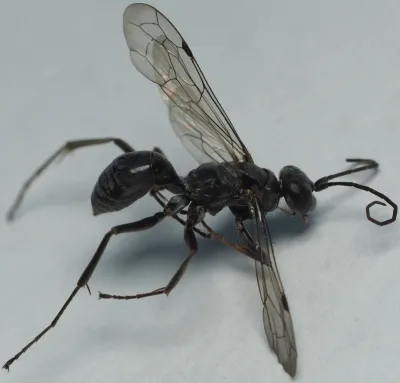
- Great black wasps (Sphex pensylvanicus) are larger, up to 1.4 inches. Their body is mostly flat black, with the blue shine showing mainly on the wings. They hunt katydids and are common on flowers.
- Spider wasps (family Pompilidae), including blue-black spider wasps (Anoplius), also flick their wings nervously. They lack the stalk-like waist and drag spiders rather than crickets.
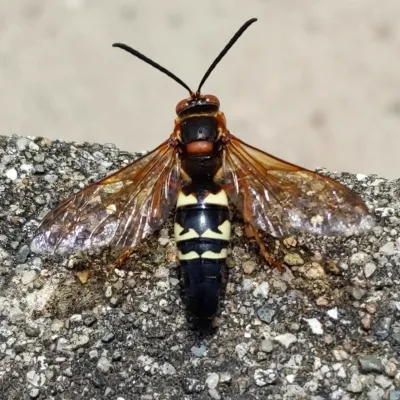
- Cicada killers are much bigger and have rusty red and yellow bands. They are not blue, but cricket hunters often nest right in their burrows, so you may see both at once.
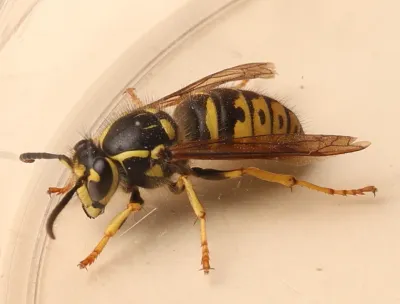
- Blue-winged wasps are hairy and black with two yellow spots and an orange tail end. They hover low over lawns hunting grubs.
Common Species
Chlorion aerarium is the most widespread member of its genus in the United States and Canada. A few relatives occur mainly in the Southwest and Mexico. Its closest everyday relatives are the great golden digger wasp and other digger wasps.
Steel-Blue Cricket Hunter Behavior and Biology
Habitat
These wasps prefer sunny, open ground with loose or dry soil. Common spots include lawn edges, garden beds, sandy paths, ball fields, and bare patches under shrubs. Public sighting records show them in nearly all of the lower 48 states, southern Canada, and northern Mexico. They are common in Maryland, Virginia, and DC.
Adults rarely feed at flowers. They more often drink sap oozing from wounded plants, though they will visit nectar sources like bee balm.
Diet and Hunting
As the name suggests, females hunt field crickets. In the eastern U.S., the main prey is the fall field cricket, Gryllus pennsylvanicus. A female searches leaf litter and garden debris. She flushes a cricket from hiding and stings it several times. The venom paralyzes the cricket but does not kill it.
She then grabs the cricket by its antennae and drags it back to her burrow. University of Maryland entomologist Michael Raupp has written about watching this behavior in his own yard and garden.
Nesting and Life Cycle
The steel-blue cricket hunter has an unusual nesting habit. It often uses the burrow of a cicada killer as a front hallway. The female digs small side tunnels off the main shaft. She builds several cells in them. Where cicada killers are scarce, she may start her own burrow or borrow one left by another wasp or bee.
Each cell gets between two and nine paralyzed crickets. She lays one egg on a cricket, then seals the cell with soil, small stones, and debris. The larva hatches and eats the stored crickets. Then it spins a cocoon and spends the winter underground. New adults come out the next summer.
There is one generation per year. In the Mid-Atlantic, nest building peaks in late July and August.
Sting Risk
Steel-blue cricket hunters are solitary. Each female works alone. There is no colony to defend, so they seldom sting people. Females sting only when they are handled, trapped against skin, or stepped on. Males have no stinger.
A sting is painful but brief for most people. People with a known allergy to wasp or bee stings face a greater risk from any stinging insect. This is not medical advice. If you are stung and have trouble breathing, swelling of the face or throat, or dizziness, get emergency care right away and talk to your doctor about an allergy plan.
How Pest Control Companies Treat Steel-Blue Cricket Hunters
Homeowners usually call when burrows sit in busy spots, like a sandbox, a patio edge, or a walkway. Cricket hunters often share burrows with cicada killers. For that reason, a typical service covers the whole nesting site.
- Inspection: A technician confirms the wasp species and finds the active burrow openings. It is important to rule out yellowjackets. Ground-nesting yellowjackets are far more defensive and need a different approach. As with any stinging insect, if the nest can’t be found, it can’t be treated.
- Treatment: For ground-nesting solitary wasps, the usual method is an EPA-registered insecticide dust or residual product put right into each burrow opening. This targets the wasp where it nests instead of spraying the whole yard. The product label controls how and where it can be used, and some labels limit use far from a building.
- Prevention & customer guidance: These wasps favor dry, bare, sunny soil. Thick turf, mulch or landscape fabric over bare beds, and regular watering make an area less attractive. Lowering field cricket numbers around the home also removes their food. Our pest control service targets crickets and other perimeter pests, and our team can look at ground-nesting wasps during a visit.
If you are in Northern Virginia, DC, or nearby Maryland and are not sure what is digging in your yard, our technicians can identify it and walk you through your options.
References
- Crickets beware: Steel-blue cricket hunter, Chlorion aerarium, Bug of the Week, Dr. Michael J. Raupp, University of Maryland
- Chlorion, Sphecid Wasps of Michigan, University of Michigan Museum of Zoology
- Species Chlorion aerarium, BugGuide, Iowa State University
- Warning to Cicadas: Watch Out, Penn State Extension
- Cicada Killer Wasps (E-254), Purdue University Extension Entomology
- Insects and Scorpions at Work, CDC / NIOSH
Other Wasps
Explore other species in the wasps family
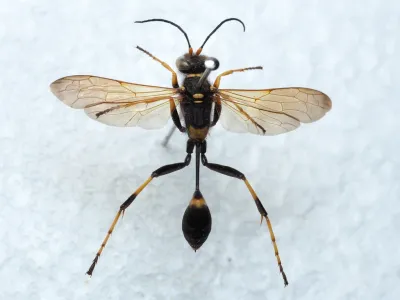
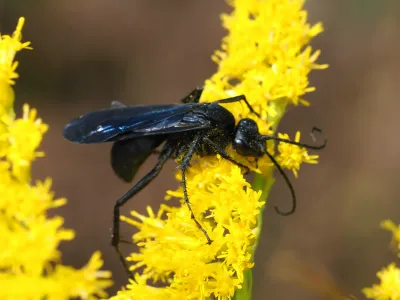
Commonly Confused With
Steel-Blue Cricket Hunters are often mistaken for these similar pests
Where Steel-Blue Cricket Hunters Are Found
Hover over states to see their names. Green regions indicate where steel-blue cricket hunters have been reported.
Common Questions about Steel-Blue Cricket Hunters
What is the big shiny blue wasp in my yard?
+
In summer, a large metallic blue wasp walking over bare soil or leaf litter is often a steel-blue cricket hunter. It is about an inch long with smoky wings and a thin waist. It flicks its wings and antennae as it searches the ground for crickets. A blue mud dauber looks similar but is usually smaller and is more often seen around mud nests on buildings.
Do steel-blue cricket hunters sting?
+
Females can sting, but they rarely do. They live alone and do not guard a colony. Most stings happen when a wasp is grabbed, trapped in clothing, or stepped on with bare feet. Males cannot sting at all. Anyone with a known wasp sting allergy should still keep their distance and follow their doctor's advice.
Are steel-blue cricket hunters dangerous to pets or kids?
+
They pose a low risk. They do not swarm or chase people the way yellowjackets do. The main concern is a child or pet stepping on or picking up a female near a burrow. Wearing shoes in the yard during July and August lowers that risk. So does treating burrows in play areas.
Why do I see them going in and out of holes in the ground?
+
Females nest underground. They often dig side tunnels off the larger burrows of cicada killer wasps, or start their own holes in dry, bare soil. Each side cell is stocked with several paralyzed field crickets, and one egg is laid in each cell. Seeing them near holes usually means cicada killers are nesting nearby too.
Do steel-blue cricket hunters damage lawns or homes?
+
No. They do not chew wood or build nests on houses. Their burrows are small and the soil they push out is minor. Any lawn mounds you notice are more likely from cicada killers, which dig much bigger tunnels in the same spots.
When are steel-blue cricket hunters active?
+
Adults show up from late spring into fall, with the most activity in July and August. That is when field crickets are plentiful and females are busy hunting and stocking nests. Activity drops off in September and they are gone by the first hard frost.
Should I have steel-blue cricket hunters treated?
+
If burrows are in a play area, next to a patio, or along a walkway, a pest control professional can find the burrows and treat them directly. These wasps often share burrows with cicada killers. Treating the cicada killer nesting site usually takes care of both.

With five years of hands-on experience in the pest control industry, George Schulz is a registered technician with the Virginia Pest Management Association and a proud third-generation professional in a family business that's been protecting homes for over 58 years. He manages and trains a team of service pros while also leading internal research efforts—recently spearheading a deep-dive review of thousands of documents on pest control materials to hand-pick the most kid and pet friendly, most effective solutions tailored specifically for homes in the DC metro area.
Local Wasps Help
Dealing with wasps at home? Our licensed technicians provide pest control across Northern Virginia and Maryland.
