
Six-Spotted Fishing Spider Identification Guide
Dolomedes triton
The six-spotted fishing spider is a large gray-brown spider with a cream stripe down each side and white dots on its back. It lives on ponds, lakes, and slow streams. It runs across the water and dives to catch prey. It rarely comes indoors and is not dangerous to people.
Taxonomy
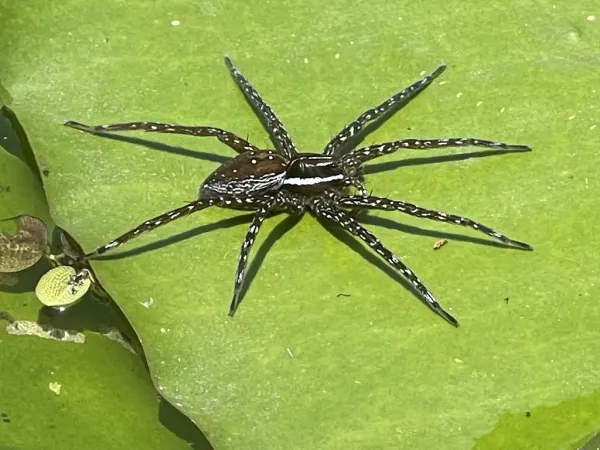
Six-Spotted Fishing Spider Coloration
Common color patterns to help identify six-spotted fishing spider
Six-Spotted Fishing Spider
Seasonal Activity
When six-spotted fishing spider are most active throughout the year
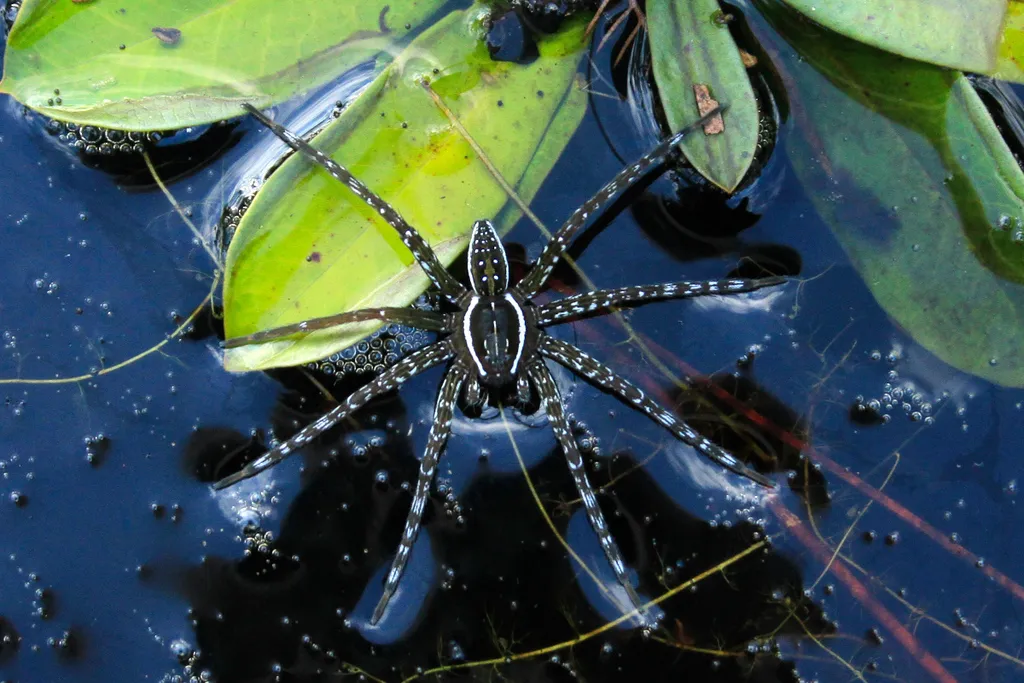
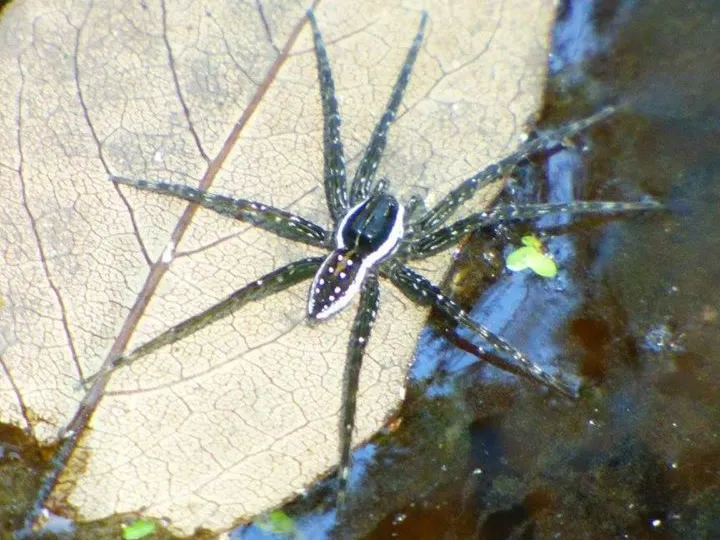
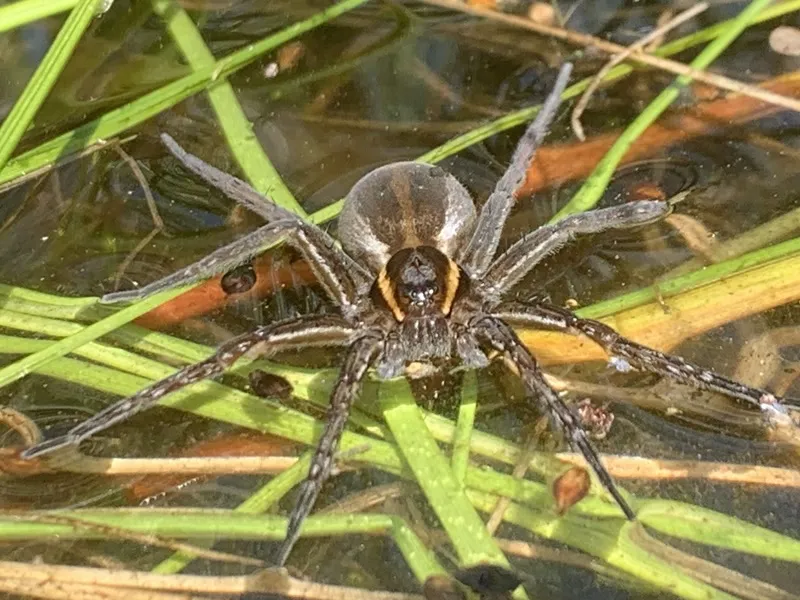

Where Six-Spotted Fishing Spider Are Found
Hover over states to see their names. Green regions indicate where six-spotted fishing spider have been reported.
Six-Spotted Fishing Spider Identification Guide
The six-spotted fishing spider (Dolomedes triton) is the spider you see standing on top of a pond. It rests on lily pads, floating plants, and docks with its front legs touching the water. It is one of several fishing spiders in North America. Its cousin, the dark fishing spider, often roams dry woods. This one almost never strays far from water. It is also called the spotted fishing spider.
Physical Characteristics
- Size: Females have a body about 15 to 20 mm long (roughly 3/4 inch), and some reach 26 mm. With legs spread, a female is about 2 1/2 inches across. Males are about half that size, with a body 9 to 13 mm long.
- Color: Gray to dark brown overall.
- Side stripes: A cream or white stripe runs along each side of the front half of the body. The stripe often runs down the sides of the abdomen too. This is the easiest mark to see.
- Abdomen: Several pairs of small white dots run down the dark back.
- Underside: Six dark spots sit on the belly side of the front half of the body. They give the spider its name. You only see them if the spider is flipped over.
- Legs: Long and spiny, with tiny white dots from pale hairs. At rest, the legs stretch out flat across the water or leaf.
- Eyes: Eight eyes of about the same size, set in two rows.
Telling It Apart From Look-Alikes
- Dark fishing spiders are larger and darker, with W-shaped marks on the abdomen and no bright side stripes. They often live in dry woods and show up in basements.
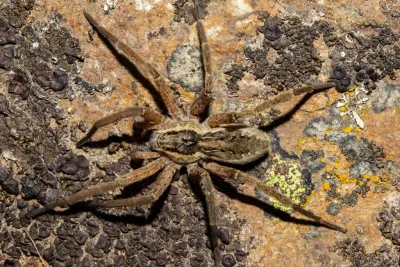
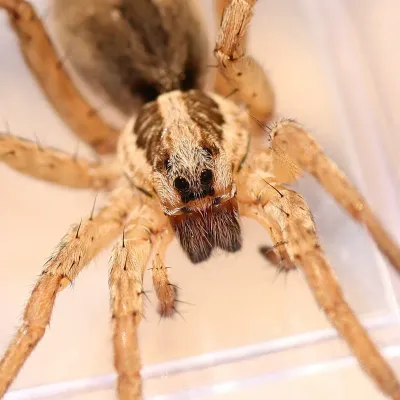
- Wolf spiders have two very large eyes in the middle of the face. Females carry the egg sac on the tip of the abdomen, not in the jaws. Some wolf spiders hunt at the water’s edge, but they do not rest on the water with legs spread. See our fishing spider vs. wolf spider guide for a side-by-side look.
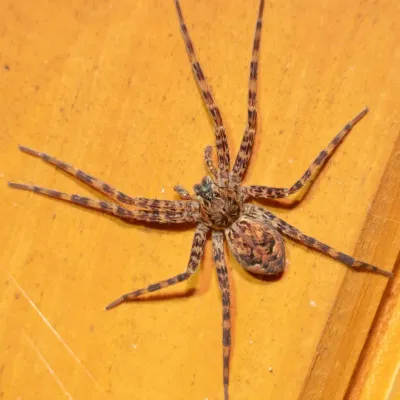
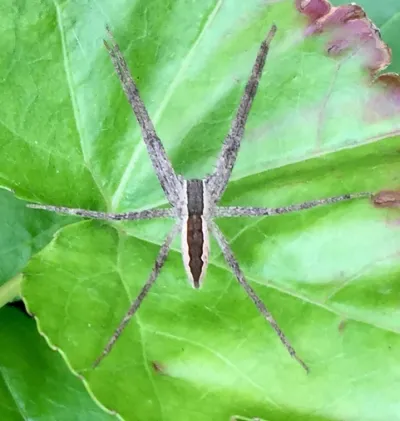
- Nursery web spiders are close relatives in the same family. They are slimmer, with a pale stripe down the middle of the back instead of along the sides.
- Striped fishing spiders (Dolomedes scriptus) also live on streams. They have wavy white lines on the abdomen rather than rows of dots.
Six-Spotted Fishing Spider Behavior and Biology
Habitat
This spider is semi-aquatic. It lives where there is calm, fresh water and plenty of plants, such as:
- Ponds, lake edges, and marshes
- Slow-moving streams and backwaters
- Garden ponds and water features
- Boat docks, piers, and boathouses
It lives across most of the United States and southern Canada. Its range reaches south to the Yucatán Peninsula in Mexico. It is most common east of the Rocky Mountains. In Virginia and Maryland, look for it on farm ponds, stormwater ponds, and slow creeks from spring through fall.
Diet and Hunting
This spider does not build a web to catch food. It sits still for a long time with its front legs on the water. When a bug lands or a small fish swims by, it feels the ripples. Then it sprints across the water to grab it.
It can also dive. Fine hairs on its body trap a thin layer of air. The air keeps it dry and lets it breathe under water. Dives to hunt or hide often last a few minutes. Animal Diversity Web reports stays of up to 45 minutes when it is escaping a predator.
It mostly eats water insects, such as mosquito larvae. It also eats land insects that fall onto the water, plus tadpoles and small fish. In turn, bass, sunfish, trout, frogs, birds, and spider wasps eat it.
Life Cycle
Adults are most active in summer. Females are much larger than males. They sometimes kill and eat a male before or after mating. About 10 to 14 days after mating, the female makes a round egg sac. She carries it in her jaws for several weeks.
Just before the eggs hatch, she ties leaves together with silk. This makes a “nursery web” in plants near the water. She hides the egg sac inside and stands guard. The spiderlings leave the web about a week after hatching. They grow through a series of molts until they reach adult size.
How We Treat for Six-Spotted Fishing Spiders
Six-spotted fishing spiders do not damage homes. But a big spider on the dock, deck, or back door is hard to ignore. Spider products are applied around the house, not to ponds or streams. So treatment focuses on keeping these spiders off your home and out of it. We treat them as part of our regular spider service in Northern Virginia and suburban Maryland.
- Inspection: We check the inside and outside of your home to find where spiders get in and what draws them. Common causes are gaps under doors, gaps around basement windows, and bright lights. Lights pull in the insects spiders eat.
- Treatment: We apply a non-repellent product to exterior entry points such as door frames, window wells, foundation corners, and garage door edges. Inside, treatment is limited to spot treatments in corners and around entry points.
- Web and spider removal: We knock down webs and spiders we can reach from the ground, up to about 6 to 8 feet.
- Ongoing service: We return three times a year to renew the exterior barrier. If spiders come back between visits, callbacks are free.
Prevention Tips for Homeowners
- Install door sweeps and seal gaps around doors, windows, and utility lines on the side of the house facing the water.
- Switch dock and porch lights to yellow “bug” bulbs, or turn them off when not in use.
- Knock egg sacs and nursery webs off docks, boat lifts, and deck railings in summer.
- Keep stored boat cushions, life jackets, and pool toys off the ground and shake them out before bringing them inside.
- Catch a lone spider under a cup and release it back near the water.
Six-spotted fishing spiders often share waterfront yards with wolf spiders and nursery web spiders. Our general spider plan covers the ones that try to move indoors.
References
- Spotted Fishing Spider - Missouri Department of Conservation
- Dolomedes triton - Animal Diversity Web, University of Michigan Museum of Zoology
- Fishing Spider - Penn State Extension
- Fishing Spiders (EF622) - University of Kentucky Entomology
- Spiders (Pest Notes 7442) - University of California Agriculture and Natural Resources
- Dolomedes fishing spider biology: gaps and opportunities for future research - Frontiers in Arachnid Science (2024)
Other Spiders
Explore other species in the spiders family
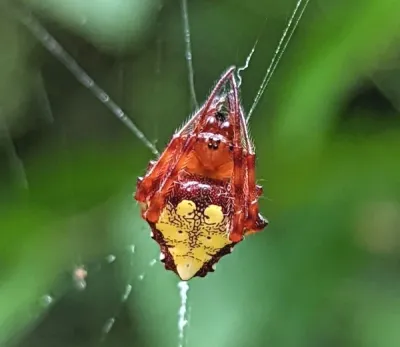
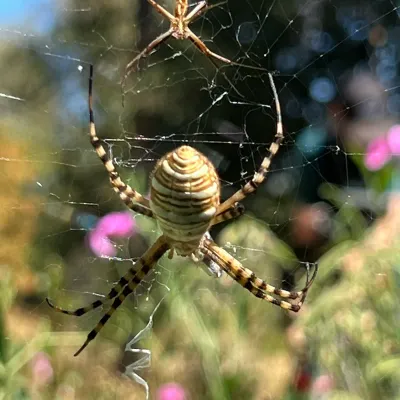
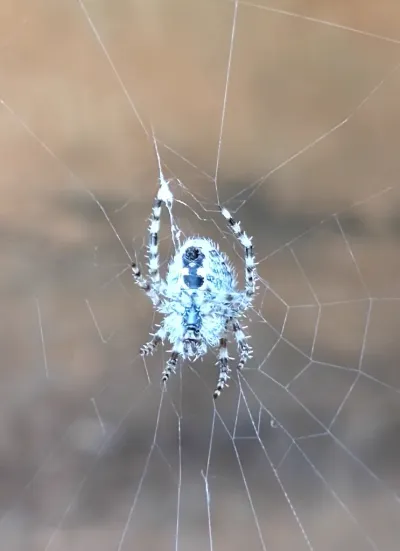
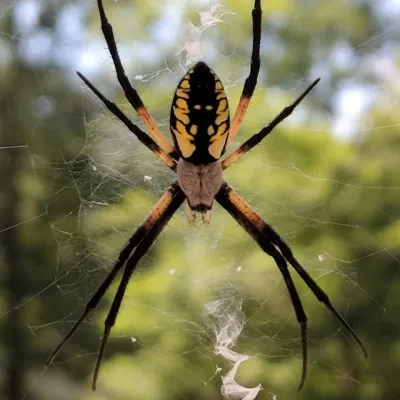
Commonly Confused With
Six-Spotted Fishing Spider are often mistaken for these similar pests
Where Six-Spotted Fishing Spider Are Found
Hover over states to see their names. Green regions indicate where six-spotted fishing spider have been reported.
Common Questions about Six-Spotted Fishing Spider
How do I identify a six-spotted fishing spider?
+
Look for a large gray-brown spider with a cream or white stripe along each side of the front half of its body. The abdomen has several pairs of small white dots. The six dark spots that give it its name are on the underside, so you rarely see them. If it sits on a pond, dock, or lily pad with its front legs on the water, it is likely this species.
Is the six-spotted fishing spider dangerous?
+
No. It is shy and would rather dive under the water than bite. A bite can happen if one is grabbed or pinned against skin. It is usually compared to a bee sting, with brief pain and mild swelling. See a doctor if you have an allergic reaction or a bite that gets worse after a day or two. This is general information, not medical advice.
Do six-spotted fishing spiders really catch fish?
+
Yes. Most of what they eat are water insects and bugs that fall onto the surface. They also catch tadpoles and small fish. They feel ripples with their front legs. Then they run across the water or dive under it to grab prey.
How long can a six-spotted fishing spider stay underwater?
+
Fine hairs on its body trap a layer of air. This lets it breathe and stay dry under water. The Missouri Department of Conservation says dives often last several minutes. Animal Diversity Web reports they can stay down for up to 45 minutes when hiding from predators.
Will six-spotted fishing spiders come into my house?
+
It's rare. This species stays close to ponds, lakes, streams, and marshes. The big brown spider people find in basements is usually a dark fishing spider or a wolf spider. Homes with docks, boathouses, or garden ponds may see six-spotted fishing spiders on those structures.
How do I keep fishing spiders off my dock or deck?
+
Knock down egg sacs and nursery webs in summer and sweep the spiders into the water. Turn off or swap dock lights for yellow bulbs so fewer insects gather at night. Keep the house side of the deck clear of clutter, and seal gaps around doors so wandering spiders stay outside.

With five years of hands-on experience in the pest control industry, George Schulz is a registered technician with the Virginia Pest Management Association and a proud third-generation professional in a family business that's been protecting homes for over 58 years. He manages and trains a team of service pros while also leading internal research efforts—recently spearheading a deep-dive review of thousands of documents on pest control materials to hand-pick the most kid and pet friendly, most effective solutions tailored specifically for homes in the DC metro area.
Local Spiders Help
Dealing with spiders at home? Our licensed technicians provide pest control across Northern Virginia and Maryland.
