Star-Bellied Orbweaver Identification Guide
Acanthepeira stellata
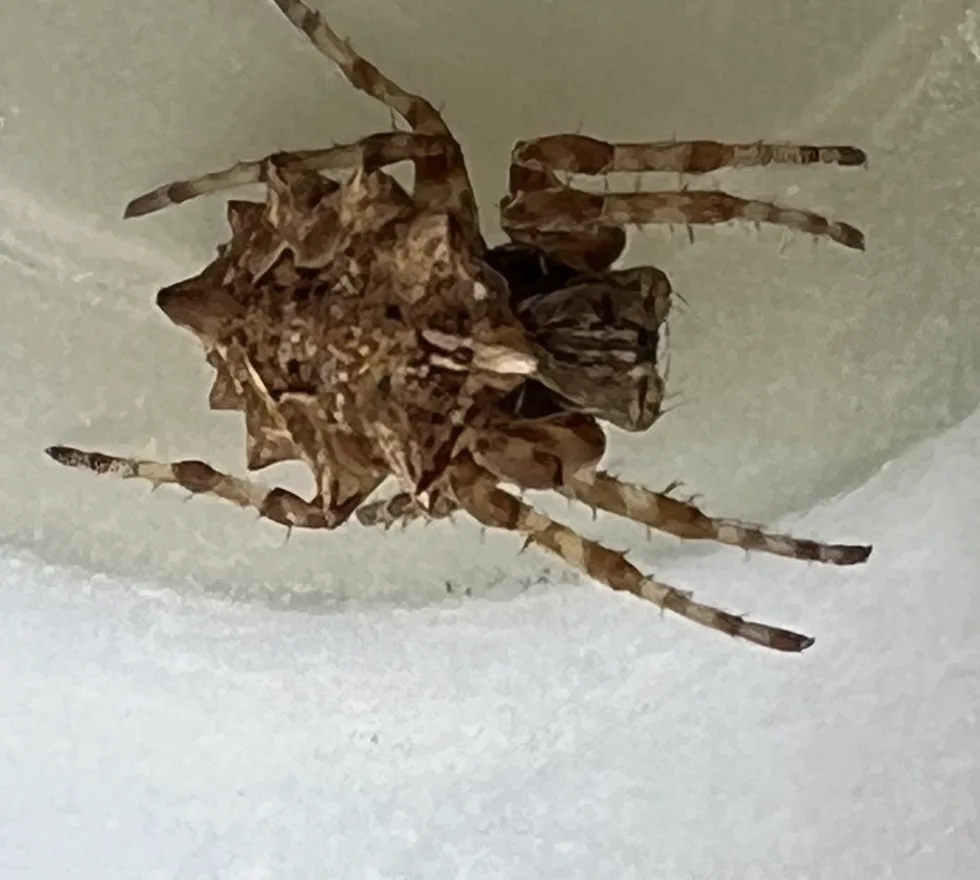
The star-bellied orbweaver is a small, harmless orb weaver with a crown of short spines around the edge of its abdomen. It builds webs low in fields and tall grass, and when disturbed it drops, tucks its legs in, and plays dead.
Taxonomy
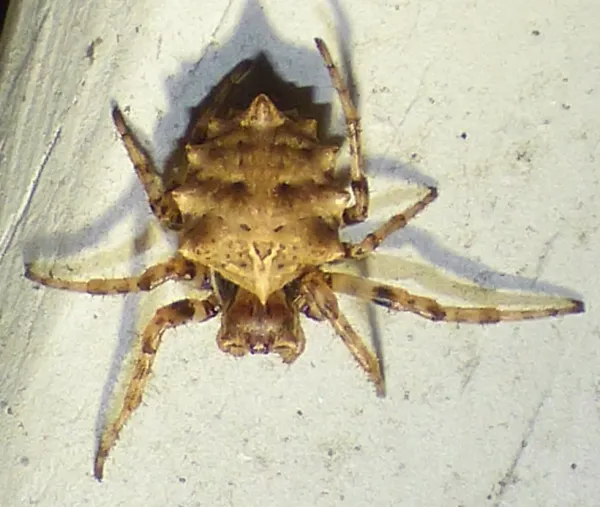
Star-Bellied Orbweaver Coloration
Common color patterns to help identify star-bellied orbweaver
Star-Bellied Orbweaver
Seasonal Activity
When star-bellied orbweaver are most active throughout the year

Where Star-Bellied Orbweaver Are Found
Hover over states to see their names. Green regions indicate where star-bellied orbweaver have been reported.
Star-Bellied Orbweaver Identification Guide
Physical Characteristics
The star-bellied orbweaver (Acanthepeira stellata) is a small orb weaver. People also call it the star-bellied spider or starbellied orbweaver. In this name, “belly” means the whole abdomen, not the underside. The species name stellata means “starred.”
The Missouri Department of Conservation lists females at about 1/4 to 5/8 inch long, not counting legs. That is roughly 7 to 15 mm. Males are only about 1/4 inch and are rarely seen.
Key features of an adult female:
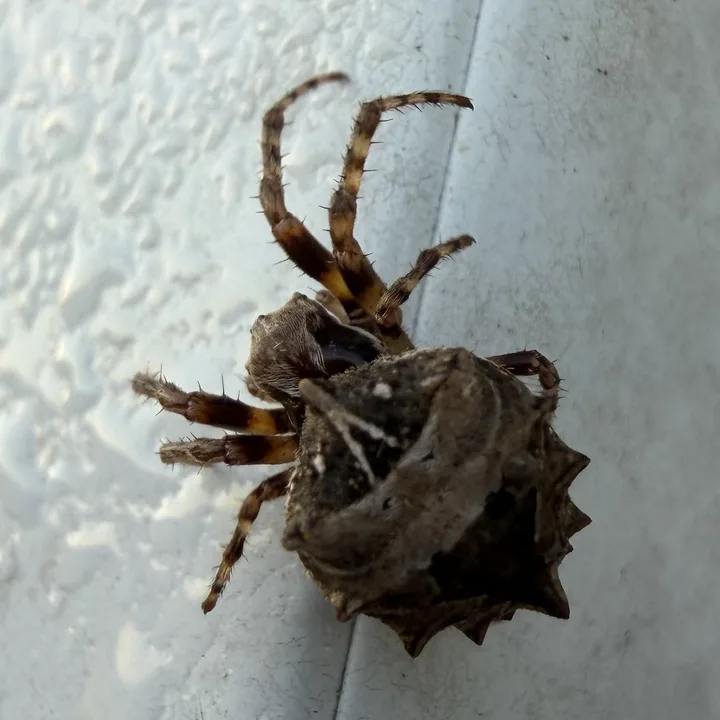
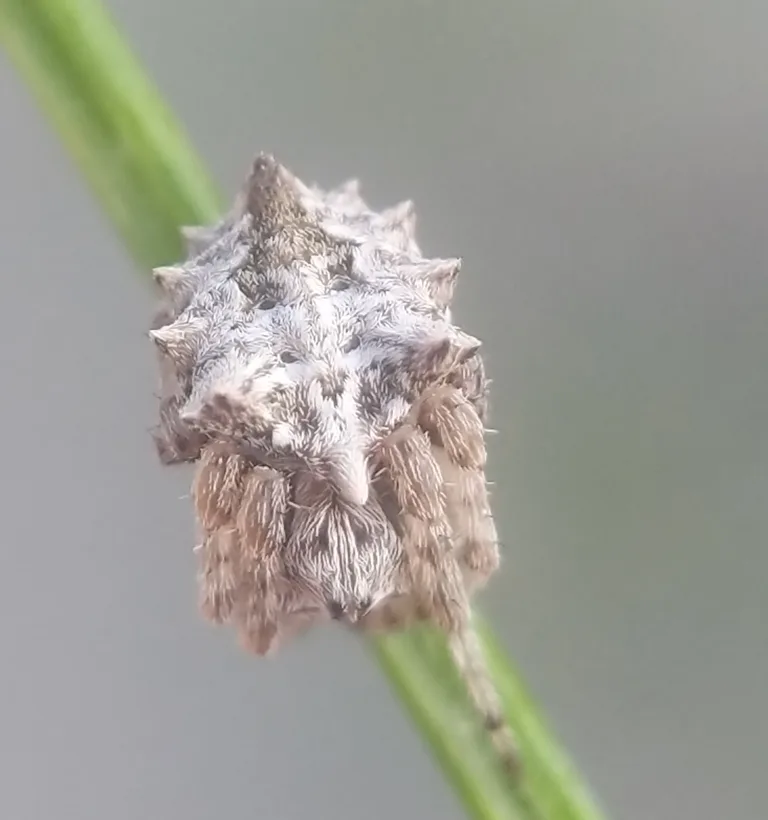
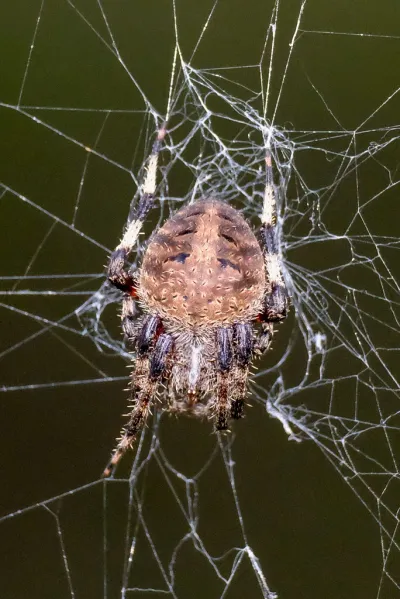
- Crown of spines: About a dozen short, blunt spines stick out around the outer edge of the abdomen. From above, the abdomen looks like a crown, a burr, or a little star.
- Star-shaped pattern: Many have a darker, star-like pattern on top of the abdomen. Some are fairly plain.
- Drab colors: Most are tan, brown, or gray. Some lean yellowish, orange, or olive. The legs are usually banded light and dark.
- Head-down in the web: The female usually sits in the center of her web with her head pointing down.
- Plays dead: When disturbed, she drops and pulls her legs in tight. She then looks like a clump of dirt or a bit of dried plant.
How to Tell Star-Bellied Orbweavers Apart from Look-Alikes
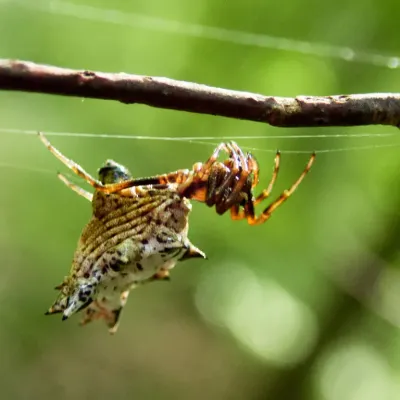
- Spined micrathena: Another small, spiny orb weaver. Its abdomen is hard and pale, often white, with sharp spines mostly toward the rear. It builds webs at face height in shady woods. The star-bellied orbweaver is brown or gray, has spines all the way around the edge, and prefers sunny, grassy places.
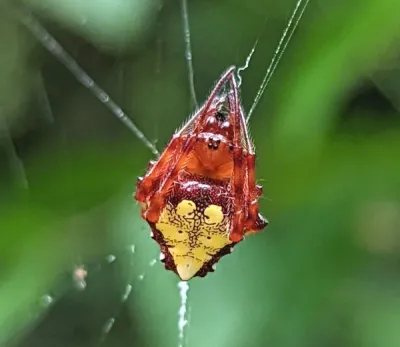
- Arrowhead spider: Has a triangle-shaped abdomen with small bumps and a shiny white or yellow triangle on top. It also rests head-up in its web, while the star-bellied orbweaver hangs head-down.
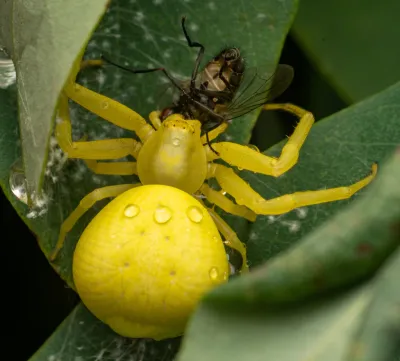
- Crab spiders: Some have a wide, lumpy abdomen. A star-bellied orbweaver with its legs pulled in can look similar. Crab spiders do not build orb webs. They wait on flowers and leaves with their front legs held out to the sides.
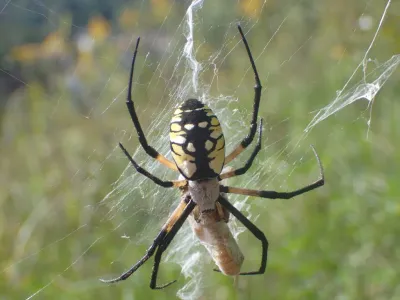
- Spotted orbweaver: Larger, with a smooth, round abdomen and no spines. It often builds big webs on porches and eaves at night.
Common Species
Acanthepeira stellata is the most widespread Acanthepeira species in the United States and Canada. A few close relatives live in the southern states and Mexico, such as Acanthepeira venusta in the Southeast. They look alike and are best told apart by experts.
Star-Bellied Orbweaver Behavior and Biology
Habitat
Star-bellied orbweavers like open, sunny places. Look for them in:
- Meadows, prairies, and old fields
- Tall grass and weeds along yard edges
- Garden beds and roadside plants
They build round, vertical webs about 1 foot across, usually within 4 feet of the ground. Public records on GBIF show the species across much of the eastern and central United States. It is especially common in Texas, the Midwest, and the Mid-Atlantic, and it reaches southern Ontario and New Brunswick in Canada. Maryland and Virginia both have a solid number of records, so it is a regular find in DC-area yards with tall grass or meadow plantings.
Diet
Like other orb weavers, the star-bellied orbweaver catches flying insects in a sticky web. Common prey includes:
- Mosquitoes
- Small flies and gnats
- Small moths and other flying insects
- Young grasshoppers that jump into the web
When an insect gets stuck, the spider bites it with venom. The venom stops the insect and starts to break it down, so the spider can drink the liquid.
Life Cycle
In most of North America, the star-bellied orbweaver lives about one year:
- Spring: Spiderlings hatch from egg sacs that spent the winter on plants.
- Late spring to midsummer: Young spiders grow and molt. Most reach adult size by midsummer.
- Summer to fall: Adults mate. Females wrap their eggs in a ball of tan or brown silk and attach it to leaves and stems.
- Hard frost: Adults die. The egg sacs carry the next generation through winter.
In Virginia and Maryland, records rise through spring, peak around July, and taper off in late fall.
Defensive Behavior
The play-dead trick is this spider’s best defense. It may scramble onto nearby plants or drop straight to the ground. It then tucks its legs against its tough, spiny body and holds still. Birds, frogs, lizards, spider wasps, and other spiders all hunt orb weavers. Looking like a dried seed helps it get passed over.
How We Treat for Star-Bellied Orbweavers
Star-bellied orbweavers do not damage homes, and they rarely come indoors. Most stay out in the grass and weeds, eating insects. Most homeowners only call when web-building spiders keep showing up around doors, windows, and porches. Our spider control service handles them along with other common spiders.
- Inspection: We look for spider hot spots around your home and for what draws them in. Bright outdoor lights pull in the insects spiders eat. Tall grass and plants against the house give webs a place to anchor.
- Exterior treatment: We apply a non-repellent product to the outside of the home where spiders are active, such as windows, doorways, eaves, and corners.
- De-webbing: We knock down webs around the eaves and front porch that we can reach from the ground, up to about 6 to 8 feet.
- Ongoing service: Follow-up visits renew the outside treatment and clear new webs. You also get unlimited free callbacks between visits, and the same plan covers other common household pests.
Spider products work best on and near the house itself, because they are applied to the structure. Webs out in a meadow or back field are best handled by mowing the grass and weeds the spiders build in.
Prevention and Customer Guidance
- Mow or trim tall grass and weeds right next to the foundation
- Keep a small gap between garden plants and the siding
- Switch porch lights to yellow bug bulbs to draw fewer insects
- Close blinds at night so indoor lights do not pull insects to windows
- Sweep webs off doorways and railings with a broom
- Move a stray spider outside with a jar and a piece of card
References
- Starbellied Orbweaver - Missouri Department of Conservation field guide
- Acanthepeira stellata - Integrated Taxonomic Information System (ITIS)
- Acanthepeira stellata occurrence records - Global Biodiversity Information Facility (GBIF)
- Species Acanthepeira stellata - Starbellied Orbweaver - BugGuide, Iowa State University
- Starbellied Orbweaver (Acanthepeira stellata) - iNaturalist
- Spiders: Management Guidelines - University of California Agriculture and Natural Resources
Other Spiders
Explore other species in the spiders family
Commonly Confused With
Star-Bellied Orbweaver are often mistaken for these similar pests
Where Star-Bellied Orbweaver Are Found
Hover over states to see their names. Green regions indicate where star-bellied orbweaver have been reported.
Common Questions about Star-Bellied Orbweaver
Is the star-bellied spider dangerous?
+
No. The star-bellied orbweaver is harmless to people and pets. Like nearly all spiders it uses venom on insects, but the Missouri Department of Conservation lists it as harmless to people. It is small and shy, and it would rather drop out of its web and play dead than bite.
How do I identify a star-bellied orbweaver?
+
Look for a small tan, brown, or gray spider with a row of short spines sticking out around the edge of its abdomen, like a crown. Many also have a star-shaped pattern on top of the abdomen. Females are about 1/4 to 5/8 inch long, not counting legs. Males are much smaller.
Why does the star-bellied spider look dead?
+
Playing dead is its main defense. When something bumps its web, it drops to the ground or onto a plant and pulls its legs in tight against its body. With its spines and drab colors, it then looks like a clump of dirt, a seed, or a bit of dried plant.
Where do star-bellied orbweavers live?
+
They live in open, sunny places such as fields, meadows, prairies, and tall grass along yard edges. Webs are usually built within about 4 feet of the ground. They range across much of the eastern and central United States, into southern Canada and parts of Mexico.
When will I see star-bellied orbweavers in Virginia and Maryland?
+
Adults show up from late spring into fall. Sighting records in Virginia and Maryland peak around July, and adults die off when hard frosts arrive. Their egg sacs, wrapped in tan or brown silk, carry the next generation through winter.
Do star-bellied orbweavers come inside the house?
+
Rarely. They are outdoor spiders of grassy and weedy areas. You may find one on siding, a window screen, or a porch next to tall grass or garden beds, but they do not set up inside homes.
How do I get rid of star-bellied orbweavers?
+
For a single spider, knock down the web with a broom or move the spider outside with a jar and card. To keep them away from the house, mow tall grass and weeds near the foundation and use yellow bug bulbs on porch lights. If web-building spiders keep showing up around your doors and windows, our spider control service treats and de-webs the outside of the home.

With five years of hands-on experience in the pest control industry, George Schulz is a registered technician with the Virginia Pest Management Association and a proud third-generation professional in a family business that's been protecting homes for over 58 years. He manages and trains a team of service pros while also leading internal research efforts—recently spearheading a deep-dive review of thousands of documents on pest control materials to hand-pick the most kid and pet friendly, most effective solutions tailored specifically for homes in the DC metro area.
Local Spiders Help
Dealing with spiders at home? Our licensed technicians provide pest control across Northern Virginia and Maryland.
