Silverfish
Lepisma saccharina
Silverfish are small, wingless insects with a silvery-blue color and fish-like movements. They live in dark, humid areas and can damage books, paper, fabrics, and wallpaper.
Silverfish Identification Guide
Physical Characteristics
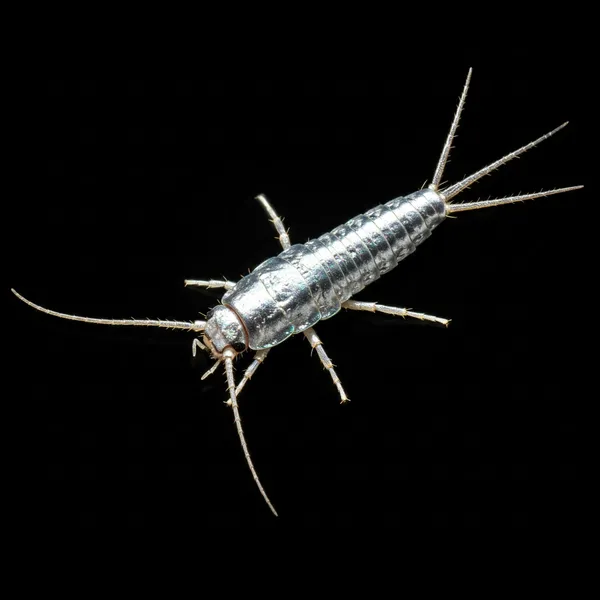
Silverfish are small, wingless insects with teardrop-shaped bodies. They are silver or gray and have a metallic sheen. Their bodies are covered in fine scales, giving them a slippery look. They have three long tail-like parts at the rear and two long antennae on their heads. Adults can grow up to 3/4 inch long. People sometimes confuse silverfish with firebrats or bristletails, which share a similar body shape.
Common Species
-
Lepisma saccharina (Common Silverfish)
-
Ctenolepisma longicaudata (Gray Silverfish) For more information, read our guide on Earwig vs Silverfish: Key Differences Explained.
-
Ctenolepisma lineata (Four-lined Silverfish)
Silverfish Behavior and Biology
Silverfish are active at night and prefer dark, humid areas. They eat paper, glue, fabric, and food crumbs. To learn more, read about what attracts silverfish to your home. If they’re already established in bathrooms or storage boxes, our Dunn Loring pest control team can knock down the population and correct the humidity supporting it. They can survive a long time without food but need moisture to live. Females lay small clusters of eggs in cracks and crevices. It can take several months to years for them to grow from egg to adult.
How We Treat for Silverfish
Our silverfish control strategy follows a similar approach to our millipede and centipede control:
-
Inspection: Our licensed technicians conduct a thorough inspection. We focus on areas where silverfish are most active, such as basements and bathrooms. We look for entry points, moisture issues, and food sources.
-
Interior Treatment: We apply targeted treatments to baseboards, cracks, and crevices. We use a non-repellent insecticide designed to control silverfish populations without scattering them further into the home.
-
Exterior Treatment: We apply granular or liquid insecticides around the home’s perimeter. We target moisture-prone areas like mulch beds and foundation gaps.
-
Moisture Reduction and Exclusion: Our technicians advise homeowners on reducing humidity levels. This includes using dehumidifiers, improving ventilation, and sealing entry points to limit silverfish access.
-
Ongoing Maintenance: Silverfish are persistent, so we recommend triannual treatments (three times per year) to maintain control and monitor activity. This ongoing care helps prevent reinfestations.
Types of Silverfish
Click on any species below to learn more about identification, behavior, and control methods.
Bristletails
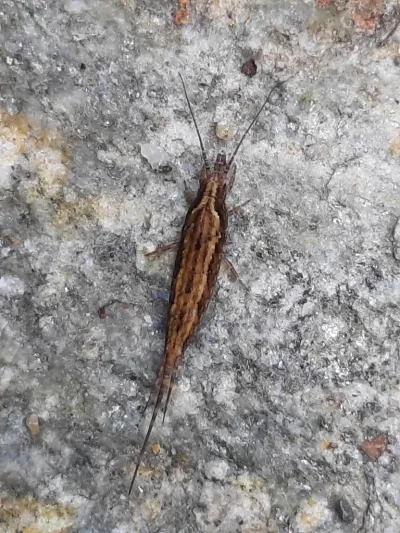
Archaeognatha
Bristletails are wingless insects with long bodies, three tail threads, and a humpbacked shape. These outdoor insects sometimes wander indoors but do not harm homes or people.
View identification guide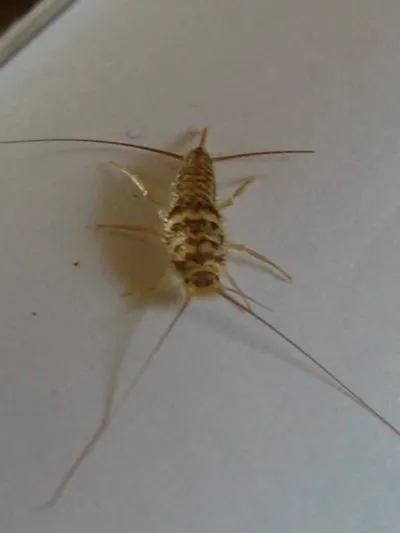
Firebrats
Thermobia domestica
Firebrats are small, wingless insects closely related to silverfish. They prefer hot, humid environments like boiler rooms, bakeries, and areas near furnaces. Their mottled gray-brown coloring and heat-loving behavior distinguish them from their silverfish cousins.
View identification guide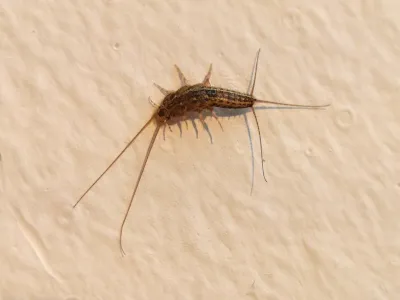
Four-Lined Silverfish
Ctenolepisma lineatum
The four-lined silverfish is a common household pest with distinctive dark stripes on its back. Larger and more robust than the common silverfish, it thrives in humid environments and feeds on paper, starches, and fabrics.
View identification guide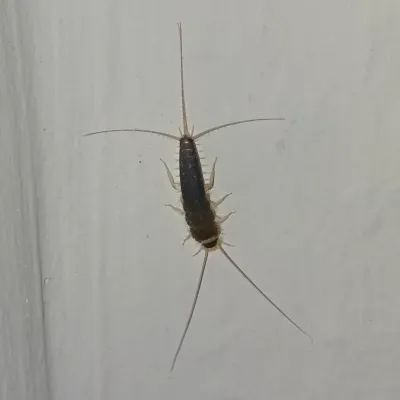
Gray Silverfish
Ctenolepisma longicaudatum
The gray silverfish, also known as the long-tailed silverfish or urban silverfish, is a large species found in homes across North America. Distinguished by its dull gray color and exceptionally long tail filaments, it thrives in humid indoor environments and can damage paper, books, and fabrics.
View identification guideCommon Questions about Silverfish
Why do I have silverfish in my home?
+
Silverfish like dark, damp places with food sources like paper, books, and fabric. Homes with high moisture from leaks or poor airflow are more likely to have them.
Are silverfish harmful?
+
Silverfish do not bite or spread diseases. However, they can damage books, wallpaper, clothing, and stored food.
How long does it take to get rid of silverfish?
+
Initial treatment reduces silverfish numbers quickly. Full removal may take weeks. Regular triannual treatments (three times per year) help keep them away.
Will silverfish go away on their own?
+
No, silverfish thrive in undisturbed, humid environments. Without intervention, their population can grow and spread.
What can I do to prevent silverfish?
+
Use dehumidifiers and improve airflow to reduce moisture. Seal cracks and gaps. Store food in sealed containers. Keep storage areas tidy.
Will your treatments kill silverfish eggs?
+
Yes, our treatments target adult silverfish and their eggs. This helps prevent future problems.
What if silverfish come back after treatment?
+
Customers with an active plan can request free callbacks if silverfish persist between scheduled visits.
More Resources About Silverfish
Explore our guides and articles for more information about silverfish.
- ›What Causes Silverfish? Tips to Get Rid of Bathroom Invaders
- ›Silverfish Control: Complete Guide to Removing These Pests
- ›Silverfish Larvae: Identification and Control Methods
- ›Silverfish Diet: What These Household Pests Actually Eat
- ›What Attracts Silverfish to Your Home | Effective Solutions
- ›Earwig vs Silverfish: Key Differences Explained
- ›House Centipede vs Silverfish: 5 Key Differences Explained
- ›Centipede vs Silverfish: How to Tell Them Apart & Treat Them
- ›Silverfish in Bathroom: Identification, Damage & Prevention
- ›Are Centipedes Dangerous? What Homeowners Need to Know
- ›House Centipede Eggs: Facts Every Homeowner Should Know
- ›Springtails in Bathroom: Tiny Bugs That Signal Moisture Issues
- ›Sawtoothed Grain Beetle: Identifying and Eliminating Them
- ›Tiny Brown Bugs in Bathroom: Identification & Removal Tips
- ›Silverfish vs Centipede: 5 Key Differences to Know About
Explore Other Pest Categories
Browse our comprehensive pest library for identification guides and control information.



With five years of hands-on experience in the pest control industry, George Schulz is a registered technician with the Virginia Pest Management Association and a proud third-generation professional in a family business that's been protecting homes for over 57 years.
Find Local Silverfish Control Services
We provide professional silverfish control throughout Virginia, Maryland, and the DC Metro area.
Local Silverfish Help
Dealing with silverfish at home? Our licensed technicians provide pest control across Northern Virginia and Maryland:
- AlexandriaPest Control
- AnnandalePest Control
- ArlingtonPest Control
- AshburnPest Control
- BethesdaPest Control
- BowiePest Control
- BurkePest Control
- CentrevillePest Control
- ChantillyPest Control
- Chevy ChasePest Control
- ClintonPest Control
- College ParkPest Control
- ColumbiaPest Control
- CroftonPest Control
- Ellicott CityPest Control
- FairfaxPest Control
- Fairfax StationPest Control
- Falls ChurchPest Control
- Fort WashingtonPest Control
- FrederickPest Control
- FredericksburgPest Control
- GainesvillePest Control
- GaithersburgPest Control
- GermantownPest Control
- Glen BurniePest Control
- Great FallsPest Control
- GreenbeltPest Control
- HerndonPest Control
- HyattsvillePest Control
- KensingtonPest Control
- LaurelPest Control
- LeesburgPest Control
- LortonPest Control
- ManassasPest Control
- McLeanPest Control
- OaktonPest Control
- OlneyPest Control
- Oxon HillPest Control
- PotomacPest Control
- RestonPest Control
- RockvillePest Control
- Silver SpringPest Control
- South RidingPest Control
- SpringfieldPest Control
- StaffordPest Control
- SterlingPest Control
- Takoma ParkPest Control
- Upper MarlboroPest Control
- ViennaPest Control
- WaldorfPest Control
- WarrentonPest Control
- WinchesterPest Control
- WoodbridgePest Control
- All service areas →