Tailless Whip Scorpions Identification Guide
Amblypygi
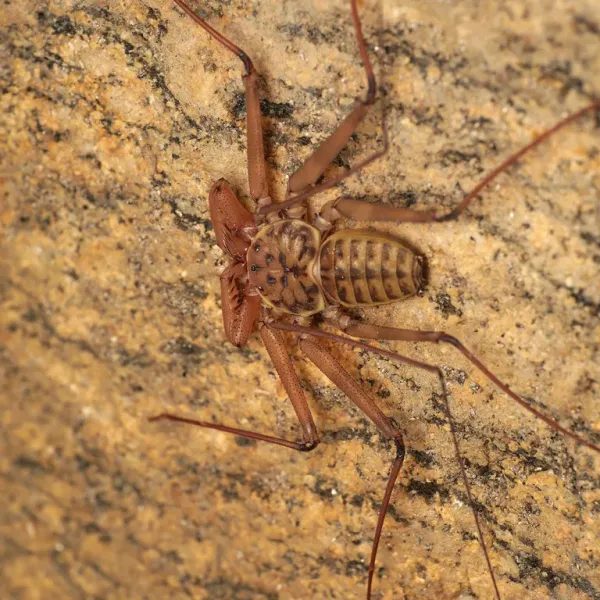
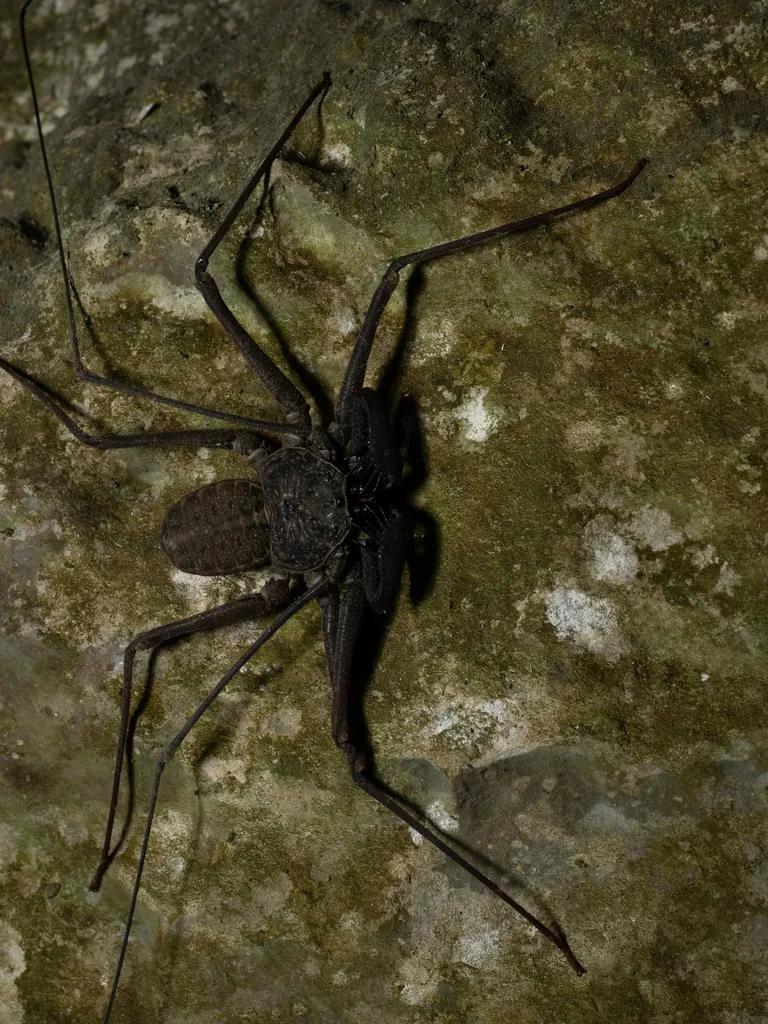
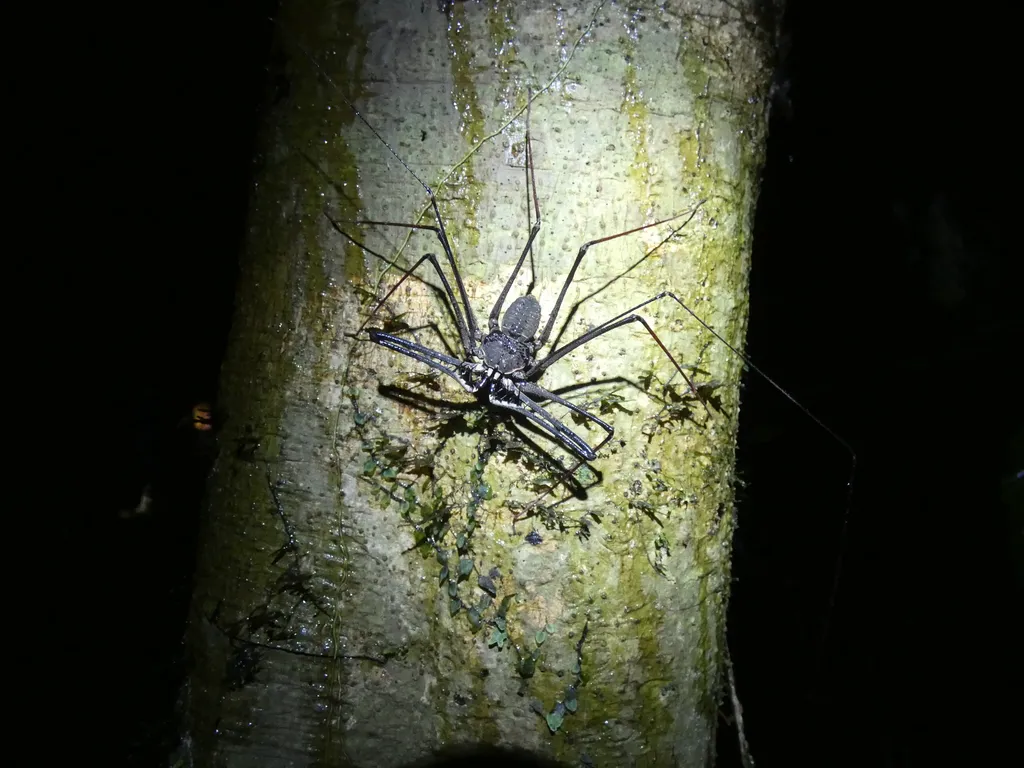
Tailless whip scorpions are flattened, nocturnal arachnids with long sensory front legs and spiny grasping pedipalps. Despite their alarming appearance, they are harmless to humans and do not possess venom or produce silk.
Taxonomy
Tailless Whip Scorpions Coloration
Common color patterns to help identify tailless whip scorpions
Tailless Whip Scorpions
Seasonal Activity
When tailless whip scorpions are most active throughout the year

Where Tailless Whip Scorpions Are Found
Hover over states to see their names. Green regions indicate where tailless whip scorpions have been reported.
Tailless Whip Scorpion Identification Guide
Physical Characteristics
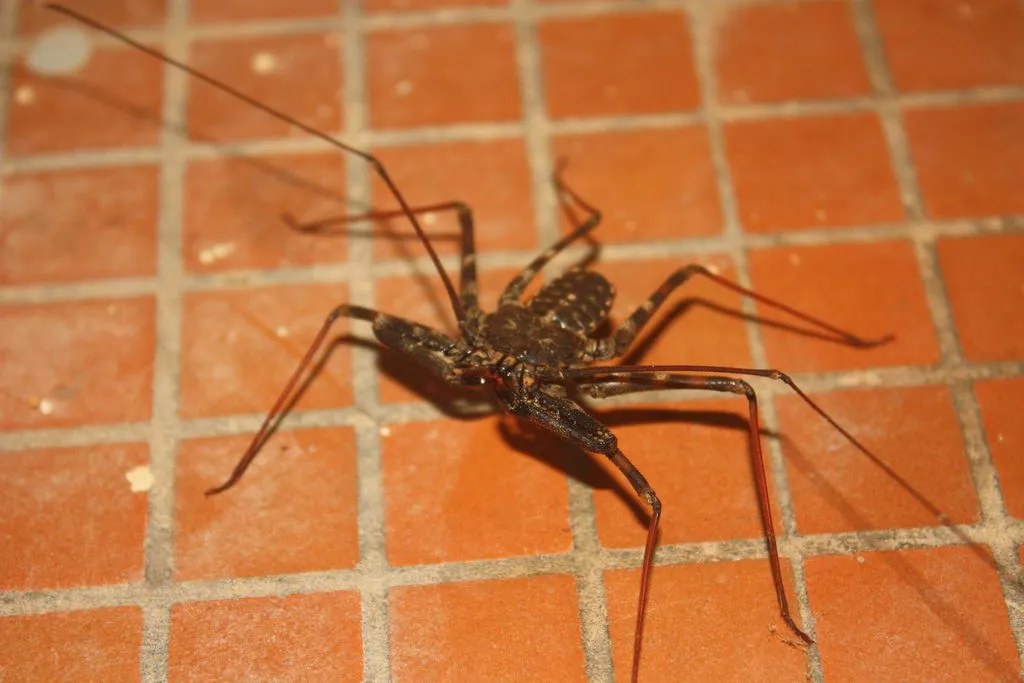
Tailless whip scorpions belong to the arachnid order Amblypygi and are among the most visually striking creatures a homeowner might encounter in warm, humid regions. Adults measure between 20 and 60 millimeters in body length (roughly 0.8 to 2.4 inches), though their legspan can extend to 5 inches or more depending on the species. Their bodies are distinctly flattened from top to bottom, which allows them to squeeze into tight crevices under bark, rocks, and cave walls.
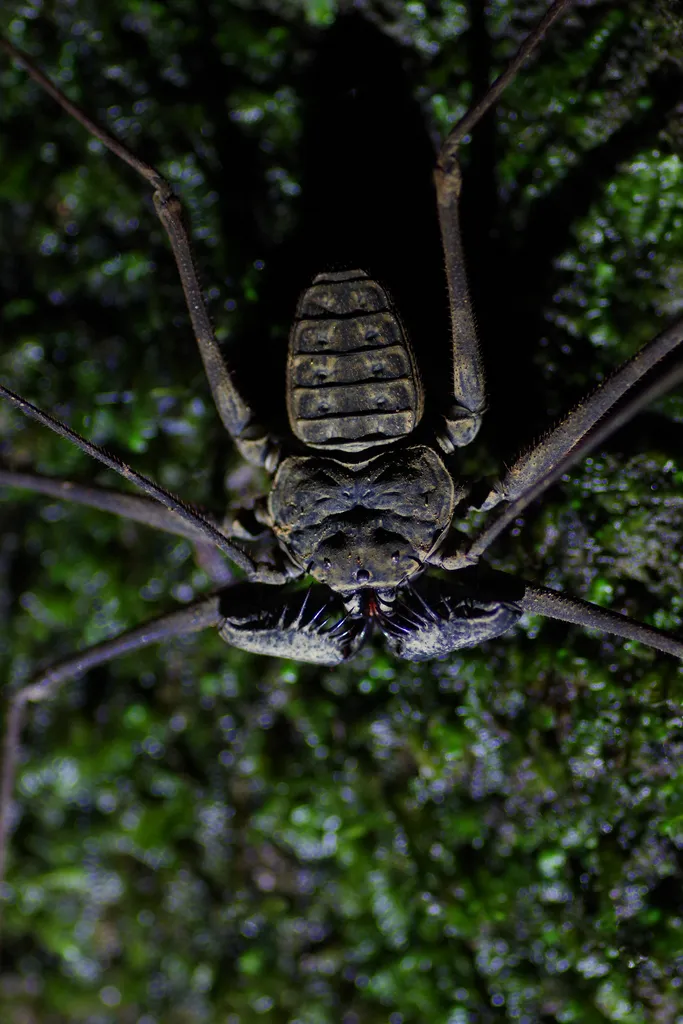
The most recognizable feature is their first pair of legs, which are extremely elongated and whip-like. These antenniform legs are not used for walking at all. Instead, they function as sensory organs, sweeping the environment ahead like antennae to detect vibrations, chemical signals, and obstacles. The remaining three pairs of legs handle locomotion.
Their pedipalps are large, spiny, and raptorial, resembling grasping pincers. These are used to seize and crush prey. Coloring ranges from tan and light brown to dark brown and reddish-brown, with most species displaying cryptic tones that help them blend into bark and stone surfaces. Notably, they lack a tail entirely, which immediately distinguishes them from vinegaroons (giant whip scorpions).
Common Species in North America
- Phrynus marginemaculatus — The most commonly documented species in the United States, found in southern Florida and the Florida Keys. Adults are dark brown with mottled markings on the abdomen.
- Paraphrynus species — Several species in this genus occur in the southwestern United States and throughout Mexico, often associated with cave systems and rocky desert habitats.
Tailless Whip Scorpion Behavior and Biology
Tailless whip scorpions are strictly nocturnal predators. During the day, they rest in protected retreats such as crevices in rock walls, under loose bark, inside cave entrances, or beneath debris. At nightfall, they emerge to hunt, using their antenniform legs to probe their surroundings before ambushing prey with their raptorial pedipalps.
Their diet consists primarily of insects, spiders, and other small invertebrates. They do not produce silk or webs of any kind, and they lack venom glands that would be medically significant to humans. When threatened, their typical response is to flee rather than fight.
Reproduction and Life Cycle
Mating involves a courtship ritual in which the male deposits a spermatophore that the female picks up. Females carry their eggs in a sac attached to the underside of the abdomen. After hatching, young tailless whip scorpions ride on their mother’s back until they complete their first molt, a form of parental care that is relatively uncommon among arachnids. These creatures are long-lived for invertebrates, with some species surviving 5 to 10 years.
Habitat Preferences
Tailless whip scorpions require warm, humid conditions to thrive. In North America, established populations are documented in southern Florida (especially the Florida Keys and the Everglades region), southern Texas (in cave systems and the Lower Rio Grande Valley), and parts of Mexico ranging from the Yucatan Peninsula through central and western states. They are not found in cooler climates and have no established populations in Canada or the northern United States.
Treatment Methods for Tailless Whip Scorpions
When a tailless whip scorpion is found inside a home, a pest control professional will typically focus on exclusion and habitat modification rather than broad chemical applications. Because these arachnids are non-venomous and do not reproduce indoors, the goal is to remove the individual and prevent future entry.
Common professional approaches include:
- Capture and relocation: A pest control technician can safely capture the animal and release it outdoors in a sheltered area near rocks or logs. Homeowners can also do this by placing a cup over the creature, sliding cardboard underneath, and carrying it outside.
- Sealing entry points: Caulking cracks in foundations, installing door sweeps, repairing torn window screens, and sealing gaps around utility penetrations helps prevent accidental entry. A thorough inspection of the home’s exterior can identify the likely access points.
- Habitat modification: Reducing rock piles, wood debris, and leaf litter near the foundation removes the sheltered, humid microhabitats that attract both tailless whip scorpions and the insects they feed on.
- Outdoor lighting adjustments: Switching to yellow “bug light” bulbs near entry doors reduces the number of insects drawn to the home at night, which in turn reduces the food source that may attract predatory arachnids closer to the structure.
- Moisture management: Addressing areas of excessive moisture near the foundation, including leaking hose bibs, poor drainage, or clogged gutters, makes the perimeter less hospitable to these moisture-dependent arachnids.
- Perimeter treatment: If the home has a broader pest issue attracting predatory arachnids, a targeted perimeter treatment to reduce the overall insect population around the structure can indirectly decrease the likelihood of encountering tailless whip scorpions indoors.
Commonly Confused Species
Tailless whip scorpions are often mistaken for several other arachnids due to their unusual appearance:
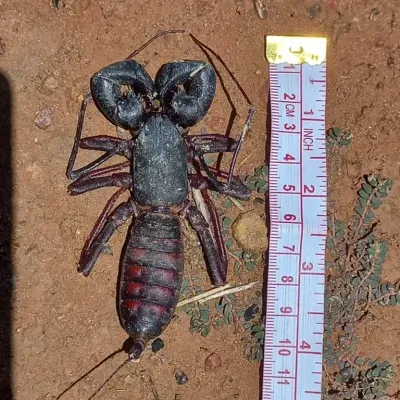
- Giant whip scorpions (vinegaroons): The most common confusion. Vinegaroons have a prominent whip-like tail and can spray acetic acid as a defense. Tailless whip scorpions lack any tail and have no chemical defense.
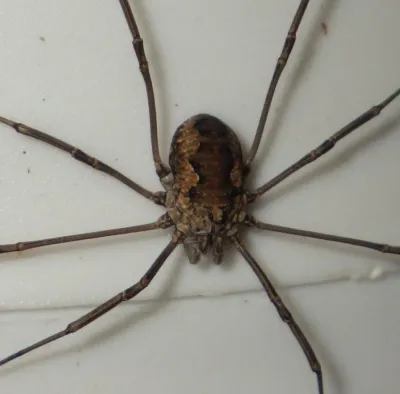
- Harvestmen (daddy longlegs): Harvestmen have a fused, rounded body without a clear division between the front and rear segments. They lack the large raptorial pedipalps and antenniform legs that define tailless whip scorpions.
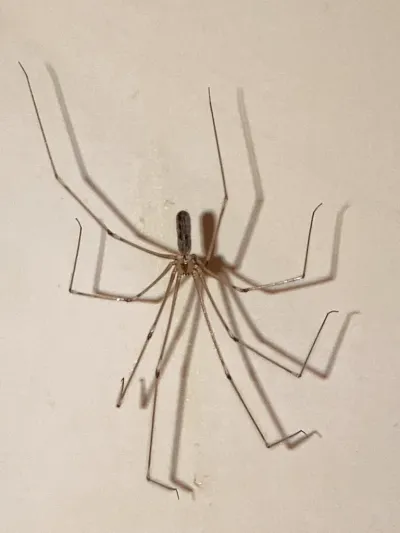
- Cellar spiders: While both are long-legged and found in dark areas, cellar spiders spin webs, have a distinctly different body shape, and lack the flattened profile and grasping pedipalps of tailless whip scorpions.
References
Other Other Pests
Explore other species in the other pests family
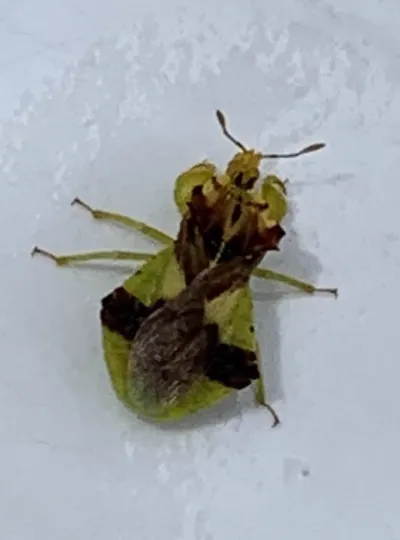
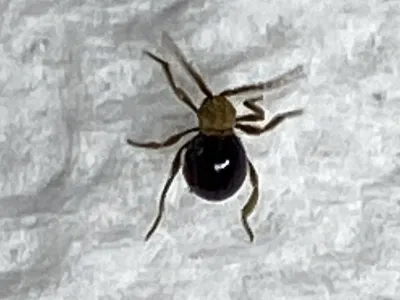
Commonly Confused With
Tailless Whip Scorpions are often mistaken for these similar pests
Where Tailless Whip Scorpions Are Found
Hover over states to see their names. Green regions indicate where tailless whip scorpions have been reported.
Common Questions about Tailless Whip Scorpions
Are tailless whip scorpions dangerous to humans?
+
No. Despite their intimidating appearance, tailless whip scorpions are completely harmless to people. They do not possess venom, do not sting, and do not spray defensive chemicals. If handled roughly, they may pinch lightly with their pedipalps, but this is not medically significant.
How can I tell a tailless whip scorpion from a vinegaroon?
+
The easiest way to tell them apart is the tail. Vinegaroons (giant whip scorpions) have a long, whip-like tail called a flagellum and can spray an acetic acid solution that smells like vinegar. Tailless whip scorpions have no tail whatsoever and cannot spray any defensive chemicals.
Why do tailless whip scorpions have such long front legs?
+
Their extremely long first pair of legs are modified sensory organs called antenniform legs. They function like antennae, sweeping the area ahead to detect prey, obstacles, and chemical signals. The remaining six legs are used for walking.
Where are tailless whip scorpions found in the United States?
+
In the U.S., tailless whip scorpions are found primarily in southern Florida, including the Florida Keys, and in parts of southern Texas. Limited records also exist near the Mexico border in Arizona. They prefer warm, humid environments such as caves, rock crevices, and under tree bark.
What should I do if I find a tailless whip scorpion in my home?
+
The recommended approach is gentle capture and relocation. Place a cup or container over the animal, slide a piece of cardboard underneath, and release it outdoors near suitable habitat such as a rock pile or wooded area. There is no need for chemical treatment.
Do tailless whip scorpions cause property damage?
+
No. Tailless whip scorpions are predators of insects and other small invertebrates. They do not chew wood, fabric, wiring, or stored food. Their presence indoors is incidental and poses no risk to your property.
Can tailless whip scorpions infest a home?
+
True infestations are extremely unlikely. These arachnids are solitary, nocturnal creatures that prefer outdoor habitats like caves and rock crevices. An individual found indoors has almost certainly wandered in by accident through an unsealed gap or crack.

With five years of hands-on experience in the pest control industry, George Schulz is a registered technician with the Virginia Pest Management Association and a proud third-generation professional in a family business that's been protecting homes for over 58 years. He manages and trains a team of service pros while also leading internal research efforts—recently spearheading a deep-dive review of thousands of documents on pest control materials to hand-pick the most kid and pet friendly, most effective solutions tailored specifically for homes in the DC metro area.
Local Other Pests Help
Dealing with other pests at home? Our licensed technicians provide pest control across Northern Virginia and Maryland.
