Giant Whip Scorpions Identification Guide
Mastigoproctus giganteus
The giant whip scorpion, also called the vinegaroon, is a large nocturnal arachnid found in the southern United States and Mexico. Despite its fearsome appearance, it is not venomous and defends itself by spraying a vinegar-like acid from its tail base.
Taxonomy
Giant Whip Scorpions Coloration
Common color patterns to help identify giant whip scorpions
Giant Whip Scorpions
Seasonal Activity
When giant whip scorpions are most active throughout the year

Where Giant Whip Scorpions Are Found
Hover over states to see their names. Green regions indicate where giant whip scorpions have been reported.
Giant Whip Scorpion Identification Guide
Physical Characteristics
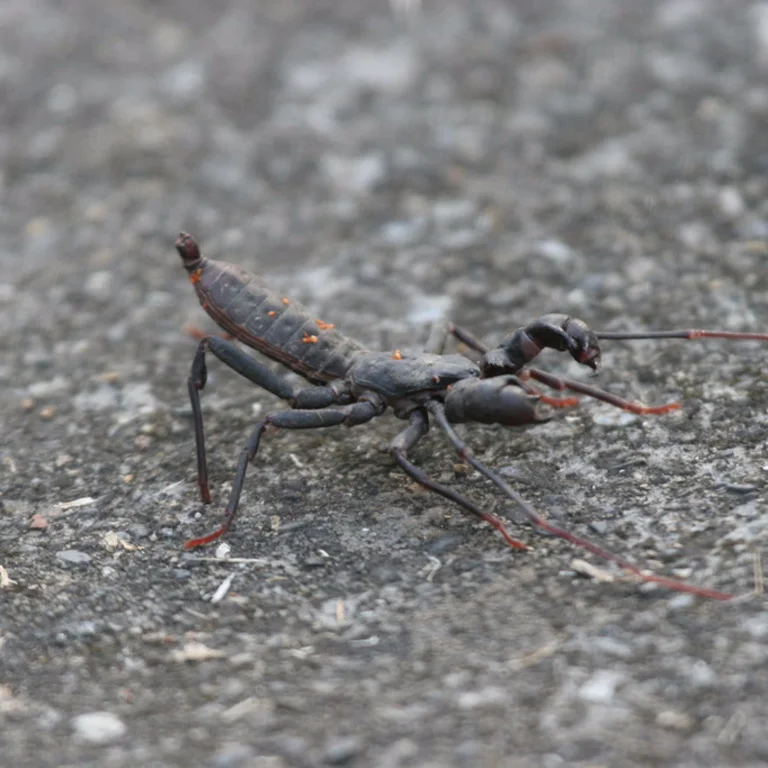
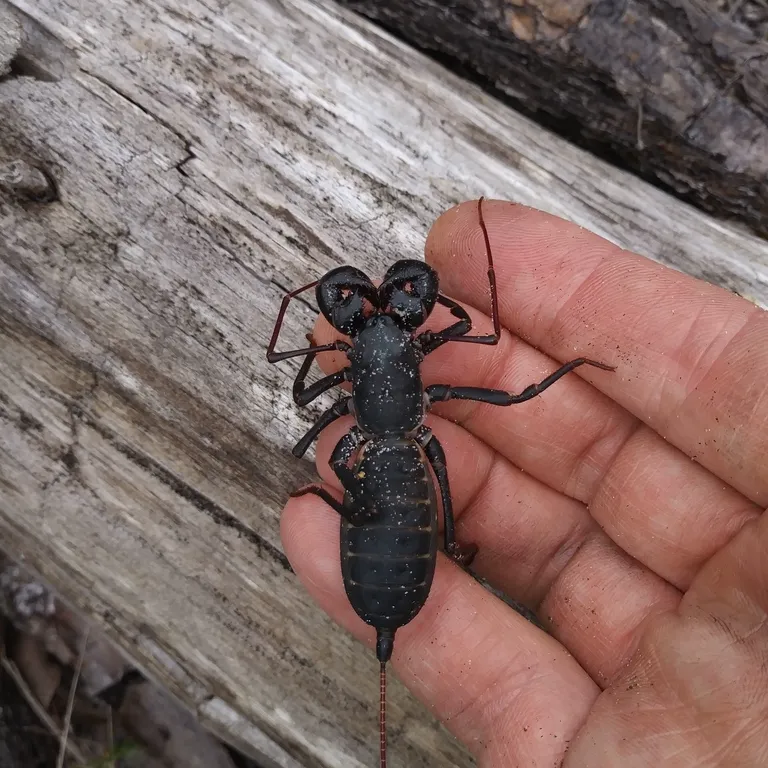
The giant whip scorpion (Mastigoproctus giganteus), also called a vinegaroon, is one of the most striking arachnids in North America. Adults are about 1.5 to 2 inches long in the body. With the tail included, total length can reach 3 to 5 inches. They look like scorpions but belong to a completely different group of arachnids.
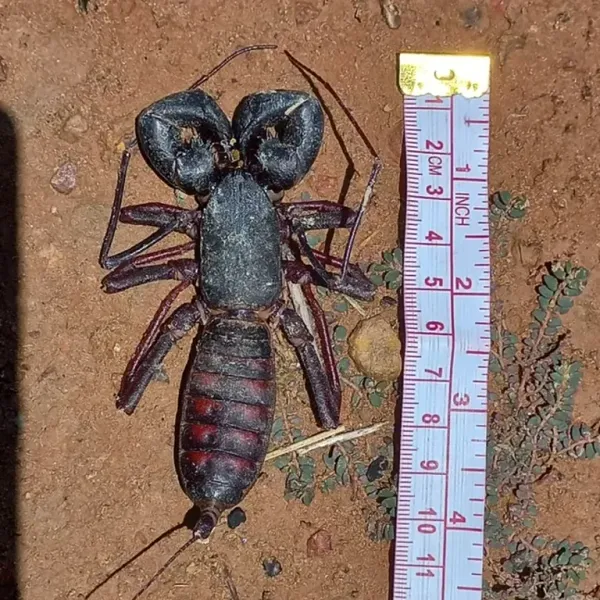
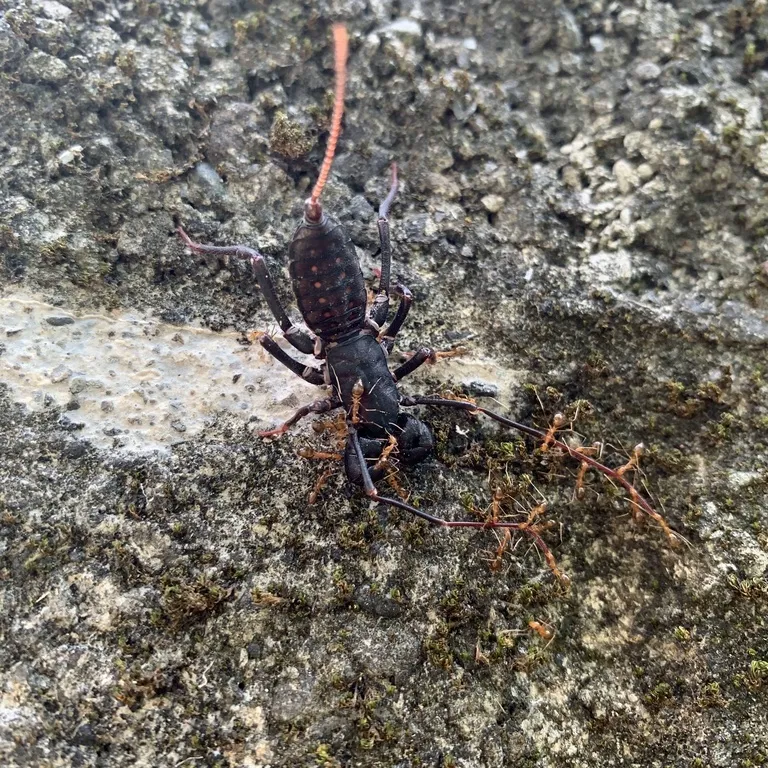
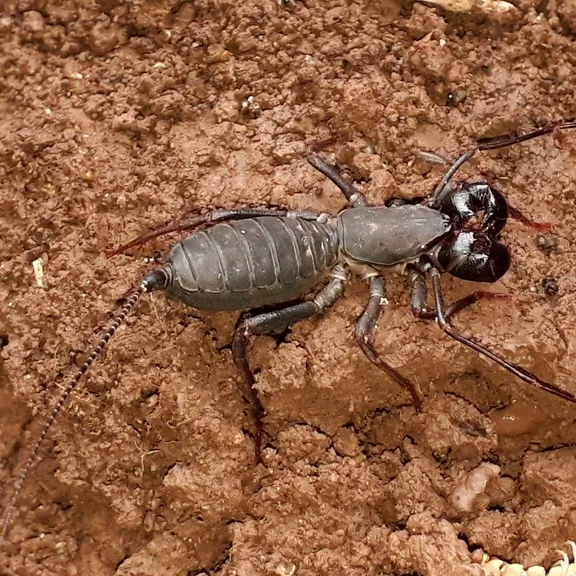
The body is dark brown to almost black with a hard, armored shell. Two large pincers called pedipalps sit at the front. These pincers are strong enough to crush prey. The first pair of legs is very long and thin, working more like antennae than walking legs. The other three pairs of legs handle walking, giving the animal six legs for getting around.
The most notable feature is the long, thin tail called a flagellum. This whip-like tail is a sensory organ, not a stinger. Near the base of the tail are glands that spray a solution made of roughly 85 percent acetic acid. That is the same chemical found in household vinegar, which is how the animal got its common name: vinegaroon.
Common Look-Alikes
Several other arachnids and arthropods are commonly confused with giant whip scorpions:
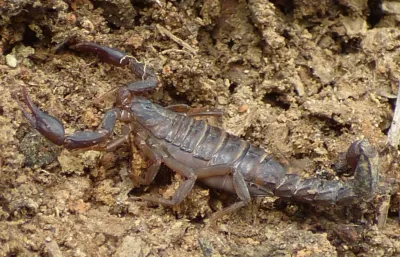
- True scorpions have a segmented tail that ends in a venomous stinger. Whip scorpions have a thin, whip-like tail with no stinger and no venom.
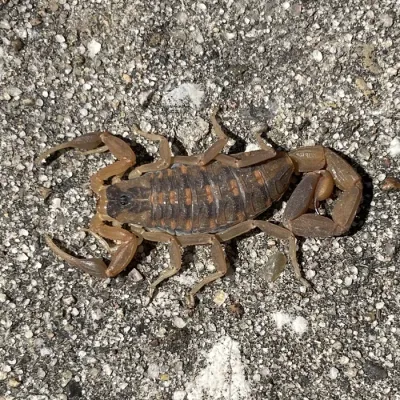
- Striped bark scorpions (Centruroides vittatus) are much smaller, lighter in color, and have the curved stinger tail of a true scorpion.
- Sun spiders (Solifugae), also called wind scorpions or camel spiders, look similar at first glance. They are very fast runners and have large jaws instead of pincers. They have no whip tail.
- Tailless whip spiders (Amblypygi) share the long sensory front legs but have a flat body and no tail at all.
To tell a giant whip scorpion apart from other look-alikes, check for its large pincers, thin whip-like tail, long sensory front legs, and very dark color.
Giant Whip Scorpion Behavior and Biology
Habitat and Distribution
Giant whip scorpions live across the southern United States and Mexico. In the U.S., they are found in Arizona, Florida, New Mexico, Oklahoma, and Texas. In Mexico, several species in the Mastigoproctus group live across Sonora, Chihuahua, Tamaulipas, Morelos, Jalisco, Veracruz, Oaxaca, and Chiapas.
A 2018 study from the American Museum of Natural History found that what was once called Mastigoproctus giganteus is actually several species. The Arizona population is now Mastigoproctus tohono. The Florida population is Mastigoproctus floridanus. For everyday purposes, all of these species look and act very much alike.
These arachnids come out only at night. During the day, they hide in shallow burrows they dig with their pincers. They also shelter under rocks, logs, boards, and leaf litter. They prefer warm areas with some moisture and are common in desert scrubland, subtropical forests, and rocky grasslands.
Diet and Feeding
Giant whip scorpions are meat-eating ambush hunters. They hunt at night and use their long front legs to pick up vibrations from nearby prey. They eat mainly cockroaches, crickets, termites, millipedes, and beetle larvae. On rare occasions, they may catch small frogs.
When a vinegaroon finds prey, it grabs the target with its strong pincers and crushes it. They are slow hunters that rely on stealth and grip strength rather than speed or venom.
Reproduction and Life Cycle
Giant whip scorpions have a lengthy mating process. Courtship can last 8 to 12 hours. The male leaves a sperm packet that the female picks up. After mating, the female produces a sac holding 30 to 40 eggs. She carries this sac on her body and seals herself inside a burrow while the eggs develop.
After the eggs hatch, the white, soft young climb onto the mother’s back. They ride there until their first molt, about one month later. The mother does not eat during this time. Young vinegaroons molt several times over two to three years before reaching full size. Adults can live four to seven years or longer.
Seasonal Activity
Vinegaroons are most active during warm, humid months. In the desert Southwest, activity peaks during and after the summer monsoon from June through September. Rain brings moisture and pushes prey insects to the surface. In subtropical Florida, they are active above ground from roughly May through November.
In cooler months, vinegaroons go back underground into their burrows and slow down. They do not handle cold well and are mostly dormant from December through February across their range.
Defense Mechanisms
When threatened, a giant whip scorpion stands up on its back legs, spreads its pincers wide, and sprays its acetic acid solution from glands at the base of its tail. This spray can reach about a foot and is aimed at the face of the threat. The vinegar-like spray irritates the eyes and nose but is not venomous or toxic.
The animal can also pinch hard with its pincers. The pinch is painful but does not inject venom. Giant whip scorpions pose no real medical risk to healthy adults. If the spray gets in your eyes, rinse them well with clean water.
Treatment Methods for Giant Whip Scorpions
When giant whip scorpions enter homes, a combination of exclusion, habitat changes, and targeted treatments can keep them out. Here are the most effective methods:
-
Capture and removal. If you find a vinegaroon inside, trap it under a container, slide stiff cardboard underneath, and carry it outside. Wear gloves to avoid being pinched or sprayed. Do not squeeze the animal, as this triggers the acid spray.
-
Exclusion. Seal cracks in the foundation, gaps around doors and windows, and openings where pipes or wires enter the home. Add or repair door sweeps and weatherstripping. Vinegaroons live on the ground and usually enter through gaps at floor level.
-
Habitat changes. Remove logs, rock piles, boards, and thick leaf litter close to the foundation. These create the dark, damp hiding spots vinegaroons use during the day.
-
Moisture reduction. Fix leaky outdoor faucets, point downspouts away from the foundation, and avoid overwatering near the home. Less moisture means fewer vinegaroons and fewer of the insects they feed on.
-
Prey reduction. Reducing cockroaches, crickets, and other insects around the home cuts off the food supply that draws vinegaroons close to or into a building.
-
Perimeter treatments. For homes with repeated vinegaroon problems, a pest control professional can apply perimeter treatments labeled for crawling pests and find specific entry points and hiding areas that need attention.
References
- UF/IFAS Featured Creatures: Giant Whip Scorpion (EENY-493)
- Texas A&M AgriLife Field Guide: Vinegaroon
- Barrales-Alcala et al. (2018): Systematic Revision of the Mastigoproctus giganteus Complex, Bulletin of the American Museum of Natural History
- GBIF: Mastigoproctus giganteus Species Data
- BugGuide: Order Thelyphonida (Whipscorpions)
Other Other Pests
Explore other species in the other pests family
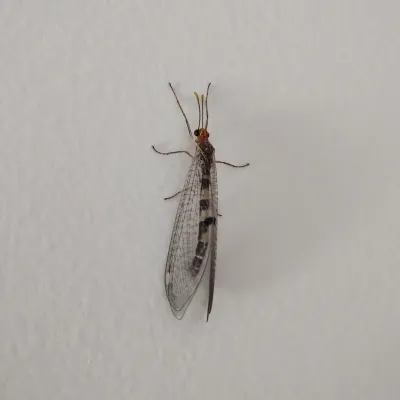
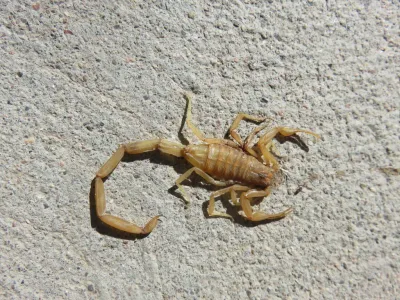
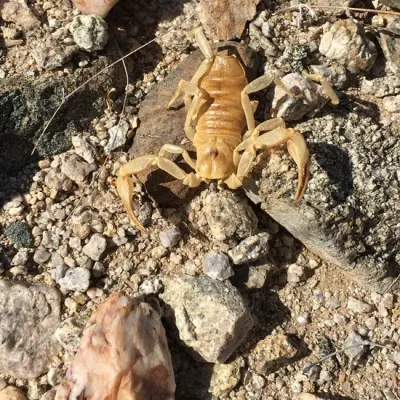
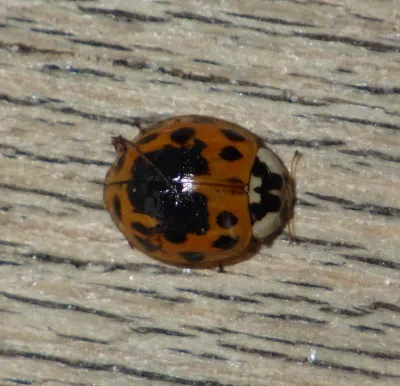
Commonly Confused With
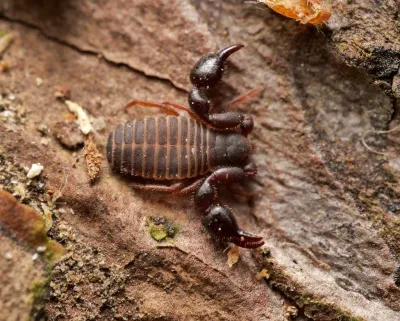
Giant Whip Scorpions are often mistaken for these similar pests
Where Giant Whip Scorpions Are Found
Hover over states to see their names. Green regions indicate where giant whip scorpions have been reported.
Common Questions about Giant Whip Scorpions
Are giant whip scorpions dangerous to humans?
+
Giant whip scorpions are not venomous and are not considered dangerous. They can pinch with their strong pedipalps, and they spray a vinegar-like acetic acid solution from glands near their tail base. The spray can irritate eyes and mucous membranes but is not toxic. If the spray gets in your eyes, rinse thoroughly with water.
Why is it called a vinegaroon?
+
The name vinegaroon comes from the acetic acid solution the animal sprays when threatened. This defensive spray is roughly 85 percent acetic acid, which is the same chemical found in vinegar, and it produces a strong vinegar-like smell.
Do vinegaroons sting?
+
No. Unlike true scorpions, vinegaroons do not have a venomous stinger. Their long, thin tail is a sensory organ called a flagellum or telson, not a weapon. They defend themselves by pinching with their pedipalps and spraying acetic acid.
What do giant whip scorpions eat?
+
Giant whip scorpions are nocturnal predators that feed on cockroaches, crickets, termites, millipedes, and other soft-bodied arthropods. They crush their prey with their strong pedipalps and use their chelicerae to eat.
Where are giant whip scorpions found in the United States?
+
In the United States, giant whip scorpions are found primarily in Arizona, Florida, New Mexico, Oklahoma, and Texas. They prefer warm, humid environments and are most common in the desert Southwest and subtropical regions of the Southeast.
Should I kill a vinegaroon if I find one in my home?
+
If you find one indoors, gently trap it under a container, slide cardboard beneath, and release it outside. Wear gloves to avoid being pinched or sprayed. For repeated problems, seal entry points and contact a pest control professional.
How long do giant whip scorpions live?
+
Giant whip scorpions are long-lived arachnids. They take several years to reach full size through multiple molts and can live four to seven or more years as adults. Females carry their young on their backs for about a month after hatching.

With five years of hands-on experience in the pest control industry, George Schulz is a registered technician with the Virginia Pest Management Association and a proud third-generation professional in a family business that's been protecting homes for over 58 years. He manages and trains a team of service pros while also leading internal research efforts—recently spearheading a deep-dive review of thousands of documents on pest control materials to hand-pick the most kid and pet friendly, most effective solutions tailored specifically for homes in the DC metro area.
Local Other Pests Help
Dealing with other pests at home? Our licensed technicians provide pest control across Northern Virginia and Maryland.
