
Common Eastern Bumble Bee Identification Guide
Bombus impatiens
The most common bumble bee in eastern North America, with a yellow thorax and a single yellow band at the front of a black abdomen. A key pollinator that sometimes nests in the ground, under decks, or in wall voids near homes.
Taxonomy
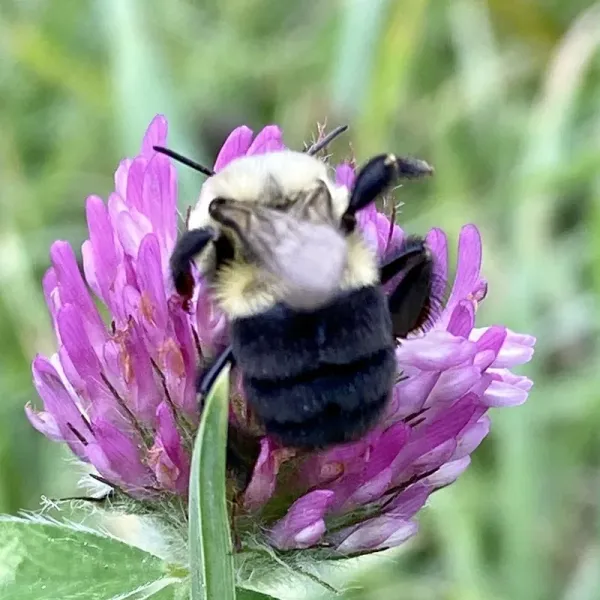
Common Eastern Bumble Bee Coloration
Common color patterns to help identify common eastern bumble bee
Common Eastern Bumble Bee
Seasonal Activity
When common eastern bumble bee are most active throughout the year

Where Common Eastern Bumble Bee Are Found
Hover over states to see their names. Green regions indicate where common eastern bumble bee have been reported.
Common Eastern Bumble Bee Identification Guide
Physical Characteristics
The common eastern bumble bee (Bombus impatiens) is the bumble bee most people see in the eastern U.S. It is a large, round, fuzzy bee with short, even hair.
Size depends on the bee’s role in the colony:
- Queens: about 17 to 23 mm (roughly 3/4 inch to nearly 1 inch)
- Workers: about 8 to 16 mm, and they vary a lot in size within one nest
- Males: about 12 to 18 mm
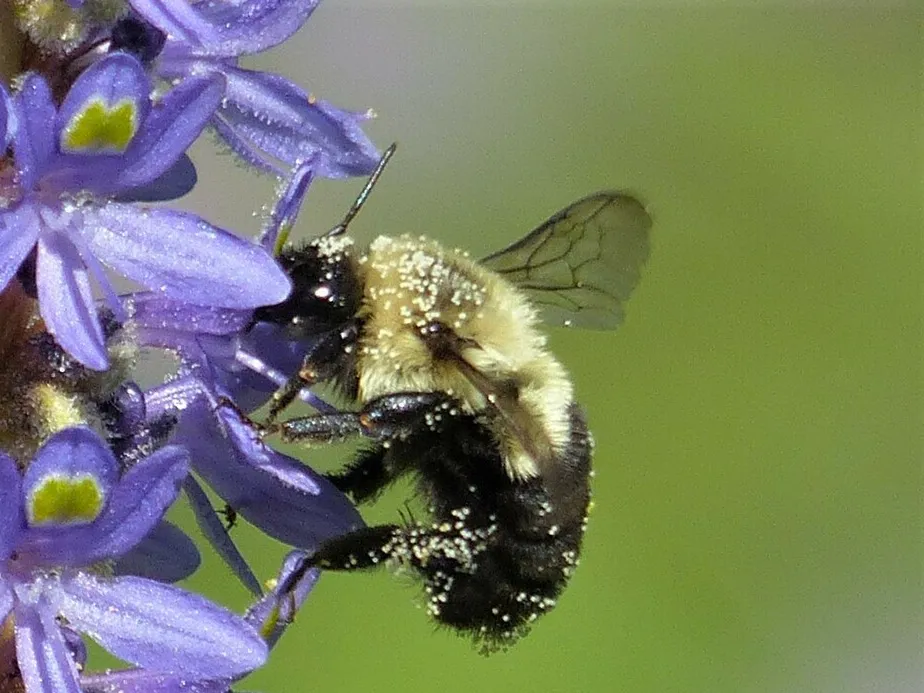
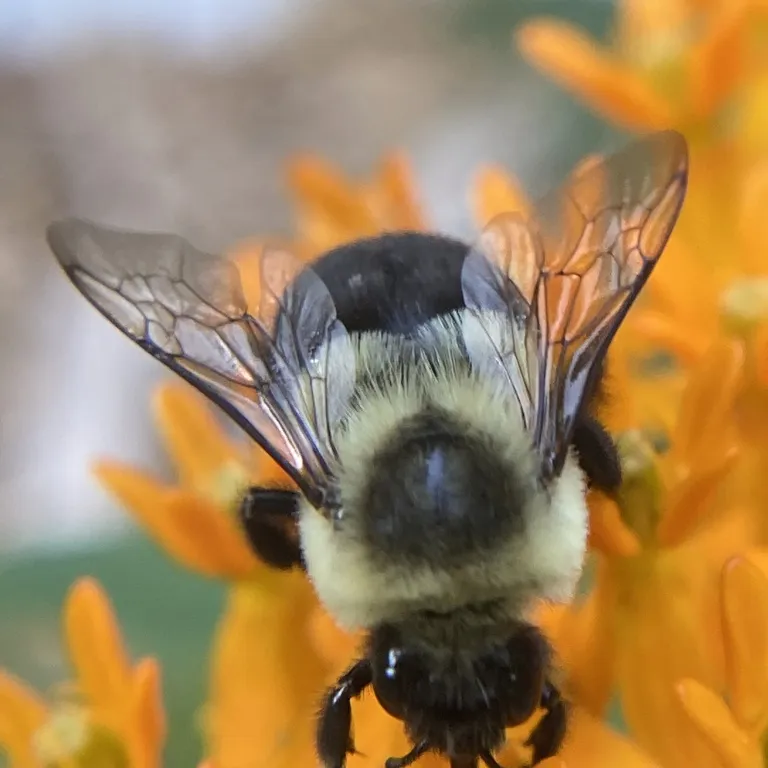
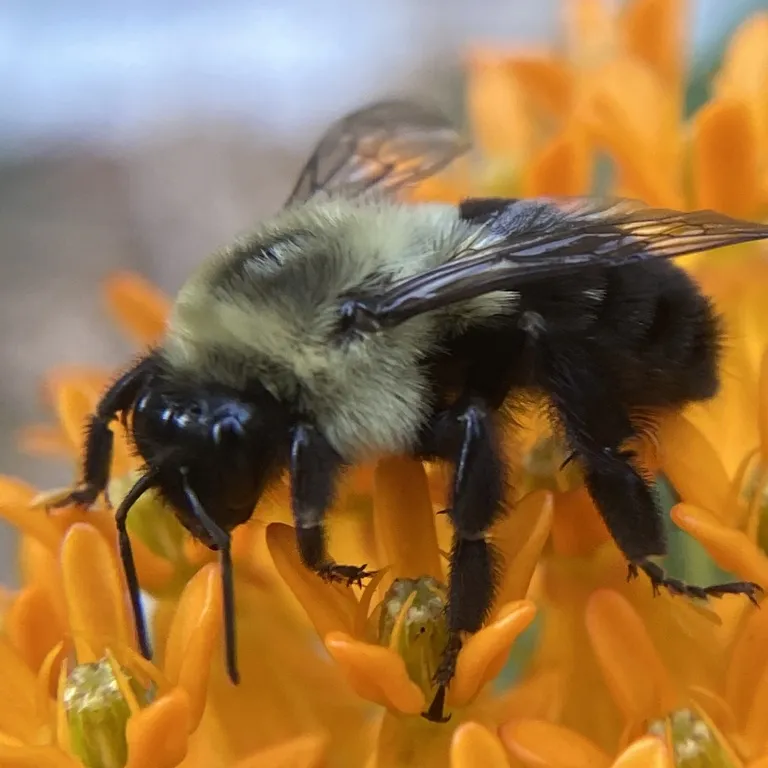
The color pattern is the key to identification:
- Thorax: bright yellow, usually with a round black patch between the wings
- First abdominal segment: yellow
- Rest of the abdomen: solid black, with no extra yellow, orange, or brown bands
- Head: mostly black in females; males have a tuft of yellow hair on the face, like a small mustache
Workers and queens carry pollen in “baskets” on their back legs. You will often see yellow or orange pollen packed there. Males have no pollen baskets and cannot sting.
Common Look-Alikes
Several bees share this yellow-and-black look. For a broader overview of the genus, see our bumble bees guide.
- Eastern carpenter bee (Xylocopa virginica): Same size and a yellow thorax, but the rear half is shiny and nearly bald. Carpenter bees drill round holes in wood. Bumble bees never do.
- Two-spotted bumble bee (Bombus bimaculatus): Has yellow on the second abdominal segment as well, often shaped like two spots or a “W.”
- Brown-belted bumble bee (Bombus griseocollis): Has a brown or rusty band across the middle of the abdomen.
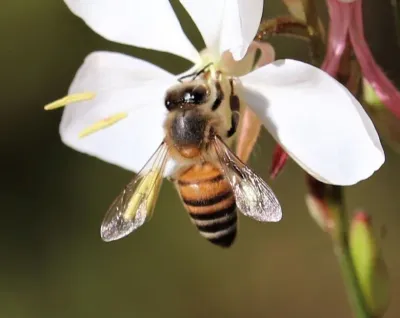
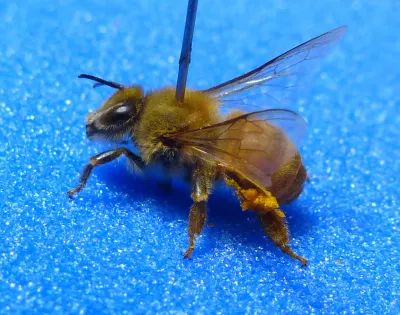
- Honey bee (Apis mellifera): Smaller and slimmer, with amber and brown stripes and far less hair.
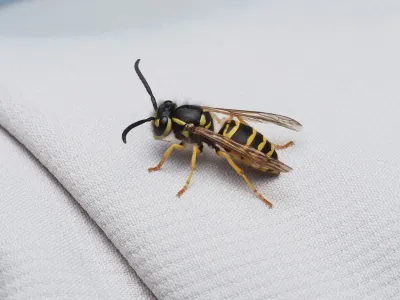
- Yellowjackets (Vespula spp.): Wasps with smooth, shiny bodies, bold yellow stripes, and a thin waist. They also nest in the ground, so look closely before you decide a ground nest is bumble bees.
Common Eastern Bumble Bee Behavior and Biology
Habitat and Range
This species lives across eastern North America. It ranges from Ontario, Quebec, and the Maritime provinces south to Florida. To the west it reaches Minnesota, Kansas, and eastern Texas, where it gets less common. It does well in cities, suburbs, and farms. That is why it is the most common bumble bee in Virginia, Maryland, and DC.
Growers also raise it to pollinate greenhouse tomatoes and other crops. Escaped bees now live in parts of British Columbia, far outside the native range.
Diet
Bumble bees eat nectar for energy and pollen for protein. This species is not picky. It visits clover, milkweed, goldenrod, asters, squash, and most garden flowers. It also “buzz pollinates.” The bee grabs a flower and shakes its flight muscles to free the pollen. Tomatoes, peppers, and blueberries need this kind of help.
Nesting
Nests are usually close to the ground and have a single small entrance about the size of a dime or nickel. Common sites include:
- Abandoned rodent burrows in lawns and garden beds
- Under decks, porches, sheds, and patio pavers
- Wall voids and attic insulation reached through gaps in siding or soffits
- Bird boxes, compost piles, and stacks of old cushions or furniture
Inside, the nest looks messy. It is a clump of wax pots and brood cells, often tucked into an old mouse nest or insulation. Bumble bees do not chew wood or damage homes.
Life Cycle
The colony lasts only one season. A queen wakes from her winter sleep in early spring, often March or April in our area. She finds a nest site and builds a small wax honey pot. Then she lays her first eggs on a ball of pollen. She keeps them warm with her body, like a bird on eggs.
The first workers appear in about four to five weeks. After that, the queen stays home and lays eggs while workers gather food. Colonies often reach 300 to 500 bees by mid-summer. That is large for a bumble bee. This species also stays active longer than most, often into October.
In late summer the colony raises males and new queens. After mating, new queens eat well and dig into loose soil or leaf litter for the winter. The old queen, workers, and males all die in the cold. The nest is never reused.
Defensive Behavior
Away from the nest, these bees are calm and will ignore you. Near the nest, workers guard the door. Warning signs include loud buzzing, bees flying at your face, and a bee raising a middle leg. Females can sting more than once. For most people, a sting means sharp pain and some swelling. For someone with a bee allergy, a nest near the house is a real hazard.
This is general information, not medical advice. If you have trouble breathing, swelling of the face or throat, or other signs of a serious reaction after a sting, call 911 or see a doctor right away.
How We Treat for Common Eastern Bumble Bees
We handle bumble bee nests case-by-case. These bees do not damage homes, and the colony dies off by late fall. So the deciding factor is sting risk. We treat when a nest is in a spot where people will run into it, such as:
- A nest beside a doorway, walkway, deck stairs, or garage entry
- A nest under a play set, patio, or other area people use daily
- A nest in a wall void where bees are finding their way indoors
- A household member with a sting allergy
When treatment makes sense, here is how it works:
- Inspection: Our technician confirms the insect is a bumble bee and not yellowjackets, honey bees, or carpenter bees. Then we find the nest entrance. If we cannot find the nest, we cannot treat it.
- Treatment: We apply a residual insecticide or dust right into the nest entrance. We time it for when most bees are home. For nests in walls, dust goes into the entry hole, and returning bees carry it inside. Learn more on our bee nest removal page.
- Warranty: Treated bee nests come with a 30-day warranty. If activity returns to that nest within the window, we come back at no extra cost.
- Prevention and guidance: After treatment, we point out the gaps and holes that drew the queen in. Fill old rodent holes in the fall. Seal gaps in siding and soffits. Keep clutter out from under decks and sheds. If a nest is far from foot traffic, we may tell you it can wait until winter.
If you are not sure whether you have bumble bees or carpenter bees, our bumblebee vs carpenter bee guide walks through the differences.
References
- Common Eastern Bumble Bee - Wisconsin Bumble Bee Brigade, University of Wisconsin-Madison
- Bug of the Month: Bombus impatiens - Penn State Center for Pollinator Research
- Bombus impatiens - Animal Diversity Web, University of Michigan
- Bumble Bee Life Cycle - University of Georgia Extension (C 1290)
- Bumble Bees of North America - Xerces Society
Other Bees
Explore other species in the bees family
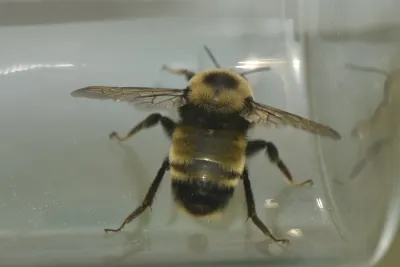
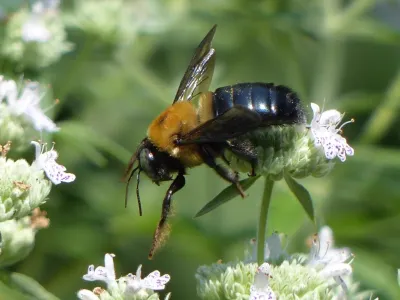
Commonly Confused With
Common Eastern Bumble Bee are often mistaken for these similar pests
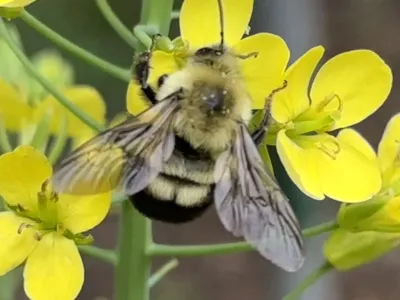
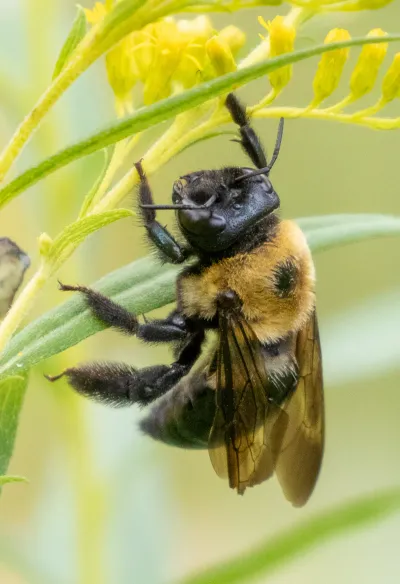
Where Common Eastern Bumble Bee Are Found
Hover over states to see their names. Green regions indicate where common eastern bumble bee have been reported.
Common Questions about Common Eastern Bumble Bee
How can I tell a common eastern bumble bee from other bumble bees?
+
Look at the rear half of the body. This bee has one yellow band at the front, and the rest is black. The two-spotted bumble bee has two yellow spots behind that band. The brown-belted bumble bee has a brown band in the middle.
Is it a bumble bee or a carpenter bee?
+
Check the rear end. A common eastern bumble bee has a fuzzy black abdomen with a yellow band at the front. An eastern carpenter bee has a shiny, bald black abdomen. Carpenter bees hover near wood trim and drill round holes; bumble bees nest in the ground or in hidden cavities.
Will common eastern bumble bees sting?
+
Only females can sting. They rarely sting away from the nest. Near the nest they will defend it, and they can sting more than once. If a bee lifts a middle leg toward you, it is a warning. Back away slowly.
Should I get rid of a bumble bee nest in my yard?
+
It depends on where the nest is. The colony dies off on its own in late fall, so a nest far from foot traffic can often wait. A nest by a door, walkway, deck, or play area is worth treating, as is any nest near someone with a sting allergy.
Do bumble bees come back to the same nest every year?
+
No. Only new queens survive the winter, and they hibernate alone in loose soil. Each spring a queen starts a brand-new nest. The same spot can be chosen again if it stays attractive, so filling old rodent holes and sealing gaps helps.
Why are there bumble bees in my wall or under my deck?
+
These bees like soft, hidden spots, such as old mouse nests and insulation. In spring, a queen may find one through a gap in siding, under a deck or shed, or in a bird box.
Are common eastern bumble bees endangered?
+
No. Unlike the rusty patched bumble bee and the American bumble bee, this species is stable or even increasing. It handles suburbs and farmland well, which is one reason it is the bumble bee you see most often.

With five years of hands-on experience in the pest control industry, George Schulz is a registered technician with the Virginia Pest Management Association and a proud third-generation professional in a family business that's been protecting homes for over 58 years. He manages and trains a team of service pros while also leading internal research efforts—recently spearheading a deep-dive review of thousands of documents on pest control materials to hand-pick the most kid and pet friendly, most effective solutions tailored specifically for homes in the DC metro area.
Local Bees Help
Dealing with bees at home? Our licensed technicians provide pest control across Northern Virginia and Maryland.
