
Africanized Honey Bees Identification Guide
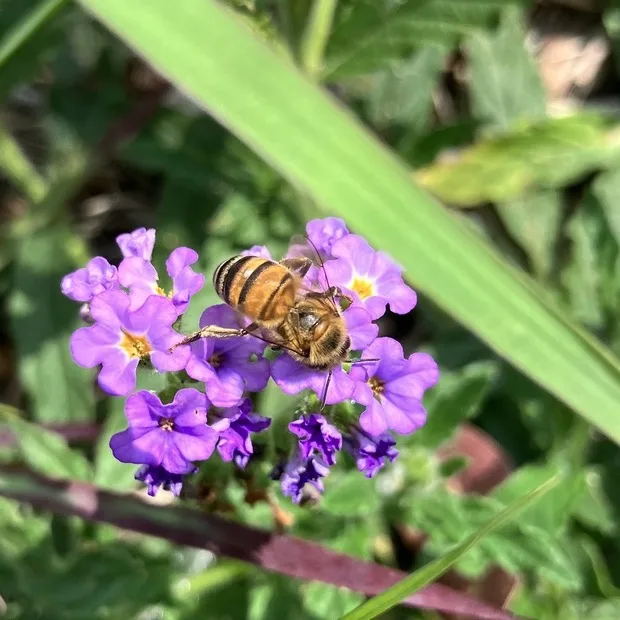
Apis mellifera scutellata-hybrid
Africanized honey bees are a hybrid honey bee known for defending the nest in large numbers. They live in the southern United States and Mexico. They are not established in Virginia, Maryland, or Washington, DC.
Taxonomy
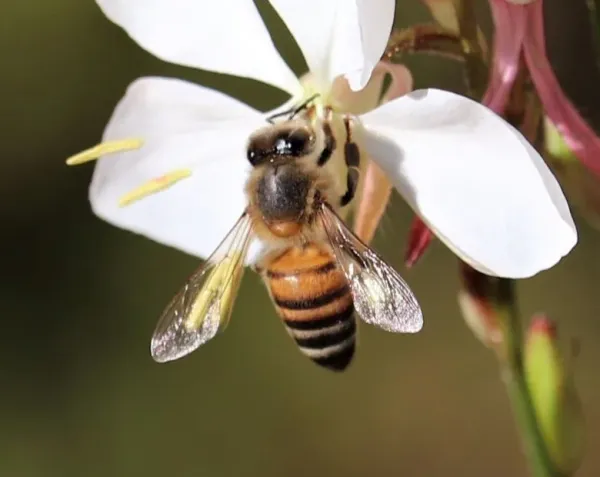
Africanized Honey Bees Coloration
Common color patterns to help identify africanized honey bees
Africanized Honey Bees
Seasonal Activity
When africanized honey bees are most active throughout the year

Where Africanized Honey Bees Are Found
Hover over states to see their names. Green regions indicate where africanized honey bees have been reported.
Africanized Honey Bee Identification Guide
Africanized honey bees are a cross between two kinds of honey bee. One parent is the African honey bee (Apis mellifera scutellata). The other is the European honey bee that beekeepers here have kept for centuries. The cross escaped from a research yard in Brazil in 1957. It spread north through Central America and Mexico. It reached southern Texas in 1990.
They are not established in Virginia, Maryland, or Washington, DC. Their spread stopped in the southern states. Mild winters there let a colony feed most of the year. Do you live in the Mid-Atlantic and see a fuzzy golden bee with dark bands? That is almost always a European honey bee. It is the same species, just without the African genes.
Physical Characteristics
- Size: workers are about 10 to 15 mm long, or 3/8 to 5/8 inch. Africanized workers run a little smaller on average. The sizes overlap too much to tell them apart this way.
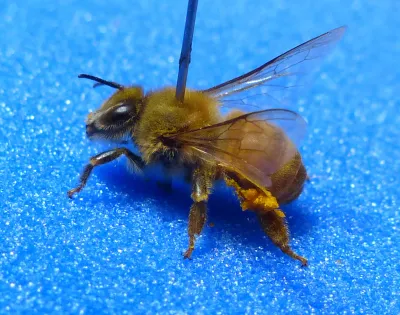
- Color: golden to brown, with darker bands across the abdomen.
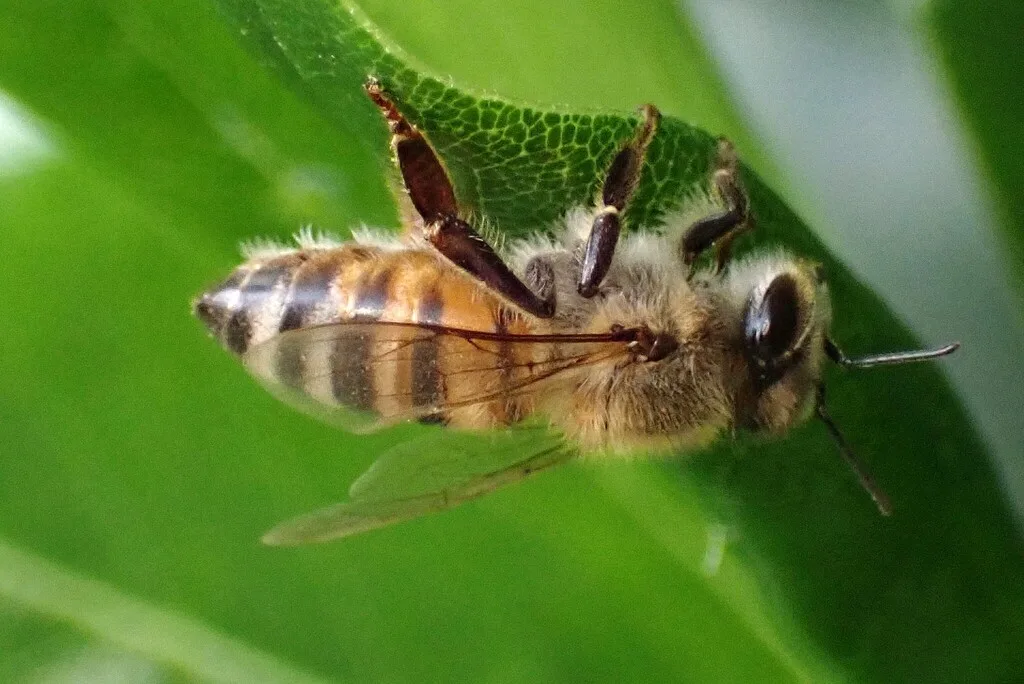
- Body: a fuzzy thorax, two pairs of clear veined wings, bent antennae, and pollen baskets on the back legs.
- Stinger: barbed, like any honey bee, so the bee dies after it stings. The venom is no stronger than European honey bee venom. The difference is how many bees sting at once.
You cannot identify an Africanized bee by sight. Labs confirm them with wing measurements or DNA tests. What people notice instead is behavior.
Behavior Clues
- Many guard bees patrolling the nest entrance
- Bees reacting to a mower, a dark shirt, or a vibration from many feet away
- Dozens or hundreds of defenders at once instead of a few
- Bees that chase a person several hundred yards from the nest
- Nests in small or open spots: water meter boxes, tires, grills, old appliances, and bare branches
Common Species and Look-Alikes
Every honey bee in North America is Apis mellifera. The word “Africanized” points to ancestry inside that one species. It is not a separate insect. Beekeepers also keep the Italian honey bee (Apis mellifera ligustica) and the Carniolan honey bee (Apis mellifera carnica). Both are known for being calm.
Here is what people often mistake for an Africanized honey bee:
- Honey bees: European stock. They look identical and stay calm near the hive. This is what homeowners in the DMV see.
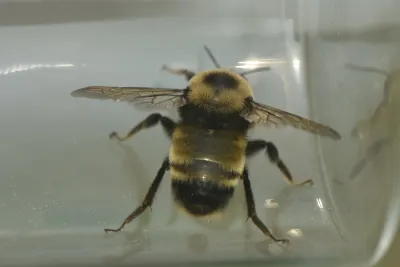
- Bumble bees: rounder and much furrier, with patches of black and yellow hair. They nest in the ground in small yearly colonies.
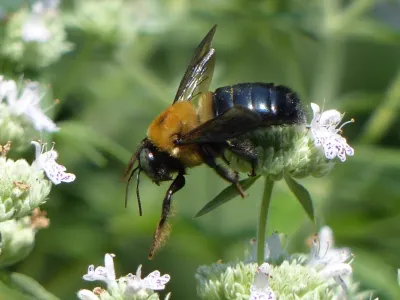
- Carpenter bees: large, with a shiny black abdomen and no hair on it. Males hover near eaves but cannot sting. They bore round holes in wood instead of building comb.
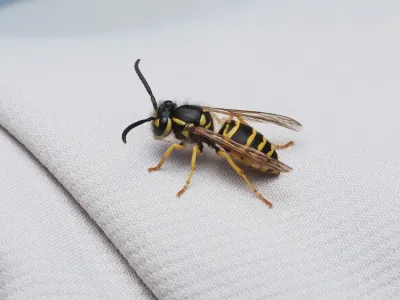
- Yellowjackets: smooth, bright yellow and black, with a narrow waist. They get pushy around food and trash in late summer. A “swarm of bees that keeps stinging” in Virginia is usually yellowjackets.
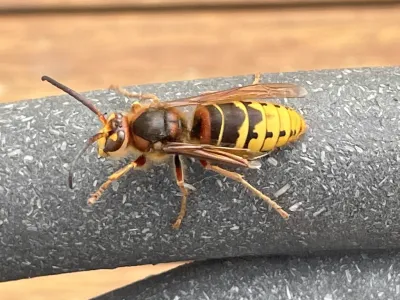
- European hornets: much larger, brown and yellow, and active at night near lights.
Africanized Honey Bee Behavior and Biology
Colony Structure
A colony has one queen that lays the eggs. It also has thousands of female workers and, in season, a few hundred male drones. Workers raise the young, build comb, gather food, and guard the nest. A grown colony often holds 20,000 to 60,000 bees. Africanized colonies are often smaller. There are simply more of them, because they split so often.
Habitat and Nesting
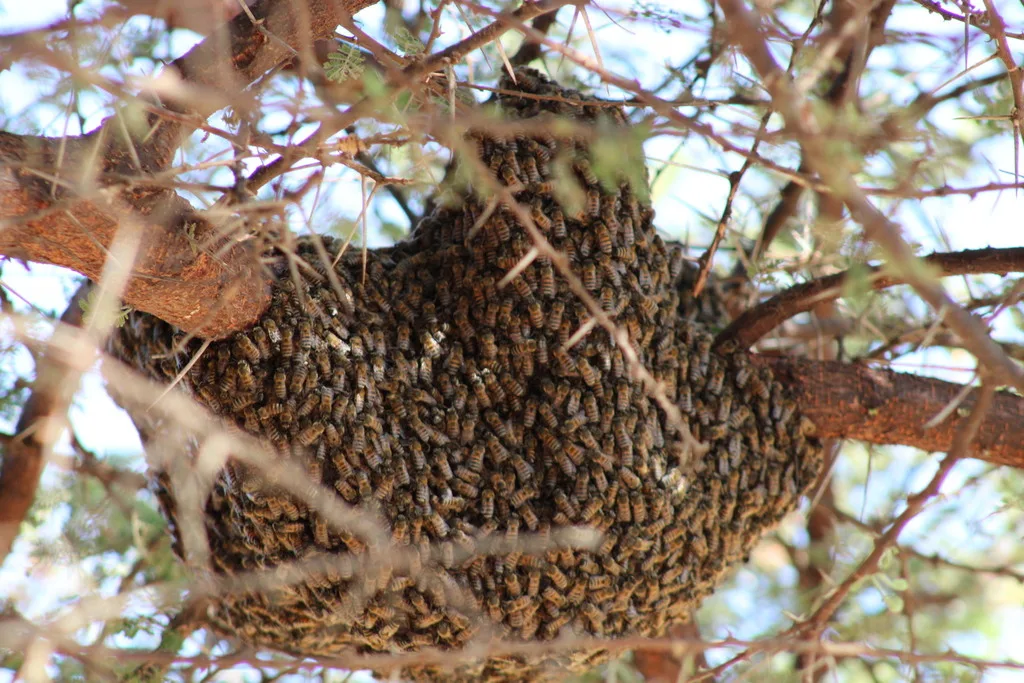
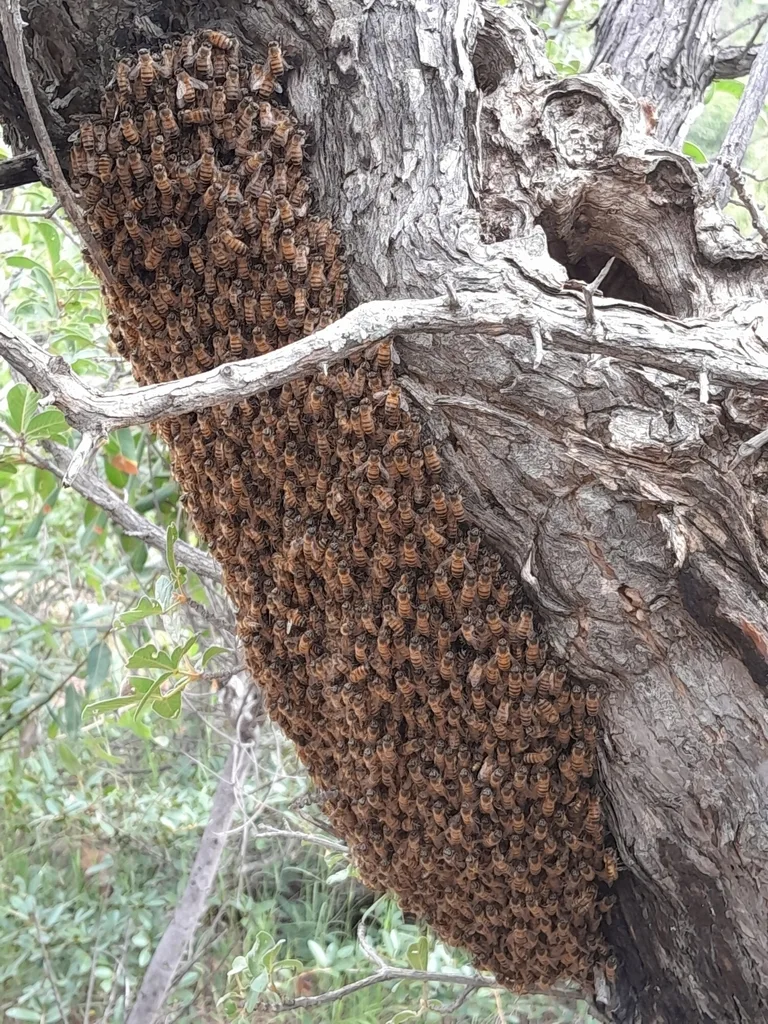
Honey bees nest in hollow spaces and build sheets of wax comb inside. European colonies like a big sheltered space, such as a hollow tree, a soffit, or a wall void. Africanized colonies are much less picky. They will move into a space the size of a bucket. That includes meter boxes, valve boxes, tipped-over flowerpots, and holes in the ground. They will also build comb out in the open on a branch. European colonies rarely do that.
Diet
Adults gather nectar for energy and pollen for protein. They also haul water back to cool the nest and to thin stored honey. The young are fed stored pollen and honey.
Life Cycle
Eggs hatch into legless larvae. Nurse bees feed them, and then the larvae pupate in capped cells. A worker takes about 19 to 21 days from egg to adult. A queen takes about 16 days and a drone about 24 days. Africanized workers develop on the fast end of that range. That is one reason their colonies build up and split so quickly.
Swarming and Leaving the Nest
All honey bees swarm to reproduce. The old queen leaves with part of the workforce. The group clusters on a branch while scout bees look for a new home. Africanized colonies swarm several times a year instead of once. They also abscond. That means they leave a nest outright when food runs short or the spot is disturbed. Both habits sped up their spread through the Americas.
A resting swarm has no comb and no young to defend, so it is usually calm. A settled colony with brood inside is a different story.
How We Treat for Africanized Honey Bees
We do not treat honey bees of any kind, Africanized or European. Honey bees are protected pollinators. Killing a colony inside a wall also leaves the comb and honey behind. That mess seeps, stains, and draws ants, wax moths, and rodents.
Here is what happens instead:
- Identification first. If you are in our Northern Virginia, Maryland, or DC service area and you are not sure what you have, send us a photo or have us look during an inspection. Most “bee” calls in the DMV turn out to be yellowjackets, paper wasps, bald-faced hornets, or carpenter bees. Those we do treat.
- A referral for honey bees. When the nest really is honey bees, we point you to a local beekeeper or a live-removal specialist. They open the cavity, take out the comb and the colony, and move it. Many beekeepers collect swarms at no charge.
- Stinging insects we do handle. For yellowjackets and hornets, we find the nest and treat it with an EPA-registered residual or dust. Nests in wall voids get dust and foam. A nest we cannot find cannot be treated. For carpenter bees, we treat the tunnels and seal the holes. This work is part of our recurring pest control plans. Those plans include unlimited free callbacks between visits.
- Prevention. Seal gaps in soffits, fascia, siding, chimneys, and vent screens before spring. Cap open meter and valve boxes. Clear out stored tires, empty pots, and old appliances that make a ready cavity.
In states where these bees live, work on a defensive colony is a job for a licensed applicator in full gear. People and pets should stay well back until the job is done.
If bees live in a wall and someone in the home reacts badly to stings, call a removal specialist that day. Do not plug the entrance yourself. Blocked bees push into the house through outlets and light fixtures.
This page is general information, not medical advice. Talk to a doctor about any sting reaction.
References and Additional Reading
- Africanized Honeybee, National Invasive Species Information Center (USDA)
- USDA Map of Africanized Honey Bee Spread, USDA Agricultural Research Service
- Bee and Wasp Stings, University of California Agriculture and Natural Resources
- Prevention and Treatment of Nuisance Honey Bees Around Your Home, Mississippi State University Extension
- Honey Bees, University of Maryland Extension
- Protecting Pollinators, US EPA
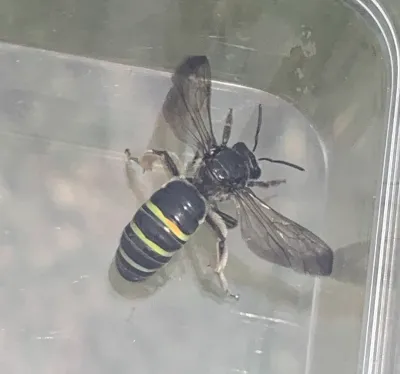
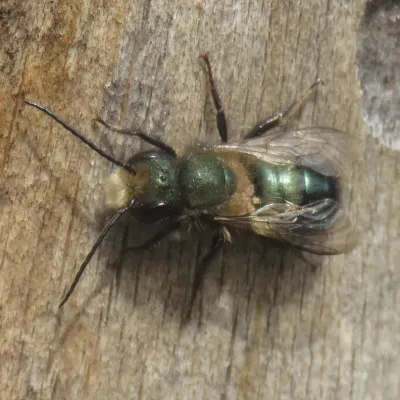
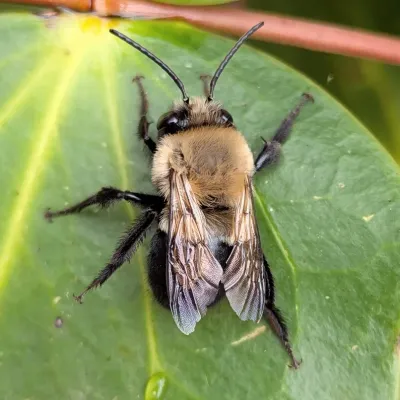
Other Bees
Explore other species in the bees family
Commonly Confused With
Africanized Honey Bees are often mistaken for these similar pests
Where Africanized Honey Bees Are Found
Hover over states to see their names. Green regions indicate where africanized honey bees have been reported.
Common Questions about Africanized Honey Bees
Are Africanized honey bees found in Virginia, Maryland, or Washington, DC?
+
No. They are not established anywhere in the Mid-Atlantic. Cold winters have kept them in the southern states. No settled population has been found in Virginia, Maryland, or DC. A fuzzy golden bee with dark bands in a DMV yard is almost always a European honey bee, a bumble bee, or a carpenter bee.
Can you tell an Africanized honey bee apart from a regular honey bee by looking at it?
+
No. Africanized workers are a little smaller on average, but the sizes overlap. The color pattern is the same. Labs tell them apart with wing measurements or DNA tests. You cannot do it by eye.
What actually distinguishes Africanized honey bees?
+
Behavior. They keep more guard bees. They react faster when the nest is bumped. They send far more defenders at once. They also chase a person or animal much farther. And they swarm more often, and leave a nest more readily, than European bees do.
How many stings are dangerous?
+
Most healthy adults handle a few stings with pain and swelling. Many stings at once can make a person very sick. Anyone with a bee allergy can react to just one. Get medical care for a lot of stings, trouble breathing, or swelling away from the sting. This is not medical advice, so call a doctor.
What should I do if bees chase me?
+
Run in a straight line away from the nest and get inside a building or a car. Cover your face with your shirt as you go. Do not swat, do not stand still, and do not jump into water, because the colony will wait above the surface.
Do you treat honey bees of any kind?
+
No. Honey bees are protected pollinators, so we do not treat them. If a colony is in a wall or on a building in our service area, we refer you to a beekeeper or a live-removal specialist. They take the colony out and move it.
I found a bee nest in a wall. Who do I call?
+
If the bees are honey bees, call a local beekeeper or a live bee removal specialist. If the nest turns out to be yellowjackets, paper wasps, or hornets, that is stinging insect work we do handle on our recurring pest control plans.
Will an Africanized colony take over a beekeeper's hive?
+
In the states where they are established, yes. An Africanized queen or swarm can move into a hive. Beekeepers there handle it by putting in a new queen from calmer stock and by working with the state apiary inspector.

With five years of hands-on experience in the pest control industry, George Schulz is a registered technician with the Virginia Pest Management Association and a proud third-generation professional in a family business that's been protecting homes for over 58 years. He manages and trains a team of service pros while also leading internal research efforts—recently spearheading a deep-dive review of thousands of documents on pest control materials to hand-pick the most kid and pet friendly, most effective solutions tailored specifically for homes in the DC metro area.
Local Bees Help
Dealing with bees at home? Our licensed technicians provide pest control across Northern Virginia and Maryland.
