Two-Spotted Bumble Bee Identification Guide
Bombus bimaculatus
An early-spring bumble bee of eastern North America with a yellow thorax, a yellow first abdominal band, and a yellow W or pair of spots on the second segment. A small-colony pollinator that usually nests underground.
Taxonomy
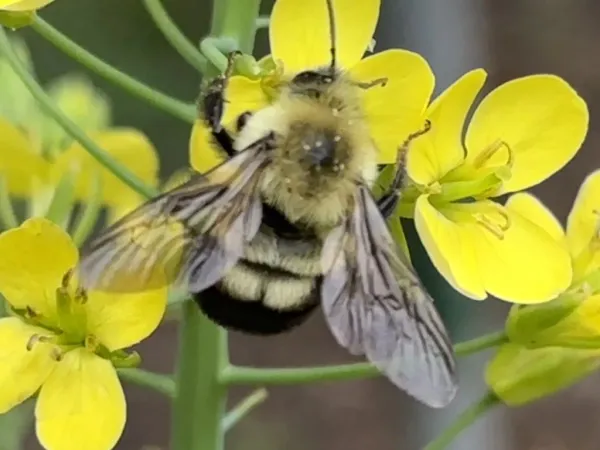
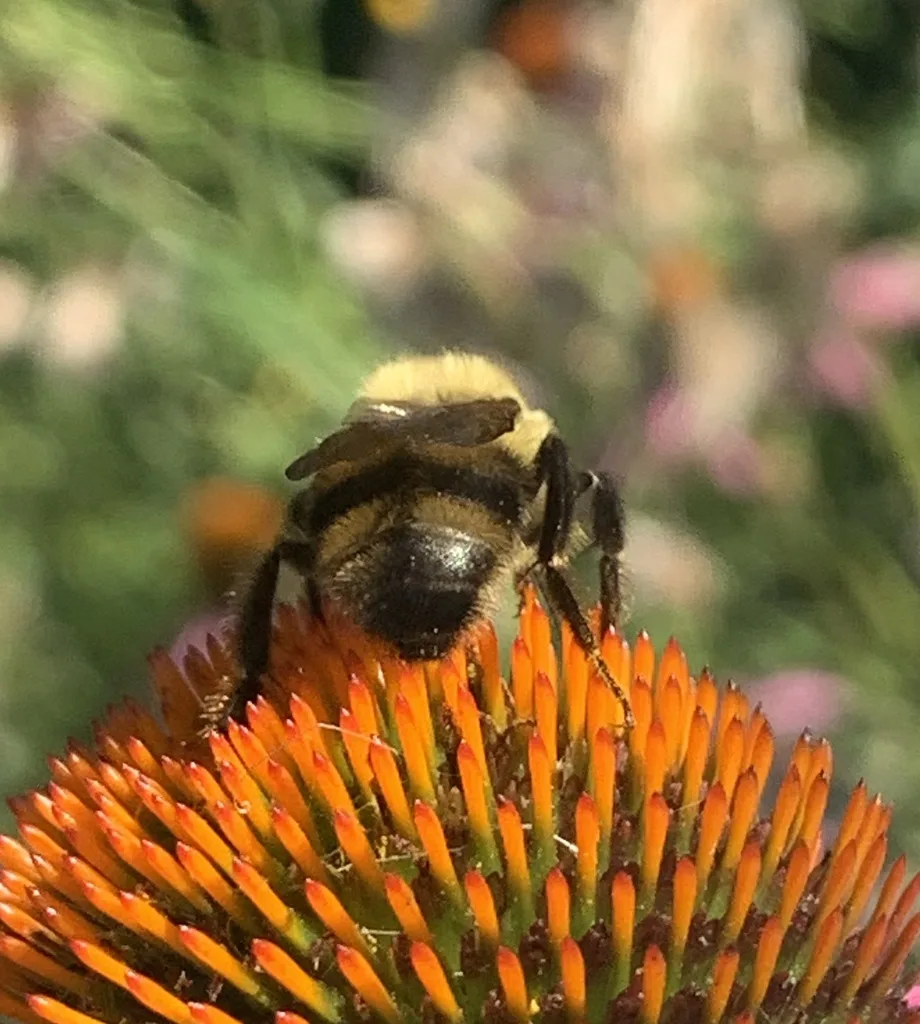
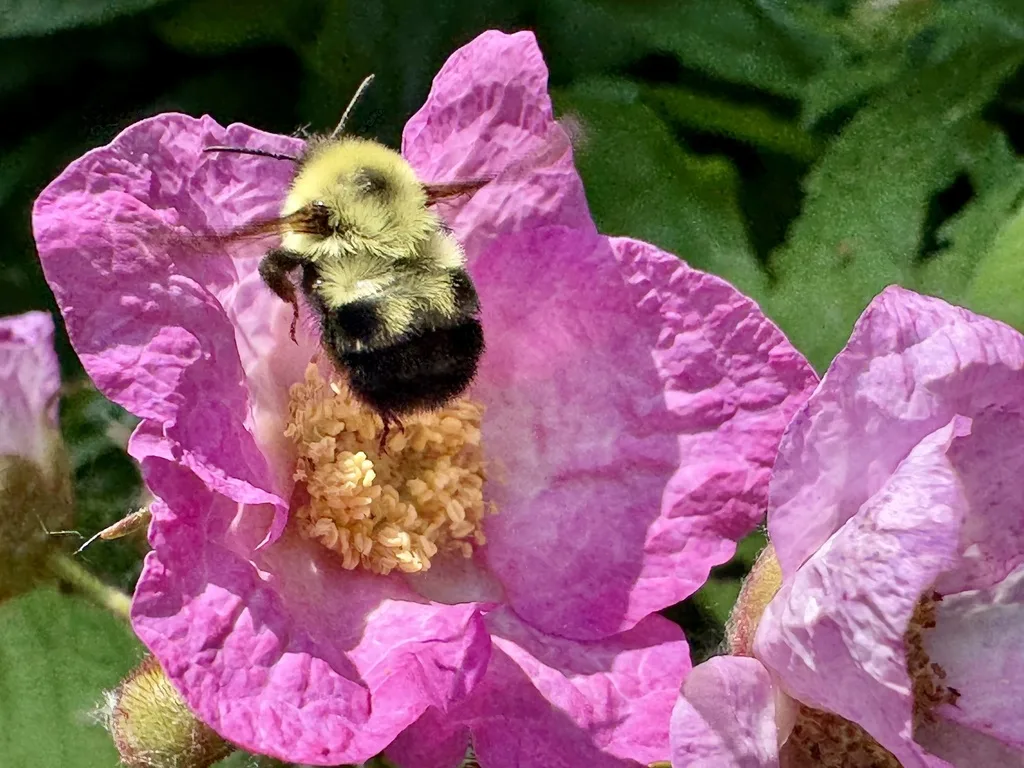
Two-Spotted Bumble Bee Coloration
Common color patterns to help identify two-spotted bumble bee
Two-Spotted Bumble Bee
Seasonal Activity
When two-spotted bumble bee are most active throughout the year

Where Two-Spotted Bumble Bee Are Found
Hover over states to see their names. Green regions indicate where two-spotted bumble bee have been reported.
Two-Spotted Bumble Bee Identification Guide
Physical Characteristics
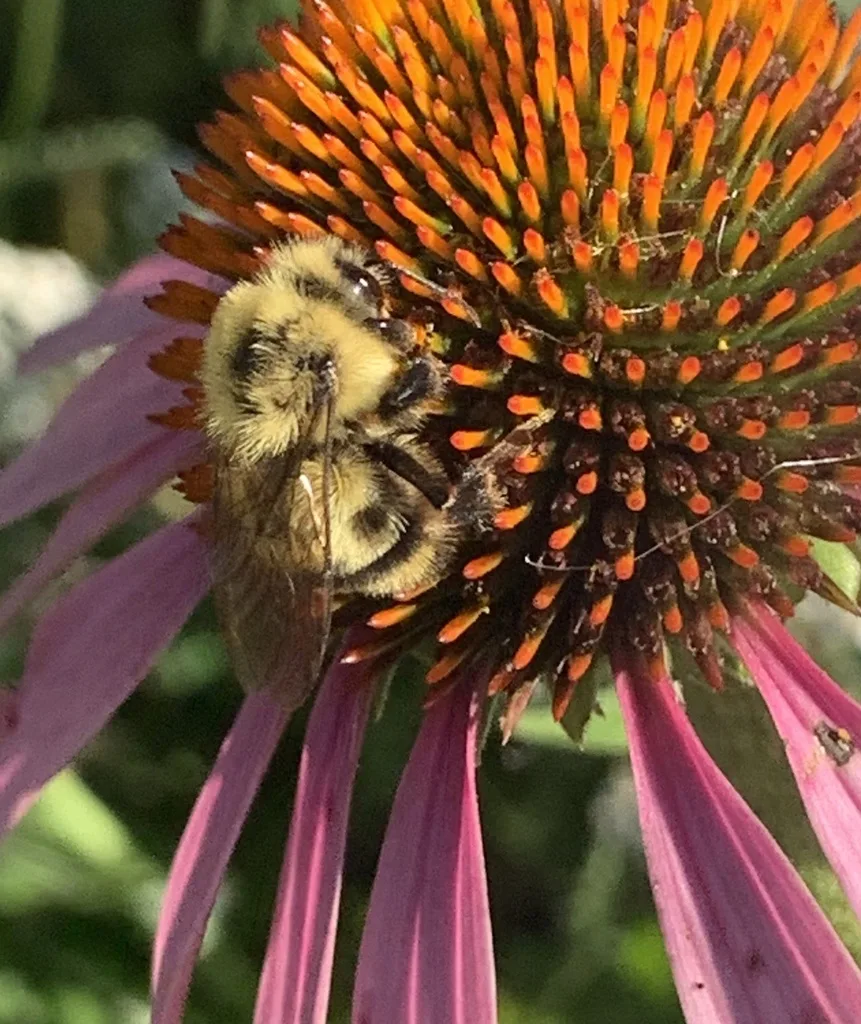
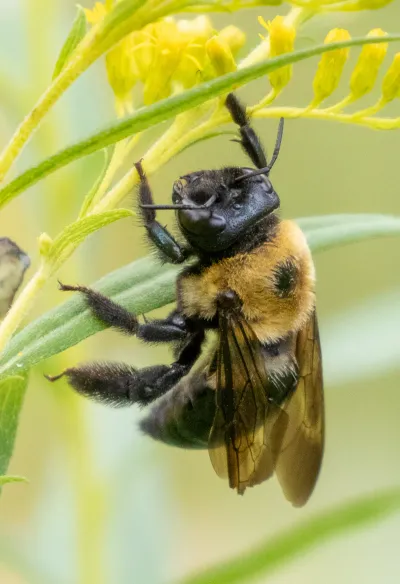
The two-spotted bumble bee (Bombus bimaculatus) is a native bumble bee of eastern and central North America. It is a fuzzy, round bee. Its long, uneven hair gives it a shaggy look.
Size depends on the bee’s role in the colony:
- Queens: about 18 to 22 mm (roughly 3/4 to 7/8 inch)
- Workers: about 10 to 16 mm
- Males: about 12 to 15 mm
The color pattern on the abdomen is the key:
- Thorax: mostly yellow, usually with a darker patch between the wings
- First abdominal segment (T1): yellow
- Second abdominal segment (T2): yellow in the center, black at the sides. The yellow often forms a “W” or two spots, which gives the bee its name.
- Rest of the abdomen: black
- Face: mostly black in females; males often have more yellow hair on the face and body
The amount of yellow on the second segment varies. Some bees show two clear spots. Others show a wide W or a nearly full band. Check several features before you decide. Queens and workers carry pollen in “baskets” on their back legs. Males have no pollen baskets and no stinger.
Common Look-Alikes
For an overview of the whole genus, see our bumble bees guide.
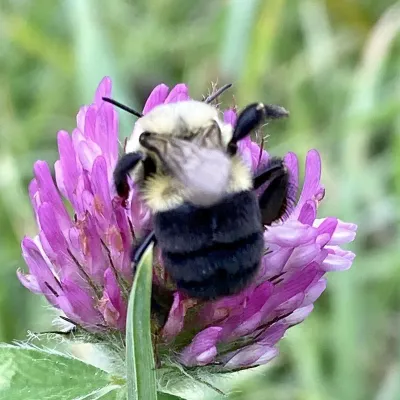
- Common eastern bumble bee (Bombus impatiens): Same yellow thorax and yellow first band, but the second segment is solid black. Its hair is shorter and more even.
- Brown-belted bumble bee (Bombus griseocollis): Has brown or rusty hair across the middle of the abdomen. A few individuals look close to a two-spotted bee, so check more than one feature.
- Half-black bumble bee (Bombus vagans): Usually has more yellow across the whole second segment, with less black at the sides.
- Eastern carpenter bee (Xylocopa virginica): Similar size, but the rear half is shiny and nearly bald. Carpenter bees drill round holes in wood. Bumble bees never do.
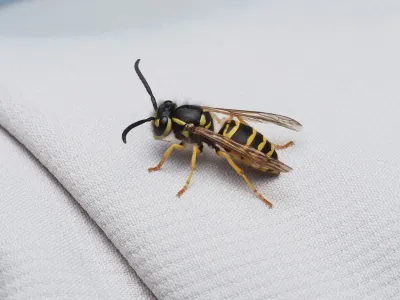
- Yellowjackets (Vespula spp.): Wasps with smooth, shiny bodies, crisp yellow stripes, and a thin waist. They also nest underground, so a hole in the lawn alone does not tell you which insect you have.
Two-Spotted Bumble Bee Behavior and Biology
Habitat and Range
This bee lives from New England and southern Canada south to Florida. To the west, it reaches the Dakotas, Kansas, and Texas. It is common in Virginia, Maryland, and DC. In Canada, it is spreading west into Manitoba and Saskatchewan and east into the Maritimes. It does well in parks, gardens, wood edges, and yards.
Diet
Adults drink nectar for energy. Females collect pollen to feed the young. The species visits many kinds of flowers. Queens favor early blooms like willow and plum. Workers visit clover, mint, bee balm, honeysuckle, raspberry, and roses. Like other bumble bees, it can “buzz pollinate.” It grips a flower and shakes its flight muscles to free the pollen.
Nesting
Most nests are underground. Queens often move into an empty rodent burrow or another sheltered cavity. Some nests are at or just above ground level. Common spots near homes include:
- Old rodent holes in lawns and garden beds
- Spaces under decks, porches, sheds, and patio stones
- Compost piles, wood piles, and stored cushions
The entrance is a single small hole. These bees do not chew wood or build nests in structural lumber.
Life Cycle
The two-spotted bumble bee is one of the earliest bumble bees each year. A study in Virginia, Maryland, and nearby states found its queens wake up before other common species. Most appear in late March or early April.
A mated queen wakes from winter, finds a nest site, and builds a small wax honey pot. She lays her first eggs on a ball of pollen and keeps them warm with her body. Once the first workers emerge, they take over foraging while the queen keeps laying eggs.
Colonies are fairly small, often around 50 workers at their peak. Penn State reports that colonies peak in June. Many finish by late July, much earlier than the common eastern bumble bee. Near the end, the colony raises males and new queens. Only the mated new queens survive the winter. The old nest dies out and is not reused.
Defensive Behavior
Foraging bees ignore people. Near the nest, workers will defend the entrance. Warning signs include loud buzzing, bees flying at your face, and a bee lifting a middle leg toward you. Mowing or digging over a nest is the most common way people get stung.
This is general information, not medical advice. If you have trouble breathing, swelling of the face or throat, or other signs of a serious reaction after a sting, call 911 or see a doctor right away.
How We Treat for Two-Spotted Bumble Bees
We handle bumble bee nests case-by-case. These native pollinators do not damage homes, and the colony often ends on its own by midsummer. So the deciding factor is sting risk. We treat when a nest is in a spot where people will run into it, such as:
- A nest beside a doorway, walkway, deck stairs, or garage entry
- A nest in a lawn, play area, or patio that people use every day
- A nest where bees are finding their way indoors
- A household member with a sting allergy
When treatment makes sense, here is how it works:
- Inspection: Our technician first confirms the insect is a bumble bee and not yellowjackets or carpenter bees. Then we find the nest entrance. If we cannot find the nest, we cannot treat it.
- Treatment: We apply an EPA-registered residual insecticide or dust directly into the nest entrance, not onto flowers or foraging bees. Learn more on our bee nest removal page.
- Warranty: Most bee nest treatments come with a 30-day warranty. If activity returns to that nest in the window, we come back at no extra cost.
- Prevention and guidance: Do not plug an active entrance. Trapped bees may find another way out, sometimes indoors. Once the nest is inactive, fill old rodent holes, seal gaps under decks and siding, and clear clutter from sheds. If a nest is out of the way, we may tell you it can simply wait.
Not sure which bee you are looking at? Our bumblebee vs carpenter bee guide walks through the differences.
References
- Two-Spotted Bumblebee - Missouri Department of Conservation
- Bombus bimaculatus - BeeSpotter, University of Illinois
- Bug of the Month: Two-Spotted Bumble Bee - Penn State Center for Pollinator Research
- Bumble Bees - Utah State University Extension
- Bees and Wasps - Illinois Department of Public Health
- Range expansion of Bombus bimaculatus in Canada - PubMed
- Bombus bimaculatus - Bees of Canada, Royal Saskatchewan Museum
Other Bees
Explore other species in the bees family
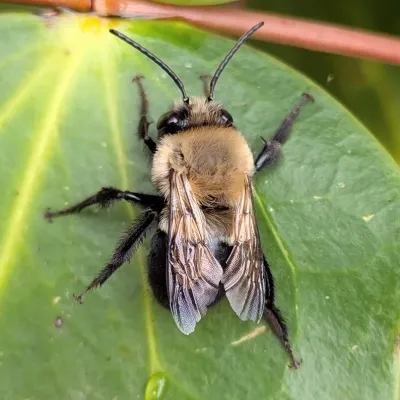
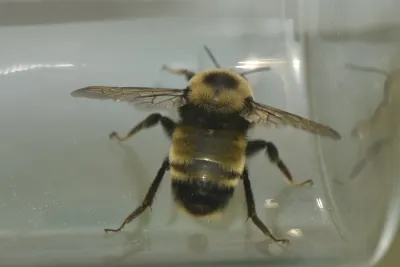
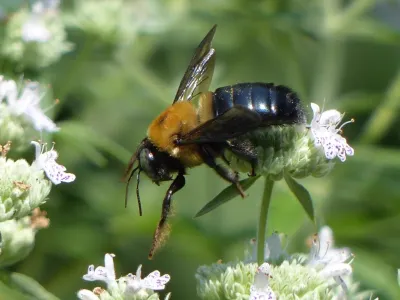
Commonly Confused With
Two-Spotted Bumble Bee are often mistaken for these similar pests
Where Two-Spotted Bumble Bee Are Found
Hover over states to see their names. Green regions indicate where two-spotted bumble bee have been reported.
Common Questions about Two-Spotted Bumble Bee
How do I identify a two-spotted bumble bee?
+
Look at the top of the abdomen. The first segment is yellow. The second segment has yellow in the middle, often shaped like a W or two side-by-side spots, with black at the edges. The rest of the abdomen is black. The thorax is mostly yellow, often with a dark patch between the wings.
What is the difference between a two-spotted bumble bee and a common eastern bumble bee?
+
The common eastern bumble bee has one yellow band at the front of the abdomen and nothing yellow behind it. The two-spotted bumble bee adds yellow on the second segment. Its hair also looks longer and shaggier. Timing helps too: two-spotted colonies peak in early summer, while common eastern colonies stay active into fall.
Do two-spotted bumble bees sting?
+
Queens and workers can sting, and they can sting more than once. Males cannot sting. Away from the nest they are calm and rarely sting. Near the nest they will defend it, especially if you mow, dig, or step over the entrance.
Why do I see these bees so early in spring?
+
This is one of the first bumble bees to wake up each year. In Virginia and Maryland, queens often fly by late March or early April. They visit willow, plum, and other early blooms while they look for a nest site.
Should I get rid of a two-spotted bumble bee nest?
+
Usually not. The colony is small and often finishes by midsummer, and the bees are valuable pollinators. Treatment makes sense when a nest sits by a door, walkway, or play area, or when someone in the home has a sting allergy.
Can two-spotted bumble bees damage my house?
+
No. They do not chew or drill wood. They move into spaces that already exist, such as old rodent burrows or gaps under decks. If you see round holes in wood trim, that is a carpenter bee, not a bumble bee.
Is the two-spotted bumble bee endangered?
+
No. It is common across much of the eastern and central U.S. and is listed as Least Concern by the IUCN. A Canadian study found it is spreading into the Prairie and Maritime provinces.

With five years of hands-on experience in the pest control industry, George Schulz is a registered technician with the Virginia Pest Management Association and a proud third-generation professional in a family business that's been protecting homes for over 58 years. He manages and trains a team of service pros while also leading internal research efforts—recently spearheading a deep-dive review of thousands of documents on pest control materials to hand-pick the most kid and pet friendly, most effective solutions tailored specifically for homes in the DC metro area.
Local Bees Help
Dealing with bees at home? Our licensed technicians provide pest control across Northern Virginia and Maryland.
