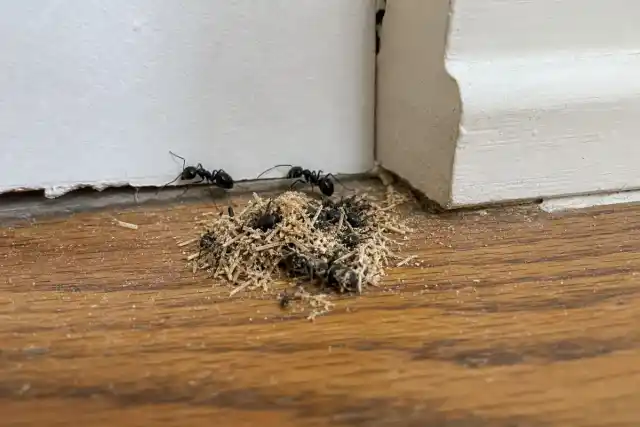

The most common drywall signs of carpenter ants are sawdust-like piles at the base of a wall, a faint rustling sound inside it, tiny slit-shaped holes in nearby trim, and large black ants coming out of cracks at night. Water stains or soft spots on the drywall are another clue. Carpenter ants nest in the damp wood behind them.
Here’s the catch: carpenter ants don’t eat drywall. They nest in the wood framing, trim, and insulation behind it. So the signs show up on the drywall and around its edges, not as holes chewed through the middle of the wall. On inspections around Northern Virginia and Maryland, I look for the leak first and the ants second. That’s how I find most of these nests.
7 Drywall Signs of Carpenter Ants
Each sign below is something you can check in a few minutes. One sign alone can be a fluke. Two or three together in the same part of the house point to a nest in that wall.
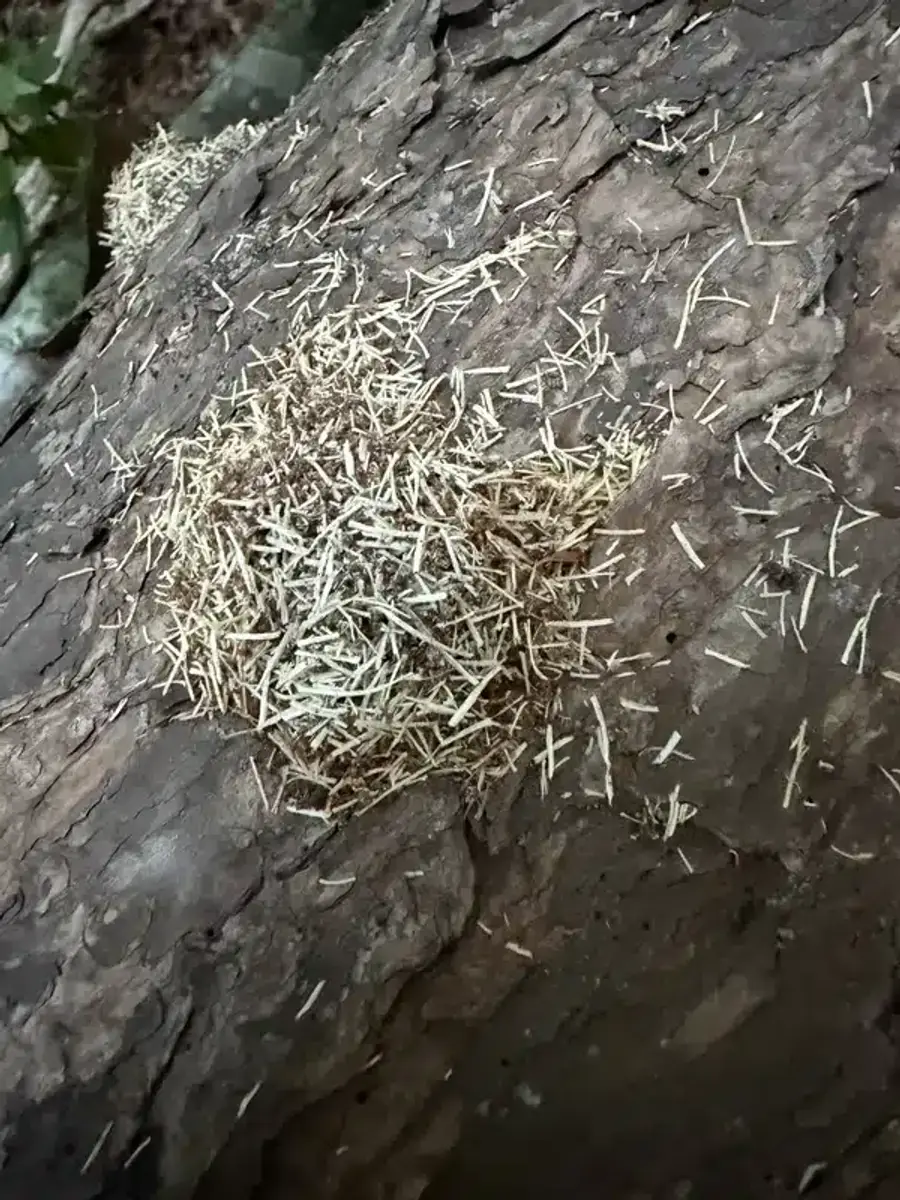
1. Sawdust-Like Piles at the Base of the Wall
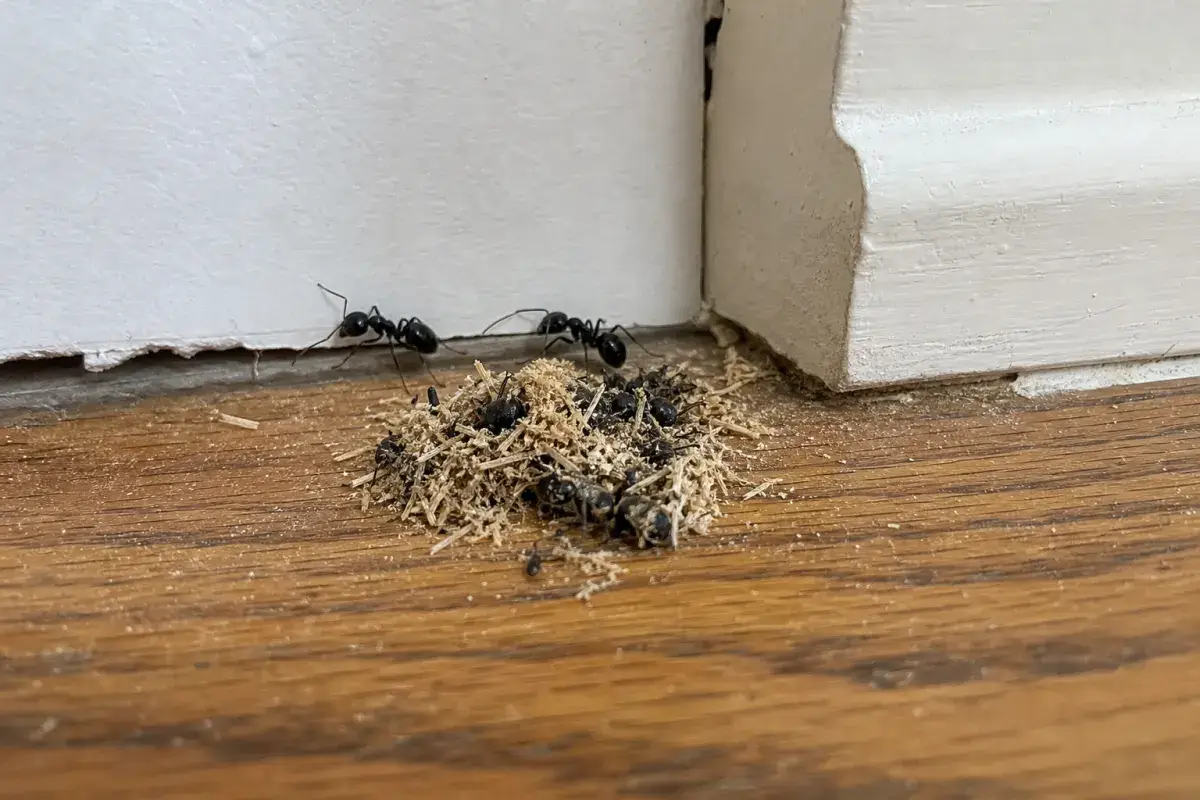
This is the sign most people notice first. Carpenter ants clean out their tunnels and dump the debris (called frass) outside the nest. It looks like coarse, stringy sawdust. Look closely and you’ll often see dead ant parts mixed in.
On drywall, frass shows up in a few places:
- On the floor where the drywall meets the baseboard
- Below window sills and door casings
- In the gap where a wall meets a ceiling or a cabinet
- Inside closets and cabinets along an outside wall
Oregon State University Extension lists sawdust-like borings coming out of cracks between walls as a main sign of infestation. If you sweep it up and it comes back in the same spot, the nest is still active. Our carpenter ant frass guide shows what it looks like up close.
2. Rustling or Crinkling Sounds Inside the Wall
An active colony isn’t silent. On a quiet night, you may hear a faint, dry rustling inside the wall, a bit like crinkling paper. It’s the sound of hundreds of ants moving and digging.
According to University of Minnesota Extension, the sound gets louder when the colony is disturbed. So tap the drywall and then press your ear to it. If the rustling picks up, you’ve likely found the nest.
3. Tiny Slit-Shaped Holes in Nearby Trim
Carpenter ants cut small openings to push frass out of the nest. These are often thin slits, not round holes. You won’t usually find them in the drywall itself. Instead, look in the wood that touches it: window casings, door frames, baseboards, and crown molding.
The holes are small and easy to miss. A pile of frass right below one is the giveaway.
4. Large Black Ants Coming Out of Cracks or Outlets
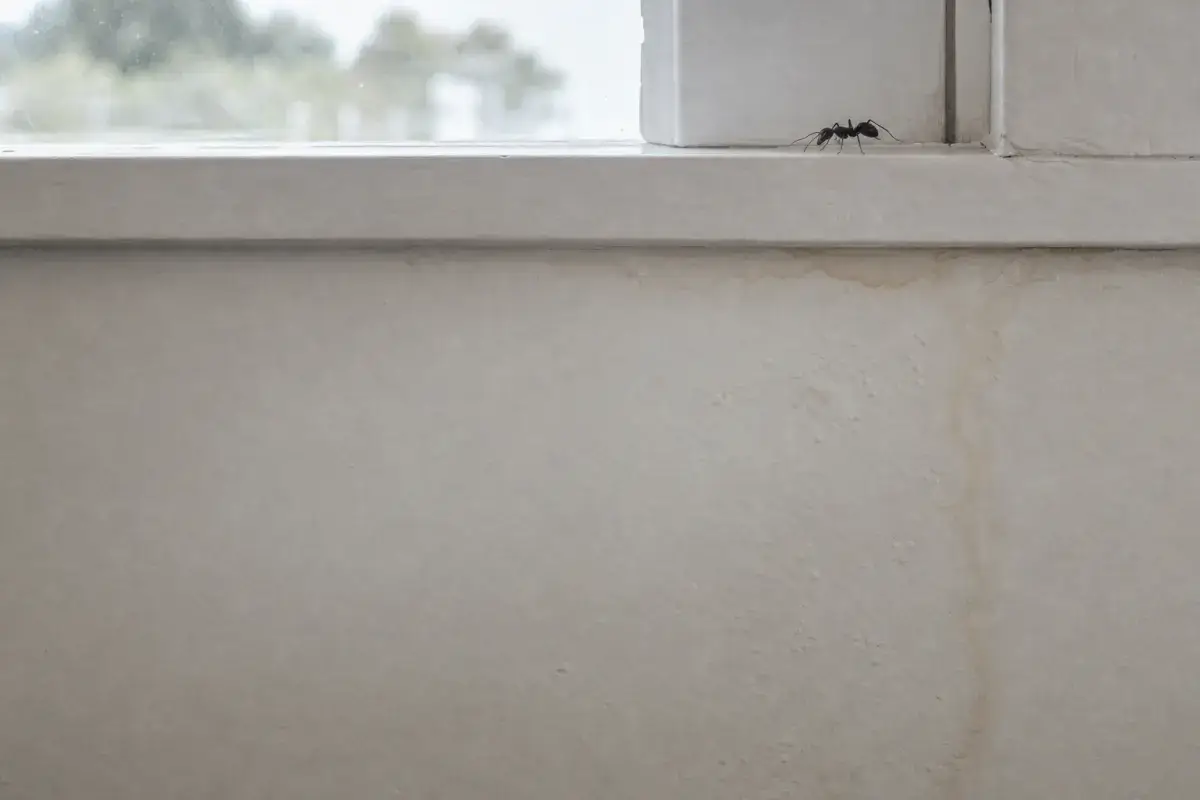
Carpenter ants use wall voids like hallways. Workers travel along pipes and wires and come out wherever there’s a gap. That can be a baseboard crack, a gap around a pipe under the sink, or the edge of an outlet cover or switch plate.
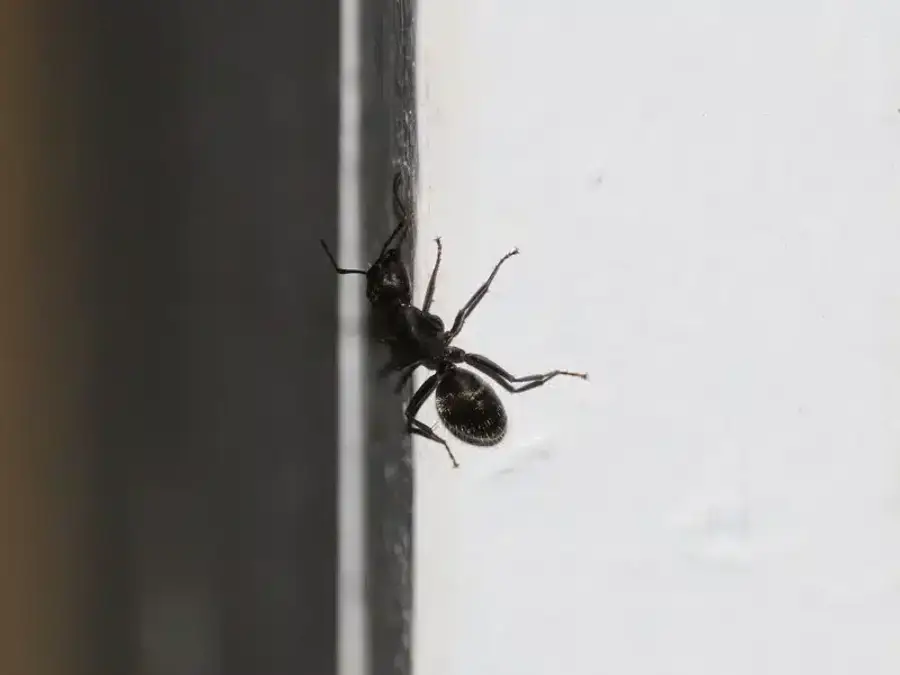
These are big ants. The black carpenter ant (Camponotus pennsylvanicus) is the main species here, and workers run about 1/4 to 1/2 inch long. If you’re unsure what you’re looking at, our black carpenter ant profile has ID photos.
Timing matters too. Carpenter ants forage mostly at night, so you might never see them during the day. A flashlight walk through the kitchen and bathrooms a couple of hours after dark often turns up the trail.
5. Winged Ants Inside the House
Swarmers are winged ants that leave a mature colony to start new ones. Finding a few winged ants near a window in spring is common. Finding a lot of them inside, though, is a different story.
University of Kentucky entomologists note that large numbers of winged ants indoors point to an indoor nest, while a few wingless ants may just be scouts. If swarmers come out of a wall, a closet, or a light fixture, the colony is probably right there. Learn more in our carpenter ant swarmers guide.
6. Water Stains, Bubbled Paint, or Soft Drywall
This sign is about the cause, not the ants. Carpenter ants move into wood that’s wet or already softening. So a stain on the drywall, peeling or bubbled paint, or a spot that gives when you press it can mark the exact area where they’re nesting.
University of Maryland Extension says a carpenter ant colony mainly signals a past or present water problem. Common spots include walls below overflowing gutters and bathroom or kitchen walls with plumbing inside.
7. Ant Trails at Night in Kitchens and Bathrooms
Most homeowners first see carpenter ants in the kitchen or a bathroom. That’s no accident. Those rooms have water lines inside the walls, and a slow leak gives the ants exactly what they want. If big ants keep showing up near the same sink, tub, or dishwasher, the nest is often in the wall right next to it. Our post on carpenter ants in the bathroom covers that setup in more detail.
One house had ants in the kitchen that my colleague Lawrence and I just couldn’t shake. We sprayed, set traps, and even pulled the outlet covers and dusted inside. That only pushed the ants to another part of the wall.
Finally, Lawrence said to check around the bathtub upstairs. The grout around the tub was cracked, and water was leaking down into the kitchen wall below. That moisture was the whole reason the ants stayed. Once it was fixed, the problem stopped.
Since that day, cracked grout and caulk around a tub is one of the first things I check when ants keep coming out of a wall.
What Carpenter Ants Don’t Do to Drywall
A lot of people expect carpenter ants to chew holes straight through their walls. That’s not how it works.
According to Virginia Cooperative Extension, carpenter ants don’t eat wood. They only use it as a place to live. They also nest in wet foam insulation. So the drywall usually stays intact. The ants dig in the framing, sill, or trim behind it.
In my experience, the ants aren’t the biggest structural threat. They mostly dig out wood that’s already wet or rotting. The real concern is how much rot was there before they showed up. Fix the leak, replace the soft wood, and the reason for the nest goes away.
Carpenter Ants vs Termites in Drywall
Termites cause similar worries, but the clues on your drywall look very different. This table covers the quick checks.
| Clue | Carpenter Ants | Termites |
|---|---|---|
| What comes out of the wall | Dry, coarse wood shavings with insect parts | No sawdust; mud and soil |
| Tunnels | Smooth and clean | Packed with mud and droppings |
| Drywall paper | Left alone | Eaten from behind |
| Mud tubes | Never | Common on foundations and walls |
| Live insects | Large black ants, often at night | Rarely seen unless swarming |
| Winged form | Pinched waist, bent antennae | Straight waist, equal-size wings |
The biggest difference is mud. NC State Extension notes that subterranean termites feed on the paper covering of sheetrock and build mud tubes from soil and wood bits. Carpenter ants never use mud. When I open up damage, carpenter ant galleries are clean and empty. Termite damage has mud in it, and old termite damage still has dried mud left behind.
If you see mud tubes or soil in the wall, skip the ant plan and book a termite inspection. For a deeper breakdown, see carpenter ants vs termites.
How to Check Your Wall for Carpenter Ants
You don’t need to cut into anything to narrow it down. These steps take one evening and a flashlight.
Check the floor along baseboards, below windows and doors, and inside closets on outside walls. Sweep up any piles you find. Then check the same spot again in a few days. New frass means an active nest.
Wait for a quiet time, like late evening. Tap the drywall near the frass or stain, then press your ear to it. A dry rustling that gets louder after tapping points to a nest in that section of wall.
Carpenter ants are most active after dark. Walk the kitchen and bathrooms with a flashlight a couple of hours after sunset. Follow any large black ants to see where they go into or out of the wall.
Look above and around the spot for anything wet. Check for a tub or shower on the floor above, a sink or dishwasher on the other side of the wall, a window that leaks, or a gutter that overflows outside. That leak is the reason the ants picked this wall.
The main (parent) colony is often outside in a stump, tree, or woodpile, with smaller satellite nests in the house. Look for ant trails on the siding, along tree limbs that touch the roof, and around damp mulch beds against the foundation.
If the outside walk turns up a trail, follow it as far as you can. That trail often leads back to the parent colony.
Penn State Extension explains that the parent colony is often within 100 yards of the house, while satellite nests sit inside under insulation between wall studs or ceiling joists and in window and door casings. Workers travel back and forth between them. That’s why treating only the wall you can see often doesn’t end the problem. Both the satellite nests and the parent colony need to be dealt with.
When to Call a Professional
Call for help if you see any of these:
- Frass that keeps coming back after you sweep it up
- Winged ants coming out of a wall, ceiling, or light fixture
- Rustling in the wall along with ants on the trail
- Ants in more than one room or on more than one floor
- Any sign that might be termites instead, like mud tubes
Our carpenter ant control service starts with finding the nest and the moisture source behind it. From there, we treat the satellite nests in the wall and the colony outside. We also point out the leaks or rotted wood that need repair, because that’s what keeps the ants from coming back. All the products we use are EPA approved and have passed through our internal research team, which removed 9 of the harshest products from our lineup.
We help homeowners with this across Northern Virginia, Maryland, and DC, including Arlington, Ashburn, Bethesda, and Kensington. If it turns out you’re dealing with a different species, our general ant control plans cover the other ants we see in walls here.
The Bottom Line
The drywall signs of carpenter ants are easy to miss one at a time. A little sawdust here, a few big ants at night there. Put together, though, they point to a nest in the wood behind your wall. They almost always point to a moisture problem too. Find the frass, listen to the wall, and look for the leak.
Our family business has been protecting homes in the DMV for 58 years, and we’ve earned 1,800+ reviews along the way. If you’re seeing any of these signs, call us at 703-683-2000 or email info@bettertermite.com for an inspection and estimate.