
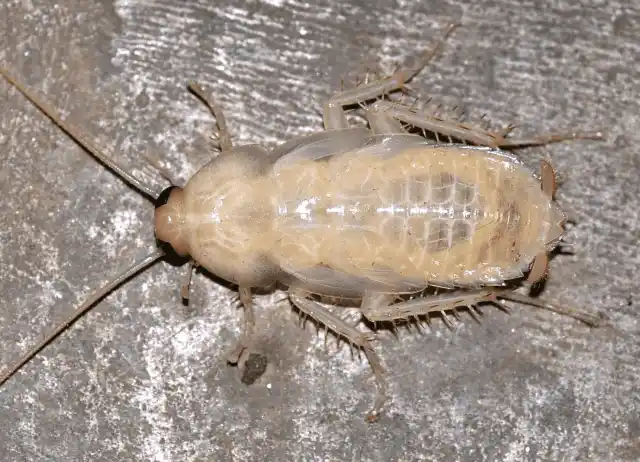

TLDR: “Albino roaches” aren’t actually albino. They’re normal cockroaches that just finished molting (shedding their old shell). The new shell starts out white and soft, then darkens over minutes to hours. Seeing a white roach means the infestation is well-established since roaches only molt where they feel protected. This is a sign you need professional treatment.
We get calls about a “rare albino roach” in someone’s kitchen more often than you’d think. Our family business has served the DMV for over 50 years, and the answer is almost always the same: what you saw is a normal cockroach caught in the few hours after it shed its skin.
That’s good news and bad news. The roach isn’t a mutant. But roaches only molt where they feel protected, so a white one usually means there are a lot more you haven’t seen.
The Albino Roach Myth
That white cockroach doesn’t have albinism. The “albino roach” people find in a kitchen or bathroom is an ordinary cockroach that just finished molting.
The same chemical process that turns a new shell brown also makes it hard. So a white roach is a soft roach. It is at its weakest, which is why it normally stays hidden until it darkens.
How Rare Is an Albino Cockroach?
A true albino, one that stays white for life, is about as rare as it gets. Labs that keep large cockroach colonies do see odd color mutants now and then, including albino and white-eyed ones. Out in homes, you can assume you’ll never meet one.
Coby Schal, an entomologist at North Carolina State University who studies German cockroaches, answered this question directly in “Cockroaches: Fact or Fiction?” All newly molted cockroaches are white. Over the next several hours the wings and body tan to the species’ normal color and pattern. Albino and white-eyed mutants do show up now and then in lab colonies, but they are extremely unlikely to be found outside the lab.
Why Roaches Turn White: The Molting Process
How Molting Works
Cockroaches grow by shedding their outer shell in a process called molting. How many times depends on the species. German roach nymphs molt 5–6 times before they’re adults, while American roaches molt anywhere from 6 to 14 times over 6–12 months. Every one of those molts produces a white roach for a few hours.
During molting, hormones trigger the roach to shed its old shell. The roach becomes exposed during this time since it’s basically unprotected until the new shell hardens.
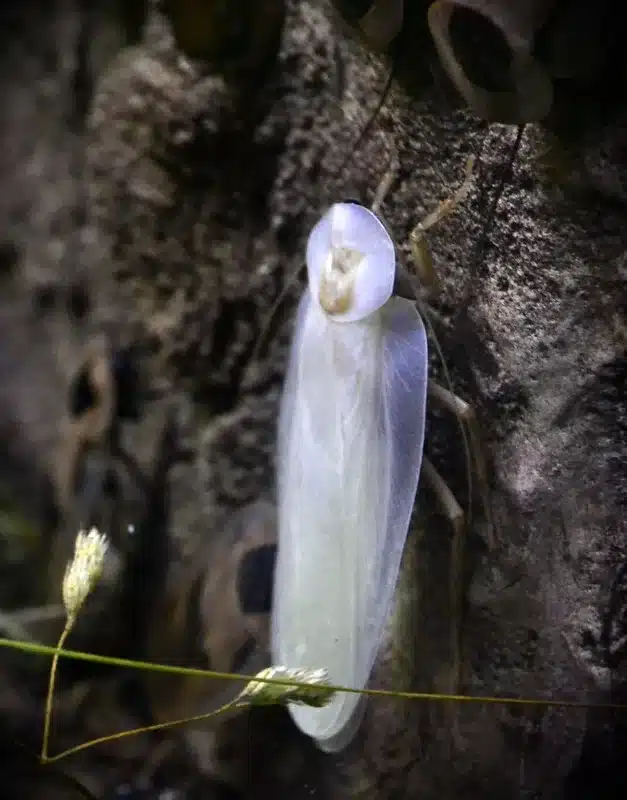
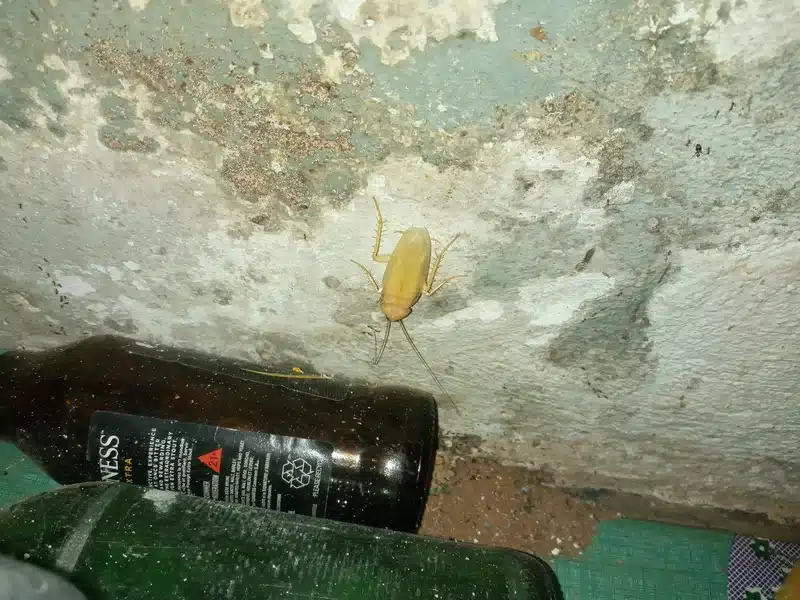
The “albino roach” look happens because the new shell starts out completely colorless and soft.

How the Shell Hardens
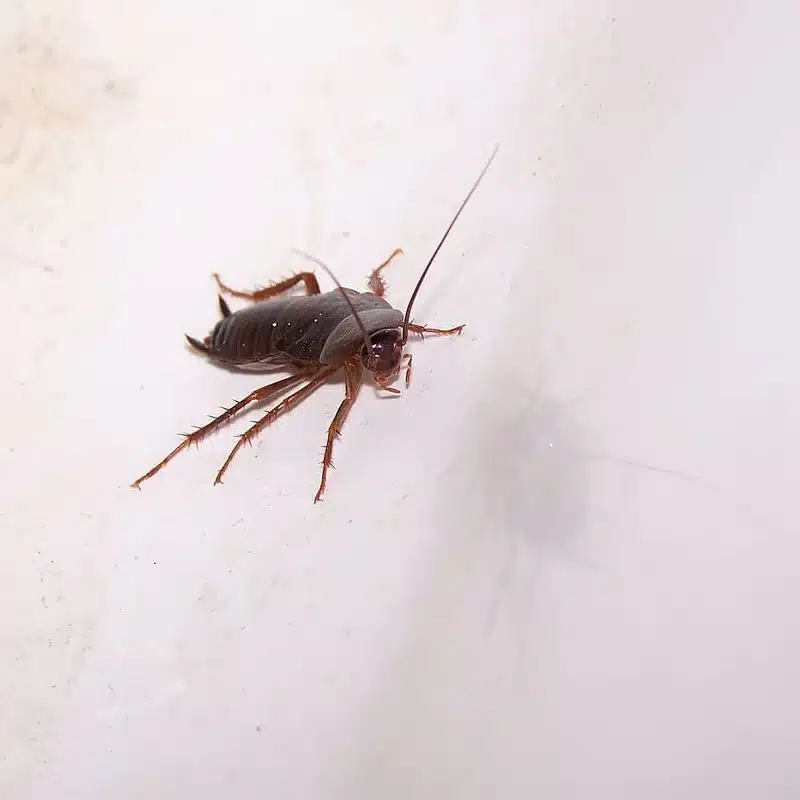
After a roach sheds its old shell, the new one needs time to harden and darken. Compounds like tyrosine slowly turn into darker pigments that also strengthen the shell.
The whole change takes a few hours. Small nymphs darken faster, and big American roaches take longest. The University of Florida describes it plainly: American roach nymphs are white after each molt, then turn reddish-brown. Since roaches hide while they’re soft, most people never see this stage.
Common Roach Species and Their White Phase
German Roach
German roaches are the most common indoor species in our area. They’re about half the size of your thumb with two dark stripes behind their heads. They molt 5-6 times and prefer kitchens and bathrooms.
German roaches breed fast, so you’re more likely to see their white stage. Rutgers entomologists report that a growing German roach population is about 80% nymphs, and every nymph has several molts ahead of it.
Oriental Roach
Oriental roaches are larger, thumb-sized insects often called “waterbugs.” They prefer cool, moist areas like basements and crawl spaces. A white Oriental roach means they’ve found a good breeding spot in your home’s lower levels.
American Roach
American roaches are the largest common indoor species. They go through 6–14 molts over 6–12 months. A freshly molted American roach is big, so it is the white roach people are most likely to notice and photograph.
Brown-Banded Cockroach
Brown-banded cockroaches prefer warmer, drier rooms and often glue their egg cases to furniture or ceilings. They seek out heated areas for molting since they’re exposed during this stage.
White Roach vs Baby Roach: How to Tell
A freshly molted roach looks different from a baby German cockroach. Molted roaches have see-through, soft bodies that look almost ghost-like. They move slowly since their new shell hasn’t stiffened yet.
Baby roaches have properly hardened shells for their size. They’re small but move fast and have normal coloring. Small roach identification comes down to body shape and behavior, not just color. If what you found was tiny and dark rather than white, our guide to baby roach identification walks through what each species’ nymphs look like.
Bugs That Look Like White Roaches
Not every pale or white-marked “roach” is a fresh molt. These look-alikes often get mistaken for white roaches:
- Roach with a white stripe or spot on its back. Young German roach nymphs are nearly black with a single light stripe down the middle of the back, according to Virginia Tech. From a distance that reads as a black-and-white roach. If you’re seeing these in the kitchen, treat it as a German roach problem.
- Brown roach with cream-colored edges. Pennsylvania wood roaches have pale edges on the shield behind the head and along the wings. Penn State notes they live in leaf litter and wood piles and die within a few days indoors, so one near a door in spring is a stray, not an infestation.
- Roach with light bands across its body. Brown-banded cockroaches have two pale bands across the wings or abdomen, and they turn up in bedrooms and living rooms more than kitchens.
- Soft, creamy white insect in wood or soil. That’s more likely a termite worker than a roach. Termite workers are white all the time, have no wings, and are shaped more like a grain of rice. If you found them in damp wood or in mud tubes along a foundation, look at our eastern subterranean termite guide.
For the rest of the list, see our roundup of bugs that look like roaches.
Why a White Roach Signals Trouble
So what does a white roach mean? Mostly, it means roaches are breeding inside, not just wandering in. Roaches only molt when they feel protected. A white one out in the open usually means the hiding spots are crowded enough that one got pushed out before its shell hardened.
Molting roaches also mean the population is actively growing. In apartment buildings common across the DMV, these populations can spread fast between units.
Crowding is something our technicians read on every roach job. Daren, one of our registered technicians, remembers a German roach house off Route 1 where the roaches were clustered on the walls up in the corners. He’d never seen that before, so he asked Lawrence, who trained him, what it meant. Lawrence’s answer: there was no room left in the wall voids for them to go. A white roach in plain sight is a smaller version of the same signal.
Is a White Cockroach Dangerous?
A white cockroach is no more dangerous than a brown one. It isn’t a different species, and it isn’t sick or poisonous. The risk is the same as with any roach: germs on your counters and allergens in your house. The allergen part is the one to take seriously if anyone at home has asthma.
Cockroach allergens come from droppings, saliva, and shed skins, and molting leaves shed skins behind. The EPA lists cockroaches as major asthma triggers, especially for children.
A national survey led by researchers at the National Institute of Environmental Health Sciences found detectable cockroach allergen in an estimated 63% of U.S. homes. On 10% of kitchen floors, levels were high enough to be linked with more severe asthma. The highest levels were in high-rise apartments, urban homes, and houses built before 1940.
How to Treat a Roach Problem
Clean Up and Seal Entry Points
The first step is removing what draws roaches in:
- Fix leaky sink traps and drip pans
- Seal foundation cracks and pipe holes
- Install tight-fitting door sweeps
- Clean up food debris and use sealed containers
These steps make your home less appealing for roaches to settle and molt.
Monitor with Traps
Sticky traps along wall-floor edges help identify which species you have and where they’re most active. This info guides treatment choices and tracks progress.
Professional Treatment
Professional treatments target the products roaches will contact during their daily routine:
- Gel baits with fipronil, indoxacarb, or clothianidin
- Growth regulators that disrupt proper molting
- Rotation of active ingredients to prevent resistance
Growth regulators are the part of treatment aimed right at the molt. They interfere with molting, so nymphs can’t finish growing into breeding adults. Daren builds them into every German roach service. His routine is a non-repellent in every crack and crevice, about 15 minutes to let it dry, then a growth inhibitor, then bait stations and glue boards. He switches products every visit, because the same material over and over is how you lose control of German roaches. The glue boards go down every time so he can tell whether the population is going up or down.
Freshly molted roaches are especially vulnerable because their soft shells absorb products faster.
Boric acid and other drying dusts work very well against molting roaches. The soft shell picks up more dust than a normal hardened roach would.
Why Foggers Don’t Work
Over-the-counter foggers rarely solve roach problems. They kill only the exposed roaches and miss the hidden groups where molting happens. Foggers can also scatter roaches to new areas of your home.
Professional treatment targets hiding spots, breeding sites, and the conditions that let roach numbers grow. Licensed technicians identify species-specific behavior and choose treatments accordingly. That is why every job starts with a cockroach inspection of the kitchen, bathrooms, basement, and crawl space. What we find there decides which species we are treating and where the bait goes.
Our Approach to Roach Control
Our third-generation family business has developed effective methods for active roach infestations. We’ve served over 100,000 homes in the DMV area, from Gaithersburg pest control visits to jobs across Northern Virginia, giving us deep experience with local roach species.
Our research team has removed 9 harsh chemicals commonly used in our industry, choosing products like Essentria and borate-based solutions instead. These meet our strict standards for home use.
Our Better Promise means no binding contracts and unlimited callbacks until your roach problem is fully resolved.
Preventing Future Problems
Long-term roach control takes ongoing effort and professional support. Our seasonal plans target the specific pests most active during each time of year.
Homeowners play a key role by keeping things clean, controlling moisture, and reporting any pest activity quickly. Catching problems early prevents small issues from turning into major infestations where white roach sightings become common.
Call us at 703-683-2000 or email info@bettertermite.com to speak with one of our licensed technicians.