Giant Leopard Moth Caterpillar Identification Guide
Hypercompe scribonia
The giant leopard moth caterpillar, or giant woolly bear, is a large black bristly caterpillar with red bands that show when it curls up. It does not sting and rarely harms plants, and it grows into a white moth covered in black rings.
Taxonomy
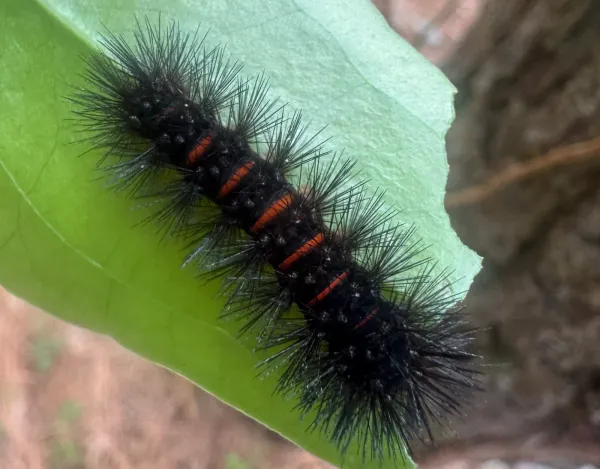
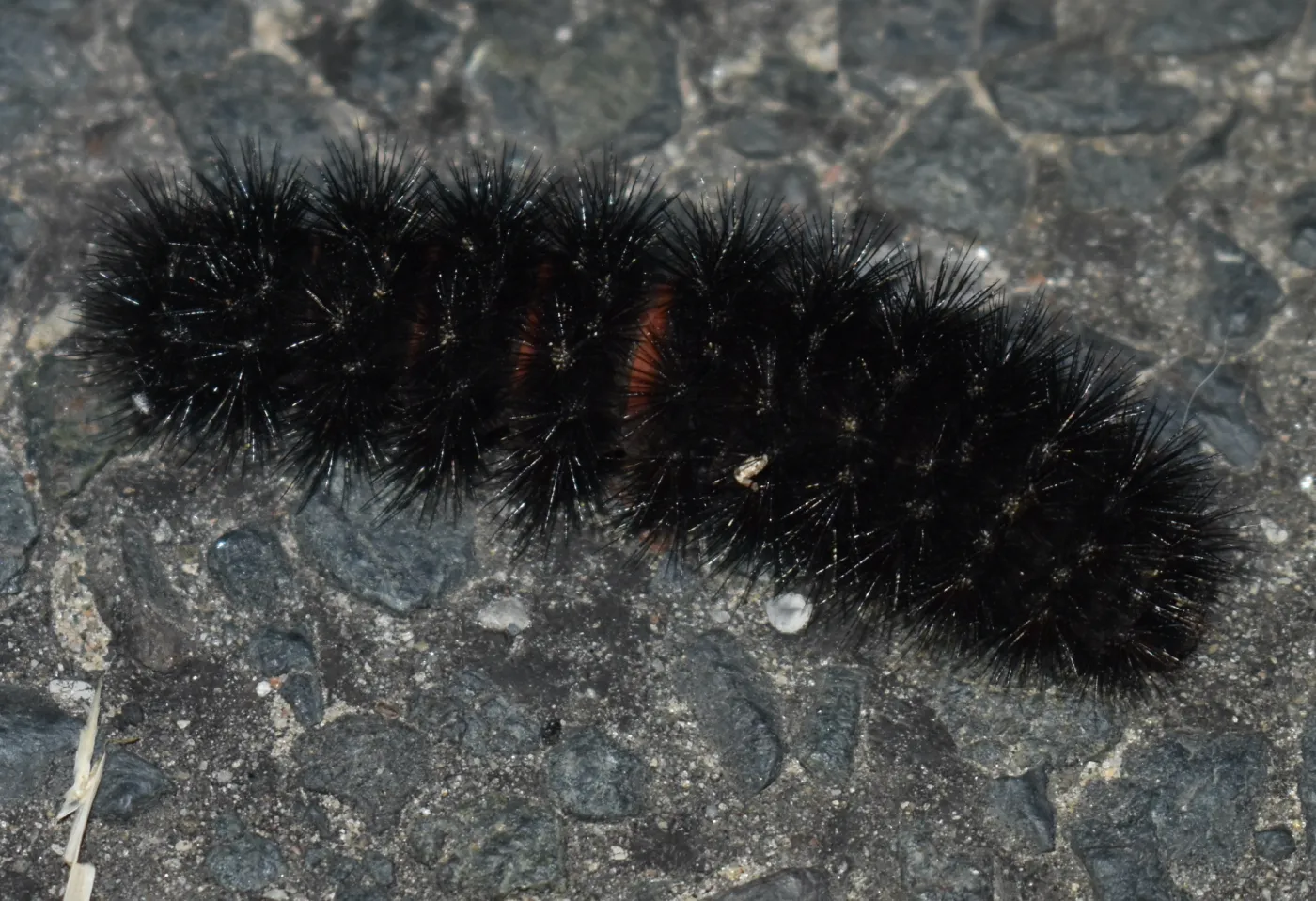
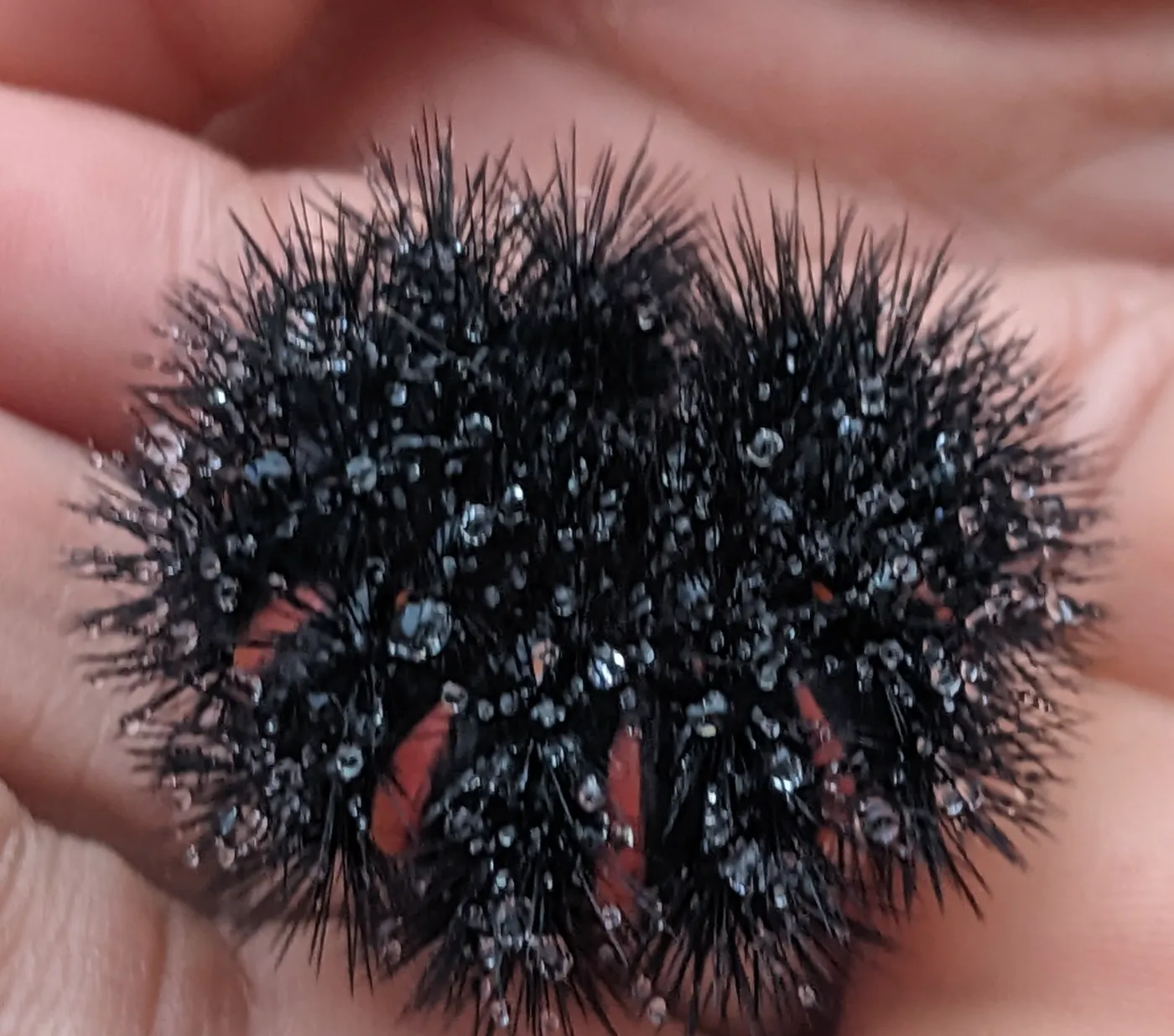
Giant Leopard Moth Caterpillar Coloration
Common color patterns to help identify giant leopard moth caterpillar
Giant Leopard Moth Caterpillar
Seasonal Activity
When giant leopard moth caterpillar are most active throughout the year

Where Giant Leopard Moth Caterpillar Are Found
Hover over states to see their names. Green regions indicate where giant leopard moth caterpillar have been reported.
Giant Leopard Moth Caterpillar Identification Guide
The giant leopard moth caterpillar (Hypercompe scribonia) is also called the giant woolly bear. It is one of the largest hairy caterpillars in eastern North America. It grows into the giant leopard moth, a type of tiger moth in the family Erebidae.
Most people see it in the fall. A big, black, bristly caterpillar crawls across the driveway, then curls into a tight ball when touched. It looks spiky, but it does not sting. That sets it apart from several black, spiny look-alikes that do.
Physical Characteristics
- Size: Full-grown caterpillars reach about 3 inches (75 mm) long.
- Bristles: Thick, shiny, stiff black bristles cover the body. They feel firm, not soft like a banded woolly bear’s hair.
- Red bands: Thin bands of bright red skin sit between the body segments. The small breathing holes along the sides are red too.
- Hidden color: The red bands are hard to see when the caterpillar is stretched out. They show clearly when it curls into a ball.
- Young caterpillars: Early stages look different. They have an orange head, dark brown segments, and an orange stripe down the back.
When threatened, the caterpillar rolls into a tight ring. Its bristles bend back, so a predator has a hard time getting a grip. The red bands then act as a warning color.
The Adult Moth
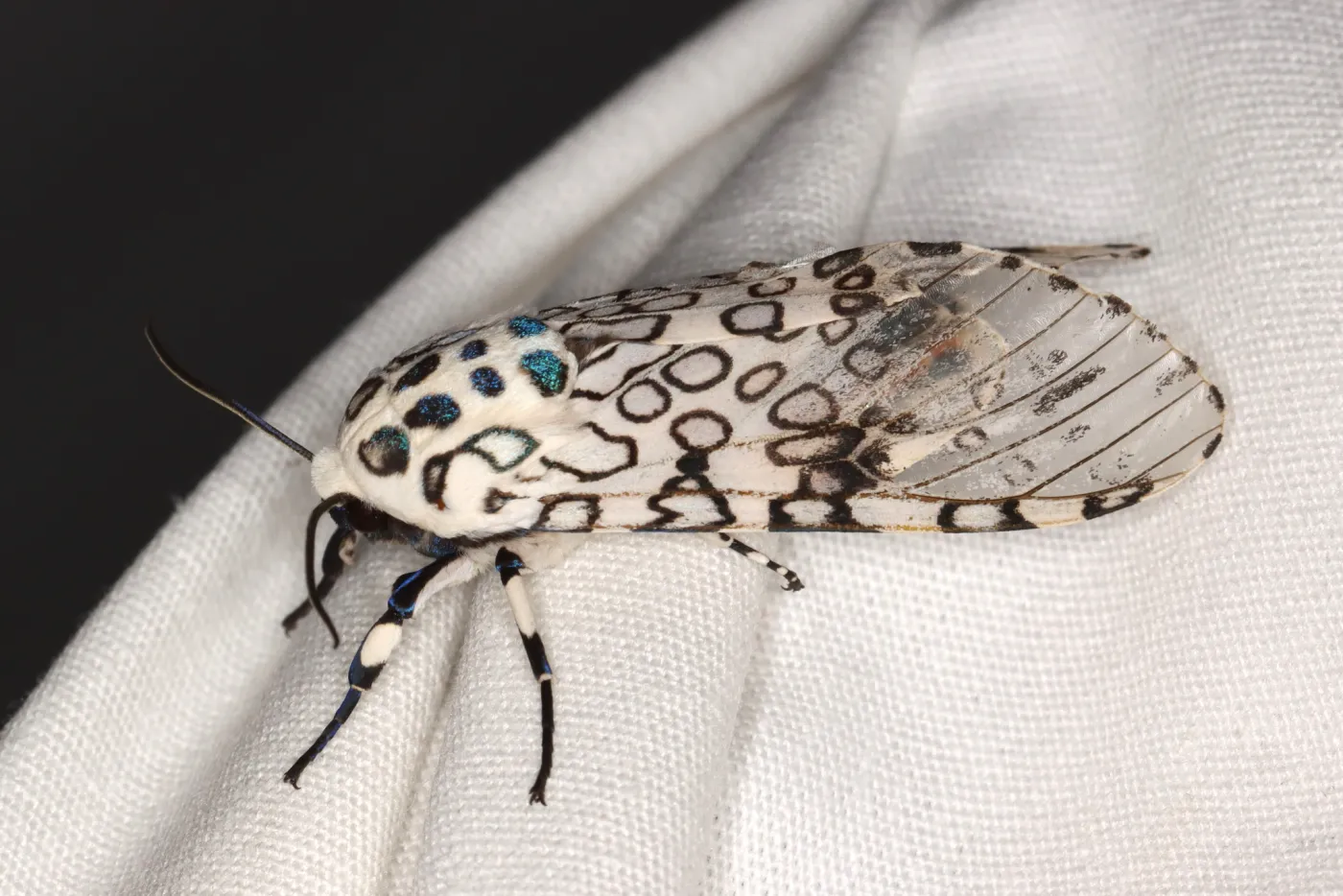
The adult moth is just as eye-catching. Its white wings span 2.25 to 3.6 inches. Black rings and spots cover the wings, and the pattern varies from moth to moth. The belly is a shiny blue-black with orange marks.
Males often gather at porch lights at night. When bothered, an adult may play dead. It can also give off a drop of yellow, bad-tasting fluid.
Similar Species
Several dark, hairy caterpillars share this range. Telling them apart matters, because some of them sting:
- Banded woolly bear (Pyrrharctia isabella): Smaller, about 2 inches. Its hair is soft and thick, black on each end and rusty orange in the middle. It also wanders and curls up in the fall.
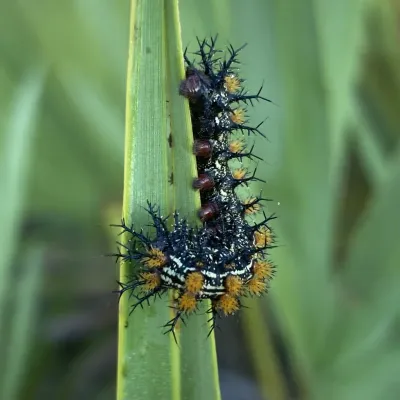
- Buck moth caterpillar (Hemileuca maia): Dark body with branching spines that sting. Never handle a black, spiny caterpillar unless you know what it is.
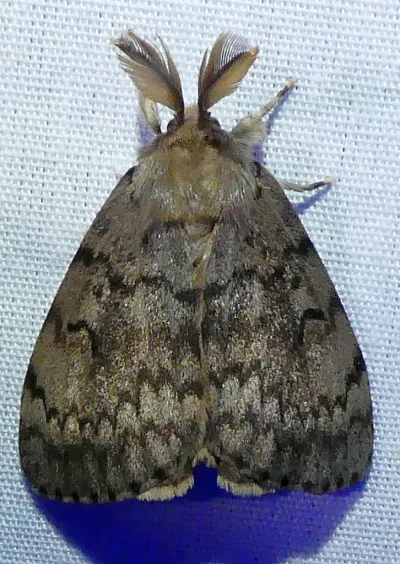
- Spongy moth caterpillar (Lymantria dispar): Hairy and dark, with pairs of blue dots up front and red dots behind them. Its hairs can irritate skin.
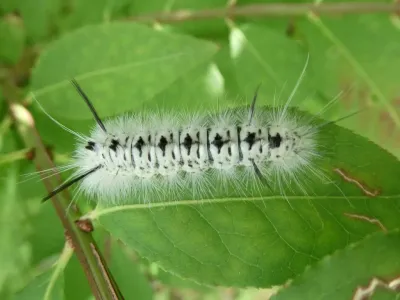
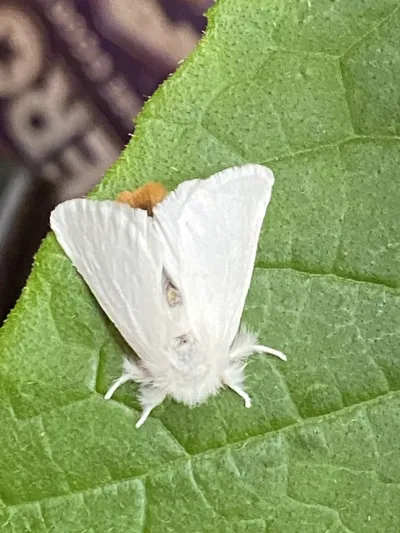
- Hickory tussock moth caterpillar (Lophocampa caryae): Another tiger moth caterpillar, but mostly white with black tufts and long black hair pencils. Its hairs often cause itchy rashes.
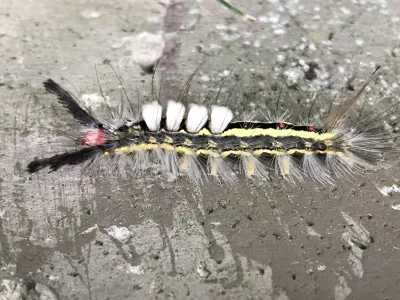
- White-marked tussock moth caterpillar (Orgyia leucostigma): Yellow and black, with white tufts on the back and a bright red head.
- Browntail moth caterpillar (Euproctis chrysorrhoea): Dark brown with white side marks and two orange-red dots near the tail. Its hairs can float in the air and cause rashes.
Giant Leopard Moth Caterpillar Behavior and Biology
Habitat and Host Plants
These caterpillars live in yards, gardens, fields, and the edges of woods. They eat more than 25 kinds of plants. Favorites include violets, dandelions, sunflowers, and cabbage. They also eat the leaves of willow, maple, cherry, and magnolia trees. In the far South, they feed on citrus and banana too.
They tend to move from plant to plant as they eat. They feed mostly at night and hide by day under leaves, boards, and yard debris.
Life Cycle
The giant leopard moth has four life stages: egg, caterpillar, pupa, and adult.
- Eggs: Females lay tiny, round, pearly gray eggs on food plants.
- Caterpillars: The young grow through several stages over summer and fall.
- Winter: Nearly full-grown caterpillars spend the winter as larvae. They hide under bark, logs, firewood, flower pots, or leaf litter. Natural antifreeze in their blood helps them survive the cold.
- Pupae: In spring they feed for a short time. Then they spin a thin, yellowish, net-like cocoon.
- Adults: Moths come out in late spring and summer, mate, and lay eggs.
There is one generation a year in the North and two or more in the South. In Virginia and Maryland, sightings peak in September and October. That is when the caterpillars wander in search of a winter hiding spot. A smaller peak comes in April and May, when they wake up to finish growing.
Range
The giant leopard moth lives from southern Ontario and New England south to Florida. It ranges west to Minnesota and Texas and south through much of Mexico. It is common in Virginia, Maryland, and Washington, DC.
Is It Harmful?
Giant leopard moth caterpillars pose little risk to people, pets, or homes. They do not bite, and their bristles have no venom. University entomologists say the species is not economically important. A few people with sensitive skin may notice mild itching after handling one. Wash your hands afterward, and see a doctor if a rash spreads or does not go away.
This information is for general education only and is not medical advice. Always ask a healthcare provider about skin reactions or other health concerns.
Treatment Methods for Giant Leopard Moth Caterpillars
Control for this species focuses on keeping wandering caterpillars out of living spaces and protecting valued plants. The methods below are the ones that tend to work best.
- Inspection: Look for caterpillars and hiding spots along the foundation, in the garage, and under firewood, pots, and boards. On plants, check leaf undersides at dusk, when they feed.
- Hand removal: Wear gloves, or use a stick or leaf, to move caterpillars from garages, patios, and garden beds. Place them in brush or leaf litter at the edge of the yard.
- Habitat changes: Store firewood off the ground and away from the house. Clear boards, pots, and debris piled against walls, since these are favorite winter shelters.
- Exclusion: Install door sweeps and repair gaps under garage doors. Seal cracks along the foundation where caterpillars and other crawling insects slip inside.
- Targeted plant sprays: If many caterpillars are eating a vegetable or flower bed, products made with Bacillus thuringiensis var. kurstaki (Bt) or spinosad work well on young, actively feeding caterpillars. Always follow the label.
Seeing caterpillars in the garage along with millipedes, crickets, or spiders? Those fall invaders point to moisture and gaps around the foundation. Our home pest control plan treats those covered pests, and the sealing steps above help keep stray caterpillars outside as well.
References
- UF/IFAS Featured Creatures: Giant Woolly Bear, Giant Leopard Moth (Hypercompe scribonia), EENY599
- Mississippi State University Extension: Giant Leopard Moth Caterpillar, Bug’s Eye View Vol. 4, No. 32
- Texas A&M AgriLife Extension, Travis County: Woollybear Tiger Moth Caterpillars
- UF/IFAS Pest Alert: Giant Woolly Bear Added to Featured Creatures
Other Moths
Explore other species in the moths family
Commonly Confused With
Giant Leopard Moth Caterpillar are often mistaken for these similar pests
Where Giant Leopard Moth Caterpillar Are Found
Hover over states to see their names. Green regions indicate where giant leopard moth caterpillar have been reported.
Common Questions about Giant Leopard Moth Caterpillar
Are giant leopard moth caterpillars poisonous or do they sting?
+
No. This is not a stinging caterpillar. Its stiff black bristles have no venom. They do not break off in the skin like the spines of a buck moth or saddleback caterpillar. A few people with sensitive skin may itch a little after handling one. Wash your hands and avoid touching your eyes afterward.
What does a giant leopard moth caterpillar look like?
+
Full-grown caterpillars are about 3 inches long. Shiny, stiff black bristles cover the body. Thin bands of bright red skin sit between the segments. You see them best when the caterpillar curls into a ball. Young caterpillars have an orange head and an orange stripe down the back.
What is the difference between a giant leopard moth caterpillar and a banded woolly bear?
+
Both are tiger moth caterpillars. Both curl up when touched and wander in the fall. The banded woolly bear is smaller, about 2 inches long. Its soft hair is black on both ends and rusty orange in the middle. The giant leopard moth caterpillar is bigger and almost all black, with stiff bristles and thin red rings.
What does the giant leopard moth caterpillar turn into?
+
It becomes the giant leopard moth. This white moth has wings about 2 to 3.5 inches across, covered in black rings and spots. Its belly is shiny blue-black with orange marks. Adults fly at night and often rest near porch lights in summer.
Why do I see giant leopard moth caterpillars crossing my driveway in the fall?
+
In September and October, the caterpillars leave their food plants. They are looking for a sheltered place to spend the winter, such as loose bark, leaf litter, firewood, or flower pots. That search is why they turn up on driveways, patios, and in garages in the fall.
Do giant leopard moth caterpillars damage gardens?
+
Rarely. They eat many plants, including violets, dandelions, sunflowers, cabbage, and the leaves of willow, maple, and cherry trees. They almost never show up in large enough numbers to cause real damage.
How do I get rid of giant leopard moth caterpillars?
+
Wear gloves or use a stick to move the caterpillar to leaf litter or brush away from the house. Seal gaps under garage doors, and keep firewood and debris away from the foundation. For many caterpillars on garden plants, a Bt or spinosad spray works best on young caterpillars.

With five years of hands-on experience in the pest control industry, George Schulz is a registered technician with the Virginia Pest Management Association and a proud third-generation professional in a family business that's been protecting homes for over 58 years. He manages and trains a team of service pros while also leading internal research efforts—recently spearheading a deep-dive review of thousands of documents on pest control materials to hand-pick the most kid and pet friendly, most effective solutions tailored specifically for homes in the DC metro area.
Local Moths Help
Dealing with moths at home? Our licensed technicians provide pest control across Northern Virginia and Maryland.
