Milkweed Tussock Moth Caterpillars Identification Guide
Euchaetes egle
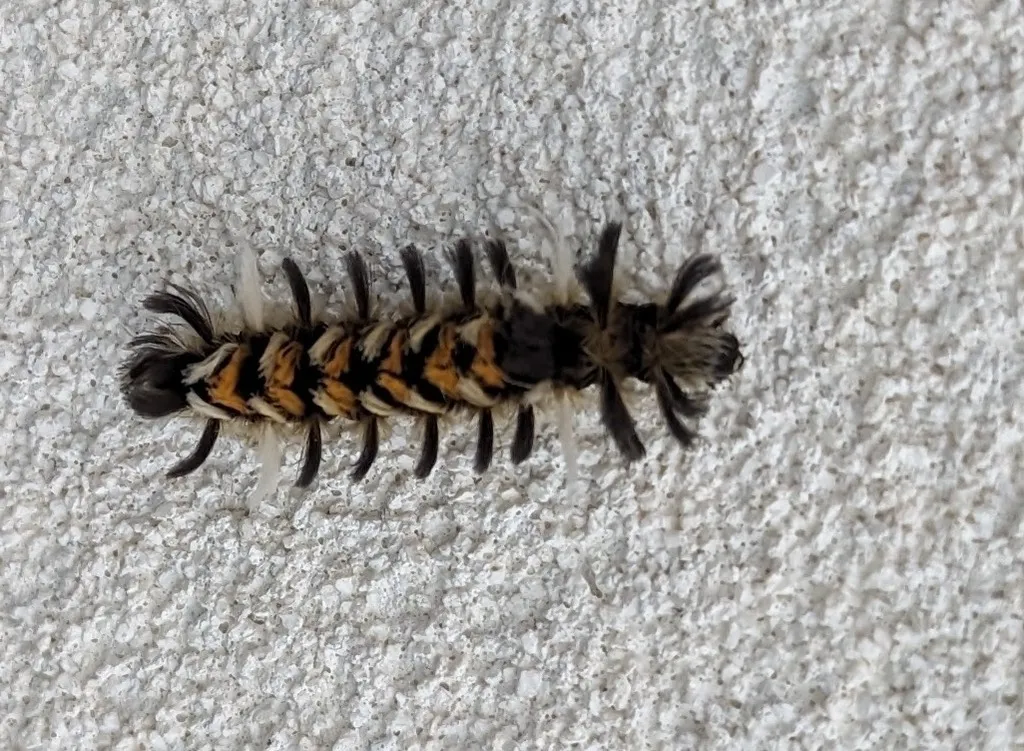
Milkweed tussock moth caterpillars are fuzzy caterpillars with tufts of black, orange, and white hair that feed in groups on milkweed in late summer. They are not venomous, but their hairs can cause a mild, itchy rash in sensitive people.
Taxonomy
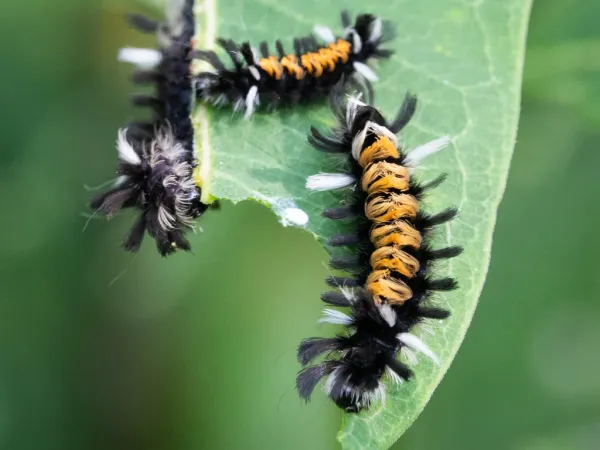
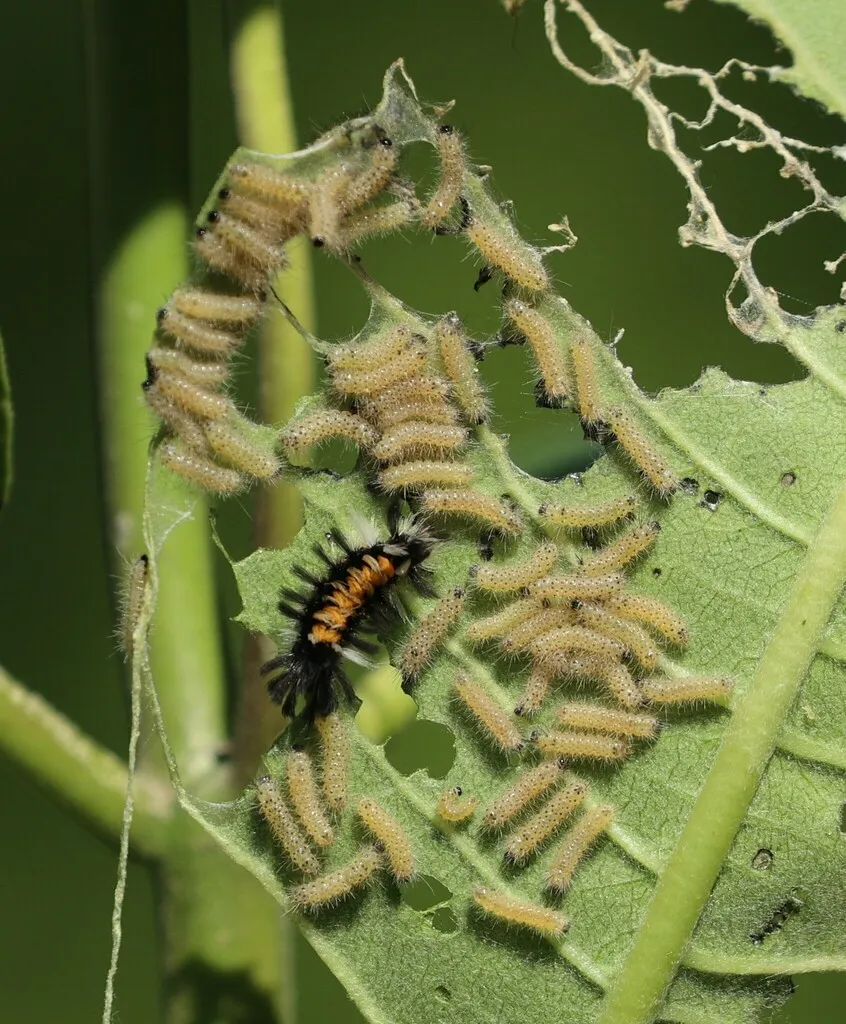
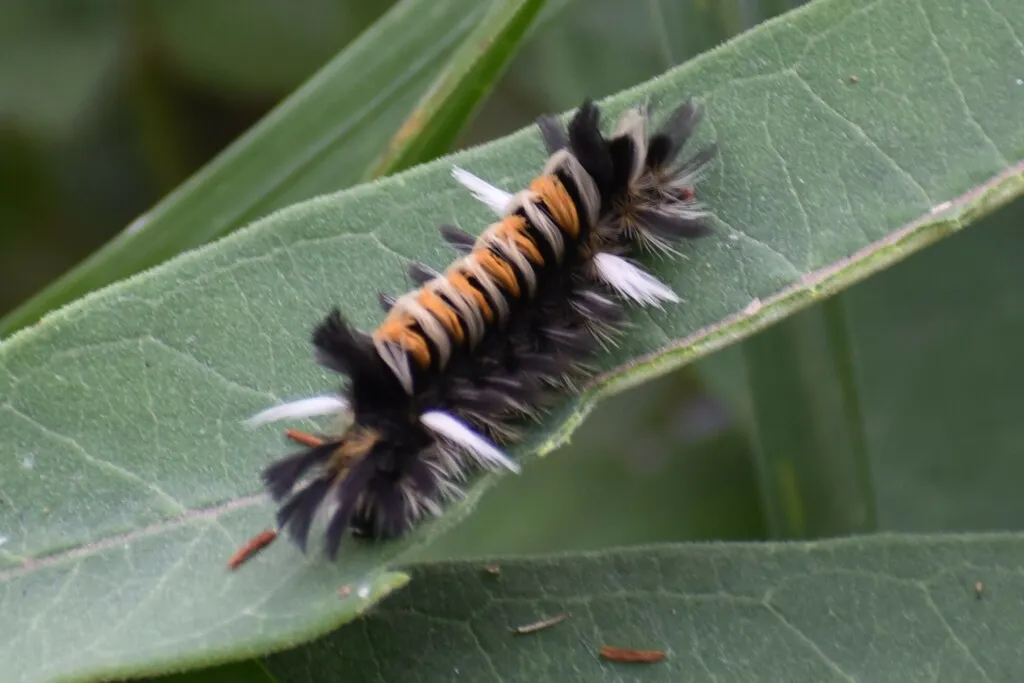
Milkweed Tussock Moth Caterpillars Coloration
Common color patterns to help identify milkweed tussock moth caterpillars
Milkweed Tussock Moth Caterpillars
Seasonal Activity
When milkweed tussock moth caterpillars are most active throughout the year

Where Milkweed Tussock Moth Caterpillars Are Found
Hover over states to see their names. Green regions indicate where milkweed tussock moth caterpillars have been reported.
Milkweed Tussock Moth Caterpillar Identification Guide
The milkweed tussock moth caterpillar (Euchaetes egle) is the shaggy black, orange, and white caterpillar that shows up in groups on milkweed in late summer. It is the young stage of the milkweed tussock moth, also called the milkweed tiger moth. Despite the name, it is a tiger moth, not a true tussock moth.
Does it sting? No. It has no venom and no stinging spines. Its hairs can cause a stinging, itchy irritation in sensitive skin, so wear gloves if you need to move one. The reaction is usually mild and much less painful than a sting from a saddleback caterpillar or puss caterpillar.
Physical Characteristics
Full-grown caterpillars reach about 1 to 1.5 inches (25 to 38 mm) long. Look for these features:
- Tufts of black, orange, and white hair over the whole body, arranged in bands
- Long white and black hair pencils that stick out near the head and the tail
- A black head that is often hidden under the front tufts
- Group feeding on milkweed or dogbane, often many caterpillars on one plant
Young caterpillars look very different. Early stages are pale yellow to gray and only lightly hairy, with black heads. They are easy to miss until the leaves start turning lacy.
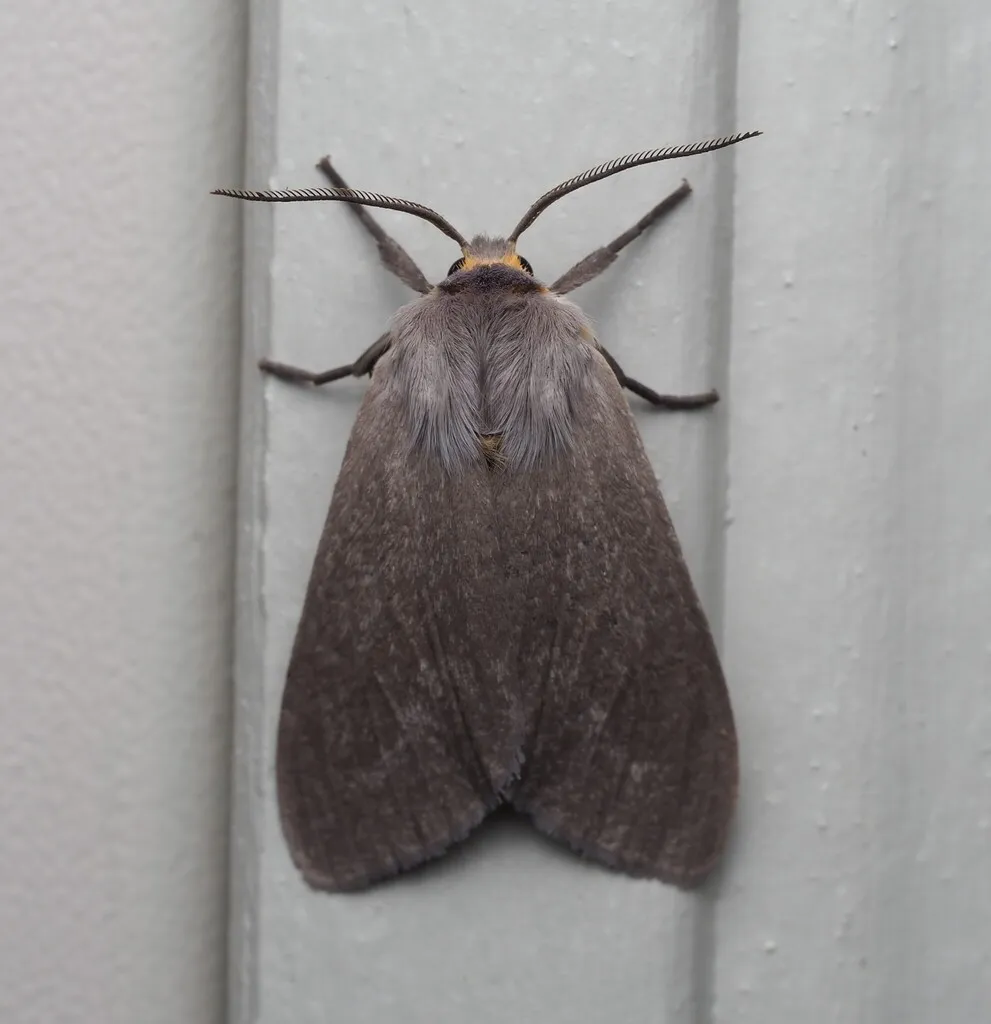
The adult moth is plain mouse-gray with a yellow abdomen marked with a row of black dots. It is one of many moths drawn to porch lights in summer.
Look-Alike Caterpillars
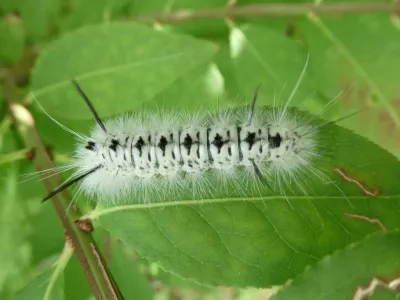
- Hickory tussock moth caterpillar (Lophocampa caryae) is mostly white with a row of black tufts and four long black hair pencils. It feeds on hardwood trees, not milkweed, and its hairs cause a stronger rash.
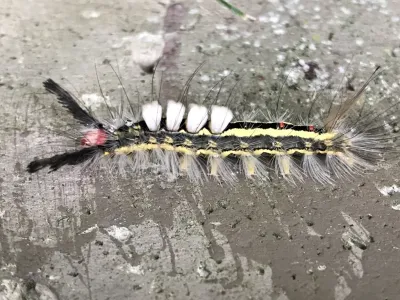
- White-marked tussock moth caterpillar (Orgyia leucostigma) has a bright red head, four white toothbrush tufts on its back, and yellow side stripes. Its hairs are more irritating.
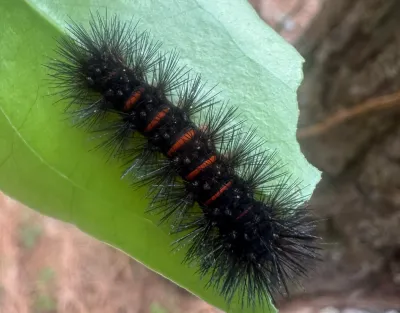
- Giant leopard moth caterpillar (Hypercompe scribonia) is solid black with stiff bristles. It shows red bands between segments when it curls into a ball.
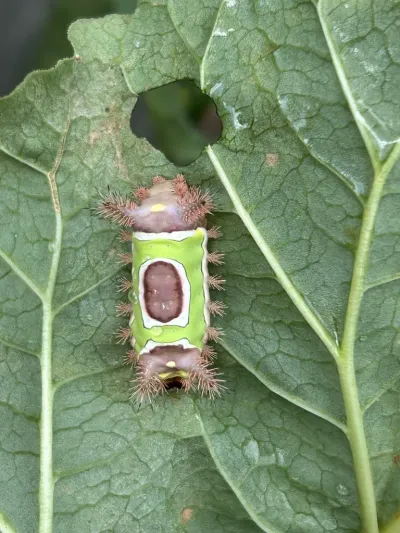
- Saddleback caterpillar (Acharia stimulea) is not fuzzy. It is green with a brown “saddle” and has true stinging spines. Never touch one.
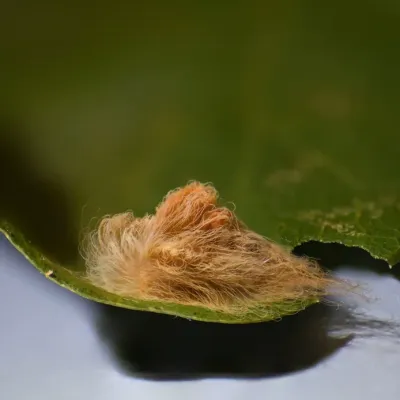
- Puss caterpillar (Megalopyge opercularis) looks like a tan or gray tuft of fur. Hidden venomous spines give one of the worst caterpillar stings in North America.
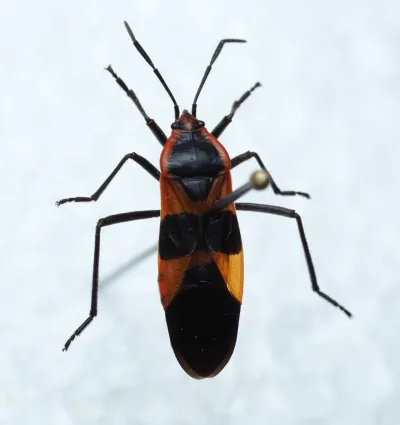
Gardeners also find milkweed bugs on the same plants. They are orange and black too, but they are true bugs with six legs and wings, not caterpillars.
Milkweed Tussock Moth Caterpillar Behavior and Biology
Habitat and Range
This moth lives wherever milkweed grows. Look in fields, roadsides, meadows, and pollinator gardens. Its range runs from southern Canada south to Florida and Texas, mostly east of the Great Plains. It is common in Virginia, Maryland, and the rest of the Mid-Atlantic. People who plant milkweed for monarch butterflies see it most.
Diet
The caterpillars eat only milkweeds and dogbanes. Common milkweed, swamp milkweed, and butterfly weed are all on the menu.
Young caterpillars feed in groups of ten or more and skeletonize the undersides of leaves. Older caterpillars spread out and eat whole leaves. A large group can strip a plant down to the stem and main veins. Older milkweed plants are tough and usually grow back the next spring.
Built-In Chemical Defense
Milkweed sap holds bitter toxins called cardiac glycosides. Like monarchs, these caterpillars store those compounds in their bodies. Their bright colors warn birds that they taste bad. Adult moths keep some of these toxins. They also make high-pitched clicks that warn bats away.
Life Cycle
- Adults fly from late spring through summer. Females lay eggs in clusters on the undersides of milkweed leaves.
- Caterpillars hatch and feed together through their first few stages. Most are noticed from July through September in the Mid-Atlantic.
- Cocoons form in late summer and fall. The caterpillar weaves its own hairs into a gray, felt-like cocoon in leaf litter or other sheltered spots.
- Winter is spent as a pupa inside the cocoon. There is one generation per year in the north and often two or more in the South.
Why They Show Up Near Houses
When a caterpillar finishes feeding, it leaves the plant to look for a place to spin its cocoon. That is when people find them on walls, steps, patios, and garden edges. They do not infest homes, damage buildings, or breed indoors.
Treatment Methods for Milkweed Tussock Moth Caterpillars
Control focuses on two things: keeping hands off the hairs and saving the milkweed you want to keep. These caterpillars do not harm homes, so the work happens in the garden.
Prevention and Avoidance
- Teach children not to handle fuzzy caterpillars, even ones that seem harmless.
- Wear gloves when weeding or cutting back milkweed in late summer and fall.
- Check milkweed often in July and August. Young groups are easy to spot once leaves turn lacy.
- Plant extra milkweed so both monarchs and tussock caterpillars have enough to eat.
Physical Removal
Hand removal works best on a few garden plants. Wear gloves. Pinch off any leaf that holds a group of young caterpillars and drop it in a bucket of soapy water. Knock older caterpillars into the same bucket. Catching them while they are young and grouped on one leaf is the fastest way to save a plant. Seal gaps under doors so wandering caterpillars stay outside.
Targeted Sprays
Products made with Bacillus thuringiensis var. kurstaki (Bt) or spinosad kill leaf-eating caterpillars. They work best on young caterpillars that are still feeding. Always follow the label. Use them only on plants with no monarch caterpillars. Any spray that kills tussock caterpillars will also kill monarch caterpillars on the same plant.
If You Touch One
- Do not rub the area.
- Press clear tape on the skin and peel it off a few times to lift loose hairs.
- Wash with soap and water.
- Ease itching with a cold pack or an over-the-counter anti-itch cream.
- Get medical help for hairs in the eyes, a spreading rash, or any swelling of the face or trouble breathing. Poison Control is at 1-800-222-1222.
This information is for general education only and is not medical advice.
Fuzzy caterpillars are only one of the bugs homeowners find in fall. If you are also seeing stink bugs, spiders, or other invaders coming indoors, our home pest control plan handles those covered pests.
References
- Clemson Cooperative Extension HGIC: Milkweed Tussock Moth Caterpillars
- Clemson Cooperative Extension HGIC: Question of the Week – Milkweed Tussock Moth Caterpillar
- UNH Extension: What Are the Hairy Caterpillars Eating My Milkweed?
- Missouri Department of Conservation: Tussock Moths
- Butterflies and Moths of North America: Euchaetes egle
Other Moths
Explore other species in the moths family
Commonly Confused With
Milkweed Tussock Moth Caterpillars are often mistaken for these similar pests
Where Milkweed Tussock Moth Caterpillars Are Found
Hover over states to see their names. Green regions indicate where milkweed tussock moth caterpillars have been reported.
Common Questions about Milkweed Tussock Moth Caterpillars
Are milkweed tussock moth caterpillars poisonous to touch?
+
They are not venomous. They have no stinging spines like a saddleback or puss caterpillar. Their hairs can still cause a mild, itchy rash in some people, so handle them with gloves. Wash your skin with soap and water if you touch one. Get medical help for hairs in the eyes or for a strong reaction.
Is it okay to let my dog or child pick one up?
+
It is better not to. The hairs can irritate skin, eyes, and mouths. The caterpillars also store bitter, toxic compounds from milkweed in their bodies, which is why birds avoid them. A pet that chews one could get an upset stomach or mouth irritation. Call your vet or Poison Control at 1-800-222-1222 if you are worried.
Will milkweed tussock caterpillars hurt monarch butterflies?
+
Not directly. Both are native and have shared milkweed for a very long time. Tussock caterpillars tend to eat older leaves, while monarchs prefer young growth. A big group can strip a small garden plant, though. If you grow milkweed for monarchs and run short, move some tussock caterpillars by hand with gloves.
Why are the caterpillars stripping my milkweed so fast?
+
Females lay eggs in clusters, so dozens of caterpillars hatch on the same plant. The young ones feed side by side and skeletonize leaves. Older ones eat whole leaves and leave only the thick veins. The damage looks bad, but established milkweed grows back the next spring.
Should I spray milkweed tussock caterpillars?
+
Usually no. Any spray that kills these caterpillars, including Bt, will also kill monarch caterpillars on the same plants. Hand removal into soapy water, or simply sharing the milkweed, works better. Spraying makes sense only on plants where no monarchs are feeding, and always by the label.
What does a milkweed tussock caterpillar turn into?
+
It becomes the milkweed tussock moth, also called the milkweed tiger moth. The adult is a plain mouse-gray moth with a yellow abdomen marked with black dots. Its wingspan is about 1.25 to 1.75 inches. Adults do not cause a rash and are rarely noticed except at porch lights.
Why did I find one on my wall or porch?
+
Full-grown caterpillars leave the milkweed in late summer and early fall to find a sheltered spot to spin a cocoon. That walk can take them across siding, steps, and patios. They do not infest homes or breed indoors.

With five years of hands-on experience in the pest control industry, George Schulz is a registered technician with the Virginia Pest Management Association and a proud third-generation professional in a family business that's been protecting homes for over 58 years. He manages and trains a team of service pros while also leading internal research efforts—recently spearheading a deep-dive review of thousands of documents on pest control materials to hand-pick the most kid and pet friendly, most effective solutions tailored specifically for homes in the DC metro area.
Local Moths Help
Dealing with moths at home? Our licensed technicians provide pest control across Northern Virginia and Maryland.
