Bees
Anthophila (Clade)
When bees nest too close to homes or in high-traffic areas, they can become a concern. Learn how to identify different bee species and understand the treatment options available for your situation.
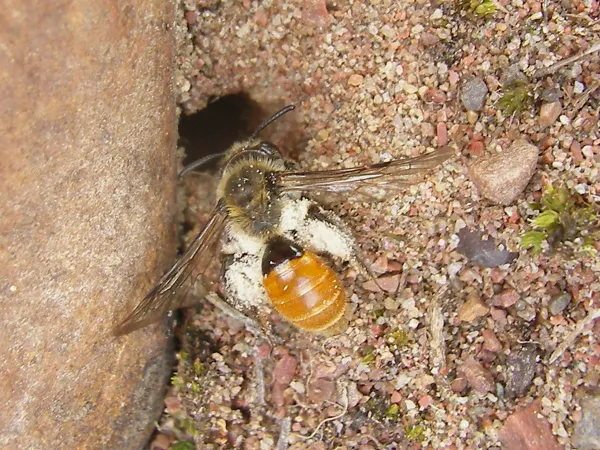
Bee Identification Guide
Physical Characteristics
Bees are flying insects with fuzzy bodies. The fuzz helps them collect pollen. They have two pairs of wings and six legs. Most bees are between 1/4 inch and 1 inch long. Many have yellow and black stripes, but colors vary by species. Bees have rounder bodies than wasps.
Common Species
-
Honey Bees: Social bees that live in large colonies and produce honey. They are golden-brown with darker stripes.
-
Bumble Bees: Large, fuzzy bees with bold black and yellow bands. They nest in ground cavities.
-
Carpenter Bees: Large bees that bore into wood. Males are territorial but cannot sting. A related species, Masked Bees, shares similar characteristics.
-
Ground Bees: Solitary bees that nest in soil. They create small mounds in lawns and gardens. A related species, Cuckoo Bees, shares similar characteristics.
Bee Behavior and Biology A related species, Long-Horned Bees, shares similar characteristics.
Honey bees are social insects. They live in colonies with a queen, workers, and drones. These colonies can grow to tens of thousands of bees. Ground bees and carpenter bees are solitary. They nest on their own rather than in groups. Most bees focus on foraging and are not aggressive. But they will sting if threatened or if you get too close to their nest.
How Bee Control Works
Here is how pest control professionals typically handle bee problems:
-
Assessment: The first step is to identify the bee species and check the nest location. Different species need different treatment approaches.
-
Relocation: For honey bee colonies, relocation to a beekeeper is often an option. This removes the bees from your property while keeping the colony intact.
-
Treatment: For bees nesting in walls or carpenter bees causing wood damage, targeted treatment works well. Dust and liquid products can be applied directly to nest areas.
-
Prevention: After treatment, sealing entry points prevents future nesting. For carpenter bees, treating and painting exposed wood deters them from boring.
When to Call a Professional
You should contact a pest control company when:
- Bees have built a nest inside your walls or attic space
- Carpenter bees are drilling into your deck, siding, or other wood structures
- You or a family member is allergic to bee stings
- A large colony is located near a high-traffic area of your home
- You have tried DIY methods without success
References
- Penn State Extension. “Bees and Wasps.” https://extension.psu.edu/bees-and-wasps
- University of Maryland Extension. “Carpenter Bees.” https://extension.umd.edu/resource/carpenter-bees
- Smithsonian Institution. “Bee Basics: An Introduction to Our Native Bees.” https://www.fs.usda.gov/wildflowers/pollinators/documents/BeeBasics.pdf
Types of Bees
Click on any species below to learn more about identification, behavior, and control methods.
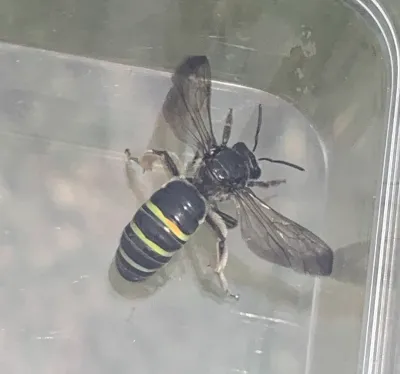
Alkali Bees
Nomia melanderi
Ground-nesting solitary bees native to the western United States, known for nesting in alkaline soils near dry lakebeds.
View identification guide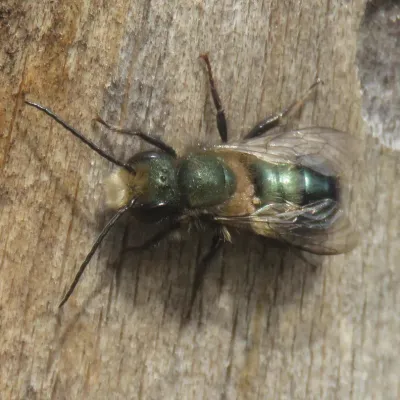
Blue Orchard Bees
Osmia lignaria
Blue orchard bees are solitary native bees prized for their exceptional pollination abilities, particularly in orchards. These metallic blue-green bees are gentle, rarely sting, and are increasingly used in commercial agriculture as an alternative to honey bees.
View identification guide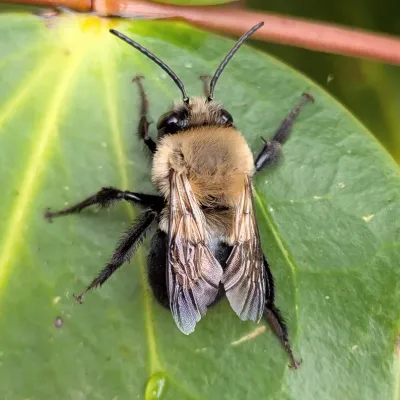
Blueberry Bees
Habropoda laboriosa
A solitary, ground-nesting bee that specializes in pollinating blueberry flowers through buzz pollination. Blueberry bees resemble small bumble bees and are not aggressive toward people.
View identification guide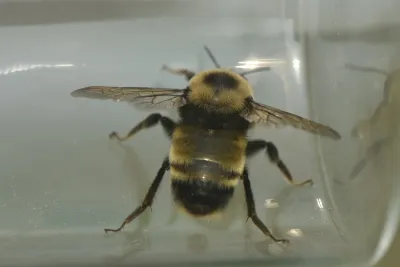
Bumble Bees
Bombus spp.
Large, fuzzy bees that nest in small colonies and can become a nuisance when nesting near doorways, walkways, or play areas.
View identification guide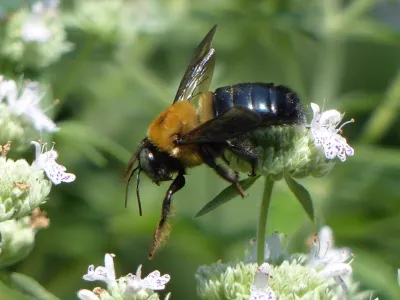
Carpenter Bees
Xylocopa virginica
Large, wood-boring bees that can damage decks, porches, and other unpainted wood structures around your home.
View identification guide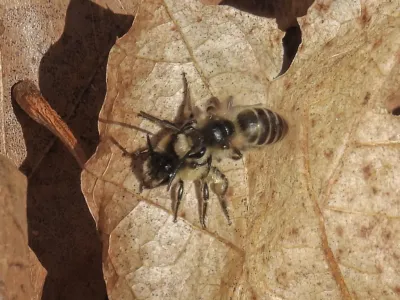
Cellophane Bees
Colletes spp.
Solitary ground-nesting bees named for the cellophane-like material they secrete to line their underground burrows.
View identification guide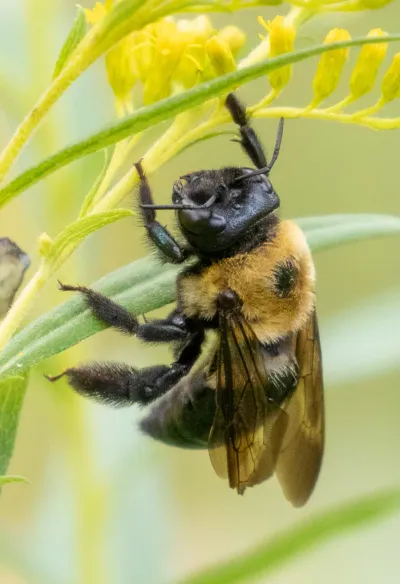
Chimney Bees
Anthophora abrupta
Chimney bees are solitary ground-nesting bees that build distinctive clay turret structures at their nest entrances, often found in clay banks, bare soil, and occasionally near foundations.
View identification guide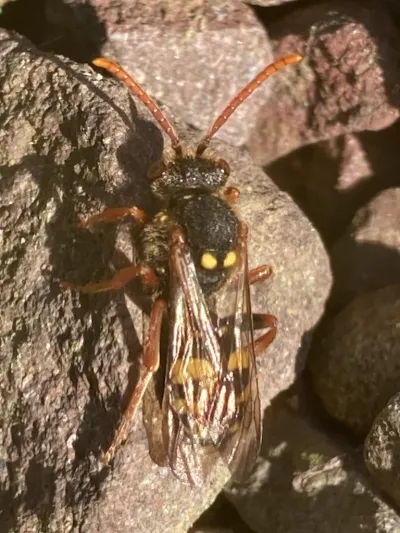
Cuckoo Bees
Nomada spp.
Parasitic bees that lay their eggs in other bees' nests. These wasp-like bees do not sting and pose no threat to homeowners.
View identification guide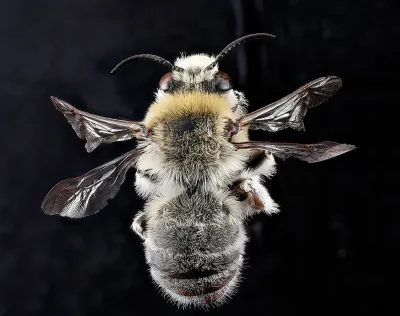
Digger Bees
Anthophora spp.
Solitary ground-nesting bees that create burrows in soil. Their large nest clusters can alarm homeowners when they appear in lawns and gardens.
View identification guide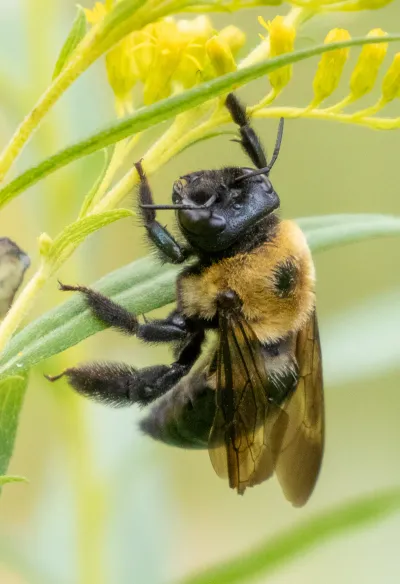
Eastern Carpenter Bees
Xylocopa virginica
The most common carpenter bee species in eastern North America, known for boring into unpainted wood structures and hovering territorially near homes.
View identification guide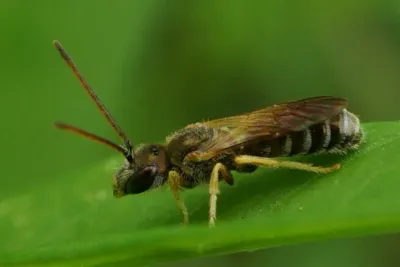
Furrow Bees
Halictus spp.
Small to medium-sized ground-nesting bees recognized by the groove on their abdomen. Often attracted to human sweat and rarely sting unless handled directly.
View identification guide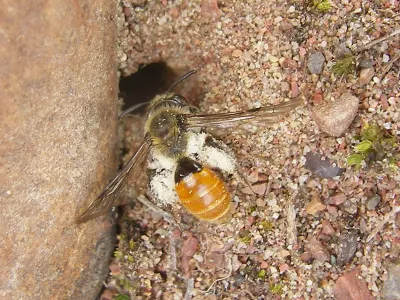
Ground Bees
Andrena spp.
Solitary bees that nest in your lawn but rarely pose a threat to homeowners.
View identification guide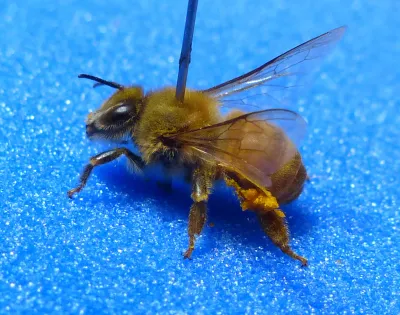
Honey Bees
Apis mellifera
Honey bees are social insects that live in large colonies and produce honey and beeswax. When colonies establish in walls or structures, professional removal or relocation is often needed.
View identification guide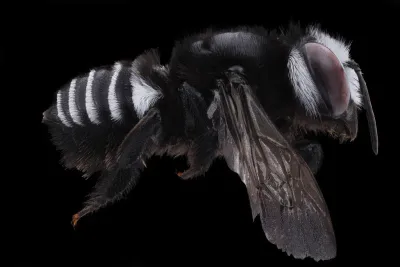
Leafcutter Bees
Megachile spp.
Solitary bees that cut circular pieces from leaves to build their nests. Homeowners often notice them due to the distinctive circular cuts they leave on rose bushes and other garden plants.
View identification guide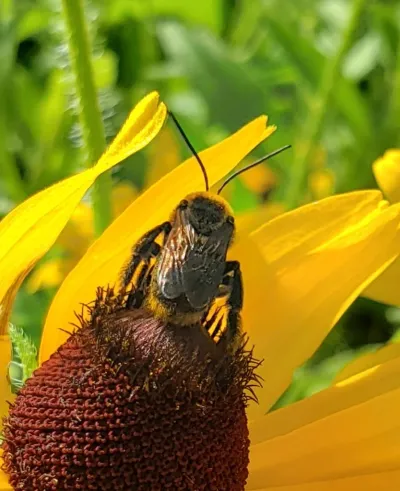
Long-Horned Bees
Eucerini (Tribe)
Native solitary bees named for the males' long antennae. These ground-nesting bees are common in gardens and lawns across North America.
View identification guide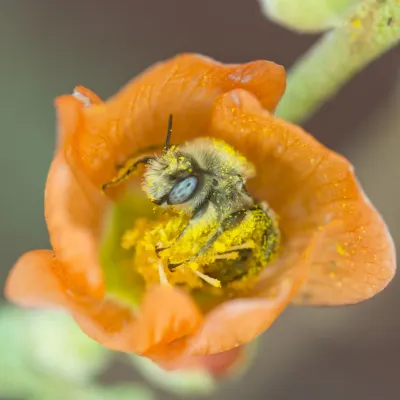
Mallow Bees
Diadasia spp.
Solitary ground-nesting bees that feed on mallow plants. Known for building chimney-like turrets around nest entrances in dry, compacted soil.
View identification guide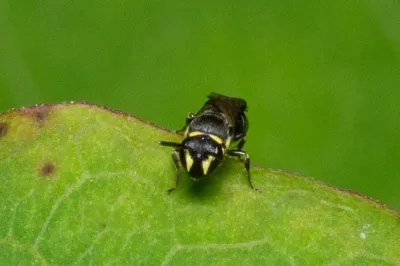
Masked Bees
Hylaeus spp.
Masked bees are small, wasp-like solitary bees with yellow or white facial markings. They nest in hollow stems and plant cavities and rarely sting humans.
View identification guide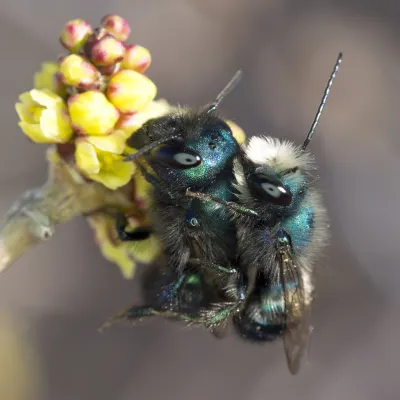
Mason Bees
Osmia spp.
Small, solitary bees that use mud to construct their nests in pre-existing cavities. Mason bees rarely sting and do not cause structural damage.
View identification guide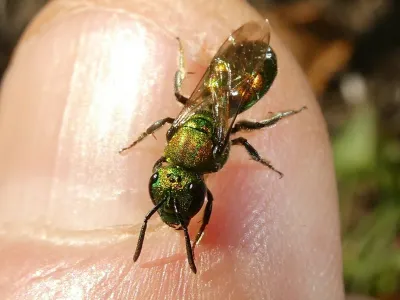
Metallic Green Sweat Bees
Augochlora pura
Small bees with iridescent green bodies that are attracted to human perspiration. They nest in rotting wood rather than soil.
View identification guide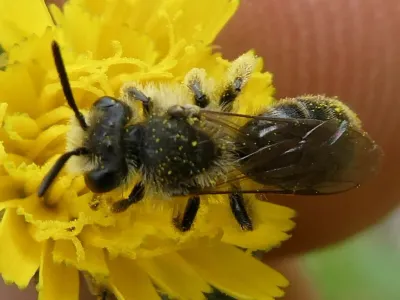
Mining Bees
Andrena spp.
Solitary ground-nesting bees with fuzzy bodies that emerge in early spring. Mining bees rarely sting and are active for only 4-6 weeks each year.
View identification guide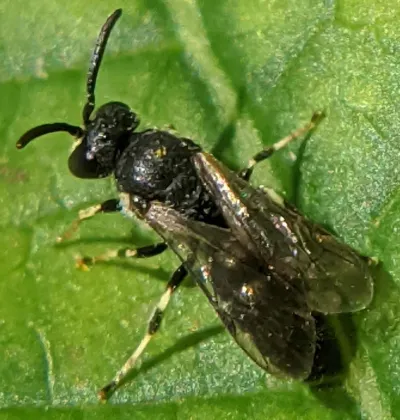
Plasterer Bees
Colletidae
Solitary ground-nesting bees named for the cellophane-like material they use to line their burrows. These docile bees rarely sting unless handled.
View identification guide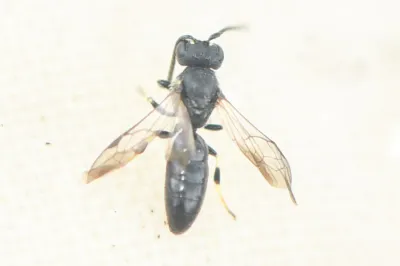
Polyester Bees
Colletidae
Solitary ground-nesting bees that line their nest cells with a waterproof, cellophane-like secretion. These beneficial pollinators are docile and rarely sting.
View identification guide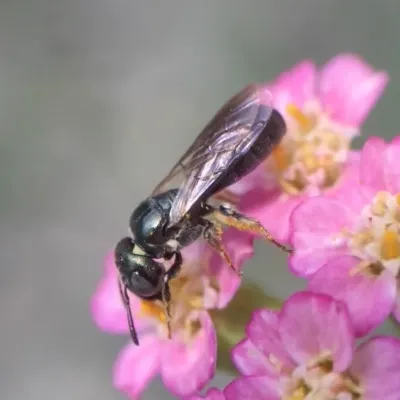
Small Carpenter Bees
Ceratina spp.
Tiny metallic bees that nest in plant stems and twigs rather than structural wood. Unlike their larger relatives, small carpenter bees rarely cause property damage.
View identification guide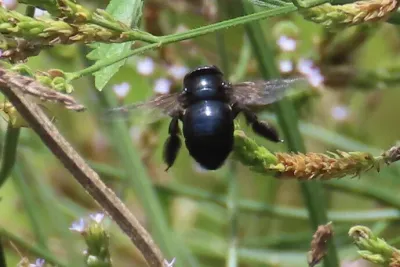
Southern Carpenter Bees
Xylocopa micans
Large, metallic blue-black carpenter bees native to the southeastern United States that bore into dead wood to create nests.
View identification guide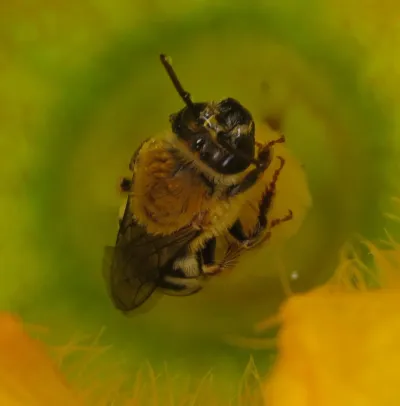
Squash Bees
Peponapis pruinosa
Native specialist pollinators that nest in the ground near squash, pumpkin, and gourd plants.
View identification guide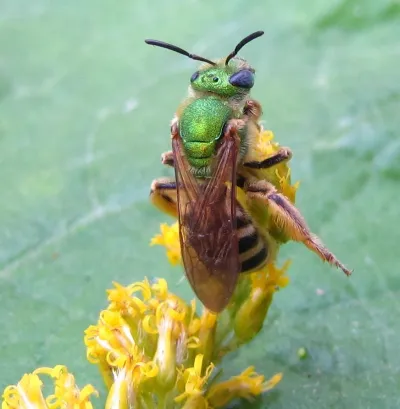
Sweat Bees
Halictidae
Small bees attracted to human perspiration. These ground-nesting bees are drawn to the salt in sweat and rarely sting.
View identification guide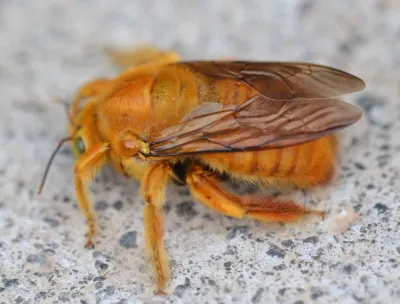
Valley Carpenter Bees
Xylocopa sonorina
One of the largest bees in North America, the valley carpenter bee is known for its striking sexual dimorphism where males are golden and fuzzy while females are solid black.
View identification guideCommon Questions about Bees
Are bees dangerous?
+
Most bees are not aggressive and only sting when threatened. However, bee stings can cause severe allergic reactions in some people. The risk increases when bees nest in or near homes where encounters are more likely.
What's the difference between bees and wasps?
+
Bees are typically rounder, fuzzier, and feed on nectar and pollen. [Wasps](/pests/wasps/) are more slender with smooth bodies and are often predators or scavengers. Bees can only sting once and then die. Wasps can sting multiple times.
Should I remove bees from my property?
+
It depends on the situation. Ground bees and solitary bees are usually temporary and not aggressive. However, honey bee colonies in walls or carpenter bees damaging wood often require professional attention. A pest control company can assess your situation and recommend the best approach.
Can you relocate bee colonies?
+
In many cases, yes. For honey bees, pest control companies often work with local beekeepers to relocate colonies. This is a common option for honey bee hives that are accessible.
How do I prevent bees from nesting?
+
Seal potential entry points in your home. Fill abandoned rodent burrows. Paint or treat exposed wood to deter carpenter bees. Keep outdoor areas clean of food and sugary drink spills.
Explore Other Pest Categories
Browse our comprehensive pest library for identification guides and control information.



With five years of hands-on experience in the pest control industry, George Schulz is a registered technician with the Virginia Pest Management Association and a proud third-generation professional in a family business that's been protecting homes for over 57 years.
Find Local Bee Control Services
We provide professional bees control throughout Virginia, Maryland, and the DC Metro area.