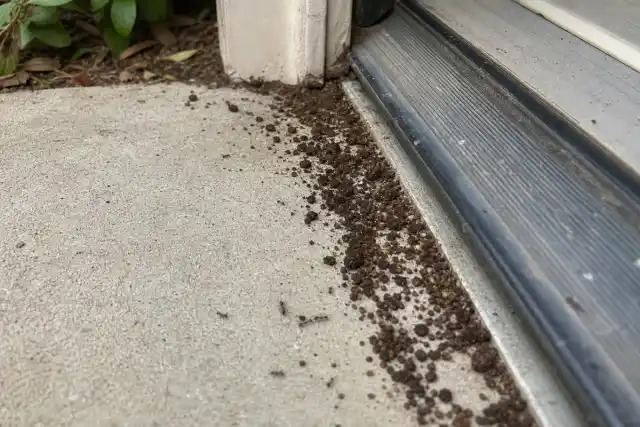

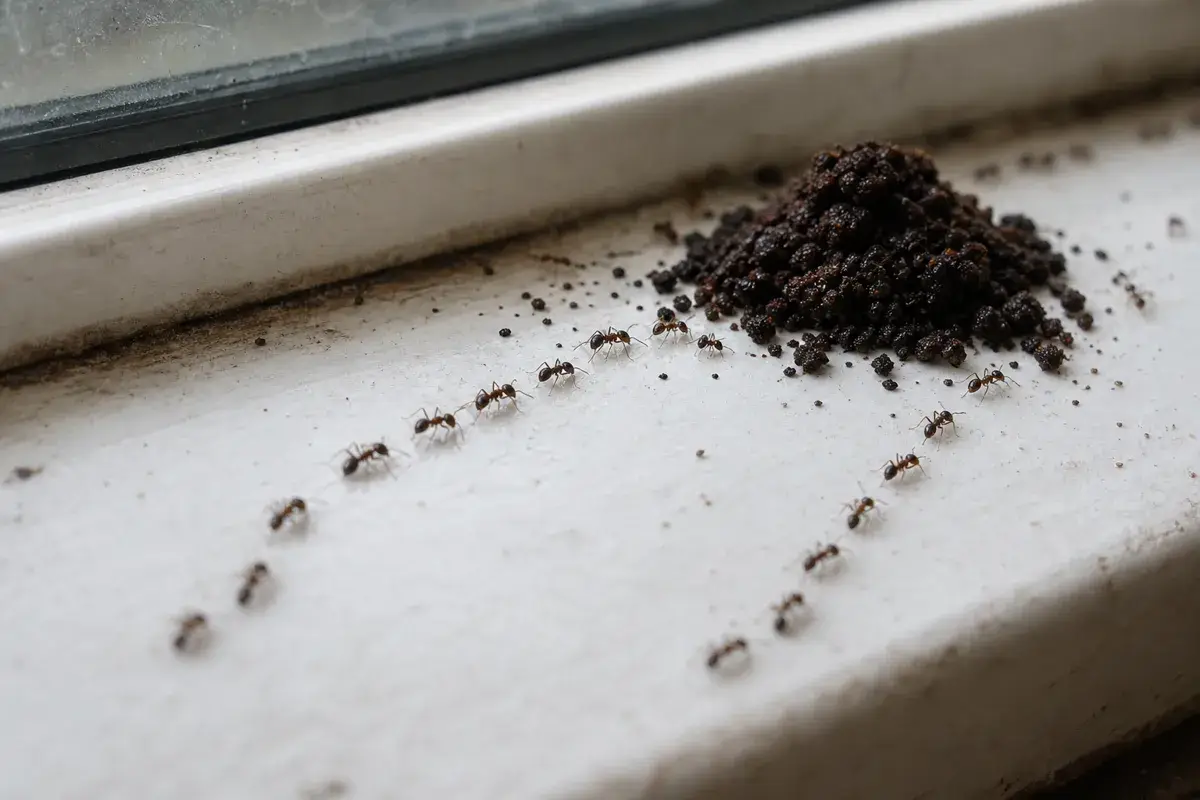
Coffee grounds barely repel ants, and only right where you sprinkle them. A line of grounds can break up an ant trail for a few days, but there’s almost no research showing it works on house ants. In fact, some lab studies found the smell of coffee can attract ants. Either way, grounds never reach the colony, so the ants come back.
Ants are one of the most common complaints we get in the spring here in Northern Virginia. In my experience, most homeowners first notice them in the kitchen or bathroom. Coffee grounds are tempting because they’re free and already in your trash. They’re fine for a quick experiment on the patio. However, they won’t fix an ant problem inside your home.
Do Coffee Grounds Repel Ants? The Short Answer
Coffee grounds are a weak, short-term barrier at best. Here’s how the claims stack up against the research:
| Claim | What the evidence says |
|---|---|
| Grounds keep ants away | One small student study on harvester ants. Nothing on common house ants. |
| Ants hate the smell of coffee | Lab tests found coffee scent attracted three household ant species. |
| Grounds kill ants | No. Low doses of caffeine actually helped ants forage better. |
| Grounds work for weeks | No. They dry out, scatter and wash away within days. |
| Grounds get rid of a colony | No. The queen and nest are never touched. |
So why do so many people swear by it? Mostly because of how ants find their way around.
Why Coffee Grounds Might Bother Ants
Ants follow scent trails. When a worker finds food, it lays down a chemical trail back to the nest. Then the rest of the colony follows it. That’s why you see ants marching in a neat line.
A pile of wet, strong-smelling coffee grounds dropped on that trail can cover up the scent for a while. As a result, the line breaks up and the ants mill around. The gritty texture may also make some ants walk around it instead of over it.
The catch is that both effects are short. As grounds dry, the smell fades. Also, rain, sweeping and foot traffic scatter them. Once the scent is gone, the ants simply pick the trail back up, or they lay a new one right around the grounds.
What the Research Says About Coffee and Ants
The honest answer is that research on this is thin. I couldn’t find a single published study testing used coffee grounds on the ants that most often get into DMV homes. Here’s what does exist.
One small study found grounds kept ants away
In a student research project published in Instars, a Texas A&M student journal, researchers circled honey with seven household products. Then they set 10 harvester ants outside each barrier. After five hours, coffee grounds were the only product that kept every ant away from the honey. Bleach, vinegar and mustard killed more ants, but didn’t block them as well.
That sounds promising. However, it was one trial with 10 ants per container. Also, harvester ants are a western species that doesn’t invade houses around here. So it’s a good starting point for more research, not proof for your kitchen.
Coffee smell can attract household ants
This is the part most “coffee hack” articles leave out. Researchers in Malaysia tested how household ants reacted to the smell of different coffees. In their Y-tube olfactometer study, every coffee extract changed how the ants behaved. Arabica coffee drew ghost ants, pharaoh ants and tropical fire ants toward it, and the weakest mix was the most attractive. In fact, the researchers framed their work around using coffee to build better ant baits.
Caffeine helped ants find food faster
Caffeine doesn’t seem to scare ants off, either. A 2024 University of Regensburg study published in the journal iScience gave Argentine ants sugar water with different amounts of caffeine. At low and moderate doses, the ants got about 28% to 44% faster at reaching the food with each trip. At the highest dose, that boost went away. Again, the researchers’ idea was to add caffeine to baits so ants find them faster.
The studies above tested harvester ants, ghost ants, pharaoh ants, tropical fire ants and Argentine ants. That matters, because ants don’t all react the same way.
For example, ghost ants and pharaoh ants were drawn to Arabica scent in the lab. Meanwhile, harvester ants were blocked by a thick ring of grounds. So depending on which ant you have, coffee could push ants away, pull them in, or do nothing at all.
None of these studies tested used grounds on odorous house ants, pavement ants or carpenter ants, which are the ants we run into most in Northern Virginia and Maryland. So if a website tells you coffee grounds “work on all ants,” that’s a guess, not a finding.
Do Coffee Grounds Kill Ants?
No. Used coffee grounds don’t kill ants in any way that matters. Grounds aren’t a bait, and no study we found showed them wiping out ants. As the caffeine study above showed, small doses of caffeine may even give foragers a boost.
More importantly, the ants you see are only a small slice of the colony. The queen, the eggs and most of the workers stay tucked inside a wall, under a slab or out in the yard. As long as the queen keeps laying eggs, the colony replaces any workers you bother.
That’s also why you’ll sometimes see a mound “move” after you dump grounds on it. The ants didn’t die. They just shifted a few feet over.
Which Ants Do Coffee Grounds Work On?
Here’s the problem for homeowners in our area. The ants that cause most indoor complaints here haven’t been tested with coffee at all.
According to the University of Maryland Extension, common indoor ants in our region include carpenter ants, pharaoh ants, odorous house ants, acrobat ants, field ants and pavement ants. Daren, one of our technicians, says odorous house ants and carpenter ants are the ones he sees most across the DMV.
| Ant | Tested with coffee? | What to expect |
|---|---|---|
| Odorous house ants | No | Maybe a short break in the trail |
| Pavement ants | No | Maybe a short break in the trail |
| Carpenter ants | No | Won’t fix the wet, rotted wood they nest in |
| Pharaoh ants | Yes, scent only | Attracted to Arabica coffee scent in the lab |
| Ghost ants | Yes, scent only | Attracted to Arabica coffee scent in the lab |
| Harvester ants | Yes, grounds | Blocked by a ring of grounds (not found in DMV homes) |
That pharaoh ant row is worth a second look. The UMD Extension also warns that pharaoh ant colonies can split into new colonies when they’re stressed by repellents. So if you see tiny, pale yellow ants in your kitchen or bathroom, skip the home remedies and use bait or call a pro.
Coffee Grounds for Ants in the Garden
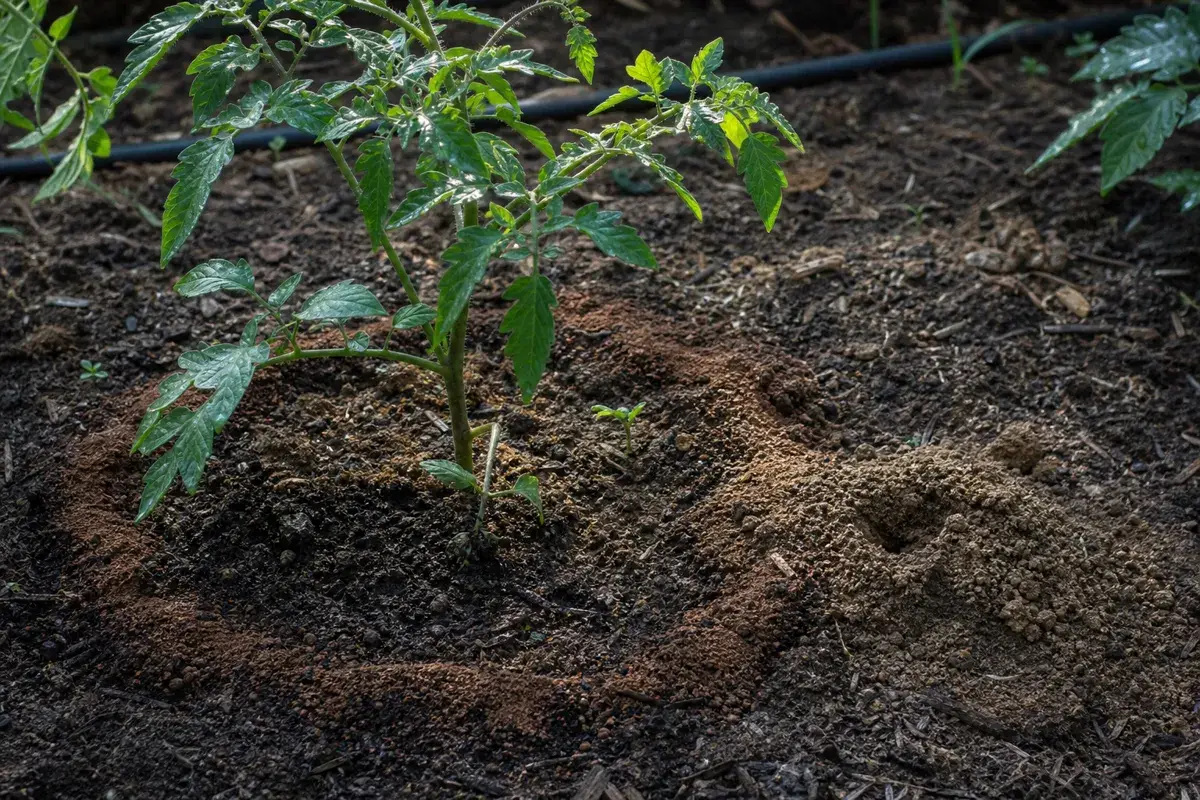
A lot of people sprinkle grounds around plants or on an ant hill in the yard. A thin layer won’t hurt most gardens. Still, don’t count on it to stop ants.
Washington State University Extension notes that “speculation abounds” about what coffee grounds do in the garden, from repelling cats to killing slugs. In other words, much of what you read online about grounds in the garden hasn’t been proven. Ants on garden plants are usually there for a reason, too. They often guard aphids for the sweet honeydew they make. In that case, deal with the aphids, and the ants will lose interest.
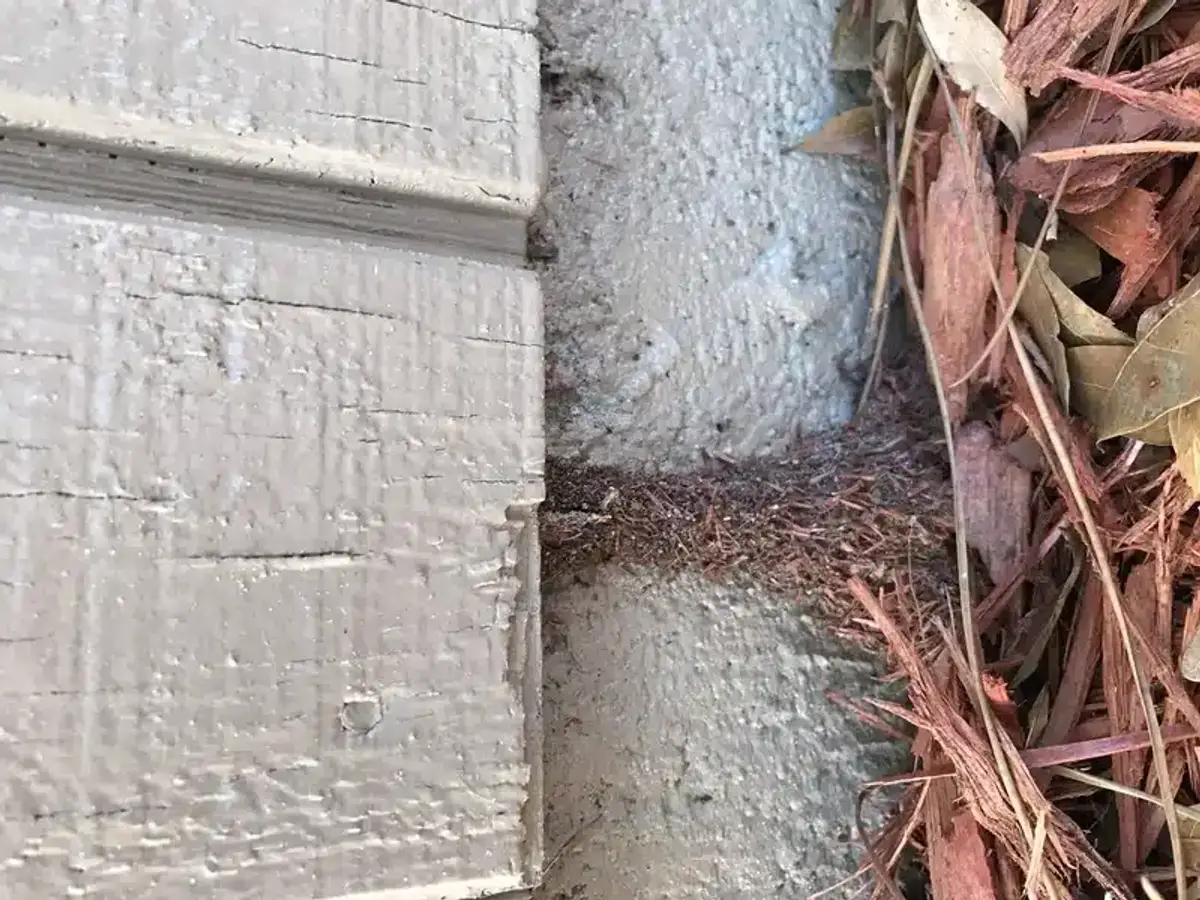
Around the house itself, the bigger issue is usually mulch and moisture, not a lack of coffee.
Daren, one of our licensed technicians, says the worst ant house he ever worked was a slab house. Wood rot around the house was drawing the ants in, and he found trails three or four ants wide running from place to place.
On top of that, the homeowners added fresh mulch against the house every year. That kept piling up more moist hiding spots right next to the walls. They’d had ant problems on and off for about 10 years. Once Daren showed them what was drawing the ants and they fixed the wood rot, it was over.
The lesson applies to coffee grounds, too. A sprinkle of grounds on top of a damp mulch bed doesn’t change why the ants are there.
If your ants keep coming back no matter what you put down, the nest and the moisture feeding it are the real targets.
How to Use Coffee Grounds for Ants (If You Want to Try It)
Coffee grounds are fine for a small experiment outdoors. For example, they might help keep a few ants off a patio while you figure out where they’re coming from. If you want to try it, here’s the approach that makes the most sense.
Wipe the ant trail with warm, soapy water first. Soap removes the scent trail the ants are following. On its own, that can break up a line of ants for a while.
Use grounds from today’s pot. Fresh, damp grounds have the strongest smell, and the smell is the main thing doing any work. Dried-out grounds from last week won’t do much.
Spread a solid line, about an inch wide, across the spot where ants come in. Good spots are door thresholds, patio edges and the base of an outside wall. Gaps in the line give ants an easy way through. Indoors, skip it. Damp grounds on a windowsill or counter can stain and get messy.
Replace the grounds every few days and after it rains. Then watch closely. If the ants just walk around the line, or they’re back within a week, the colony is still thriving. At that point, it’s time for bait or a professional.
One more thing: don’t put coffee grounds on or near any ant bait you’ve set out. You want ants to find the bait, not avoid the area.
If you have a dog, take one more precaution before you start sprinkling.
What Works Better Than Coffee Grounds for Ants
If coffee grounds are a speed bump, these are the things that actually solve an ant problem. Especially for a colony that keeps coming back, combine a few of them:
- Use baits, not barriers. Set slow-acting ant bait along the trail and let the ants take it back to the nest. University of California pest experts call baits a key tool for ants because workers share them with the queen. Our guide to borax for ants explains how that works.
- Take away the food. Wipe up sugar and grease, rinse recycling, and store pet food in sealed bins. Our guide to ants in the kitchen covers the usual hot spots.
- Fix the moisture. Leaks under sinks, cracked tub grout, clogged gutters and wet wood draw ants in. This is the whole ballgame for carpenter ants.
- Pull mulch back from the foundation. Thick mulch against the house gives ants a moist place to nest right next to your walls.
- Seal the obvious gaps. Caulk around windows, doors and utility lines where you’ve seen ants coming in.
Other kitchen-cabinet remedies follow the same pattern. We dug into whether peppermint oil repels ants and whether baking soda kills ants, and neither one reaches the colony on its own. Cinnamon is in the same boat. For more prevention ideas, see our full guide on how to keep ants away.
When to Call a Professional
Coffee grounds are worth a try for a few stray ants outside. However, it’s time to call a pro if:
- The ants keep coming back after a week or two of DIY.
- You see ants in more than one room.
- You find large black ants, sawdust-like debris, or ants near wet wood. Those can be carpenter ants.
- You see tiny pale ants in the kitchen or bathroom, which may be pharaoh ants.
- You see winged ants indoors in late winter or spring.
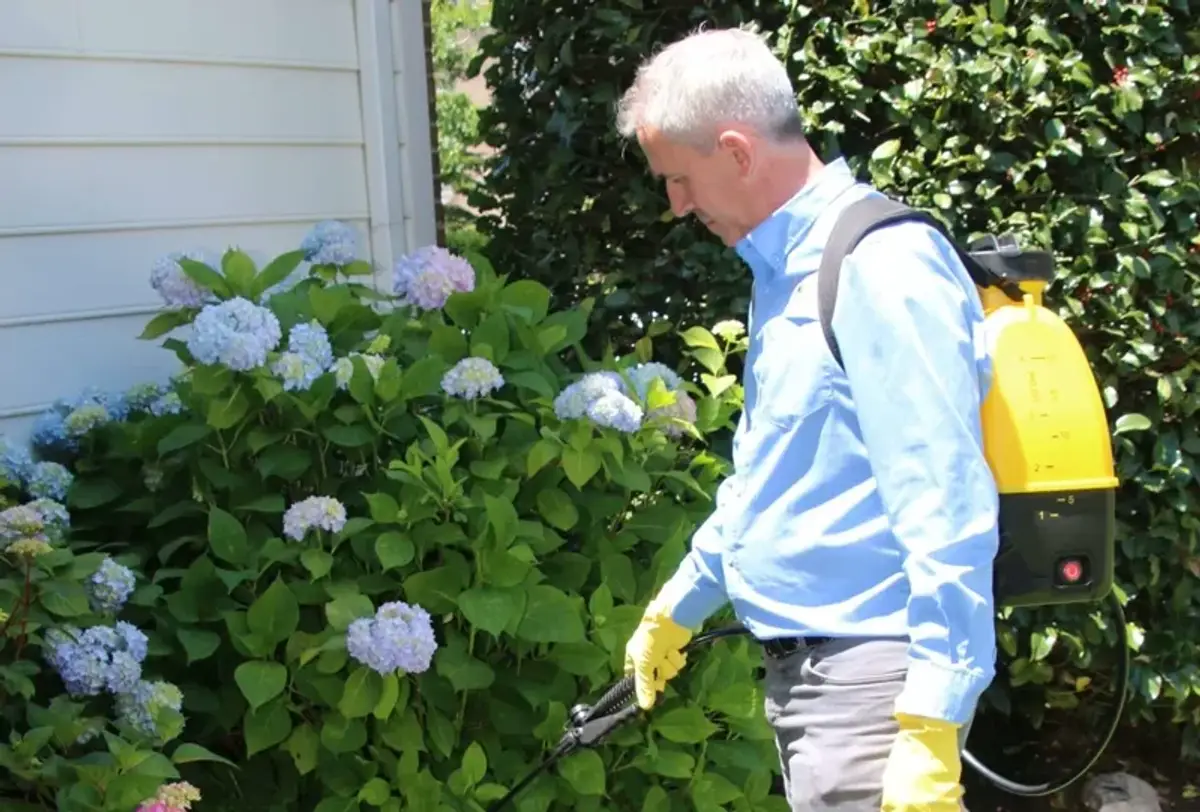
Our ant control service starts with an inspection to find the trails, the nest and the moisture feeding them. Then we treat with non-repellent products, so ants walk right through them. The ants carry the product back to the nest and share it, so it reaches the colony. Our plans start around $49 a month, plus a $200 setup fee on the first visit. All the products we use are EPA approved and have passed through our internal research team. Each one is something we’d feel comfortable using in our own homes. If you’d like a lower-impact approach, ask about our eco-friendly pest control options.
We’ve been in the pest control business for 58 years and have earned 1,800+ reviews across our locations. We help homeowners with ants across Northern Virginia and Maryland, including Alexandria, Reston, Arlington, Annandale, Burke and Rockville.
The Bottom Line on Coffee Grounds and Ants
Coffee grounds might break up an ant trail for a few days, mostly by covering the scent. But the research behind them is thin. The one study that showed they work used harvester ants, and other lab work found coffee scent can actually attract household ants. Grounds don’t kill ants, and they never reach the queen. Use them as a free outdoor experiment if you like. For ants that keep coming back, baits, moisture fixes or a professional treatment will get to the colony.
If you have questions about ants in your home or want an estimate, call us at 703-683-2000 or email info@bettertermite.com. We’re happy to help.