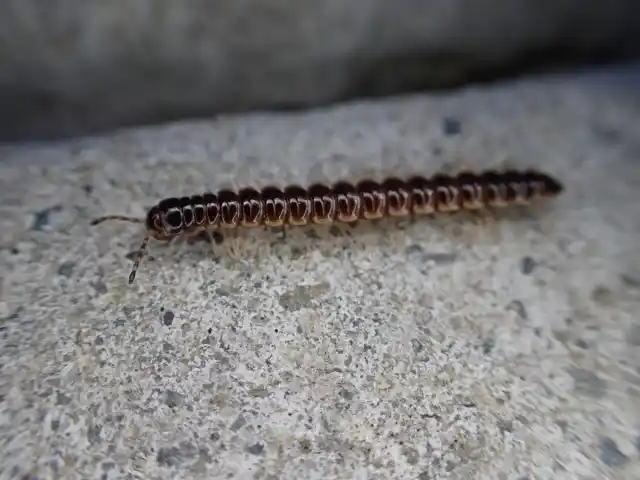

The fastest way to settle centipede vs millipede is to look at the legs. A centipede has one pair of legs per body segment, and they stick out to the sides of a flat body. A millipede has two pairs per segment, tucked under a round, tube-shaped body. Centipedes run fast and can bite. Millipedes crawl slowly, curl into a coil, and never bite.
I’m George Schulz, third generation at Better Termite & Pest Control. Our family has handled these calls across Northern Virginia and Maryland for 58 years. Basically, both bugs tell you the same thing about your house: there’s extra moisture somewhere. Here’s how to tell which one you have, and what to do about each.
Centipede vs Millipede: Side-by-Side Comparison
Here is the quick comparison table. If you only read one section, read this one.
| Feature | Centipede | Millipede |
|---|---|---|
| Legs per body segment | 1 pair | 2 pairs (on most segments) |
| Where the legs point | Out to the sides | Down, under the body |
| Body shape | Flat | Round, like a wire or cigar |
| Antennae | Long | Short |
| Speed | Very fast | Slow |
| Diet | Hunts insects and spiders | Eats decaying leaves, mulch, and plant matter |
| Defense | Venomous bite from front claws | Curls into a coil; releases a smelly fluid |
| Danger to people | Rare bite, usually short, local pain | No bite; fluid can irritate or stain skin |
| Indoors | Can live for years in damp basements | Usually dies in a few days because homes are too dry |
| Scientific class | Chilopoda | Diplopoda |
| Damages your home? | No | No |
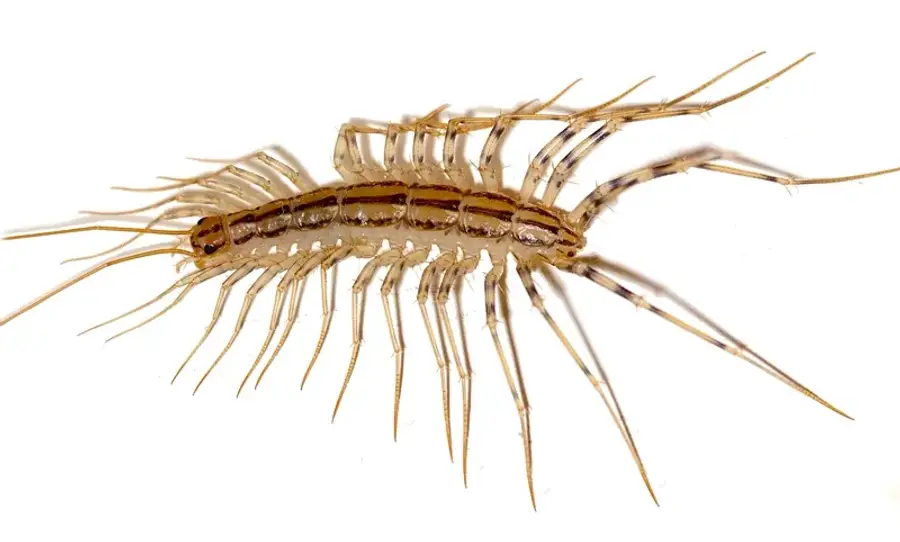
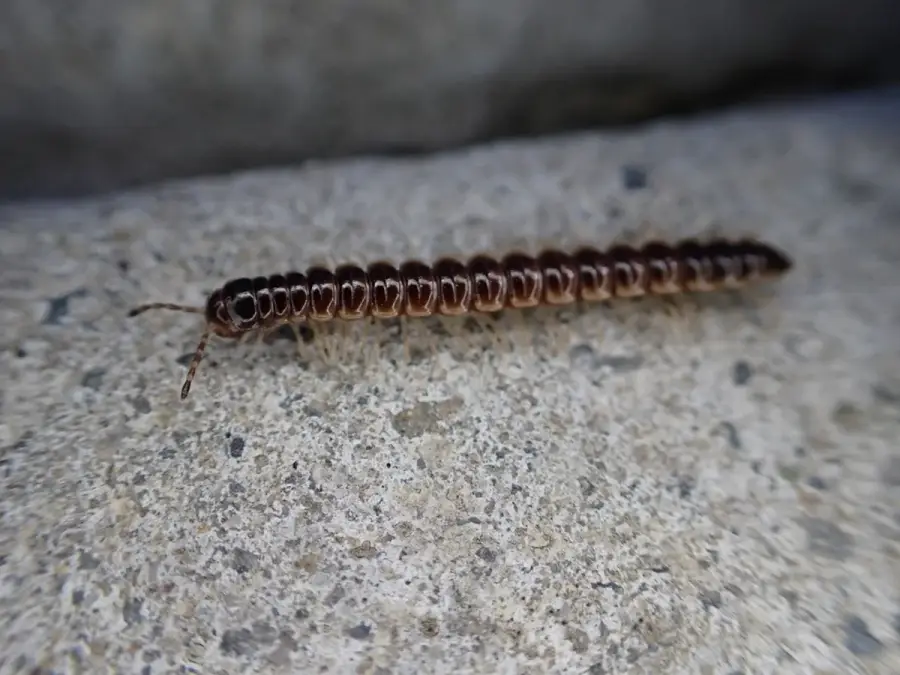
According to University of Missouri Extension, centipedes are flattened with one pair of legs per segment, while millipedes have a cigar-shaped body with two pairs on most segments. Additionally, the centipede’s antennae are noticeably longer.
No. Neither one is an insect. Both belong to a group of arthropods called myriapods, which means “many feet.” The National Park Service explains that centipedes belong to the class Chilopoda and millipedes to the class Diplopoda. “Diplo” means double, which is a handy way to remember that millipedes have double the legs per segment.
Insects have six legs and three body parts. Myriapods have a head and a long trunk made of many segments, each one carrying legs.
The 3 Features That Actually Decide It
You don’t need a magnifying glass. In my experience, these three checks settle almost every centipede vs millipede question in a few seconds.
1. Legs: Out to the Side or Underneath?
Look at the bug from above. If the legs stick out past the edges of its body like oars, it’s a centipede. If you can barely see the legs because they’re tucked under the body, it’s a millipede. Millipedes have two pairs per segment, but those legs are short. As a result, they look like a fringe moving in waves underneath.
2. Body: Flat or Round?
Centipedes are flat, almost like a ribbon. Millipedes are round in cross-section, like a piece of wire or a small cigar. According to Penn State Extension, millipedes have a cylindrical, wire-like body, with only one pair of legs on each of the first three segments.
3. Behavior: Run or Curl?
This is the easiest test. Touch the floor near it with a broom.
- A centipede runs. House centipedes are very fast, and they often bolt for a crack or under a box.
- A millipede curls. Most millipedes stop and roll into a tight spiral, or they just keep plodding along slowly.
Which One Bites: Centipede or Millipede?
Only centipedes bite. Their first pair of legs is modified into claws with venom glands, which they use to catch insects. Millipedes have no fangs or claws at all.
That said, a bite is unlikely. The Connecticut Agricultural Experiment Station notes that a house centipede stinging a person is very rare, and when it happens it causes temporary, local pain. Usually, it only happens when someone grabs one. For more detail on symptoms, read my guide on whether centipedes are dangerous.
Millipedes defend themselves differently. When disturbed, they release a fluid from glands along their sides. According to Clemson Extension, this fluid usually has an odor, may stain your hands, and can irritate skin or cause an allergic reaction. Some of our local species, like the cherry millipede, release a fluid that contains cyanide compounds. The Virginia Tech millipede lab describes the cherry millipede of eastern U.S. forests as one that “oozes cyanide.” It’s a small amount meant for predators, but it’s still a good reason to use a paper towel or gloves. You can read more in do millipedes bite and are millipedes poisonous.
Basically, neither bug is a real threat to your family. However, both are a clue that something about your home is drawing them in.
What Each One Eats (and Why It Matters)
Diet is the biggest behavioral difference. It also explains where you find each one.
Centipedes are hunters. Indoors, the house centipede feeds on silverfish, firebrats, carpet beetle larvae, cockroaches, and spiders. That’s why they hang out in basements, crawl spaces, and first-floor bathrooms, where both moisture and prey collect.
Because they hunt, a lot of centipedes can mean you have another bug problem feeding them. See what centipedes eat for the full list.
Millipedes are recyclers. They eat decaying leaves, mulch, grass clippings, and rotting wood outdoors. They won’t chew through sound wood or attack your belongings.
That’s why they live in flower beds and leaf litter right against your foundation. When those beds stay wet, populations build up and start wandering inside. More on that in what millipedes eat.
Which Species You’ll See in Virginia and Maryland
Here in the DMV, most calls come down to two bugs.
The house centipede is the one with 15 pairs of long, striped legs and a 1 to 2 inch body. It’s actually native to the Mediterranean, but it lives indoors year-round in our area. They can live for several years, so a basement population can stick around if nothing changes.
The greenhouse millipede is the most common millipede in homes here. The Virginia Cooperative Extension describes the greenhouse millipede as reddish to dark brown, under an inch long, and common throughout the eastern U.S. It notes that in fall, thousands can move across lawns and into garages and basements. However, it usually can’t survive indoors for long unless the humidity is high.
Outdoors, you may also run into stone centipedes, soil centipedes, and garden millipedes. You can browse every species in our centipede library and millipede library.
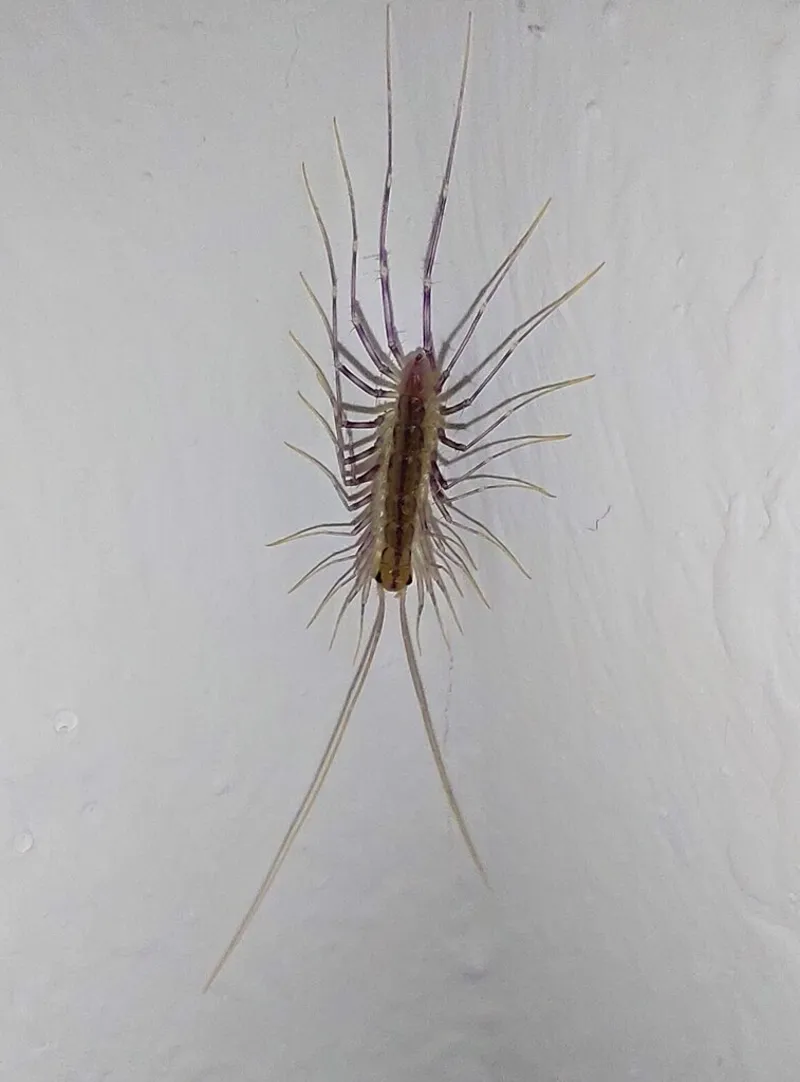

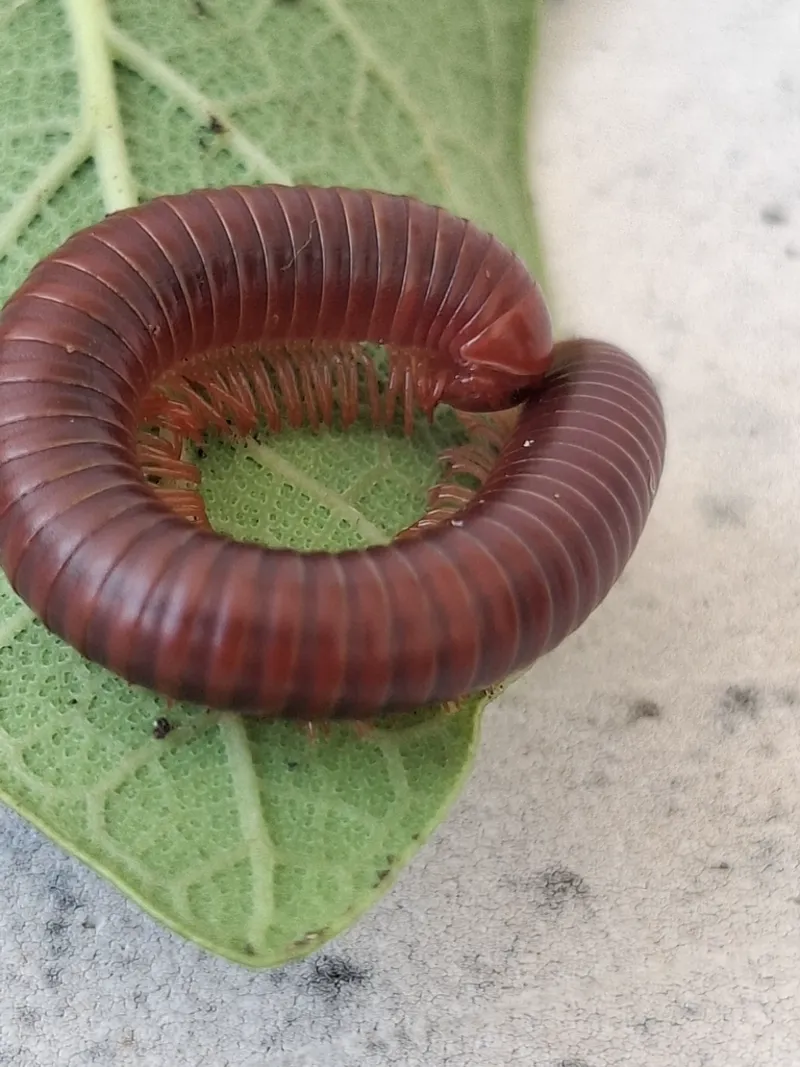
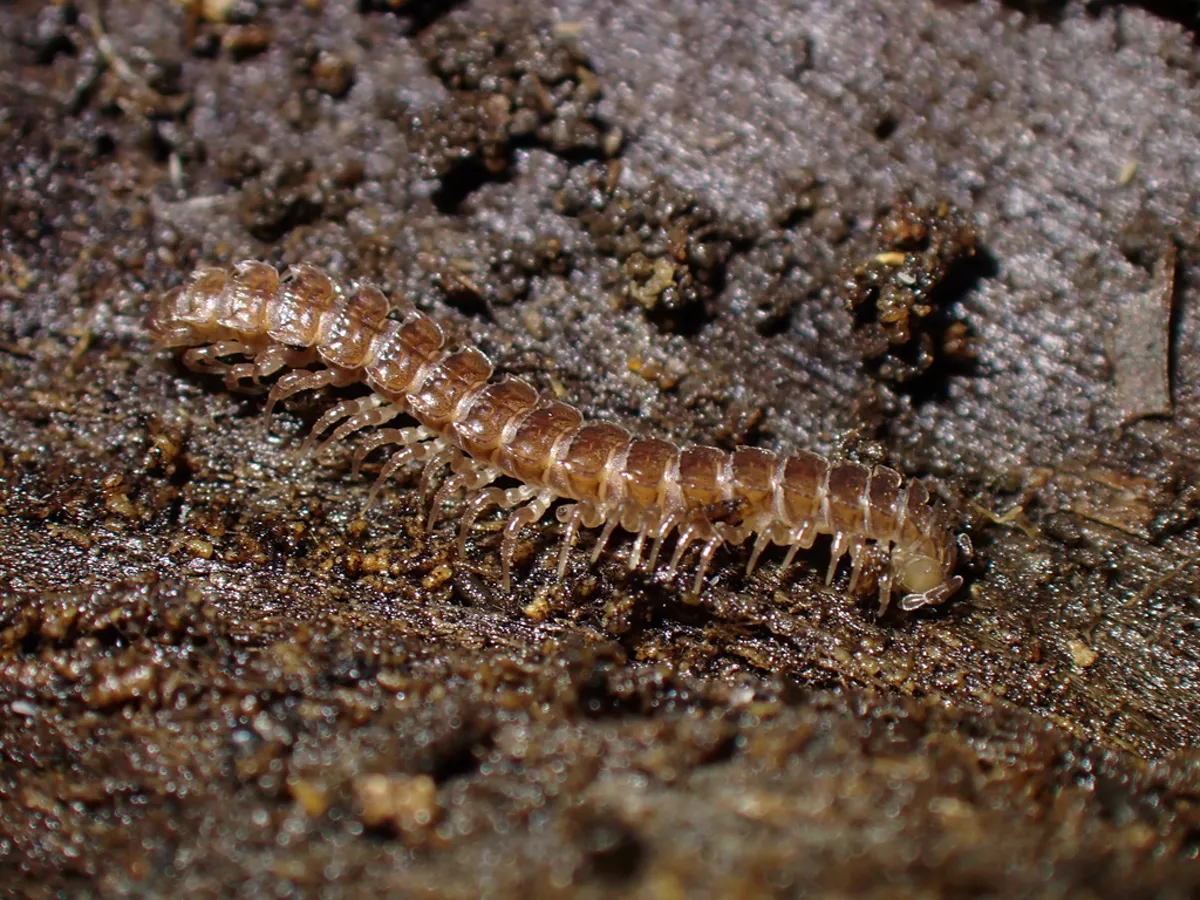

So if the bug on your wall is fast and leggy, think centipede. If it’s slow and coiled up on the garage floor, think millipede.
What to Do About Centipedes vs Millipedes
The good news is that one plan handles both: dry things out and close the gaps. In fact, most extension offices say spraying indoors is rarely the answer for either one.
One homeowner I spoke with had millipedes showing up in her basement again and again. After an inspection, we found the real cause was the high moisture content of the soil around her home.
Our technician Daren sees the same pattern. In his words, with millipedes and centipedes “it’s almost always a moisture issue.” He’ll often suggest a dehumidifier before any chemical. He’s seen a centipede population drop by half in a month from a dehumidifier and some moisture-absorbing bags. His worst millipede house was new construction, where watering in fresh sod soaked the soil. He also notes that if centipedes are inside and moisture isn’t the issue, they may have followed other insects in, so you have to find the prey they’re after.
If You Have Millipedes
- Sweep or vacuum them up. Penn State notes that treatment inside the home usually isn’t needed because they dry out.
- Pull mulch and leaf litter back from the foundation, and rake out grass clippings.
- Fix drainage. Clean gutters, extend downspouts, and grade soil away from the house.
- Seal entry points. Add door sweeps, clear window wells, and caulk foundation cracks.
- Time any outdoor treatment early. A perimeter treatment works best before the fall migration starts, not in the middle of it.
For a deeper walkthrough, see millipedes in the house or our millipede control service.
If You Have Centipedes
- Run a dehumidifier in the basement or crawl space.
- Fix leaks under sinks and around the water heater.
- Cut off their food. If silverfish or other bugs are around, deal with those too. Our house centipede vs silverfish guide helps if you’re seeing both.
- Seal cracks around the foundation, windows, and pipes by late summer.
You can find more steps in how to get rid of centipedes, or see our centipede control service.

If the moisture fixes don’t stop them within a few weeks, it’s time to get a second set of eyes on the house.
When to Call a Professional
Call in a pro when you’re still seeing live bugs after you’ve dried things out, or when you can’t find where the moisture is coming from. A licensed technician will look at grading, mulch depth, crawl space conditions, and entry points. Then we’ll treat the perimeter if it’s needed.
All the products we use are EPA approved and have passed through our internal research team. Each one is something we’d feel comfortable using in our own homes. We’ve served over 100,000 homes and earned 1,800+ reviews across our locations, from our Alexandria pest control office to the rest of Northern Virginia and Maryland.
Conclusion
So, centipede vs millipede comes down to legs, shape, and speed. One pair of side-sticking legs on a flat, fast body means centipede. Two pairs of tucked-under legs on a round, slow body means millipede. Only the centipede bites, and even that is rare. Either way, both bugs are a sign of extra moisture, so that’s where the fix starts.
If you have questions or want an estimate, call us at 703-683-2000 or email info@bettertermite.com. We’re happy to help you figure out what you’re seeing and what’s drawing it in.