
TLDR: Millipedes don’t bite humans. They lack the mouthparts to pierce skin. When threatened, they curl up or release a fluid that can burn, itch, or leave a brown to purple stain. That stain is what people call a millipede bite mark. Wash it with soap and water, and keep it out of your eyes. Millipedes come indoors seeking moisture, especially during heavy rain or drought. To keep them out: fix moisture problems, seal cracks, and clear debris from your foundation.
No, millipedes don’t bite. Millipedes have no fangs and no stinger, and their small chewing mouthparts are made for soft, rotting leaves, not skin. What people call a “millipede bite” is almost always a chemical mark: a burning, itchy, or brown-stained patch left by the fluid a millipede releases when it gets squeezed or stepped on.
I’ve been a licensed technician here since 2015, and I get plenty of calls from people who found millipedes in the basement and want to know if they’re dangerous. They aren’t. Below is what the “bite” mark looks like, what to do if you get the fluid on your skin or in your eyes, and how to tell a millipede from a centipede, which can bite.
Why Millipedes Can’t Bite
A millipede has no way to bite a person. It has no fangs, no venom glands, and no stinger. Its jaws are small grinding plates. They chew soft, rotting leaves and wood, which is what millipedes eat outside. They can’t open wide or press hard enough to break skin.
A centipede is different. It is a hunter, and its first pair of legs is shaped into venom claws that it uses on insects and, now and then, on a hand that grabs it.
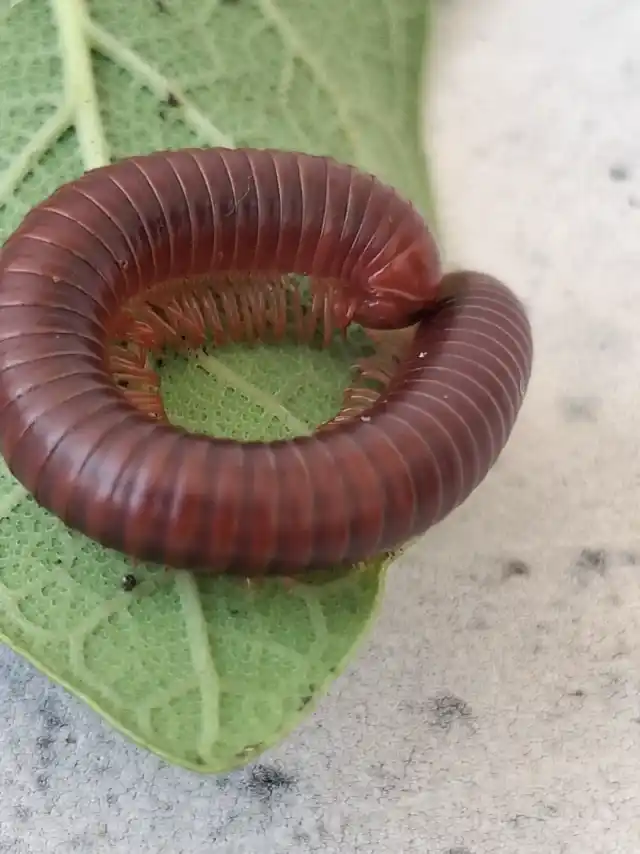
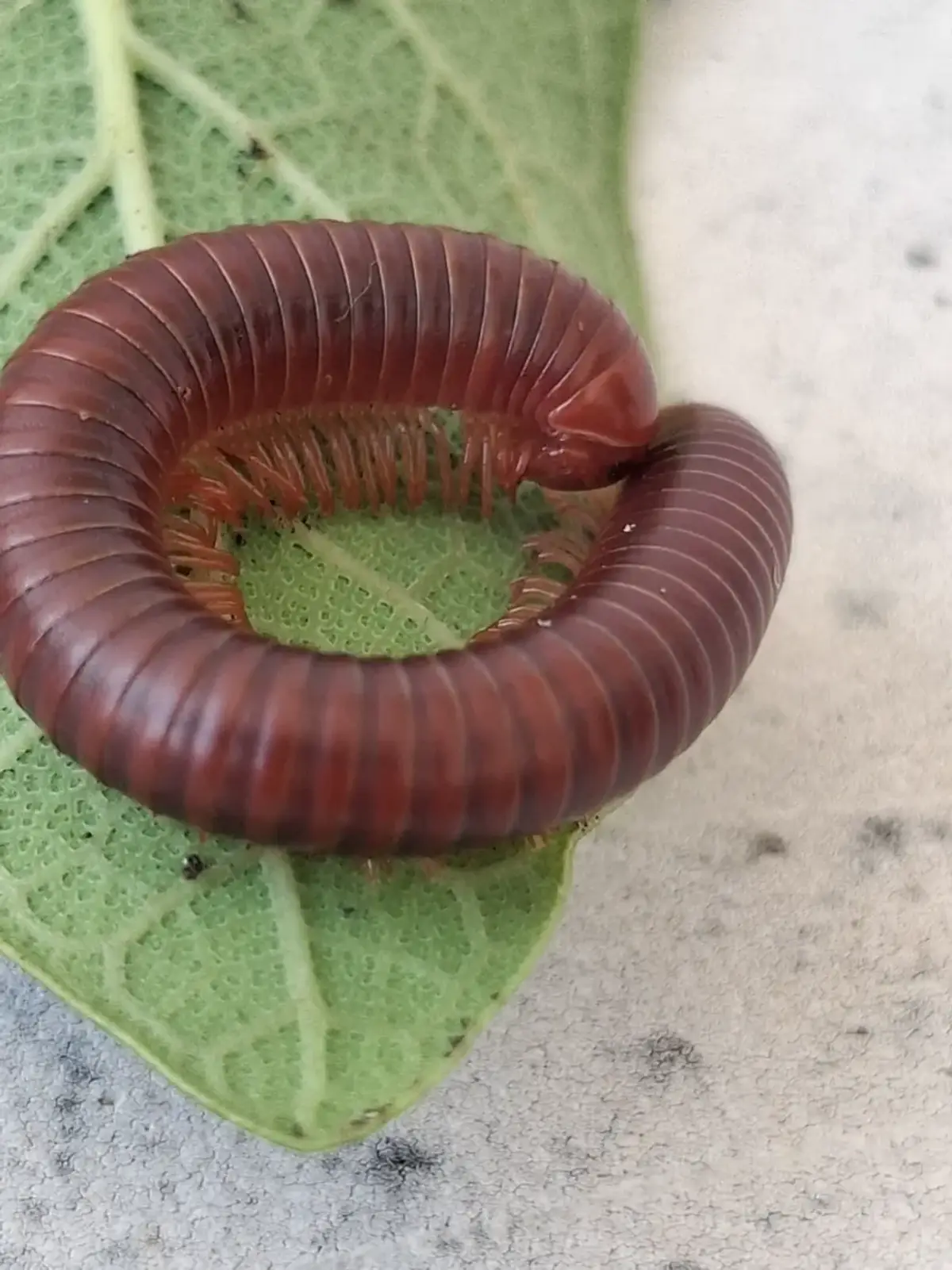
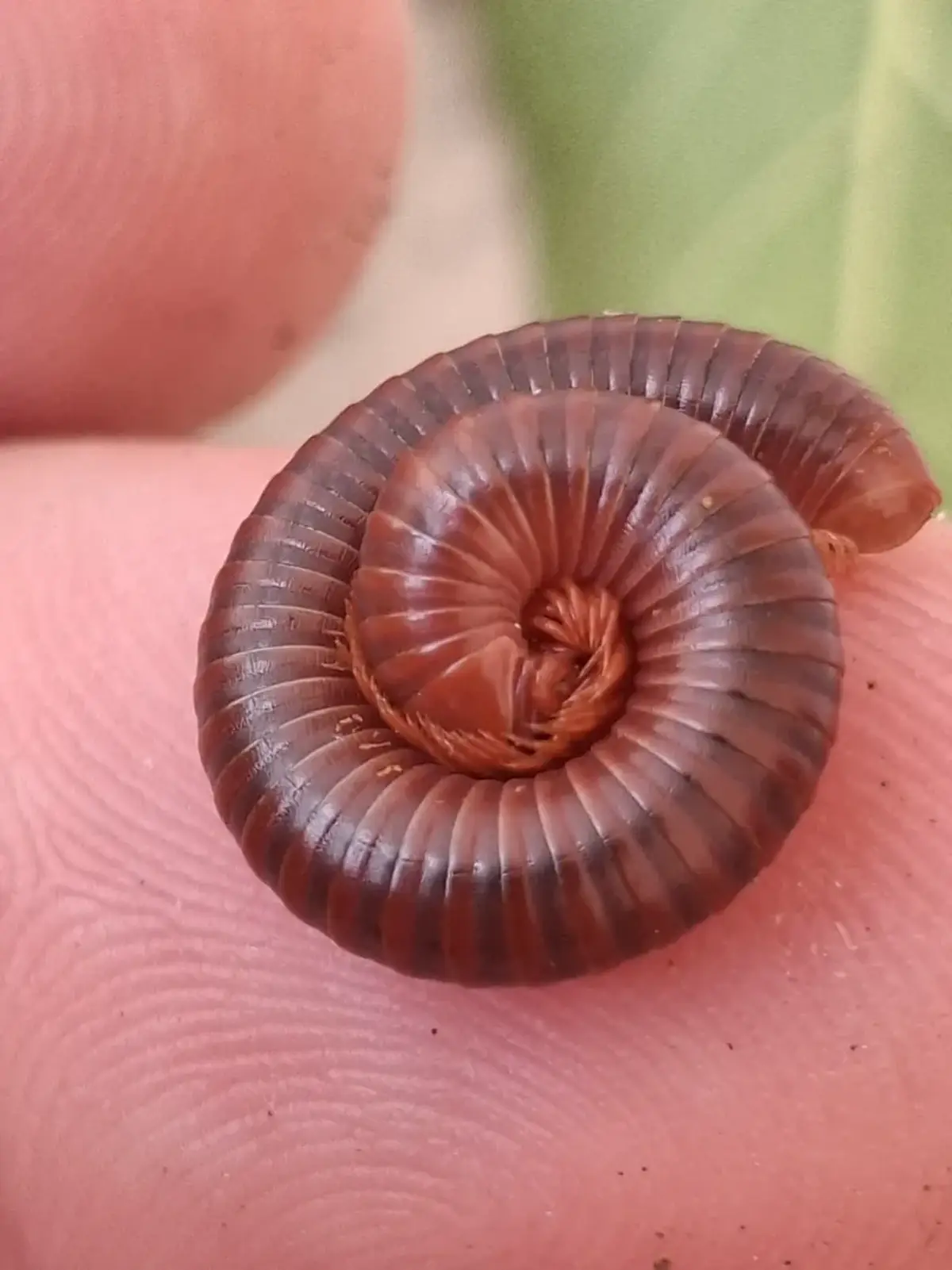
When a millipede is bothered, it does not fight back. It stops, curls into a tight spiral to protect its soft underside, and waits. That coil is the only thing most people ever see.
What Millipedes Do Instead of Biting
Curling up is the first defense. The second is chemical. Most millipedes have a row of tiny pores along their sides, called ozopores. Squeeze one, step on it, or let a bird grab it, and it pushes out a smelly, oily fluid.
A clinical review in StatPearls on the NCBI Bookshelf notes that millipedes lack fangs and stingers, so they do not bite or sting. Their defensive fluid can contain hydrogen cyanide, hydrochloric acid, hydroquinones, benzoquinones, alkaloids, and phenols.
What comes out depends on the species. Small brown greenhouse millipedes pile up on patios and in basements here. They give off a little cyanide gas when alarmed. That’s the almond smell. NC State Extension says it’s a reason to handle large numbers with care. The big, dark North American millipede you find under logs in Fairfax and Montgomery County woods is more likely to leave a brown stain on your fingers.
Most people who pick up a millipede never notice any fluid. It mostly comes out when the animal is crushed or held tight.
What Happens If a Millipede “Bites” You?
Nothing punctures your skin. Most people get the fluid on them by stepping on one barefoot or squeezing one in a hand. Here’s what usually happens next:
- Right away: a mild burning or itching feeling where the fluid touched. Some species leave an almond smell on your skin.
- First few hours: a yellowish-brown patch shows up. It usually has a sharp edge, and once in a while it traces the outline of the curled millipede.
- About 24 hours later: the patch darkens to reddish-brown, purple, or almost black. A 2019 case report in Anais Brasileiros de Dermatologia describes this exact color change.
- About a week later: the stained skin may dry and peel. A strong exposure can blister instead.
- Weeks to months: the color fades. MedlinePlus, from the National Library of Medicine, says most symptoms go away within 24 hours, but the brown discoloration can last for months.
Serious reactions are rare and mostly involve big tropical species, not the millipedes in Virginia and Maryland yards.
What Does a Millipede Bite Mark Look Like?
A “millipede bite mark” is a stain, not a wound. Here is how it compares with a real centipede bite:
| What you notice | Millipede fluid (“bite”) | Centipede bite |
|---|---|---|
| Puncture marks | None | Two small bite marks from the venom claws (StatPearls) |
| Color | Yellow-brown at first, then reddish-brown, purple, or black | Red, sometimes swollen |
| Edge | Sharp edge; can trace the millipede’s shape | Redness and swelling around the bite |
| Feeling | Mild burning or itching, sometimes none | Sharp pain right away, like a bee sting |
| How long it lasts | Discomfort about a day; stain for weeks or months | The Merck Manual says symptoms rarely last more than 48 hours |
On toes and fingers, the stain can look like a bruise or a circulation problem. A December 2025 case report in Cutis describes a woman who crushed a millipede from her shoe with her bare foot and found her toes purplish-red that night. Her pulse and skin temperature were normal, and the color faded on its own over about a month. If you see a mark like that, tell your doctor about the millipede. It saves a lot of tests.
What to Do After Millipede Contact
- Wash the skin with plenty of soap and water as soon as you can. MedlinePlus says not to use rubbing alcohol.
- Keep your hands away from your eyes until you’ve washed them.
- For itching or burning that hangs on, the Merck Manual suggests a corticosteroid cream (an over-the-counter hydrocortisone cream is the common one).
- Leave the stain alone. Scrubbing won’t lift it faster. It fades as the skin renews.
- Watch any blisters. Keep them clean; an open blister can get infected.
Can You Touch a Millipede?
Yes. A millipede crawling across your hand or up your arm can’t hurt you. Most of the time it will curl up and you won’t feel anything but legs. Kids pick them up all the time.
A few habits keep it that way:
- Let it walk onto your hand instead of pinching it between your fingers.
- Don’t step on one barefoot. Crushing is how most of the bad stains in the medical reports happened.
- Wash your hands afterward, and don’t rub your eyes first.
- If you’re cleaning up a lot of them indoors, use a vacuum or a broom instead of your hands.
If you’re worried about pets, we cover dogs and cats in are millipedes poisonous?
Millipede vs. Centipede: The Important Difference
One reason people worry about millipede bites is confusion with centipedes. These two creatures look similar at first glance, but they’re very different in terms of biting.
| Feature | Millipede | Centipede |
|---|---|---|
| Legs per segment | Two pairs | One pair |
| Body shape | Rounded | Flat |
| Movement | Slow, deliberate | Fast, darting |
| Biting ability | Cannot bite | Can bite with venomous forcipules |
| Defense | Curls up, secretes fluid | Bites and runs away quickly |
| Danger to humans | Nuisance only | Painful bite, rarely serious (are centipedes dangerous?) |
According to the Forest Preserve District of Will County, if you uncover a many-legged creature and it scatters away quickly, that’s likely a centipede. If it curls into a ball and stays still, it’s a millipede.
Why Millipedes Enter Your Home
Millipedes don’t come in to feed or to nest. They wander in while looking for damp ground, and a house is usually a dead end for them. We go deeper on the causes in why are there millipedes in my house, but here’s the short version.
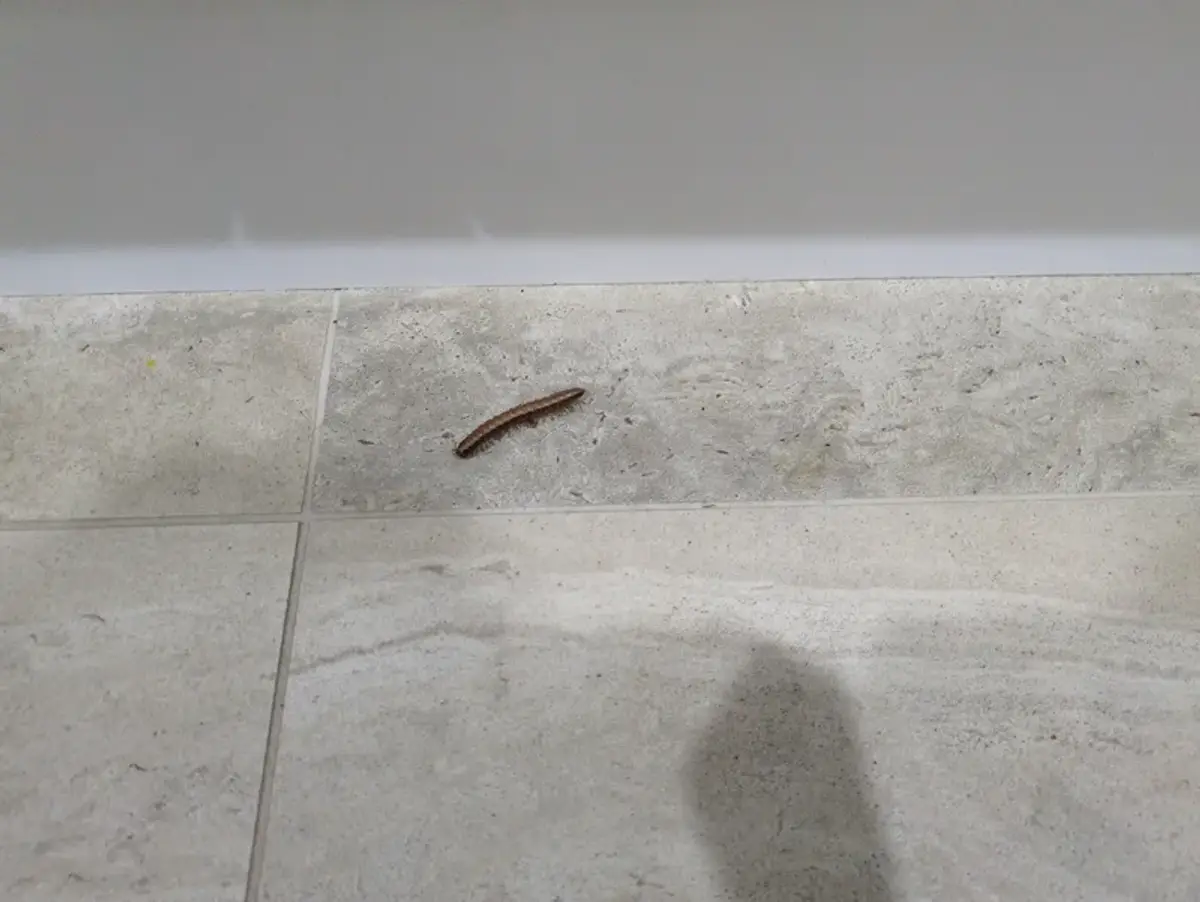
Common triggers for millipede invasions:
- Fall migration. Penn State Extension says millipedes get restless and migrate with cooler weather. Here that means fall.
- Heavy rain. Soaked soil pushes them up onto walks, patios, and driveways, and from there under doors.
- Hot, dry spells. When mulch beds dry out, they move toward the damp soil along your foundation and into basements.
According to NC State Extension, fixing moisture problems matters more for preventing millipedes than relying on insecticides alone.
One homeowner I spoke with kept finding millipedes in her basement. When we inspected, the cause wasn’t the house at all. It was how wet the soil around her home stayed.
Daren, one of our registered technicians, says the one really bad millipede house he’s had with us was a brand-new build. The builder had just laid sod, and all the watering to get it to take kept the soil soaked right up against the foundation. A granular treatment around the outside got it under control, and he says it wasn’t hard. In his words, “it’s always going to be a moisture issue with them, whether it’s outside or inside the house.” When moisture is the driver, he usually suggests a dehumidifier before any chemical.
How to Prevent Millipedes from Coming Inside
Since millipedes don’t bite and are mainly a nuisance, prevention is about making the strip of ground next to your house dry and boring to them.
Outdoor prevention steps:
- Remove leaf piles, heavy mulch, and debris near your foundation
- Keep mulch at least 6-12 inches away from exterior walls
- Ensure gutters and downspouts direct water away from your home
- Grade soil to slope away from the foundation
- Replace organic mulch with gravel near the house
Indoor prevention steps:
- Use dehumidifiers in damp basements and crawl spaces
- Fix plumbing leaks promptly
- Seal cracks around windows, doors, and the foundation
- Install door sweeps and weatherstripping
- Ensure proper ventilation in bathrooms and basements
If you can’t find where the moisture is coming from, we can help you track it down anywhere in our Northern Virginia and Maryland service area.
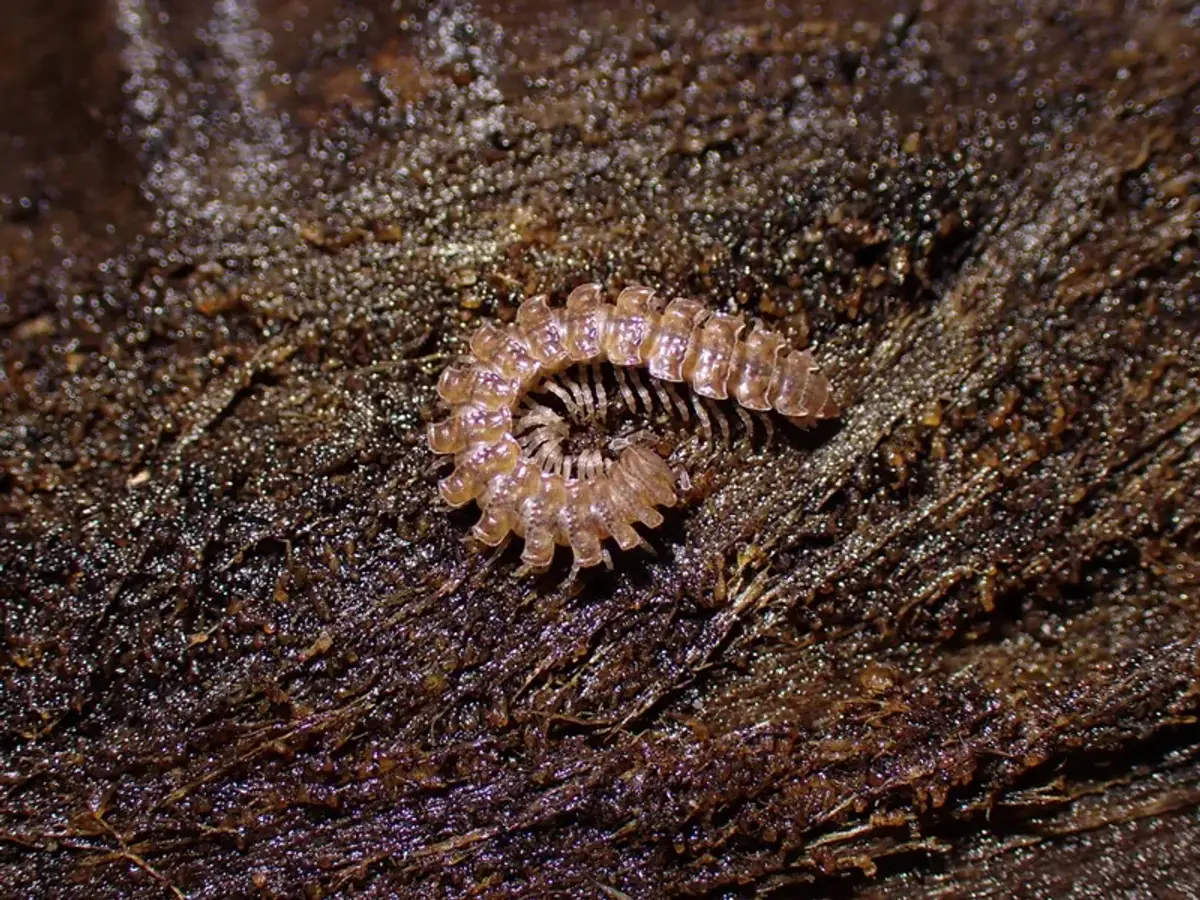
What to Do If You Find Millipedes in Your Home
A few millipedes indoors aren’t cause for alarm. Penn State Extension notes they don’t live more than a few days inside, because most homes are too dry for them.
Simple removal methods:
- Vacuum them up. It’s the fastest way, and you never touch the fluid.
- Sweep them into a dustpan and dump them outside, well away from the foundation.
- Check the next day. Strays that got in usually dry out and die within a few days.
If you’re seeing dozens of millipedes in your house every day, look for a moisture problem. After a heavy fall rain, hundreds can show up on one patio.
For ongoing millipede problems, our licensed technicians can evaluate the moisture conditions around your home and recommend targeted solutions. We serve homeowners throughout Northern Virginia and the DC metro area with over 58 years of experience.
When to Call a Pest Control Professional
While millipedes don’t bite and aren’t dangerous, sometimes professional help makes sense:
- Repeated invasions despite DIY prevention efforts
- Hundreds of millipedes appearing at once
- Difficulty identifying whether you have millipedes or centipedes
- Moisture issues you can’t locate or fix yourself
- Other pests appearing alongside millipedes
Our team at Better Termite & Pest Control has helped thousands of homeowners throughout Alexandria, Fairfax, and the surrounding areas deal with occasional invaders like millipedes. With over 1,800 reviews and 300 years of combined experience, we understand how to address the underlying issues that attract these creatures.
The Bottom Line on Millipede Bites
No, millipedes do not bite humans. If you have a brown or purple mark after touching or stepping on one, that’s a chemical stain. Wash it with soap and water, keep the fluid out of your eyes, and expect the color to hang around for a few weeks. See a doctor for an eye exposure, blisters, or a reaction that’s spreading.
If they keep turning up inside, look at moisture before you think about spraying. Check the downspouts, the mulch against the foundation, and the basement humidity.
Call us at 703-683-2000 or email info@bettertermite.com for help with millipedes or other pests.