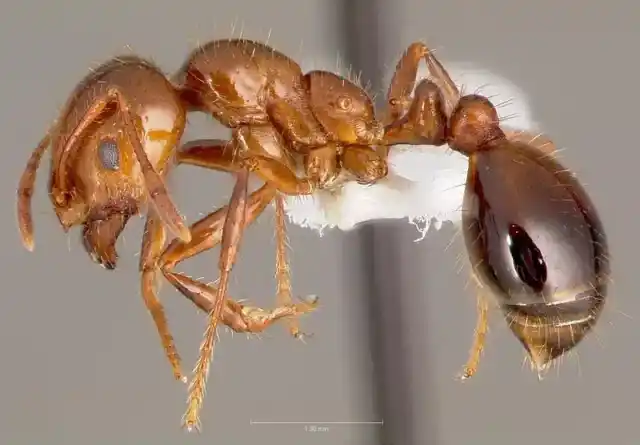

This ant identification chart shows the 16 ants we run into most around Northern Virginia and Maryland homes. Each one has a photo, its worker size, color, node count, and the one clue that gives it away. Tap any ant to open its full page in our pest library.
If you only check three things, check size, the number of bumps in the waist (nodes), and whether it smells when you crush it. That narrows almost every house ant down to one or two choices.
Ant Identification Chart: 16 Common Ants With Pictures
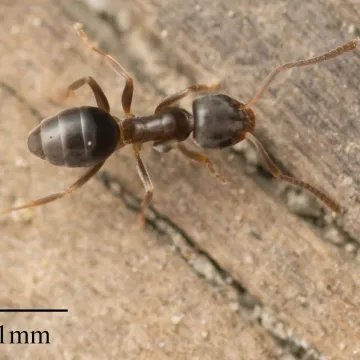
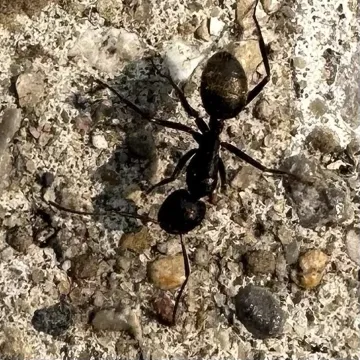
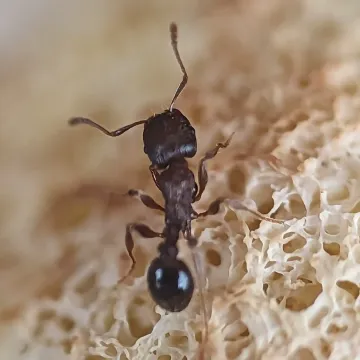
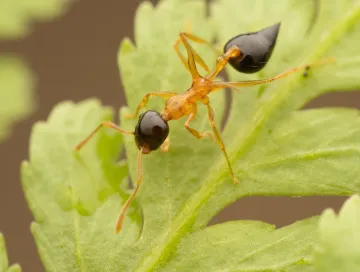
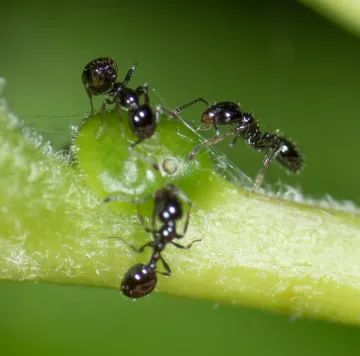
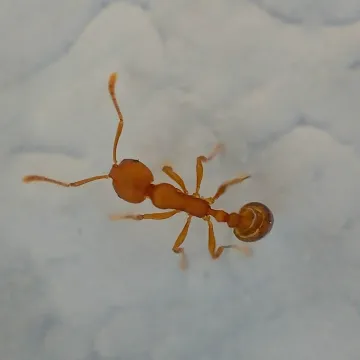
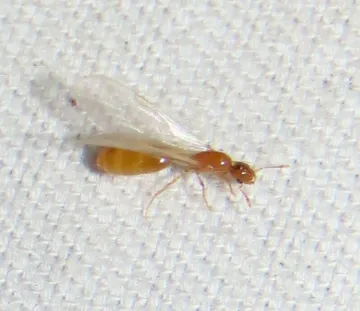
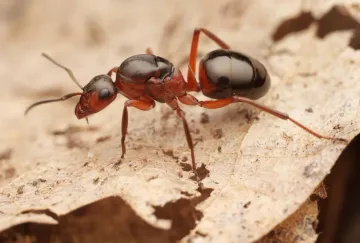
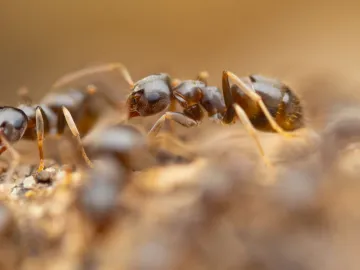
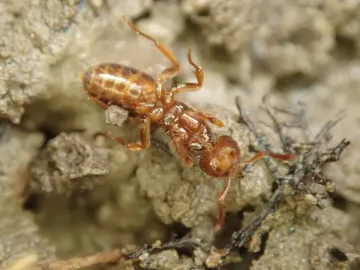
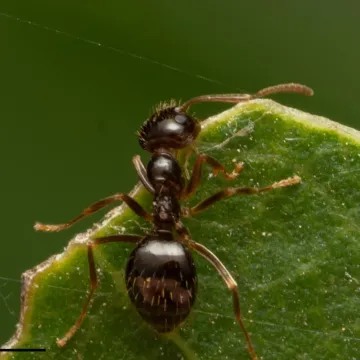
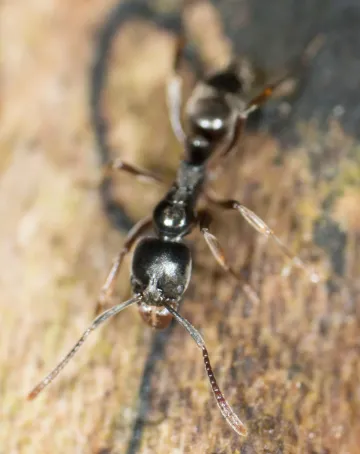
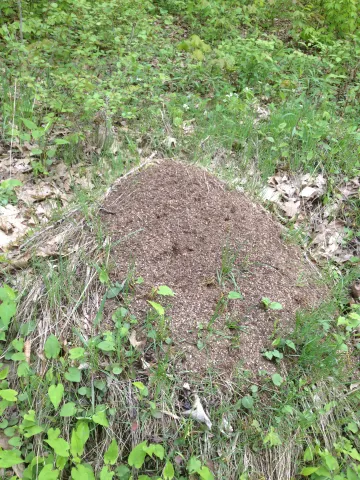
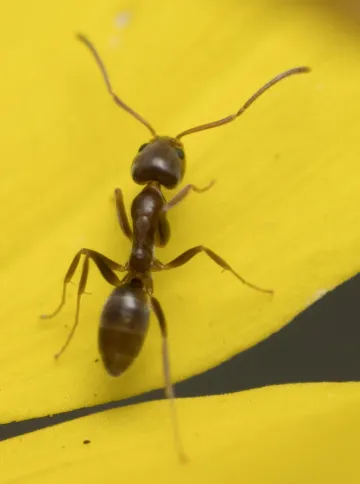
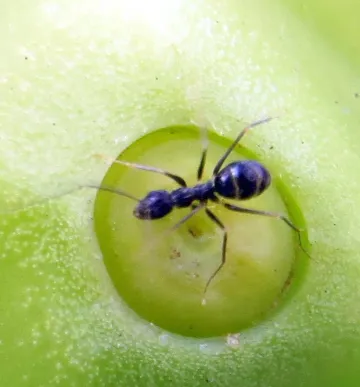
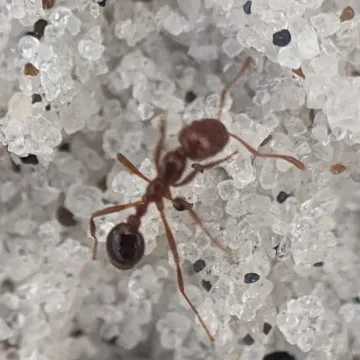
Sizes are for workers, the wingless ants you see on a trail. Queens and winged swarmers run larger. Chart sources: Ohio State’s ants in and around the home fact sheet, the University of Nebraska’s ant identification guide, Texas A&M’s household ant guide, Virginia Tech’s acrobat ant fact sheet, and Utah State on pharaoh ants.
“Sugar ant” isn’t a species. It’s a nickname people use for any small ant that goes after sweets. Around here that is usually an odorous house ant. See our sugar ants page if that’s what you’ve been calling yours.
Ant Size Chart: Smallest to Largest
Size is the fastest way to cut the list down. Here are the same ants lined up by worker length:
| Ant | Worker length | Millimeters |
|---|---|---|
| Thief ant | About 1/20 inch | 1-1.5 mm |
| Pharaoh ant | 1/16 to 1/12 inch | 1.5-2 mm |
| Little black ant | About 1/16 inch | 1.5-2 mm |
| Crazy ant | About 1/10 inch | 2-3 mm |
| Argentine ant | About 1/10 inch | 2-3 mm |
| Acrobat ant | About 1/10 inch | 2-3 mm |
| Odorous house ant | 1/16 to 1/8 inch | 2.4-3.3 mm |
| Pavement ant | About 1/8 inch | 2.5-4 mm |
| Cornfield ant | 1/10 to 1/4 inch | 2-4 mm |
| False honey ant | About 1/8 inch | 3-4.5 mm |
| Citronella ant | 1/8 to 3/16 inch | 3-5 mm |
| Asian needle ant | About 3/16 inch | About 5 mm |
| Red imported fire ant | 1/16 to 3/16 inch | 2.4-6 mm |
| Allegheny mound ant | 1/8 to 1/4 inch | 3-7 mm |
| Field ant | Up to 3/8 inch | 4-8 mm |
| Carpenter ant | 1/4 to 1/2 inch | 6-13 mm |
A big black ant over 1/4 inch inside the house is almost always a carpenter ant or a field ant that wandered in. Anything you can barely see is a thief, pharaoh, or little black ant. Most of the rest sit in the 1/10 to 1/8 inch middle, which is where the node count and the smell test do the work.
How to Identify Ants in Your House: 4 Checks
A phone camera on zoom, or a cheap magnifying glass, is enough for all four. Grab two or three ants off the trail, not just one.
1. Measure it
Put it next to a ruler or a grain of rice. A grain of rice is about 1/4 inch long. Anything that size or bigger is in carpenter or field ant territory.
2. Count the nodes
Ants have three body parts: head, thorax (the middle, where the legs attach), and abdomen. The narrow waist between the middle and the rear has either one bump or two. Those bumps are called nodes, and the count splits house ants into two groups.
Ohio State University Extension sorts common house ants by that waist. Carpenter, false honey, and odorous house ants have one node. Pharaoh, thief, pavement, and little black ants have two. The same fact sheet says a correct ID is one of the first things to get before trying to control ants.
On an odorous house ant the node is small and tucked under the abdomen, so it can look like there’s no node at all.
3. Look at the back from the side
Carpenter ants have a smooth, evenly curved back, like a single arch. Field ants, citronella ants, and odorous house ants have an uneven back with a dip in it. Pavement and acrobat ants have a pair of tiny spines at the rear of the thorax.
4. Smell it and watch it move
Crush one between your fingers. Rotten coconut or blue cheese means odorous house ant. Lemon or citronella means a citronella ant. Then watch the trail: crazy ants run in fast, random zigzags, and acrobat ants lift their heart-shaped rear over their head when you bother them.
Types of Household Ants in Virginia and Maryland
These are the ones that actually come inside here, and what each one tells you about your house.
The two we see most. Daren, one of our registered technicians with about 10 years in the field, says odorous house ants and carpenter ants are the two he runs into most across the DMV. Ants are one of the most common complaints we get every spring, and most people first notice them in the kitchen or bathroom.
Carpenter ants mean moisture. Daren’s point on these is blunt: carpenter ants go where there’s wood rot or a leak. That could be rotted trim, fascia, or a leak behind a wall. He’s had customers expect one spray to end it, and it won’t. “Until you fix the wood rot or the moisture issue, they’re going to keep coming,” he says, “no matter how much chemical I put down.” They don’t eat sound wood. They clear out wood that’s already soft. Our short guide to carpenter ants and what carpenter ants eat cover the rest.
Pavement ants nest in soil under sidewalks, driveways, and slab floors. You’ll see little piles of sand along the edges of the concrete, and they come up through cracks in basement floors.
Acrobat ants move into wood that has already been wet. Virginia Tech says they nest in insulation, wall voids, and under siding, often in water-damaged wood around windowsills, skylights, and gutters.
Pharaoh ants live indoors year-round in warm places like behind appliances and in wall voids near hot water pipes. UMD Extension calls them hard to control because their very large colonies split apart when stressed. That’s why store-bought sprays usually make a pharaoh ant problem worse.
For a local list with more detail, see Common Ants in Alexandria, Virginia. For worker ant biology, see Worker Ants 101.
Ants That Get Mistaken for Each Other
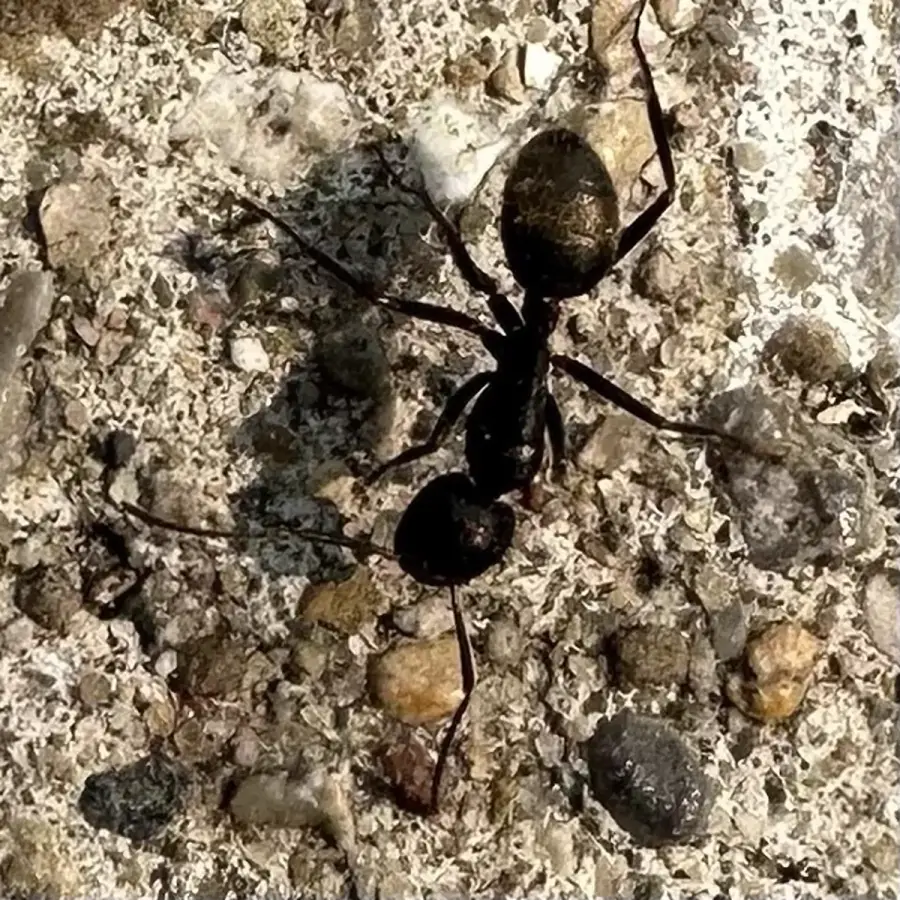
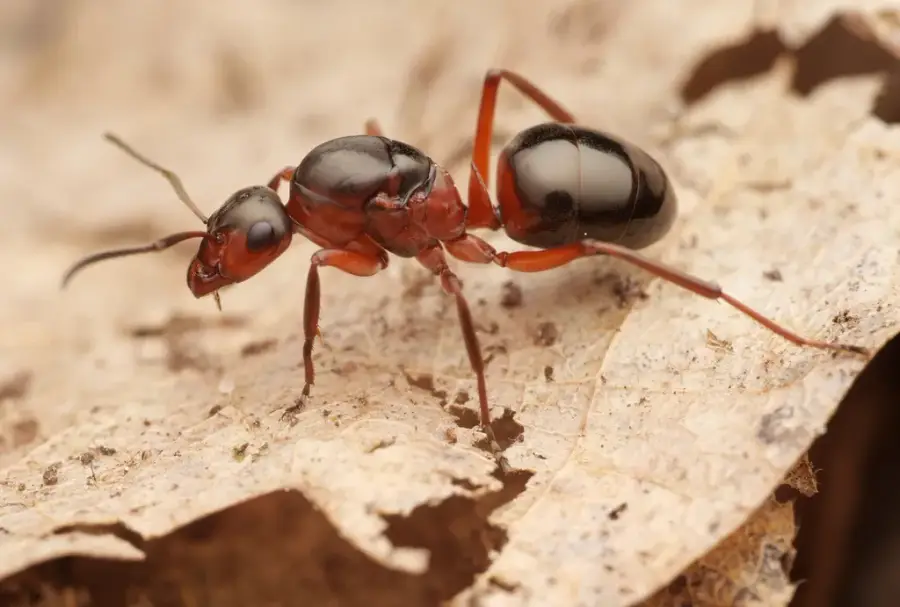
Carpenter ant vs. field ant. Both are big and often black, and both have one node. Look at the back from the side. A carpenter ant’s back is one smooth curve. A field ant’s back has a clear dip. Field ants nest in the lawn and wander in; carpenter ants point to wet wood somewhere in the house. We have a longer carpenter ant vs. black ant comparison too.
Odorous house ant vs. pavement ant. Same size, same dark color. Count the nodes: one for odorous house ants, two for pavement ants. Or just crush one. Pavement ants don’t smell.
Winged ants vs. termite swarmers. This is the costly mix-up. Daren tells a story about a home we’d signed up for a triannual plan for flying ants. When he got there, they were termite swarmers, in a basement that had just been fully remodeled with brand-new flooring. The homeowner didn’t believe it at first. The fix sometimes means drilling into that new floor, which is hard news to give. Ants have a pinched waist, elbowed antennae, and front wings longer than the back ones. Termites have a straight waist, straight beaded antennae, and four wings of the same length. Our flying ants vs. termites guide has side-by-side photos.
Using Apps to Identify an Ant
iNaturalist, Seek, and Picture Insect will suggest a species from a photo. They do well with big, common ants like carpenter ants. They struggle with the tiny ones, because a phone photo rarely shows the nodes or the spines. Treat the app as a first guess and check it against the chart above.
For a second opinion, Virginia residents can send a sample through their local extension office to the Virginia Tech Insect Identification Lab. Or have us look during an inspection.
Finding Where the Ants Are Coming From
Follow the trail back, ideally after dark when most ants forage. Indoors, trails usually lead to gaps around plumbing, under sinks, window frames, and weep holes in brick. Outdoors, check under mulch, stones, and along the foundation.
Moisture is often the reason ants stay. Daren and Lawrence, who trained him, once chased an ant problem through spray, traps, and dusting behind outlet covers, which only pushed the ants to another room. Lawrence finally suggested checking the upstairs bathtub. The grout around it was cracked and leaking into the kitchen wall below. Cracked tub grout and caulk is now one of the first things Daren checks.
Matching the Treatment to the Ant
Knowing the species tells you what will work.
- Odorous house, pavement, and little black ants: a non-repellent treatment around the foundation and in cracks, plus bait on the trails. Non-repellents don’t scare the ants off. Workers carry the product back and share it with the colony.
- Carpenter and acrobat ants: find and fix the wet or rotted wood, then treat. Treatment alone won’t hold.
- Pharaoh ants: baits only. Repellent sprays split the colony into new nests.
- Mound builders (field, cornfield, Allegheny mound): treat the mound directly. They rarely need indoor work.
All the products we use for ants are EPA registered and passed our internal research team’s review. Our ant service runs three visits a year, and we come back between visits if the ants do.
For prevention, pull mulch a few inches back from the foundation, keep counters and sinks dry overnight, and trim branches that touch the house. How to Prevent Ants in Virginia has the full checklist.
When to Call a Professional
Call if you see big black ants inside in spring, find sawdust-like debris under wood trim, see winged insects you can’t identify, or have tried baits for a few weeks without a change. That first visit is also where ant control in Clarksburg, Maryland starts, because finding the nest matters more than picking a product.
Better Termite & Pest Control’s Better Promise means unlimited callbacks until we hit a good baseline. There’s no long-term contract, and you can cancel anytime.
We work out of our Alexandria and Reston offices and cover Northern Virginia and suburban Maryland, from Falls Church ant treatment inside the Beltway out to Loudoun County. For help closer to Old Town, see Pest Control Alexandria.
More Resources
- All ants in our pest library
- Kinds of Ants: Identifying Different Types in DC Metro
- Ant Lifespan: Development Stages and Treatment Tips
If you’ve matched your ant on the chart and want a second look, call us at 703-683-2000 or email info@bettertermite.com.