False Honey Ants Identification Guide
Prenolepis imparis
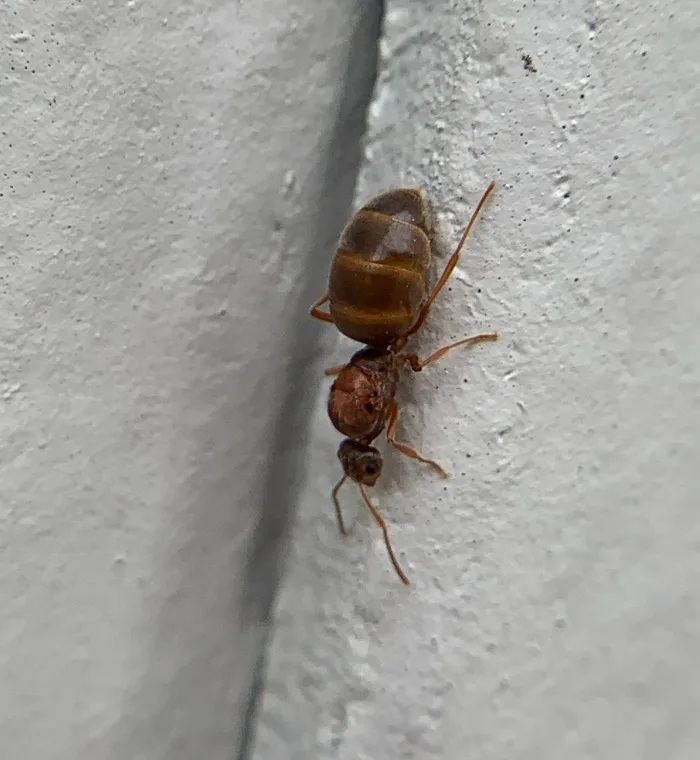
False honey ants, also called winter ants, are small brown ants that forage in cool weather when most other ants are inactive. Well-fed workers develop swollen, honey-colored abdomens, which is how the species earned its common name.
Taxonomy
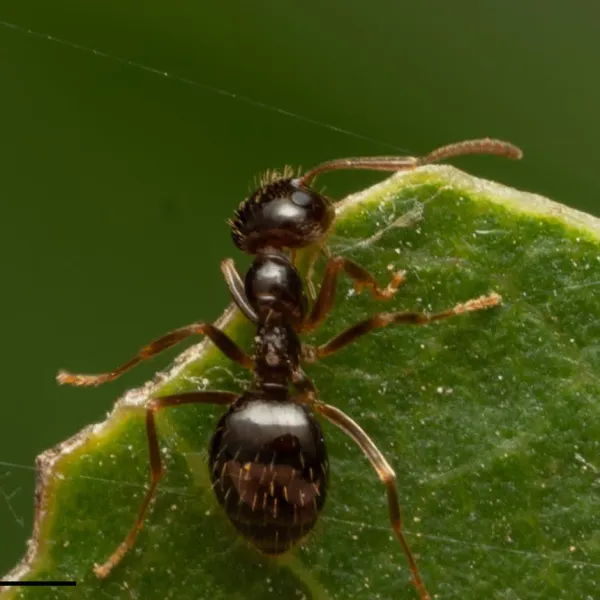
False Honey Ants Coloration
Common color patterns to help identify false honey ants
False Honey Ants
Seasonal Activity
When false honey ants are most active throughout the year

Where False Honey Ants Are Found
Hover over states to see their names. Green regions indicate where false honey ants have been reported.
False Honey Ant Identification Guide
Physical Characteristics
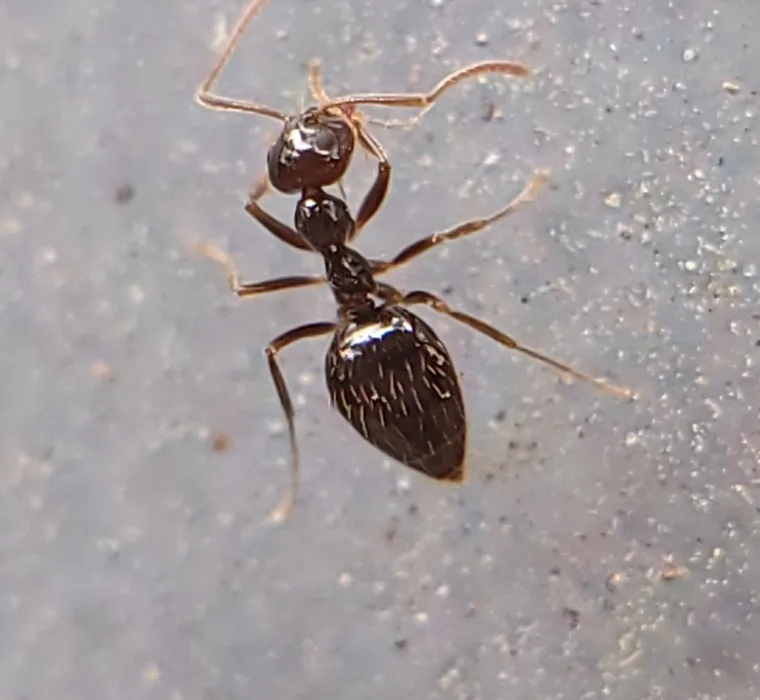
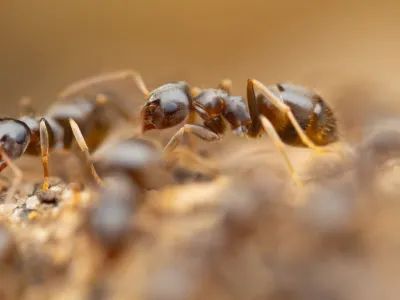
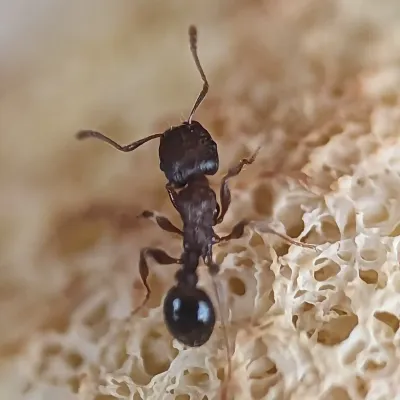
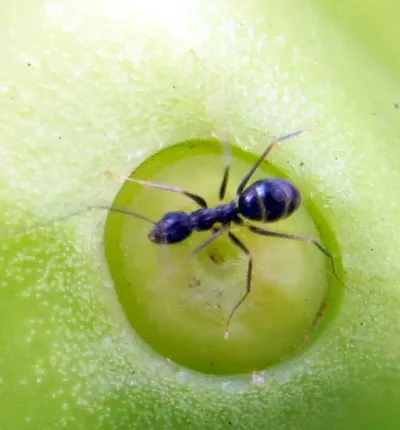
False honey ants are small, shiny, and dark. Workers run about 3 to 4.5 millimeters long, roughly the size of a sesame seed, with colors ranging from light brown to nearly black. The head and abdomen are often darker than the middle section of the body.
Two features separate this species from the other small brown ants people find indoors:
- An hourglass profile. Viewed from the side, the middle section of the body (the mesosoma) is strongly pinched in the center, giving the ant a peanut or hourglass silhouette. No other common household ant in the Mid-Atlantic has this shape.
- A swollen, amber abdomen on well-fed workers. These “corpulent” workers pack on fat before summer, stretching the abdomen until the segments separate and glow honey-colored. This is the source of the common name, and unlike a true honeypot ant, the worker slims back down after the fat is used.
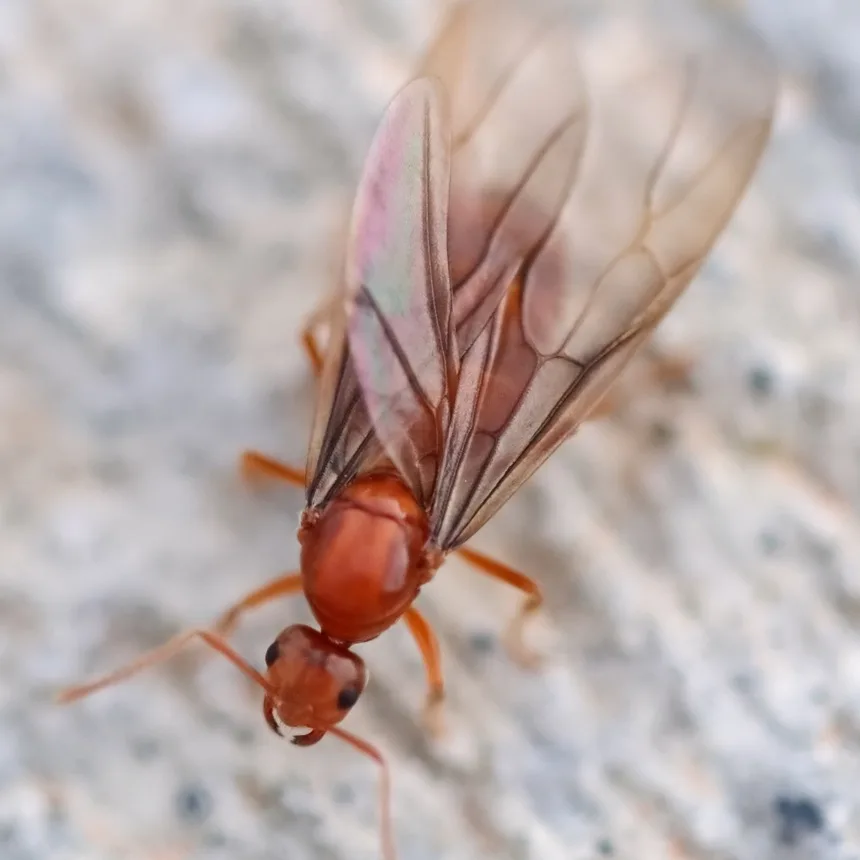
The ant also has a single node on the waist that tilts forward, 12-segmented antennae with relatively short first segments, and no stinger. Queens are larger and reddish-brown; males are small and black.
The behavior is as diagnostic as the anatomy. If you are watching small brown ants forage on a 45-degree day in February, you are almost certainly looking at this species.
Common Species
Prenolepis imparis is the only member of its genus in most of North America, so there are no close domestic relatives to sort through. The ants most often mixed up with it belong to other genera entirely:
- Tapinoma sessile, the odorous house ant, which smells like rotten coconut when crushed and has a hidden waist node
- Lasius species such as the cornfield ant, which are warm-season ants with a smoother, unpinched body profile
- Monomorium minimum, the little black ant, which is smaller, jet black, and has a two-segmented waist
- Tetramorium immigrans, the pavement ant, which is grooved on the head and thorax and nests under slabs and driveways
- Nylanderia species, the crazy ants, which have long antennae, long legs, and an erratic, zigzagging walk
False Honey Ant Behavior and Biology
Habitat
Colonies nest in shaded soil, most often at the base of a hardwood tree, along a wood line, or under leaf litter in a landscape bed. The nest is a narrow vertical shaft with chambers stacked along it. Researchers excavating nests in northern Florida followed one down nearly 12 feet. That depth is why the colony survives hard freezes, and why raking or digging around a nest entrance accomplishes very little.
Homes bordering mature trees, wooded lots, or older landscape beds are the ones that see this ant indoors.
Diet
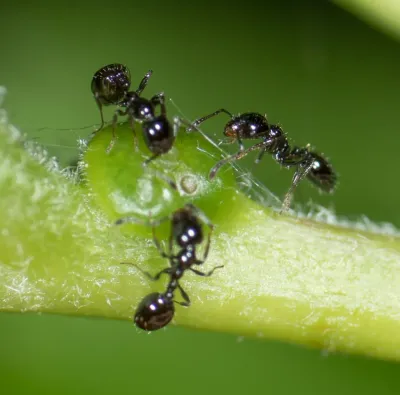
False honey ants are omnivores with a strong pull toward protein, fat, and sugar. Outdoors they tend aphids and scale insects for honeydew, scavenge dead insects, and feed heavily on fallen, rotting fruit. Indoors they go for grease, pet food, crumbs, and anything sweet left on a counter.
They are unusually aggressive at a rich food source and will hold it against larger ants, in part by using chemical secretions from the abdomen.
Life Cycle
Like all ants, the species develops through egg, larva, pupa, and adult. What is unusual is the calendar:
- Late summer (August–September): the colony raises a single annual brood, including the next generation of winged reproductives.
- Fall and winter: reproductives wait inside the nest while workers forage in cool weather and build up fat reserves.
- Late February–April: winged males and queens leave for mating flights. This is the period when homeowners find swarmers indoors.
- Late spring through summer: workers seal the nest and estivate underground, living on stored fat for as much as seven or eight months in the southern part of the range.
Mature colonies are often polygynous, meaning several egg-laying queens, and can hold thousands to more than ten thousand workers.
Cold-Weather Foraging
Most ants stop moving below about 50 degrees Fahrenheit. False honey ants forage comfortably between roughly 45 and 60 degrees and have been recorded active close to freezing. That window lets them use food sources before competitors wake up, and it is the reason a “winter ant problem” is so often this one species. In parts of California, this cold tolerance is what allows native colonies to hold ground against invasive Argentine ants.
How We Treat for False Honey Ants
Ants are a core part of our general pest control service, and false honey ants are handled the same way as other nuisance ants, with timing adjusted for their winter schedule.
- Inspection: The technician starts with the areas where you have seen activity, usually kitchens, baths, basements, and slab edges, and follows trails back to entry points such as cracks, utility penetrations, and gaps around pipes. Outdoors, the focus is the foundation, the perimeter, and shaded soil near trees and mulched beds where the nest shaft is most likely to be. We also note conducive conditions like wood rot and standing moisture and tell you what to correct.
- Treatment: Interior work is a targeted crack-and-crevice application of a non-repellent, EPA-registered material. Non-repellents matter with a social insect: foragers pick the product up without detecting it and carry it back through the colony, rather than simply being pushed to a different wall void. A perimeter application outdoors treats the band where foragers cross into the structure.
- Prevention and customer guidance: Seal the gaps that let workers in, keep mulch and leaf litter pulled back from the foundation, clean up fallen fruit, store pet food closed, and wipe trails with soapy water to erase the scent path. Because most ant materials have a working life of roughly 90 days, our plans include recurring maintenance visits to keep the perimeter current, plus unlimited free callbacks between visits if activity returns.
One honest note on expectations: this species is native, it nests deep in soil off the structure, and a colony in your neighbor’s woodline is not going away. The realistic goal is keeping foragers and early-spring swarmers out of the house, not eliminating the ant from the property. Extension entomologists make the same point, and for a colony that never comes indoors, exclusion alone is a reasonable answer.
References
- Winter Ant, False Honey Ant, Prenolepis imparis (Say) — University of Florida IFAS Featured Creatures
- Ants: Integrated Pest Management Around the Home — University of California Statewide IPM Program
- Prenolepis imparis — AntWiki species account
- Foraging patterns in three sympatric forest ant species — Lynch, Balinsky & Vail, Ecological Entomology (Maryland field study)
Other Ants
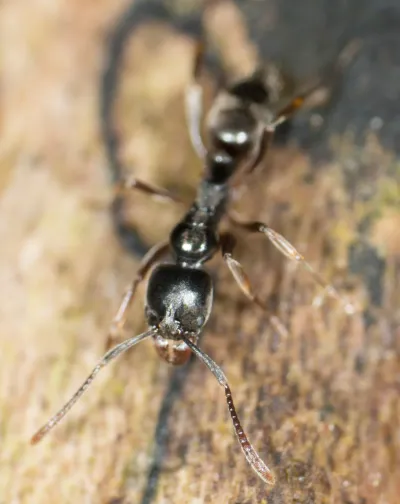
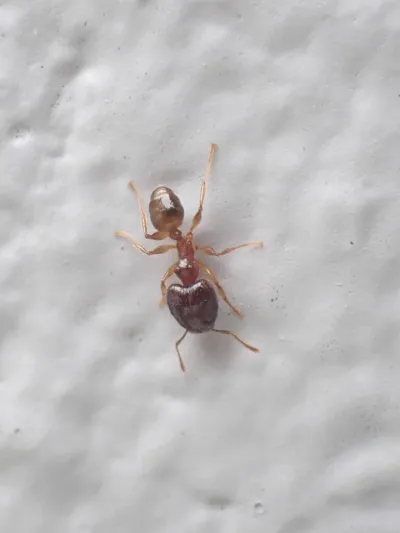
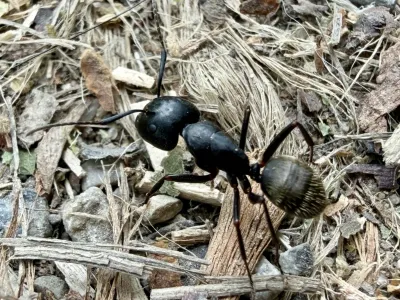
Explore other species in the ants family
Commonly Confused With
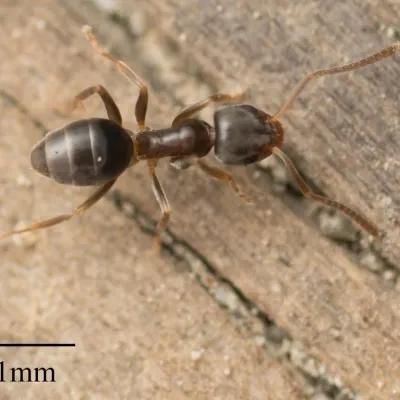
False Honey Ants are often mistaken for these similar pests
Where False Honey Ants Are Found
Hover over states to see their names. Green regions indicate where false honey ants have been reported.
Common Questions about False Honey Ants
Why am I seeing ants in my house in the middle of winter?
+
False honey ants are one of the few North American ants that forage in cold weather. They will leave the nest at temperatures in the 40s and 50s Fahrenheit, and sometimes near freezing, while most other ants are still dormant. Small brown ants trailing along a foundation or a kitchen counter in January or February are very often this species.
Are false honey ants related to honey bees or honeypot ants?
+
No. The name comes from the swollen, honey-colored abdomens that well-fed workers develop when they store fat for the summer. True honeypot ants (Myrmecocystus species) are a different group found mostly in the arid Southwest, and their storage workers hang permanently from nest ceilings. A false honey ant worker can fill up and slim back down.
Do false honey ants bite or sting?
+
They have no functional sting and are not aggressive toward people. Workers will defend a good food source against other ants, but they are a nuisance indoors rather than a health concern.
Do false honey ants damage houses?
+
They do not tunnel through wood or chew building materials the way carpenter ants do. Their nests are deep vertical shafts in soil, often beside a tree. The problem they cause is foraging indoors and, in early spring, winged reproductives appearing inside near windows.
Where is the nest likely to be?
+
Look outdoors in shaded soil, especially near the base of a mature tree, along a tree line, or in a mulched bed within 20 or 30 feet of the house. Nest entrances are small, inconspicuous holes in bare soil. The colony itself can extend several feet straight down, which is why surface digging rarely finds it.
Why do the ants disappear every summer?
+
False honey ants estivate. When soil temperatures climb in late spring, workers retreat underground, seal the nest, and live off stored fat until cool weather returns in fall. A homeowner who saw heavy activity in March and none in July has not lost the colony.
Do the winged ants inside my house mean an indoor nest?
+
Usually not. Reproductives are produced in late summer, overwinter inside the nest, and fly in late February through April. Swarmers often wander in from an outdoor nest through a gap near a sill or slab edge. An inspection can confirm whether the source is outside, which it almost always is for this species.

With five years of hands-on experience in the pest control industry, George Schulz is a registered technician with the Virginia Pest Management Association and a proud third-generation professional in a family business that's been protecting homes for over 58 years. He manages and trains a team of service pros while also leading internal research efforts—recently spearheading a deep-dive review of thousands of documents on pest control materials to hand-pick the most kid and pet friendly, most effective solutions tailored specifically for homes in the DC metro area.
Local Ants Help
Dealing with ants at home? Our licensed technicians provide ant control across Northern Virginia and Maryland.
