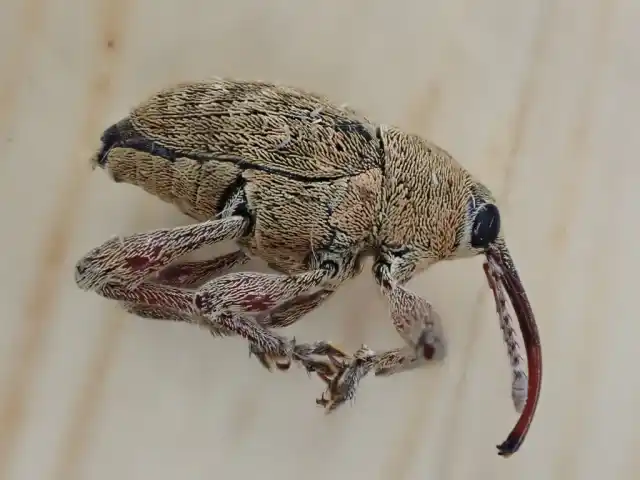

Virginia has hundreds of weevil species, but homeowners here run into the same few again and again. Inside the pantry, it’s rice, granary, and maize weevils in grain, plus bean weevils in dried beans. Walking on walls in summer, it’s usually black vine or strawberry root weevils from the shrubs outside. In fall, it’s acorn weevils crawling out of acorns you brought in. Out in the yard, the yellow-poplar weevil and white pine weevil go after trees. None of them bite, and none of them eat your house.
I’m George Schulz, a licensed technician at Better Termite in Northern Virginia. After five years in the field, weevils are one of the pantry calls I see most. Below is each weevil Virginians actually find, where it shows up, what time of year to expect it, and what to do about it.
Weevils in Virginia at a Glance
Where you find the weevil is the fastest way to tell which one you have. Here’s the quick version.
| Weevil | Where Virginians find it | When | What it harms |
|---|---|---|---|
| Rice, granary, and maize weevils | Rice, flour, pasta, cereal, corn, birdseed | Any month, indoors | Stored grain |
| Bean and cowpea weevils | Bags of dried beans and peas | Any month, indoors | Stored beans |
| Black vine weevil | Walls, windowsills, sinks, bathtubs; outside on yew and rhododendron | Mid-May through summer | Landscape shrubs |
| Strawberry root weevil | Near sinks and tubs, on walls | June through August | Nothing indoors |
| Asiatic oak weevil | Walls and windows near oak trees | Late spring through summer | Oak leaves |
| Acorn and nut weevils | Bowls of acorns or nuts, fall decorations | Late fall into winter | Acorns and nuts |
| Yellow-poplar weevil | Tulip poplar, magnolia, sassafras leaves | June and July | Tree leaves |
| White pine weevil | Top shoots of white pine and spruce | Spring and early summer | Young conifers |
| Billbugs | Lawns | Spring through late summer | Turfgrass |
Weevils in Virginia Pantries
These are the weevils most people mean when they search for weevils in Virginia. They live their whole lives in stored food. As a result, they can show up in any month of the year, even in January.
Rice, Granary, and Maize Weevils
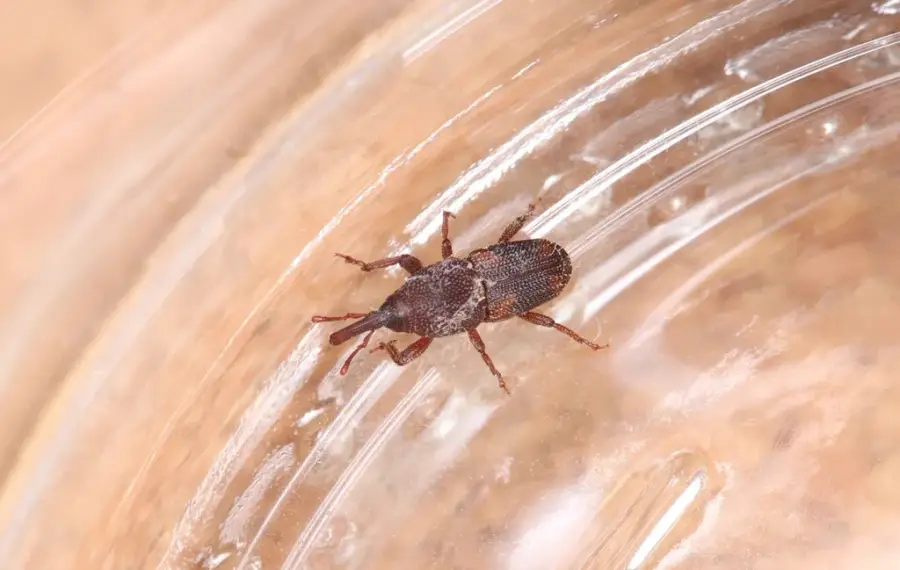
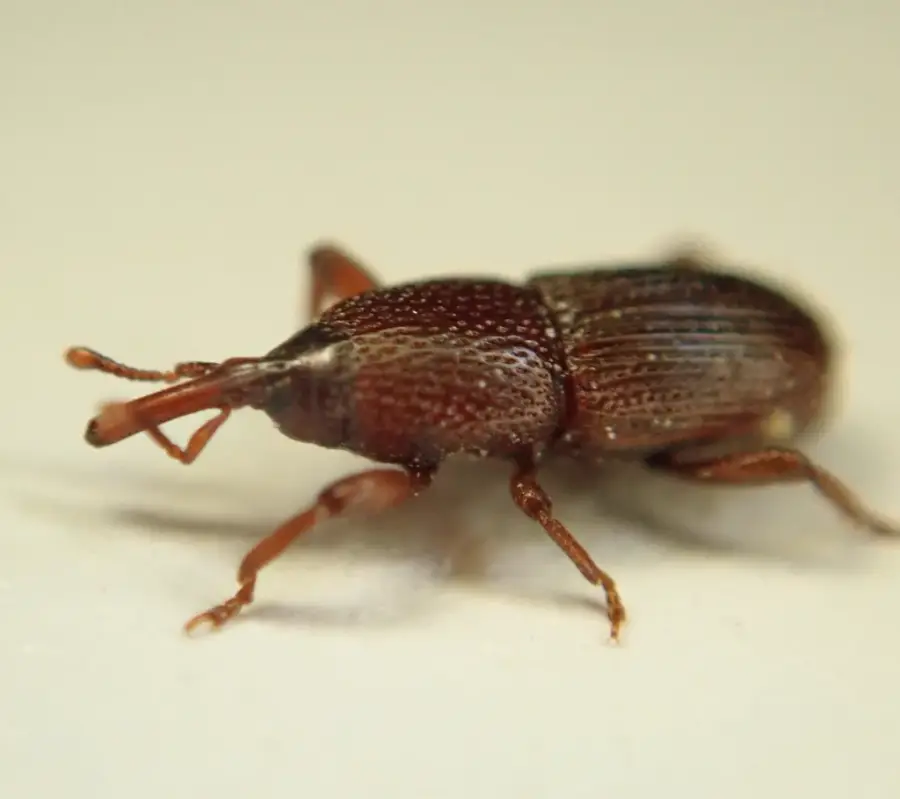
These three are close cousins in the genus Sitophilus. They are tiny, only about 1/8 inch long, with the classic weevil snout. Rice weevils are dark reddish brown with four faint light spots on their back. Granary weevils are shiny reddish brown with no spots. Maize weevils look almost exactly like rice weevils.
The key thing to know is how they breed. The female chews a hole in a single kernel and lays an egg inside. The larva eats the kernel from the inside, pupates there, and chews out as an adult. That’s why a bag of rice can look fine while it’s already infested.
According to the University of Maryland Extension, rice weevils can fly and are drawn to light, while granary weevils do neither. So a weevil at your kitchen window is more likely a rice weevil. Both species attack grains, nuts, cereals, and legumes, and both leave a sawdust-like powder in the package.
For the full ID details, see our pages on rice weevils and weevils in general.
Bean and Cowpea Weevils
If the bugs are in a bag of dried beans or black-eyed peas, you probably have a bean weevil or a cowpea weevil. Technically, these aren’t true weevils. They’re seed beetles, and they have no long snout. However, everyone calls them weevils, and they act the same way.
The larvae grow inside the bean. When the adult comes out, it leaves a neat round hole in the seed coat. So beans with small, perfect holes are your clue. Cowpea weevils can also start out in a backyard garden and come inside with the harvest.
The most common pantry pest I see in Northern Virginia homes is the Indian meal moth. After that come carpet beetles, then sawtoothed grain beetles and weevils. So when a customer tells me they have “weevils,” I always look closely before doing anything else.
A lot of the time, the bug is actually a sawtoothed grain beetle or a merchant grain beetle. Those are flat and have no snout. The treatment is similar, but the food they go after is a little different. Knowing which one it is tells me which packages to check first.
One more thing. When weevils keep coming back after a pantry cleanout, the source is often outside the pantry. Check birdseed, grass seed, dry pet food, and dried corn or wheat used in fall decorations. Those are easy to forget.
Weevils That Wander Into Virginia Homes
This group confuses a lot of people. You find small black weevils on the walls, windowsills, or around a sink, but nothing in your food. These are outdoor weevils that came inside by accident.
Black Vine Weevil
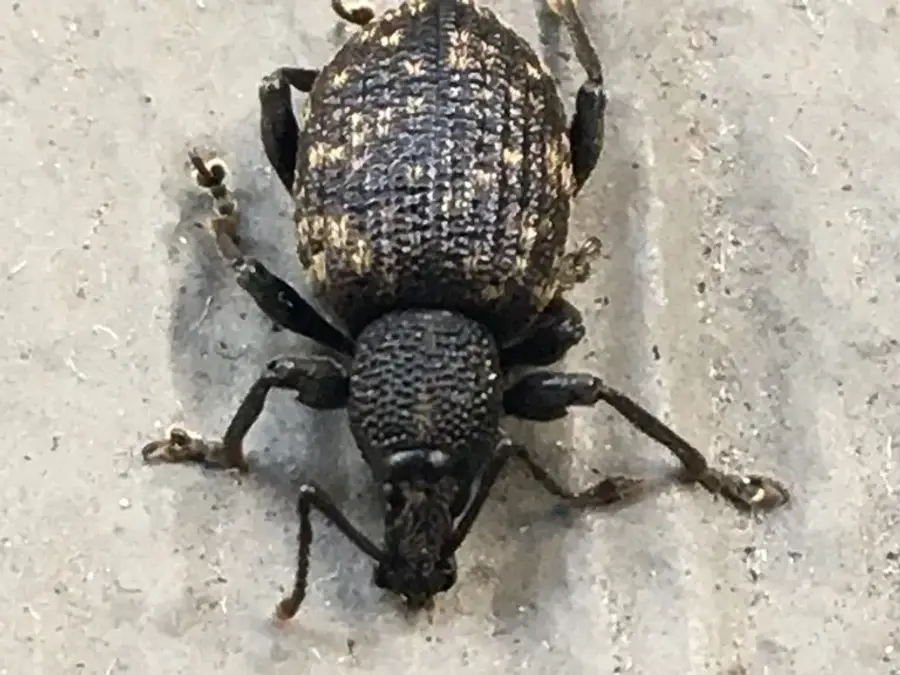
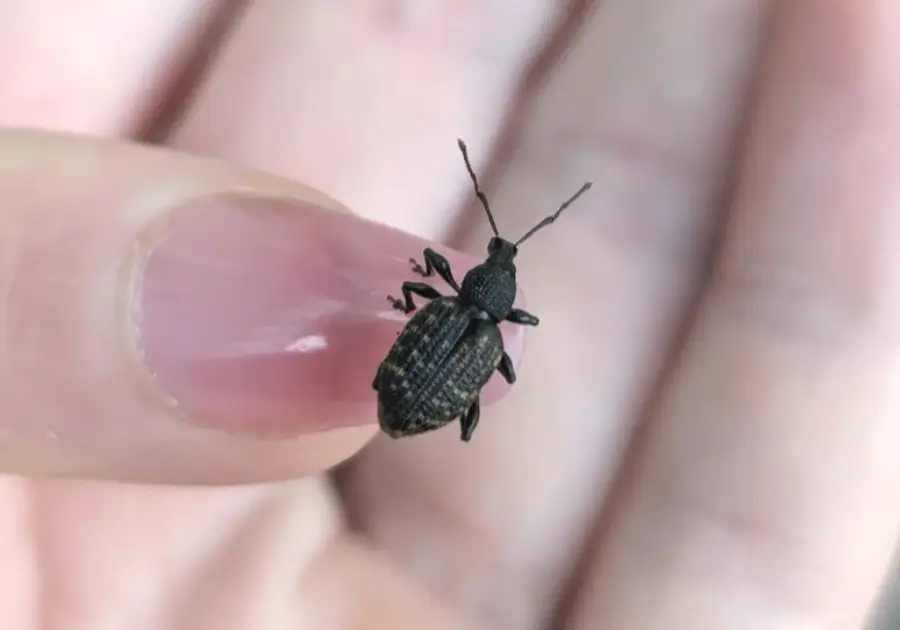
The black vine weevil is about 1/2 inch long and black. According to Virginia Tech, adults in Virginia come out of the ground around mid-May. They feed at night and chew notches along leaf edges. Their favorite shrubs are yew, hemlock, rhododendron, and cherry laurel, which are all over Northern Virginia yards.
Black vine weevils can’t fly because their wing covers are fused. Also, no males have ever been found, so every one you see is a female. Indoors, they’re only a nuisance. Outside, the larvae do the real damage by eating shrub roots.
Strawberry Root Weevil
The strawberry root weevil is a smaller relative, about 1/4 inch long and black or dark brown. The University of Minnesota Extension says they come indoors from June to August and are drawn to moisture, so they turn up near sinks and tubs. They don’t harm people, pets, buildings, or food.
Asiatic Oak Weevil
If your home backs up to oak woods, you may see a greenish-gray weevil about 1/4 inch long. That’s likely the Asiatic oak weevil. It feeds on oak leaves in late spring and summer and sometimes wanders into homes looking for a place to spend the winter.
If you see dozens of them every summer, the shrubs next to the house are usually the source. That’s a sign the problem is outside, not inside.
Acorn and Nut Weevils in the Fall
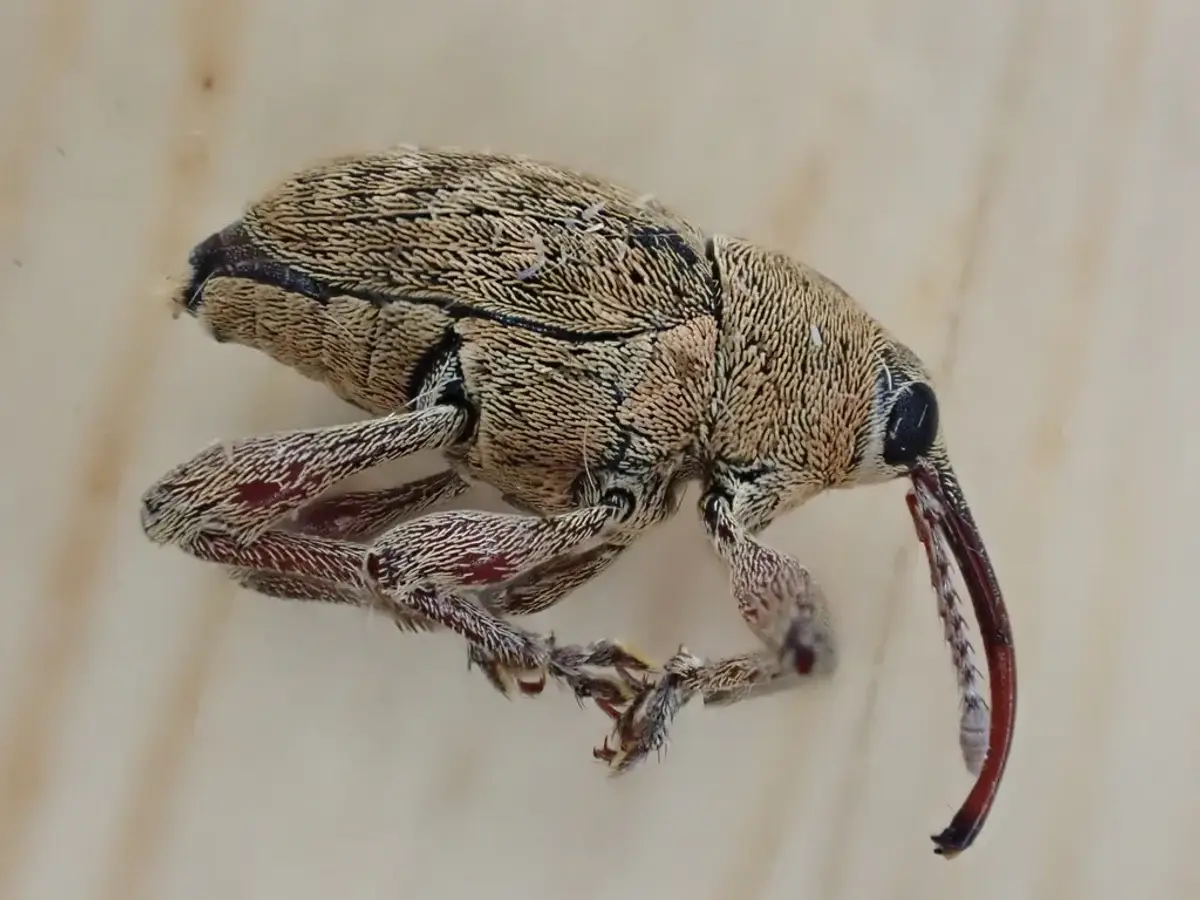
Every fall, I hear from someone who brought in a bowl of acorns or chestnuts for decoration. A few weeks later, small cream-colored grubs or tiny long-snouted weevils are crawling across the table. Those are acorn weevils or nut weevils, in the genus Curculio.
According to Iowa State University, the female lays eggs in developing nuts in midsummer. The larva eats the nut from the inside. Then, in late fall or early winter, it chews a perfectly round 1/8-inch hole and crawls out. The adult’s snout can be as long as its body.
These weevils don’t infest your pantry or your house. Once the acorns are gone, the problem is gone. So toss the acorns outside and vacuum up any stragglers.
Weevils in Virginia Trees, Shrubs, and Lawns
Some weevils never come inside. Instead, they show up as damage in the yard.
- Yellow-poplar weevil. This small, dark weevil is only about 1/5 inch long. It feeds on tulip poplar, magnolia, and sassafras leaves. Virginia Cooperative Extension calls it a sporadic pest in Virginia. Adults come out in early June and leave rice-sized holes in leaves through July. People sometimes mistake them for “flying ticks.” The damage is mostly cosmetic.
- White pine weevil. This one kills the top shoot of young white pines and Norway spruce. The leader droops into a “shepherd’s crook” by late May or June. Virginia Tech reports it is found throughout the state.
- Billbugs. These weevils feed in lawns. Bluegrass billbugs cause yellow patches in mid-to-late summer. If you tug on the grass and it breaks off at the crown with fine sawdust-like material, billbugs are a likely cause.
- Rose curculio. A red and black weevil about 1/4 inch long that chews holes in rose buds from spring into early summer.
When Weevils Show Up in Virginia: A Seasonal Calendar
Timing is a big clue. Here’s when each type usually shows up here in Northern Virginia and the rest of the state.
Pantry weevils keep breeding in heated homes all winter. A few black vine weevils and Asiatic oak weevils that snuck in to overwinter may also turn up on walls. Acorn weevil larvae from fall decorations can still be crawling out.
Rose curculios start on rose buds. White pine weevils attack new shoots, and the droop shows by late May. Black vine weevil adults come out of the soil around mid-May.
Yellow-poplar weevils emerge on tulip poplars. Black vine and strawberry root weevils start wandering indoors. Leaf notching shows up on rhododendrons, cherry laurels, and other broad-leaved evergreens.
Peak season for root weevils near sinks, tubs, and doors. Billbug damage shows in lawns. Warm pantries also speed up the rice weevil life cycle.
Acorn and nut weevil larvae leave fallen acorns. Holiday baking brings in new flour, rice, and dried beans, so this is a common time for pantry weevils to hitch a ride home.
How to Get Rid of Weevils in Your Pantry
Pantry weevils are the ones that need real cleanup. Here’s the process I walk customers through.
Pull everything out of the pantry. Check rice, flour, pasta, cereal, oats, cornmeal, dried beans, nuts, spices, birdseed, and pet food. Look for live weevils, powdery dust, and kernels with small holes. Also check the back of the shelf and the cracks in the corners.
Bag up and throw out anything with live bugs, holes, or dust. Take it straight to the outdoor trash. If you’re not sure about an open package, it’s usually cheaper to toss it than to fight a second round.
Vacuum the shelves, corners, and shelf-pin holes. Then wipe everything down with soap and water. Empty the vacuum outside when you’re done.
For food that looks clean but was nearby, the University of Kentucky recommends freezing it at 0°F for four days. That kills eggs and larvae hidden inside the kernels. You can also freeze new bags of grain when you bring them home.
Put grains, flour, and beans in glass jars or hard plastic containers with tight lids. Buy smaller amounts you’ll use within a few months. Forgotten half-used packages are where most infestations start.
Most people can handle a single infested bag this way in an afternoon. However, one common mistake makes things worse.
When to Call a Pest Professional
Most single-bag weevil problems end with a good cleanout. However, it’s time to call someone when weevils keep coming back after you’ve cleaned, when you find more than one kind of pantry pest, or when you can’t find the source at all.
That’s where our pantry pest control service comes in. We trace the infestation back to the package or hidden spot that’s feeding it. Then we treat the cracks and voids around the pantry with products that are EPA approved and have passed through our internal research team. Each one is something we’d feel comfortable using in our own homes. Pantry pest work is included in our standard pest control plan, which starts around $49 a month for an average DMV home, plus a $200 setup fee on the first visit. That same plan also covers the perimeter, which helps with root weevils coming in from the yard.
Better Termite has served Northern Virginia, DC, and Maryland for 58+ years, and we’ve earned 1800+ reviews across our locations. Our registered technicians serve homes across Northern Virginia, including Alexandria, as well as suburban Maryland.
Two weevils have a bigger story in Virginia than any pantry pest.
The boll weevil. This cotton pest reached Virginia by 1922. In 1978, Virginia and North Carolina became the site of the first full-scale boll weevil eradication program, and the insect was wiped out of Virginia within a few years. The Virginia Department of Agriculture still traps cotton fields to make sure it doesn’t come back.
The mile-a-minute weevil. Not every weevil is a pest. This tiny weevil eats only mile-a-minute vine, an invasive weed that smothers native plants. In May 2024, the Virginia Outdoors Foundation reported that 1,000 of these weevils were released at Bull Run Mountains Natural Area Preserve in Northern Virginia to help control the vine.
Conclusion
Weevils in Virginia fall into a few simple groups. If they’re in your food, they came home in a package, and a careful cleanout plus sealed storage usually ends it. If they’re on your walls in summer, they’re root weevils from the shrubs outside. If they showed up next to a bowl of acorns in fall, the acorns are the whole problem. And out in the yard, tree and lawn weevils are mostly a plant issue, not a house issue.
If weevils keep coming back, or you’re not sure what you’re looking at, give us a call at 703-683-2000 or email info@bettertermite.com. We’ll help you figure out what it is and give you an estimate.