Two-Spotted Stink Bug Identification Guide
Perillus bioculatus
The two-spotted stink bug is a brightly marked predatory stink bug that hunts Colorado potato beetle larvae. Learn how to identify it and tell it apart from pest stink bugs.
Taxonomy
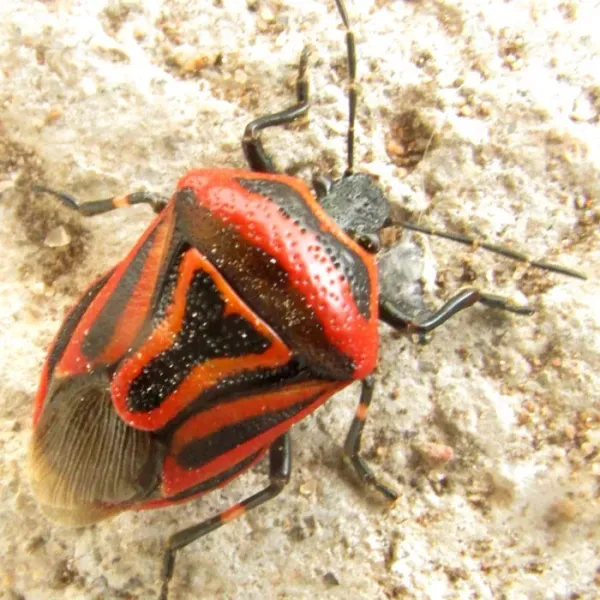
Two-Spotted Stink Bug Coloration
Common color patterns to help identify two-spotted stink bug
Two-Spotted Stink Bug
Seasonal Activity
When two-spotted stink bug are most active throughout the year

Where Two-Spotted Stink Bug Are Found
Hover over states to see their names. Green regions indicate where two-spotted stink bug have been reported.
Two-Spotted Stink Bug Identification Guide
Physical Characteristics
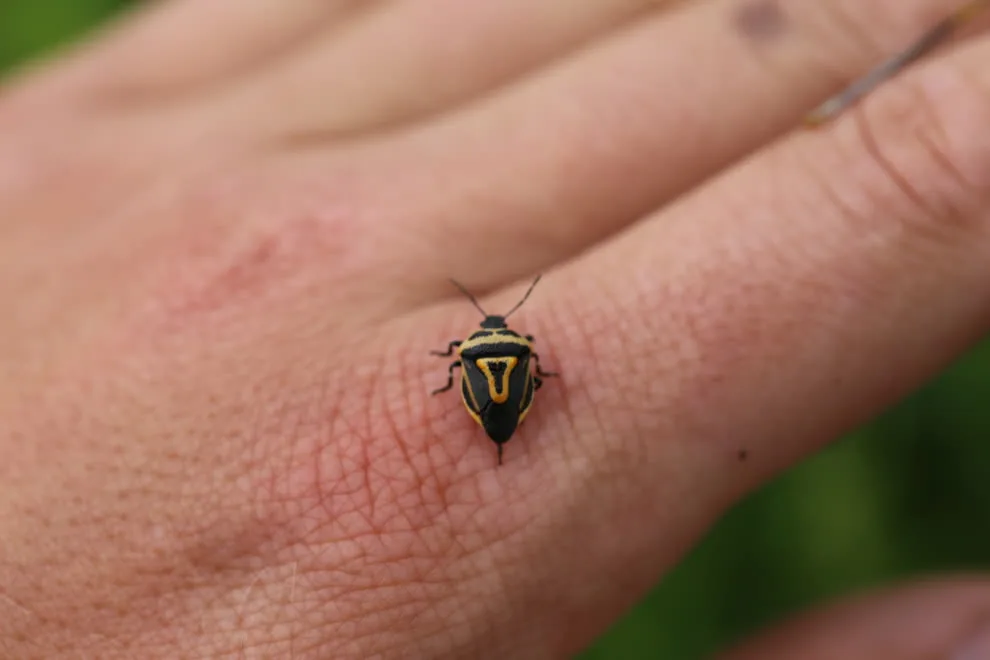
The two-spotted stink bug (Perillus bioculatus) is a small, shield-shaped insect. Adults are 8 to 12 mm long, or about a third of an inch. That makes it smaller than most of the stink bugs people find on their siding in fall.
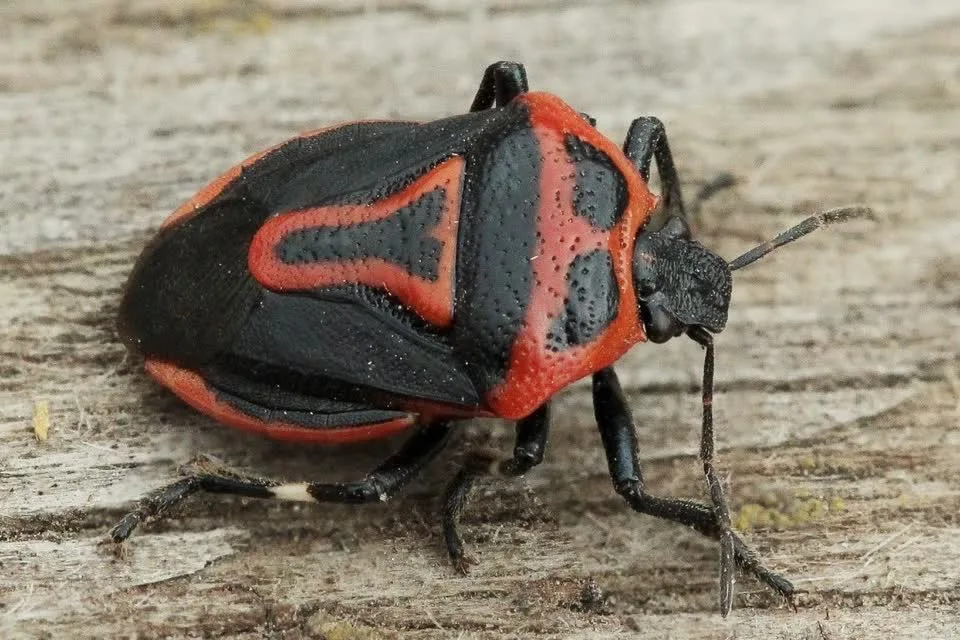
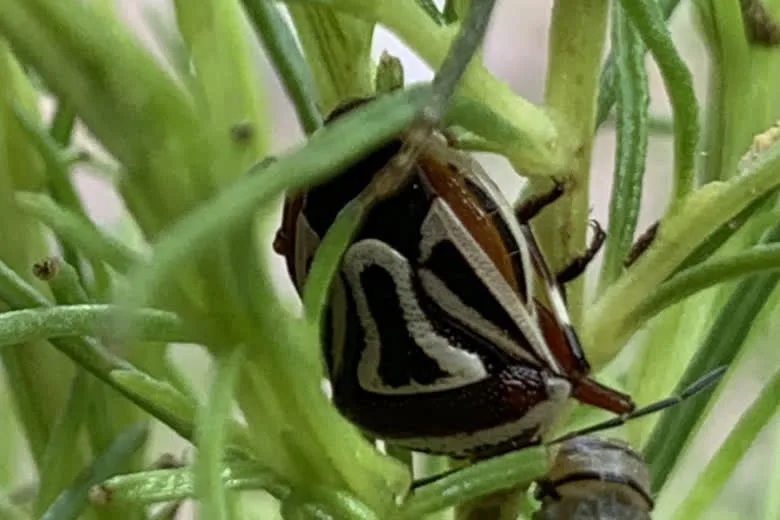
The color is what gives it away. The back is glossy black with bold red, orange, or cream marks. On many bugs those marks form an anchor, a Y, or an upside-down heart. The legs and antennae have pale bands.
Behind the head is a plate called the pronotum. It carries two dark spots that look like a second pair of eyes. Those spots give the bug its name. The species name bioculatus means two-eyed.
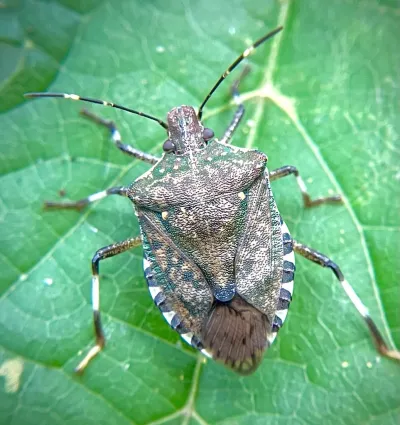
Color varies a lot from bug to bug. Some are bright red and black. Some are orange and black. Some are a dull cream and black that blends in with dry plant stems. All of them have the same crisp, hard-edged pattern. That sharp pattern is the easiest way to tell this bug from the soft, mottled brown of the pest stink bugs.
Like all stink bugs, it has a beak instead of jaws. In this species the beak is short and stout. It is built to hold and drain insect prey, not to tap plant sap.
Common Species
Perillus bioculatus is the most widespread member of its genus in North America. It belongs to a larger group of stink bugs that hunt other insects:
- Perillus bioculatus (two-spotted stink bug): black with red, orange, or cream marks. The one you are most likely to see in potato rows and vegetable gardens.
- Perillus exaptus: a close western relative with the same habits and a plainer pattern.
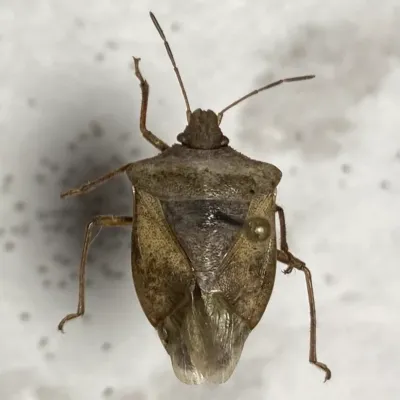
- Podisus maculiventris (spined soldier bug): a dull brown hunter with sharp shoulder spines. Our soldier bug page has a full comparison.
Bright colors do not always mean a hunter. The harlequin bug is also black with red or orange marks, but it feeds on plants and damages cabbage and kale. Its marks are rounder and more scattered. You find it chewing on leaves, not gripping a beetle grub.
Two-Spotted Stink Bug Behavior and Biology
Habitat
You find two-spotted stink bugs wherever their prey lives. Look in potato and eggplant rows, vegetable gardens, weedy field edges, hedgerows, and roadside patches of nightshade. They live across most of the United States. They also range into southern Canada from British Columbia to Quebec and south into Mexico.
These are outdoor bugs and they stay outdoors. That is a big difference from the brown marmorated stink bug, which packs into walls and attics each fall.
Diet
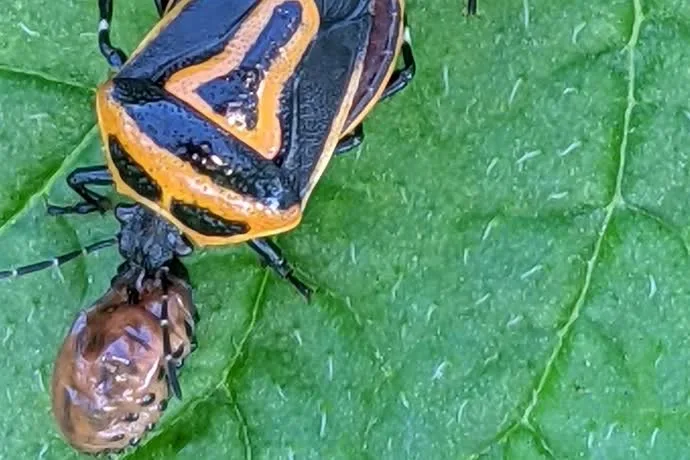
This bug hunts. Its main prey is the Colorado potato beetle, and it eats both the egg clusters and the soft orange larvae. It also takes other leaf beetle larvae and caterpillars when potato beetles are scarce.
A feeding bug grips its prey, slides its beak in, and drains the body. If you see a stink bug latched onto a beetle grub, you are looking at a hunter, not a plant pest. Two-spotted stink bugs do not pierce fruit. They do not scar tomatoes. They do not leave the dimples that plant-feeding green stink bugs cause.
Life Cycle
Females lay eggs in neat clusters on leaves and stems, usually near a supply of prey. The eggs hatch into nymphs. Nymphs pass through five growth stages before they become adults. They are wingless, rounder, and often more boldly marked than adults, and they start hunting early.
Adults spend the winter in a resting state. They tuck under leaf litter, loose bark, or thick ground cover. They come out in spring once it warms up and prey shows up. Northern bugs go through one generation a year. In the South and in Mexico, the longer season allows two or more.
Defensive Behavior
Two-spotted stink bugs give off the same bad smell other stink bugs are named for. The bright red-and-black pattern is a warning. It tells birds that this insect tastes bad. The bug may jab a person who picks it up, but it is not aggressive and it does not seek people out.
How We Treat for Two-Spotted Stink Bugs
We do not treat for two-spotted stink bugs. They do not damage homes, and they do not feed on plants. They are also hard to find in numbers, since they live outdoors and follow their prey. There is no pest problem here to solve.
If you find one indoors, cover it with a cup, slide a piece of paper underneath, and put it back outside. Do not crush it. Crushing releases the odor and can stain surfaces. A vacuum works too, as long as you use a bag or canister you can empty right away.
If you garden, spot-treat the plants that actually have a problem instead of spraying the whole yard. Broad-spectrum products kill hunting insects along with the target pest.
If your stink bugs are a pest species, that is a different job. Brown marmorated stink bugs and other fall invaders gather on sunny walls in autumn. They then push into attics, wall voids, and window frames by the dozen. Our pest control plan covers those. We inspect to find the entry points, treat the exterior walls and voids where the bugs gather before they move in, and give you a list of gaps to seal around windows, doors, utility lines, and attic vents. Our plans are recurring and include unlimited free callbacks between scheduled visits. If you are not sure which bug you have, send us a photo before anyone sprays.
References
- Twospotted Stink Bug - University of California Statewide Pest Management Program
- Two-Spotted Stink Bug - NC State Extension Biological Control Information Center
- Colorado Potato Beetle - Penn State Extension
- Common Stink Bugs of the Mid-Atlantic - University of Maryland Extension
- Look-Alike Insects - StopBMSB.org
Other Stink Bugs
Explore other species in the stink bugs family
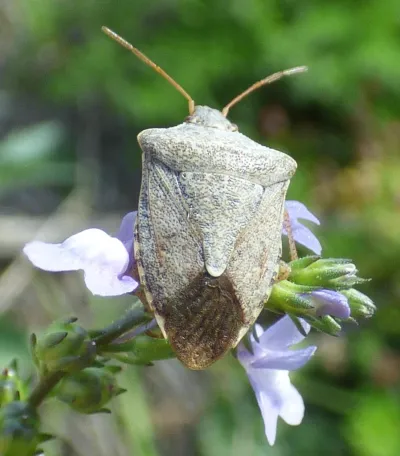
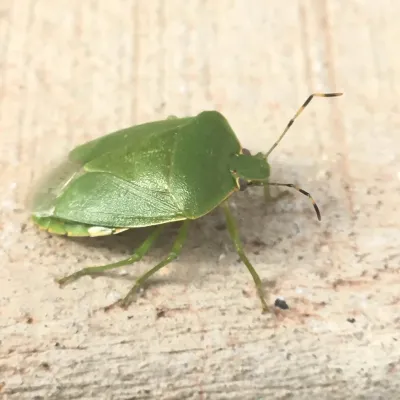
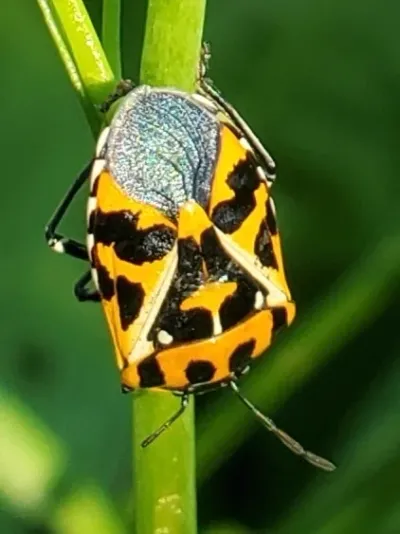
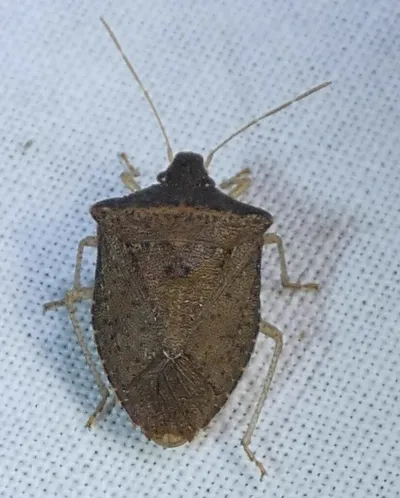
Commonly Confused With
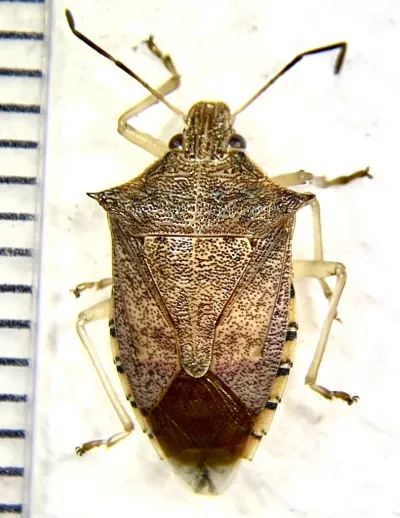
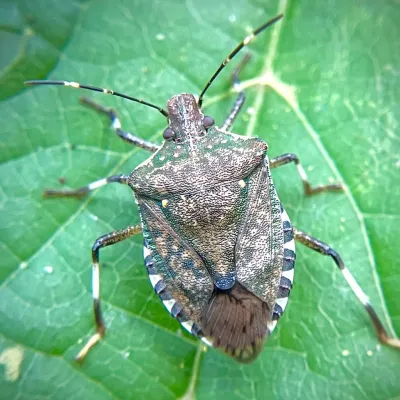
Two-Spotted Stink Bug are often mistaken for these similar pests
Where Two-Spotted Stink Bug Are Found
Hover over states to see their names. Green regions indicate where two-spotted stink bug have been reported.
Common Questions about Two-Spotted Stink Bug
What is a two-spotted stink bug?
+
The two-spotted stink bug (Perillus bioculatus) is a native North American stink bug that hunts other insects instead of feeding on plants. It belongs to the predatory stink bug group, Asopinae, and is best known for eating Colorado potato beetle eggs and larvae.
Is the two-spotted stink bug a pest?
+
It is not a structural or plant pest. It does not damage homes, and it does not feed on plants or crops. It hunts leaf-eating beetles in gardens and potato fields, so it is usually left alone rather than treated.
How do I tell a two-spotted stink bug from a brown marmorated stink bug?
+
Color is the quickest clue. The two-spotted stink bug is glossy black with bold red, orange, or cream markings that often form an anchor or Y shape on its back. The brown marmorated stink bug is a dull marbled brown with white bands on its antennae, and it is noticeably larger.
Do two-spotted stink bugs bite people?
+
Bites are very rare. This insect uses its beak to pierce soft-bodied insect prey, not people. A handled bug may jab in self-defense, which feels like a brief pinprick, but it does not feed on blood and does not carry disease.
Why is it called the two-spotted stink bug?
+
The name comes from a pair of dark spots on the shield-shaped plate behind its head, which look a little like two eyes. The scientific name bioculatus means two-eyed, and the insect is sometimes called the double-eyed soldier bug for the same reason.
What do two-spotted stink bugs eat?
+
They feed almost entirely on other insects, especially the eggs and larvae of leaf beetles such as the Colorado potato beetle. They also take caterpillars and other soft-bodied insects. Both the nymphs and the adults hunt.
Will two-spotted stink bugs come into my house?
+
Rarely. Unlike brown marmorated stink bugs, this species overwinters outdoors under leaf litter and loose bark rather than inside walls and attics. If one wanders in, you can scoop it up with a cup and a piece of paper and put it back outside.
Should I get rid of two-spotted stink bugs in my garden?
+
This species feeds on beetle larvae and causes no plant damage, so gardeners rarely target it. If you are treating a garden for other pests, spot-treat the affected plants instead of spraying everything. Broad-spectrum products kill hunting insects along with the target pest.

With five years of hands-on experience in the pest control industry, George Schulz is a registered technician with the Virginia Pest Management Association and a proud third-generation professional in a family business that's been protecting homes for over 58 years. He manages and trains a team of service pros while also leading internal research efforts—recently spearheading a deep-dive review of thousands of documents on pest control materials to hand-pick the most kid and pet friendly, most effective solutions tailored specifically for homes in the DC metro area.
Local Two-Spotted Stink Bug Help
Dealing with two-spotted stink bug at home? Our licensed technicians provide pest control across Northern Virginia and Maryland.
