Square-Necked Grain Beetle Identification Guide
Cathartus quadricollis
The square-necked grain beetle is a tiny reddish-brown beetle that mainly infests field and stored corn. It looks like a sawtoothed grain beetle without the saw teeth, and it only rarely turns up in a home pantry.
Taxonomy
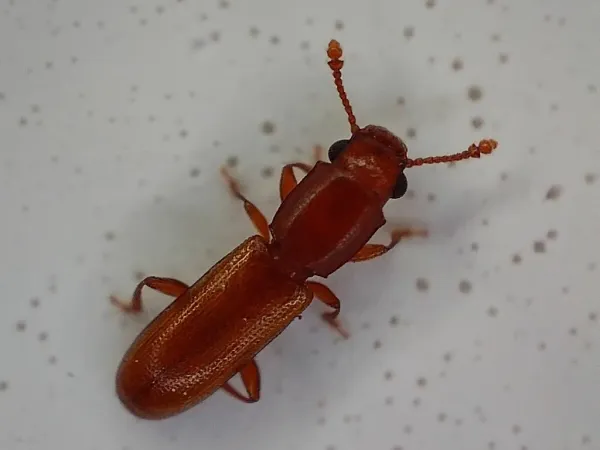
Square-Necked Grain Beetle Coloration
Common color patterns to help identify square-necked grain beetle
Square-Necked Grain Beetle
Seasonal Activity
When square-necked grain beetle are most active throughout the year
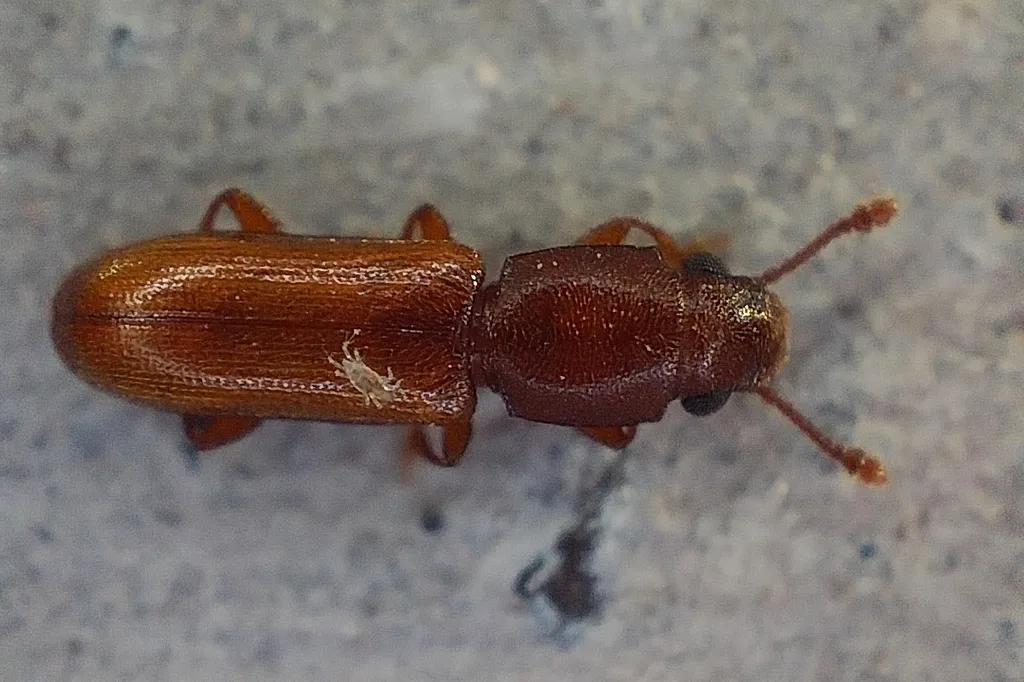
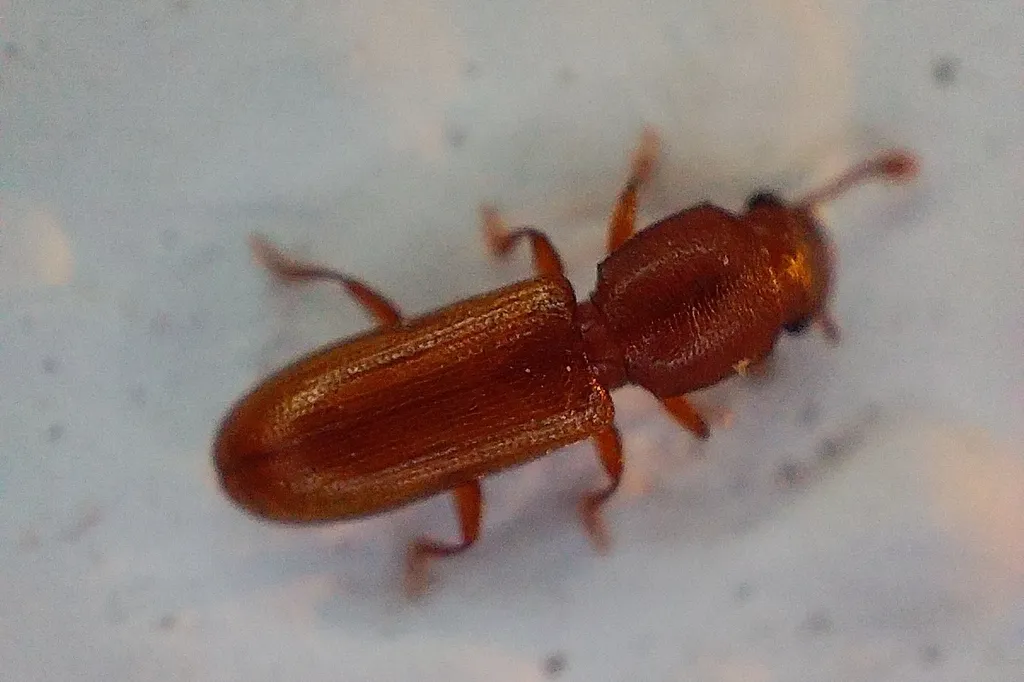

Where Square-Necked Grain Beetle Are Found
Hover over states to see their names. Green regions indicate where square-necked grain beetle have been reported.
Square-Necked Grain Beetle Identification Guide
The square-necked grain beetle (Cathartus quadricollis) is a small grain beetle that is mostly a farm and storage problem. It feeds on corn in the field and keeps going after harvest in cribs, bins, and feed storage. It is far less common in homes than its cousins. If you found a tiny reddish beetle in your kitchen, it is more likely a sawtoothed grain beetle or merchant grain beetle. This guide shows you how to tell them apart.
Physical Characteristics
- Size: About 2.5 to 3.5 mm long, roughly the size of a sesame seed. Adults raised on poor food can be smaller.
- Color: Shiny reddish-brown to brown.
- Shape: Long, slender, and flat, built for squeezing into cracks and between kernels.
- Thorax: The section behind the head is nearly square, with smooth sides. This “square neck” gives the beetle its name.
- Antennae: Long and beaded, ending in a small club.
- Wings: Hard, grooved wing covers protect a working pair of flying wings.
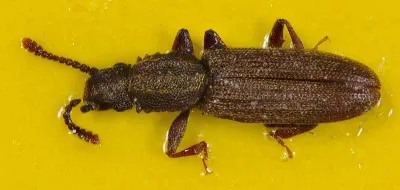
The one feature that matters most is the thorax. Sawtoothed and merchant grain beetles have six saw-like teeth on each side of the thorax. The square-necked grain beetle has none. The larvae of all of these beetles look almost the same, so use adults for ID.
Common Species
The square-necked grain beetle belongs to the family Silvanidae, the silvanid flat bark beetles. Its stored-product relatives in North America include:
- Sawtoothed grain beetle (Oryzaephilus surinamensis): the most common grain beetle in home pantries. Six teeth on each side of the thorax. Rarely flies.
- Merchant grain beetle (Oryzaephilus mercator): nearly identical to the sawtoothed beetle, with larger eyes. Common in nuts, cereals, and other oily foods.
- Foreign grain beetle (Ahasverus advena): a small brown beetle with a bump on each front corner of the thorax. Feeds on mold, so it shows up in damp spots and new homes.
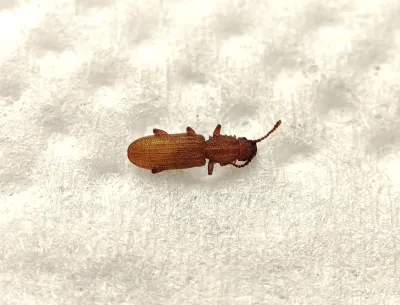
Two look-alikes from a different family, the flat bark beetles (Laemophloeidae), also turn up in stored grain. The flat grain beetle and the rusty grain beetle are even smaller, about 2 mm, with very long antennae. For an overview of the whole group, see our grain beetles guide.
Square-Necked Grain Beetle Behavior and Biology
Habitat
In nature, these beetles live under tree bark and in seed pods. On farms, they feed on corn both in the field and in storage. The University of Florida says they are mostly found in the southern United States. They are also a pest of stored corn and grain in the Midwest. Infestations often start in the field on ripening ears and then carry into storage, especially when the grain is damaged or a little damp.
The species likely came from South America and is now found around the world in warm regions. In Hawai’i, it lives in old coffee berries and macadamia nuts left on the tree.
How Often Homeowners See Them
Not often. Square-necked grain beetles are rarely reported from homes compared with sawtoothed, merchant, or flour beetles. When they do get indoors, the most likely sources are corn-based products that were stored on a farm or in a feed warehouse:
- Cracked corn and wildlife or deer corn
- Poultry and livestock feed
- Birdseed mixes that contain corn
- Dried decorative ears of corn and fall displays
- Bulk cornmeal or grits from small mills
Because the adults fly well, a few may also wander in from a nearby barn, feed room, or grain bin in rural areas.
Diet
Both larvae and adults prefer the germ, or embryo, of the grain kernel. They can also develop on the starchy part of the kernel alone. Their menu includes:
- Corn, sorghum, wheat, oats, and rice
- Nuts and oilseeds
- Dried fruit and seed pods, such as cotton bolls
- Fungi, pollen, and plant debris
They also eat other small insects. In Hawai’i, researchers raise them on cracked corn and release them on coffee farms to eat coffee berry borer, a serious coffee pest.
Life Cycle
The square-necked grain beetle goes through four stages: egg, larva, pupa, and adult.
- Eggs: Tiny, white, and oval, less than 1 mm long. In warm weather they can hatch in about 4 days.
- Larvae: Small, fast-moving, cream-colored grubs. They go through five growth stages and can grow as long as the adult.
- Pupae: Larvae build small cells from food bits and pupate inside. Pupae darken from white to tan to reddish-brown.
- Adults: On cut corn at about 82°F, development from egg to adult takes 18 to 20 days. Adults often live 6 to 8 months, and longer in cool climates.
Warm, humid storage speeds everything up. Cool, dry grain slows it down.
Treatment Methods for Square-Necked Grain Beetles
Square-necked grain beetles respond to the same steps that work on other pantry pests. The key is finding and removing the food they are breeding in.
- Find the source: Check corn products first: cracked corn, feed, birdseed, cornmeal, popcorn, and decorative corn. Then check other grains, nuts, and dried fruit. Look for live beetles, small grubs, and fine powder in the bottom of the bag.
- Throw out infested items: Seal them in a plastic bag and put them in an outdoor trash can. Do not keep infested feed or birdseed in a garage next to the house.
- Clean thoroughly: Vacuum shelves, corners, and cracks, then wash with soap and water. Empty the vacuum outside.
- Store food in sealed containers: Use glass, metal, or heavy plastic with tight lids. Keep bulk feed and birdseed in sealed bins away from the kitchen.
- Use cold: Freezing new or questionable dry goods for several days kills hidden eggs and larvae.
- Skip the bug spray: The University of California does not recommend insecticides for pantry pests. Sanitation and storage work better.
On farms and in feed stores, the fix is grain management: clean bins before harvest, dry and cool stored grain, and remove old or damaged grain. Large commercial infestations may need a licensed fumigation contractor.
If you keep finding small beetles after a cleanout and are not sure which species you have, a pest professional can identify them and look for a hidden source. Our team handles common pantry pests such as rice weevils and drugstore beetles in homes across Northern Virginia and suburban Maryland.
References
- University of Florida - Squarenecked Grain Beetle, Cathartus quadricollis
- University of Hawai’i CTAHR - An Introduction to the Square-Necked Grain Beetle as a Predator of Coffee Berry Borer in Hawai’i (IP-40)
- Purdue University Extension - Sawtoothed Grain Beetle (E-228)
- UC Agriculture and Natural Resources - Pantry Pests (Pest Notes)
- ITIS - Cathartus quadricollis Taxonomy
Other Pantry Pests
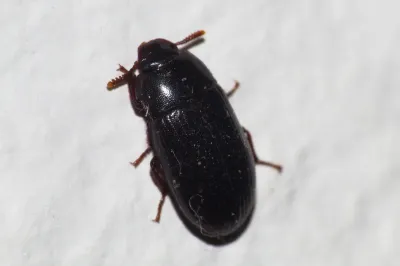
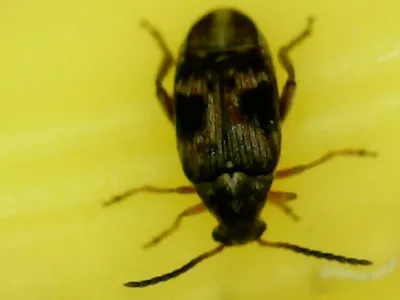
Explore other species in the pantry pests family
Commonly Confused With
Square-Necked Grain Beetle are often mistaken for these similar pests
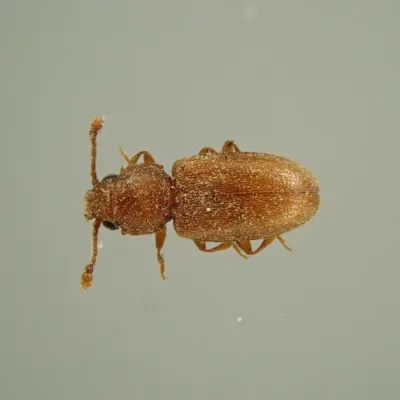
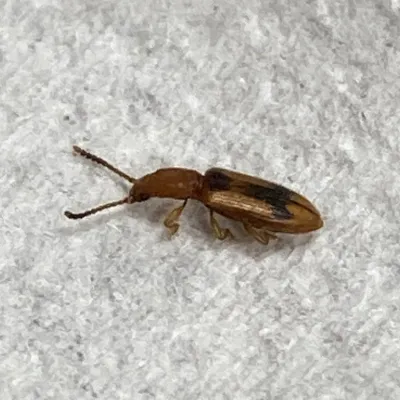
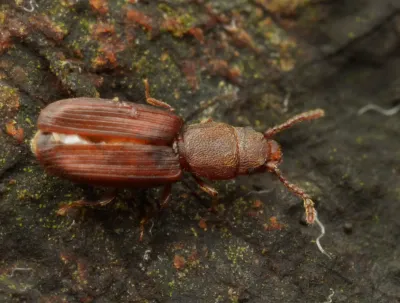
Where Square-Necked Grain Beetle Are Found
Hover over states to see their names. Green regions indicate where square-necked grain beetle have been reported.
Common Questions about Square-Necked Grain Beetle
What is a square-necked grain beetle?
+
It is a tiny reddish-brown beetle, about 2.5 to 3.5 mm long, in the same family as the sawtoothed and merchant grain beetles. Its name comes from its nearly square thorax. It is mainly a pest of corn in the field and in storage, especially in the southern United States and the Midwest.
How do I tell a square-necked grain beetle from a sawtoothed grain beetle?
+
Look at the edges of the thorax, the section just behind the head. A sawtoothed grain beetle has six tooth-like points on each side. A square-necked grain beetle has smooth sides and a boxy, nearly square thorax. You will usually need a magnifying glass to see the difference.
Are square-necked grain beetles common in homes?
+
No. Most homeowners will never see one. They live mainly in cornfields, corn cribs, grain bins, and feed storage. When one does show up indoors, it usually came in with corn-based products such as cracked corn, feed, birdseed, or dried decorative corn.
Do square-necked grain beetles bite or spread disease?
+
No. They do not bite, sting, or spread disease to people or pets. The problem is contamination. Beetles, larvae, and their waste make food unfit to eat.
Can square-necked grain beetles fly?
+
Yes. Unlike sawtoothed grain beetles, which rarely fly, square-necked grain beetles fly readily and can ride the wind to new food sources, according to the University of Hawai'i.
What do square-necked grain beetles eat?
+
They prefer the germ of corn and other grains but can also develop on the rest of the kernel. They also eat sorghum, wheat, oats, nuts, oilseeds, dried fruit, seed pods, fungi, and plant debris. They sometimes eat other small insects.
How do I get rid of square-necked grain beetles in my pantry?
+
Find the infested item, which is often something made from corn, and throw it out in a sealed bag. Vacuum the shelves and store dry goods in airtight containers. University extension guides do not recommend insecticides for pantry pests in the home.

With five years of hands-on experience in the pest control industry, George Schulz is a registered technician with the Virginia Pest Management Association and a proud third-generation professional in a family business that's been protecting homes for over 58 years. He manages and trains a team of service pros while also leading internal research efforts—recently spearheading a deep-dive review of thousands of documents on pest control materials to hand-pick the most kid and pet friendly, most effective solutions tailored specifically for homes in the DC metro area.
Local Square-Necked Grain Beetle Help
Dealing with square-necked grain beetle at home? Our licensed technicians provide pest control across Northern Virginia and Maryland.
