Dried Fruit Beetles Identification Guide
Carpophilus hemipterus
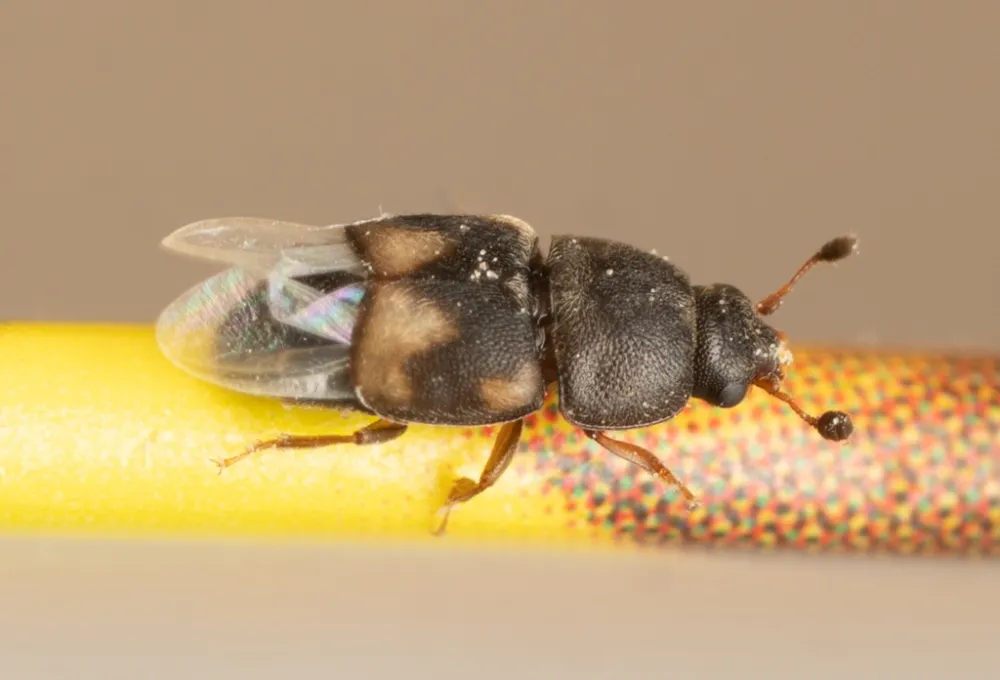
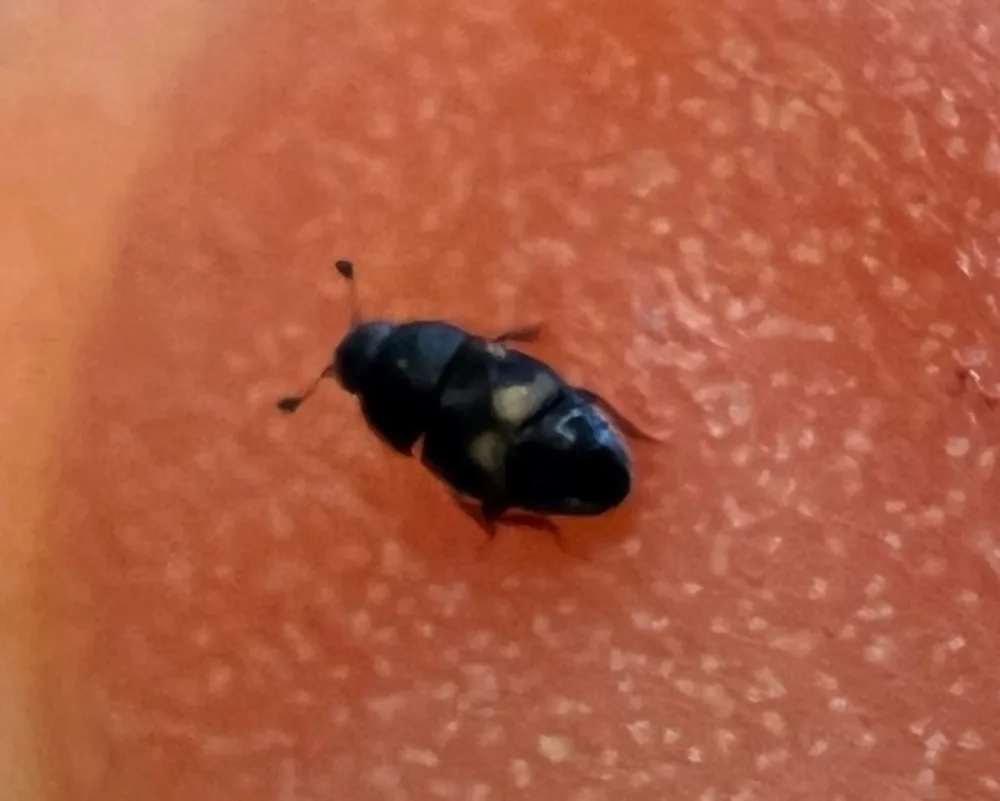
Dried fruit beetles are tiny black sap beetles with amber spots on the back. They infest raisins, figs, dates, and ripe fruit. Most ride into homes inside bags of dried fruit and nuts.
Taxonomy
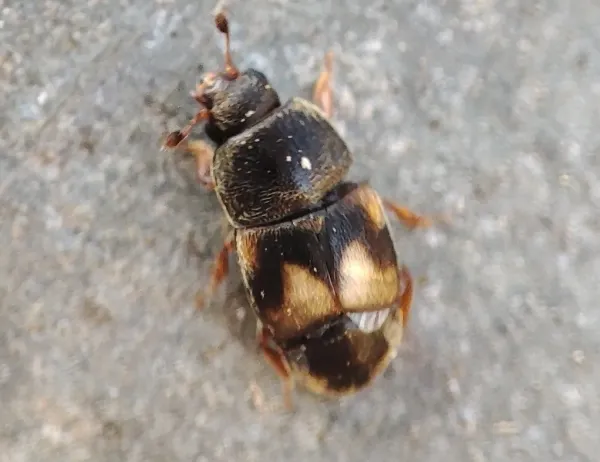
Dried Fruit Beetles Coloration
Common color patterns to help identify dried fruit beetles
Dried Fruit Beetles
Seasonal Activity
When dried fruit beetles are most active throughout the year
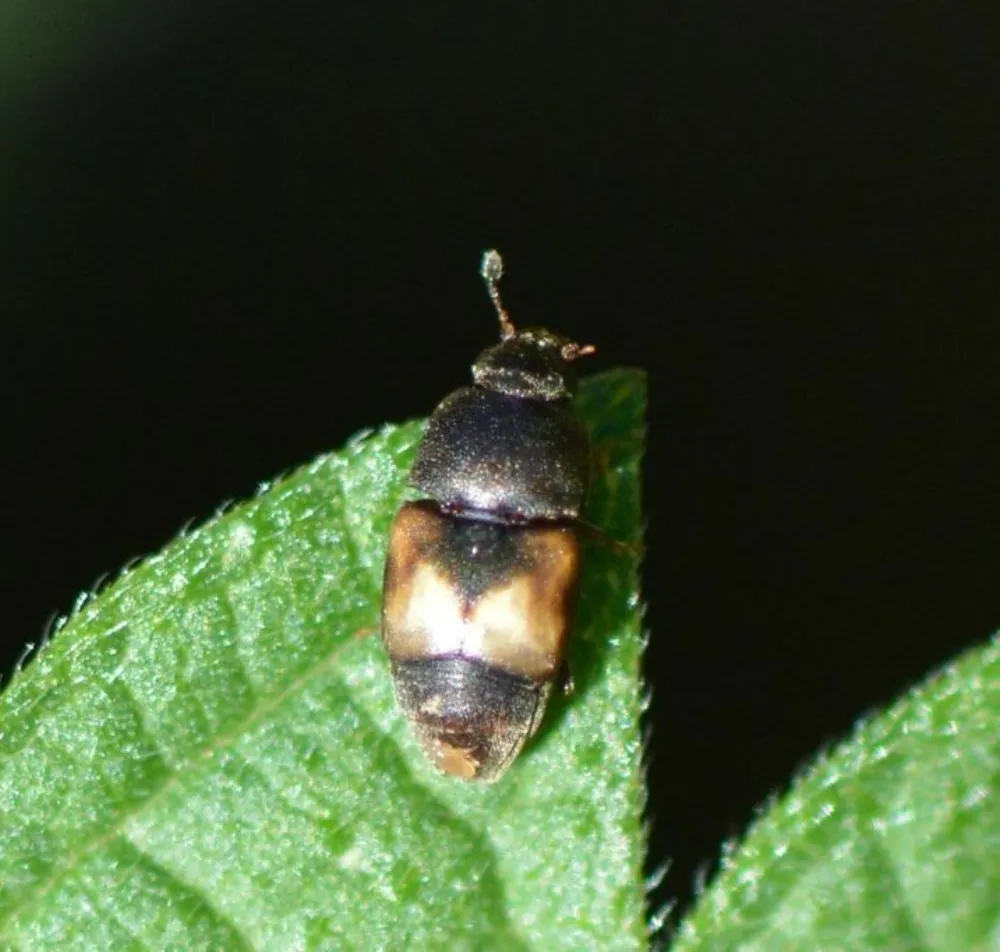
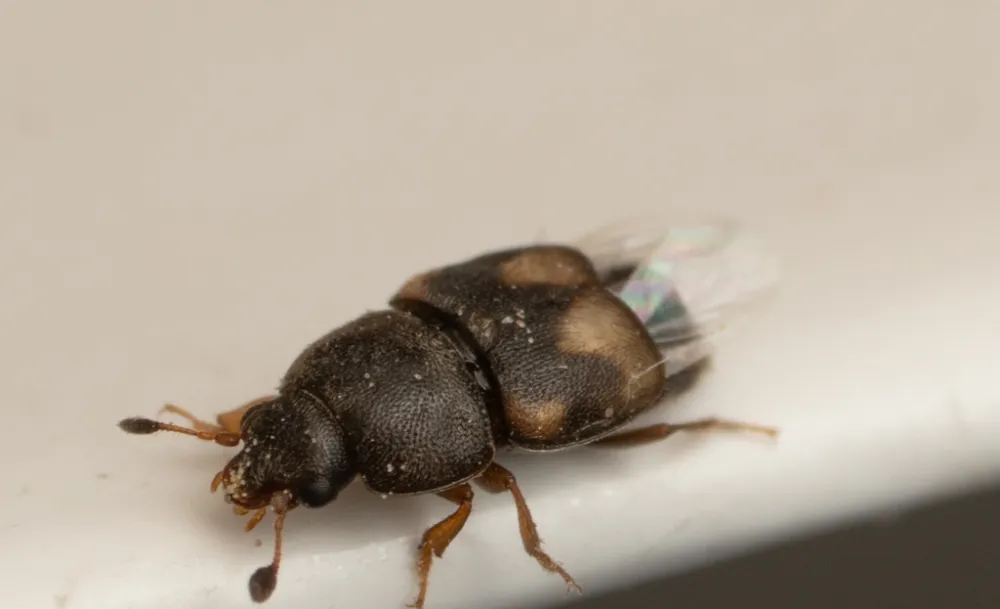

Where Dried Fruit Beetles Are Found
Hover over states to see their names. Green regions indicate where dried fruit beetles have been reported.
Dried Fruit Beetle Identification Guide
Physical Characteristics
The dried fruit beetle (Carpophilus hemipterus) is a tiny sap beetle. It turns up in raisins, figs, dates, prunes, and overripe fruit. Most people first see one crawling out of a bag of dried fruit or flying near a fruit bowl.
Key features of adults:
- Size: About 2 to 4 mm long, or roughly 1/8 inch.
- Shape: Oval and slightly flat, with a rounded thorax.
- Color: Black to very dark brown, with two amber patches on each wing cover. Sometimes the patches run together into one large spot.
- Short wing covers: The wing covers stop short. The last two or three parts of the abdomen stay bare. All sap beetles share this trait.
- Antennae: Short, with a round, three-part club at the tip.
- Wings: Adults have working flight wings under the wing covers and fly well.
Larvae are thin, white grubs up to about 1/4 inch long. They have a light brown head and three pairs of short legs. Two small horns stick out from the rear end. They wiggle fast and hide when disturbed.
Common Species
Several close cousins in the genus Carpophilus look and act much the same:
- Corn sap beetle (Carpophilus dimidiatus): Same size, but plain brown with no spots. It is often found in rice, bran, dried fruit, and moldy grain.
- Freeman sap beetle (Carpophilus freemani): Brown with fainter markings. A common orchard and dried fruit pest in California.
- Confused sap beetle (Carpophilus mutilatus): Dull brown, found in figs, dates, and stored fruit.
- Dusky sap beetle (Carpophilus lugubris): Dark and unspotted, mostly a pest of sweet corn in the field.
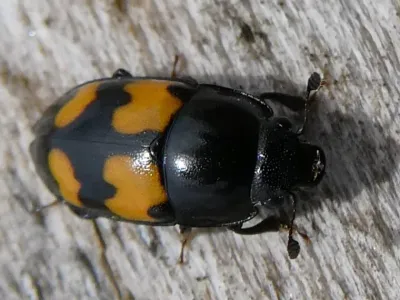
The larger, orange-spotted picnic beetles on our sap beetles page are in the same family. They mostly stay outdoors in gardens and at cookouts.
How to Tell Dried Fruit Beetles From Look-Alikes
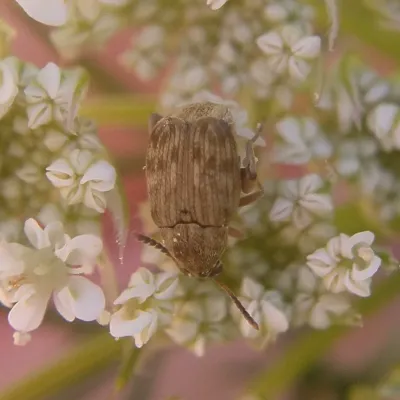
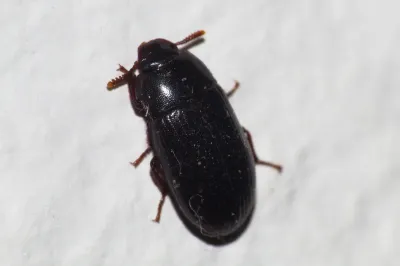
- Sap beetles (picnic beetles): Larger, at 1/4 inch or more, with bright orange or yellow spots. They gather on patios and in gardens, not inside pantry bags.
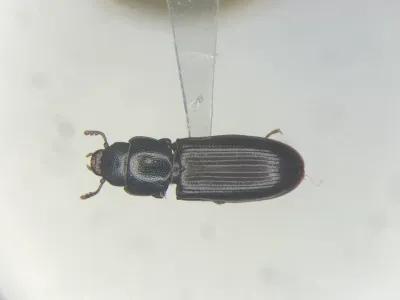
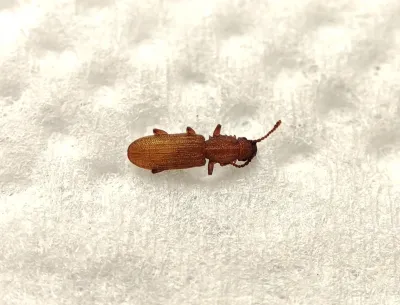
- Sawtoothed grain beetles: Thinner and reddish-brown, with six tooth-like points on each side of the thorax. Their wing covers reach the end of the body.
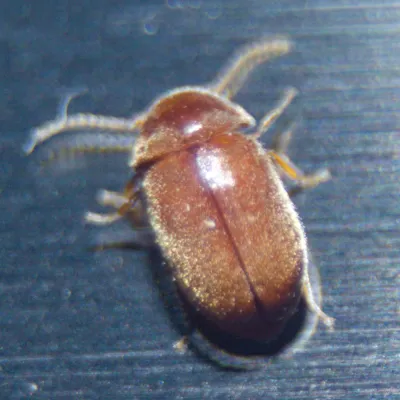
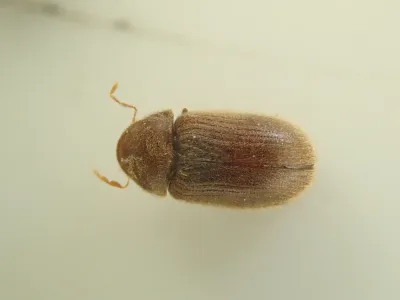
- Drugstore beetles and cigarette beetles: Reddish-brown and humped, with the head tucked under. They have no spots, and their wing covers reach the tip of the body.
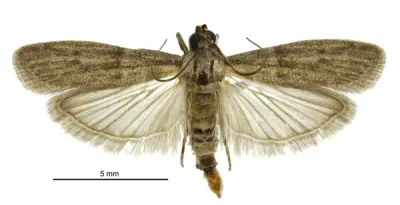
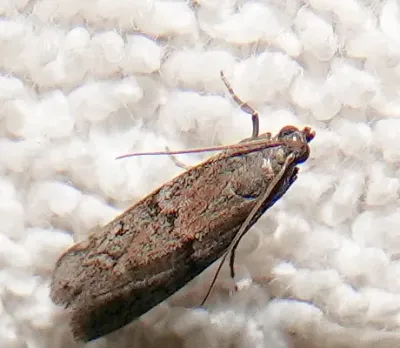
- Dried fruit moths and raisin moths: These caterpillars eat the same foods but leave silk webbing behind. Dried fruit beetle larvae leave no silk.
Dried Fruit Beetle Behavior and Biology
Habitat
Dried fruit beetles live around the world and across most of North America. They are most common in warm places with big fruit crops, such as California and the Southeast. In colder areas, they get through winter in heated buildings, warehouses, and stored food.
In and around homes, look for them in:
- Pantries with raisins, figs, dates, prunes, and dried apricots
- Nuts, trail mix, and baking supplies
- Fruit bowls, kitchen compost, and recycling with sweet residue
- Gardens and fruit trees with fallen, split, or rotting fruit
Diet
Adults and larvae eat ripe, overripe, and rotting fruit. They are a major pest for dried fruit growers and packers. Purdue University Extension notes they also eat stored corn, cornmeal, wheat, oats, rice, beans, nuts, spices, bread, sugar, and honey.
They like food that is damp, moldy, or already damaged. Adults follow the smell of rotting fruit and yeast. As they move from fruit to fruit, they spread yeast and germs that make fruit sour and rot.
Life Cycle
Dried fruit beetles have four life stages: egg, larva, pupa, and adult.
- Eggs are laid one at a time on ripe or rotting fruit. They hatch in 1 to 4 days.
- Larvae feed inside the fruit for about 4 to 14 days. They need damp air to grow well.
- Pupae form in the soil outdoors. In stored food, they pupate right inside the product.
- Adults emerge and start laying eggs within a few days.
In warm weather, the full cycle takes as little as 12 days. A female lays about 1,000 eggs in her life. Indoors, they can breed all year.
Seasonal Activity
Outdoors, numbers climb from midsummer into fall as fruit ripens and drops. That is when adults most often fly through open doors toward fruit on the counter. Indoors, a bad package can produce beetles in any month.
Treatment Methods for Dried Fruit Beetles
Dried fruit beetles do not damage your home. Control means finding the bad food, throwing it out, and keeping new food sealed and dry. These steps work well:
- Find the source: Check every bag of dried fruit, nuts, trail mix, and baking supplies. Look for live beetles, white larvae, a sour smell, or moldy, sticky fruit.
- Throw out infested food: Seal it in a plastic bag and take it to an outside trash can right away.
- Clean the pantry: Vacuum shelves, corners, and cracks. Wipe surfaces with soap and water. Empty the vacuum outside.
- Freeze what you keep: Freeze sealed dried fruit and nuts at 0°F for at least four days. This kills hidden eggs and larvae.
- Store food in sealed containers: Use glass jars or hard plastic tubs with tight lids. Thin bags and cardboard boxes do not stop beetles.
- Keep food dry: The larvae need moisture. Store food in a cool, dry spot. In humid weather, keep opened dried fruit in the fridge.
- Remove outdoor lures: Pick up fallen fruit. Keep compost covered and away from doors. Rinse cans and bottles before recycling.
- Use fruit traps: A cup with overripe fruit, water, and a little yeast draws adult beetles. Fruit growers use scent traps the same way.
- Professional help: For a stubborn problem, a pest control company starts with an inspection to find every source, including hidden spills and pet food. A technician may then treat cracks and shelf gaps with products labeled for food areas, and set traps to confirm the beetles are gone.
Most home cases do not need sprays. Once the source is gone, cleaning and sealed storage solve the problem. If you keep finding moths, weevils, or other beetles in your kitchen, see our pantry pest control page for help with ongoing pantry problems.
References
- Dried Fruit Beetle and Corn Sap Beetle (E-229) from Purdue University Extension
- Driedfruit Beetles in Figs from University of California Agriculture and Natural Resources
- Dried Fruit Beetle in Dates from University of California Agriculture and Natural Resources
- Sap Beetles from University of Florida IFAS Featured Creatures
- Sap Beetles in Home Gardens from University of Minnesota Extension
Other Pantry Pests
Explore other species in the pantry pests family
Commonly Confused With
Dried Fruit Beetles are often mistaken for these similar pests
Where Dried Fruit Beetles Are Found
Hover over states to see their names. Green regions indicate where dried fruit beetles have been reported.
Common Questions about Dried Fruit Beetles
What are the tiny black beetles in my raisins or dates?
+
Small black beetles with amber or tan spots on the back are most likely dried fruit beetles. They are about 1/8 inch long, and their short wing covers leave the tip of the abdomen showing. You may also find slender white larvae with a brown head inside the fruit. Throw out the package and check other dried fruit, nuts, and baking goods nearby.
Are dried fruit beetles harmful if I eat them?
+
Dried fruit beetles do not bite, sting, or spread disease to people. The bigger issue is that they carry yeast and germs that make fruit sour and moldy. Throw out any food with beetles, larvae, or a sour smell.
How did dried fruit beetles get into my pantry?
+
Most arrive inside bags of dried fruit, nuts, or trail mix that had beetles before you bought them. Adults can also fly in from outside in late summer. The smell of ripe fruit or kitchen compost draws them in.
What is the difference between a dried fruit beetle and a sap beetle?
+
The dried fruit beetle is a type of sap beetle. All sap beetles have short wing covers and clubbed antennae. The dried fruit beetle is tiny and has two amber patches on each wing cover. Larger picnic beetles have bright orange spots. They stay mostly outdoors near gardens and cookouts.
Can dried fruit beetles live in dry cereal or flour?
+
They can eat grain, cornmeal, bread, nuts, and spices. But they do best on food that is damp, moldy, or rotting. Their larvae need moisture to grow. Very dry foods more often host other pests, such as sawtoothed grain beetles or drugstore beetles.
Does freezing dried fruit kill dried fruit beetles?
+
Yes. Freezing sealed packages at 0°F for at least four days kills eggs, larvae, and adults. Freezing works well for dried fruit you want to keep. It is also a good step before storing bulk buys. After freezing, keep the food in a sealed glass or hard plastic container.
How long do dried fruit beetles live?
+
Adults can live for several months. Purdue University lab studies found males averaged about 146 days and females about 103 days. In that time a female can lay around 1,000 eggs. That is why one forgotten bag of figs can turn into a big problem.

With five years of hands-on experience in the pest control industry, George Schulz is a registered technician with the Virginia Pest Management Association and a proud third-generation professional in a family business that's been protecting homes for over 58 years. He manages and trains a team of service pros while also leading internal research efforts—recently spearheading a deep-dive review of thousands of documents on pest control materials to hand-pick the most kid and pet friendly, most effective solutions tailored specifically for homes in the DC metro area.
Local Dried Fruit Beetles Help
Dealing with dried fruit beetles at home? Our licensed technicians provide pest control across Northern Virginia and Maryland.
