Sap Beetles Identification Guide
Nitidulidae
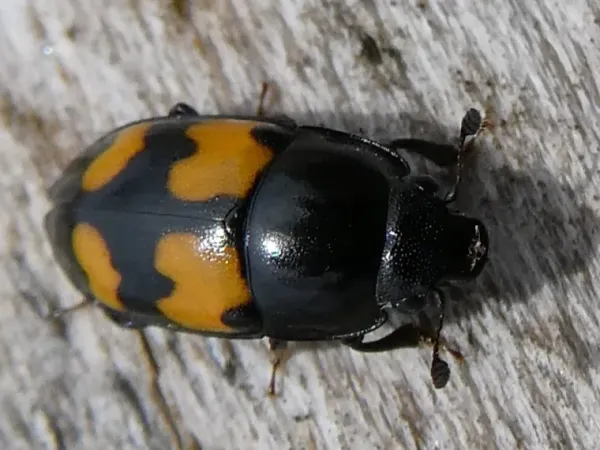
Sap beetles, often called picnic beetles, are small, dark, oval beetles drawn to overripe fruit, sweet corn, spilled drinks, and cookouts. Some have bright orange or yellow spots. They are a garden and patio nuisance, not a threat to your home.
Taxonomy
Sap Beetles Coloration
Common color patterns to help identify sap beetles
Sap Beetles
Seasonal Activity
When sap beetles are most active throughout the year

Where Sap Beetles Are Found
Hover over states to see their names. Green regions indicate where sap beetles have been reported.
Sap Beetle Identification Guide
Physical Characteristics
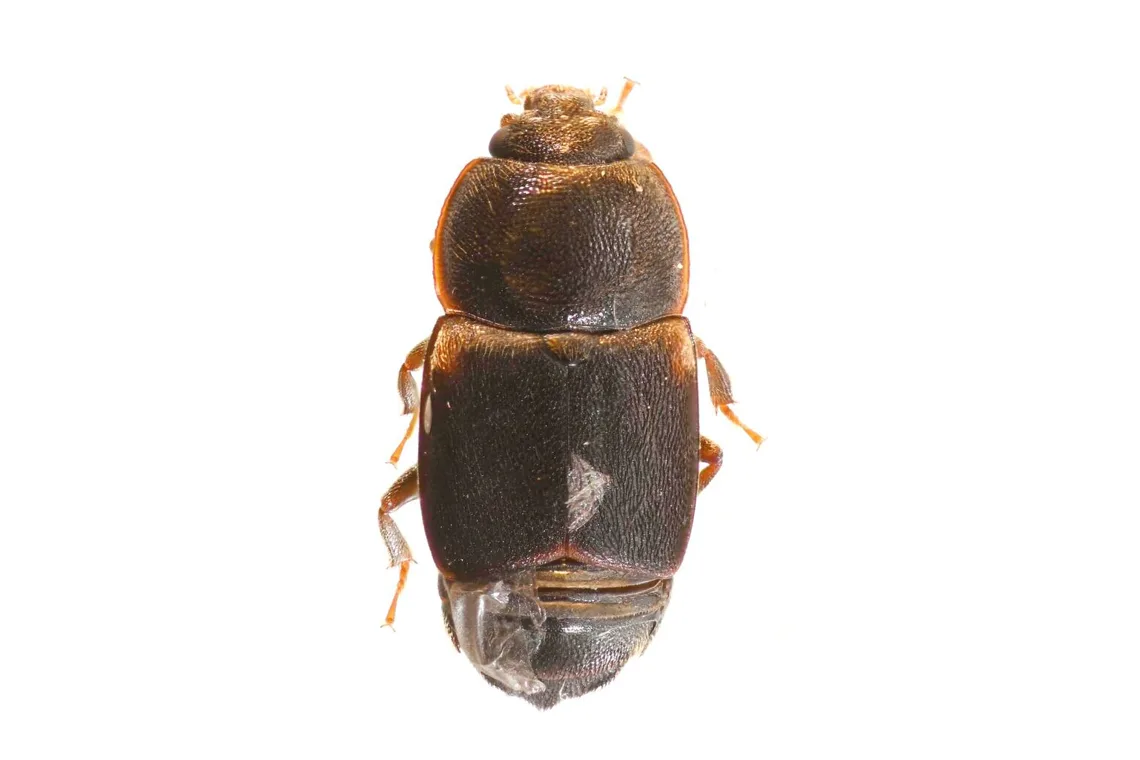
Sap beetles belong to the family Nitidulidae. North America has well over 100 species. Most are small, about 1/16 to 1/4 inch long (2 to 7 mm). Homeowners most often see the spotted “picnic beetles.” They also find plain, dark sap beetles in sweet corn and ripe fruit.
Look for these features:
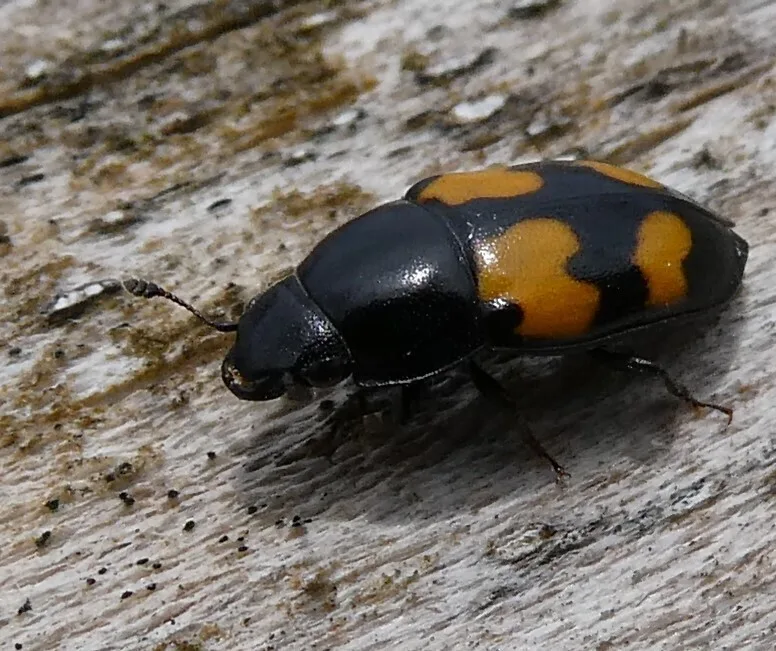
- Oval, slightly flat body. Most sap beetles are black or brown. Some have orange, yellow, or cream spots on the wing covers.
- Clubbed antennae. Each antenna ends in a small round knob. All sap beetles have it. It is the best quick check with a hand lens.
- Short wing covers on many species. In the dusky sap beetle and its relatives, the wing covers stop short. One or two abdominal segments stick out at the rear.
- Where you find them. Clusters of small dark beetles in bruised fruit, corn ears, or open drinks are a strong clue.
Picnic Beetles
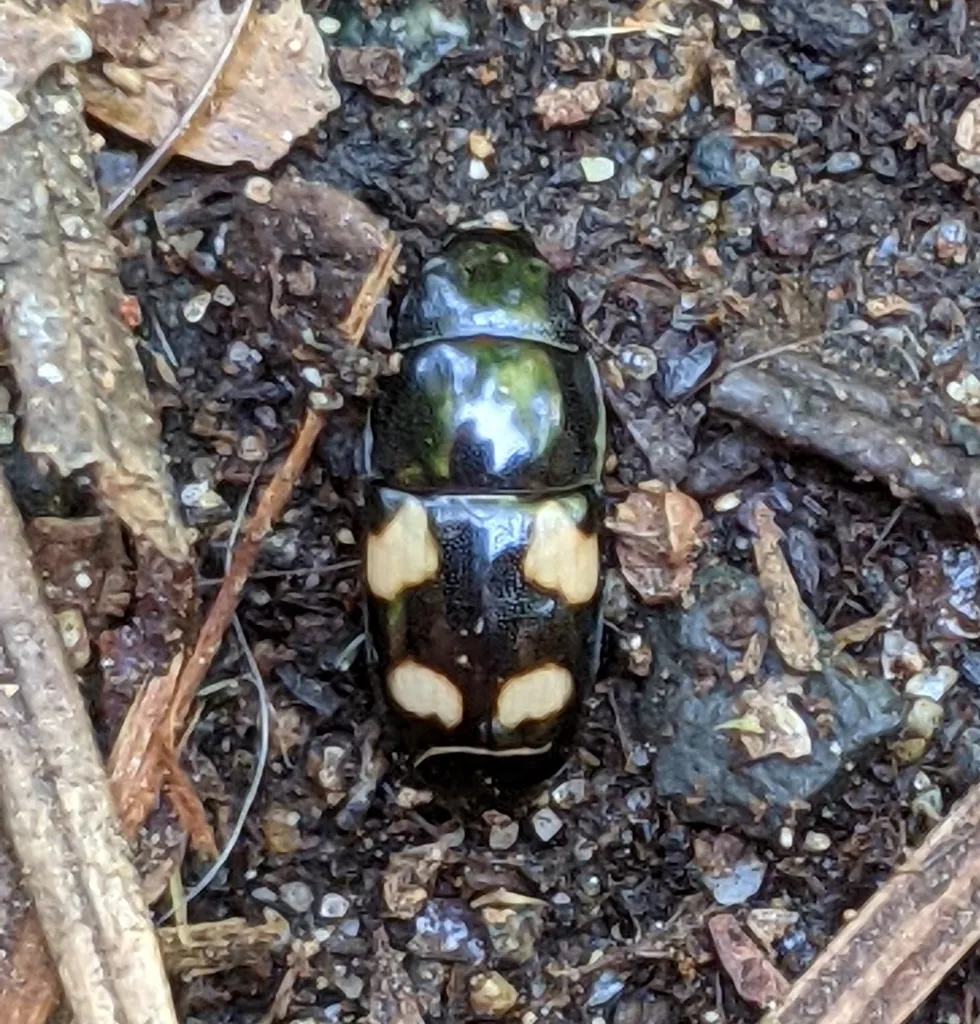
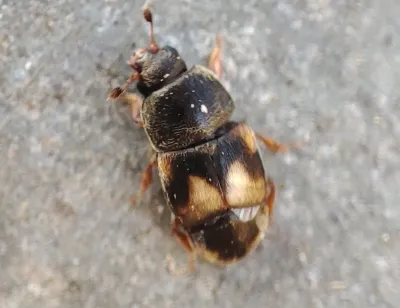
“Picnic beetle” is the common name for sap beetles in the genus Glischrochilus. They are the largest and most colorful sap beetles, about 1/6 to 1/4 inch long (4 to 7 mm). They are shiny black with four orange to yellow spots or jagged bands across the back. Some people call them “beer bugs” because they crawl into open cans and cups.
- Four-spotted sap beetle (Glischrochilus quadrisignatus): Black with four small, pale yellow to orange spots. It is the most common picnic beetle in gardens and sweet corn across much of the U.S. and southern Canada.
- Picnic beetle (Glischrochilus fasciatus): Black with four larger, jagged orange-red markings that can look like two broken bands. Common in the eastern half of North America.
- Red-spotted sap beetle (Glischrochilus sanguinolentus): Black with red-orange patches near the shoulders and rear. Often found on sap flows and fungi in woods.
Picnic beetles fly in from nearby woods and gardens, mostly in mid to late summer and early fall. Fermenting smells from fruit salad, melon rinds, beer, and soda pull them to patios. They do not sting, but they are a real nuisance at outdoor meals.
Dusky Sap Beetle
The dusky sap beetle (Carpophilus lugubris) is small and plain, about 1/8 to 3/16 inch long (2.8 to 4.5 mm). It is dull black to brown-black with no bright spots. Its short wing covers leave two abdominal segments bare, and you may see faint brown “shoulders” at the front of the wing covers. Some newer catalogs place it in the genus Caplothorax.
This is one of the most common sap beetles in sweet corn. Adults eat pollen when the corn tassels. Then they lay eggs in the silks and at the ear tip. The larvae burrow into the kernels and can ruin the ear. Early sweet corn with loose tip cover is hit hardest. It also feeds on ripe strawberries, raspberries, melons, and tomatoes.
Other Common Species
- Strawberry sap beetle (Stelidota geminata): Tiny, under 1/8 inch, mottled light brown. The most common sap beetle in strawberry patches.
- Corn sap beetle (Carpophilus dimidiatus): Small and brown, often in damaged corn and stored grain.
- Dried fruit beetle (Carpophilus hemipterus): Dark brown with amber patches on the wing covers. It infests ripe and dried fruit, including stored raisins and figs.
How to Tell Sap Beetles From Look-Alikes
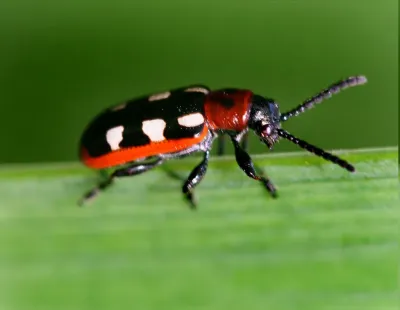
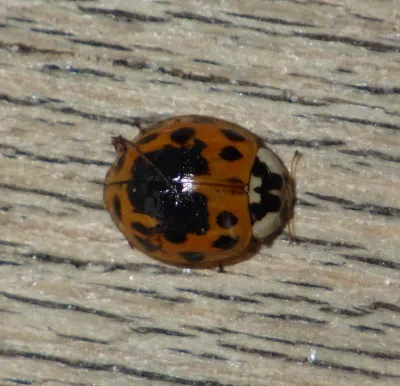
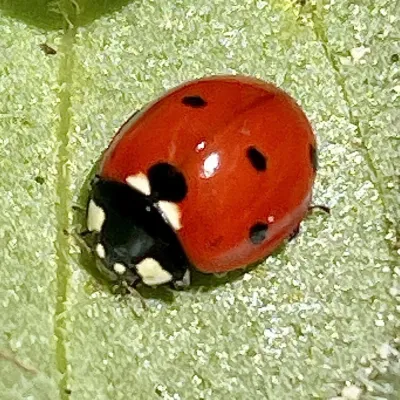
- Asian lady beetles and seven-spotted lady beetles: Lady beetles are round and dome-shaped, usually orange or red with black spots. Picnic beetles are flatter, longer, and black with orange spots, the reverse color pattern.
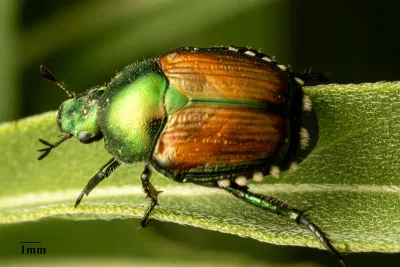
- Japanese beetles: Much bigger (about 1/2 inch) and metallic green with copper wing covers. They chew leaves into lace. Sap beetles feed on ripe fruit, not leaves.
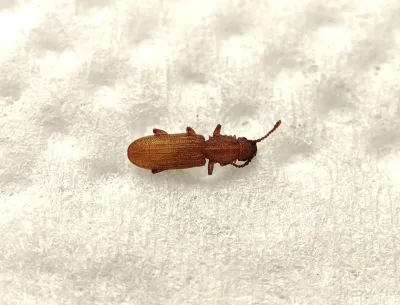
- Sawtoothed grain beetles: Slim, brown pantry beetles with six tooth-like points on each side of the thorax. They live in dry foods like cereal and flour, not fresh fruit.
- Fruit flies: Often found on the same rotting fruit. Their larvae are legless maggots with no clear head. Sap beetle larvae are cream-colored grubs with a brown head and three pairs of short legs.
Sap Beetle Behavior and Biology
Habitat
Sap beetles live wherever sweet, fermenting food is easy to find:
- Vegetable gardens and berry patches, especially sweet corn, tomatoes, melons, and strawberries
- Orchards with dropped fruit, compost piles, and trash cans
- Tree wounds that ooze sap, and fungi on logs
- Patios, picnic areas, and farm stands with open food and drinks
Adults spend the winter in leaf litter, soil, and wooded edges near past feeding sites. They become active again in spring.
Diet
Adults and larvae feed on ripe, damaged, or decaying fruit and vegetables. Adults also eat pollen and tree sap. Most sap beetles move into produce already wounded by birds, caterpillars, or cracking. The dusky sap beetle also attacks sound sweet corn ears and ripe berries.
Life Cycle
Sap beetles go through complete metamorphosis: egg, larva, pupa, and adult.
- Eggs are tiny, milky white, and look like grains of rice. Females lay them in or near ripe or rotting produce and corn silks.
- Larvae are pinkish-white to cream grubs, up to about 1/4 inch long. They tunnel into fruit or kernels to feed.
- Pupae form in the soil after full-grown larvae drop from the food source.
- Adults emerge and look for more ripe food.
In warm weather, the cycle can finish in about a month. There are several generations a year in most of the U.S., with the biggest numbers in July through September. Males of some species release a scent that draws other beetles, which is why they show up in groups.
Oak Wilt Concern
Sap beetles are drawn to fresh wounds on trees. Some species can carry the fungus that causes oak wilt, a disease that kills oaks. They pick up spores on sick trees and carry them to fresh cuts on healthy ones. To lower the risk, many experts say not to prune oaks from spring through early summer. If you must cut, cover the wound right away.
How to Control Sap Beetles
Sap beetles do not damage homes or structures. Control focuses on removing the ripe and rotting food that draws them in. These methods work well for gardens, patios, and outdoor events:
- Harvest promptly: Pick tomatoes, berries, melons, and sweet corn as soon as they ripen. Overripe produce is the main attraction.
- Clean up damaged produce: Remove fallen fruit, cracked tomatoes, and bird-pecked berries every few days. Bag them for the trash, or bury them deeply instead of leaving them on the ground.
- Manage compost and trash: Keep compost covered and away from the patio. Use tight-lidded trash cans and rinse drink cans before recycling.
- Use bait traps: A container with overripe fruit, or a mix of water, molasses, and a little yeast, draws beetles away from crops. Set traps at the edge of the yard, not next to the plants or picnic table you want to protect. Empty and refresh them weekly.
- Protect outdoor meals: Cover food and drinks, serve fruit last, and use cups with lids. Clear spills and rinds quickly.
- Choose better corn varieties: Sweet corn with tight husks over the ear tip gets less damage.
- Indoor tips: Check produce before bringing it in, refrigerate ripe fruit, and take out kitchen compost often.
Insecticides do not work well on sap beetles. New beetles keep flying in, and many products cannot be used close to harvest. If you use a product on food plants, pick one labeled for that crop. Follow the label, including the wait time before harvest.
If yellowjackets are also crashing your cookouts, our yellowjacket nest removal page covers how to deal with ground and wall nests near the patio.
References
- Sap Beetles from UMass Amherst Extension Vegetable Program
- Sap Beetles in Home Gardens from University of Minnesota Extension
- Sap Beetles from Utah State University Extension
- Sap Beetle Management in Sweet Corn from Penn State Extension
- Family Nitidulidae from NC State University General Entomology
- Insect and Related Pests of Vegetables: Sweet Corn from NC State Extension
- Oak Wilt in Minnesota from University of Minnesota Extension
Other Garden Pests
Explore other species in the garden pests family
Commonly Confused With
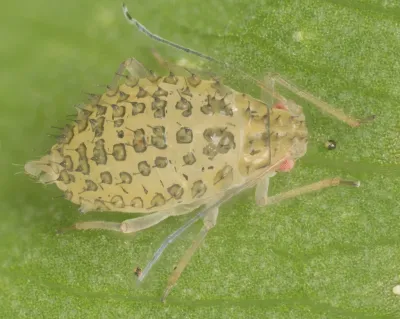
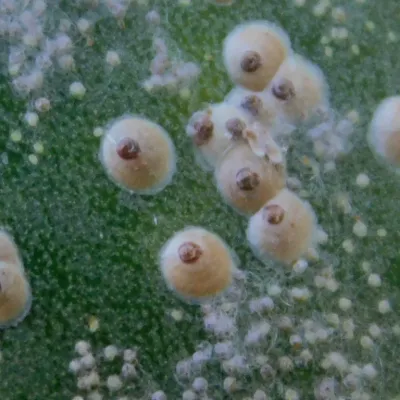
Sap Beetles are often mistaken for these similar pests
Where Sap Beetles Are Found
Hover over states to see their names. Green regions indicate where sap beetles have been reported.
Common Questions about Sap Beetles
What are the small black beetles with orange spots at my cookout?
+
They are most likely picnic beetles, a type of sap beetle in the genus Glischrochilus. They are about 1/4 inch long, shiny black, and have four orange or yellow spots on their back. They fly in from nearby woods and gardens when they smell fermenting fruit, beer, soda, or other sweet food.
Do picnic beetles bite or sting?
+
Picnic beetles do not sting and are not known to spread disease to people. They may give a light pinch if one gets trapped against your skin, but they are mostly a nuisance. The real problem is that they crawl into open drinks, fruit bowls, and food at outdoor gatherings.
Why are there beetles in my tomatoes and sweet corn?
+
Sap beetles are drawn to fruit and vegetables that are ripe, split, or already damaged. They crawl into cracked tomatoes, bird-pecked berries, and the tips of sweet corn ears. Their small, cream-colored larvae then feed inside. Picking produce as soon as it ripens and removing damaged pieces is the best way to stop them.
What is a dusky sap beetle?
+
The dusky sap beetle (Carpophilus lugubris) is a small, dull black-brown sap beetle about 1/8 inch long. Its wing covers are short, so the tip of the abdomen shows. It is one of the most common sap beetles in sweet corn, where it lays eggs in the silks and its larvae hollow out kernels near the ear tip.
Can sap beetles get inside my house?
+
Sometimes. They usually ride in on garden produce or fly through open doors toward ripe fruit on the counter. They cannot breed well indoors unless they find rotting fruit or vegetables. Check produce before you bring it in, keep ripe fruit in the refrigerator, and take out trash and compost often.
Do sap beetles harm trees?
+
Sap beetles feed on sap oozing from tree wounds. Some species can carry the fungus that causes oak wilt from sick oaks to fresh wounds on healthy oaks. That is why tree experts advise against pruning oaks in spring and early summer when the beetles are active.
What is the best way to get rid of sap beetles?
+
Sanitation works best. Pick ripe fruit and vegetables promptly, clean up fallen or damaged produce, and keep compost covered. Bait traps with overripe fruit or a molasses-and-yeast mix can pull beetles away from gardens and patios. Sprays work poorly because new beetles keep flying in from outside.

With five years of hands-on experience in the pest control industry, George Schulz is a registered technician with the Virginia Pest Management Association and a proud third-generation professional in a family business that's been protecting homes for over 58 years. He manages and trains a team of service pros while also leading internal research efforts—recently spearheading a deep-dive review of thousands of documents on pest control materials to hand-pick the most kid and pet friendly, most effective solutions tailored specifically for homes in the DC metro area.
Local Garden Pests Help
Dealing with garden pests at home? Our licensed technicians provide pest control across Northern Virginia and Maryland.