Desert Scorpion Identification Guide
Hadrurus arizonensis
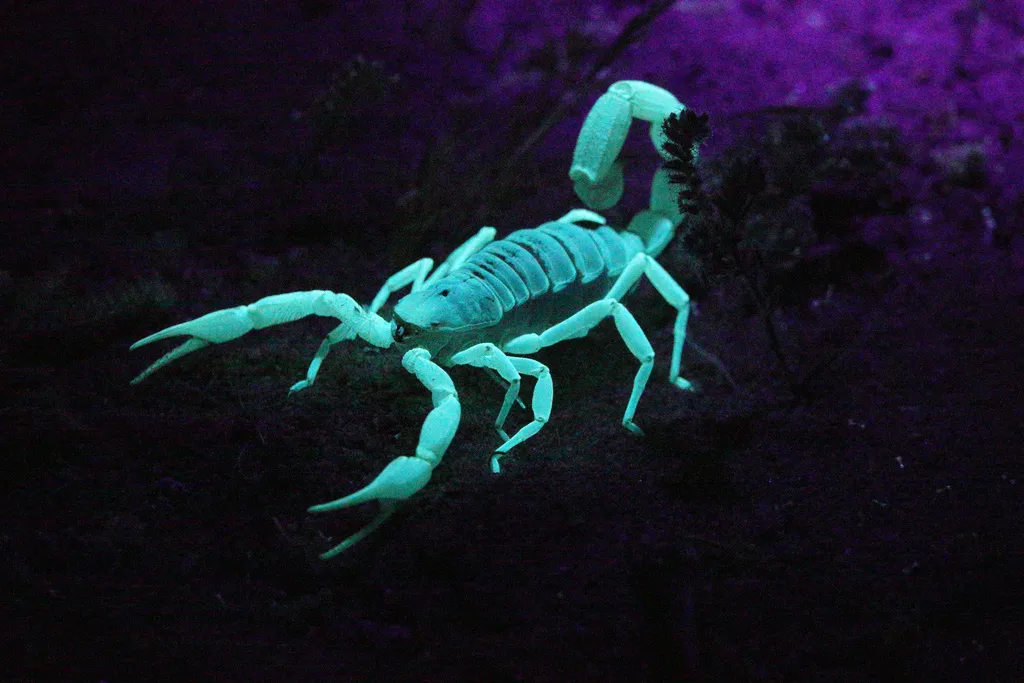
Desert scorpions are large, burrowing arachnids found throughout the arid Southwest. The giant desert hairy scorpion is the largest scorpion in North America, reaching over five inches in length.
Taxonomy
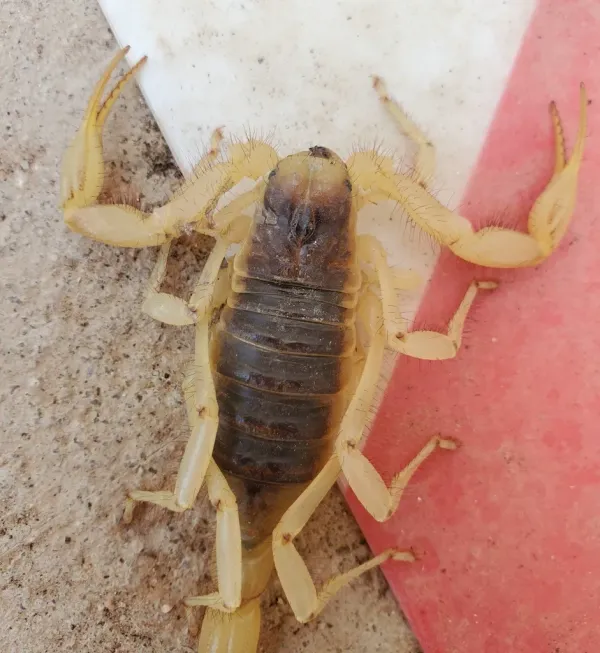
Desert Scorpion Coloration
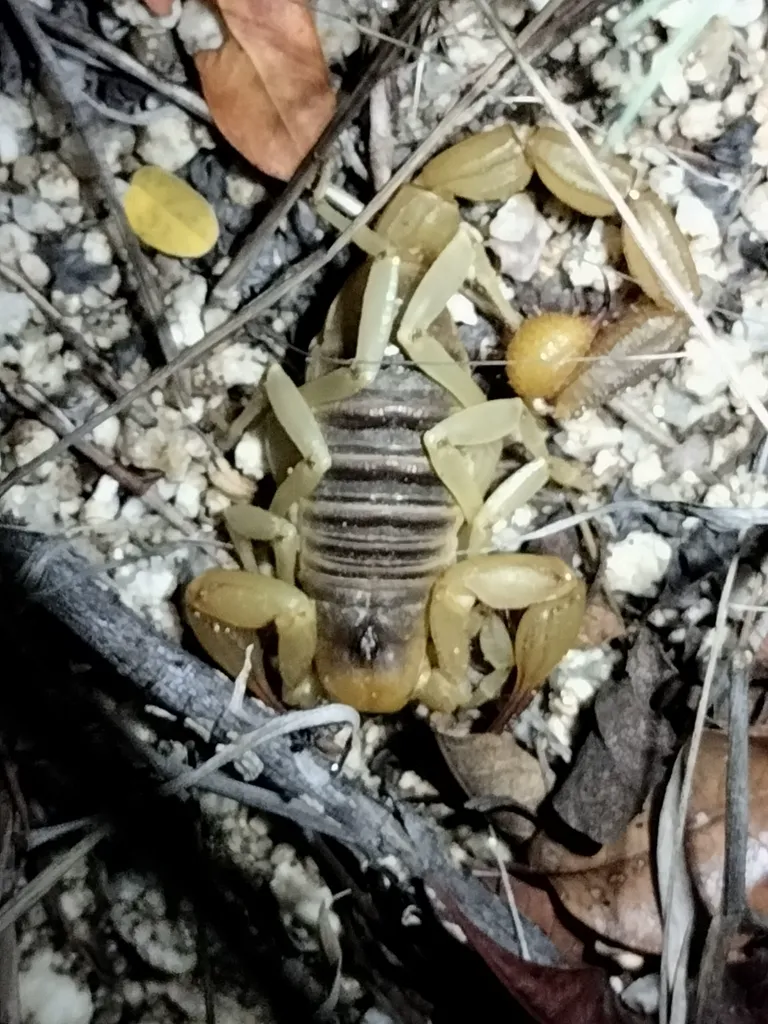
Common color patterns to help identify desert scorpion
Desert Scorpion
Seasonal Activity
When desert scorpion are most active throughout the year

Where Desert Scorpion Are Found
Hover over states to see their names. Green regions indicate where desert scorpion have been reported.
Desert Scorpion Identification Guide
Physical Characteristics
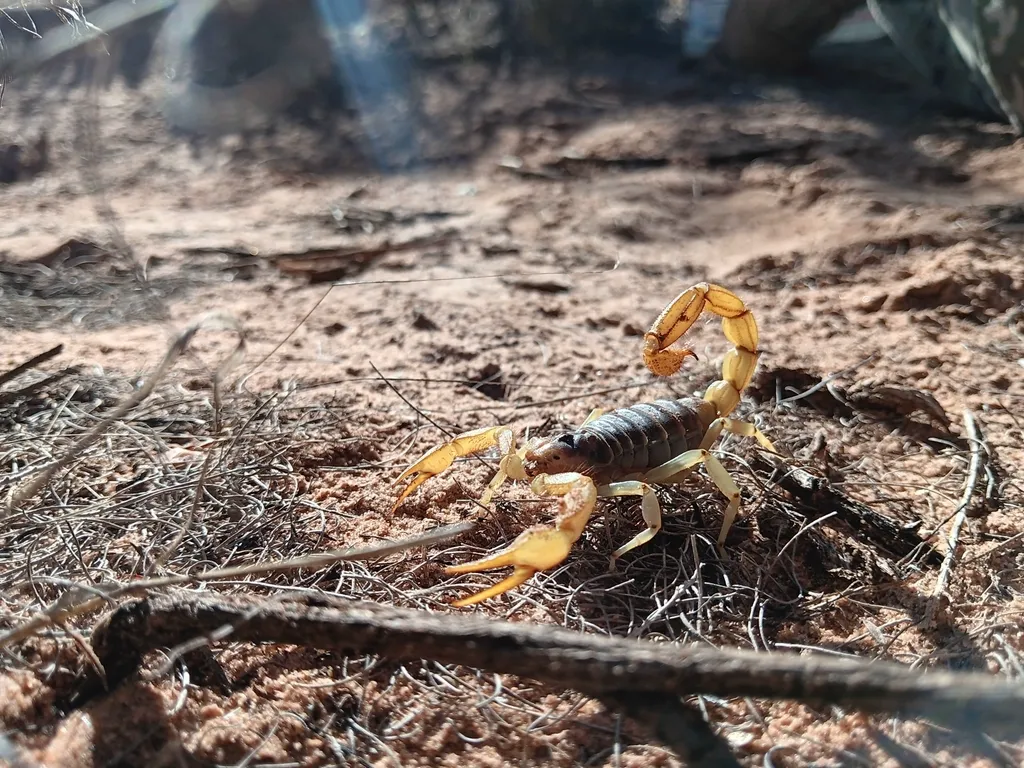
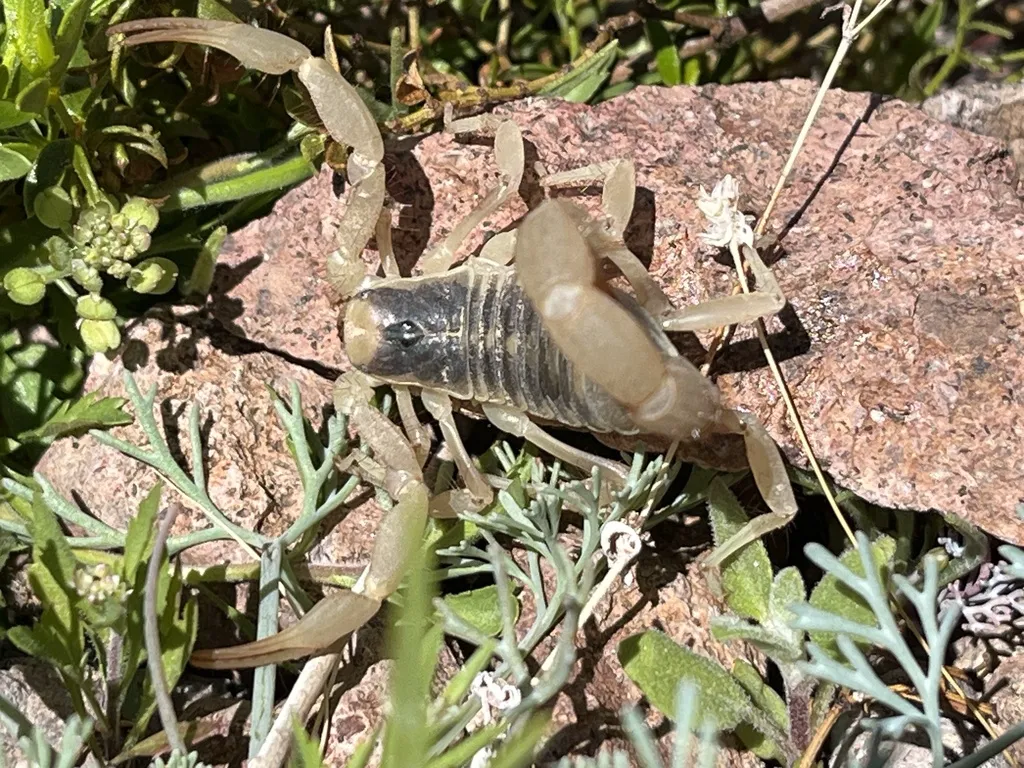
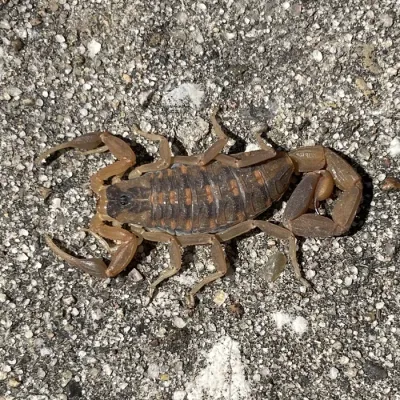
The term “desert scorpion” most commonly refers to the giant desert hairy scorpion (Hadrurus arizonensis), the largest scorpion in North America. Adults typically measure 4 to 5.5 inches from pincer tips to stinger, roughly the length of a dollar bill. Their body has a clear two-tone color pattern. The top of the midsection is olive-brown to dark brown, while the legs, pincers, and tail are pale yellow to tan.
The most obvious feature is the dense coat of brown sensory hairs covering the body, legs, and tail. These hairs pick up vibrations in the ground and air, helping the scorpion find prey and sense danger even in total darkness. The pincers are thick and powerful, much heavier than those of slender bark scorpion species. The tail has five broad segments ending in a rounded bulb that holds the venom gland and stinger.
Like all scorpions, desert hairy scorpions are arachnids with eight walking legs, a pair of large pincers, small mouthparts, and a segmented tail. Two main eyes sit on top of the head, with smaller eyes on the sides giving them a nearly 360-degree field of view.
Common Desert Scorpion Species in North America
Several scorpion species share the “desert scorpion” label across the arid regions of the continent:
- Giant desert hairy scorpion (Hadrurus arizonensis): The largest at 4 to 5.5 inches. Found across Arizona, southern California, Nevada, Utah, and New Mexico. Recognized by its dense body hairs and heavy pincers.
- Arizona bark scorpion (Centruroides sculpturatus): Smaller at 2 to 3 inches, slender build, and the most medically significant scorpion in North America. An excellent climber frequently found inside homes.
- Stripe-tailed scorpion (Paravaejovis spinigerus): Medium-sized at 2 to 3 inches with visible keels on the underside of the tail. Common throughout the Sonoran Desert.
- Striped bark scorpion (Centruroides vittatus): The most widespread scorpion in the United States, found from Arizona to the southeastern states. Identified by two dark dorsal stripes.
Desert Scorpion Behavior and Biology
Habitat and Burrowing
Desert scorpions are adapted to some of the harshest environments in North America. They live in the Sonoran, Mojave, and Chihuahuan deserts, where summer temperatures regularly exceed 110 degrees Fahrenheit. To survive this heat, the giant desert hairy scorpion digs burrows up to 8 inches deep in sandy or loose soil. These burrows provide stable temperature and humidity throughout the day.
Preferred habitat includes rocky desert washes, sandy flats, and areas with loose substrate suitable for digging. In residential neighborhoods that border desert land, scorpions shelter under landscaping rocks, railroad ties, concrete slabs, and debris piles near foundations. They are particularly drawn to properties with irrigated landscapes, which create pockets of moisture that attract both scorpions and their insect prey.
Diet and Hunting
Desert scorpions are opportunistic nocturnal predators. Their diet consists primarily of crickets, beetles, spiders, centipedes, and other scorpions. Larger specimens occasionally take small lizards and even small rodents. They are ambush hunters that wait near their burrow entrance or along commonly traveled pathways.
When prey comes within range, the scorpion grabs it with its pincers. For smaller prey, the pincers alone do the job. For larger or struggling prey, the scorpion uses its stinger to inject venom that stops the catch from moving. Comb-shaped sensory organs on the underside of the body, called pectines, help scorpions read ground textures and pick up chemical trails left by potential prey.
Reproduction and Lifecycle
Desert scorpion mating involves an elaborate courtship dance. The male grasps the female by her pincers and walks her across the ground until he finds a good spot to deposit a sperm packet. He then guides her over it for fertilization. After several months of development, the female gives live birth to 25 to 35 babies called scorplings.
Newborns are soft, pale, and completely dependent on their mother. They ride on her back for one to three weeks until their first molt hardens their exoskeleton. Young scorpions undergo five to six molts over two to six years before reaching adulthood. This slow development contributes to the species’ long lifespan, which can reach seven to ten years in the wild.
Venom and Sting Risk
The sting of the giant desert hairy scorpion is painful but generally considered mild for healthy adults. The University of California Pest Management Program compares it to a bee or wasp sting. Symptoms typically include localized pain, swelling, and redness that resolve within several hours to a day. The large pincers of this species are a defensive advantage that reduces its reliance on venom.
By contrast, the Arizona bark scorpion, which shares much of the same desert territory, has venom that affects the nervous system. The Mayo Clinic notes that bark scorpion stings can cause numbness, tingling, muscle twitching, and difficulty breathing, especially in young children and the elderly. Knowing which desert scorpion species you are dealing with is important for understanding the risk.
This content is for general information only and is not medical advice. Always consult a healthcare provider for medical concerns related to scorpion stings.
Treatment Methods for Desert Scorpions
Managing desert scorpion populations around a home works best with an integrated approach that combines habitat modification, exclusion, and targeted treatments. Since scorpions follow their food supply, reducing insect prey is often the single most effective step.
-
Habitat modification: Remove rock piles, wood stacks, yard debris, and ground cover within several feet of the foundation. Keep firewood elevated and away from the house. Trim vegetation so branches and leaves do not contact exterior walls. Reduce irrigation near the foundation, since damp soil attracts both scorpions and the insects they eat.
-
Exclusion: Install tight-fitting door sweeps on all exterior doors. Seal cracks and gaps around windows, pipes, utility penetrations, and weep holes with caulk or expanding foam. Cover vents and attic openings with fine mesh (1/8-inch or smaller). The University of Arizona Cooperative Extension identifies exclusion as the highest-impact measure for preventing indoor scorpion encounters.
-
Reduce prey insects: Scorpions concentrate where food is abundant. Controlling crickets, roaches, and other insects around the home makes the property less appealing to scorpions. Switching outdoor lights to yellow or amber “bug” bulbs reduces the flying insects that draw scorpions closer to structures at night.
-
UV detection: A handheld ultraviolet flashlight is one of the best tools for finding scorpions. All scorpion species fluoresce bright blue-green under UV light, making them easy to spot during nighttime inspections. Regular UV surveys around the foundation and landscape help monitor activity levels and identify entry points.
-
Perimeter treatments: Residual applications along foundations and around entry points can reduce scorpion intrusion when combined with exclusion and habitat cleanup. However, the UC Pest Management Program emphasizes that chemical treatments alone are not a long-term solution because scorpions harbor in cracks and crevices that sprays cannot reach.
-
Sticky traps: Glue boards placed along baseboards, in garages, and near known entry points can capture scorpions and help monitor how many are present. Check traps regularly and replace them as needed.
-
Professional pest management: For properties with persistent scorpion pressure, a licensed pest control company with experience in scorpion management can conduct a thorough inspection, identify entry points, and develop a treatment plan that pairs exclusion work with targeted applications.
References
Other Other Pests
Explore other species in the other pests family
Commonly Confused With
Desert Scorpion are often mistaken for these similar pests
Where Desert Scorpion Are Found
Hover over states to see their names. Green regions indicate where desert scorpion have been reported.
Common Questions about Desert Scorpion
Are desert scorpions dangerous to humans?
+
Most desert scorpion stings cause localized pain and swelling similar to a bee sting. The giant desert hairy scorpion has relatively mild venom. However, the Arizona bark scorpion, another desert species, has medically significant venom that can cause serious symptoms in children and the elderly. Always seek medical attention if you experience numbness, difficulty breathing, or muscle spasms after a sting.
How do I find desert scorpions around my home?
+
The most effective method is using a UV (blacklight) flashlight at night. All scorpions contain compounds in their exoskeleton that glow bright blue-green under ultraviolet light. Walk slowly around the foundation, under landscaping rocks, and near exterior walls after dark.
What attracts desert scorpions to houses?
+
Desert scorpions follow their food. If your home or yard harbors crickets, beetles, roaches, or other insects, scorpions will move closer to hunt. Excess moisture from irrigation systems, leaky faucets, and landscaping near the foundation also draws in both scorpions and the prey they feed on.
Can desert scorpions climb walls?
+
The giant desert hairy scorpion is primarily a ground-dweller and poor climber due to its large size. However, bark scorpions, which also live in desert areas, are excellent climbers and can scale walls, tree bark, and even ceilings. Knowing which species you have matters for choosing prevention strategies.
How long do desert scorpions live?
+
Desert scorpions have long lifespans compared to most arthropods. The giant desert hairy scorpion can live seven to ten years. They grow slowly, taking two to six years to reach maturity, and molt their exoskeleton five to six times during development.
Do desert scorpions come out during the day?
+
Desert scorpions are nocturnal. They stay hidden in burrows, under rocks, or inside crevices during the day to avoid heat and predators. Activity peaks after sunset, especially during warm summer months. Most human encounters happen when someone steps on or reaches near a hidden scorpion.
What should I do if a desert scorpion stings me?
+
Clean the sting site with soap and water, apply a cool compress, and take over-the-counter pain medication if needed. Watch for signs of a serious reaction like spreading numbness, muscle twitching, difficulty breathing, or excessive drooling. If any of these occur, call 911 or Poison Control at 1-800-222-1222. This is general information, not medical advice. Always consult a healthcare provider for medical concerns.

With five years of hands-on experience in the pest control industry, George Schulz is a registered technician with the Virginia Pest Management Association and a proud third-generation professional in a family business that's been protecting homes for over 58 years. He manages and trains a team of service pros while also leading internal research efforts—recently spearheading a deep-dive review of thousands of documents on pest control materials to hand-pick the most kid and pet friendly, most effective solutions tailored specifically for homes in the DC metro area.
Local Other Pests Help
Dealing with other pests at home? Our licensed technicians provide pest control across Northern Virginia and Maryland.
