Grasshoppers
Family Acrididae
Grasshoppers are jumping insects known for their powerful hind legs and ability to damage gardens and crops. These herbivores are most active during warm summer months.
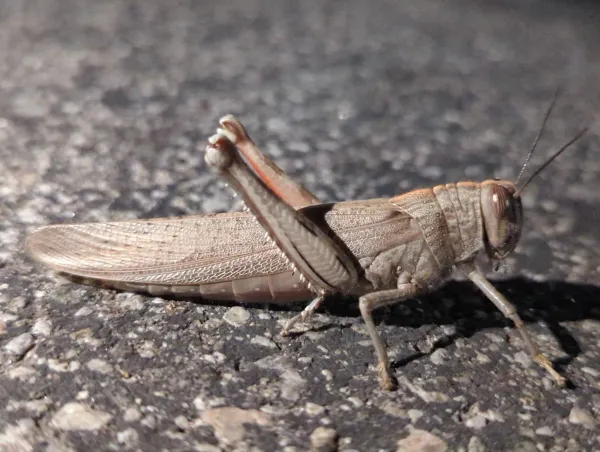
Grasshopper Identification Guide
Physical Characteristics
Grasshoppers are medium to large insects with elongated bodies built for jumping. Adults range from half an inch to three inches long depending on the species. Their most striking feature is the pair of oversized hind legs with thick femurs that power their impressive jumps.
The head has large compound eyes on the sides and short, thick antennae. This is one of the easiest ways to tell grasshoppers apart from their relatives. Crickets and katydids have long, thin antennae that can be as long as their bodies. Grasshopper antennae are always shorter than the body.
Most grasshoppers have two pairs of wings. The front wings are narrow and leathery, called tegmina. They protect the larger, membranous hindwings that fold up like a fan when not in use. Some species have brightly colored hindwings with bands of yellow, red, or blue that flash when they fly.
Colors vary widely among species. Many grasshoppers are green or brown to blend with their surroundings. Some have stripes, spots, or banded patterns. Color can even vary within a single species based on habitat and diet.
Common Species
Several grasshopper species are common across North America:
-
Red-legged Grasshopper (Melanoplus femurrubrum): One of the most widespread pest species. Adults are yellowish-brown to olive green with red hind tibiae. They grow up to one inch long and damage many crops and garden plants.
-
Differential Grasshopper (Melanoplus differentialis): A large yellow to olive species with black chevron markings on the hind legs. It reaches over one inch in length and is a serious crop pest in the Great Plains.
-
Two-striped Grasshopper (Melanoplus bivittatus): Named for the pale stripes running down its back. This greenish-brown species grows up to two inches and feeds on many plants including vegetables and ornamentals.
-
Carolina Grasshopper (Dissosteira carolina): A band-winged species with black hindwings bordered in yellow. They are common along roadsides and in open areas. Their crackling flight sound and yellow wing flash make them easy to spot.
-
Clear-winged Grasshopper (Camnula pellucida): A smaller species important in western rangelands and the Prairie provinces of Canada. Adults are straw-colored and about three-quarters of an inch long.
Grasshopper Behavior and Biology
Grasshoppers go through incomplete metamorphosis with three life stages: egg, nymph, and adult. Most temperate species complete one generation per year, though the full cycle can span two seasons.
Life Cycle
Female grasshoppers lay eggs in the soil during late summer and fall. Using a set of prongs on the tip of her abdomen, she drills into firm soil and deposits 20 to 120 eggs in a protective pod made of frothy secretions that hardens around the eggs. A single female may lay several pods over her lifetime.
Eggs remain dormant through winter. Soil temperature triggers hatching in spring, usually from late April through June depending on climate. Warmer springs lead to earlier hatches. The tiny nymphs that emerge look like miniature adults but lack fully developed wings.
Nymphs pass through five or six growth stages called instars. At each molt, they shed their outer skin and grow larger. Wing buds appear early and get bigger with each molt until the final adult molt reveals functional wings. The nymph stage lasts about two months.
Adults mate and lay eggs from midsummer into fall. Hard frosts kill adults, but their eggs survive underground to continue the cycle the following year.
Feeding Habits
Grasshoppers are generalist herbivores with strong chewing mouthparts. They eat leaves, stems, flowers, and even bark of many plant species. Different species have different food preferences, but most will feed on whatever green plants are available when hungry.
Their feeding creates ragged holes and notched edges on leaves. Heavy infestations can completely defoliate plants. Grasshoppers often start feeding on field margins and move inward as food becomes scarce. Gardens adjacent to weedy areas or dry fields are at higher risk.
Feeding activity peaks during warm, sunny weather. Grasshoppers need external heat to digest food efficiently. On cool or cloudy days, they are sluggish and eat less.
Habitat and Movement
Grasshoppers thrive in open habitats with low vegetation. Grasslands, prairies, roadsides, pastures, and agricultural fields provide ideal conditions. Many species also do well in suburban lawns and gardens.
Females prefer to lay eggs in undisturbed soil with sparse vegetation. Field edges, roadsides, and unmowed areas are common egg-laying sites. Understanding this preference helps explain why grasshoppers often invade gardens from adjacent weedy areas.
While many grasshoppers stay in a limited area, others can fly miles when food runs short. During outbreak years, grasshoppers may migrate into new areas in search of food, sometimes appearing suddenly in large numbers.
Treatment Methods for Grasshoppers
Managing grasshoppers requires understanding their biology and timing. Nymphs are easier to control than adults, so early-season monitoring and intervention tend to be most effective.
Cultural Controls
Reducing favorable habitat near gardens can lower grasshopper pressure. Keep weedy areas mowed and remove tall grass along fence lines and field edges. Tilling egg-laying sites in fall or early spring destroys overwintering eggs. However, avoid tilling established perennial beds, as this causes more harm than good.
Row covers and netting can protect valuable vegetable plants during peak grasshopper season. Barriers work best for small garden areas where physical exclusion is practical.
Trap strips are another cultural technique. Leave a band of attractive plants, like clover or alfalfa, along the garden edge. Grasshoppers concentrate in this area, where they can be treated or removed without affecting the entire garden.
Biological Controls
Many natural enemies feed on grasshoppers. Spiders, including wolf spiders and jumping spiders, prey on small nymphs. Birds, including meadowlarks, hawks, and chickens, eat large numbers of nymphs and adults. Encouraging bird populations with habitat features can provide some level of control.
Nosema locustae is a biological control agent sold as bait. This protozoan parasite infects grasshoppers that eat the bait, causing disease and death over several weeks. It works best on young nymphs and may take a season or two to reduce populations significantly. Nosema is most effective for area-wide management rather than protecting individual gardens.
Entomopathogenic fungi, including species of Metarhizium and Beauveria, also attack grasshoppers. These biological controls are used in some large-scale management programs but are less available for homeowner use.
Chemical Controls
When grasshopper populations are high and damage is severe, insecticide treatments may be warranted. Carbaryl baits are commonly used for grasshopper control. The bait attracts grasshoppers, which feed on it and are killed by the insecticide. Baits are applied to field borders and areas where grasshoppers congregate.
Contact insecticides, including pyrethroids, can provide quick knockdown of grasshoppers on plants. These work best on nymphs and require good coverage. Adults are harder to kill and may reinvade from untreated areas.
For best results, apply treatments to young nymphs before they develop wings and spread. Once grasshoppers mature and become mobile, control becomes much more difficult. Coordinate with neighbors when possible, since grasshoppers easily move between properties.
Prevention Tips
Monitor your property in late spring for signs of hatching nymphs. Small grasshoppers gathering on plants near field edges or weedy areas signal the start of the season. Early action prevents larger problems later.
Maintain a diverse landscape with flowering plants that attract beneficial insects and birds. Natural predators provide ongoing, free pest control that complements other management efforts.
Water and fertilize plants appropriately to help them recover from light feeding damage. Healthy, vigorous plants tolerate some insect feeding without serious harm.
References
Types of Grasshoppers
Click on any species below to learn more about identification, behavior, and control methods.
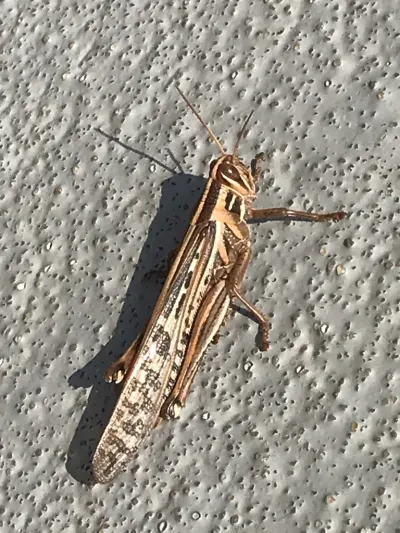
American Grasshopper
Schistocerca americana
The American grasshopper, also known as the American bird grasshopper, is one of the largest grasshopper species in North America. These powerful fliers can form localized outbreaks and cause significant damage to crops and gardens.
View identification guide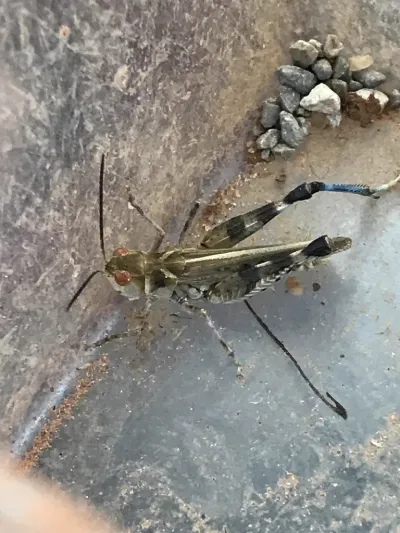
Bigheaded Grasshopper
Aulocara elliotti
The bigheaded grasshopper is a medium-sized rangeland pest recognized by its proportionally large head and distinctive X-pattern on its back. Common across western North America, it causes significant damage to grasslands and rangelands.
View identification guide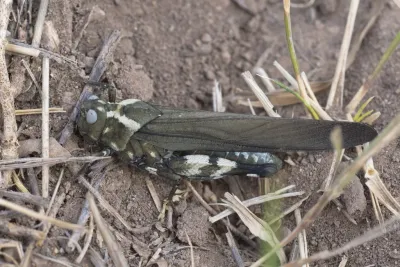
Carolina Grasshopper
Dissosteira carolina
The Carolina grasshopper is one of North America's largest and most conspicuous grasshoppers, easily identified by its black hindwings bordered in yellow. These band-winged grasshoppers are commonly seen flying over dirt roads and bare ground during warm summer days.
View identification guide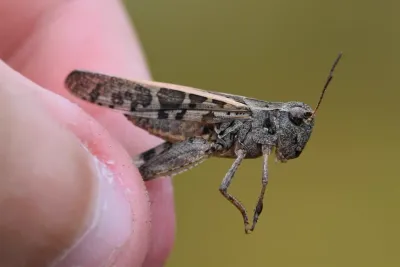
Clear-Winged Grasshopper
Camnula pellucida
The clear-winged grasshopper is a major agricultural pest known for its transparent hindwings and ability to devastate grains and rangelands. This early-season species can form massive swarms that strip vegetation across thousands of square miles.
View identification guide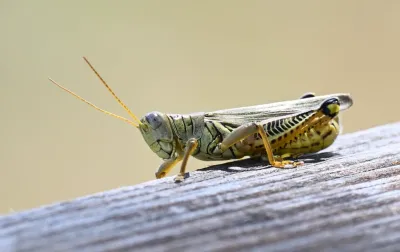
Differential Grasshopper
Melanoplus differentialis
The differential grasshopper is one of North America's most destructive crop pests, recognized by its distinctive black chevron markings on yellow hind legs. These large grasshoppers can devastate gardens and agricultural fields within days.
View identification guide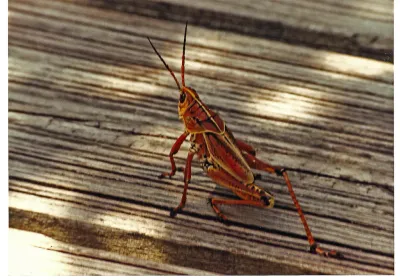
Eastern Lubber Grasshopper
Romalea microptera
The Eastern Lubber Grasshopper is one of North America's largest and most colorful grasshoppers. Known for their clumsy movement and toxic defense chemicals, these slow-moving insects are found throughout the southeastern United States.
View identification guide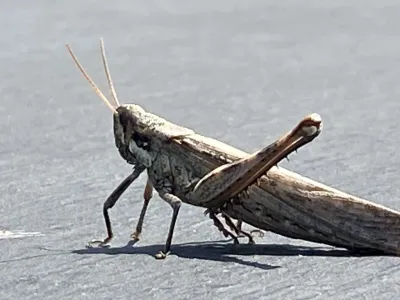
Gray Bird Grasshopper
Schistocerca nitens
The gray bird grasshopper is a large, strong-flying grasshopper found across the southwestern United States and Mexico. Known for its grizzled gray-brown coloration and ability to travel long distances, it can cause significant crop and garden damage during outbreak years.
View identification guide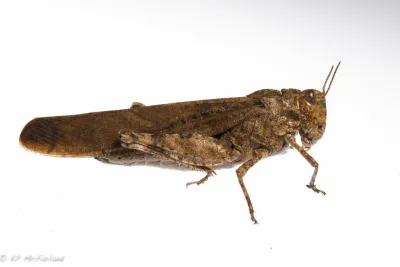
High Plains Grasshopper
Dissosteira longipennis
The High Plains grasshopper is one of the largest band-winged grasshoppers in North America, historically known for devastating swarms that destroyed rangeland and crops across the Great Plains during the 1930s. Though now rare, this species remains a potential threat during outbreak conditions.
View identification guide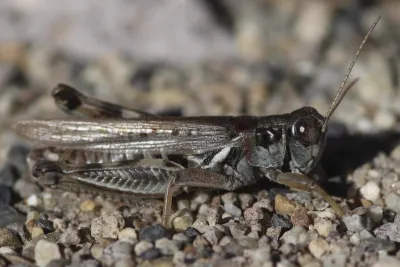
Migratory Grasshoppers
Melanoplus sanguinipes
The migratory grasshopper is one of North America's most destructive agricultural pests, capable of forming massive swarms that devastate crops and rangelands across the continent.
View identification guide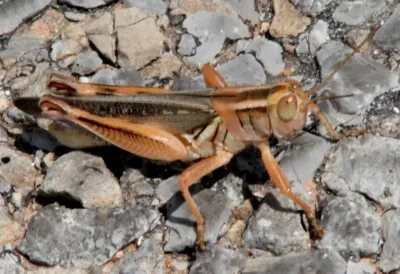
Packard Grasshopper
Melanoplus packardii
The Packard grasshopper is a large, tan-colored grasshopper native to western North American prairies. Known for its distinctive twin dorsal stripes and preference for sandy soils, this species can damage crops when populations surge.
View identification guide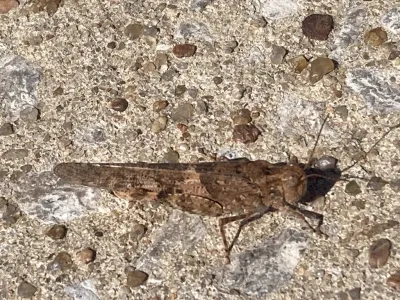
Pallid-Winged Grasshopper
Trimerotropis pallidipennis
The pallid-winged grasshopper is a widespread band-winged grasshopper native to western North American deserts. Known for its strong flight abilities and distinctive pale yellowish hindwings, this species thrives in arid and semi-arid habitats with sparse vegetation.
View identification guide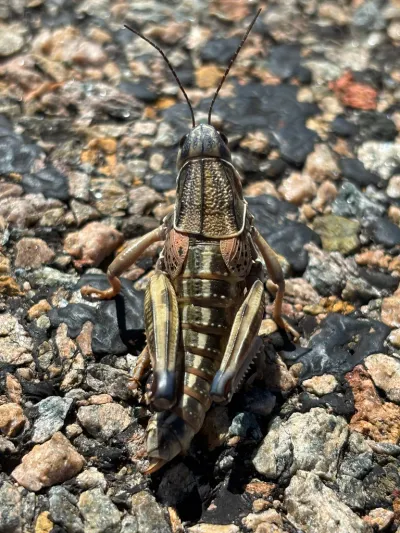
Plains Lubber Grasshoppers
Brachystola magna
The plains lubber grasshopper is one of the largest grasshoppers in North America, known for its robust body, vestigial wings, and inability to fly. These slow-moving insects are found across the Great Plains and western prairies.
View identification guide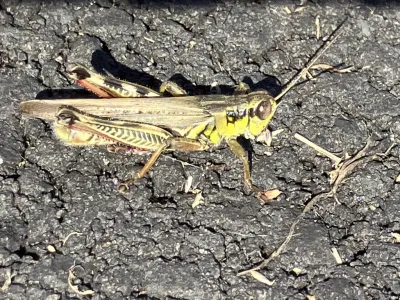
Red-Legged Grasshoppers
Melanoplus femurrubrum
Red-legged grasshoppers are one of the most common and widespread grasshopper species in North America, recognized by their distinctive reddish-colored hind legs and known for causing damage to gardens, lawns, and agricultural crops.
View identification guide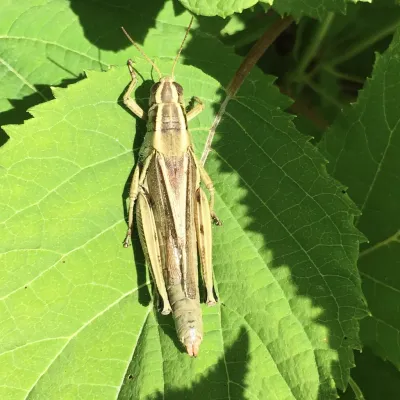
Two-Striped Grasshopper
Melanoplus bivittatus
The two-striped grasshopper is one of North America's most destructive grasshopper species, recognized by the pale yellow stripes running down its back. This large agricultural pest damages gardens, crops, and ornamental plants.
View identification guideCommon Questions about Grasshoppers
Are grasshoppers harmful to my garden?
+
Yes, grasshoppers are herbivores that eat plant leaves, stems, and flowers. Small numbers cause minor damage, but during outbreak years, large populations can strip entire gardens and landscaping of vegetation. They prefer vegetables, ornamentals, and grass.
What is the difference between grasshoppers and locusts?
+
Locusts are actually a type of grasshopper that can change behavior and form swarms. When certain grasshopper species experience crowded conditions, they undergo physical and behavioral changes that cause them to migrate in large groups. In North America, most grasshoppers do not become true locusts.
Do grasshoppers bite people?
+
Grasshoppers rarely bite humans. While they have strong mandibles for chewing plants, they are not aggressive toward people. If handled roughly, a grasshopper might pinch with its jaws, but this causes no real harm and does not break skin.
Why do grasshoppers jump instead of fly?
+
Grasshoppers use their powerful hind legs to make quick escapes from predators. Jumping is faster and requires less energy than flying. Many grasshoppers will jump first, then open their wings to glide away. Some species are weak fliers or have reduced wings and rely mainly on jumping.
When are grasshoppers most active?
+
Grasshoppers are most active during warm, sunny days in summer. They are cold-blooded and need heat from the sun to move quickly. You will see them basking on warm surfaces in the morning and feeding actively during midday. They become sluggish in cool weather.
What attracts grasshoppers to my yard?
+
Grasshoppers are drawn to areas with plenty of plants to eat. Gardens, lawns, and weedy areas all provide food. Dry conditions in nearby fields may push grasshoppers into irrigated yards where plants are greener. Bare soil nearby can also attract egg-laying females.
How long do grasshoppers live?
+
Most grasshoppers live about one year total. Eggs laid in late summer overwinter in the soil and hatch the following spring. Nymphs take about two months to become adults. Adult grasshoppers live through summer and fall, dying after the first hard frost.
Explore Other Pest Categories
Browse our comprehensive pest library for identification guides and control information.



With five years of hands-on experience in the pest control industry, George Schulz is a registered technician with the Virginia Pest Management Association and a proud third-generation professional in a family business that's been protecting homes for over 57 years.
Find Local Grasshopper Control Services
We provide professional grasshoppers control throughout Virginia, Maryland, and the DC Metro area.