
Rat Fleas Identification Guide
Xenopsylla cheopis
A rat flea is a small, wingless flea that lives mainly on rats and mice. The Oriental rat flea is the main carrier of plague and also spreads murine typhus. Rat fleas bite people when their rodent hosts die or leave.
Taxonomy
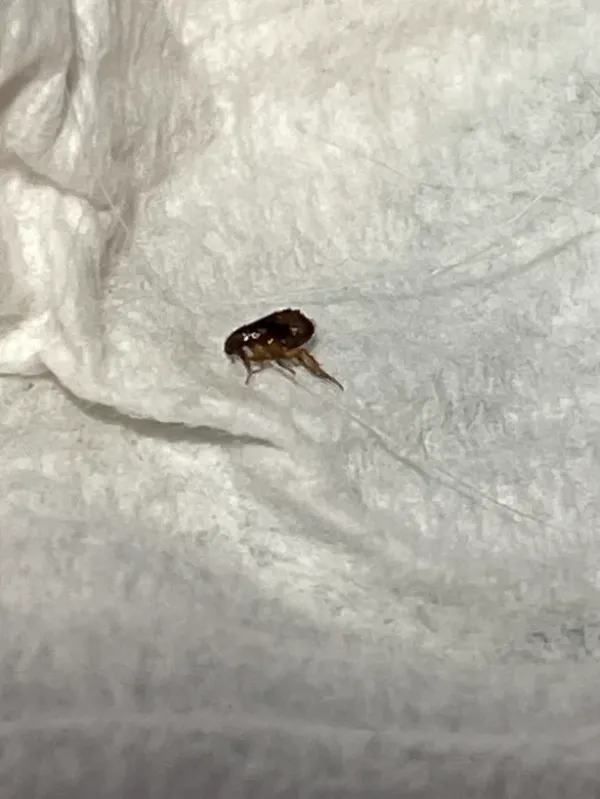
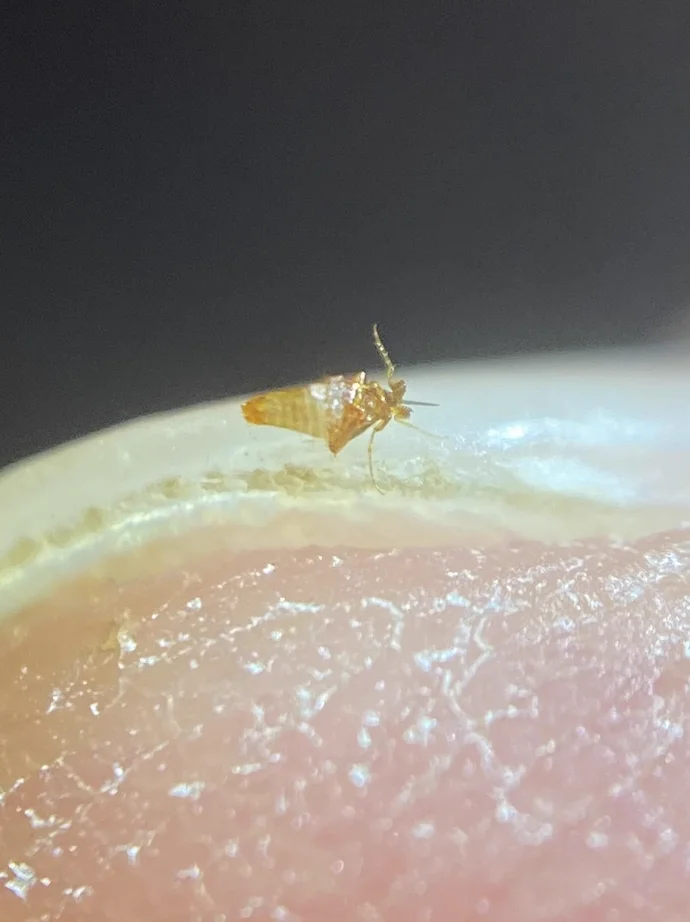
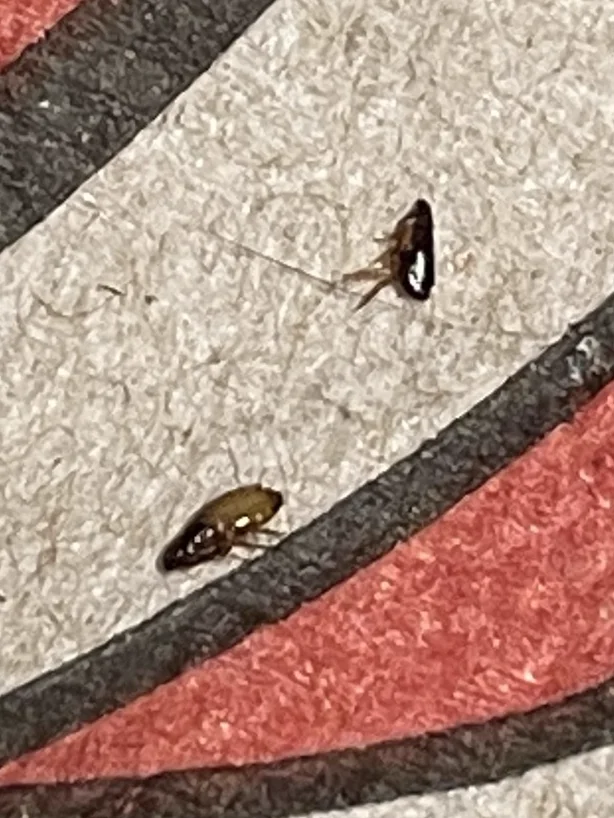
Rat Fleas Coloration
Common color patterns to help identify rat fleas
Rat Fleas
Seasonal Activity
When rat fleas are most active throughout the year

Where Rat Fleas Are Found
Hover over states to see their names. Green regions indicate where rat fleas have been reported.
What Is a Rat Flea?
A rat flea is a small, wingless, blood-feeding insect that lives mainly on rats and mice. It is 2 to 4 millimeters long, brown to reddish-brown, and flattened side to side. The name usually refers to two species: the Oriental rat flea (Xenopsylla cheopis), the main carrier of plague and a carrier of flea-borne typhus, and the northern rat flea (Nosopsyllus fasciatus), which is more common in cooler climates. Both will bite people when their rodent host dies or leaves.
| Oriental rat flea | Northern rat flea | Cat flea (for comparison) | |
|---|---|---|---|
| Scientific name | Xenopsylla cheopis | Nosopsyllus fasciatus | Ctenocephalides felis |
| Size | 1.5 to 4 mm | about 3 to 4 mm | 1 to 3 mm |
| Comb along the jaw (genal) | No | No | Yes |
| Comb behind the head (pronotal) | No | Yes | Yes |
| Main hosts | Norway and roof rats | Norway rats, house mice | Cats, dogs, opossums |
| Bites people? | Yes, when hosts are gone | Yes, when hosts are gone | Yes |
| Main disease concern | Plague, murine typhus | Minor plague role | Murine typhus, tapeworm |
Do Rats Have Fleas?
Yes. Wild rats and mice commonly carry fleas, and the fleas spend most of their lives in the rodent’s fur and nest. Norway rats and roof rats can carry Oriental rat fleas and northern rat fleas. House mice carry northern rat fleas and mouse fleas. Pet rats rarely have fleas unless they have been around wild rodents.
So when people ask “do rats carry fleas” or “can rats get fleas,” the practical answer is that a rodent problem and a flea problem usually travel together. The fleas stay out of sight until the rodents die off or move. Then they start biting whoever is closest, often the people sleeping in the room under the attic or next to the crawl space.
Here in Northern Virginia we get a lot of calls about rats and mice in Old Town Alexandria, where the older row houses have plenty of ways in. Daren, one of our technicians, calls a row-house job off Edison Street in Del Ray the worst rodent infestation he has handled. When the music theater behind them shut down early in the pandemic, the rats lost their food and moved into the homes. “With old row houses like that, the firewall between units isn’t always intact,” Daren said, “so they just work their way unit to unit.” Rodents moving indoors like that bring their fleas with them.
Rat Flea Identification Guide
Physical Characteristics
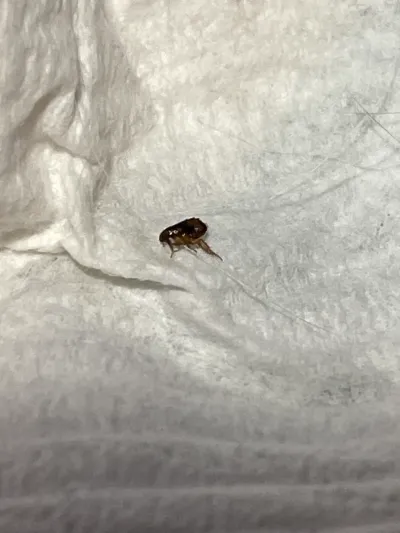
Rat fleas belong to the flea order Siphonaptera. Adults are 2 to 4 millimeters long, about the size of a sesame seed. Like all fleas, their bodies are flattened side to side, which lets them slip between hairs on their rodent host.
Adults are brown to reddish-brown and look darker after a blood meal. They have a hard outer shell covered in backward-pointing bristles that help them hang on. Strong back legs let them jump many times their body length.
To tell rat fleas from cat fleas and dog fleas, you need a hand lens and a look at the combs. These are rows of dark spines, one along the lower edge of the head (the genal comb) and one just behind the head (the pronotal comb). The CDC’s flea identification page notes that cat and dog fleas have both combs, while the Oriental rat flea has neither. The northern rat flea sits in between: it has the comb behind the head but no comb along the jaw, a split used in published flea identification keys.
Common Species
Oriental Rat Flea (Xenopsylla cheopis): Also called the tropical rat flea. This is the species that matters most for public health, since it is the main carrier of plague and one of the main carriers of murine typhus. It does best in warm, humid places and mostly lives on Norway rats and roof rats.
Northern Rat Flea (Nosopsyllus fasciatus): This species handles cooler weather better and is more common in the northern U.S. and Europe. It lives mainly on Norway rats but also on house mice. It is a little larger, about 3 to 4 millimeters, and has a comb of 17 to 20 spines behind the head.
What Do Rat Fleas Look Like Without a Microscope?
Without magnification, a rat flea looks like a tiny dark brown speck that jumps. You cannot tell it from a cat flea by eye. Where you find it is the better clue. Fleas jumping near an attic hatch, a crawl space door, or a spot where you have seen droppings point to rodents. Fleas on your dog or cat point to cat fleas.
Signs of Rat Fleas in the House
- Rodent activity: Droppings, gnaw marks, grease marks along walls, or scratching in the walls or ceiling at night.
- Bites on the lower legs: Small, red, itchy bumps on ankles and shins, often starting soon after rodents were trapped or baited.
- Fleas near rodent areas: Tiny jumping insects near attic access, the basement, the crawl space, or behind appliances where rodents travel.
- Pets scratching more: Especially pets that hunt mice or get into storage areas.
Rat Flea Behavior and Biology
Life Cycle
Rat fleas go through four stages: egg, larva, pupa, and adult. Knowing the cycle explains why one treatment rarely finishes the job.
Eggs: According to the University of Florida, a female Oriental rat flea lays up to about 6 eggs a day and 300 to 400 over her life. The eggs are white, oval, and not sticky, so they fall off the rodent into its nest and the areas around it.
Larvae: Larvae are small, white, legless, and blind. They do not feed on blood. They eat debris in the nest and the dried-blood droppings of adult fleas. This stage takes about two weeks in good conditions but can stretch to 200 days when conditions are poor.
Pupae: The larva spins a silk cocoon coated with dust and debris. The University of Florida puts this stage at roughly 2 to 9 weeks, depending on temperature. Heat, vibration, and carbon dioxide from a nearby animal or person can trigger the adult to come out. The cocoon also protects the flea from many treatments.
Adults: New adults need to find a host and feed soon after they emerge. On a host they feed several times a day. With regular meals, an adult Oriental rat flea can live well over 100 days. Without one, it can last up to about six weeks.
Feeding and Host Behavior
Both male and female rat fleas feed on blood. Their mouthparts pierce the skin, and their saliva keeps the blood from clotting. That saliva is what makes the bite itch.
Their first choice is rodents: Norway rats, roof rats, and house mice. When the rodent dies or the nest is abandoned, they switch to people, pets, and other mammals. This is why flea bites often show up right after a rodent problem gets fixed.
Environmental Preferences
The University of Florida reports that Oriental rat fleas lay the most eggs at about 80°F (27°C) with humidity of 70% or more, and that adults may disappear during long, hot, dry spells. The northern rat flea copes better with cold, which is why it is the more common rat flea in cooler regions.
Both species live close to rodent nests. Eggs, larvae, and pupae build up in nest material, wall insulation, and along rodent runways. The flea population is always heaviest where rodent activity is heaviest.
Rat Flea Bites and Disease Risk
Most rat flea bites in a Virginia home are an itch problem, not a disease problem. But rat fleas are the reason fleas have a reputation for spreading disease, so here is what the health agencies say.
Rat Flea Bites on Humans
Rat flea bites look like other flea bites: small red bumps, often in a group or a line, mostly on the ankles and lower legs. They itch, sometimes for days. Scratching can open the skin and lead to infection. Rat fleas bite people but do not live on them. They feed and drop off, and without rodents to return to they die out.
Plague
The Oriental rat flea is the main carrier of plague, caused by the bacterium Yersinia pestis. Purdue Extension ties it to the “black death” that hit Europe in the 14th century.
The CDC says plague spreads to people mostly through bites from infected rodent fleas, and less often through direct contact with an infected animal. Inside the flea, the bacteria can block its gut. When a blocked flea tries to feed, it pushes bacteria back into the bite.
Plague is rare in the U.S. The CDC’s case data shows an average of about five human cases a year (0 to 17 in any one year), almost all in the rural West: northern New Mexico, northern Arizona, southern Colorado, California, southern Oregon, and far western Nevada. More than 80% of U.S. cases are bubonic plague, which causes painful, swollen lymph nodes. Plague can be cured with antibiotics, but the CDC stresses that treatment must start quickly.
Murine Typhus
Murine typhus, also called flea-borne typhus, is caused by the bacterium Rickettsia typhi. The CDC names the Oriental rat flea and the cat flea as its most common carriers.
It spreads differently than plague. Infected flea droppings get into bite wounds or scratches, or are rubbed into the eyes. Symptoms start 3 to 14 days later and include fever, chills, headache, and body aches. About half of patients get a rash. Most people recover fully with antibiotics, and the CDC estimates deaths at less than 1% of cases. Southern California, Hawaii, and southern Texas report the most cases.
Tapeworms
Rat fleas can carry the dwarf tapeworm and the rat tapeworm. People get infected by accidentally swallowing an infected flea.
Medical Disclaimer: This information is for education only and is not medical advice. If you have a fever, a rash, or swollen lymph nodes after flea bites, see a healthcare provider.
How We Treat for Rat Fleas
Getting rid of rat fleas means dealing with the rodents and the fleas together. Treat only the fleas and the rodents bring more. Treat only the rodents and the fleas they leave behind go looking for you.
-
Find the rodents first. We look for droppings, gnaw marks, runways, and nest sites, and for the gaps they use to get in. Our technician Daren’s rule of thumb: if you can fit the tip of your pinky in a gap, about the size of a dime, a mouse can get through it. For a rat, it is about a thumb’s width.
-
Rodent control. Our rat control and mouse control work combines baiting, trapping where it makes sense, and sealing entry points. In our experience in Old Town and other older neighborhoods, the lower-level baiting is what makes a rodent program work, more than tearing out attic insulation.
-
Flea treatment in the nest areas. We treat where flea larvae and pupae develop: nest sites, along rodent runways, and the living areas where bites are happening. Insect growth regulators stop eggs and larvae from becoming biting adults. Interior fleas are covered under our flea control plans.
-
Timing. Flea treatment should happen at the same time as rodent control or right after it. That keeps fleas from moving onto people when their hosts die.
-
Expect a few more bites at first. Cocoons resist treatment, so new adults can keep hatching for a few weeks. Vacuuming often during that time helps, because the vibration brings them out of the cocoon where the treatment can reach them.
-
Pets. If you have pets, talk with your veterinarian about flea prevention so they don’t become the next host.
References and Further Reading
Other Fleas
Explore other species in the fleas family
Commonly Confused With
Rat Fleas are often mistaken for these similar pests
Where Rat Fleas Are Found
Hover over states to see their names. Green regions indicate where rat fleas have been reported.
Common Questions about Rat Fleas
What does rat flea mean?
+
A rat flea is any flea that lives mainly on rats and other rodents. The term usually means the Oriental rat flea (Xenopsylla cheopis), which carries plague and murine typhus, or the northern rat flea (Nosopsyllus fasciatus), the one more common in cooler parts of North America.
What is the difference between rat fleas and cat fleas?
+
Look at the head and the back of the neck under magnification. Cat fleas have two rows of comb-like spines, one along the jaw and one behind the head. The Oriental rat flea has neither, and the northern rat flea has only the comb behind the head. Cat fleas are also the ones you usually find on pets.
Can rat fleas transmit diseases to humans?
+
Yes. The Oriental rat flea is the main carrier of plague and one of the two main carriers of flea-borne (murine) typhus. Rat fleas can also carry rodent tapeworms. In the U.S. plague is rare, with about five human cases a year, mostly in the rural West.
How do I know if I have rat fleas in my home?
+
Rat fleas show up where rodents live. Look for droppings, gnaw marks, or scratching in the walls or ceiling. If you also have itchy bites on your ankles and lower legs, rodent fleas are a likely source, and the rodents have to be dealt with first.
Do rat fleas bite humans?
+
Yes. Rat fleas prefer rodents, but they bite people when their host dies or leaves. That is why bites often start right after rats or mice are trapped or baited. The bites are small, red, and itchy, usually around the ankles.
Can rat fleas live on humans?
+
No. Rat fleas will bite people, but they do not settle in human hair the way they live in rat fur. They feed and drop off. Without rodents to go back to, they die out, though new adults can keep hatching from cocoons for a few weeks.
How long can rat fleas survive without a host?
+
The University of Florida reports that adult Oriental rat fleas can go up to about six weeks without a blood meal, and live well over 100 days when they can feed. Pupae in cocoons can wait for weeks before hatching, which is why bites can continue after the rodents are gone.
Do mice have fleas too?
+
Yes. House mice carry fleas, including the northern rat flea and the mouse flea. The same rule applies as with rats: get rid of the mice and seal the gaps they use, then deal with any fleas left in the nest areas.
Why do rat flea problems get worse after rodent control?
+
When rodents die, the fleas on them lose their food. Hungry fleas then go looking for people and pets. Treating the nest areas for fleas at the same time as rodent control keeps that from turning into a bite problem.
Can my pets get rat fleas?
+
They can, especially if they hunt mice or get into areas where rodents nest. Even so, cat fleas are by far the most common flea on dogs and cats. If your pet has fleas and you also have rodents, ask your veterinarian about flea prevention and have the rodent problem looked at.

With five years of hands-on experience in the pest control industry, George Schulz is a registered technician with the Virginia Pest Management Association and a proud third-generation professional in a family business that's been protecting homes for over 58 years. He manages and trains a team of service pros while also leading internal research efforts—recently spearheading a deep-dive review of thousands of documents on pest control materials to hand-pick the most kid and pet friendly, most effective solutions tailored specifically for homes in the DC metro area.
Local Fleas Help
Dealing with fleas at home? Our licensed technicians provide pest control across Northern Virginia and Maryland.
