Khapra Beetles Identification Guide
Trogoderma granarium
Khapra beetles are tiny dermestid beetles and one of the world's most serious stored-grain pests. They are not established in North America, and suspected finds must be reported to agriculture officials.
Taxonomy
Khapra Beetles Coloration
Common color patterns to help identify khapra beetles
Khapra Beetles
Seasonal Activity
When khapra beetles are most active throughout the year
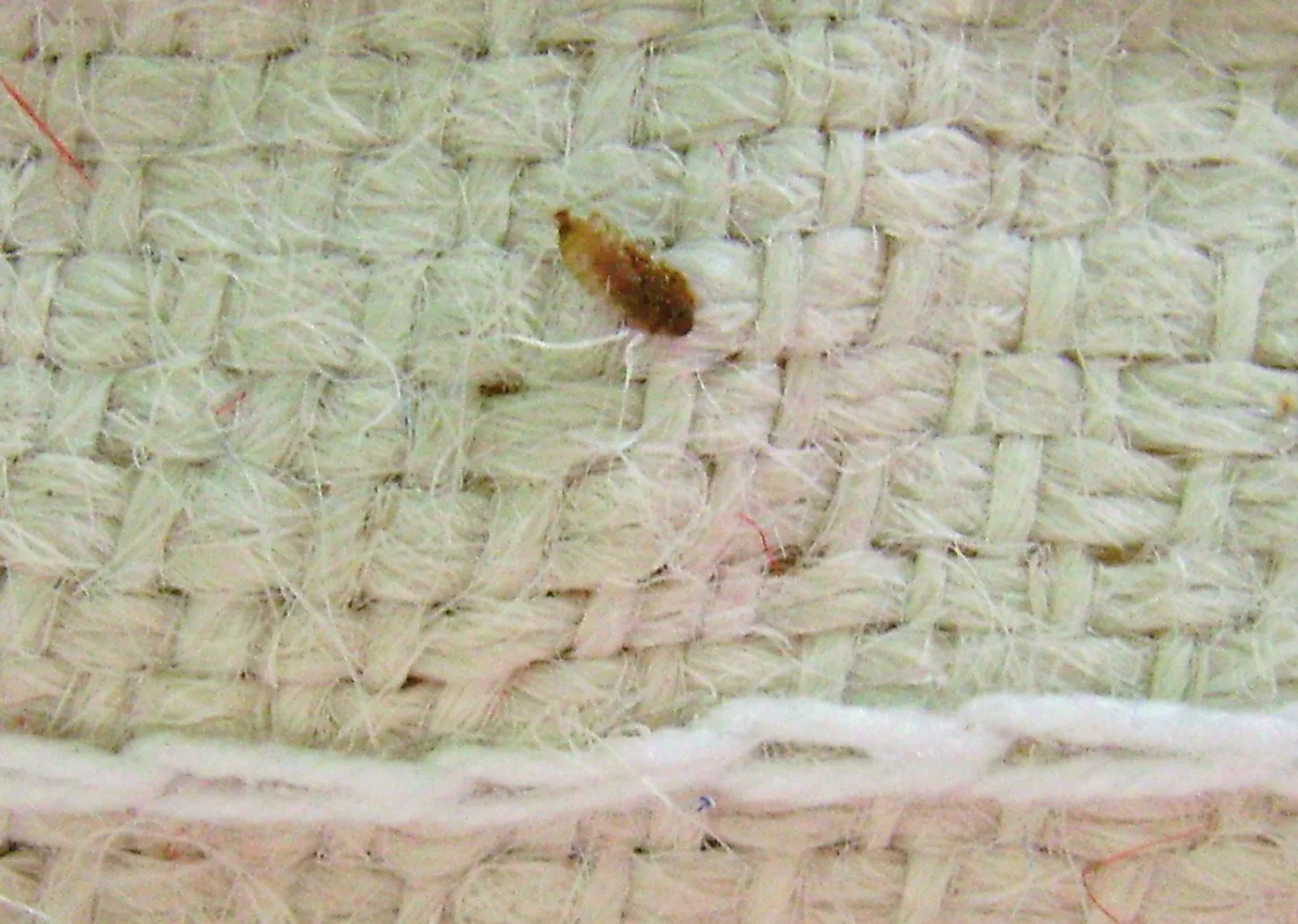

Where Khapra Beetles Are Found
Hover over states to see their names. Green regions indicate where khapra beetles have been reported.
Khapra Beetle Identification Guide
The khapra beetle (Trogoderma granarium) is a small dermestid beetle native to South Asia. It is one of the most damaging stored-grain pests in the world. It is not established in North America. The USDA treats it as a quarantine pest, and inspectors regularly catch it in imported rice, beans, spices, and shipping materials.
If you found small beetles or hairy larvae in your kitchen, the odds of a khapra beetle are very low. Common look-alikes such as warehouse beetles and carpet beetle larvae are far more likely.
Physical Characteristics
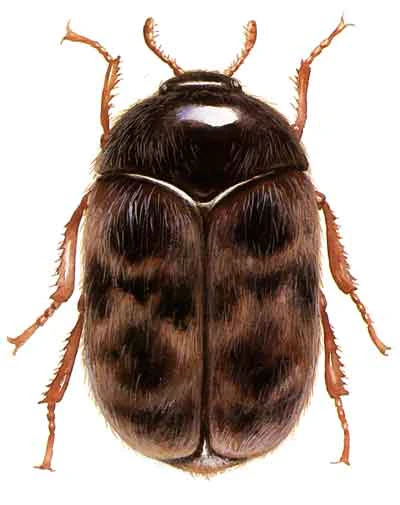
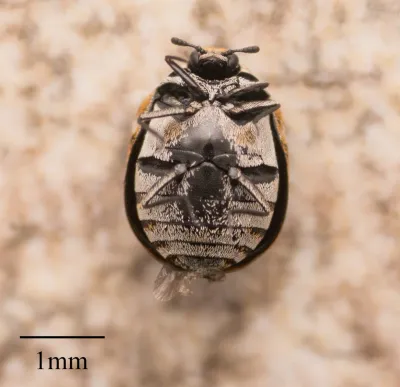
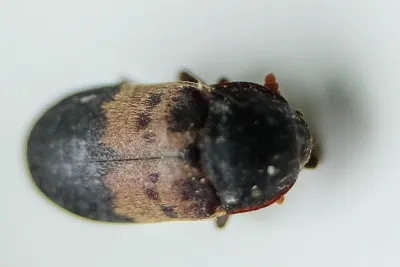
Adults are tiny, oval, and hairy:
- About 1.6 to 3 mm long, smaller than a grain of rice
- Brown to dark brown with faint, blurry reddish-brown markings on the wing covers
- Females are a bit larger and lighter in color than males
- Short, clubbed antennae
- Wings are present, but adults are not known to fly
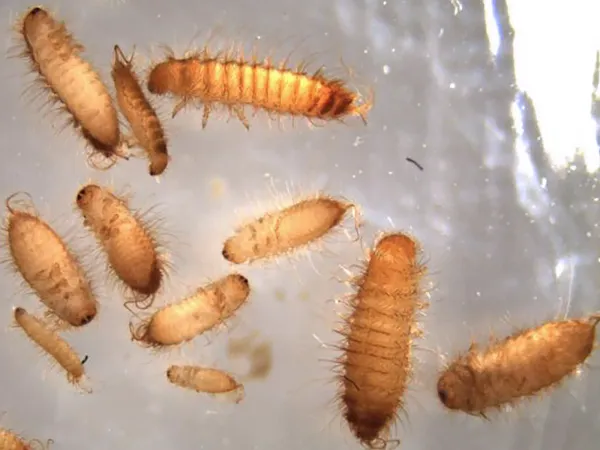
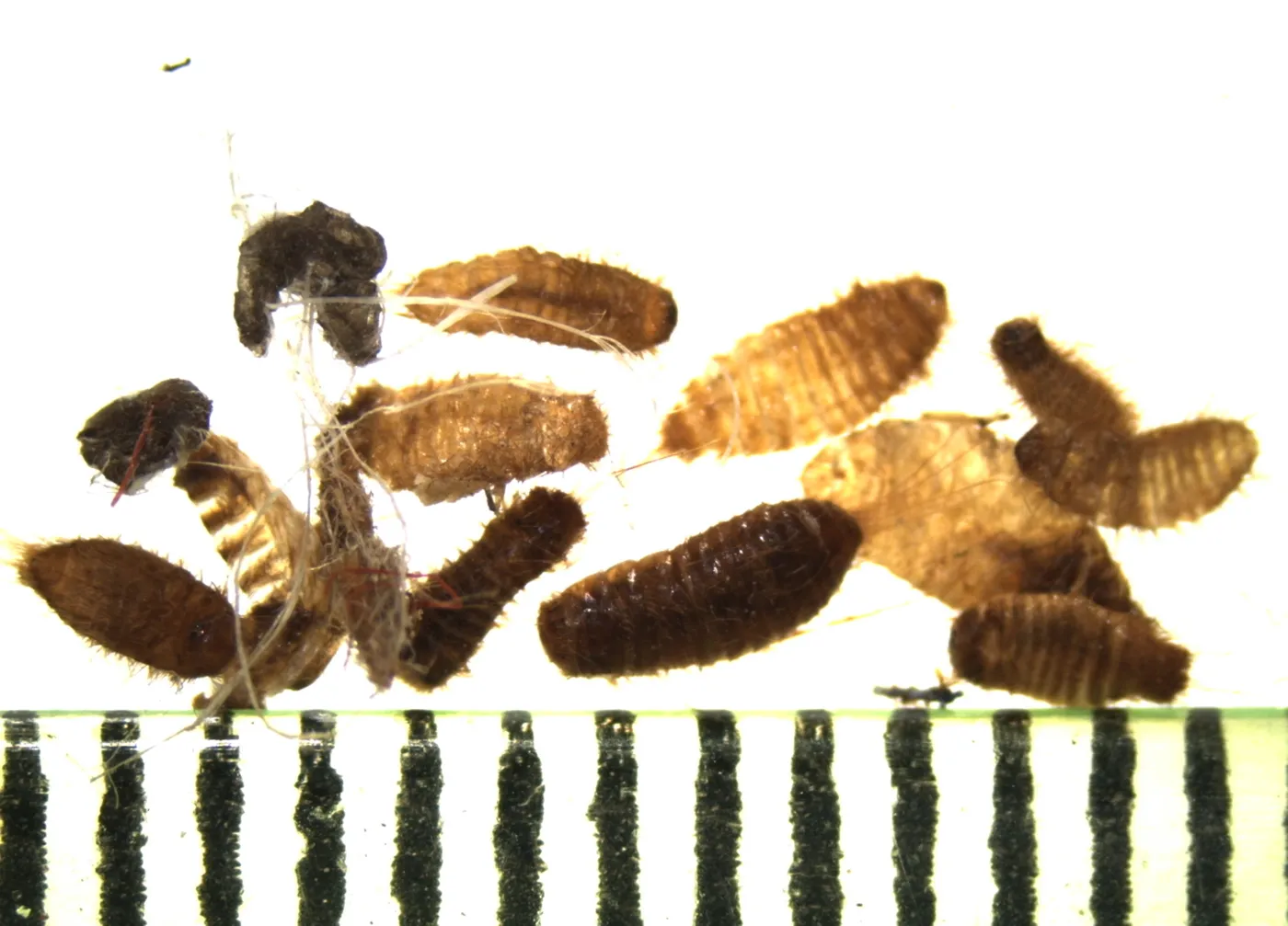
Larvae are the stage most often found, and the stage that does the damage:
- Up to about 5 mm long when full grown
- Yellowish-white when young, turning golden to reddish-brown
- Covered in long hairs, with dense tufts of barbed hairs toward the tail end
- Often found with piles of shed skins in grain, sacks, and packaging seams
You cannot reliably identify a khapra beetle by eye. It looks almost the same as several native Trogoderma species. Confirmation takes a trained entomologist with a microscope, and sometimes a DNA test.
Common Species
The khapra beetle belongs to the genus Trogoderma. Related species found in North America include:
- Warehouse beetle (Trogoderma variabile): the most common stored-food Trogoderma in U.S. and Canadian homes and warehouses
- Cabinet beetle (Trogoderma inclusum): feeds on stored foods and dried animal products
- Glabrous cabinet beetle (Trogoderma glabrum): found in stored grain and food plants
Other dermestids that people mix up with khapra beetles include the varied carpet beetle, the black carpet beetle, and the larder beetle.
Khapra Beetle Behavior and Biology
Habitat
Khapra beetles thrive in hot, dry places. They are established in parts of South Asia, the Middle East, North Africa, and sub-Saharan Africa. They live almost entirely indoors in grain stores, warehouses, mills, and shipping containers.
In North America, khapra beetles only show up when they arrive in imported goods. Common sources include:
- Rice, dried beans, chickpeas, and lentils
- Spices, dried chilies, and seeds
- Burlap sacks, pallets, and shipping container floors
- Food carried in luggage or sent through the mail
Diet
Larvae feed on a wide range of dry foods:
- Wheat, rice, barley, corn, and other grains
- Flour, cereal products, and malt
- Dried beans, peas, nuts, and oilseeds
- Dried fruit and spices
- Dried animal products such as fish meal and milk powder
Larvae chew into the germ of grain kernels first. In heavy infestations, the top layer of stored grain can turn into a mix of hollow kernels, hairs, shed skins, and droppings. Adults eat little or nothing.
Life Cycle
Khapra beetles go through four stages: egg, larva, pupa, and adult.
- Eggs are laid loosely on grain or in cracks. A female may lay dozens of eggs.
- Larvae molt many times as they grow. In hot conditions they can reach adulthood in about a month.
- Pupae form inside the last shed larval skin.
- Adults live only a couple of weeks. They mate soon after emerging.
Development slows sharply in cool weather. Larvae can also enter diapause, a resting state, when food runs short. In diapause they hide in cracks and can survive for years without eating. They are also hard to kill with some fumigants. These traits explain why the pest is so feared.
History in North America
Khapra beetles were found in California in 1953. The infestation spread to Arizona, New Mexico, and northern Mexico. A federal and state eradication program took more than a decade and cost millions of dollars. The pest was declared eradicated in the 1960s. Since then, strict USDA import rules have kept it out, though U.S. Customs and Border Protection still intercepts it at ports of entry.
Treatment Methods for Khapra Beetles
Khapra beetles are a regulated quarantine pest. Treatment is directed by government plant health officials, not by homeowners or routine pest control.
If You Suspect a Khapra Beetle
- Do not move or throw away the food. Moving it can spread larvae.
- Bag and freeze samples. Seal a few insects and the food package in a zip-top bag and freeze it.
- Report it. In the U.S., contact your state department of agriculture, your county extension office, or USDA APHIS. In Canada, contact the Canadian Food Inspection Agency.
- Wait for a confirmed ID before cleaning out the whole pantry.
How Officials Control Khapra Beetles
Confirmed infestations are handled under strict government rules. Methods that work include:
- Fumigation of commodities and structures under approved treatment schedules
- Heat treatment that raises the product or space to lethal temperatures
- Controlled atmospheres with low oxygen or high carbon dioxide
- Destruction of heavily infested shipments
- Deep cleaning of cracks, sacks, and equipment where diapausing larvae hide
- Monitoring traps and trace-back of other shipments from the same source
Prevention
- Avoid bringing rice, beans, seeds, or spices into the country in luggage
- Declare all food items to customs when you travel
- Store dry goods in sealed glass, metal, or thick plastic containers
- Check bulk and imported foods before adding them to your pantry
If lab results show a common pantry beetle instead, pantry pest control and good sanitation can clear up the problem. You can also browse our pantry pest library to compare other stored-food insects.
References
Other Carpet Beetles
Explore other species in the carpet beetles family
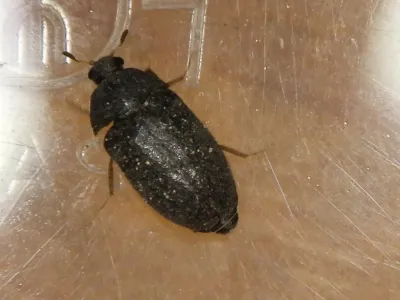
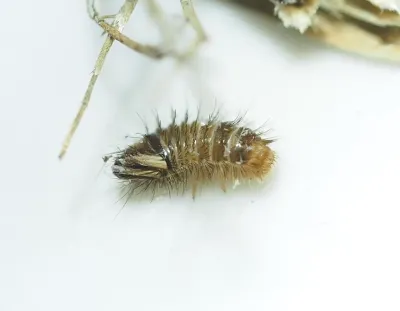
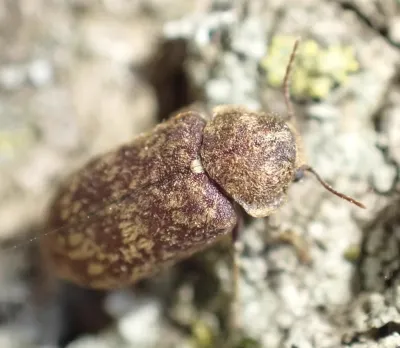
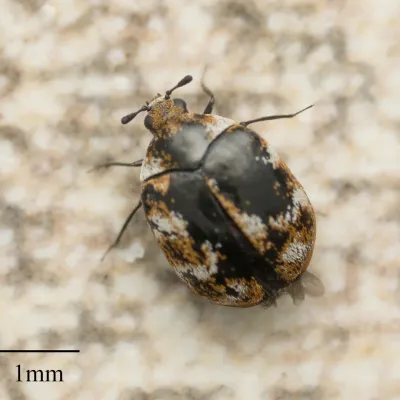
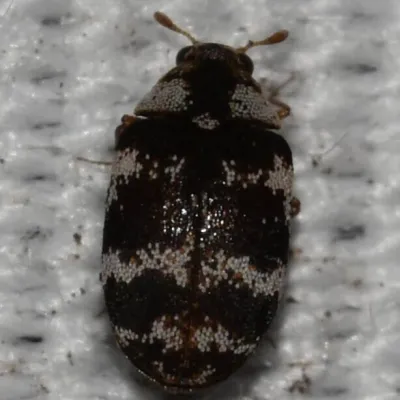
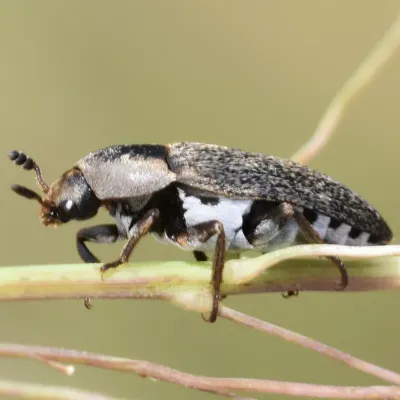
Commonly Confused With
Khapra Beetles are often mistaken for these similar pests
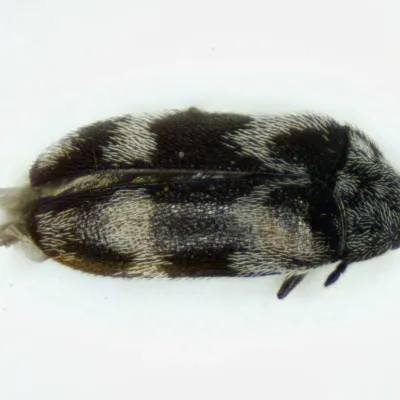
Where Khapra Beetles Are Found
Hover over states to see their names. Green regions indicate where khapra beetles have been reported.
Common Questions about Khapra Beetles
Are khapra beetles in the United States?
+
No. Khapra beetles are not established anywhere in the United States, Canada, or Mexico. An outbreak found in California in 1953 spread to Arizona, New Mexico, and northern Mexico, but a long federal and state eradication program wiped it out by the 1960s. Today, inspectors still catch khapra beetles in imported cargo, luggage, and mail, which is why the pest remains under strict USDA quarantine rules.
I found hairy larvae in my pantry. Are they khapra beetles?
+
Almost certainly not. Hairy larvae in a North American pantry are usually warehouse beetles or carpet beetle larvae, which are common here. Khapra beetle is only a real possibility if the infested food came from overseas, such as rice, beans, spices, or seeds carried back in luggage from Asia, the Middle East, or Africa. Only a trained lab can tell khapra larvae apart from close relatives.
What should I do if I think I found a khapra beetle?
+
Do not throw the food away or move it to another building. Seal the item and any insects in a zip-top bag, then place it in the freezer. Contact your state department of agriculture, your local extension office, or USDA APHIS in the U.S. In Canada, contact the Canadian Food Inspection Agency. They can confirm the identification and tell you what to do next.
Why is the khapra beetle such a big deal?
+
Khapra beetle larvae can destroy large amounts of stored grain and contaminate it with hairs, shed skins, and droppings. They survive for long periods without food and resist many common treatments. A confirmed outbreak can lead to quarantines, costly treatments, and lost export markets. It is listed among the world's worst invasive species.
Do khapra beetles bite or harm people?
+
Khapra beetles do not bite, sting, or spread disease. Like other dermestid larvae, their barbed hairs can irritate skin, and eating heavily contaminated food may cause stomach upset. The main harm is economic, not medical.
Can khapra beetles fly?
+
Adults have wings but are not known to fly. They spread almost entirely through people moving infested grain, packaging, sacks, and shipping containers. That is why inspections at ports of entry are the main line of defense.
How long can khapra beetle larvae live without food?
+
Khapra beetle larvae can enter a resting state called diapause when food is scarce or temperatures drop. In this state they hide in cracks and seams and can survive for several years without eating. This makes infestations very hard to wipe out once they start.

With five years of hands-on experience in the pest control industry, George Schulz is a registered technician with the Virginia Pest Management Association and a proud third-generation professional in a family business that's been protecting homes for over 58 years. He manages and trains a team of service pros while also leading internal research efforts—recently spearheading a deep-dive review of thousands of documents on pest control materials to hand-pick the most kid and pet friendly, most effective solutions tailored specifically for homes in the DC metro area.
Local Khapra Beetles Help
Dealing with khapra beetles at home? Our licensed technicians provide pest control across Northern Virginia and Maryland.
