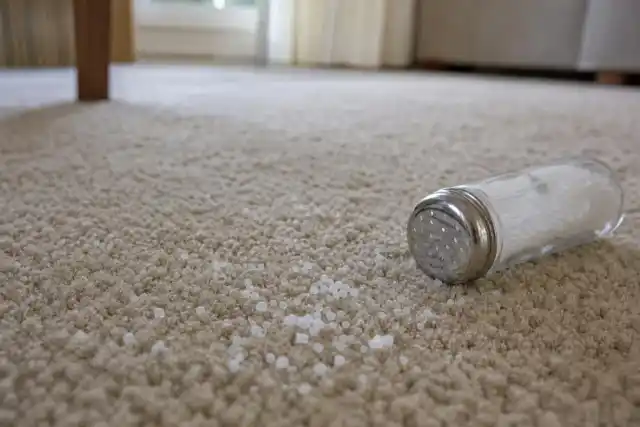

No, there’s no proof that salt kills fleas. No study has tested table salt or sea salt as a flea treatment. The flea guides from university extension offices don’t recommend it either. When “salt the carpet, then vacuum” seems to work, the vacuum is doing most of the job.
Salt is one of the most common flea home remedies I see online, and I understand the appeal. It’s cheap and it’s already in the kitchen. However, salt can’t reach the fleas that matter most, and a dog or cat that licks it up can get very sick. Below, I’ll walk through where the salt idea comes from, why it falls short, and the steps that actually clear fleas from a home.
Does Salt Kill Fleas? The Short Answer
Salt is not a proven flea killer. Here’s how it stacks up against each part of a flea problem:
| Flea Stage (Where It Lives) | Does Salt Kill It? |
|---|---|
| Adults on your pet (fur and skin) | No |
| Adults in the house (carpet, bedding) | No evidence |
| Eggs (deep in carpet and pet beds) | No evidence |
| Larvae (carpet base, under furniture) | Unproven theory |
| Pupae (sealed in silk cocoons) | Very unlikely |
Where the Salt Idea Comes From
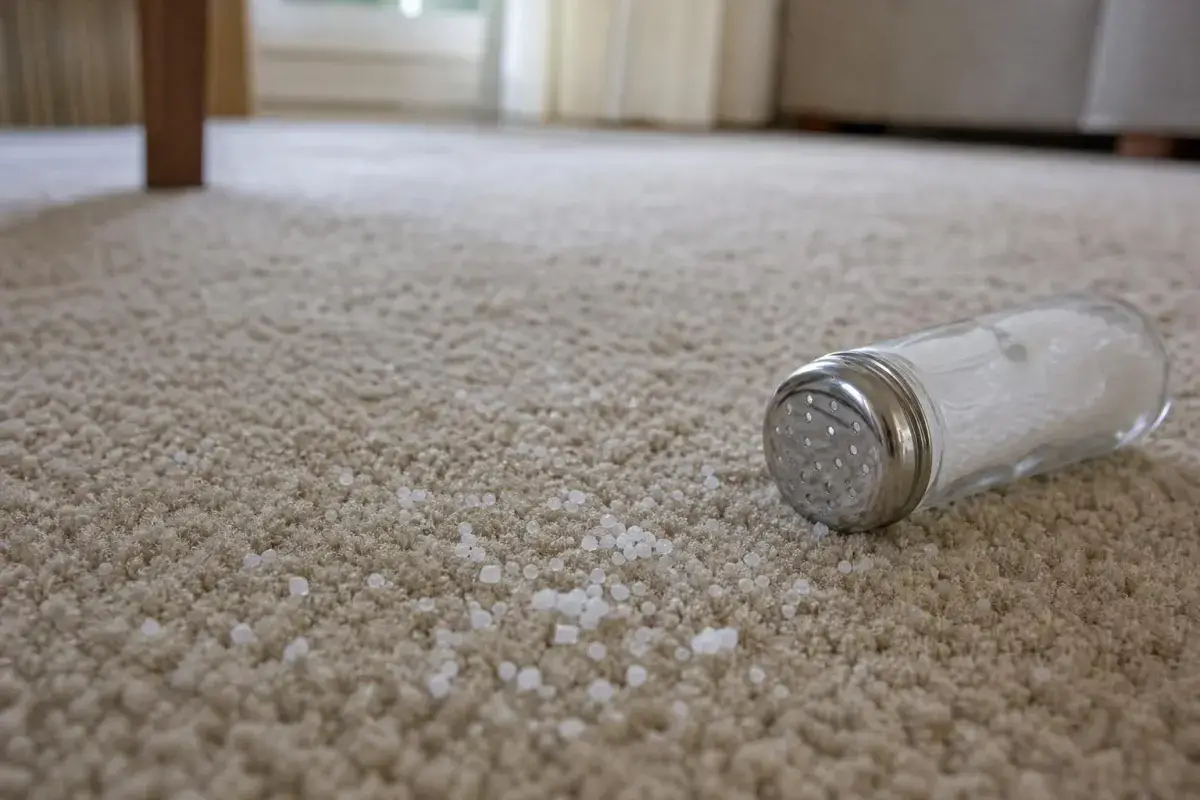
The theory sounds reasonable. Salt pulls moisture out of things, and flea larvae need moisture to live. So, the idea goes, salt sprinkled into carpet should dry out the eggs and larvae before they grow up.
There is a grain of truth in the moisture part. Texas A&M AgriLife Extension notes that flea larvae die when relative humidity drops below 50 percent. In other words, dry air really can kill larvae. However, nobody has shown that a layer of salt on a carpet creates those conditions where the larvae actually live.
I looked for research on salt as a flea treatment and found none. The major flea guides from university extension offices leave salt out entirely. That includes the University of Kentucky’s flea fact sheet, which instead calls for treating the pet, cleaning, and using targeted insecticides.
A 2017 review of cat flea biology in the journal Insects explains why moisture matters. Flea larvae can absorb water from the air when humidity is above about 53 percent. Pupae and adults can’t. That’s why dry conditions hurt larvae. It’s also why the drying theory only aims at one stage of the flea life cycle, and it still has no salt study behind it.
Why Salt Falls Short Against Fleas
Even if salt dried out a few larvae, it would miss most of the problem. Here’s why.
Most of the Problem Is Hidden
Adult fleas are only a small part of an infestation. According to Washington State University, a typical flea population in a home is 50% eggs, 35% larvae, 10% pupae, and only 5% adults. Those eggs and larvae sink deep into carpet and pet bedding, well below a surface layer of salt.
Cocoons Shield the Next Wave
Flea pupae spin silk cocoons that protect them. The University of California’s pest management program says fully formed fleas can wait inside their cocoons for up to 12 months in cool conditions. They hatch when they sense warmth, movement, or pressure. That’s why fleas keep showing up for weeks after any treatment, salt or otherwise.
Salt Never Touches Your Pet
Your dog or cat is where adult fleas feed and lay eggs. Salt on the carpet does nothing to those fleas. As a result, your pet keeps dropping fresh eggs around the house every day. In the DC area, most of those fleas are cat fleas, the same species that infests both dogs and cats.
The Real Risk: Salt and Your Pets
This is the part that worries me most. A carpet full of salt is easy for a dog or cat to lick, roll in, or carry on their paws.
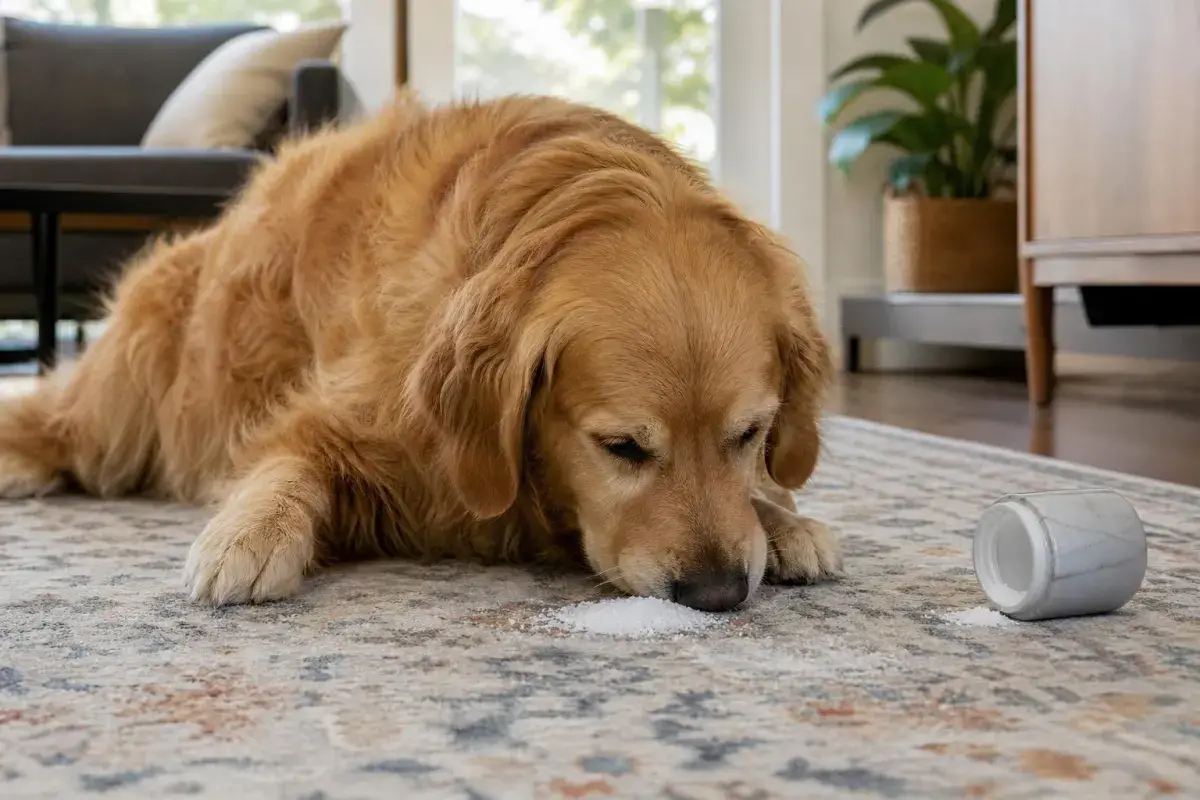
According to the Merck Veterinary Manual, the lethal dose of salt in dogs is about 4 grams per kilogram of body weight. Signs can appear at just 2-3 grams per kilogram. For a 10-pound dog, that’s only a couple of teaspoons. Vomiting usually comes first, within a few hours. Weakness, diarrhea, tremors, and seizures can follow.
The simplest fix is to keep salt off the floor altogether. The steps below clear fleas without putting your pets at risk.
What Actually Kills Fleas Instead of Salt
The good news is that the methods that work are simple. They just take a couple of weeks of steady effort, because new fleas keep hatching from cocoons.
Vacuum carpets, rugs, furniture, and the edges of baseboards every day or every other day. A study from Ohio State University found vacuuming killed an average of 96% of the adult fleas it picked up, along with all of the pupae. The study was partly funded by a vacuum maker, but the result lines up with extension advice. Vacuuming also wakes up fleas in cocoons, so they hatch sooner and hit your other treatments. Empty the canister or toss the bag in an outdoor trash can each time.
Wash pet bedding, throw blankets, and any washable covers where your pets rest. Use hot, soapy water and a hot dryer cycle. Do this at least once a week until the fleas are gone.
Every dog and cat in the home needs a flea product at the same time. The CDC recommends asking your veterinarian which flea control product is right for your pet, and treating year-round. Never use a dog product on a cat unless the label says it’s for cats.
An insect growth regulator (IGR) stops flea eggs and larvae from growing into biting adults. You’ll find it in many labeled carpet sprays, often paired with an adult flea killer. Always follow the label, and keep pets and kids off treated areas until they dry.
Expect to see a few fleas for two to three weeks as the last cocoons hatch. That’s normal. If you still see plenty of fleas after three weeks of steady work, it’s time to call a professional.
For a closer look at carpet methods, see our guide on how to kill fleas in carpet. If the problem covers more than one room, our full plan for getting rid of fleas in your house walks through the yard too.
Here is how salt compares with the steps above at a glance.
- Salt: no proven effect on fleas, can poison pets, and leaves a mess in the carpet
- Vacuuming: kills most of the fleas it picks up, and it’s free
- Hot wash and dry: clears fleas and eggs from bedding and blankets
- Vet-recommended pet product: stops your pet from reseeding the house with eggs
- Growth regulator: stops the next generation before it can bite
What About Other Home Remedies?
Salt isn’t the only pantry flea fix making the rounds. Baking soda and vinegar get a lot of attention too, and they have the same basic problem: no good evidence. We’ve broken down the research on each one:
- Does baking soda kill fleas? covers the popular salt and baking soda mix.
- Does vinegar kill fleas? explains why vinegar sprays and rinses fall short.
- Does diatomaceous earth kill fleas? looks at a powder with a little more science behind it.
When to Call a Professional
Fleas are one of the pests our licensed technicians treat across Northern Virginia, DC, and Maryland. A professional flea treatment focuses on where fleas develop: carpets, pet resting areas, furniture edges, and baseboards. It typically pairs a product that kills adult fleas with an insect growth regulator. All the products we use are EPA approved, having passed through our internal research team. Each one is something we’d feel comfortable using in our own homes.
It’s time to call a pro if:
- You’ve vacuumed daily and treated your pets for three weeks and still see fleas.
- You’re getting bitten, especially around your ankles.
- Fleas are showing up in more than one room.
- You moved into a home where the last owners had pets.
You can read more about how we handle fleas on our flea control service page.
The Bottom Line on Salt and Fleas
Salt doesn’t have any research behind it as a flea treatment. At best, it might dry out a few larvae near the surface of the carpet. It can’t reach fleas on your pet or fleas sealed in cocoons, and it can make dogs and cats sick. If you’ve seen fewer fleas after salting the carpet, give your vacuum the credit. Daily vacuuming, hot-washed bedding, a vet-recommended product for every pet, and a growth regulator will get you much further.
Better Termite & Pest Control has served the DC metro area for 58 years, with more than 1,800 reviews and over 100,000 homes treated. If fleas keep coming back, call us at 703-683-2000 or email info@bettertermite.com for an estimate. We’re happy to answer questions, even if you just want to know whether your DIY plan is on track.