
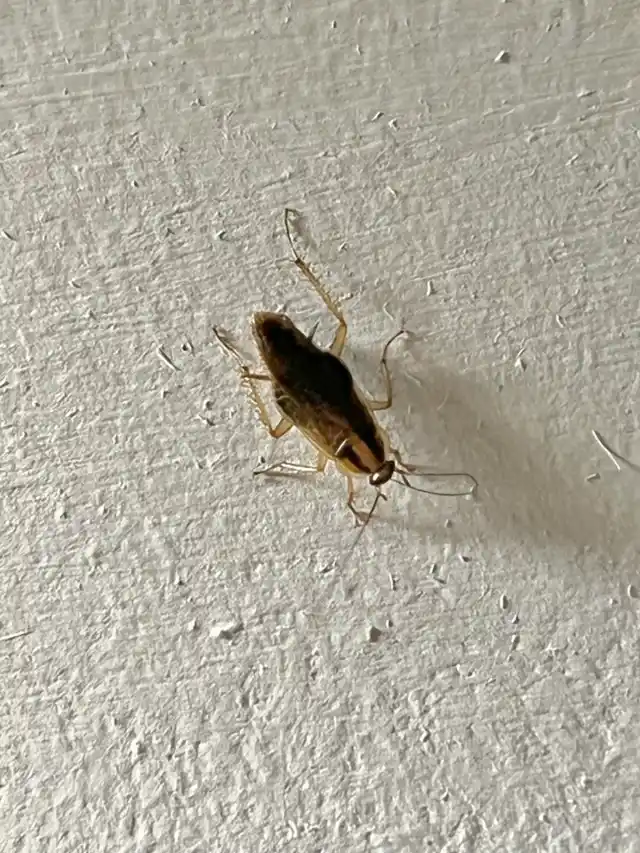

TLDR: German cockroaches have wings but do not fly. At most they flutter down from a high spot. They run instead, and they hide in tight spaces near food and water. If you see a flying roach, it’s likely a different species. German cockroaches spread fast through hitchhiking and rapid breeding. Contact a professional as soon as you spot one.
Can German cockroaches fly? The short answer is no, German cockroaches do not fly. Adults have two full pairs of wings, but the most they do with them is flutter or glide a short way down from a high shelf. Penn State Extension says it plainly: they have fully developed wings, yet they do not fly.
If a roach flew at you in Northern Virginia or Maryland, it was almost certainly a different species. The usual suspects are a male wood cockroach that came in toward a porch light, a smokybrown cockroach, or a male brown-banded cockroach. The table further down shows which local roaches have wings and which ones use them.
I’ve worked in pest control since 2015 and have dealt with many German cockroach problems across the DC metro area. German, oriental, and American roaches are some of the most common species in this region. Knowing how these pests move and behave is the first step toward getting rid of them.
Do German Cockroaches Have Wings?
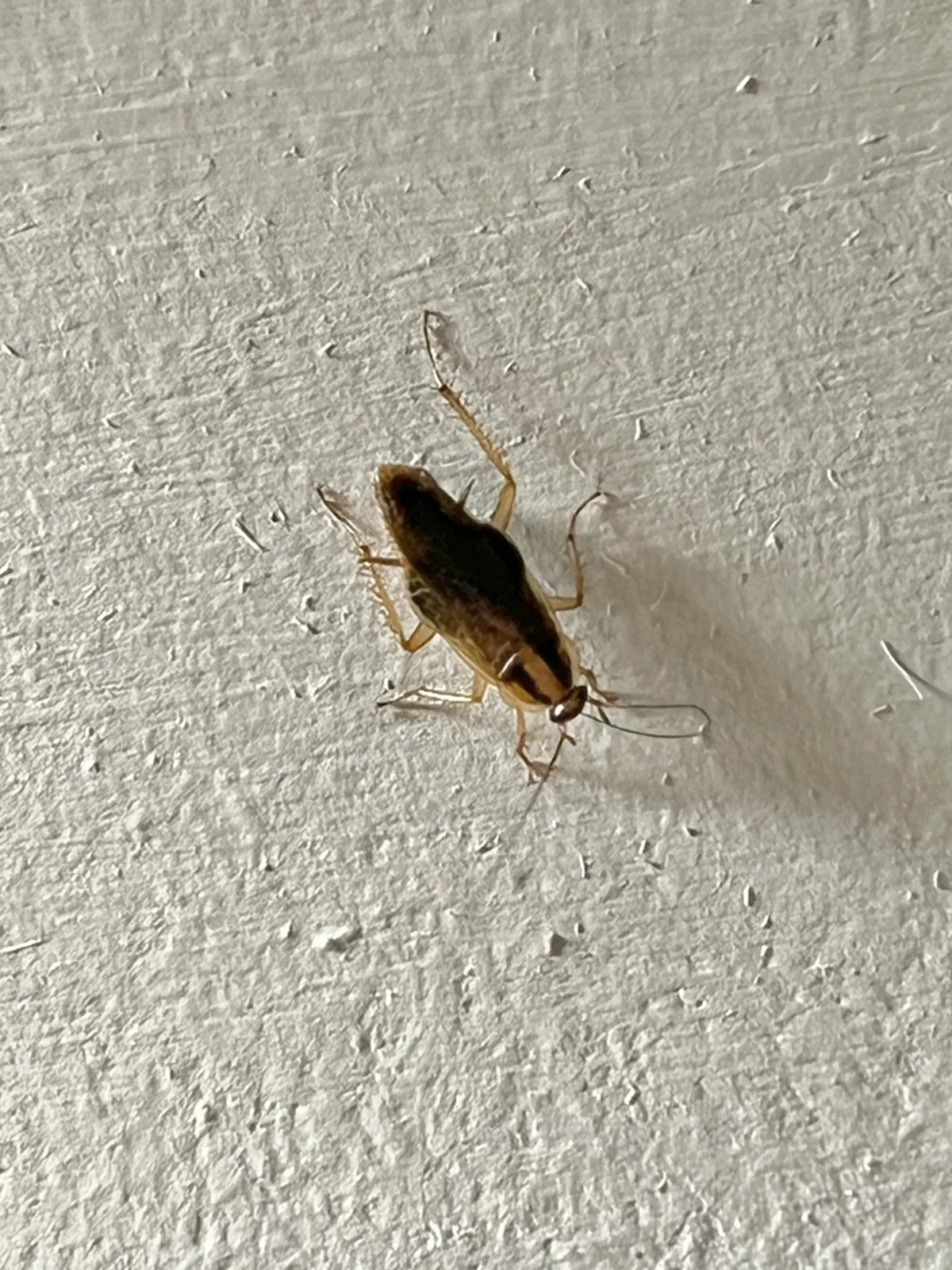
Yes, adult German cockroaches do have wings. Both males and females grow a full set, and the wings cover the whole abdomen. You can see them lying flat against the roach’s back.
Like most roaches, they actually have two pairs. The top pair is thicker and a bit leathery. It works like a cover. The bottom pair is thin and clear, folded like a fan underneath. That thin pair is what a flying roach beats. On a German roach it hardly ever opens.
But having wings doesn’t mean they use them. German cockroaches are built for running, not flying. Their wings are small compared to their body. They just don’t create enough lift for real flight.
According to PestWorld.org, German cockroaches “rarely fly. Instead, they prefer to run.” They have fully working wings. But research shows they may only glide short distances of 1-2 meters when they must, such as when escaping danger.
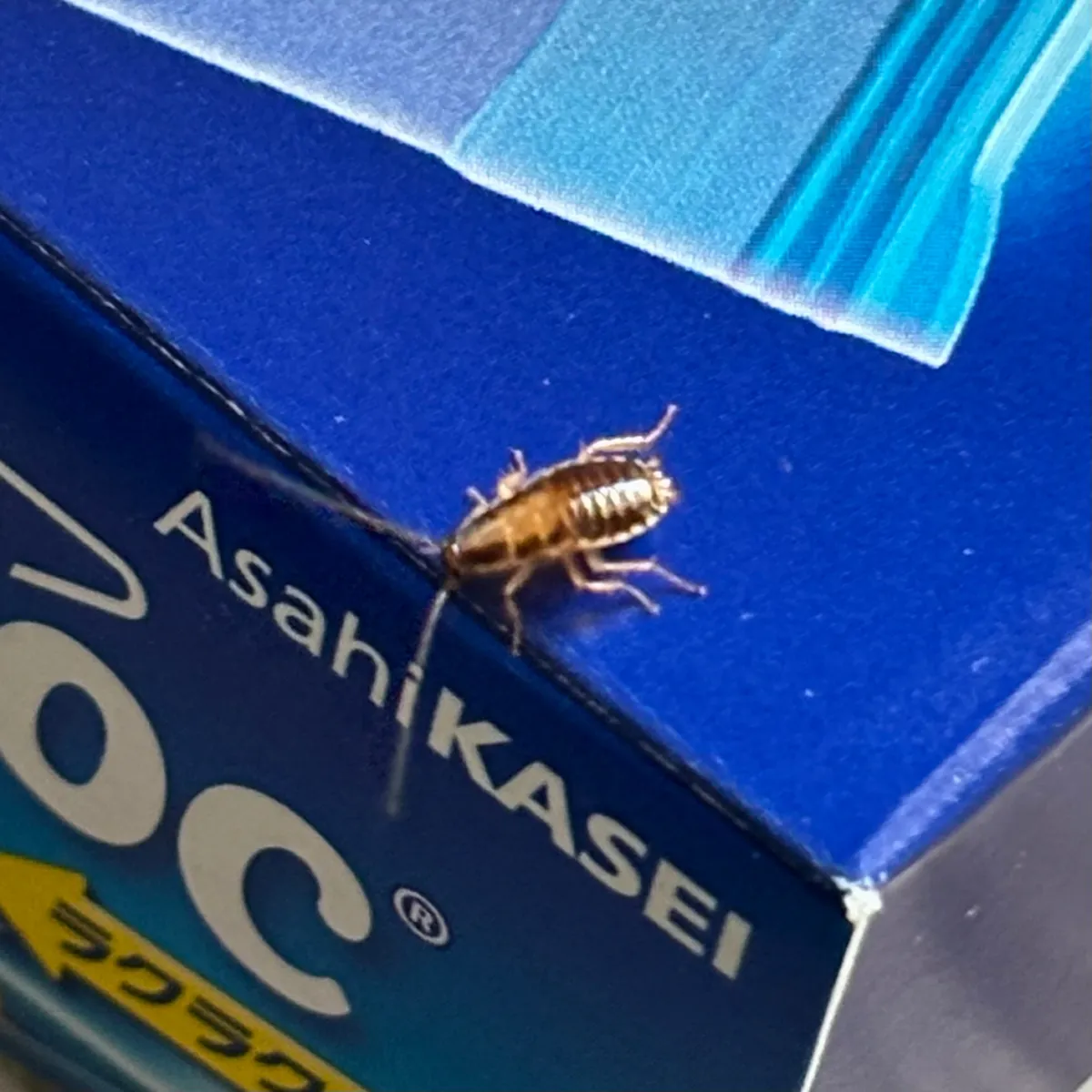
Here’s what German cockroaches look like up close. Notice the wing structure and the dark stripes that set them apart from other roach species.

Why Don’t German Cockroaches Fly?
There are several reasons why German cockroaches prefer running over flying.
First, they don’t need to fly. German cockroaches live indoors where food and shelter are always close by. Unlike outdoor insects that fly to find food, these roaches live right next to their food sources.
Second, running works better. German cockroaches are quick for their size, and they rarely stray far from a crack. When startled, they dart into that gap much faster than they could take flight. (You’ll see “3 miles per hour” quoted online. That number comes from lab studies of the much larger American cockroach, not this one.)
Third, their body isn’t built for flight. Their wings are too small for their body weight. This makes getting off the ground very hard.
German Cockroaches vs American Cockroaches: Flying Ability
One of the easiest ways to tell these two species apart is by their flying behavior. Here’s how they compare:
| Feature | German Cockroach | American Cockroach |
|---|---|---|
| Size | 1/2 to 5/8 inch | Up to 2 inches |
| Color | Light brown/tan | Reddish-brown |
| Flying ability | Does not fly | Can fly short distances in heat; rarely flies this far north |
| Wings | Has wings, doesn’t use them | Has wings, uses them |
| Identifying mark | Two dark stripes on back | Light yellow band behind head |
American cockroaches are sometimes called “palmetto bugs” or “water bugs.” They can fly short distances, mostly when it’s hot. That happens far more in the Deep South than here. University of Maryland Extension notes that adults are poor to fair fliers in the southern U.S. but do not fly in Maryland.
If you’re trying to figure out which type of cockroach you’re dealing with, check out our guide on bugs that look like roaches for more identification help.
Do All Cockroaches Have Wings? Which Roaches Fly in Virginia and Maryland
Most adult cockroaches have wings, but not all of them. And wings don’t tell you much on their own. Some roaches have full wings and never fly (the German roach). Some have wings only on the males. Some females just have small stubs. Baby roaches of every species have no wings at all.
University of Maryland Extension lists five roaches that commonly get into homes here: German, brown-banded, American, oriental, and Pennsylvania wood cockroaches. Virginia Tech adds the smokybrown cockroach for Virginia. Here’s how their wings compare:
| Roach | Wings | Does it fly? | Where you’ll usually find it |
|---|---|---|---|
| German | Full wings, males and females | No. Flutters down from a high spot at most | Kitchens, bathrooms, near appliances |
| American | Full wings, males and females | Rarely. Glides in heat; UMD says it doesn’t fly in Maryland | Damp basements, floor drains, sewers |
| Oriental | Males: wings cover about 3/4 of the body. Females: small pads | No | Damp basements, crawl spaces, under mulch |
| Brown-banded | Males: full wings. Females: short wings | Males yes, females no | Warm, dry rooms away from the kitchen |
| Pennsylvania wood | Males: long wings. Females: short, useless wings | Males are strong fliers; drawn to lights | Leaf litter and woodpiles; strays indoors |
| Smokybrown | Full wings past the body, males and females | Yes, good fliers; drawn to lights | Outdoors in tree holes, woodpiles, attics |
Sources for the table: UMD Extension, Penn State Extension on American, oriental, brown-banded, and wood cockroaches, and the University of Florida on smokybrowns.
The wood cockroach is the one people most often catch flying in the DMV. Penn State notes that males fly and are sometimes drawn to lights at night, but wood roaches can’t live indoors. They dry out and die within a few days. So one flying roach that came in through an open door is a very different problem from German roaches in your cabinets.
One more look-alike is worth knowing about. The Asian cockroach looks almost exactly like a German cockroach, stripes and all. The University of Florida sums up the difference in one line: it looks very much like a German cockroach, except it flies. It’s mostly a Deep South pest and isn’t on UMD’s list of common Maryland roaches. Our Asian vs German cockroach guide covers how to tell them apart.
For a closer look at the roaches that do fly, see our flying cockroach guide.
How to Identify German Cockroaches
Since German cockroaches don’t fly, knowing their other identifying features is important. Here’s what to look for:
Size and Color
German cockroaches measure about 1/2 to 5/8 inch long as adults. That’s roughly the size of a penny. They have a light brown to tan color, though females tend to be slightly darker than males.
The Two Dark Stripes
The most telling feature is the two dark, parallel stripes on their back. These stripes run from behind the head to the base of the wings. You can see them in both adults and nymphs. None of the other common household roaches in our area has this marking. The only close match is the Asian cockroach, a near-twin that flies and is mostly a Deep South pest.
Physical Features
German cockroaches have six spiny legs, long thin antennae, and an oval-shaped body. Their wings lay flat against their back when at rest. Young roaches (nymphs) are wingless but still have those telltale dark stripes.
Where German Cockroaches Prefer to Hide
Where these pests hide helps explain why they don’t need to fly. German cockroaches like tight, warm, damp spaces near food and water. According to pest control experts, they can squeeze through gaps as small as 3/8 inch.
Common hiding spots include:
- Behind and under kitchen appliances like refrigerators, stoves, and dishwashers
- Inside cabinets and drawers, especially near food
- Under sinks where moisture collects
- In cracks and crevices around countertops and backsplashes
- Behind wall outlets and switch plates
- Near water heaters where it’s warm
Their preference for these tight spaces means flying isn’t practical. Running and squeezing into cracks works far better for these pests.
In my years treating cockroach problems in the DC metro area, German cockroaches are almost always in kitchens and bathrooms. I’ve never once seen a German cockroach fly during a job. They scatter like lightning when you turn on the lights. But they always run, never fly. If you see a roach take flight, it’s likely a different species, such as a wood cockroach or smokybrown that came in toward a light.
Since German cockroaches stay so close to food and water, kitchens are almost always where problems start. If you’re finding droppings near your appliances or seeing roaches at night, it’s time to act.
Can Baby Cockroaches Fly?
No. Baby cockroaches of any species cannot fly, and that includes baby German cockroaches. Young roaches (called nymphs) don’t have working wings. A German cockroach nymph sheds its skin six or seven times over 6 to 31 weeks, according to Penn State Extension. Wing pads show up on the older nymphs, and full wings only appear after the last molt.
Even then, as we’ve covered, German cockroach adults don’t really fly. So at no point in their life do German cockroaches truly fly. If a small roach flies at you, it’s an adult of a small flying species, such as a male brown-banded cockroach, not a baby.
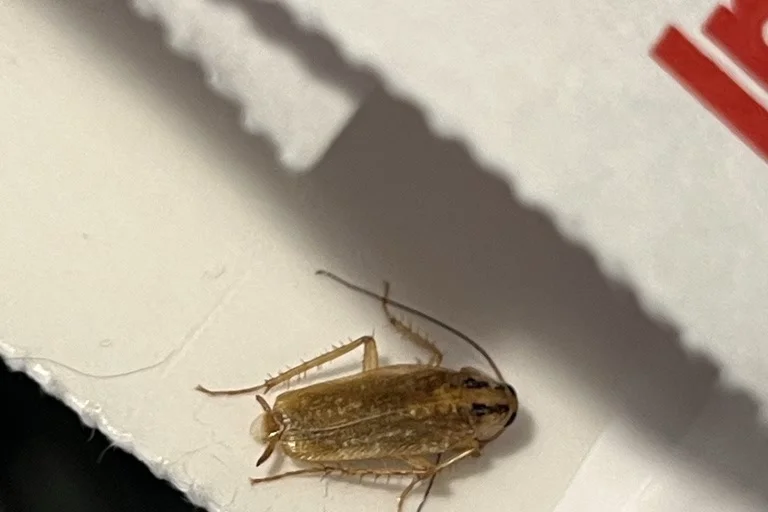
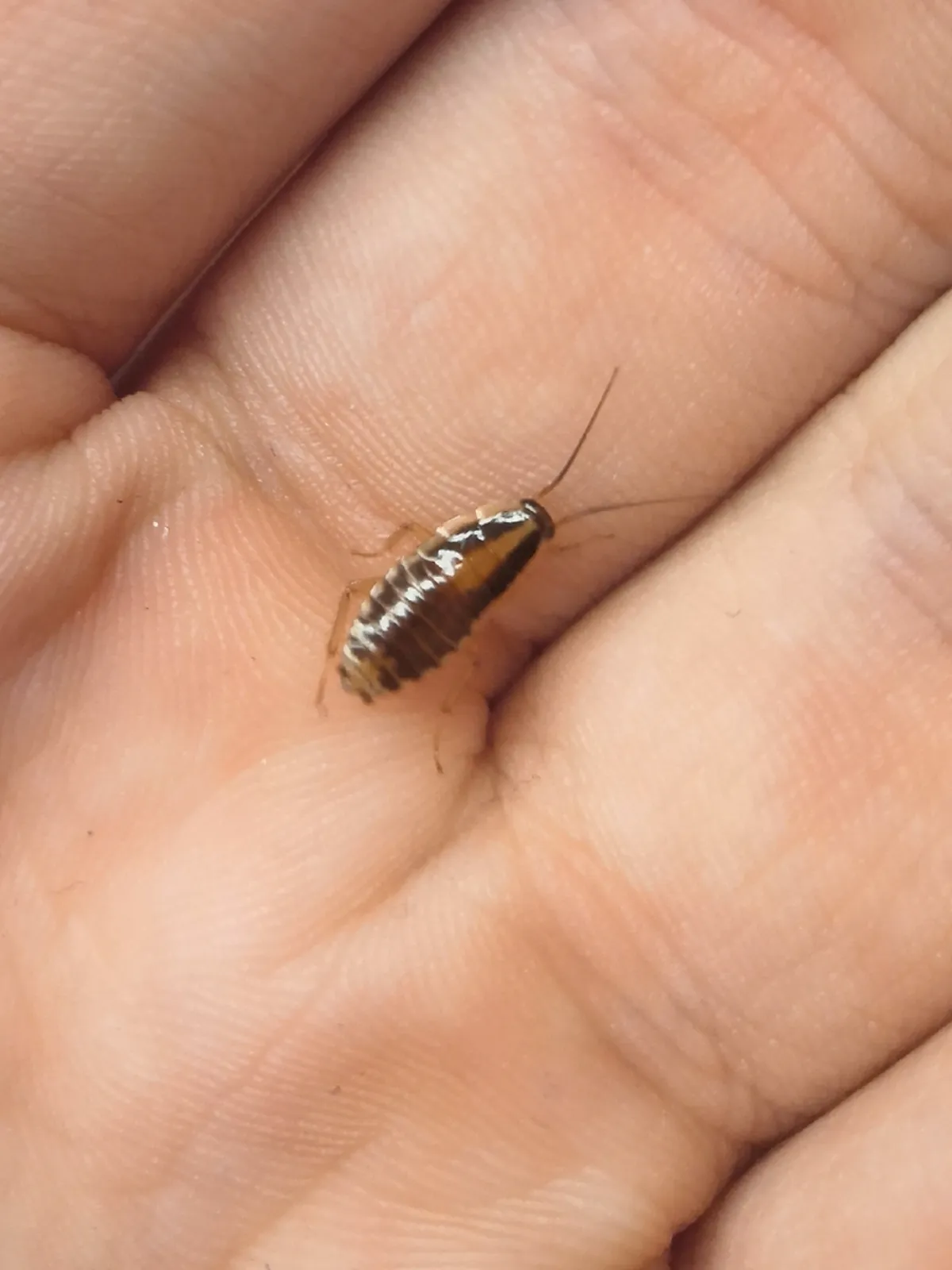
Want to learn more about identifying young cockroaches? Our baby German cockroach guide breaks down size, color, and behavior at each life stage.
Why German Cockroach Infestations Spread So Quickly
Even though German cockroaches can’t fly, they spread through homes fast. Here’s how they do it:
- They hitchhike. They come into homes through grocery bags, boxes, used appliances, and even clothing.
- They run fast. Their speed and small size lets them move between rooms and apartments with ease.
- They breed quickly. Each egg case holds 30 to 48 eggs, and a female makes four to eight of them in her life. Penn State Extension figures that over 10,000 descendants can be produced in one year.
- They hide well. They spend most of their time packed into cracks near food and water. That makes them hard to spot until the problem is severe.
Daren, one of our registered technicians, had a Fort Hunt house that took about a year and a half to get under control. The roaches didn’t fly in. The owner had bought a refrigerator, and the roaches probably rode in with it. He also kept bringing Costco and Amazon cardboard into the house. “A lot of times that’s how roaches get transported, in the corrugations of the cardboard,” Daren says. Once the owner started breaking down boxes outside and throwing them away, it still took about six more months, but the house got under control.
What to Do If You Find German Cockroaches
Finding German cockroaches in your home calls for immediate action. These pests don’t just fly away, and they won’t leave on their own.
Seeing one German cockroach usually means there are many more hiding nearby. The sooner you address the problem, the easier it will be to control.
Check common hiding spots in your kitchen and bathroom. Look for droppings (small, dark “pepper-like” specks), shed skins, and egg cases. Note where you’re seeing the most activity.
While sanitation alone won’t end an infestation, it helps. Clean up food debris, fix any water leaks, and store food in sealed containers. This removes some of their resources.
German cockroach problems usually need professional treatment. Store-bought sprays often scatter roaches without killing them. This can spread the problem to new areas.
At Better Termite & Pest Control, our team uses gel baits, growth regulators, and crack-and-crevice treatments that work against German roaches. We’ve helped many homeowners in Northern Virginia, Fairfax, Bethesda, and the DMV area get rid of these stubborn pests.
When You Might See a Cockroach “Fly”
While German cockroaches don’t fly, they might appear to in certain situations:
Gliding when startled. If knocked off a high spot, a German cockroach might spread its wings to slow its fall. This isn’t true flight. It’s just controlled falling.
Running down walls. When roaches run fast down a wall, it can look like flying at first glance.
Wrong ID. You might be seeing a different species. Wood cockroaches, smokybrowns, and male brown-banded roaches all fly. Asian cockroaches look almost the same as German cockroaches and fly well, but they’re mostly a Deep South pest.
Daren says mix-ups like this are among the most common he sees. “As soon as a customer sees a roach they think German roach,” he says. His rule of thumb: a big brown-red or black roach is almost always an outdoor roach. Tiny roaches all through the cabinets and bathrooms are German roaches, and that’s a real issue.
If you’re not sure what species you have, our techs can help identify the pest and suggest the right treatment.
Get Help With German Cockroach Control
German cockroaches may not fly, but they’re still one of the hardest pests to remove. They breed fast, hide well, and resist many DIY treatments. That’s why professional help is the best option.
If you have German cockroaches in your home, don’t wait. Call Better Termite & Pest Control at 703-683-2000 or email us at info@bettertermite.com. We’ll inspect your home and create a treatment plan. Our licensed techs have the tools and know-how to get your home roach-free.