
TLDR: Boxelder bugs are not harmful. They do not bite, sting, carry disease, or damage the structure of a house. What they do is show up by the hundreds on sunny walls in the fall, wander inside, and leave fecal spots on light-colored surfaces. Vacuum them, wash the clusters off the siding, and treat the outside of the house in late August if it happens every year.
No, boxelder bugs are not harmful. They don’t bite people, they aren’t poisonous, and they can’t damage your house. The worst thing they do is stain a curtain and creep you out in large numbers.
I’ve been in the pest control business since 2015. I’m third generation at Better Termite, and boxelder calls follow the same script every October. A homeowner counts a few hundred red-and-black bugs on the south wall. Anything that numerous must be doing damage, they figure, so they call us. It isn’t. Here are the short answers to what people ask.
| Question | Answer |
|---|---|
| Do they bite? | No |
| Do they sting? | No |
| Poisonous to people or pets? | No |
| Do they carry disease? | No |
| Do they damage the house? | No |
| Do they breed indoors? | No |
| Do they hurt trees? | Rarely, cosmetic only |
| Do they stain things? | Yes, the real complaint |
Do Boxelder Bugs Bite?
No. Virginia Tech’s extension publication on the species states plainly that boxelder bugs “are not biting insects”. Their mouthparts are a slender straw built to pierce seed pods, not skin.
You will find the odd online report of a defensive jab if someone grabs one. That happens with a lot of true bugs. The University of Connecticut’s fact sheet puts it this way: there are reports that they bite people, but it is apparently very rare. In eleven years I have never had a customer show me a boxelder bite. What I do get is a homeowner who found a mark on her arm, saw the bugs on the wall, and put the two together.
The National Pesticide Information Center, run by Oregon State University, says boxelder bugs are “generally not known to bite, though there are rare reports of defensive biting,” and that they “do not sting or transmit disease.” If something is biting you at night and leaving welts in rows, look at a different pest. It is not these.
Are Boxelder Bugs Poisonous?
No. A boxelder bug has no venom gland and no sting. It doesn’t carry a pathogen that transfers to people. There is nothing on or in the insect that will poison you by touch.
Pets are the same story. If your dog or cat eats one, the likely result is drool, a face rub, or a small amount of vomiting. That is a reaction to the bug’s defensive odor, not poisoning. Cleaning up dead clusters so the dog isn’t eating a dozen of them is a reasonable precaution. Calling poison control is not.
Is the Box Elder Tree Poisonous?
Here the answer changes. This is the one thing on this page worth taking seriously. The tree is not a problem for people or dogs. It is a real problem for horses.
Box elder seeds contain hypoglycin A. It is a compound that blocks the way muscle cells burn fat. In horses that eat the seeds it causes seasonal pasture myopathy, and it moves fast. Watch for weakness, stiffness, trouble standing, and red-brown urine.
Veterinarians at the University of Minnesota identified hypoglycin A in box elder seeds as the cause of seasonal pasture myopathy in 2013. North Dakota State University Extension reports that about 75 percent of horses that develop the condition die within 72 hours. University of Minnesota Extension notes the horses that died were on heavily overgrazed pasture with no hay put out. Only female box elders make seeds, so if you board horses near one, find out which kind you have and keep them off that paddock in the fall.
This is worth separating from the bug question because the searches run together. “Are box elders poisonous” pulls up both, and the answers point in opposite directions: the insect is harmless. The female tree’s seeds are not, if you own horses.
Do Boxelder Bugs Cause Damage to Your House?
No. They have no chewing mouthparts, so they can’t tunnel into framing, bore holes in siding, or hollow out a joist. They don’t build nests in wall voids, and they don’t reproduce indoors. The National Pesticide Information Center is explicit that boxelder bugs do not reproduce inside homes. Every bug you see in January came in through a gap last October.
What they do is make a mess. Virginia Tech notes that indoors they “can emit strong odors and their feces stain surfaces like walls, carpets, curtains, and upholstery,” and that crushed bodies stain and smell too.
- Rust-colored fecal spotting on siding, sills, curtains, and light upholstery
- An orange smear and a sour smell if you step on one or vacuum a pile aggressively
- Dozens of dead bugs in window tracks and light fixtures over the winter
- The unpleasantness of a wall that looks like it’s moving on a warm afternoon
One correction worth making, because I see it repeated everywhere: people say boxelder bugs don’t smell and stink bugs do. Boxelder bugs absolutely release an odor when you crush them. It’s less intense than a brown marmorated stink bug’s, but it’s there. Vacuum rather than swat.
Are Boxelder Bugs Harmful to Plants and Trees?
Almost never in a way you’d notice. They feed on seeds, and secondarily on new leaves and soft tissue. The National Pesticide Information Center describes the result on host trees as “minor deformities in fruits and leaves or yellow leaf discoloration”. That is cosmetic. It is not a threat to the tree’s health.
Late in the season they will sometimes probe soft fruit, especially apples, plums, and peaches, leaving small dimples or corky spots at the puncture. Annoying if you grow fruit. Not an orchard-killer, and not a reason to spray a tree.
They don’t feed on houseplants, they don’t eat stored food, and they don’t chew fabric. If something is eating your sweaters, that’s carpet beetles or clothes moths, not these.
What Do Boxelder Bugs Look Like?
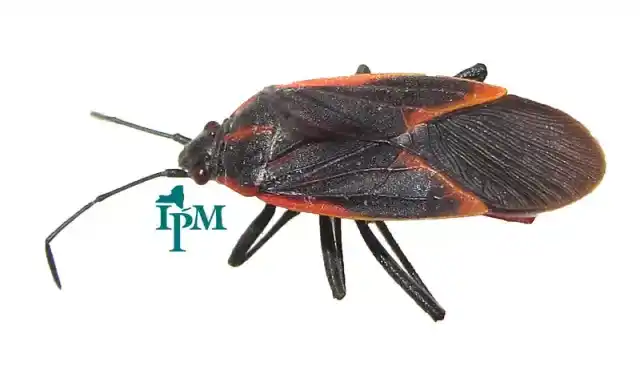
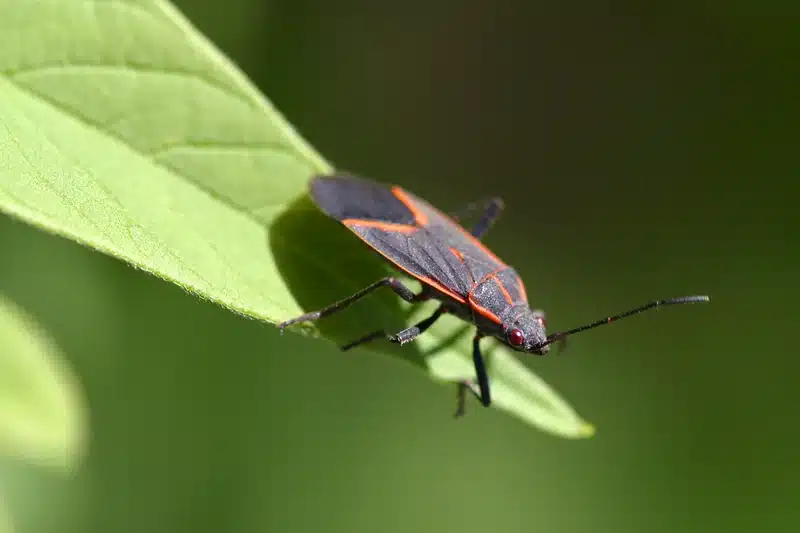
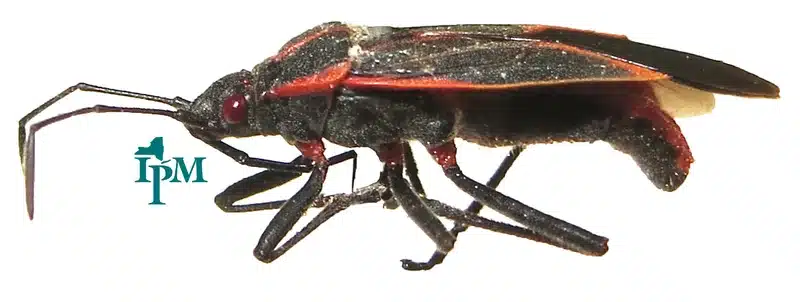
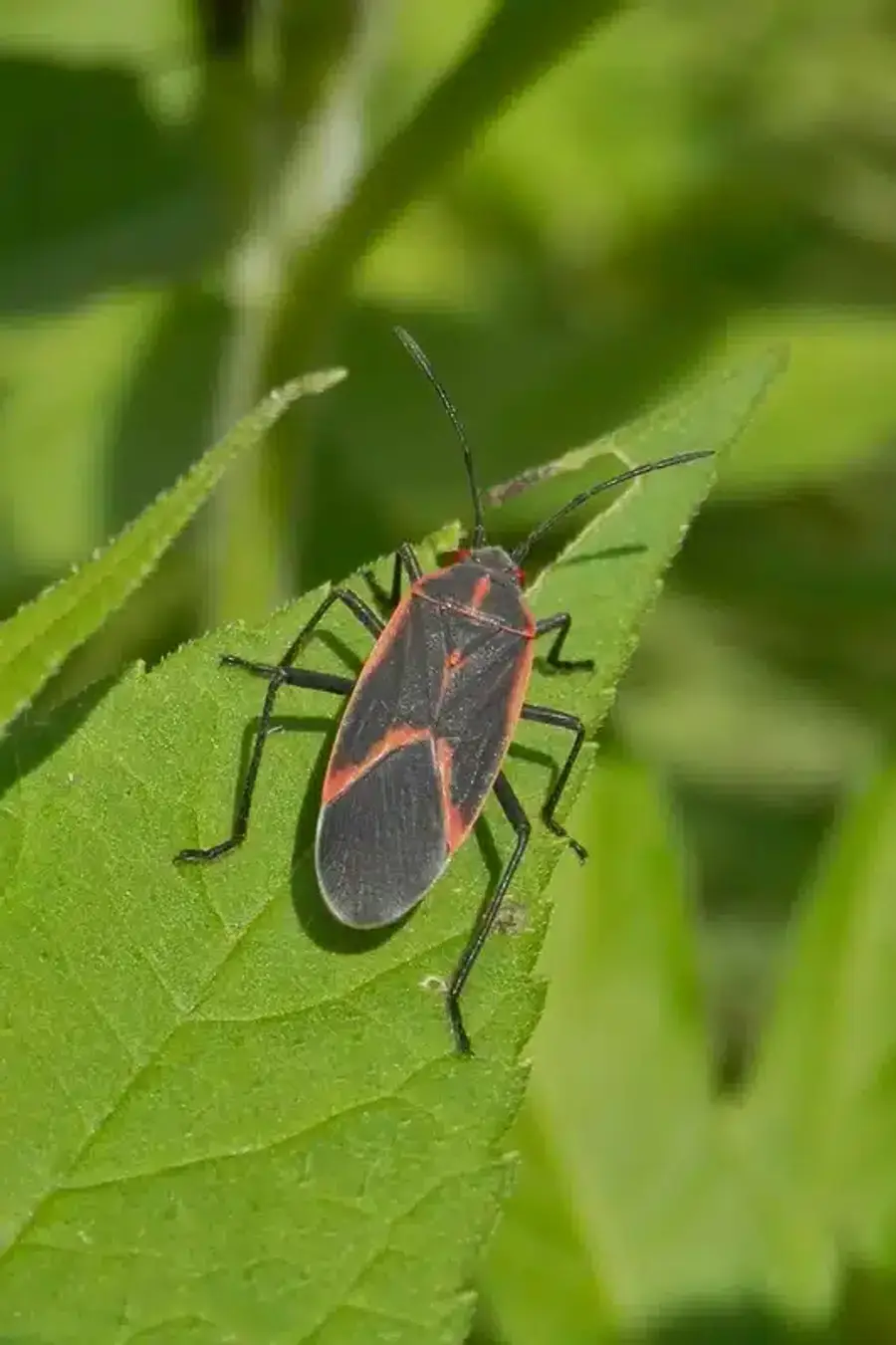
Adults run about 12 mm long, or half an inch. They are dark brown to black. Three bright red-orange lines sit on the plate behind the head, and red edges outline the folded wings into a rough X. The eyes are red. The body is a long, flat oval, not shield-shaped.

Box Elder Bug vs. Stink Bug
A stink bug is broad and shield-shaped, mottled gray-brown, with no red on it. A boxelder bug is narrow, black, and clearly striped in red. At a glance on a wall they get mixed up, because both cluster on sunny siding in October. Side by side, they don’t look much alike at all.
Boxelder Nymphs
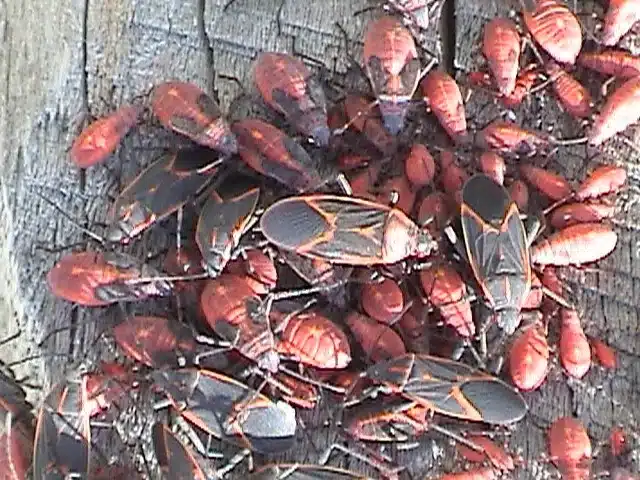
The young are bright red, rounder than the adults, and wingless. People often call them “tiny red bugs” and assume they are a different species. Eggs hatch in about two weeks, and the nymphs molt five times before they reach the adult stage, according to UConn. If you want the full sequence, I wrote it out in the boxelder bug life cycle post, and what boxelder bugs eat covers the feeding side.
Why They Cover Your Wall Every Fall
Virginia Tech reports that depending on the weather, “there can be two generations a year in Virginia”. That is why the numbers in late September run so much higher than what you saw in June. By late fall they gather on the outside of south- and west-facing buildings, looking for a warm place to spend the winter.
They don’t have to live next to a box elder tree to find you, either. The National Pesticide Information Center says they can fly up to two miles to reach a suitable overwintering site. I’ve had customers in Alexandria and Arlington swear there isn’t a box elder on their street. They are usually right. The bugs came from a couple of blocks away and picked that house because the brick on the sunny side holds heat until sundown.
Then they slip into a gap and go quiet. University of Maryland Extension describes the same pattern here in the DMV: the bugs overwinter in cracks and crevices around siding and in wall voids. They come back out on the first 60-degree day in February, confused, in your living room. They aren’t hatching. They were already in there.
Milkweed Bugs and Clover Mites: The Look-Alikes
Fall brings a few red-and-black insects to the same walls. Milkweed bugs are also orange and black but shorter and blockier, and they stay on milkweed seed pods rather than piling onto siding. Clover mites are the other frequent mix-up: these are true mites, the size of a pinhead, and solid red.
In my experience there’s a few-week window in the spring and fall in the DC metro area when clover mites spike. Customers almost always report them on the sunny side of the house. That is the same wall the boxelder bugs pick, which is why the two get confused. One homeowner described them as easily smushed on her patio when they were stepped on, leaving a red mess. Boxelder bugs are ten times that size, so once you’ve seen both you won’t mix them up again.
How to Get Rid of Boxelder Bugs
Start with removal, not chemicals. There’s nothing to kill in your walls, so physical removal handles the bugs you can see.
Don’t crush them on light surfaces. That’s how the stains happen.
For an infestation that repeats every year, timing matters more than product. Virginia Tech recommends perimeter sprays around the foundation of houses in mid to late August. That is before the bugs gather and before they start looking for a way in. Wait until October and you are treating a wall that already has a thousand bugs on it. UConn also notes chemical control works poorly below about 70°F, which is another argument for August over Halloween.
The other durable fix is the tree. If a female box elder is dropping seed pods in your yard, you have a food source and a nursery on site.
What Sealing the House Will and Won’t Do
Most articles tell you to caulk every crack. That advice is directionally right and practically oversold, and I’d rather you hear the field version. Daren, one of our registered technicians, has been doing this almost ten years and came up in construction before that. His take:
“You can’t really exclude insects out of a house — that’d mean caulking every crack in the whole place, and it’s just not realistic. They’ll get in if they want to. Exclusion is for rodents and for sealing a utility line so yellow jackets can’t nest in a void, not for bugs.”
What he does seal is worth copying, because it’s the list of gaps people miss. “The most common entry points I seal are utility lines — those are always the biggest, because somebody’s always out working on something and doesn’t reseal the duct sealer around it. Garage door trim at the bottom is usually second.” After that: weep holes, crawl space vents, and the hole left around an old dead cable line still hanging off the house.
- Around utility penetrations: gas, electric, cable, AC line sets
- The bottom trim and side seals of the garage door
- Gaps at window and door frames on the south and west walls
- Torn window screens and unscreened gable or soffit vents
- The old cable or phone line nobody removed
When to Call a Pest Control Company
Call if this happens every year. Call if the bugs are getting into finished living space in numbers. Call if you would rather have the August perimeter treatment handled than buy a pump sprayer. A licensed technician puts a residual product on the sunny walls and the foundation at the right time of year. Timing is the part most DIY attempts get wrong.
Our perimeter work uses pyrethroid products such as bifenthrin or deltamethrin. These are residual insecticides, meaning they stay put on siding and foundation for several weeks. All of them are EPA-registered and reviewed by our internal research team, which removed 9 of the harshest products from our list.
We don’t sell one-time jobs. Ongoing pest control starts around $49 a month plus a one-time $200 setup fee on the first visit, and boxelder bugs are covered under that general plan along with the rest of the fall invaders. If you’d rather just handle it yourself, our guide to getting rid of boxelder bugs walks through the DIY steps in more detail.
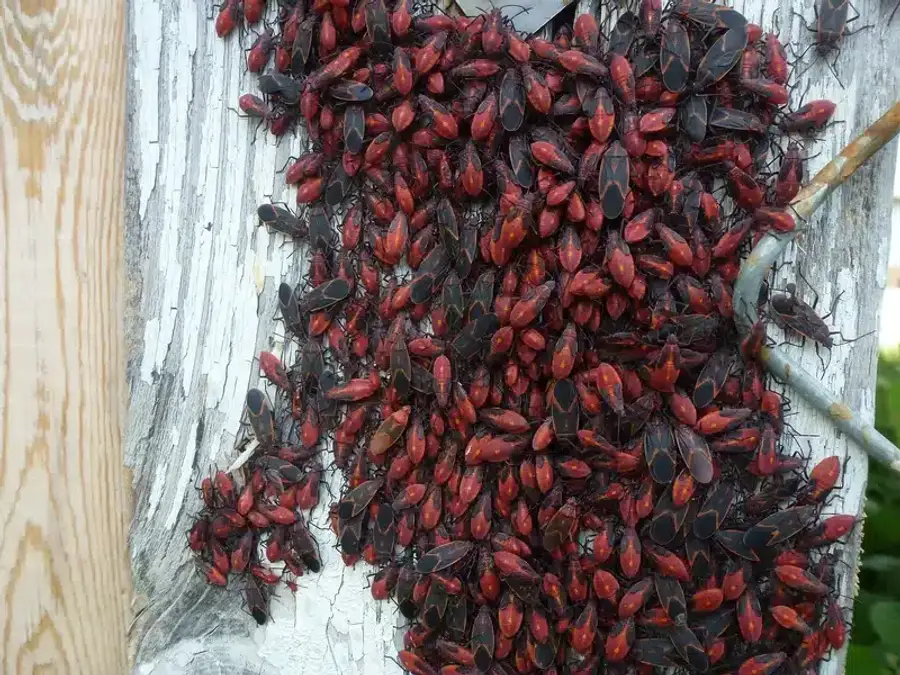
So: a wall covered in boxelder bugs looks worse than anything they will ever do to you. Vacuum what’s inside, wash what’s outside, and put the treatment on in August instead of October.
Call us at 703-683-2000 or email info@bettertermite.com for a free estimate.