

Those tiny red bugs are almost certainly clover mites if you are finding them on a windowsill, a sunny wall, or the frame of a south-facing door. They do not bite, they do not carry disease, and they are not a sign of anything wrong with your house. They are lawn mites that walked up your siding.
The catch is that “tiny red bug” describes five different things, and the fix is different for each. Start with where you found it.
Tiny Red Bugs in the House: What You Are Probably Looking At
| What you found | Where you see it | Size | Does it bite? | What it is |
|---|---|---|---|---|
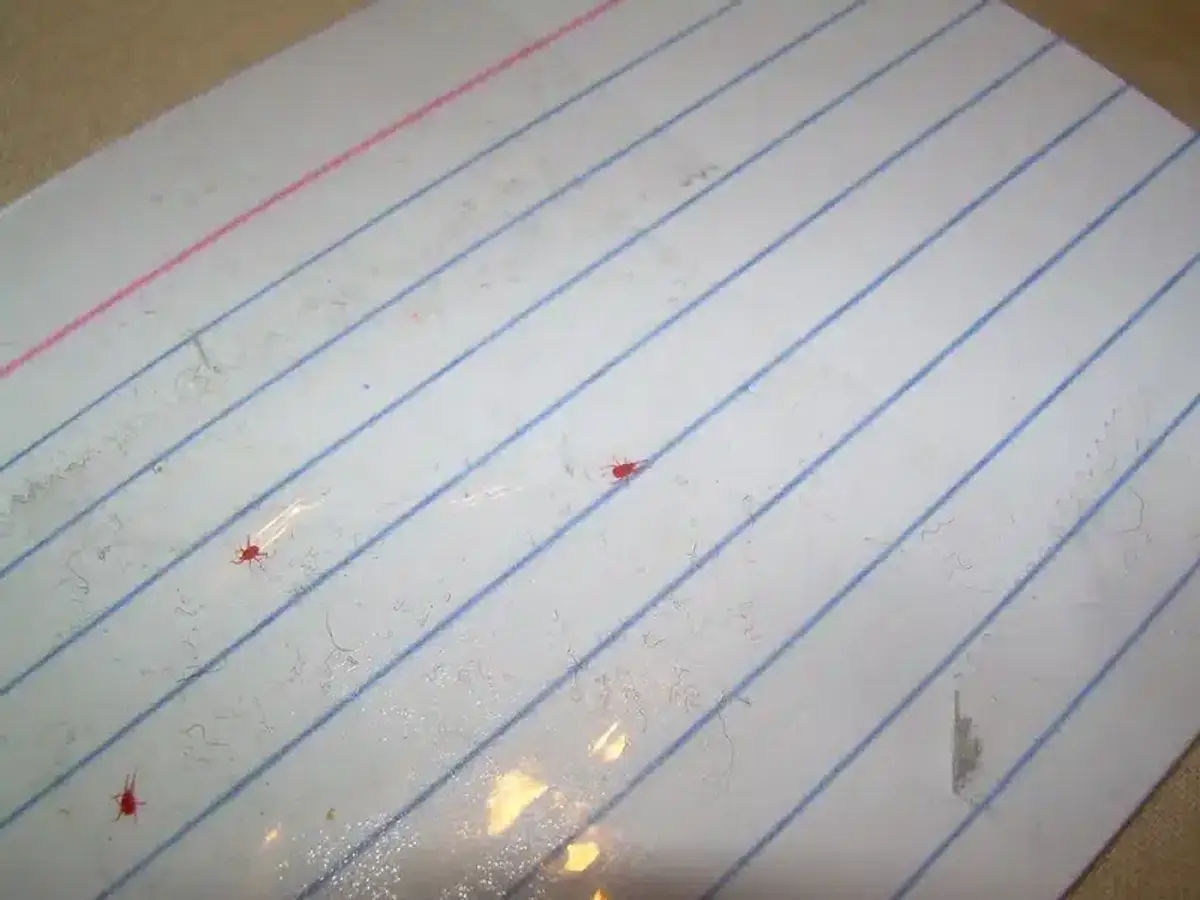
| Flat, brick-red to olive, long front legs held forward | Windowsills, sunny siding, door frames | 0.75 mm, about the size of a period | No | Clover mite |
| Plump, bright red, fuzzy or velvety | Concrete, patios, brick walls, mulch | Up to 4 mm, easy to see move | No | Red velvet mite (also called a concrete or brick mite) |
| Reddish-brown, oval, on leaves, with fine webbing | Houseplants, garden plants | About 0.4 mm | No | Spider mite |
| Never actually seen, only felt | Ankles, waistband, sock line, after being outside | 1/120 to 1/150 inch | Yes, and it itches | Chigger |
| Reddish-brown, flat, apple-seed sized | Mattress seams, headboard, box spring | 1/16 to 1/4 inch | Yes | Bed bug (adults; young ones are pale) |
Sizes above come from Penn State Extension, NC State Extension, Purdue Extension and the EPA.
How to Tell a Clover Mite From the Look-Alikes
Three checks settle it in about a minute.
- Look at the front legs. A clover mite’s first pair of legs is much longer than the other three pairs and it holds them out in front, so people mistake them for antennae. Purdue Extension puts them at twice the length of the other legs. Nothing else on this list does that.
- Press one with a white tissue. A brick-red smear means plant pigment, not blood. That rules out anything that feeds on you.
- Notice where you found it. Clover mites walk up walls and stop at the window. Velvet mites stay on hot concrete and brick. Spider mites stay on plants. Chiggers you feel and never see.
The front legs are the check that does the most work. Here is what the difference looks like side by side.
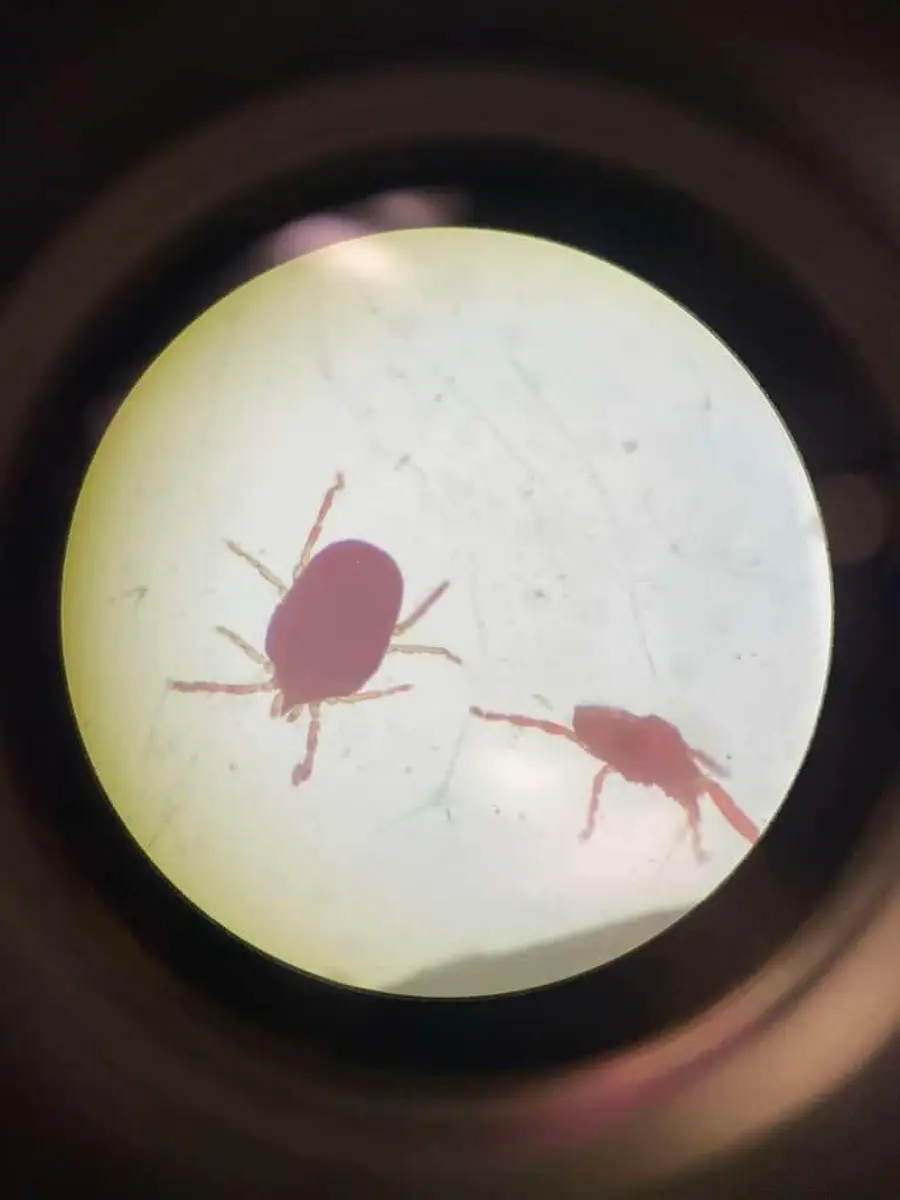
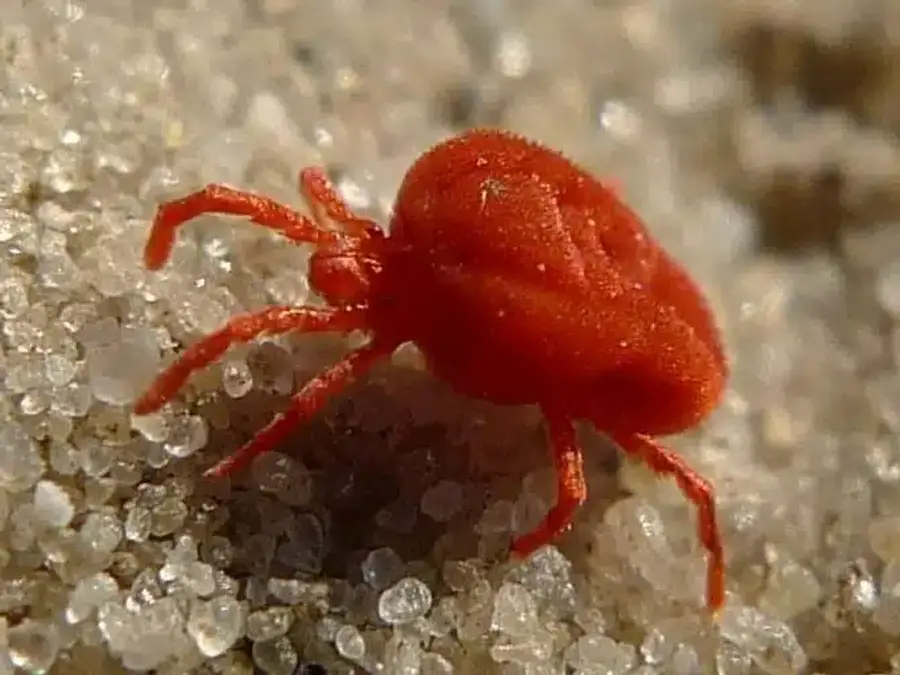
Daren, one of our registered technicians, says the misread runs the other direction more often than you would think: “Nine times out of ten when you go there, a lot of them don’t know the clover mites, and they immediately think they’re ticks, because they are arachnids. They do look very similar.” Both are eight-legged, both are reddish. A tick is far bigger and it will be attached to skin, not walking across a windowsill.
NC State Extension sorts household mites into the ones that bite and the ones that do not. Clover mites, at about 1/32 inch and reddish-brown, land firmly in the second group: they “do not bite and only feed on plants.” Chiggers land in the first, and Purdue Extension notes the itching usually starts 3 to 6 hours after the larvae attach, which is why people rarely connect the bites to being in the yard.
Do Tiny Red Bugs Bite?
No, not the ones on your windowsill. University of Maryland Extension is blunt about it: clover mites “do not bite, carry diseases, damage food, or household furnishings except by leaving a red stain if crushed.” That red smear is plant pigment from the grass they feed on, not blood.
If you are itching, the mite you are looking for is not the one you found. Chiggers bite, and they are so small that most people never see one. That is a different pest with a different answer, and we walk through it in clover mites vs chiggers.
Tiny Red Bugs in the Bed
Clover mites eat plants. They have no reason to be in a mattress, and they die quickly indoors away from the lawn. Finding a few near a bedroom window in April is normal; finding specks in the seam of your mattress is not the same thing.
Something reddish-brown, flat and about apple-seed sized in bedding usually means bed bugs. The EPA describes adults that way. The young stages are pale or whitish, not red. We do not treat bed bugs. If that is what your photos match, call a company that specializes in them.
Why They Show Up, and When, in the DC Area
Clover mites live in the lawn. They feed on grass and clover. When the ground warms in spring they cross the turf and climb the first wall they hit. That wall is your foundation. Maryland Extension puts the noticeable window at 45 to 80 degrees F. Penn State pegs egg hatch above 45 degrees, and says a warm spell can start them as early as mid-January.
Around here that means two waves: late March through early May, then again in mid-October once the heat breaks. In between, summer shuts them down. NC State Extension notes that once temperatures regularly pass 85 degrees the females lay dormant eggs and the population goes quiet until fall.
In my experience there is a few-week window each spring and fall in the DC metro area when the calls spike, and it is almost always clover mites, rarely chiggers. Customers describe the same thing every time: they are on the sunny side of the house. One homeowner told me they were so easy to squash on her patio that stepping outside made a red mess.
Three things make a house worse than its neighbors:
- Lawn right up to the foundation. No gap means no reason for them to stop.
- A sunny brick or light-colored wall. South and east faces heat up first and draw them in.
- A heavily fertilized yard. Penn State says the rise in activity “may be related in some way to an increased use of lawn fertilizers,” and NC State says clover mites are “more of a problem in new lawns and lawns that have been heavily fertilized.”
That last one matches what our technicians see. Daren puts the timing on the lawn service: “Every year you get a lot of clover mite stuff, and it’s usually after the guys come and pump the yard with nitrogen for the fertilizer is when it really makes them pop.”
How to Get Rid of Tiny Red Bugs
Work from the inside out. The mites that got indoors have nothing to eat in there, so they are a cleanup job. The lawn is the actual problem.
Today, inside:
- Vacuum, do not wipe. Maryland Extension calls vacuuming “the quickest way to remove them once they are inside.” A wipe turns one mite into a red streak on the paint.
- Oil the sill. The same Maryland page suggests a thin film of cooking or mineral oil on the windowsill. The mites get stuck in it.
- Blot a stain, do not scrub it. Scrubbing pushes the pigment into the grain of the paint or the fibers of the sill.
This week, outside:
- Hose the siding down. A firm spray knocks them off masonry without any product. NC State recommends the same for velvet mites: a garden hose or soapy water, since no pesticide is specifically labeled for them.
- Open a bare band at the foundation. This is the one that lasts. Penn State recommends removing grass from a 6- to 24-inch-wide band next to the foundation. NC State suggests roughly two feet of bare, loose soil, which the mites do not like to cross. Pea gravel, mulch or a planting bed all work.
- Caulk the entry points. Window frames, door frames and the gaps under siding laps are where they get in.
If it keeps coming back: the mites are breeding in the turf, so ask your lawn company to treat the yard, not just the foundation. That is the piece homeowners usually miss.
When a Perimeter Treatment Makes Sense, and What It Costs
Call someone when the mites keep getting inside after you have caulked and vacuumed, when stains are showing up on painted trim or fabric, or when the volume is high enough that you cannot keep up with it.
Our licensed technicians treat the lower foundation and the band of turf against it. We use a non-repellent product, so the mites walk through it instead of going around. NC State names the same target zone: the lower three feet of foundation and a six-to-ten-foot perimeter. Most homes turn around in one or two visits. All products are EPA registered and applied to the label.
Our clover mite control work is covered under the home pest control plan, which starts around $49/month for an average DMV home plus a one-time $200 setup fee. If you see them again between scheduled visits, we come back at no additional charge. That is our Better Promise.
A heavy yard is a different job. Daren has one house that still stands out to him: “She had like a stone patio, kind of an off-white color, and it was so covered it looked like a red mass moving around.” Her daughter’s wedding was coming up, so he went back week after week for three or four weeks and ended up treating the whole yard the way he would for a mosquito job to bring the numbers down. His takeaway is the honest one: “You can do what you can around the house, but really treating the yard is the focal point.”
Related Guides
Pick the one that matches what you found:
- On concrete, a patio or a brick wall: concrete mites and the velvet mite profile
- Biting and itching: clover mites vs chiggers
- On houseplants, with fine webbing: spider mites
- Something with a visible web, not a mite: are tiny red spiders dangerous?
- Full species profile: clover mites and what attracts them
The practical takeaway is that the mites you are seeing on the window came from the yard, and the yard is where the next wave comes from too. Vacuum what is inside, open a bare band at the foundation before the fall wave, and get the lawn treated if it happens two seasons running. If you want us to look at it, call 703-683-2000 or email info@bettertermite.com.