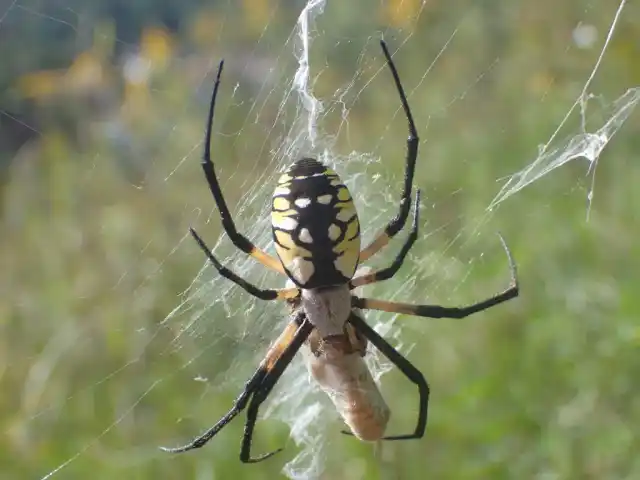

Found a yellow spider in Maryland? It is almost certainly one of six. A big one in a round web outside is usually the black-and-yellow garden spider, the paler banded garden spider, or the newer Joro spider. A round, yellow-orange one in fall is often a marbled orbweaver. A small, pale yellow spider running across your wall at night is a yellow sac spider. And a bright yellow spider sitting on a flower is a crab spider. None of these are considered dangerous.
I’m George Schulz, a licensed technician at Better Termite & Pest Control. Spiders are one of the top pests we deal with, and every late summer I get photos of big yellow spiders from worried homeowners. Below is how to tell these six apart quickly, including the Joro spider that has been showing up in Howard County.
Quick ID Chart: Yellow Spiders in Maryland
Start with where you found the spider. Then match the most obvious feature.
| Spider | Where you see it | Size (female body) | Tell-tale sign | Bite risk |
|---|---|---|---|---|
| Black-and-yellow garden spider | Webs in gardens, tall weeds, sunny edges | About ¾ to 1⅛ inch | Thick white zigzag in the web | Low |
| Banded garden spider | Webs in fields and tall grass | Slightly smaller | Many thin black stripes on a pale yellow abdomen | Low |
| Joro spider | Big webs on trees, shrubs, porches | Up to 1¼ inch, 4-inch leg span | Yellow-banded black legs, golden 3D web | Very low |
| Marbled orbweaver | Webs in trees and shrubs in fall | ½ to ¾ inch | Round yellow-orange abdomen with dark marbling | Low |
| Yellow sac spider | Walls, ceilings, corners indoors | About ¼ inch | Pale yellow body, dark leg tips and jaws | Mild |
| Crab spiders | On flowers like goldenrod and asters | ¼ to ½ inch | Crab-like legs held out to the sides | Negligible |
Big Yellow Spiders in Webs
Most yellow spiders that stop people in their tracks are orb weavers. They build the classic round web in gardens, between shrubs, and across walkways. Three of them are big and yellow.
1. Black-and-Yellow Garden Spider
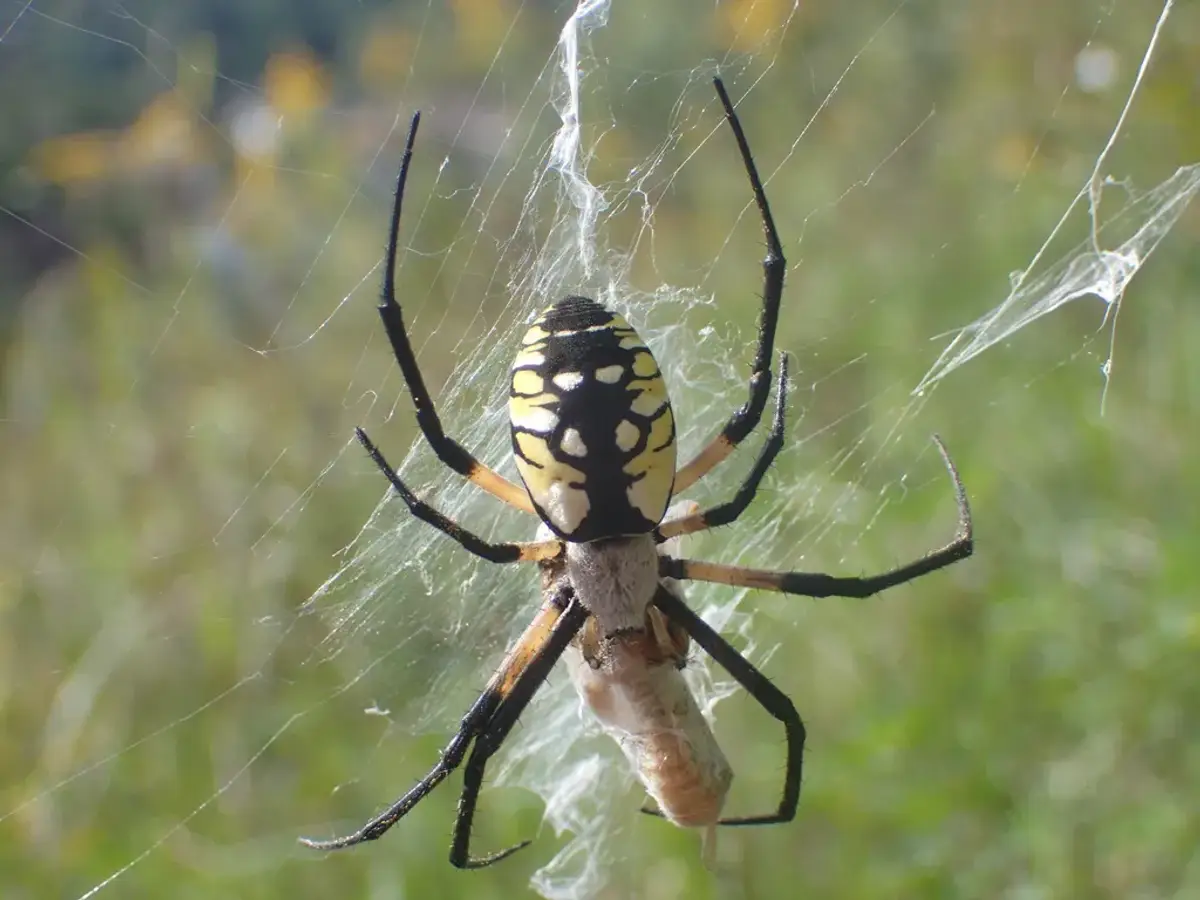
This is the classic big yellow spider of a Maryland garden. It’s also called the yellow garden spider or the writing spider. The body is black with bright yellow patches, and the legs are mostly black. It hangs head-down in the center of its web all day.
The web is the best clue. According to Penn State Extension, females are 19 to 28 millimeters long, and the web has a white zigzag stripe down the center called a stabilimentum. Males are much smaller, only 5 to 8 millimeters. You’ll find them in gardens, tall weeds, and other sunny spots, and the webs can reach about 2 feet across.
Adults show up in mid to late summer and stick around until frost. See our black-and-yellow garden spider page for more photos.
2. Banded Garden Spider
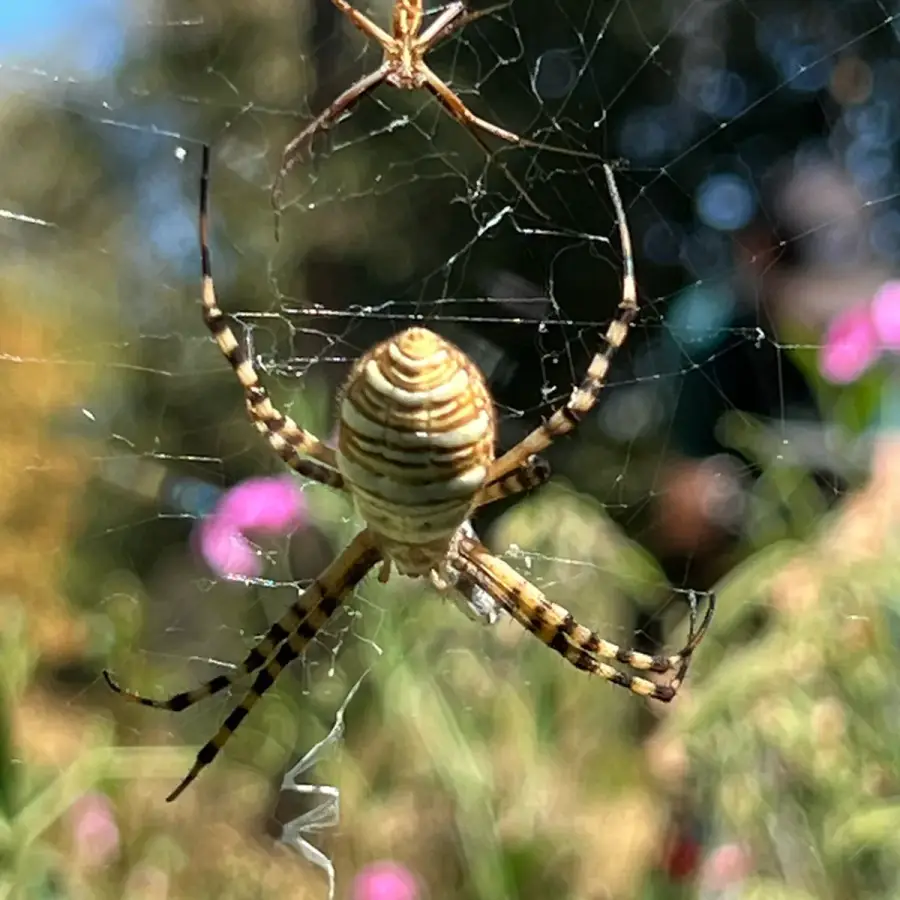
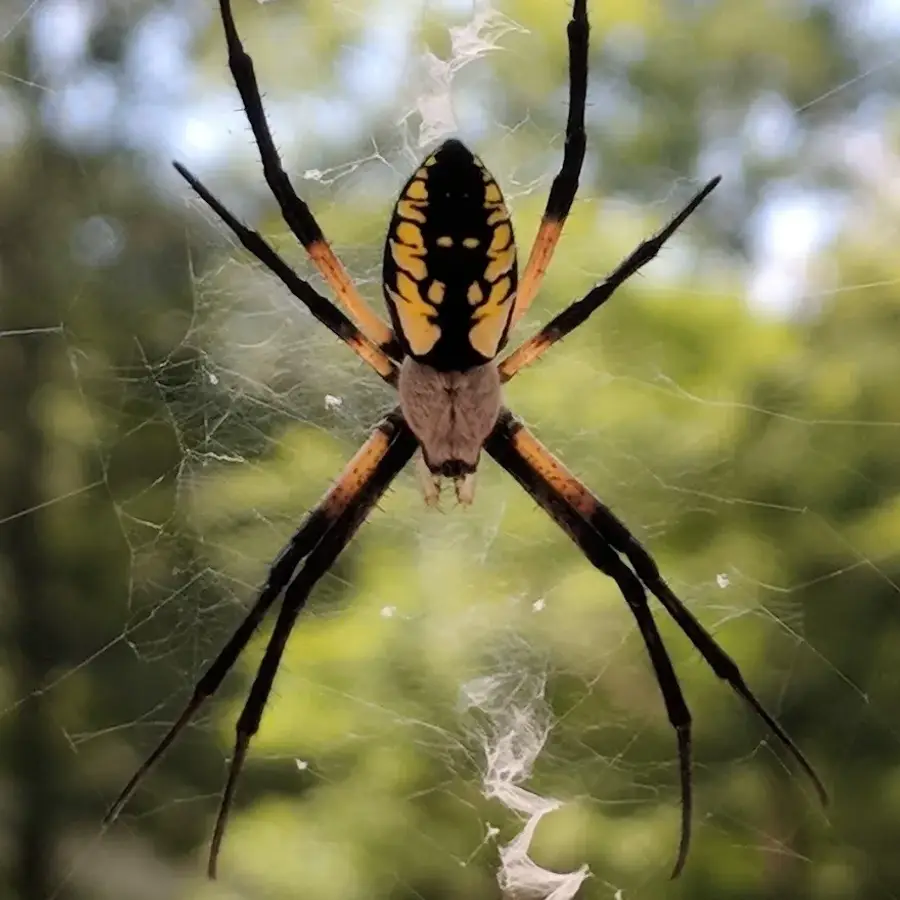
The banded garden spider is the yellow garden spider’s close cousin. It’s a little smaller and a lot paler. Instead of bold yellow patches on black, the abdomen is pale yellow or silvery with many thin black stripes running across it. The abdomen is also a smoother oval, without the “shoulders” you see on the yellow garden spider.
Two more clues help. First, the legs are banded brown and black instead of mostly black. Second, the zigzag in the web is often missing or smaller. Banded garden spiders like open fields and tall grass, and adults are out from mid-summer through the first freeze. Our banded garden spider page has close-ups.
3. Joro Spider
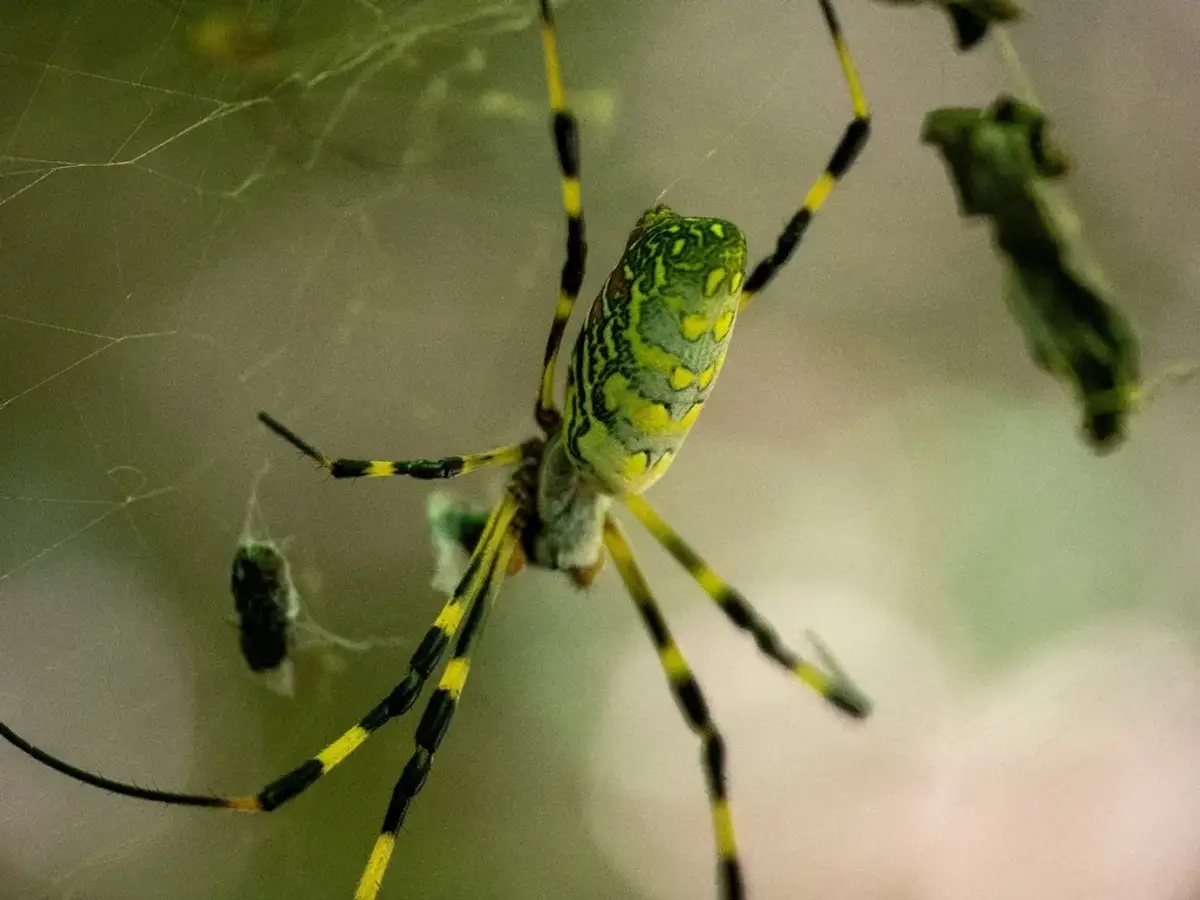
The Joro spider is the newest yellow spider in Maryland, and it’s the one people ask me about most. It’s originally from East Asia. The females are big, with a bright yellow abdomen marked with blue-gray bands and long black legs.
The first Maryland Joros were reported in September 2022 in eastern Howard County, near Elkridge. University of Maryland entomologist Michael Raupp traced that history in his Bug of the Week column. Since then, most sightings have stayed around Elkridge, Columbia, and Ellicott City, with a few reports outside Howard County. If you spot one, take a photo and post it on iNaturalist so researchers can track where they are spreading.
Because Joros are yellow and black, people often mistake them for yellow garden spiders. Here’s how to tell them apart, based on the Rutgers fact sheet comparing the two:
- Legs. Joro legs are black with bright yellow bands. Yellow garden spider legs are mostly black and don’t have those yellow rings.
- Size. A female Joro can have a leg span of up to 4 inches. The yellow garden spider is noticeably smaller.
- Web. Joro webs are huge, golden-tinted, and layered, sometimes 10 feet across. They never have the white zigzag.
- Timing. Joros are easiest to spot in fall, when the females reach full size.
No. Joros are large, but they are shy. Research from the University of Georgia found that when disturbed, Joros often freeze in place for over an hour instead of running or biting. The researchers also say a Joro won’t bite unless cornered, and its fangs likely aren’t large enough to pierce human skin.
So there’s no need to spray your yard for them. They eat flying insects, and they die off after the first hard freeze.
4. Marbled Orbweaver (Yellow Form)
If the yellow spider has a big, round abdomen that looks like a small yellow or orange ball, it’s probably a marbled orbweaver. They’re common in Maryland woods, shrubs, and tall weeds from late summer into fall. The abdomen is often yellow with dark marbling, and it can turn more orange as fall goes on.
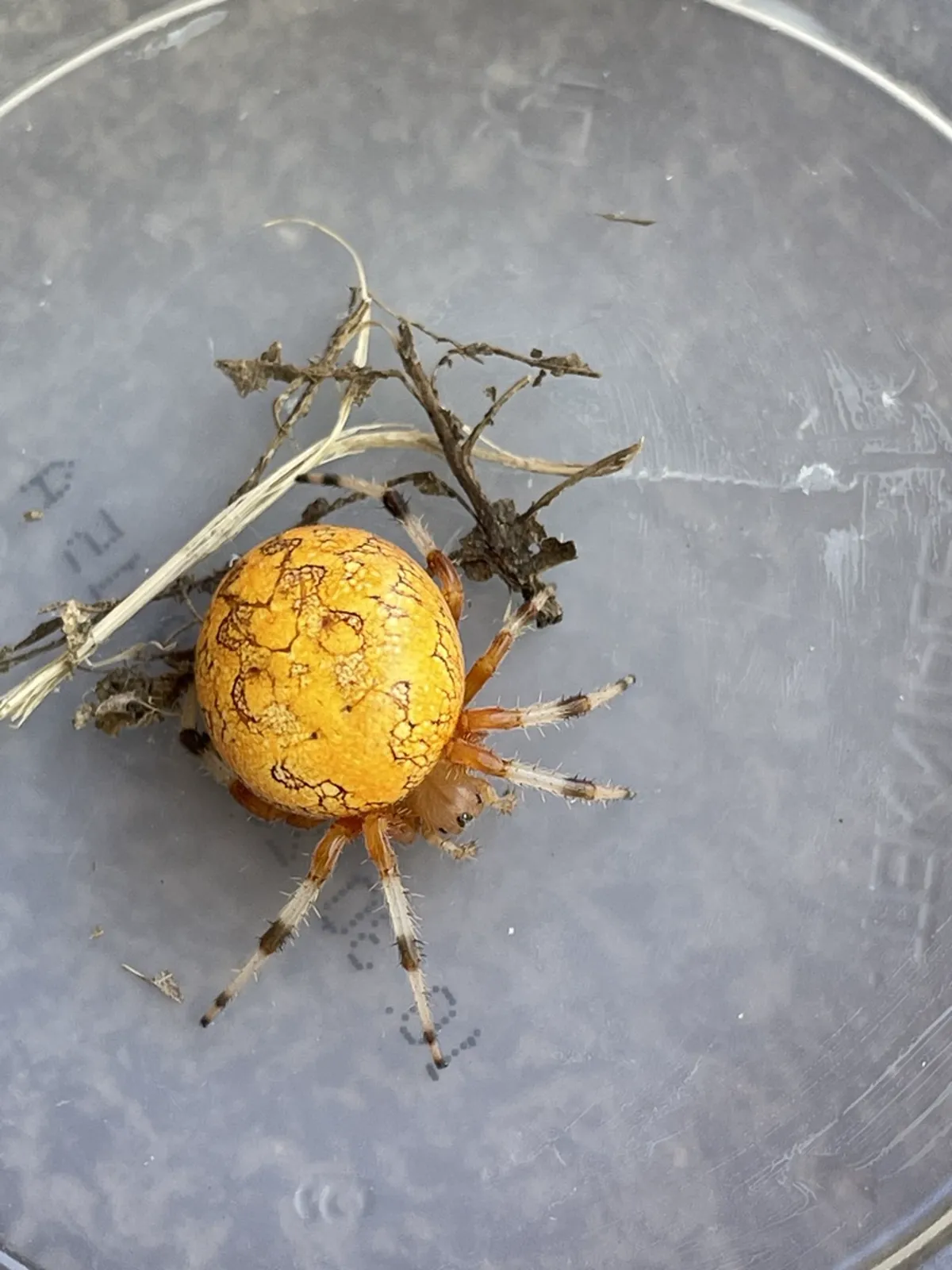
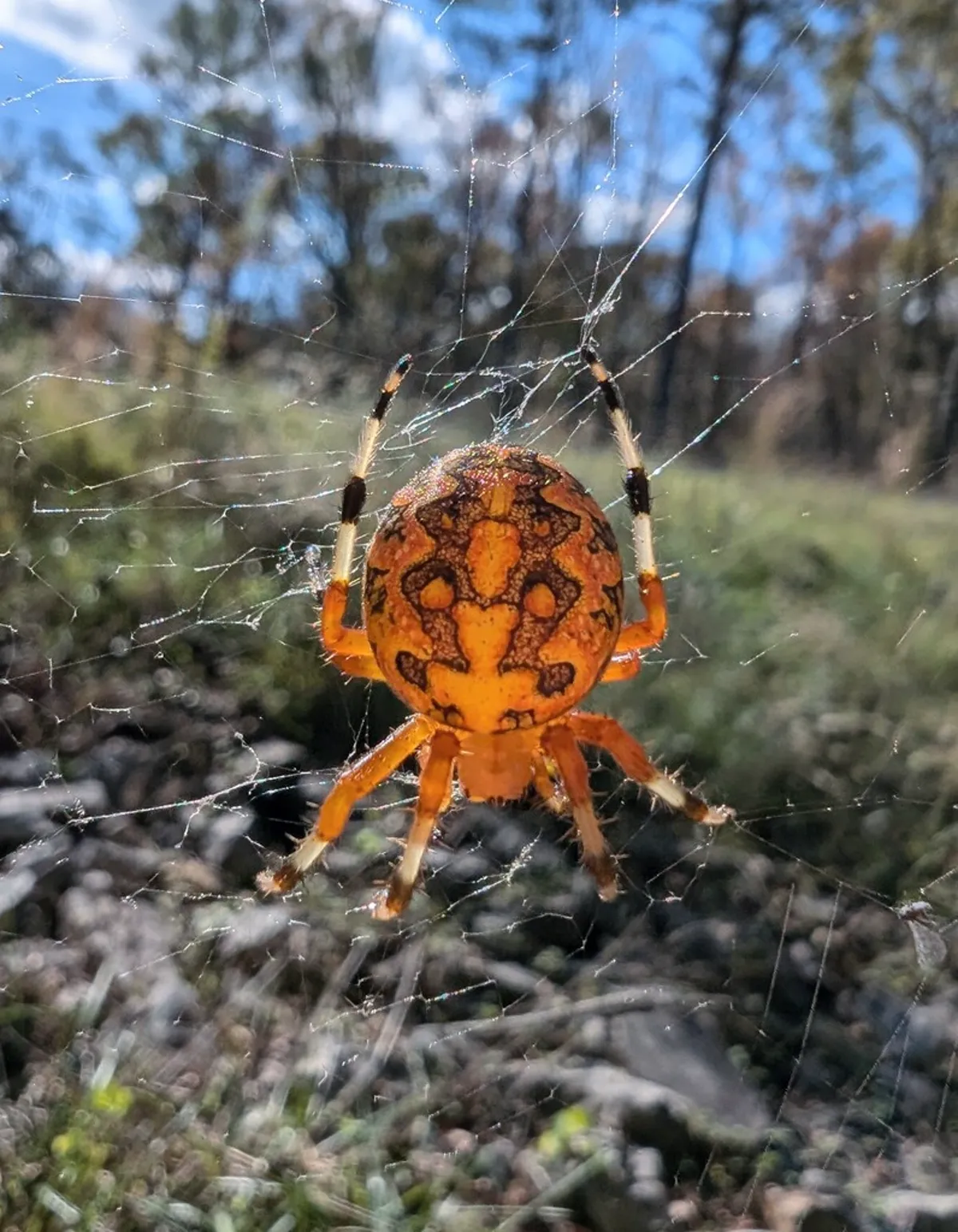
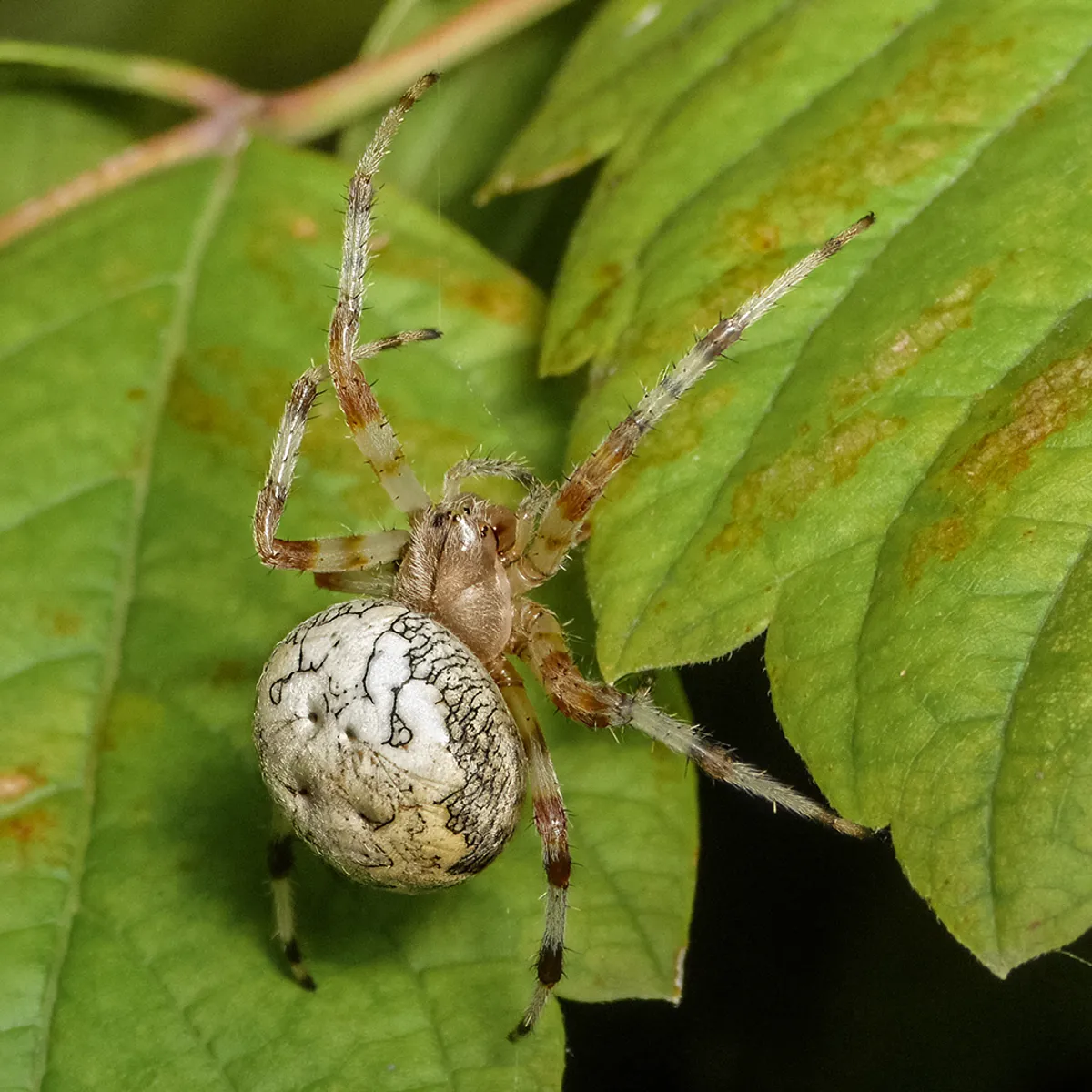

Marbled orbweavers are about ½ to ¾ inch long. They usually hide in a curled leaf at the edge of the web during the day. Our marbled orbweaver page has more on the color range. If yours looks more orange than yellow, our guide to orange spiders covers the look-alikes.
Small Pale Yellow Spiders Indoors
5. Yellow Sac Spider
If you found a small, pale yellow spider on your wall, ceiling, or bed, this is almost certainly it. Yellow sac spiders are the only yellow spiders in Maryland that regularly live indoors.
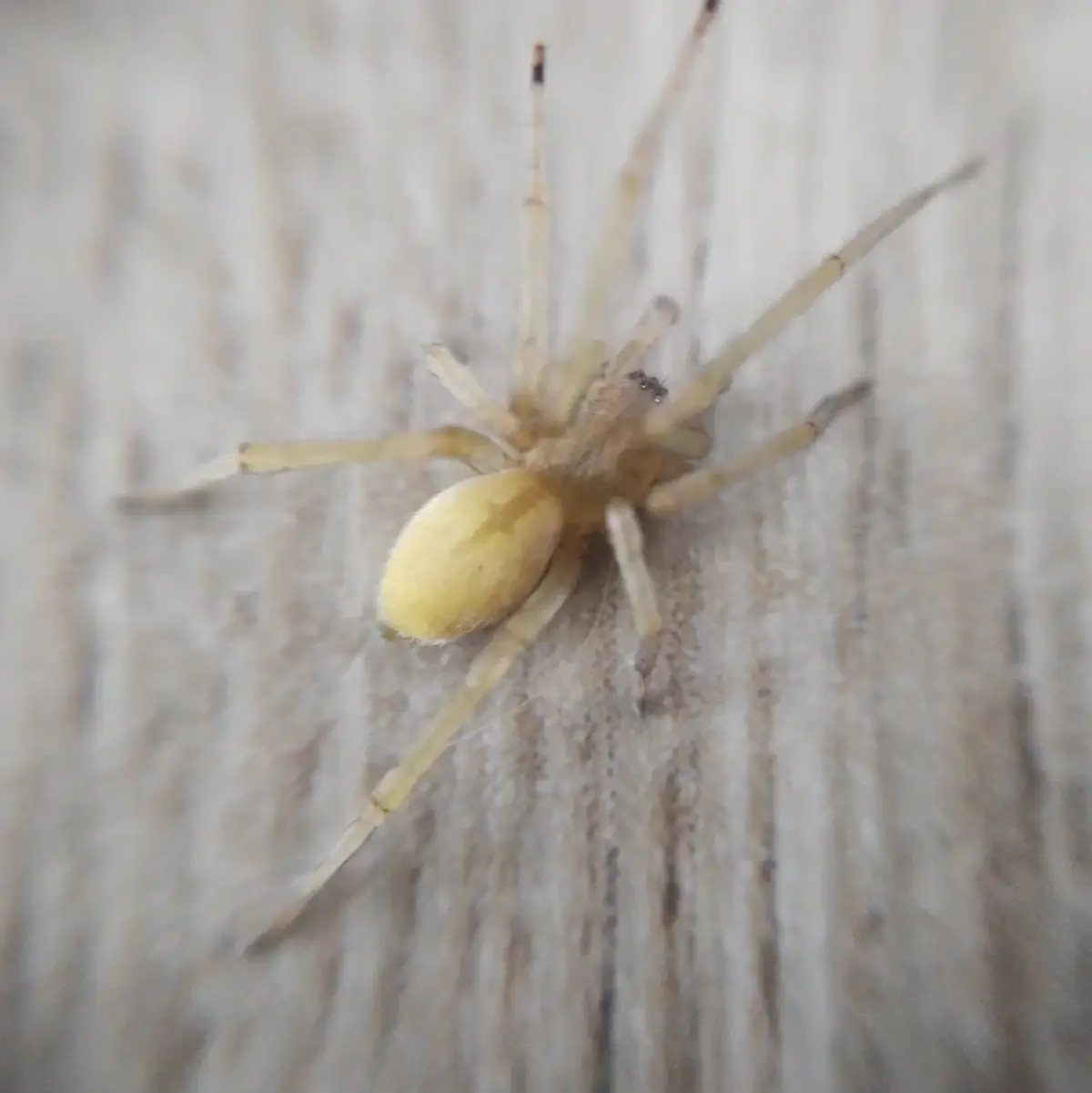
According to Virginia Tech entomologists, both common species are 4 to 10 millimeters long and light yellow or beige. They have darker brown tips on the legs and mouthparts. One of them can look slightly greenish. They don’t build a web to catch food. Instead, they rest during the day inside a small silk sac, often in a ceiling corner, behind a picture frame, or in folds of curtains. At night, they come out and hunt.
That’s why people run into them in odd places. They wander across walls and ceilings, and they sometimes end up in bedding or clothes. They move indoors in early fall, especially as the nights cool off. Learn more on our yellow sac spider page.
You may have read that yellow sac spider bites cause necrosis, or rotting skin wounds. The research doesn’t support that. A study published through PubMed reviewed 20 verified yellow sac spider bites in the United States and Australia and found none with necrosis. The authors traced the myth to animal venom experiments and repeated citations of weak reports.
Most real bites cause sharp pain at first, then redness and mild swelling that fade within a few days to weeks. These spiders live indoors and wander at night, so they do bite more often than the other spiders on this list.
Yellow Spiders on Flowers
6. Crab Spiders (Goldenrod and White-Banded)
A bright yellow spider sitting perfectly still on a flower is a crab spider. They hold their long front legs out to the sides, like a crab, and they sit and wait for bees, flies, and butterflies to land.
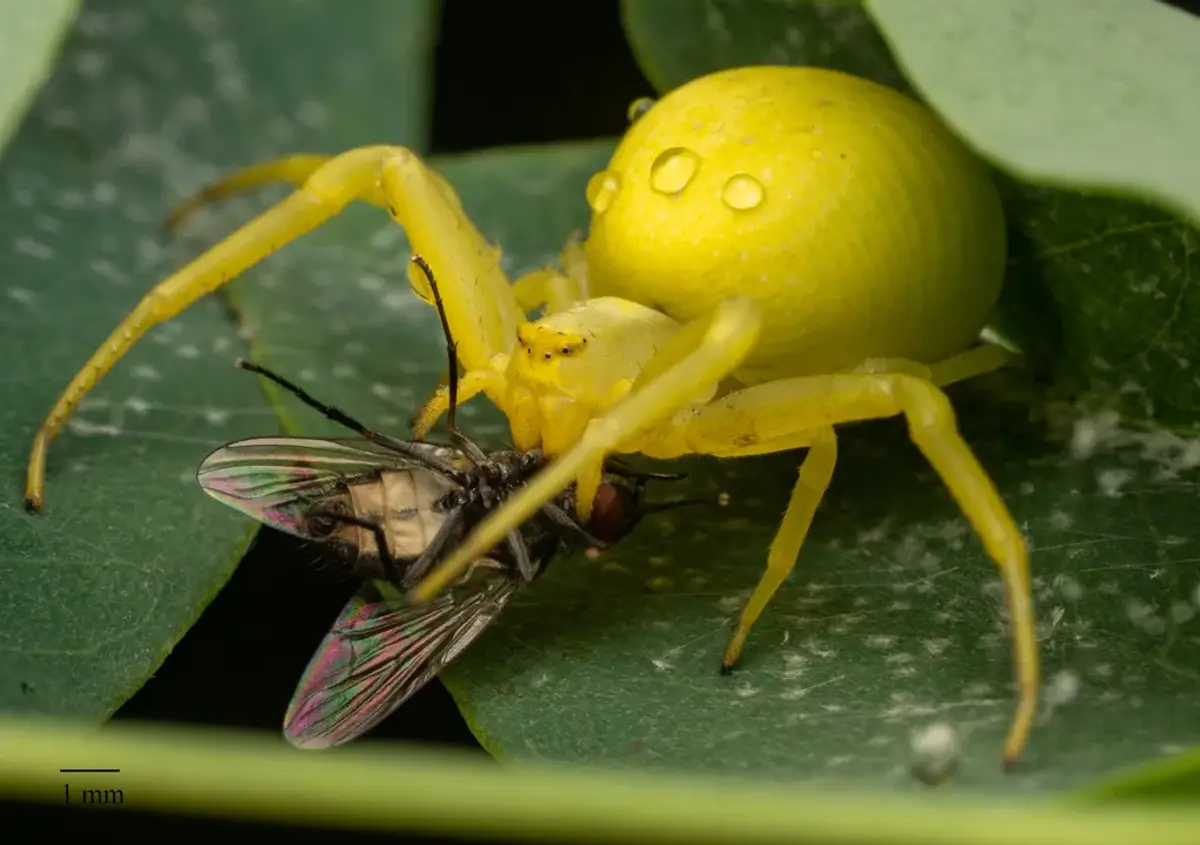
Two yellow crab spiders show up in Maryland:
- Goldenrod crab spider. It can change color between white and yellow to match the flower it’s hunting on. According to NC State Extension, turning white takes about 6 days, while turning yellow takes 10 to 25 days.
- White-banded crab spider. This one is actually more common in Maryland, based on iNaturalist records. It’s whitish yellow to yellowish brown and has a white or yellow ridge across the face. You’ll often find it on goldenrod, asters, and fleabane in early fall.
Crab spiders are small, usually ¼ to ½ inch. They don’t build webs, and they almost never bite people. See our crab spider page for more.
Are Yellow Spiders in Maryland Dangerous?
No. None of the yellow spiders in Maryland are considered medically significant. The Maryland DNR points to the black widows as the native spiders of real concern, and notes that medically significant spider bites are rare. Black widows are shiny black with red markings, not yellow.
The brown recluse isn’t a concern either. University of Maryland Extension says brown recluse spiders are not native to Maryland and can’t survive the climate here. So a pale spider in your Maryland basement is far more likely to be a yellow sac spider or a common house spider.
For the full list of common species here, including the ones that aren’t yellow, see our field guide to spiders in Maryland.
What to Do About Yellow Spiders Around Your Home
A few garden spiders in the yard are a good thing. They catch flies, mosquitoes, grasshoppers, and moths all season. The problem starts when webs cover your doors, eaves, porch lights, and windows, or when yellow sac spiders keep turning up inside.
Spiders are one of our top pests across the DMV, and homes near trees and moisture get the most. In my experience, webs build up quickly in the eaves. Our approach is two-pronged. First, we remove the existing webs with a long-handled web brush called a webster. Then we apply a non-repellent perimeter treatment along the foundation.
Webs can also tell you a lot about a house. One of our registered technicians, Daren, has solved more than one mystery ant problem by looking at the spider webs. When he found them full of ants or swarmers, it pointed him right to the real issue.
Here’s what makes a real difference on your own:
- Knock down webs regularly with a broom, especially around eaves, doors, and light fixtures.
- Switch porch lights to yellow bulbs. Fewer insects gather, so orb weavers have less reason to build there.
- Trim shrubs and tall weeds back from the house so garden spiders can’t anchor webs between plants and siding.
- Check ceiling corners and behind frames for the small silk sacs of yellow sac spiders, and vacuum them up.
- Seal gaps around windows, doors, and utility lines. Our exclusion services handle the bigger openings.
When DIY isn’t keeping up, our spider control service handles it as part of a recurring plan. It’s also included in our general pest control plans for Maryland homes in Montgomery County, Rockville, Bethesda, and Howard County communities like Columbia and Ellicott City. All the products we use are EPA approved and have been reviewed by our internal research team.
Final Thoughts on Yellow Spiders in Maryland
Most yellow spiders in Maryland are orb weavers, and the big one in your garden is usually a black-and-yellow garden spider. Check the web, the legs, and the stripes, and you can tell it from a banded garden spider or a Joro in seconds. The small pale one inside is a yellow sac spider, and the yellow one on a flower is a crab spider. None of them are dangerous.
Our family has been handling pests in the DMV for 58 years, with over 1,800 reviews and licensed technicians who deal with spiders every week. If you have questions about a spider you found or want an estimate, call us at 703-683-2000 or email info@bettertermite.com.