
Slender-Horned Flour Beetle Identification Guide
Gnatocerus maxillosus
The slender-horned flour beetle is a small, reddish-brown stored product beetle found in flour, meal, corn, and peanuts in warm climates. Males carry two thin, curved horns on their jaws.
Taxonomy
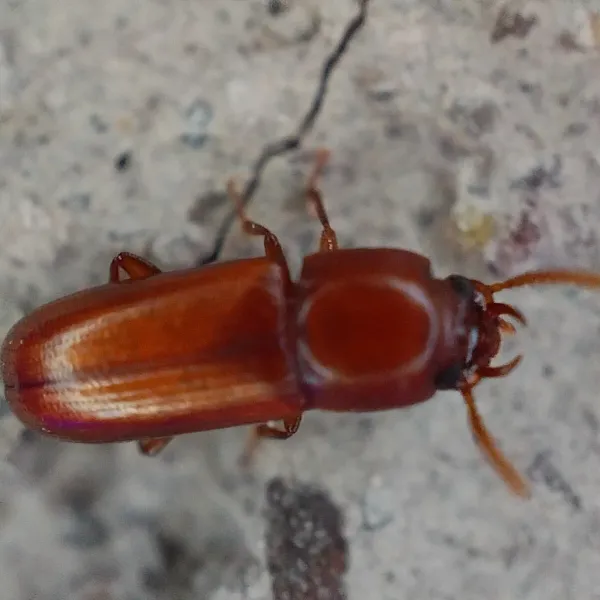
Slender-Horned Flour Beetle Coloration
Common color patterns to help identify slender-horned flour beetle
Slender-Horned Flour Beetle
Seasonal Activity
When slender-horned flour beetle are most active throughout the year
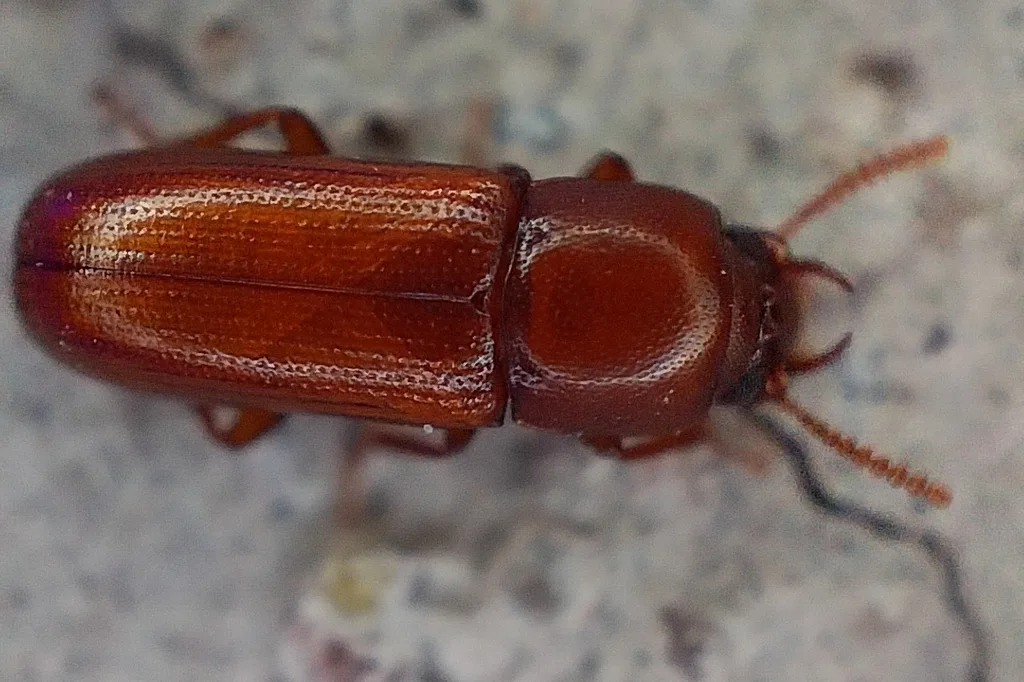
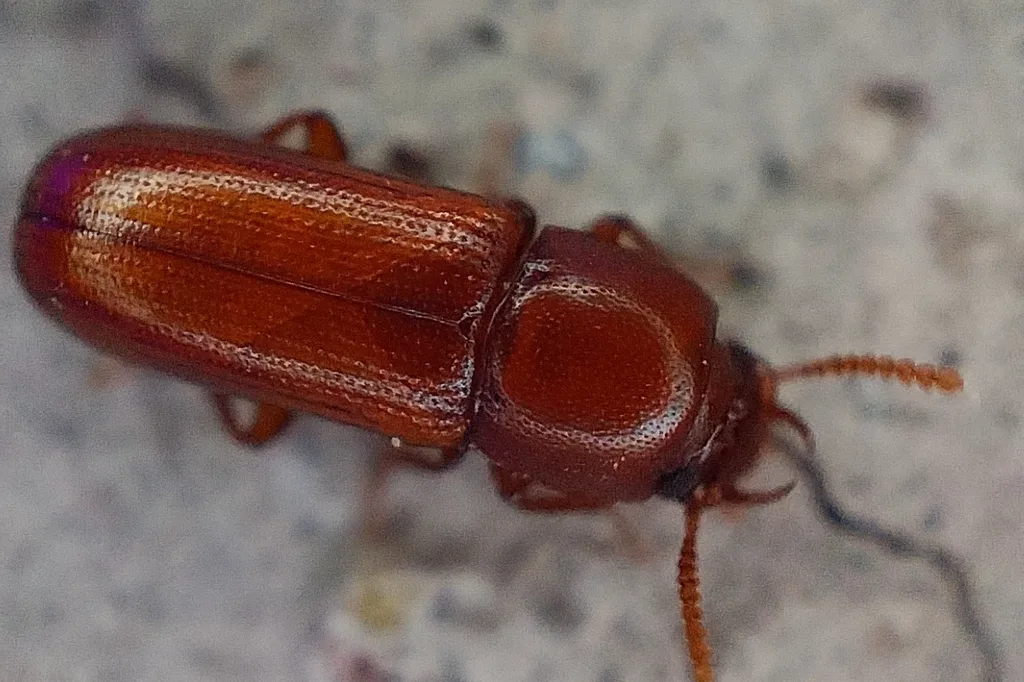

Where Slender-Horned Flour Beetle Are Found
Hover over states to see their names. Green regions indicate where slender-horned flour beetle have been reported.
Slender-Horned Flour Beetle Identification Guide
Physical Characteristics
The slender-horned flour beetle (Gnatocerus maxillosus) is a small, shiny, reddish-brown beetle. Adults are 3 to 4 mm long, or about 1/8 inch. The body is narrow and flat with straight sides. Fine grooves run down the wing covers.
The males give it away. Their jaws have two thin horns that curve inward, a bit like tongs. You can see them with a hand lens or a zoomed-in phone camera. Females have no horns. They look a lot like other small flour beetles.
The antennae are fairly long for a flour beetle and reach back past the head. The beetle has six legs and moves quickly when disturbed.
Larvae are thin, worm-like grubs. They are cream to light yellow with a darker head. They live buried in the food they eat. You will rarely see them unless you sift the food.
Common Species and Look-Alikes
The slender-horned flour beetle belongs to the darkling beetle family, Tenebrionidae. Several close relatives turn up in stored food:
- Broad-horned flour beetle (Gnatocerus cornutus): its closest relative. It is a bit larger, about 1/6 inch, and males have wide, stout jaw horns instead of thin, curved ones. It is found across much more of North America.
- Red flour beetle (Tribolium castaneum): similar size and color but no horns, and a broader body. Its antennae end in a sudden three-segment club.
- Confused flour beetle (Tribolium confusum): also hornless, with antennae that widen slowly toward the tip. It is the most common flour beetle in cooler regions.
- Sawtoothed grain beetle (Oryzaephilus surinamensis): smaller and darker, with six saw-like teeth along each side of the section behind the head.
If you see small reddish-brown beetles in flour, the odds favor one of the Tribolium species. Our flour beetle guide covers the common ones in more detail.
Slender-Horned Flour Beetle Behavior and Biology
Habitat
This beetle likes warm weather. The USDA says it is much less common in the U.S. than other flour beetles. It is mostly found in the South. Records come from Texas, Oklahoma, Louisiana, Florida, and nearby states. It also lives in Hawaii, Mexico, Central America, the Caribbean, and South America.
It lives where flour and grain dust pile up. Think flour mills, feed stores, and warehouses. In homes, it can show up in pantries with old flour, cornmeal, or animal feed. Outside the South, most finds come from food shipped in from warm areas. Cold holds it back. It stops growing below about 68 degrees Fahrenheit. It cannot live through winter outdoors in the North or in Canada.
Diet
Like other flour beetles, it is a secondary pest. It cannot chew into whole, sound kernels. It feeds on food that is already broken, ground, or damaged:
- Flour, meal, and bran
- Cornmeal and cracked corn
- Peanuts and other groundnuts
- Grain dust and spilled feed
- Damp or moldy grain
The FAO says it is mostly found on corn and peanuts in warm parts of the world. It does far less harm than other pantry pests.
Life Cycle
The slender-horned flour beetle goes through four stages: egg, larva, pupa, and adult.
- Eggs: Females lay small white eggs in or near flour and meal. In its close relative, each female lays 100 to 200 eggs, and they hatch in 4 to 6 days in warm weather.
- Larvae: Grubs feed inside the food and molt several times as they grow.
- Pupae: Pupae lie loose in the food with no cocoon.
- Adults: Adults of this genus often live a year or longer.
Heat and humidity set the pace. The FAO says egg to adult takes about 35 days at 86 degrees Fahrenheit. At 73 degrees, it takes about 64 days. It can only grow between about 68 and 95 degrees.
Signs of Infestation
- Small, slim, reddish-brown beetles in flour, cornmeal, or feed
- Beetles crawling on pantry shelves near grain products
- Fine dust, shed skins, or clumps in stored flour
- A musty smell from badly infested meal
Treatment Methods for Slender-Horned Flour Beetles
We do not treat for this beetle. It is rarely found in Virginia, Maryland, or DC homes. The steps below work on most flour beetles. These beetles live inside the food. Sprays alone will not fix the problem. Getting rid of the bad food will.
- Find the source: Check every dry food item, especially flour, cornmeal, grits, baking mixes, nuts, birdseed, and pet food. Older, opened packages at the back of the shelf are the usual source.
- Throw out infested food: Seal infested items in a plastic bag and put them in an outdoor trash can.
- Clean thoroughly: Empty the shelves, vacuum cracks, corners, and shelf-pin holes, and wipe surfaces with soap and water. Spilled flour in a crack can keep a small population going.
- Freeze what you keep: Freeze dry goods you want to save at 0 degrees Fahrenheit for 4 to 7 days to kill all life stages. Freezing new flour before storing it is a good habit.
- Store food tightly: Use glass, metal, or thick plastic containers with sealed lids. Buy grain products in amounts you will use within a few months.
- Keep watching: Check the pantry every week or two for a month or so. New beetles usually mean a missed package.
If beetles keep coming back after a full cleanout, look further. The source may be in a wall void, under an appliance, or in a bag of feed or birdseed in the garage. A licensed pest pro can confirm the species and find the source. Pros usually start with a close inspection and a cleanup plan. Then they treat the cracks and gaps where beetles hide with EPA-registered products, away from stored food. Mills and warehouses may also use heat treatment or fumigation by licensed applicators. For other beetles and moths that infest stored food, see our pantry pests guide.
References
Other Pantry Pests
Explore other species in the pantry pests family
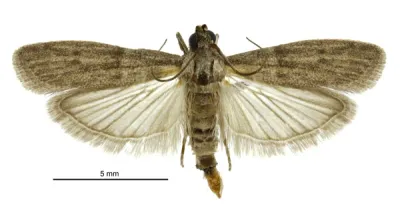
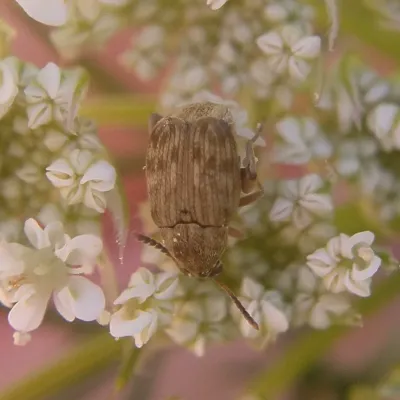
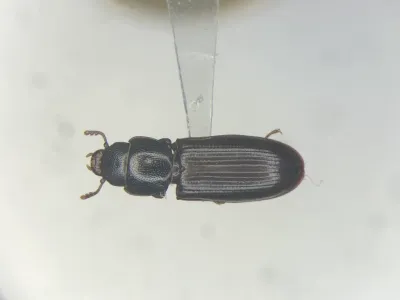
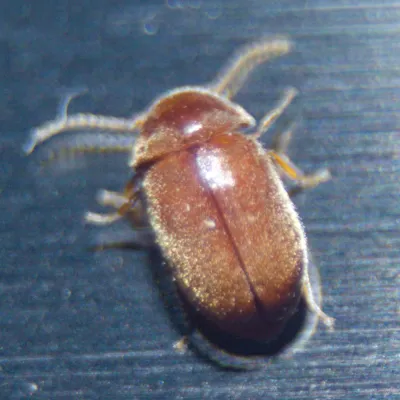
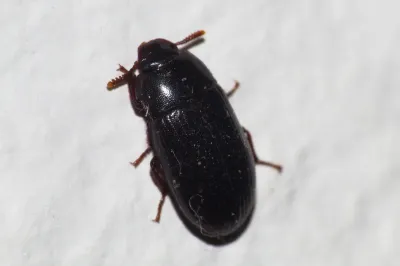
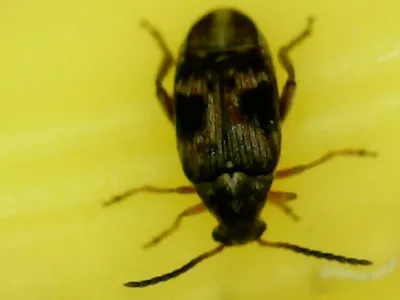
Commonly Confused With
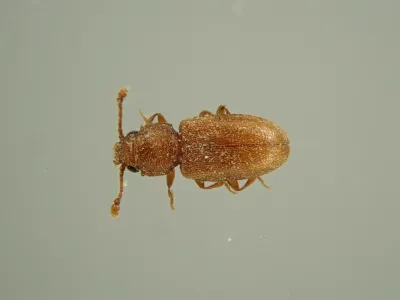
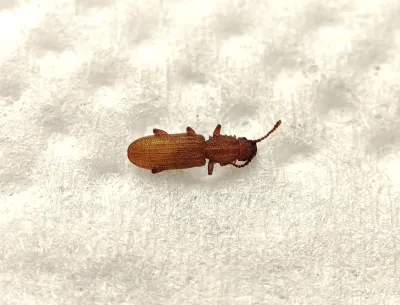
Slender-Horned Flour Beetle are often mistaken for these similar pests
Where Slender-Horned Flour Beetle Are Found
Hover over states to see their names. Green regions indicate where slender-horned flour beetle have been reported.
Common Questions about Slender-Horned Flour Beetle
What is a slender-horned flour beetle?
+
It is a small stored product beetle, about 1/8 inch long, that feeds on flour, meal, corn, and peanuts. It belongs to the same darkling beetle family as the red and confused flour beetles. Males have two thin, curved horns on their jaws, which give the beetle its name.
How do I tell a slender-horned flour beetle from a red flour beetle?
+
Look at the head. Male slender-horned flour beetles have two curved horns sticking forward from the jaws. Red flour beetles have no horns. Slender-horned flour beetles are also a bit narrower and more parallel-sided. Females lack horns, so a lab key or a hand lens may be needed to sort them out.
How is it different from the broad-horned flour beetle?
+
The two are close relatives. The broad-horned flour beetle is a little larger, about 1/6 inch long, and its males have wide, stout jaw horns. Slender-horned males have thin, incurved horns. The broad-horned species is found across much of the U.S., while the slender-horned species is mostly found in the South.
Do slender-horned flour beetles bite or spread disease?
+
No. They do not bite people or pets, and they are not known to spread disease. The problem is spoiled food. Beetles, shed skins, and waste make flour and meal unfit to eat.
Are slender-horned flour beetles common in Virginia and Maryland?
+
No. The USDA describes this beetle as much less common in the United States than other flour beetles and mostly limited to Southern states. It needs warm conditions to develop. A beetle found in a Mid-Atlantic pantry is far more likely to be a red or confused flour beetle.
How do I get rid of slender-horned flour beetles?
+
Find and throw out every infested food package, then vacuum and wipe the shelves. Freeze any dry goods you want to keep for at least 4 to 7 days at 0 degrees Fahrenheit. Store flour, meal, cornmeal, and nuts in airtight glass or hard plastic containers.

With five years of hands-on experience in the pest control industry, George Schulz is a registered technician with the Virginia Pest Management Association and a proud third-generation professional in a family business that's been protecting homes for over 58 years. He manages and trains a team of service pros while also leading internal research efforts—recently spearheading a deep-dive review of thousands of documents on pest control materials to hand-pick the most kid and pet friendly, most effective solutions tailored specifically for homes in the DC metro area.
Local Slender-Horned Flour Beetle Help
Dealing with slender-horned flour beetle at home? Our licensed technicians provide pest control across Northern Virginia and Maryland.
