Lesser Stripetail Scorpions Identification Guide
Chihuahuanus coahuilae
The lesser stripetail scorpion is a small, ground-dwelling scorpion found across the Chihuahuan Desert region of the southwestern United States and northern Mexico. It is one of the most commonly encountered scorpions in west Texas and southern New Mexico.
Taxonomy
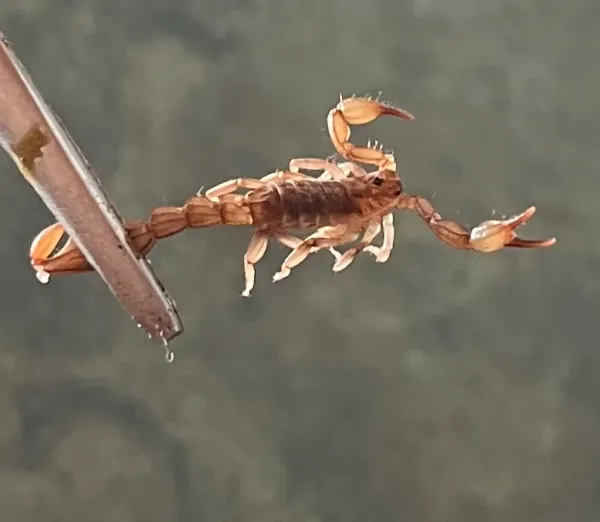
Lesser Stripetail Scorpions Coloration
Common color patterns to help identify lesser stripetail scorpions
Lesser Stripetail Scorpions
Seasonal Activity
When lesser stripetail scorpions are most active throughout the year

Where Lesser Stripetail Scorpions Are Found
Hover over states to see their names. Green regions indicate where lesser stripetail scorpions have been reported.
Lesser Stripetail Scorpion Identification Guide
Physical Characteristics
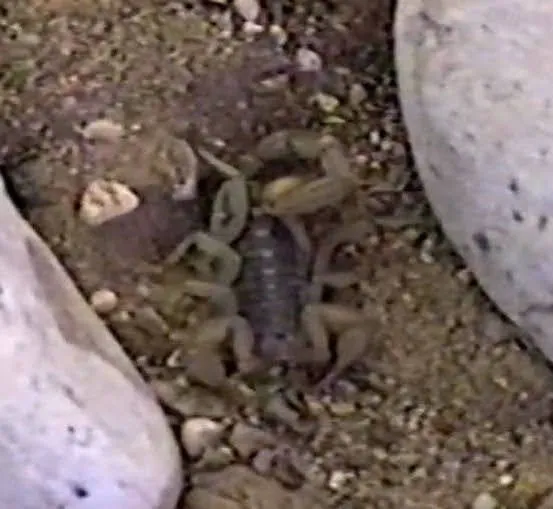
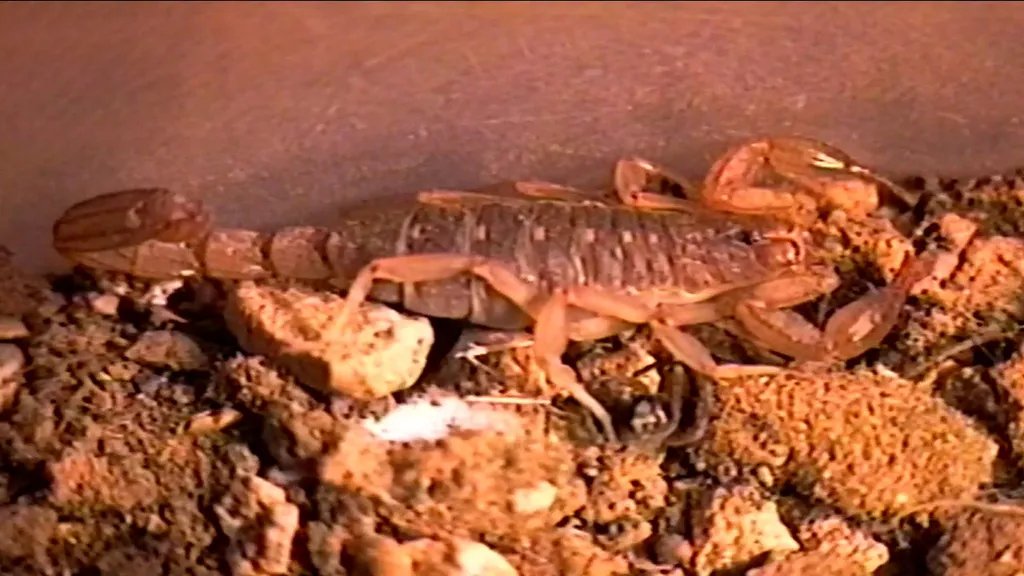
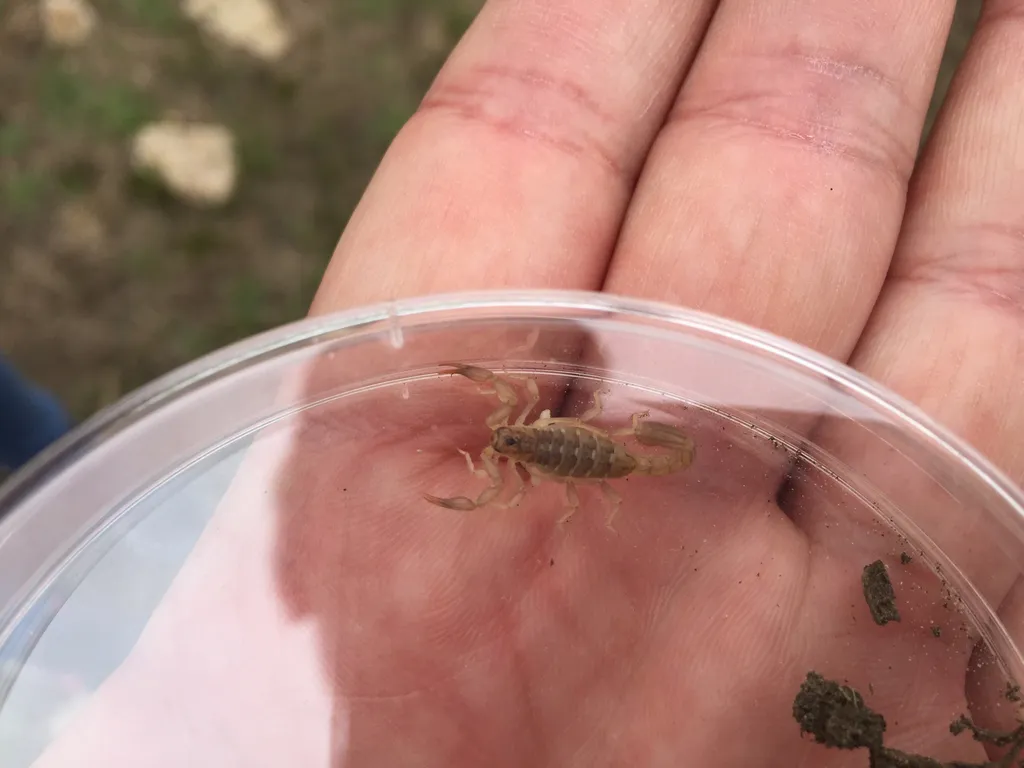
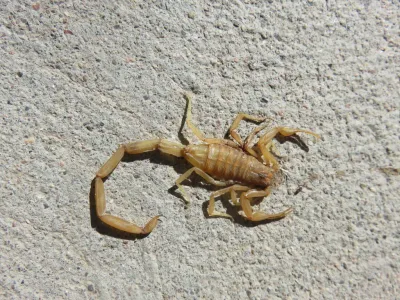
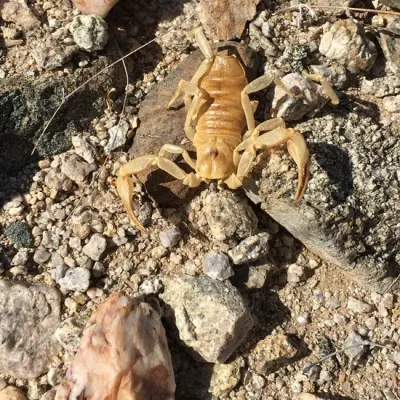
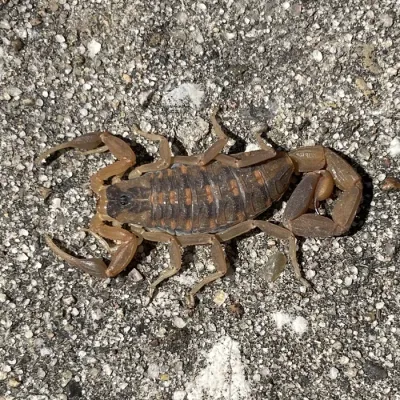
The lesser stripetail scorpion (Chihuahuanus coahuilae) is a small scorpion. Adults measure about 1.4 to 2.2 inches (35 to 55 mm) long. The body is yellow-tan to light brown. Faint darker bands run along the tail segments, which is how the species got its name. Its build is stocky compared to bark scorpions. The pincers are thick, and the five-segment tail ends in a curved stinger.
Like all scorpions, the lesser stripetail has eight walking legs, a pair of large pincers, and a segmented tail. The body has two main parts. The front section (prosoma) holds the eyes, pincers, and mouthparts. The rear section (opisthosoma) includes the broad middle body and the narrow tail. Two small clusters of eyes sit on top of the head, with more eyes along the sides. Sensory hairs cover the body and legs. These hairs help the scorpion pick up ground vibrations and air movement.
Scientists first described this species as Vaejovis coahuilae. It was later called Hoffmannius coahuilae. A 2013 study moved it to the genus Chihuahuanus, which is the name used today.
Common Species in North America
Several scorpion species share the same range as the lesser stripetail in the Southwest. The striped bark scorpion (Centruroides vittatus) is the most common look-alike. Bark scorpions have thinner pincers and longer tails. They are also good climbers and often get into homes by scaling walls. The Arizona bark scorpion (Centruroides sculpturatus) is the most dangerous scorpion in North America. It lives in the western part of the lesser stripetail’s range. The much larger Arizona hairy scorpion (Hadrurus arizonensis) lives in some of the same desert areas but is easy to tell apart because it grows over 5 inches long.
Lesser Stripetail Scorpion Behavior and Biology
Habitat and Distribution
The lesser stripetail scorpion lives in the Chihuahuan Desert of the southwestern United States and northern Mexico. In the U.S., you can find it in southern Arizona, southern and central New Mexico, and west Texas. The first specimen was collected near Cuatro Cienegas in Coahuila, Mexico. The species also lives in Chihuahua and Durango.
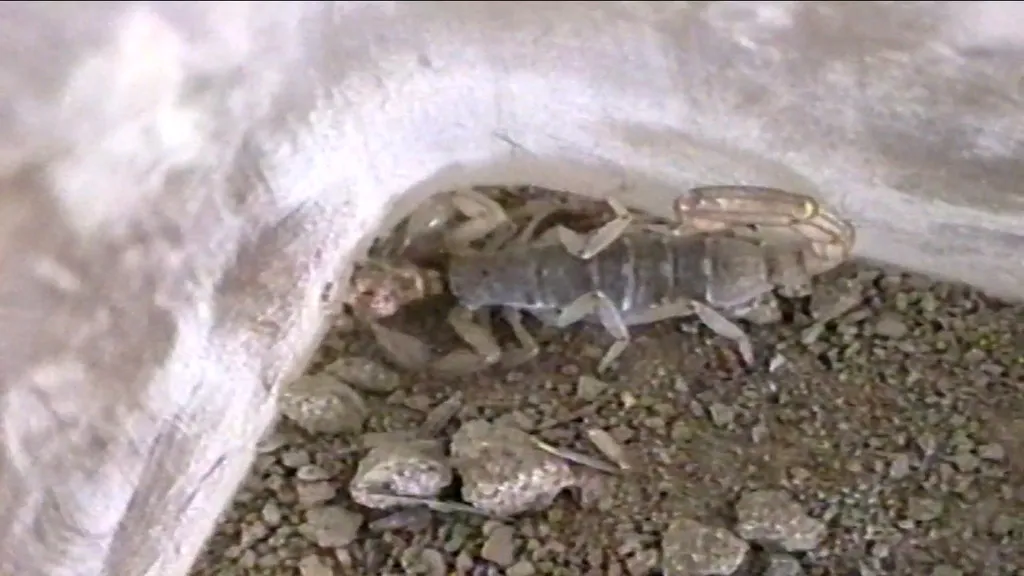
These scorpions stay on the ground. They like rocky desert terrain with loose soil. During the day they hide under rocks, flat stones, landscape debris, and in shallow burrows. Some have been found at elevations up to about 7,000 feet. Near homes in desert areas, they may tuck under potted plants, along foundations, inside block wall gaps, and beneath stored items.
Diet and Feeding Habits
Lesser stripetail scorpions hunt at night. They eat small insects and other small creatures, including crickets, beetles, and spiders. They are ambush hunters. They wait near their shelter and grab anything that comes close with their pincers. For bigger or faster prey, they sting to stop the catch from moving.
Sensory hairs on their body pick up vibrations in the ground and air. Comb-shaped organs on the underside of the body, called pectines, help them read ground textures and follow scent trails left by prey. These senses let the scorpion hunt well even in total darkness.
Reproduction and Lifecycle
Lesser stripetail scorpions give birth to live young. The female does not lay eggs. After mating, she carries the babies inside her body. When born, the young are pale and soft. They climb onto the mother’s back and ride there for one to three weeks until their first molt hardens their shell.
Young scorpions shed their skin several times over multiple years before they are fully grown. Growth timing for this species is not well studied. However, scorpions in the same family tend to grow slowly compared to insects. Adults can live several years in the wild.
Venom and Medical Significance
The sting of a lesser stripetail scorpion hurts but is usually not dangerous to healthy adults. The venom causes pain, swelling, and redness at the sting site. These symptoms usually go away within a few hours to a day. A review of scorpion venom research shows that scorpions in this family are much less dangerous than bark scorpions like the Arizona bark scorpion (Centruroides sculpturatus), which can cause serious nerve problems.
Still, any scorpion sting can be more risky for young children, older adults, or people with allergies. If someone has trouble breathing, muscle twitching, or spreading numbness after a sting, get medical help right away. You can also call Poison Control at 1-800-222-1222.
This content is for general information only and is not medical advice. Always talk to a doctor about health concerns related to scorpion stings.
Treatment Methods for Lesser Stripetail Scorpions
Controlling lesser stripetail scorpions works best when you combine several steps: removing hiding spots, sealing entry points, and using targeted treatments. Since this species stays on the ground and follows its prey, the goal is to make your home and yard less appealing.
-
Remove hiding spots: Clear rock piles, woodpiles, and debris near your foundation. Keep firewood off the ground and away from the house. Trim plants so they do not touch outside walls. The University of Arizona Cooperative Extension suggests keeping a clean 3-foot buffer around the foundation.
-
Seal entry points: Put tight-fitting door sweeps on all outside doors. Fill cracks around windows, pipes, utility lines, and the foundation with caulk or foam. Screen weep holes and vents. These steps keep both scorpions and their prey from getting inside.
-
Cut down on prey bugs: Scorpions go where their food is. Reducing crickets, beetles, and other ground bugs near the home makes the area less inviting. Switching outdoor lights to yellow or amber “bug” bulbs also cuts down on the flying insects that attract prey species.
-
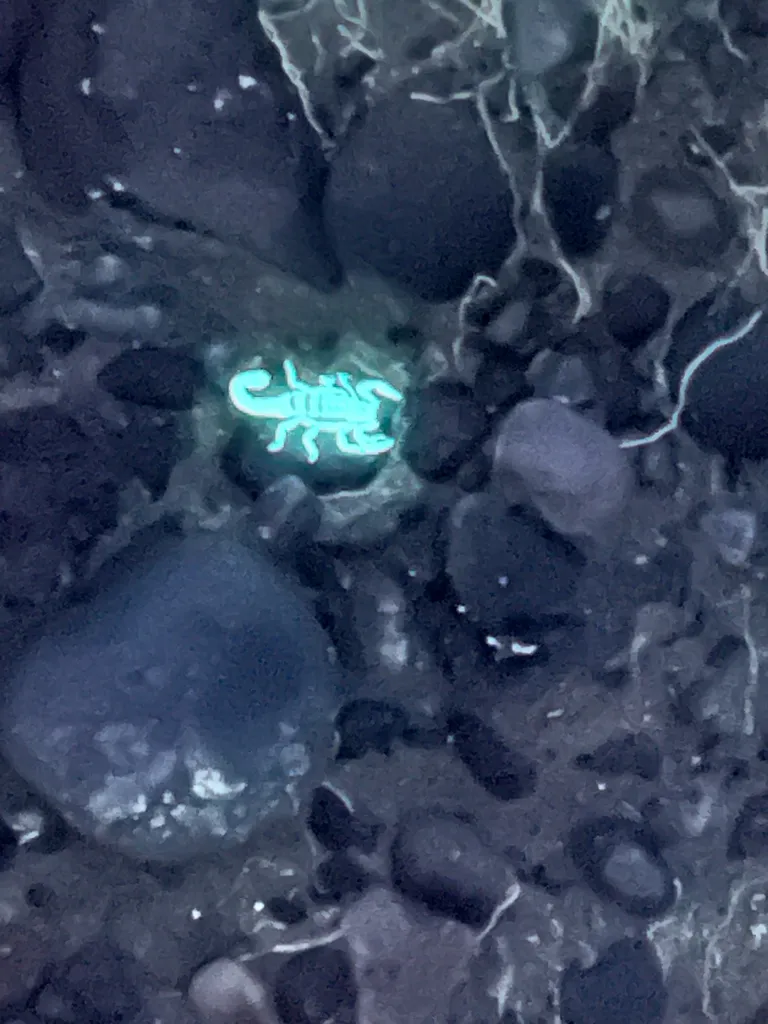
Use a UV flashlight: Scorpions glow under ultraviolet light, turning bright blue-green. A handheld blacklight is one of the best tools for finding them. Walking the yard at night with a UV light shows where scorpions are active and where they are hiding.
-
Perimeter treatments: Residual treatments along the foundation and around entry points can lower scorpion activity when paired with sealing and cleanup. Extension sources note that chemical treatments alone do not solve the problem. Scorpions hide in tight cracks that sprays cannot reach. The best results come from using several methods together.
-
Professional help: For ongoing scorpion problems in desert neighborhoods, a licensed pest control company with scorpion experience can inspect the property, find entry points, and set up a treatment plan for the local conditions.
References
- Chihuahuanus coahuilae, Scorpion Files (Jan Ove Rein)
- Gonzalez-Santillan & Prendini (2013), Revision of Vaejovid Scorpion Subfamily Syntropinae, Bulletin of the American Museum of Natural History
- Chihuahuanus coahuilae, GBIF
- Scorpion Pest-Proofing Your Home, University of Arizona Cooperative Extension
- Lesser Stripetail Scorpion, Texas A&M El Paso Urban Programs
- Scorpion Venom Review, PMC/NCBI
Other Other Pests
Explore other species in the other pests family
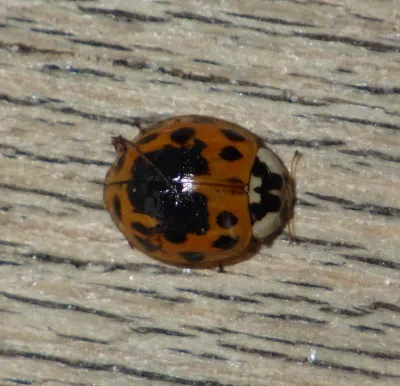
Commonly Confused With
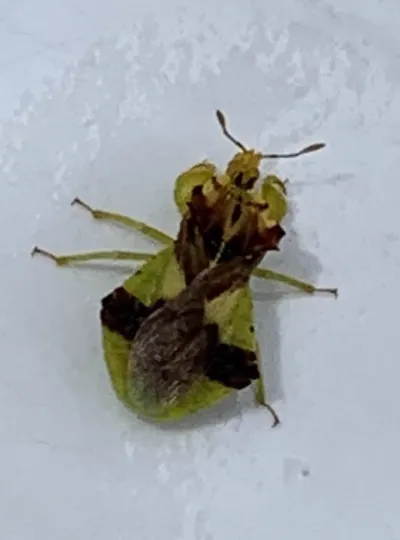
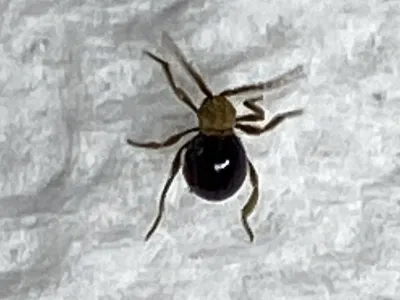
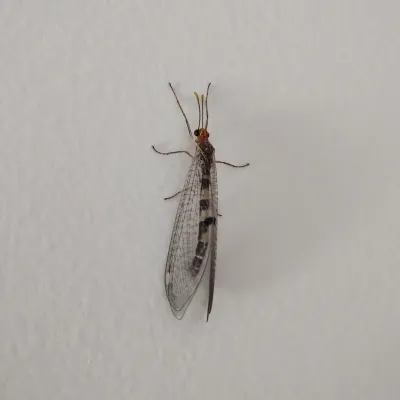
Lesser Stripetail Scorpions are often mistaken for these similar pests
Where Lesser Stripetail Scorpions Are Found
Hover over states to see their names. Green regions indicate where lesser stripetail scorpions have been reported.
Common Questions about Lesser Stripetail Scorpions
How dangerous is a lesser stripetail scorpion sting?
+
The sting of a lesser stripetail scorpion is painful but generally not medically significant for healthy adults. Most people experience localized pain, redness, and swelling that resolves within a few hours. Children, elderly individuals, and people with allergies should seek medical attention after any scorpion sting. This is not medical advice. Always consult a healthcare provider for medical concerns.
Where do lesser stripetail scorpions live?
+
Lesser stripetail scorpions live in the Chihuahuan Desert region, including parts of west Texas, southern New Mexico, southern Arizona, and northern Mexico (Coahuila, Chihuahua, and Durango). They prefer rocky desert terrain and are most often found under rocks, debris, and in shallow burrows.
How big do lesser stripetail scorpions get?
+
Adults typically reach 1.4 to 2.2 inches (35 to 55 mm) in total length from pincers to stinger tip. Females tend to be slightly larger than males. This makes them a small to medium-sized scorpion compared to species like the Arizona hairy scorpion, which can reach over 5 inches.
Do lesser stripetail scorpions glow under a blacklight?
+
Yes. Like all scorpions, lesser stripetail scorpions fluoresce under ultraviolet light. Their exoskeleton contains compounds that glow bright blue-green when exposed to a UV flashlight. This makes a blacklight one of the most effective tools for finding scorpions at night.
What do lesser stripetail scorpions eat?
+
They are nocturnal predators that feed on small insects and other arthropods such as crickets, beetles, and spiders. They detect prey through vibrations picked up by sensory hairs and specialized organs on their underside called pectines.
How can I keep lesser stripetail scorpions out of my home?
+
Remove outdoor harborage like rock piles, woodpiles, and yard debris near your foundation. Seal cracks around doors, windows, and utility lines. Install tight-fitting door sweeps. Reduce insect populations around your home since scorpions follow their food sources. A UV flashlight can help you locate and monitor scorpion activity around your property at night.
Are lesser stripetail scorpions aggressive?
+
No. Lesser stripetail scorpions are not aggressive toward people. They are shy, ground-dwelling arachnids that stay hidden during the day. Most stings happen when a person accidentally steps on or reaches near a hidden scorpion in shoes, clothing, or yard debris.

With five years of hands-on experience in the pest control industry, George Schulz is a registered technician with the Virginia Pest Management Association and a proud third-generation professional in a family business that's been protecting homes for over 58 years. He manages and trains a team of service pros while also leading internal research efforts—recently spearheading a deep-dive review of thousands of documents on pest control materials to hand-pick the most kid and pet friendly, most effective solutions tailored specifically for homes in the DC metro area.
Local Other Pests Help
Dealing with other pests at home? Our licensed technicians provide pest control across Northern Virginia and Maryland.
