Flies
Diptera (Order)
Flies are two-winged insects that can become household nuisances. Many species breed in decaying organic matter, drains, and moist environments around homes.
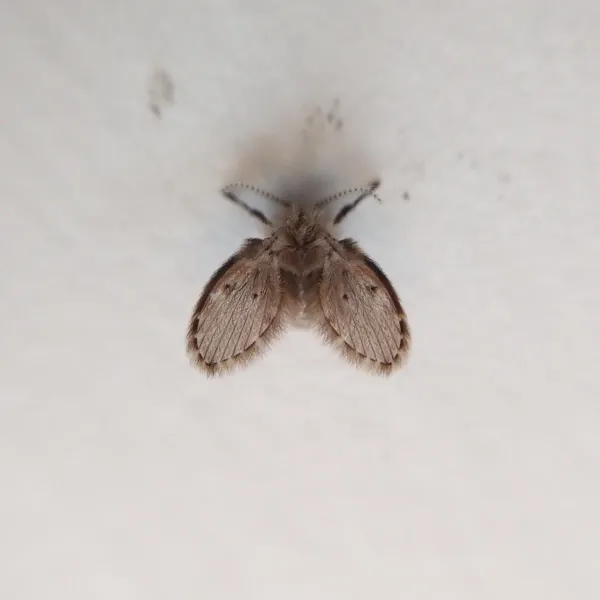
Fly Identification Guide
Physical Characteristics
Flies belong to the order Diptera, meaning “two wings.” Unlike most flying insects that have four wings, flies have only one pair of functional wings. Their hind wings have evolved into small knob-like structures called halteres that help with balance during flight. Flies have large compound eyes, short antennae, and sponging or piercing mouthparts depending on the species.
Common Household Fly Species
-
Drain Flies: Small, fuzzy, moth-like flies that breed in the organic film inside drains. They hold their wings roof-like over their bodies and are weak fliers.
-
Fruit Flies: Tiny tan flies with red eyes that hover around overripe fruit, fermenting liquids, and garbage. They reproduce extremely quickly in warm conditions.
-
House Flies: Medium-sized gray flies with four dark stripes on their thorax. They are strong fliers and commonly land on food and surfaces.
-
Blow Flies: Metallic blue or green flies attracted to decaying animal matter. Their presence often indicates a dead animal nearby.
-
Cluster Flies: Larger, slower flies that enter homes in fall to overwinter. They are often found in attics and wall voids.
-
Horse Flies: Large biting flies found near livestock and water. They deliver painful bites and are strong, fast fliers.
-
Stable Flies: Blood-feeding flies that resemble house flies but have forward-pointing mouthparts for biting.
-
Phorid Flies: Tiny humpbacked flies that run across surfaces in short bursts. They breed in a wide range of decaying organic matter.
-
Fungus Gnats: Small dark flies found around houseplants. Their larvae feed on fungi and organic matter in moist potting soil.
Fly Behavior and Biology
Flies undergo complete metamorphosis with four life stages: egg, larva (maggot), pupa, and adult. Most pest flies complete their life cycle in one to four weeks depending on temperature and species. Females can lay hundreds of eggs near suitable food sources for their larvae.
Different fly species have distinct breeding preferences. Drain flies breed in the gelatinous film inside pipes. Fruit flies prefer fermenting fruits and vegetables. House flies lay eggs in garbage, manure, and decaying organic matter. Understanding these preferences is key to controlling infestations. For help telling similar species apart, see our guides on drain flies vs fruit flies, cluster fly vs house fly, and horse fly vs house fly identification.
Flies are most active during warm months but can persist year-round indoors if breeding sites and food sources are available. They are attracted to light and often congregate near windows.
Treatment Methods for Flies
Effective fly control focuses on source elimination and environmental management:
-
Sanitation: Remove breeding sources by cleaning drains, disposing of overripe produce, securing garbage containers, and eliminating standing water.
-
Exclusion: Repair window screens, seal gaps around pipes and vents, and keep doors closed to prevent fly entry.
-
Drain Treatment: For drain flies, cleaning drain pipes with enzymatic cleaners or a stiff brush removes the organic film where larvae develop.
-
Traps: Various fly traps including sticky traps, UV light traps, and vinegar traps can reduce adult populations while addressing the underlying breeding issue.
-
Professional Assessment: Persistent fly problems may indicate hidden breeding sources that require professional inspection to locate and eliminate.
Types of Flies
Click on any species below to learn more about identification, behavior, and control methods.
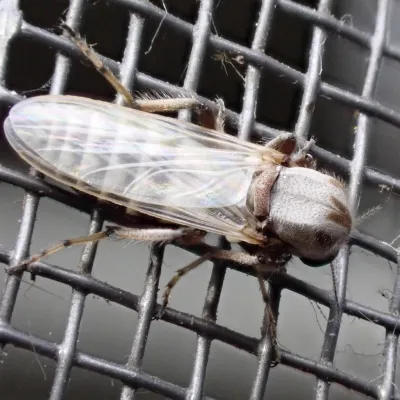
Biting Midges
Ceratopogonidae (Family)
Biting midges, also called no-see-ums, are extremely small flies that deliver painful bites despite their tiny size. These blood-feeding insects are most active at dawn and dusk near coastal and wetland areas.
View identification guide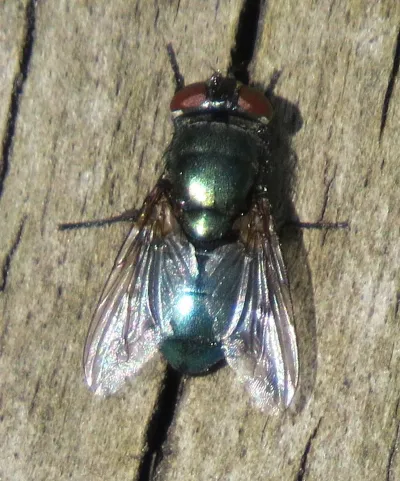
Black Blow Flies
Phormia regina
Black blow flies are dark metallic flies commonly found near decaying organic matter. They are one of the first insects to arrive at carrion and are important in forensic science for estimating time of death.
View identification guide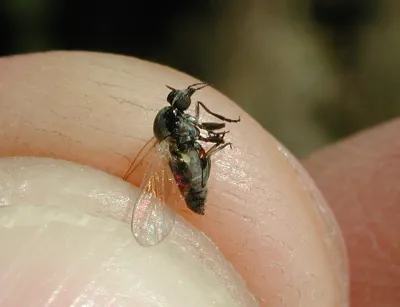
Black Flies
Simuliidae (Family)
Black flies are small, dark-colored biting flies that breed in flowing water. Also called buffalo gnats due to their humpbacked appearance, female black flies can deliver painful bites that cause swelling and irritation.
View identification guide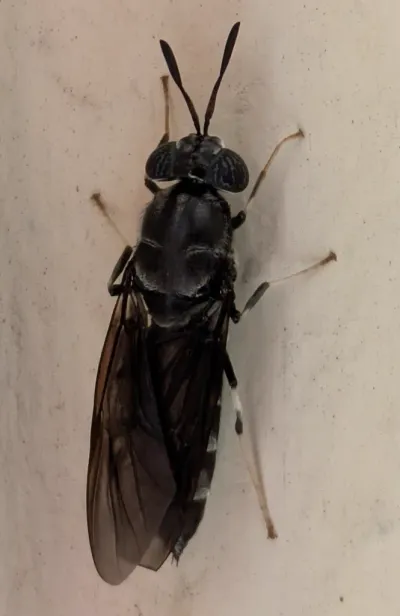
Black Soldier Flies
Hermetia illucens
Black soldier flies are large, dark-colored flies that mimic wasps in appearance. They do not spread disease or bite humans, which sets them apart from common house flies and blow flies.
View identification guide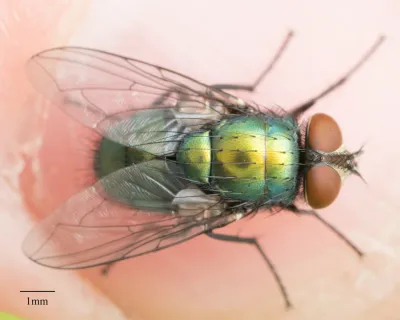
Blow Flies
Calliphoridae (Family)
Blow flies are metallic blue, green, or black flies known for their loud buzzing and attraction to decaying organic matter. Their presence indoors often signals a dead animal or sanitation issue nearby.
View identification guide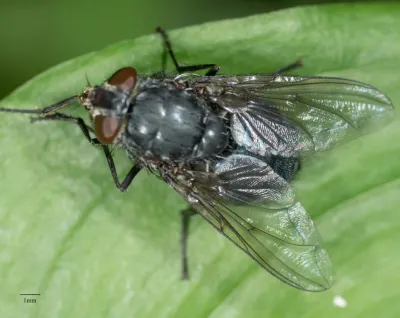
Blue Bottle Flies
Calliphora vomitoria
Blue bottle flies are large, metallic blue blow flies known for their loud buzzing and attraction to decaying organic matter. They are common throughout North America and often indicate the presence of dead animals or sanitation issues nearby.
View identification guide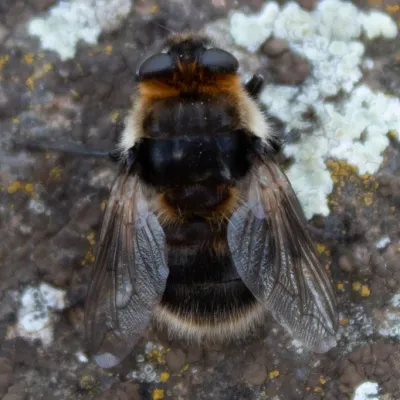
Bot Flies
Oestridae (Family)
Bot flies are parasitic flies whose larvae develop inside the bodies of mammals. Unlike most household flies, bot flies do not breed in garbage or filth. Instead, their larvae burrow under the skin of hosts such as rodents, rabbits, livestock, and occasionally pets.
View identification guide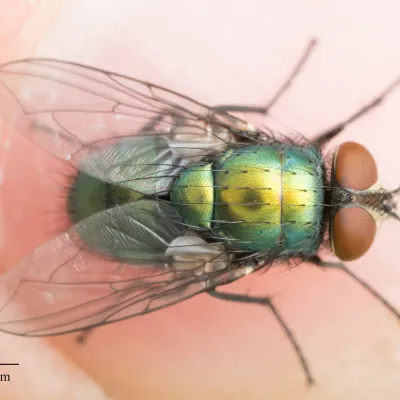
Bottle Flies
Calliphoridae (Family)
Bottle flies are metallic-colored flies commonly seen around homes, especially when decaying organic matter is present. Named for their shiny, bottle-like appearance, these flies can indicate dead animals or sanitation problems nearby.
View identification guide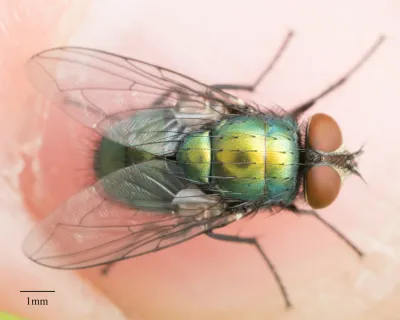
Carrion Flies
Calliphoridae (Family)
Carrion flies are metallic-colored flies attracted to dead animals and decaying organic matter. Also known as blow flies, they are often the first insects to arrive at carcasses and can indicate a dead animal in or near your home.
View identification guide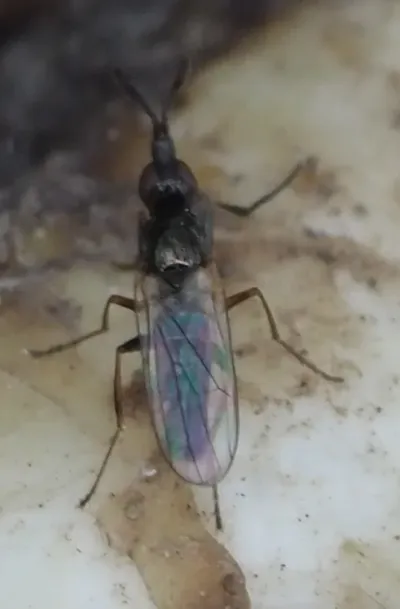
Cheese Skipper Flies
Piophila casei
Cheese skipper flies are small, metallic-black flies whose larvae infest cured meats, aged cheeses, and other high-protein stored foods. Their larvae are famous for their ability to jump several inches when disturbed.
View identification guide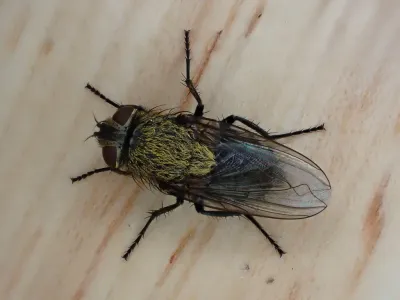
Cluster Flies
Pollenia spp.
Cluster flies are large, slow-moving flies that enter homes in fall to overwinter in attics and wall voids. Unlike house flies, they do not breed indoors or in garbage.
View identification guide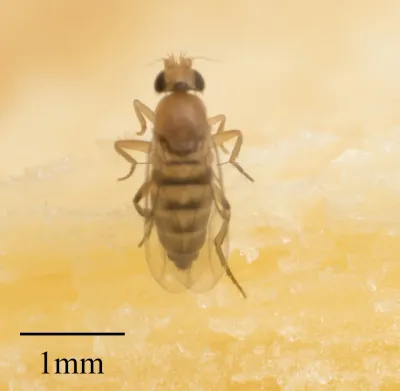
Coffin Flies
Megaselia scalaris
Coffin flies are small phorid flies known for their ability to locate and breed in buried organic matter, including corpses. They are found throughout North America and can become indoor pests when breeding in decaying materials.
View identification guide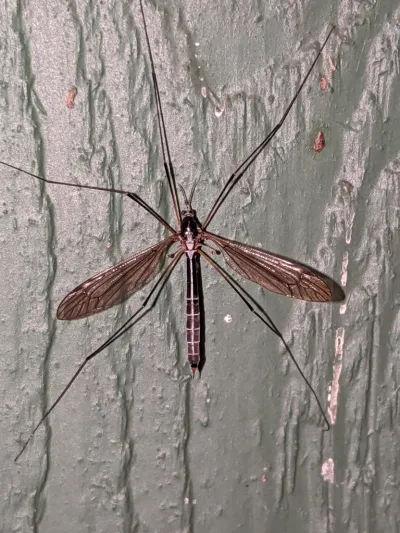
Crane Flies
Tipulidae (Family)
Crane flies are large, long-legged flies often mistaken for giant mosquitoes. Despite their intimidating appearance, adult crane flies are harmless and do not bite or sting.
View identification guide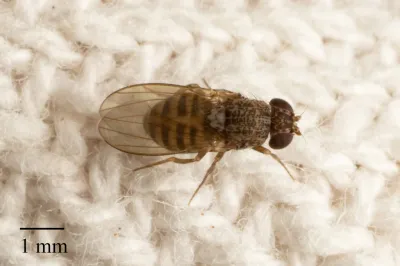
Dark-Eyed Fruit Flies
Drosophila repleta
Dark-eyed fruit flies are small vinegar flies distinguished by their dark red to brown eyes, commonly found around decaying vegetables, garbage, and fermenting organic matter in homes.
View identification guide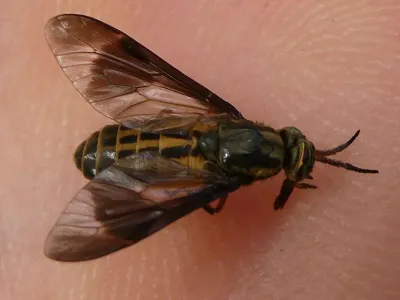
Deer Flies
Chrysops (Genus)
Deer flies are small to medium-sized biting flies with distinctive patterned wings and colorful eyes. Female deer flies deliver painful bites while feeding on blood from mammals, including humans.
View identification guide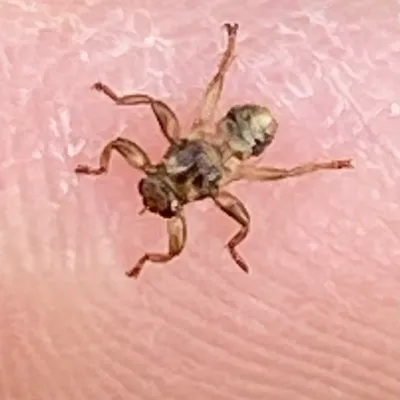
Deer Keds
Lipoptena cervi
Deer keds are wingless, blood-feeding parasitic flies that primarily infest white-tailed deer. They resemble ticks but are actually flattened flies that shed their wings after finding a host, and they occasionally land on humans during fall hunting season.
View identification guide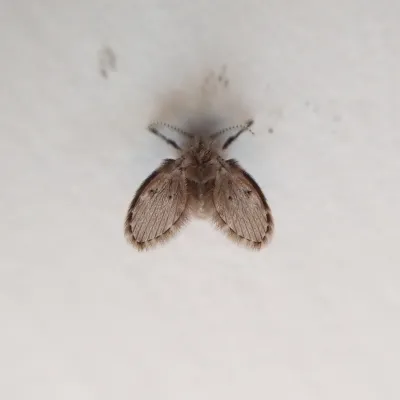
Drain Flies
Psychodidae (Family)
Drain flies are small, fuzzy, moth-like flies that breed in the organic buildup inside drains, pipes, and other moist areas with decaying organic matter.
View identification guide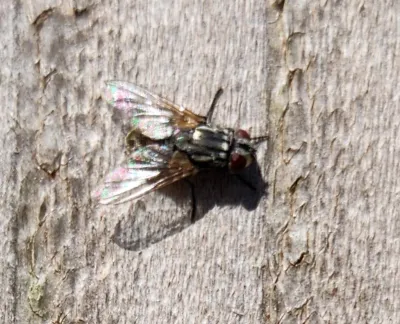
Face Flies
Musca autumnalis
Face flies are cattle-associated pests that closely resemble house flies. They enter homes in fall to overwinter and can become a nuisance when they emerge on warm winter days.
View identification guide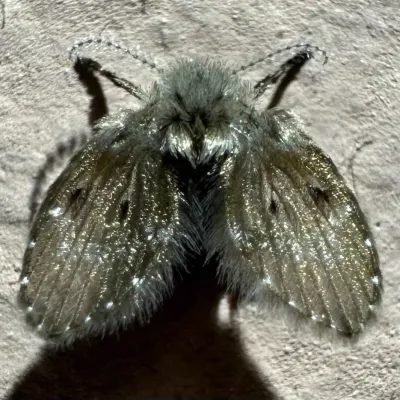
Filter Flies
Psychodidae (Family)
Filter flies are small, fuzzy, moth-like flies commonly found near drains, sewage treatment facilities, and areas with stagnant water containing organic matter.
View identification guide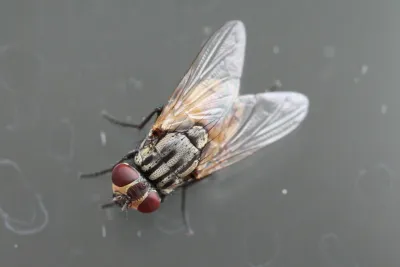
Filth Flies
Diptera (Various Families)
Filth flies are a group of fly species that breed in decaying organic matter, garbage, and animal waste. This group includes house flies, blow flies, bottle flies, and flesh flies, all of which can spread disease-causing organisms.
View identification guide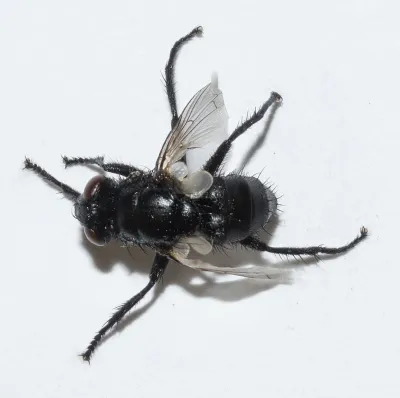
Flesh Flies
Sarcophagidae (Family)
Flesh flies are gray flies with distinctive black and gray striped thoraxes and checkered abdomens. They breed in decaying organic matter and are often the first flies to arrive at animal remains.
View identification guide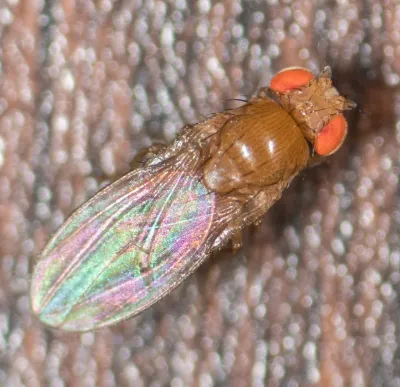
Fruit Flies
Drosophila melanogaster
Fruit flies are tiny tan-colored flies with distinctive red eyes that are attracted to overripe fruit, fermenting liquids, and decaying organic matter in kitchens and homes.
View identification guide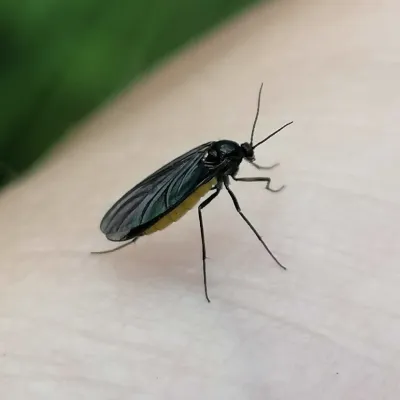
Fungus Gnats
Sciaridae (Family)
Fungus gnats are small, dark-colored flies commonly found around houseplants and in areas with moist soil. Their larvae feed on fungi, decaying organic matter, and plant roots.
View identification guide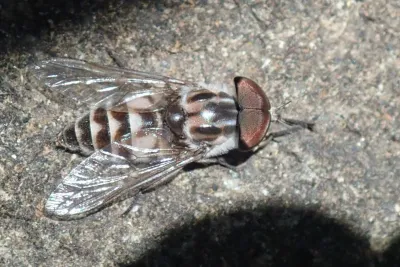
Horse Flies
Tabanidae (Family)
Horse flies are large, robust biting flies known for their painful bites. Female horse flies feed on blood from mammals, while males feed on nectar and pollen.
View identification guide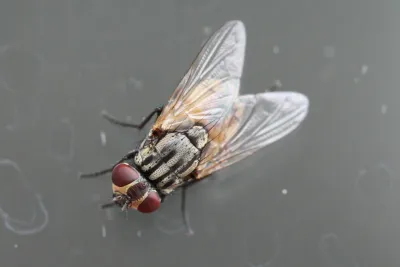
House Flies
Musca domestica
House flies are medium-sized gray flies with four dark stripes on the thorax that are found worldwide. They are significant pests due to their ability to mechanically transmit disease-causing pathogens.
View identification guide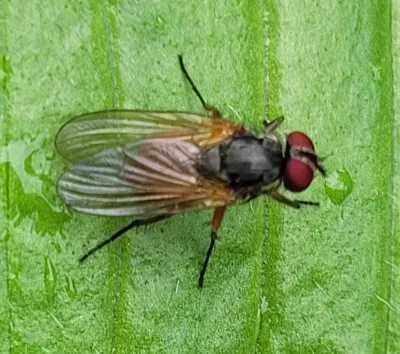
Latrine Flies
Fannia scalaris
Latrine flies are small, slender flies that breed in animal and human waste, decaying organic matter, and other unsanitary environments. They are closely related to the lesser house fly.
View identification guide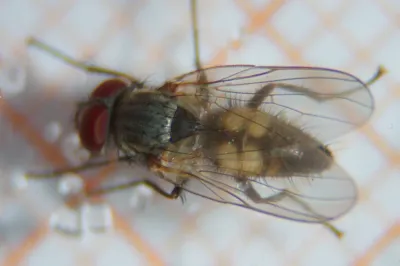
Lesser House Flies
Fannia canicularis
Lesser house flies are small gray flies known for their distinctive circling flight pattern beneath hanging objects. They are common nuisance pests that breed in decaying organic matter and animal waste.
View identification guide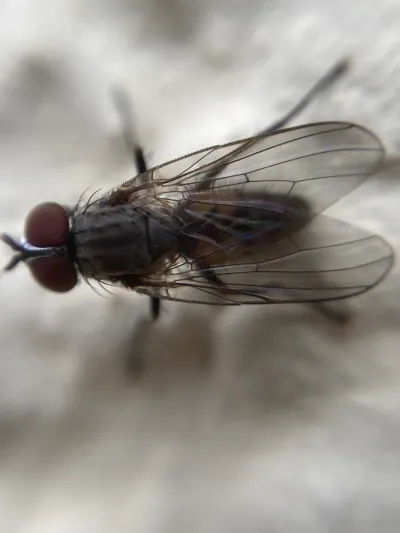
Little House Flies
Fannia canicularis
Little house flies are small gray flies often seen hovering in circles beneath lights and in shaded areas. They breed in moist organic matter and are common nuisance pests in homes near animal facilities or areas with decaying waste.
View identification guide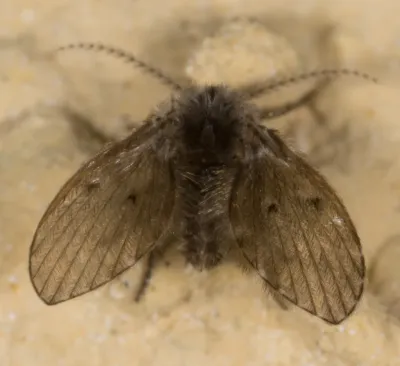
Moth Flies
Psychodidae (Family)
Moth flies are small, fuzzy, moth-like insects that breed in the organic buildup inside drains and other moist areas. Also known as drain flies or sewer gnats, they are a common nuisance pest in bathrooms and kitchens.
View identification guide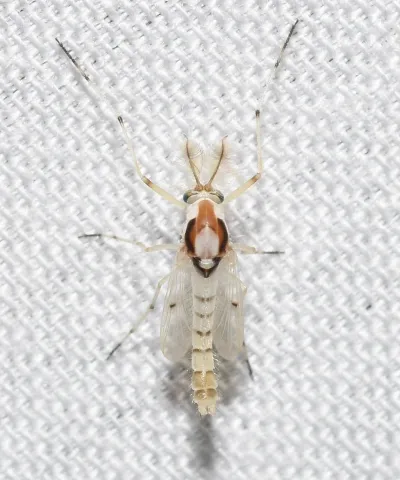
Non-Biting Midges
Chironomidae (Family)
Non-biting midges are small, mosquito-like flies that do not bite humans. They emerge in large swarms near lakes, ponds, and other water sources and can become a significant nuisance around homes.
View identification guide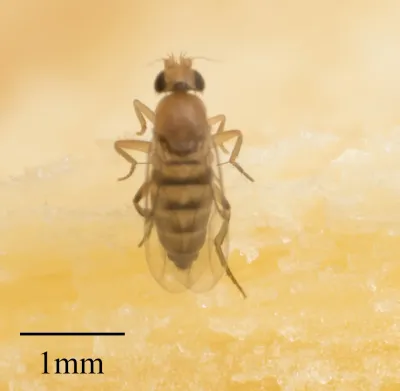
Phorid Flies
Phoridae (Family)
Phorid flies are small, humpbacked flies known for their erratic running behavior. They breed in decaying organic matter and can indicate plumbing issues or hidden moisture problems in homes.
View identification guide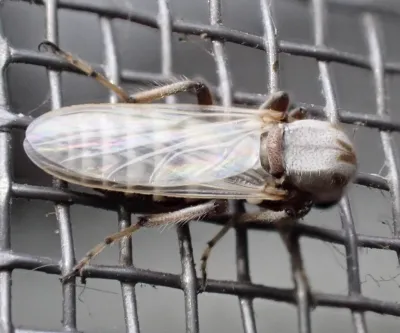
Sand Flies
Ceratopogonidae (Family)
Sand flies, also known as no-see-ums or biting midges, are tiny biting insects found near beaches, marshes, and other moist areas. Their painful bites cause intense itching and can make outdoor activities unbearable.
View identification guide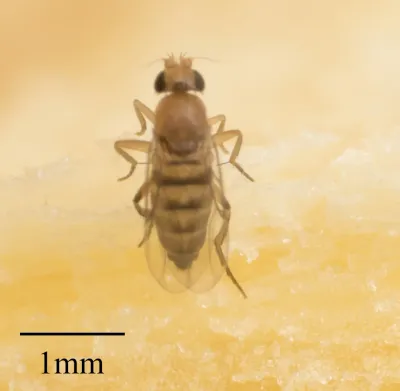
Scuttle Flies
Phoridae (Family)
Scuttle flies are tiny humpbacked flies named for their distinctive running behavior. These pests breed in decaying organic matter and are commonly found near drains, garbage, and areas with moisture problems.
View identification guide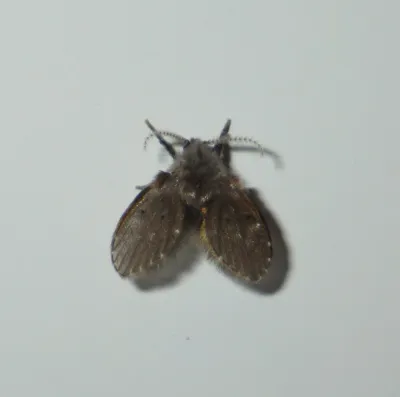
Sewer Flies
Psychodidae (Family)
Sewer flies are small, fuzzy, moth-like insects that breed in the organic sludge found in drains, sewage systems, and septic tanks. Also called drain flies or moth flies, they commonly emerge from bathroom and kitchen plumbing.
View identification guide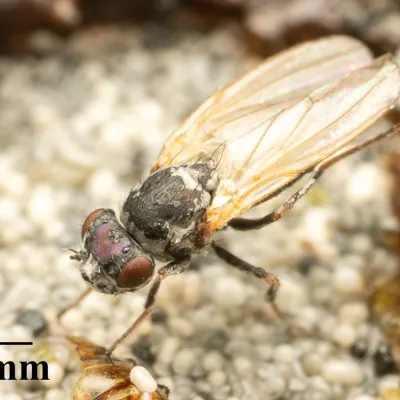
Shore Flies
Ephydridae (Family)
Shore flies are small, dark-colored flies commonly found near standing water, algae, and moist environments. They are frequent nuisance pests in greenhouses and can become problematic in homes with excess moisture.
View identification guide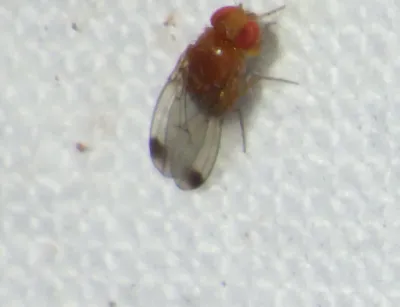
Spotted Wing Drosophila
Drosophila suzukii
The spotted wing drosophila is an invasive fruit fly from Asia that attacks ripening soft fruits like berries and cherries before harvest, causing significant agricultural damage across North America.
View identification guide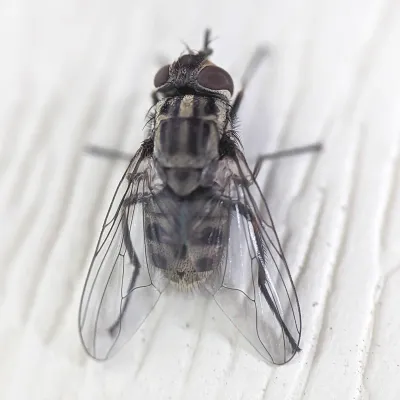
Stable Flies
Stomoxys calcitrans
Stable flies are biting flies that resemble house flies but have piercing mouthparts. They primarily attack livestock but will bite humans and pets, causing painful wounds.
View identification guide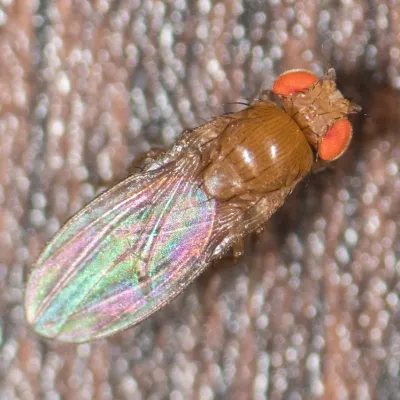
Vinegar Flies
Drosophilidae (Family)
Vinegar flies are a family of small flies attracted to fermented and decaying organic matter. Also known as fruit flies or pomace flies, these common kitchen pests breed rapidly in overripe produce, drains, and garbage.
View identification guide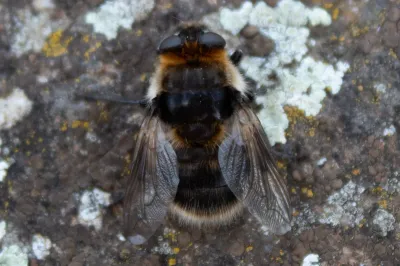
Warble Flies
Hypoderma spp.
Warble flies are parasitic flies in the genus Hypoderma whose larvae develop beneath the skin of cattle and wild ungulates. Adults resemble bumblebees and do not bite or feed, but their larvae cause characteristic raised lumps called warbles on the backs of host animals.
View identification guideCommon Questions about Flies
Why do I have flies in my house?
+
Flies enter homes seeking food, moisture, and breeding sites. Common attractants include overripe fruit, garbage, pet waste, and organic buildup in drains. Identifying the breeding source is essential for control.
What attracts flies indoors?
+
Flies are attracted to decaying organic matter, sweet substances, moisture, and warmth. Kitchen scraps, dirty drains, pet areas, and even houseplants can draw flies into your home.
How do flies get into my home?
+
Flies enter through open doors and windows, torn screens, gaps around pipes and vents, and sometimes on produce or plants brought inside. Small flies can fit through surprisingly tiny openings.
Are flies dangerous to humans?
+
Some flies can spread disease by landing on food after contacting contaminated surfaces. House flies, in particular, are known to carry pathogens. Drain flies and fruit flies are generally more of a nuisance than a health threat.
How long do flies live?
+
Most common household flies live 15 to 30 days as adults. However, their rapid reproduction means a few flies can quickly become an infestation if breeding sites are available.
What is the fastest way to get rid of flies?
+
The most effective approach is eliminating breeding sources. Clean drains, remove rotting produce, secure garbage, and address any moisture issues. Traps and proper sanitation work together for best results.
Explore Other Pest Categories
Browse our comprehensive pest library for identification guides and control information.



With five years of hands-on experience in the pest control industry, George Schulz is a registered technician with the Virginia Pest Management Association and a proud third-generation professional in a family business that's been protecting homes for over 57 years.
Find Local Flie Control Services
We provide professional flies control throughout Virginia, Maryland, and the DC Metro area.