Odd Beetles Identification Guide
Thylodrias contractus
Odd beetles are tiny dermestid beetles whose males and females look like two different insects. Their bristly larvae feed on wool, silk, dead insects, and other dry animal material indoors.
Taxonomy
Odd Beetles Coloration
Common color patterns to help identify odd beetles
Odd Beetles
Seasonal Activity
When odd beetles are most active throughout the year

Where Odd Beetles Are Found
Hover over states to see their names. Green regions indicate where odd beetles have been reported.
Odd Beetle Identification Guide
The odd beetle (Thylodrias contractus) is a small dermestid beetle, a cousin of the common carpet beetle. The name fits. Males and females look so different that most people would never guess they are the same species.
Odd beetles live across much of North America, but usually in small numbers. Experts at the University of California call them widespread but seldom a serious pest. They turn up most in homes, museums, and storage rooms that hold wool, silk, or dried animal items.
Physical Characteristics
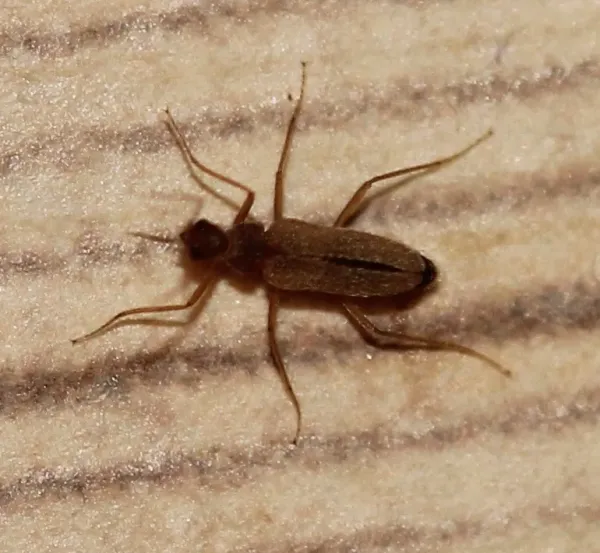
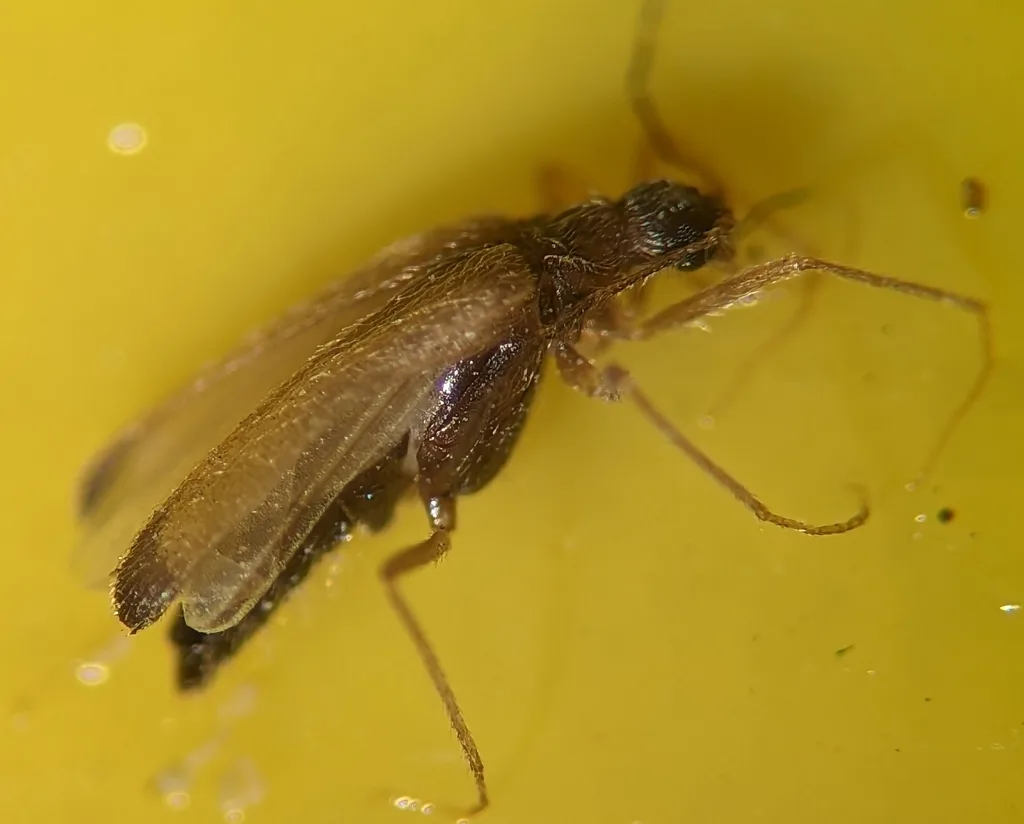
Adult males are the only stage that looks like a typical beetle:
- About 2 to 3 millimeters long (roughly 1/10 inch)
- Slender and yellowish brown to tan
- Long legs and antennae for such a small body
- Wing covers that touch only near the front, then spread apart to show the belly segments
- A single small extra eye between the two main eyes
Some males have full wings and can fly. Many have short wings and fly poorly or not at all.
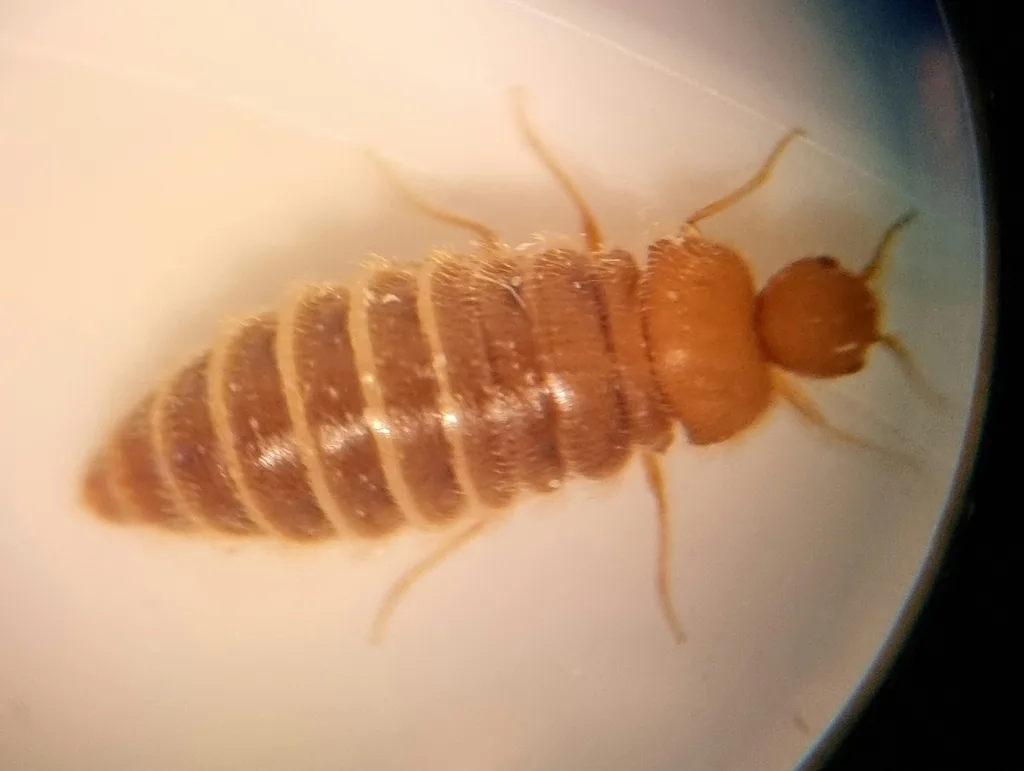
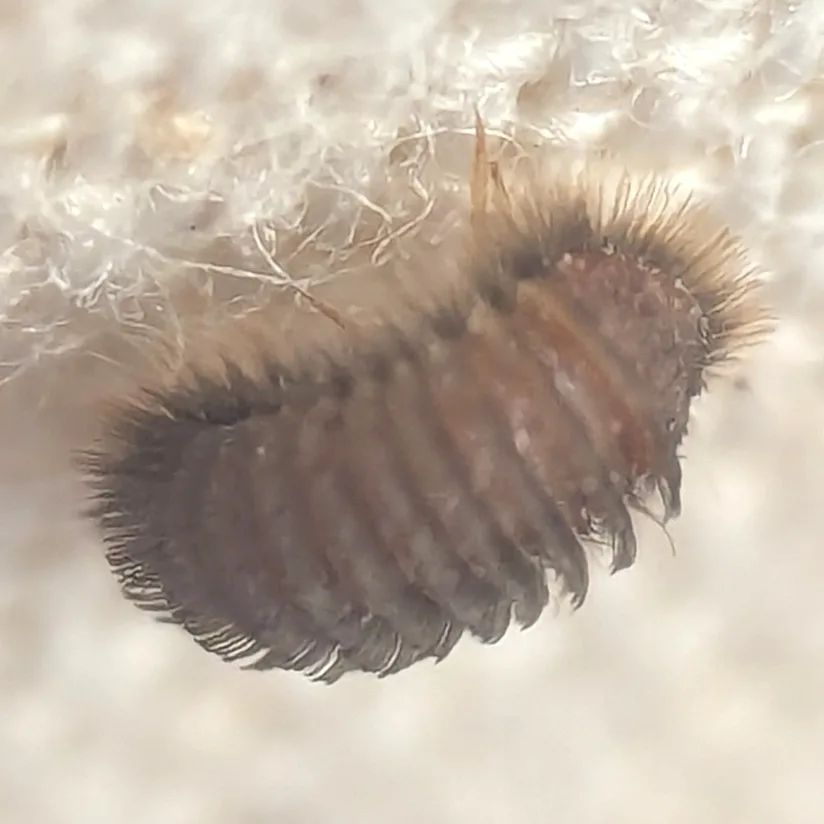
Adult females have no wings at all. They look like a plump, segmented grub about 4 to 5 millimeters long. They are orange-brown to light brown, with pale bands between the segments.
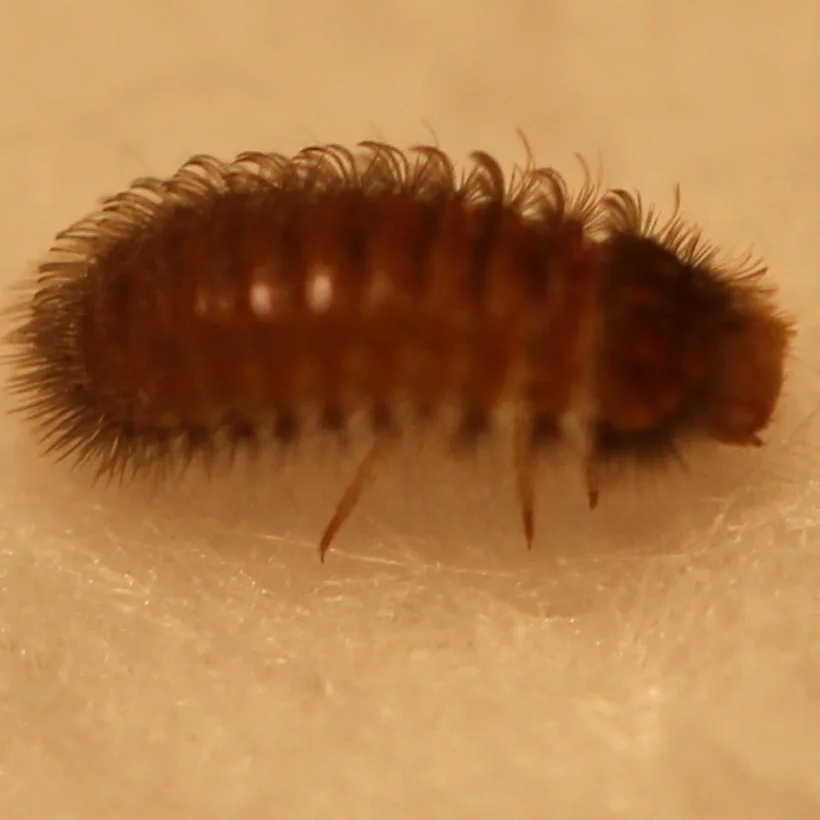
Larvae are brown and covered in short, stiff bristles. Unlike carpet beetle larvae, they have no long tuft of hair at the rear. Instead, each segment has a row of stiff bristles across its back edge. When touched, a larva can roll into a ball. That is a handy clue.
How to Tell Odd Beetles From Look-Alikes
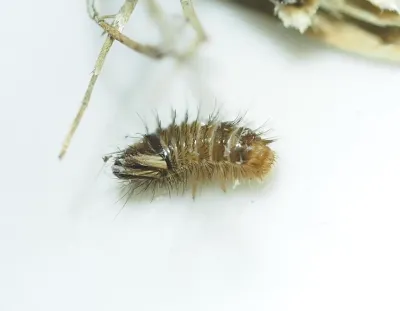
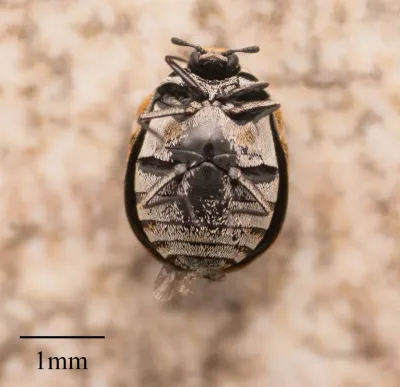
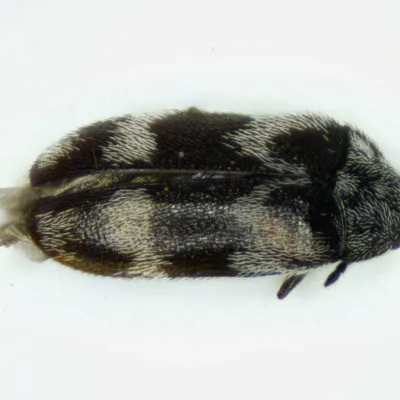
- Varied carpet beetles: Adults are round and mottled with white, brown, and yellow scales. Male odd beetles are narrow and plain tan.
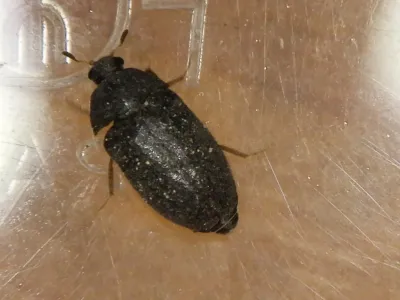
- Warehouse beetles: These Trogoderma beetles usually infest stored grain and dry foods. Odd beetles favor animal-based materials.
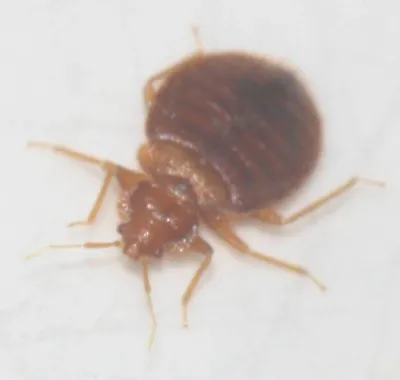
- Bed bugs: The wingless female odd beetle is sometimes mistaken for a bed bug. Bed bugs are flat and oval, have no bristle bands, and feed on blood. Odd beetles never bite.
Odd Beetle Behavior and Biology
Habitat
Odd beetles came from Europe and Asia. Now they live in buildings in many parts of the world. Indoors, they hide in dark, quiet places near food. Common spots include:
- Closets and storage boxes with wool or silk
- Attics and wall voids where dead insects collect
- Window sills and light fixtures full of insect remains
- Natural history collections, taxidermy, and pinned insect displays
Outdoors, they have been found on dried animal remains. Females cannot fly. So new problems usually start when someone carries an infested item indoors.
Diet
Larvae do almost all of the feeding. They eat dry animal material, including:
- Dead insects
- Wool, silk, and muslin cloth, even when clean
- Fur, feathers, and hides
- Dried museum and hobby specimens
They can chew through tissue paper to reach wrapped items. That gave the species its older nickname, the “tissue-paper beetle.”
Life Cycle
Odd beetles go through four stages: egg, larva, pupa, and adult. Their growth rate varies a lot. In lab studies, one generation took about a year on average. Some took only 6.5 months. Others took almost four years. Larvae can slow their growth when food is short. This helps small groups hang on for a long time.
In heated homes, any stage can be active all year. In the Mid-Atlantic, people notice adult males most from late spring through summer. They may wander to windows or land on sticky traps.
Signs of an Odd Beetle Problem
- Bristly larvae or cast larval skins in closets, drawers, or storage bins
- Small irregular holes in wool or silk items
- Wingless, grub-like females crawling on floors or walls
- Slender tan beetles near windows or on sticky traps
- Damaged insect collections or taxidermy mounts
Treatment Methods for Odd Beetles
Odd beetles are uncommon in most homes. When they do show up, they respond to the same steps used for other carpet beetles, since they share the same family, foods, and hiding spots.
- Inspection: The first job is finding what the larvae are eating. Check closets, stored fabrics, attics, wall voids, window sills, and light fixtures for dead insects, lint, and animal-based items.
- Treatment: Professionals treat the cracks, crevices, carpet edges, and voids where larvae travel and grow. Aim matters more than volume. A hidden food source can keep a small group going for years.
- Prevention: Wash, dry-clean, freeze, or seal away anything the larvae can eat. Removing the food source is what makes treatment last.
If you are in Northern Virginia or suburban Maryland and see fuzzy larvae or fabric damage, our carpet beetle control service covers the whole dermestid group, with unlimited free callbacks.
What You Can Do
- Vacuum dead insects from window tracks, light fixtures, and attic floors
- Wash or dry-clean wool and silk before storing it
- Store natural fibers in sealed plastic bins or zippered garment bags
- Freeze small infested items in a sealed bag at 0°F or colder for at least one week
- Check secondhand rugs, furs, specimens, and antiques before bringing them inside
References
- Pests of Fabrics and Paper: Odd Beetle - University of California, Riverside (Ebeling, Urban Entomology)
- Life History and Morphology of the Odd Beetle, Thylodrias contractus - Annals of the Entomological Society of America (Mertins, 1981)
- Carpet Beetles - University of Kentucky Entomology
- Carpet Beetles - National Pest Management Association
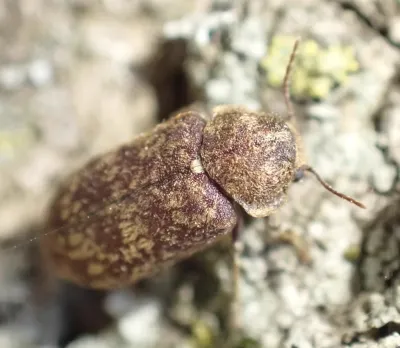
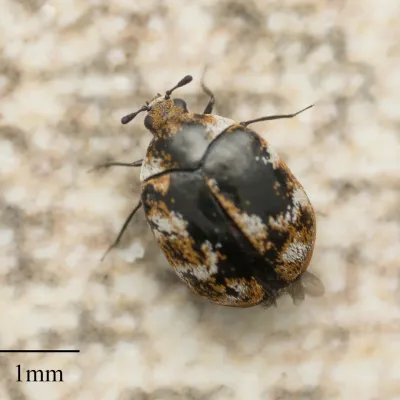
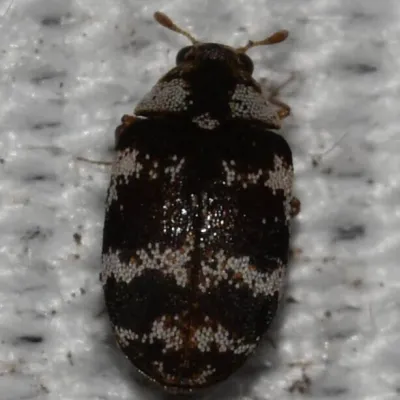
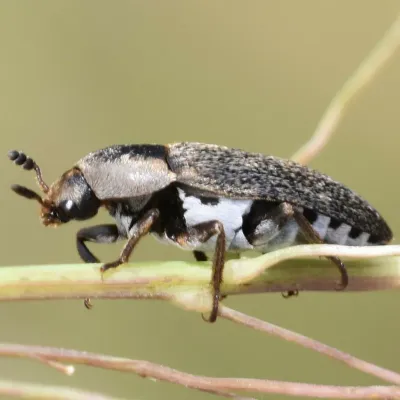
Other Carpet Beetles
Explore other species in the carpet beetles family
Commonly Confused With
Odd Beetles are often mistaken for these similar pests
Where Odd Beetles Are Found
Hover over states to see their names. Green regions indicate where odd beetles have been reported.
Common Questions about Odd Beetles
What is an odd beetle?
+
The odd beetle (Thylodrias contractus) is a small member of the dermestid family, the same family as carpet beetles. It gets its name from how different the males and females look. Males are slender, tan beetles about 2 to 3 millimeters long. Females have no wings and look like fat, segmented grubs.
Why do I keep finding small grub-like bugs that never turn into beetles?
+
If the bug is plump, segmented, and lined with short bristles, you may be seeing an adult female odd beetle. Females never grow wings or wing covers, so they look like a larva for their whole adult life. Larvae of the species look similar but are smaller and can curl into a ball when touched.
Are odd beetles harmful to people?
+
Odd beetles do not bite, sting, or feed on blood, and they are not known to spread disease. Like carpet beetle larvae, the bristly larvae may irritate sensitive skin. This is not medical advice, so see a doctor about any rash. Their main impact is damage to wool, silk, and dried animal items.
What do odd beetles eat?
+
The larvae feed on dry animal matter. That includes dead insects, wool, silk, fur, feathers, hides, and dried specimens such as pinned insects or taxidermy. They can also chew through tissue paper to reach wrapped items, which is why an older name for them is the tissue-paper beetle.
How are odd beetles different from carpet beetles?
+
Adult carpet beetles are round and patterned, while male odd beetles are slender with wing covers that only meet near the front and then spread apart. Carpet beetle larvae usually have long hairs and a tail tuft. Odd beetle larvae lack the tail tuft and instead have a row of stout bristles across each body segment.
Can odd beetles be mistaken for bed bugs?
+
Yes. The wingless female is brown, small, and turns up indoors, so people sometimes think it is a bed bug. Bed bugs are flat, oval, and have no bristle bands. Odd beetle females are rounder from the side, segmented like a grub, and never feed on blood.
How do I get rid of odd beetles?
+
Find and remove what they are eating. Vacuum dead insects from window sills, light fixtures, and attics. Wash, dry-clean, or freeze wool and silk items, and store them in sealed containers. If the beetles keep showing up after a thorough cleanup, a professional can locate hidden food sources and treat the cracks and voids where larvae develop.

With five years of hands-on experience in the pest control industry, George Schulz is a registered technician with the Virginia Pest Management Association and a proud third-generation professional in a family business that's been protecting homes for over 58 years. He manages and trains a team of service pros while also leading internal research efforts—recently spearheading a deep-dive review of thousands of documents on pest control materials to hand-pick the most kid and pet friendly, most effective solutions tailored specifically for homes in the DC metro area.
Local Odd Beetles Help
Dealing with odd beetles at home? Our licensed technicians provide pest control across Northern Virginia and Maryland.
