Carpet Beetles
Anthrenus spp. & Attagenus spp.
Carpet beetles are small, oval-shaped insects whose larvae cause significant damage to carpets, clothing, upholstery, and other natural fiber materials in homes.
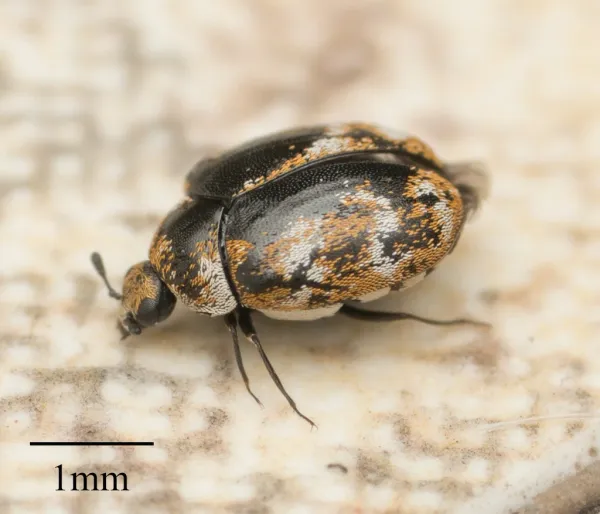
Carpet Beetle Identification Guide
Physical Characteristics
Adult carpet beetles are small, oval insects about 2-5mm long. You will often find them on windowsills and flowers rather than on carpets. The larvae cause the actual damage to fabrics. They look very different from adult beetles.
Adult beetles have hard, rounded bodies covered in tiny scales. These scales form their color patterns. They have short, clubbed antennae and can fly. This helps them spread to new areas. When scared, they often play dead by tucking their legs close.
Carpet beetle larvae do all the damage. They look like fuzzy, carrot-shaped grubs with bands of brown bristly hairs. These hairs can break off and cause skin irritation in some people. The larvae shed their skins many times as they grow. Finding these shed skins is often the first sign of a problem. Learn more about whether carpet beetles are dangerous and how to recognize signs of carpet beetles in your home.
Common Species in North America
Varied Carpet Beetle (Anthrenus verbasci) is the most common type. Adults have a mix of white, brown, and yellow scales on their backs. They are about 2-3mm long. Their larvae have light and dark brown stripes.
Black Carpet Beetle (Attagenus unicolor) adults are solid dark brown to black. They are slightly larger at 3-5mm. Their larvae have a long tuft of golden-brown hairs at the tail. Some people call them “buffalo moths.”
Common Carpet Beetle (Anthrenus scrophulariae) looks like the varied carpet beetle but has clearer bands of color. They are slightly larger and often have red or orange scales mixed with white and black.
Furniture Carpet Beetle (Anthrenus flavipes) is rounder than other types. It has a mix of yellow, white, and black scales. These beetles often infest upholstered furniture. They are common in the eastern United States.
Carpet Beetle Behavior and Biology
Lifecycle and Development
Carpet beetles go through four life stages: egg, larva, pupa, and adult. Knowing this lifecycle helps with control.
Eggs are tiny and white. Females lay them in clusters of 30 to 100 in dark, hidden spots near food sources. They look for lint, hair, dead insects, or natural fiber materials. Eggs hatch in 1-2 weeks.
Larvae are the stage that causes damage. They feed for 2-3 months, but can take up to 2 years in poor conditions. They like dark, quiet areas and will burrow into materials. Larvae shed their skins 5-11 times before they pupate. These shed skins are often the most visible sign of an infestation.
Pupae form inside the last larval skin. This stage lasts 2-3 weeks. Pupae resist many pesticides. This is why follow-up treatments are needed.
Adults come out and seek light right away. They live 2-6 weeks and feed on pollen from flowers. They prefer white and light-colored blooms. Adults do not damage household items. Their only job is to reproduce.
What Do Carpet Beetles Eat?
Carpet beetle larvae eat keratin, a protein found in many natural materials:
- Wool carpets, rugs, and clothing
- Silk garments and fabric
- Leather goods and bookbindings
- Fur coats and animal hides
- Feathers in pillows, down jackets, and decorations
- Taxidermy mounts and insect collections
- Pet hair and dander buildup
- Dead insects in wall voids
The larvae prefer dirty materials. Sweat, food stains, and body oils give them extra nutrients. Clothing worn once and stored without washing is at high risk.
Where Do Carpet Beetles Hide?
Infestations usually start in spots people overlook:
- Inside closets with wool clothing you rarely wear
- Under furniture and along baseboards where pet hair builds up
- In air ducts where lint collects
- Around taxidermy, antiques, and old items
- Inside stored boxes of clothing or blankets
- In piano felts and other items with wool parts
- Near bird or wasp nests (a natural food source for them)
Signs of a Carpet Beetle Infestation
Damage Patterns
Carpet beetle damage looks different from clothes moth damage:
- Irregular holes instead of even, uniform damage
- Surface grazing where larvae eat only the top layer and leave the backing
- Damage along seams and folds where larvae hide while they feed
- Fecal pellets and shed skins near damaged areas
Early Warning Signs
- Shed larval skins: Light brown, hairy shells left behind after molting
- Adult beetles on windowsills: They are drawn to light when trying to get outside
- Larvae crawling on walls: This happens often in spring when they look for places to pupate
- Small fecal pellets: Tiny, sand-like particles near damaged items
How We Treat for Carpet Beetles
Good carpet beetle control takes a step-by-step approach that targets all life stages.
Inspection and Assessment
Our licensed technicians start with a full inspection to:
- Find the source of the problem
- Identify all affected materials and areas
- Check how many larvae are active
- Look for conditions that attract beetles, like lint buildup or stored natural fibers
We check closets, storage areas, HVAC systems, and any place with natural fibers or animal products.
Treatment Strategy
Targeted Residual Applications: We apply insecticides to cracks, baseboards, and carpet edges where larvae travel and feed. These treatments keep working over time to stop newly hatched larvae.
Insect Growth Regulators (IGRs): IGRs stop larvae from growing into adults that can reproduce. This breaks the breeding cycle and prevents new infestations from eggs and pupae that survived the first treatment.
Dust Applications: In wall voids and other hidden areas, we use insecticidal dusts. These provide long-lasting control in spaces where larvae often grow.
Customer Preparation and Guidance
Treatment works best when homeowners help:
- Clean infested areas well and remove lint and debris
- Dry clean or hot wash fabrics that may be affected (above 120 degrees F kills all life stages)
- Store woolens properly in sealed containers or garment bags
- Vacuum regularly, especially carpets, furniture, and along baseboards
Follow-Up and Prevention
Eggs and pupae can survive initial treatment. We schedule follow-up visits 2-4 weeks later to kill newly emerged larvae. We also suggest ways to change your storage habits to prevent future problems.
References and Further Reading
Types of Carpet Beetles
Click on any species below to learn more about identification, behavior, and control methods.
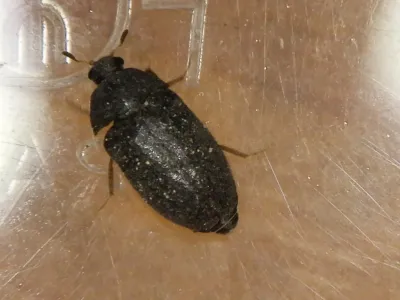
Black Carpet Beetle
Attagenus unicolor
The black carpet beetle is the most common and destructive carpet beetle species in the United States, with larvae that feed on wool, silk, leather, and other natural fiber materials throughout homes.
View identification guide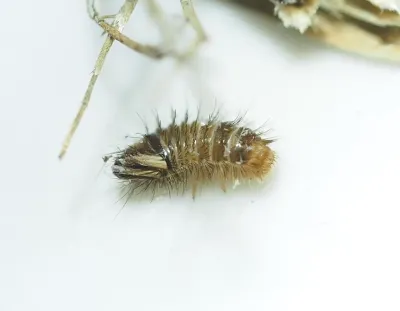
Carpet Beetle Larvae
Dermestidae (larval stage)
Carpet beetle larvae are the destructive juvenile stage of carpet beetles, causing significant damage to wool, silk, fur, feathers, and other natural fiber materials in homes.
View identification guide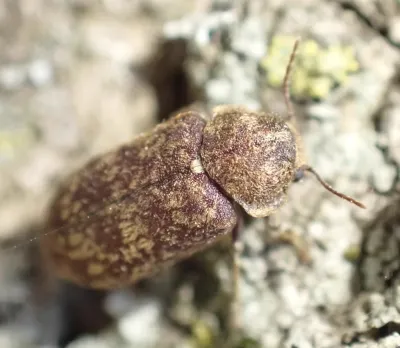
Deathwatch Beetles
Xestobium rufovillosum
Deathwatch beetles are wood-boring insects known for the distinctive tapping sounds males produce to attract mates. Their larvae can spend years tunneling through structural hardwood timbers, causing significant damage to older buildings.
View identification guide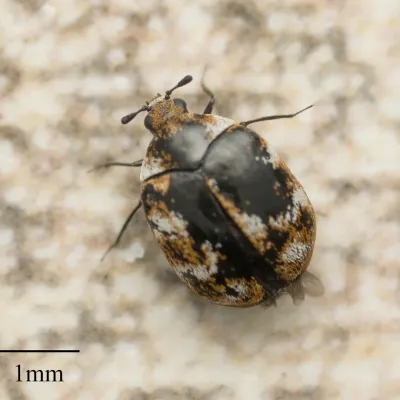
Dermestid Beetles
Dermestidae
Dermestid beetles are a family of scavenging insects that includes carpet beetles and larder beetles. These pests damage natural fiber materials, stored foods, and animal products in homes.
View identification guide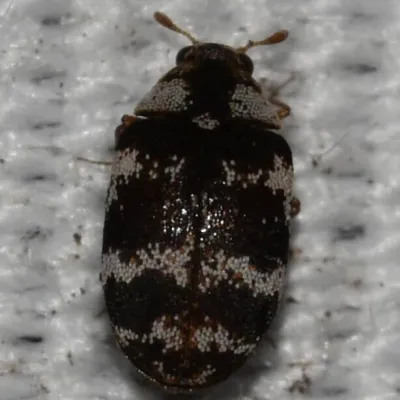
Furniture Carpet Beetles
Anthrenus flavipes
The furniture carpet beetle is a common fabric pest that causes significant damage to upholstered furniture, carpets, and natural fiber materials. Its larvae feed on wool, silk, leather, and other animal-based materials.
View identification guide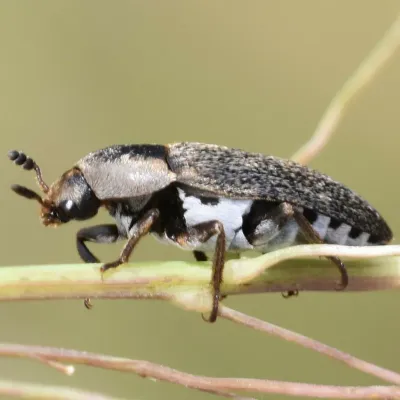
Hide Beetles
Dermestes maculatus
Hide beetles are dark-colored dermestid beetles that feed on dried animal materials including hides, furs, taxidermy specimens, and stored meat products. They are common pests in museums, homes with wildlife carcasses, and food storage facilities.
View identification guide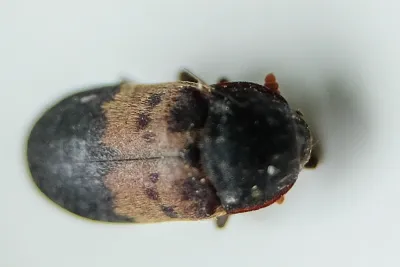
Larder Beetles
Dermestes lardarius
Larder beetles are dark-colored dermestid beetles with a distinctive yellowish band across their wing covers. Both adults and larvae feed on high-protein materials like dried meats, pet food, and animal products in homes.
View identification guide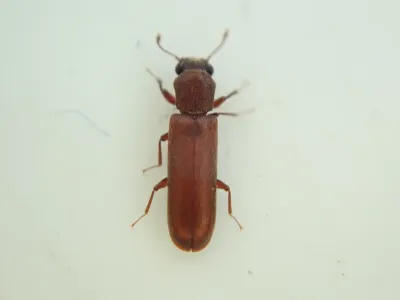
Powder Post Beetles
Lyctinae, Anobiidae & Bostrichidae
Powder post beetles are small wood-boring insects whose larvae tunnel through seasoned hardwood and softwood, reducing it to a fine, flour-like powder and causing significant structural damage to homes and furniture.
View identification guide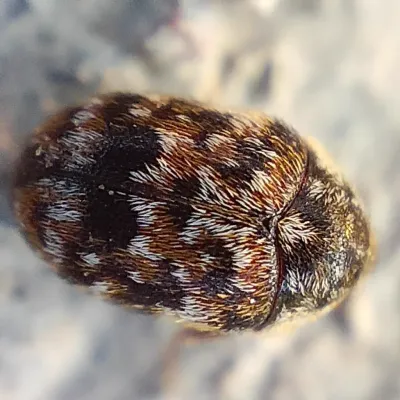
Skin Beetles
Dermestidae
Skin beetles are scavenging insects that feed on dried animal matter, including hides, furs, feathers, and natural fiber materials. They are common household pests that damage woolens, leather goods, and stored animal products.
View identification guide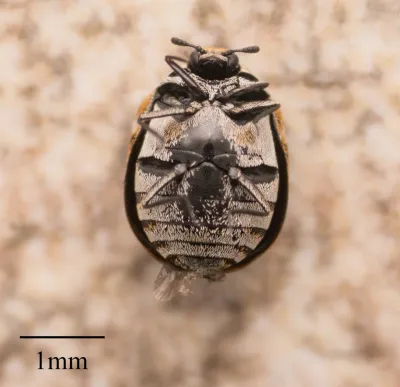
Varied Carpet Beetles
Anthrenus verbasci
The varied carpet beetle is the most common carpet beetle species in North America. Its larvae cause significant damage to wool, silk, fur, and other natural fiber materials in homes.
View identification guide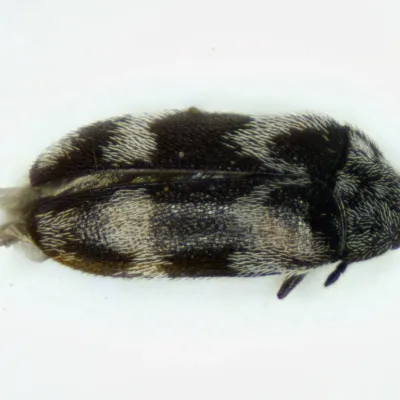
Warehouse Beetles
Trogoderma variabile
Warehouse beetles are small dermestid beetles that infest stored foods like grains, cereals, and pet food. Their hairy larvae contaminate products and can survive months without feeding.
View identification guideCommon Questions about Carpet Beetles
What do carpet beetles look like?
+
Adult carpet beetles are small (2-5mm), oval insects. Varied carpet beetles have brown, tan, and white scales. Black carpet beetles are solid dark brown to black. The larvae look different. They are fuzzy, carrot-shaped grubs with bristly hairs that can irritate skin.
Are carpet beetles harmful to humans?
+
Carpet beetles do not bite or spread disease. However, their larvae's bristly hairs can cause skin rashes in some people. The main concern is damage to your belongings. Larvae eat wool, silk, leather, feathers, and other natural materials. They leave irregular holes in clothing, carpets, and furniture.
How do carpet beetles get into my house?
+
Adult carpet beetles can fly and like flowers for pollen. They enter homes through open windows, doors, or gaps around pipes. They can also come in on cut flowers, used furniture, or stored clothing. Once inside, females look for dark, quiet spots to lay eggs.
What attracts carpet beetles to my home?
+
Carpet beetles like natural fibers such as wool, silk, fur, and feathers. They also eat pet hair, dead insects, and food crumbs. Homes with wool carpets, old furniture, taxidermy, or stored wool clothing have higher risk.
How do I know if I have carpet beetles?
+
Look for irregular holes in fabrics. These differ from moth damage, which is more even. Also look for shed larval skins and small fecal pellets near damaged items. You may see fuzzy larvae on walls or windowsills in spring.
How long does it take to get rid of carpet beetles?
+
Carpet beetle treatment usually takes 2-3 months. You must break the lifecycle. Eggs and pupae resist treatments, so follow-up visits are needed to kill newly hatched larvae.
Can carpet beetles damage synthetic materials?
+
Carpet beetles mostly eat natural fibers. They can damage synthetic fabrics if blended with natural fibers or if soiled with food, sweat, or body oils. Pure synthetic materials usually are not damaged by carpet beetles.
Explore Other Pest Categories
Browse our comprehensive pest library for identification guides and control information.



With five years of hands-on experience in the pest control industry, George Schulz is a registered technician with the Virginia Pest Management Association and a proud third-generation professional in a family business that's been protecting homes for over 57 years.
Find Local Carpet Beetle Control Services
We provide professional carpet beetles control throughout Virginia, Maryland, and the DC Metro area.